Is It Bad to Prune Trees When They're Wet?
Arborists avoid pruning wet trees for good reason. See how moisture raises disease and safety risks—and the dry, cool weather window that heals cuts fastest.
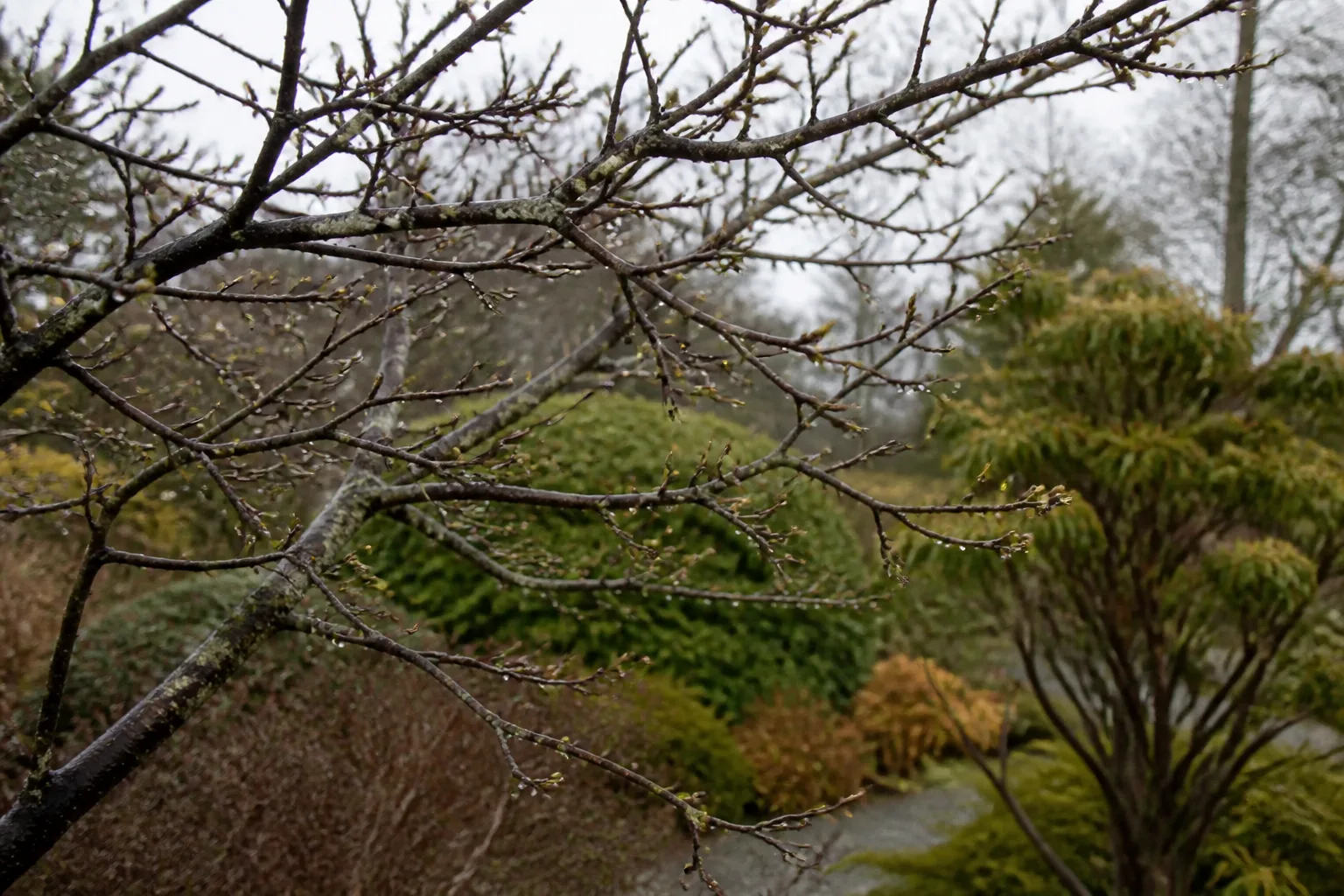
You planned a Saturday morning to open up the canopy, remove a few crossing branches, and finally deal with that low limb scraping the roof. Then the forecast flipped: overnight rain, dripping bark, and sodden mulch underfoot. The question is not philosophical—it is practical. Should you make the cuts now, or wait?
For most backyard trees and nearly every fruit tree, the answer is wait for dry conditions when the job is elective. Wet bark does not automatically kill a tree the moment you snip, but it raises the odds of pathogen entry, sloppy cuts, and preventable accidents. The rest of this guide explains why moisture matters, what orchard research says about rain and open wounds, and how to make a smart call when spring weather refuses to cooperate.
The Short Answer: Wait for Dry Weather When You Can
Pruning a wet tree is a bad idea when you have a choice. Moisture on bark and tools helps bacteria and fungi move into fresh cuts. Those cuts also need dry air to begin sealing. At the same time, wet wood is slick—bad news if you are on a ladder or running a chainsaw.
Postpone structural pruning, canopy thinning, and large limb removal until branches are surface-dry and you expect at least 48 hours of dry weather afterward. If a branch is a genuine hazard—hanging over a walkway after a storm, cracked and likely to fall—remove it carefully even in damp conditions, then sanitize tools and monitor the wound. Routine cosmetic work can wait; safety work cannot.
Why Wet Bark Changes the Risk Equation
Pruning is always a trade-off: you solve one problem (crowding, deadwood, clearance) and create another (an open wound). Trees evolved to compartmentalize decay behind a chemical and physical barrier at the branch collar—the slightly swollen ring where branch meets trunk. Clean cuts just outside that collar give the tree its best shot at sealing the injury.
Water changes the math on both sides of the cut. It loosens spores and bacteria sitting on bark surfaces. It keeps wound margins hydrated when they need to dry and callus. And it makes you rush—cold fingers, fogged glasses, and mud under your boots are not the setup for precise arboriculture.
Water Splash Moves Pathogens Into Fresh Cuts
Fungal canker pathogens, fire blight bacteria, and assorted rot organisms do not need an invitation—they need a pathway. Fresh pruning wounds expose cambium and xylem that bark normally shields. Rain, dew, and dripping foliage create splash that can wash microbes from infected bark, old pruning debris, or neighboring trees directly into those openings.
Big Blog of Gardening lists pruning wet branches among the top disease-spreading mistakes because moisture is a transport medium. The risk is not theoretical in commercial orchards. Sacramento Valley almond research documented 21 fungal species associated with canker diseases whose primary infection sites are pruning wounds, with rain events strongly correlated to spread across the Central Valley (Sacramento Valley Orchards, UC Davis).
Your backyard oak or cherry is not an almond orchard, but the biology rhymes: open wood + water + inoculum = higher infection odds.
Pruning Wounds Stay Open Longer in Damp Air
After a proper cut, the tree begins compartmentalizing—depositing lignin and suberin at the wound margin. That process slows in cold, wet weather and speeds somewhat in warmer dry spells, though excessively hot pruning days bring their own stress (more on that below).
Humid air keeps wound surfaces from drying. Slow sealing means a longer window for spores to germinate. Even a light drizzle hours after you finish can re-wet cuts you thought were done for the day.
What Research Shows About Rain and Pruning Wounds
Orchard trials give homeowners the clearest numbers because fruit growers measure infection in dollars. UC Davis researchers tracked almond pruning wounds across dormant months and found infection rates were lowest when cuts were made in January compared with September through November, partly because healing chemistry ramps up again after mid-winter decline—and partly because rainfall timing matters.
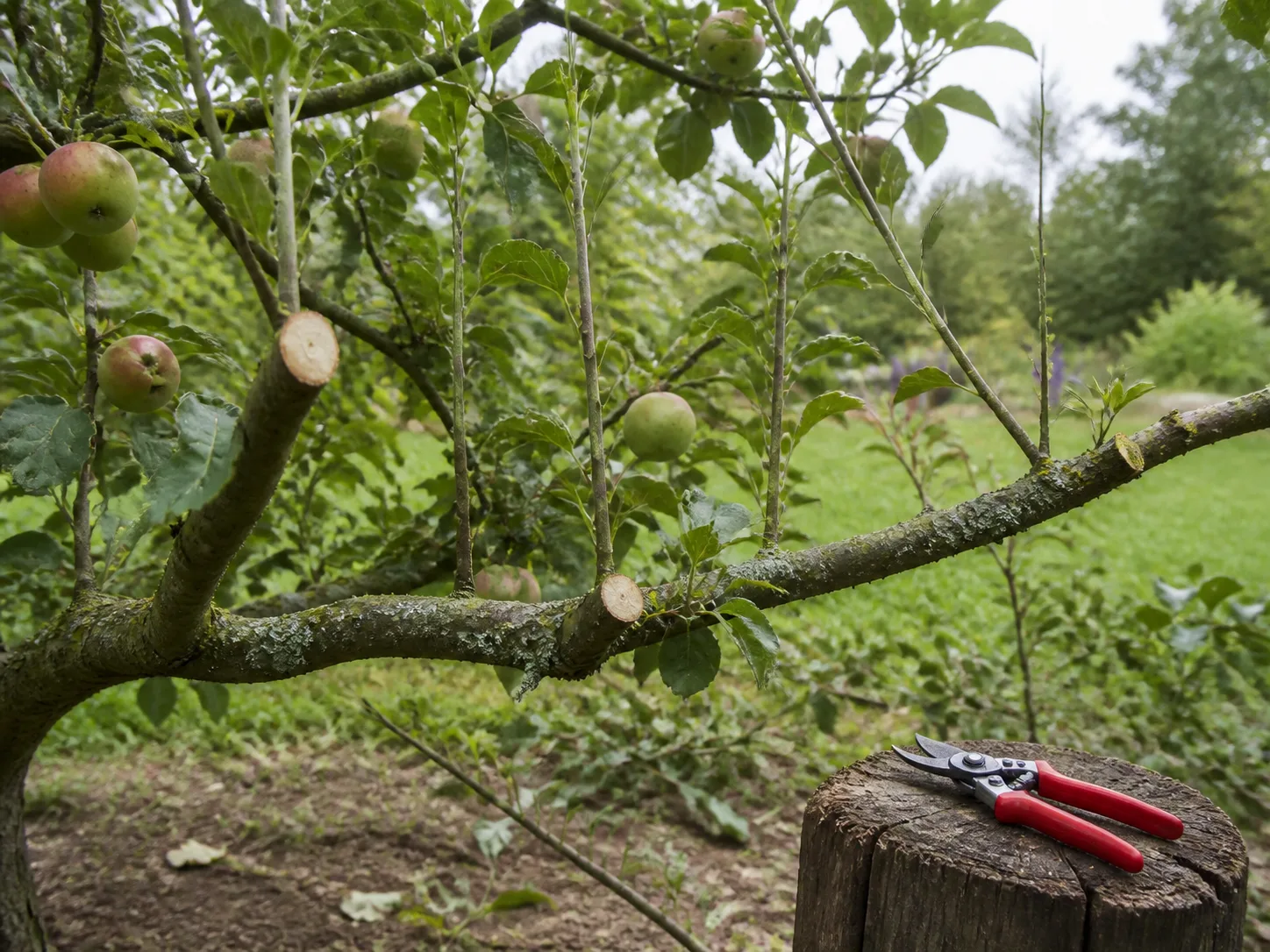
Their management guidelines are blunt: avoid pruning ahead of predicted rain, and if rain is unavoidable, apply a labeled pruning-wound protectant immediately after cutting. In trials, thiophanate-methyl (Topsin M) and a Trichoderma biocontrol reduced canker infection by roughly 77–82% on commercial almonds. Those are orchard products with specific labels—not a blanket recommendation for every shade tree in a subdivision. They illustrate the principle: if rain is coming and cuts are fresh, passive hope is not a strategy.
How Long Fresh Cuts Stay Vulnerable
The same UC trials inoculated pruning wounds with canker pathogens at intervals after cutting. Wounds infected immediately after pruning showed 80–100% infection. At two weeks, infection dropped about 60%. At three weeks, roughly 75% lower than immediate exposure. By eight weeks, susceptibility fell 85–90% overall—though fresh wounds at any date remained the most vulnerable.
Translation for home gardeners: the first 72 hours matter most. The first two weeks still matter a lot. If your weather app shows a multi-day rain event right after a major prune, you are inside the danger zone.
Safety Risks That Multiply in the Rain
Disease is the slow problem. Falls and chainsaw kickback are the fast ones. Certified arborists treat wet-weather pruning as a site-hazard issue, not just a plant-health issue.
Slippery Bark, Ladders, and Chainsaws
Bark with a film of water has less friction for boots and ladder rails. Fine-textured bark on beech, certain maples, and smooth-barked fruit trees is especially treacherous. Even ground-level work gets risky on wet grass or slopes—one misstep with loppers in hand can mean a trip to urgent care.
Chainsaws on wet wood deserve extra respect. Wet sawdust clogs cutters, binds in compression cuts, and reduces visibility. Kickback risk rises when the chain is not cutting cleanly. If the job requires a saw and you are not trained for in-tree work, call a licensed arborist and let them pick a dry window.
Rule of thumb: if you would not roof a house in this weather, you should not limb a mature tree on a ladder in it either.
Tools Work Poorly—and Spread Disease Faster—When Wet
Sharp tools make crisp cuts that the tree can seal. Wet conditions work against both sharpness and sanitation.
Saw teeth and bypass blades bite less cleanly into water-saturated outer bark. You end up tearing fibers, leaving stubs or flush cuts that destroy the branch collar—two of the most common pruning mistakes that invite rot. Torn wood also takes longer to compartmentalize even in ideal weather.
Disinfectant evaporates slowly—or washes off—on wet metal. Arborists who routinely sterilize blades between trees find wet weather makes it harder to maintain a true clean surface between cuts. Pathogens on a damp saw can ride to the next branch before alcohol or bleach has time to work.
Dry the tool as well as you can, disinfect, make the cut, disinfect again. In rain, that rhythm breaks down. Another reason to postpone.
What Happens If You Already Pruned Before Rain
You are not the first gardener to misread a forecast. If major cuts are already open and rain is hours away:
Remove cut debris from under the tree. Infected wood on the ground can splash back onto wounds.
Avoid wound paints and sealers on most landscape trees. Research and arboricultural practice have moved away from tar-based dressings for general use—they can trap moisture and interfere with compartmentalization. Orchard protectants are a different category with trial data behind them.
Monitor for cankers over the next season: sunken, discolored bark; oozing sap on stone fruit; dieback on branch tips. Early removal of affected limbs—on a dry day with sanitized tools—limits spread.
When a Protective Spray Makes Sense
For commercial almond and other orchard crops, labeled fungicides applied immediately after pruning and before rain are standard. Home fruit growers with valuable cherry, peach, or apple trees in high-disease-pressure regions should read their state extension fruit IPM guides before spraying anything.
UC IPM emphasizes clean tools and proper cut placement for backyard fruit trees. Copper fungicides are sometimes recommended for specific pathogens and timings, but product, rate, and pre-harvest interval vary by crop and state. Never borrow an almond-orchard label for a backyard shade tree without confirming legality and necessity.
If spraying is not appropriate for your situation, the better play is prevention: watch the forecast and schedule big pruning for a dry block of days.
The Best Weather Window for Tree Pruning
Arborists and extension educators converge on a similar profile: dry, calm, cool-to-mild air—often on an overcast day rather than blazing sun or hard frost.
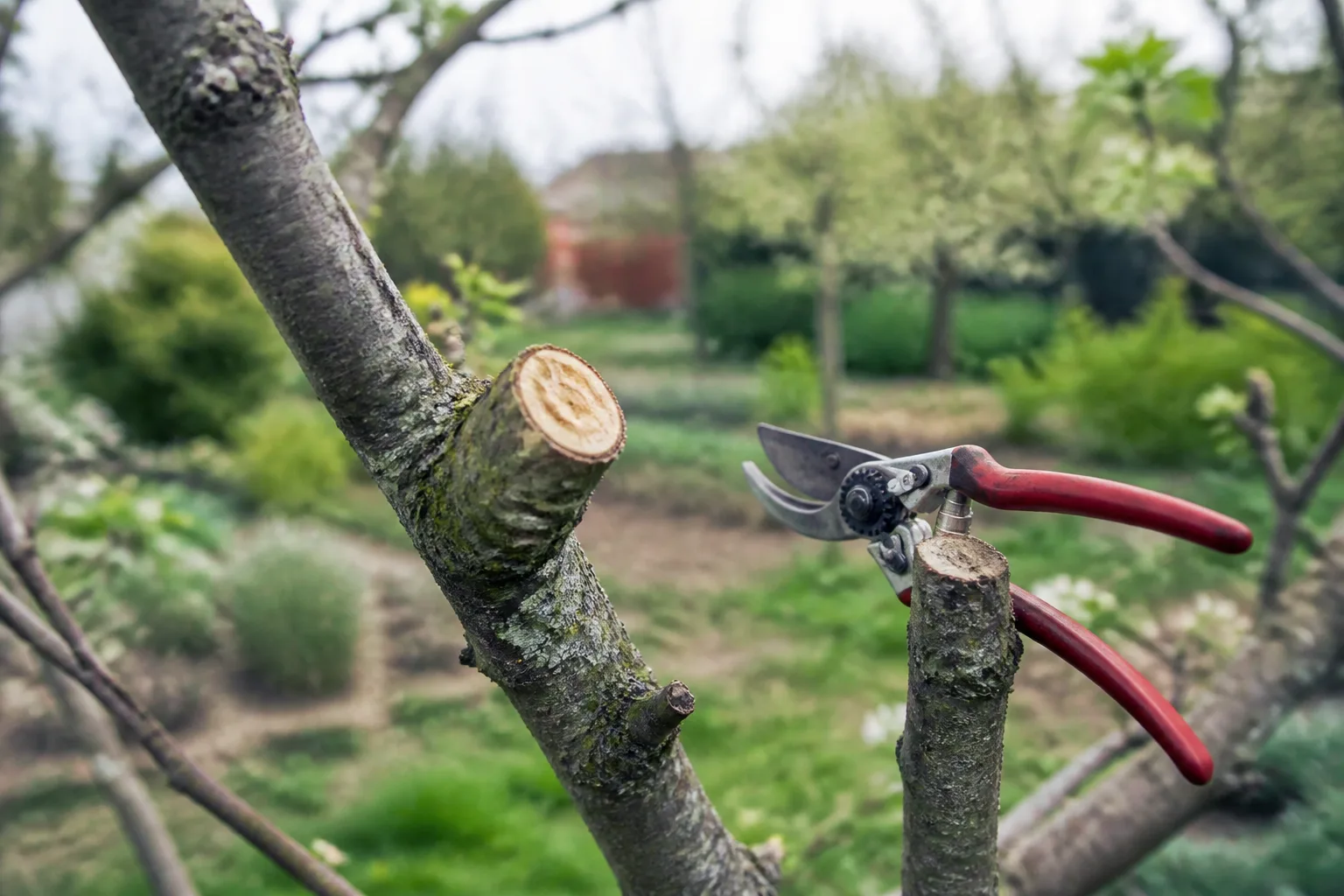
Dry bark gives you traction and clean cuts. Calm air keeps debris predictable. Moderate temperatures avoid the double hit of heat stress plus open wounds.
Dry, Cool, and Overcast Beats Hot or Freezing
Overcast skies reduce transpiration stress while you work. The tree is not losing water as aggressively as on a hot afternoon, yet air circulation is still adequate for wound margins to dry after cutting.
Unseasonably warm spring days can trigger sap rise—the surge that pushes buds open. Pruning during a heat spike on top of that flush can stress the tree and cause excessive “bleeding” on maples and birches. Not always fatal, but wasteful of stored energy.
Hard frost immediately after pruning can damage cambium at fresh cuts on marginally hardy species. Late-winter pruning is normal for many deciduous trees, but watch the 48-hour temperature trend, not just the afternoon high.
Aim for two to three consecutive dry days after significant work. Light morning dew on otherwise dry branches is less concerning than active rainfall, but wait until surfaces are dry to the touch before cutting large wood.
Species and Job Type: When the Rule Is Strict vs Flexible
Not every snip carries the same stakes.
Evergreens, Fruit Trees, and Ornamental Shade Trees
Stone and pome fruit trees (cherry, peach, plum, apple, pear) are strict: wet pruning is a hard no for routine work. Fire blight, bacterial canker, and brown rot organisms love warm wet springs. Schedule these trees on the driest week you can find in late winter or early spring, depending on local recommendations.
Ornamental flowering trees you prune after bloom—dogwood, redbud, flowering cherry—follow the same moisture rule even though disease lists differ. Open wounds during petal-fall rains are still entry points.
Large shade trees (oak, maple, linden) tolerate minor timing imperfections better than fruit crops, but canker and rot fungi still exploit wet wounds on oaks and honey locust. Do not treat “shade tree” as “anything goes.”
Conifers bleed resin instead of sap; wet pruning is less about bacterial splash and more about clean cuts and pitch flow. Still prefer dry days—wet needles conduct electricity if you are near power lines, and footing on dropped needles is slick.
Small shrubs and hedges (forsythia, lilac, boxwood) are lower on the risk ladder. Removing a few dead twigs in light drizzle is unlikely to doom the plant. Renovation pruning—taking out thick old stems—should still wait for dry weather.
| Tree type | Wet-pruning strictness | Primary concern |
|---|---|---|
| Apple, pear, cherry, peach | Strict | Fire blight, bacterial canker |
| Oak, honey locust | Strict | Canker and rot fungi |
| Maple, birch (spring) | Moderate | Sap loss + wound entry |
| Ornamental shade trees | Moderate | Canker, general rot |
| Conifers | Moderate | Cut quality, resin, safety |
| Flowering shrubs | Flexible for minor deadwood | Low unless major renovation |
Emergency Cuts You Shouldn’t Postpone
Storm-damaged limbs hanging over a driveway, split leaders threatening to tear down the trunk, or cracked branches touching utility lines cannot wait for a weather postcard. Safety pruning overrides the dry-day preference.
In emergencies: work from the ground when possible, use a tripod ladder only on stable dry-ish footing, never stand on wet slopes, and remove the minimum wood needed to eliminate the hazard. Make three-cut method removals on large limbs to avoid bark stripping. Disinfect tools after the job and plan a follow-up dry-day session for final collar cuts and structural cleanup.
If lines are involved, call the utility company—not your pruning saw.
A Spring Pruning Decision Framework When Rain Won’t Quit
Persistent spring rain traps gardeners between the calendar and the forecast. Use this sequence:
1. Classify the job. Hazard removal → proceed with caution. Structural or heavy fruit-tree pruning → postpone.
2. Check the 48-hour forecast. Any measurable rain or all-day drizzle? Move the job.
3. Look at the 7-day block. Pick the longest dry interval; schedule heavy work on day one of that interval so wounds have 48+ dry hours afterward.
4. Shrink the scope if you must. Remove only dead, diseased, or dangerous wood now; save shaping for dry weather.
5. Prep sanitation before you start. Sharpen blades, mix a 10% bleach solution (one part bleach to nine parts water) or pour 70% isopropyl alcohol into a clip-on cup. Fresh solution beats a muddy rag.
6. After unexpected rain on fresh cuts, shift to monitoring—not panic spraying. Flag the tree on your calendar for a dry-season health check.
This framework keeps you productive in a wet spring without pretending moisture does not matter.
Tool Sanitation That Actually Prevents Cross-Infection
Whether the bark is wet or dry, dirty tools are a silent disease vector. The fix is boring and effective:

Between trees and after any diseased cut: dip blades for 30 seconds in 70% isopropyl alcohol, or 60 seconds in 10% bleach solution. Rinse and oil steel afterward—bleach corrodes metal.
Between cuts on the same tree when removing cankered or fire-blighted wood: disinfect every time. Skipping once can move pathogens from a dying limb into a healthy scaffold.
Carry two saws or pruners on wet days if you must work: use one while the other dries after disinfection.
Sharpen before you sanitize. A dull tool makes ragged wounds that stay open longer—exactly what you do not want when humidity is high.
Dry tools, sharp edges, and disciplined dipping beat any wound paint on the market for backyard trees.
Conclusion
Pruning a wet tree is a bad idea for routine work because moisture helps pathogens invade fresh cuts, slows wound sealing, dulls your control over tools, and turns ladders into liabilities. Orchard research confirms that rain and open pruning wounds are a risky combination, with the highest infection odds in the first days after cutting. Wait for dry, calm, cool-to-mild weather, give wounds at least 48 hours of dryness afterward, and keep tools sharp and disinfected.
When the job is truly hazardous, prune for safety first and refine on a dry day later. When spring rain will not relent, shrink the scope, watch the forecast blocks, and save the big cuts for the first clear window. Your trees heal faster, your tools work better, and you stay on your feet—which is the part no fungicide can fix.