Overwintering Herbs: Which Ones Are Worth the Work?
Should you bother overwintering herbs? Decide what to bring indoors, mulch outside, replace, or restart from seed with this herb-by-herb guide.
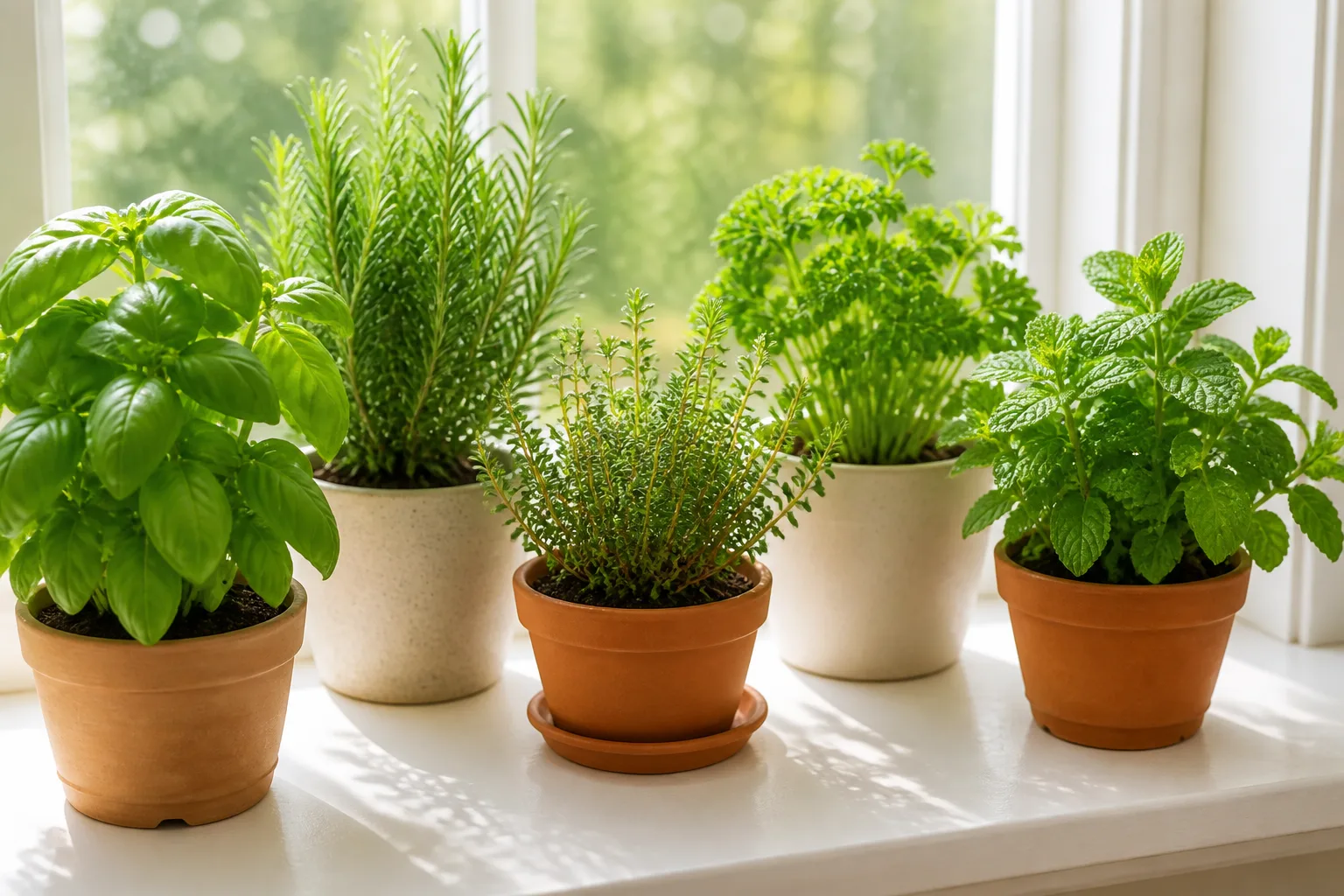
Overwintering herbs is worth it when you are preserving a slow-growing, expensive, sentimental, or hard-to-replace plant. It is usually not worth it when the herb is a fast annual, already declining, or competing with a healthier plant for your brightest window. The smartest winter garden is selective: leave hardy herbs outdoors, protect or move tender perennials, and restart quick crops when fresh seedlings will outperform a tired survivor.
Use the guide to choose whether each herb should stay, move, or start over, while separating survival from winter harvest and a spring head start.
The short answer: preserve the slow, replace the quick
Think of overwintering as an investment decision, not a test of gardening loyalty. Bring in or protect a herb when the plant has more value than the space, light, water, pest-monitoring time, and recovery risk it will consume. A large bay laurel or established rosemary may take years to regain its size; a new basil plant can be grown from seed in a fraction of that time.
The best candidates are usually woody or slow-growing herbs that are not reliably hardy in your climate. Bay laurel, rosemary, lavender, and some marjoram varieties fit that description. A second group includes herbs you can overwinter easily outdoors—thyme, oregano, mint, chives, and many sages—where the work is mostly good placement, drainage, mulch, or wind protection rather than indoor care.
The least convincing candidates are fast annuals and damaged plants. Basil, dill, and cilantro can be grown again from seed, while a frost-blackened, pest-covered, or waterlogged plant may carry problems inside without giving you a worthwhile harvest. “Can it survive?” is a weaker question than “Will it be healthier and more useful than a replacement?”
Start with the herb’s life cycle, not its price tag
An herb’s label—annual, biennial, or perennial—tells you how it is designed to move through the seasons. It does not, by itself, tell you whether it can tolerate your winter. A perennial may be tender in a cold zone, and an annual may still give you a useful indoor extension even though it will not become a permanent plant.
Hardy perennials: leave them outside
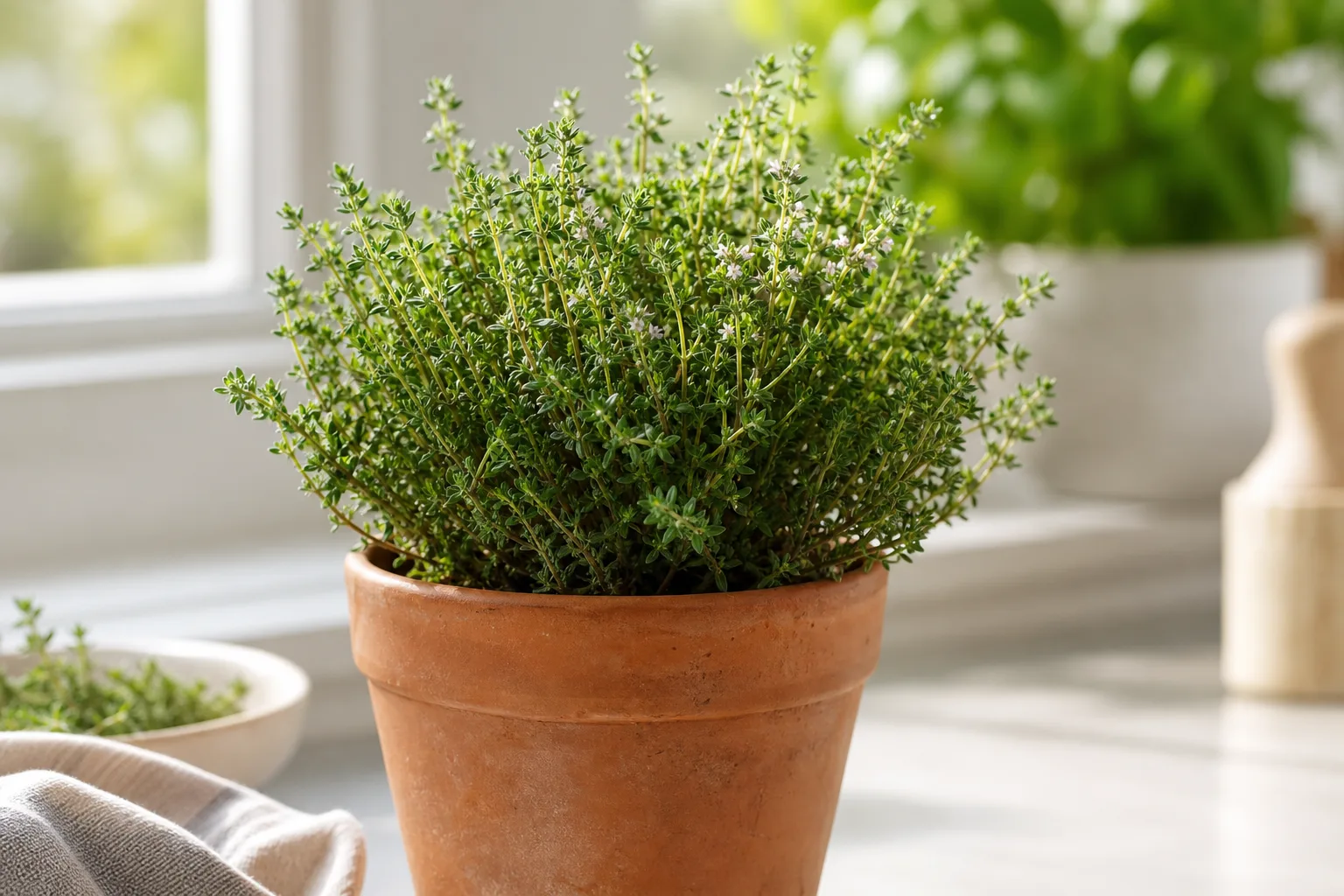
Thyme, oregano, mint, and chives are often better left in the garden than moved indoors. Their roots or crowns can go dormant, their top growth may shrink or disappear, and then they resume growth. NC State Extension notes that many perennial herbs can remain in the garden, while hardiness varies by region.
That does not mean “ignore them.” Hardy herbs still need well-drained soil, protection from drying wind, and enough moisture going into winter. A plant in a raised bed may pass through a freeze more safely than the same plant in a small exposed pot, because container roots experience the air temperature more directly.
Mint is the clearest example of a herb you rarely need to rescue indoors. It may die back aboveground and return from the roots, and it is quick to replace if it does fail. Keep it contained outdoors so it does not escape into the bed, and save indoor space for plants with a slower recovery curve.
Tender perennials: protect or bring them in
Rosemary, bay laurel, lavender, and some marjoram plants are long-lived in the right climate but vulnerable to cold, wet soil, or drying wind. Look closely at your hardiness zone, cultivar, exposure, and container size. Gardening Know How likewise recommends determining hardiness before choosing outdoor protection or an indoor move.
You do not always need to choose between a heated room and abandonment. A sheltered patio, unheated greenhouse, cold frame, or bright frost-free porch can provide a better winter for a Mediterranean herb than a warm, dim kitchen. The right place is often cooler and brighter than a typical living room, with roots that never sit in cold water.
Annuals and biennials: know when the clock runs out
Basil and dill are annuals. They can sometimes be moved indoors before frost, but the plant still has a limited life cycle. Cilantro is also an annual, but it prefers cool weather and may give you a better fall or late-winter crop outdoors than in a warm windowsill pot.
Parsley is a biennial: it can provide leafy harvest in its first season, then usually sends up a flowering stalk in its second year. That means a parsley plant may survive winter and still be useful, but its best culinary window may be closing. Save some leaves in autumn and decide whether early spring harvest is worth keeping the plant for seed.
The life-cycle distinction prevents a common disappointment. A living basil plant in January is not necessarily a successful overwintering project if it is thin, pale, pest-prone, and producing less than a fresh sowing would. Survival is a biological outcome; usefulness is the gardening outcome you actually care about.
A value test that tells you whether overwintering is worth it
Before you carry a pot indoors, score it with five questions. This exposes the trade-off you might otherwise ignore.
- How long would a replacement take to become useful? A mature bay or rosemary may justify protection; basil may not.
- Is the plant healthy enough to be a good parent? Do not preserve disease, severe root damage, or a pest outbreak just because the pot is large.
- Can you provide its winter conditions? A bright, cool, well-ventilated location is more valuable than a sunny label on a window that receives only weak winter light.
- What is the cost of failure? If bringing it indoors risks spreading spider mites to houseplants, take a cutting or start seeds instead.
- What is your winter goal? A plant kept barely alive needs less water and harvest than a plant expected to keep producing leaves.
Use this quick triage:
| If the herb is… | Best winter choice | Why |
|---|---|---|
| Hardy in your climate and planted in the ground | Leave outdoors | The roots can use natural dormancy with modest protection. |
| Tender, woody, healthy, and slow to replace | Bring in or use a frost-free shelter | You are preserving accumulated size and time. |
| Healthy but borderline hardy in a container | Protect the pot or take a backup cutting | Container roots and shoots need extra insurance. |
| Fast-growing and easy from seed | Harvest, compost if clean, and restart | Fresh plants often beat a weak winter survivor. |
| Pest-ridden, diseased, or frost-collapsed | Do not bring in | The risk is greater than the likely return. |
Savvy Gardening distinguishes harvesting hardy herbs under protection from growing herbs indoors. A cloche, cold frame, or low tunnel can extend an outdoor harvest without an indoor move.
When to bring potted herbs indoors
Use the weather and the plant, not a date on the calendar. Start preparing when nights are trending colder and move tender plants before a frost warning turns the job into an emergency. A plant that is already chilled, wet, and stressed is a poor candidate for a sudden move into a heated room.
Basil deserves the earliest alarm. Penn State Extension says basil cannot survive temperatures below 50°F and advises growing herbs in a protected indoor environment with suitable light and temperature. Do not wait for black leaves. Move basil while it is actively growing, then decide whether maintaining it indoors is worth the light and pest-monitoring cost.
For rosemary, bay, lavender, sage, and thyme, the trigger depends on the variety and your site. A sheltered bed in a mild climate may need only wind protection; a pot on an exposed balcony may need to move earlier because its roots have little insulation. If you are unsure, make the move in stages: place the pot in a sheltered, bright spot for several days, inspect it, then take it indoors before the first hard freeze.
Before moving anything, harvest usable leaves, remove dead material, and check the underside of leaves and the soil surface. Avoid major late-season pruning. NC State Extension warns that late nitrogen fertilizer and severe pruning can encourage tender growth or reduce winter hardiness, while light harvesting is acceptable.
A low-risk indoor transition in six steps
Moving an outdoor herb indoors changes its light, airflow, temperature, humidity, and root-zone drying speed. This sequence reduces adjustment shock, pests, and root rot.
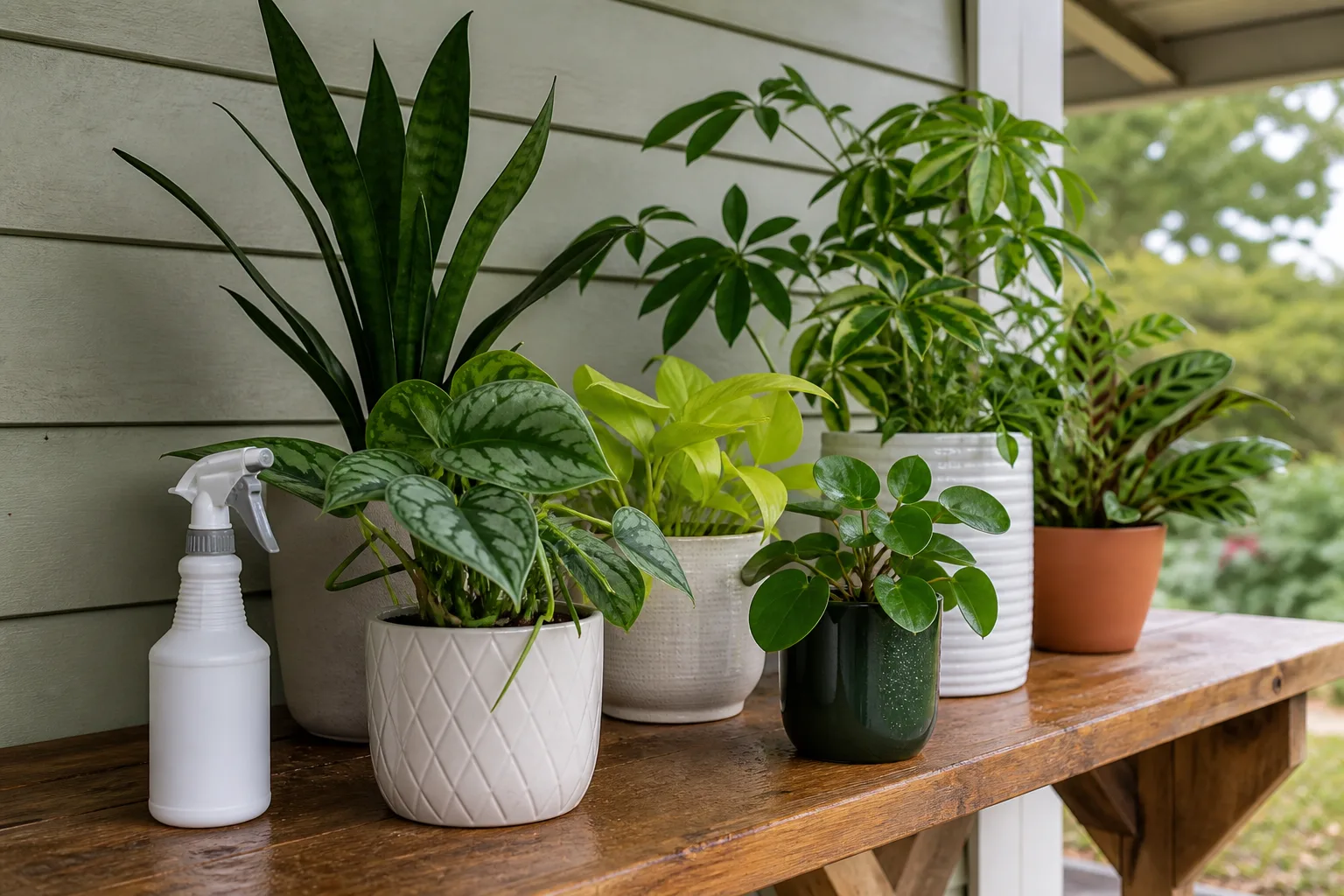
- Choose the plant. Select a compact, healthy specimen with firm stems and roots that are not chronically wet. If it has been failing outdoors, do not assume indoors will fix the cause.
- Inspect and clean it. Look along stems, under leaves, and around the crown. Remove dead foliage and insects, rinse foliage if tolerated, and wipe the pot and saucer.
- Use a sensible container. Pot up only if necessary, using a drainage hole. A huge pot holds more wet mix than a reduced winter root system can use. Gardenary emphasizes a deep-enough container with real drainage for herbs moved indoors.
- Use an airy mix. Preserve as much root ball as practical, but do not pack dense garden soil around it. A free-draining potting mix is safer indoors.
- Stage the move. Give the plant a few days in a protected, bright transition spot when possible, especially after full outdoor sun and wind.
- Label the care goal. Note whether it is being kept for survival or harvest so you do not water a nearly dormant rosemary like fast-growing basil.
Quarantine before the sunny window
The most overlooked step is separation. Keep a newly moved herb away from established houseplants while you observe it. Gardenary specifically recommends checking herbs for pests before they come indoors; that is not just tidiness, because aphids, whiteflies, spider mites, scale, and fungus gnats can multiply under indoor conditions.
Inspect again several days later for webbing, stippling, sticky residue, moving specks, curled growth, or flying adults. Yellow sticky traps monitor flying insects but do not replace inspection or careful watering. Penn State Extension recommends cultural and mechanical controls first and says products used on edible foliage must follow their labels.
Do not spray a mystery product on a plant you plan to eat and assume it is safe. If the infestation is significant, discard the plant, take a clean cutting from unaffected growth only when you are confident the problem is not systemic, or start fresh from seed.
Choose light and temperature before you water
Light is usually the limiting factor indoors. Penn State Extension says most herbs need about six hours of direct sunlight, or supplemental fluorescent lighting placed 6 to 12 inches above plants for 14 to 16 hours. A bright window may keep a plant alive but still produce thin stems, smaller leaves, and weaker aroma if winter light is inadequate.
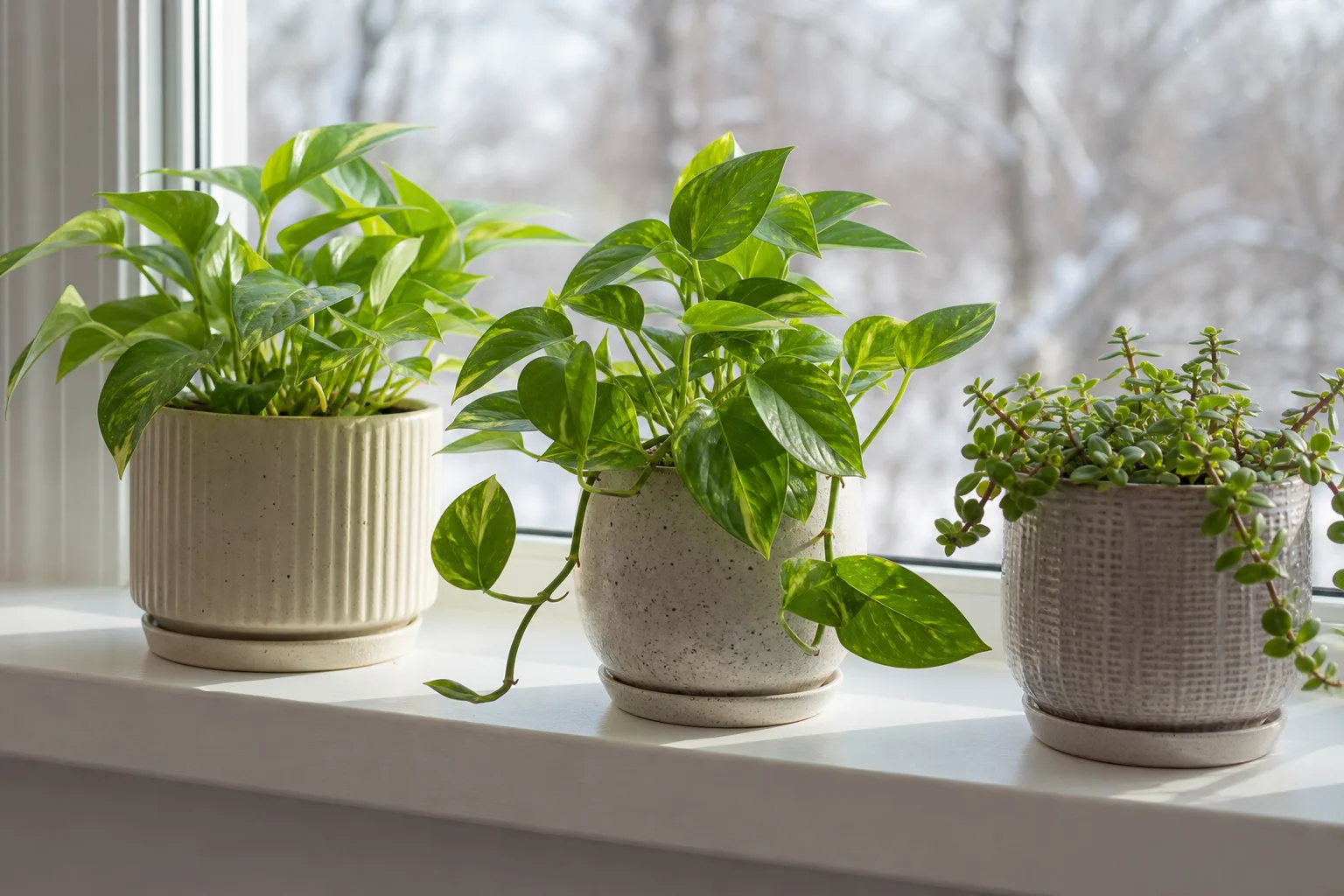
Put rosemary, thyme, sage, lavender, oregano, and bay in the brightest practical location with room for air movement. A cool room or unheated bright porch can beat a dark spot beside a radiator. Basil needs warmth and light, while Mediterranean herbs punish warm air, weak light, and wet soil.
Penn State’s indoor-herb guidance gives a useful general range of 65–70°F by day and 55–60°F at night, but individual herbs vary. Keep basil away from cold glass and drafts, and keep all herbs away from hot forced-air vents. Rotate pots so one side does not stretch toward the window.
Match watering to winter growth
Water by the root zone, not by the calendar. In a cool, bright room, a woody herb may use water slowly; in a warm room under a grow light, it may use more. Check the mix with a finger, lift the pot when you can, and water thoroughly only when the plant’s needs indicate it. Empty the saucer rather than letting the pot stand in runoff.
Bay, marjoram, oregano, sage, thyme, and rosemary should dry slightly between waterings. Basil should not be allowed to become bone dry, and mint prefers more even moisture, but neither needs a permanently saturated saucer. Penn State Extension makes the same distinction between herbs that should dry somewhat and basil, which should not dry out completely.
Humidity is not a universal cure. Forced-air heat can dry foliage, but adding moisture to wet soil can worsen root and fungal problems. Improve air circulation and keep leaves from touching cold glass; use a humidifier only if you can keep the area clean and well ventilated.
How to overwinter herbs outdoors
Outdoor overwintering is often the least stressful option for a hardy herb. Leave it in place, improve drainage, stop pushing soft new growth, and protect the root zone after the first hard freeze. The method depends on whether you want crown survival or winter harvest.
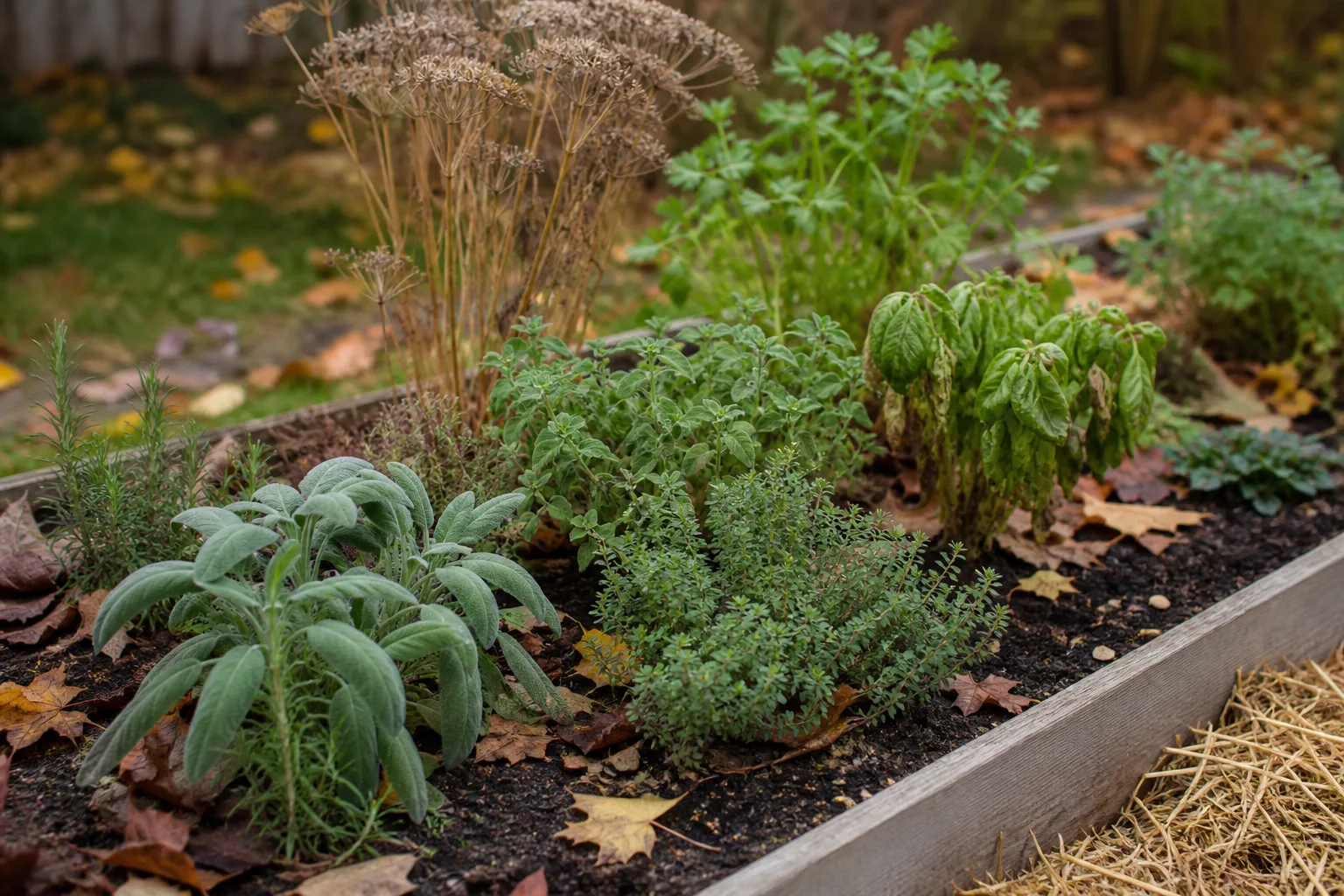
For an herb in the ground, keep it watered during a dry late summer and fall. Drought-stressed plants enter winter weaker, but winter watering should happen only when the ground is not frozen and the site can drain. Mediterranean herbs are especially vulnerable to the combination of cold and wet soil; NC State Extension recommends good drainage and identifies rosemary, thyme, and lavender as plants for which excessive moisture can reduce winter hardiness.
After the first hard freeze, apply roughly 3–6 inches of loose organic mulch such as chopped leaves, straw, or pine needles where that level of protection fits your climate. Keep bulky mulch off the crown and remove most of it as new growth begins in spring. Applying a heavy, warm layer too early can keep the plant actively growing when it should be hardening for cold.
Protect from wind as well as temperature. Evergreen boughs, a wind-sheltered site, frost cloth, a cloche, or a low tunnel can reduce drying and make harvesting possible. Savvy Gardening describes row covers, cloches, cold frames, and mini hoop tunnels as ways to extend winter harvests of hardy herbs; these structures work best when they are ventilated during mild sunny spells and secured before storms.
Container herbs need more attention than plants in the ground. Group pots near a wall, sink them into soil or mulch, or use a cold frame to buffer root temperatures. Do not seal a pot without airflow.
What to do with rosemary, bay, and lavender
These are the herbs most likely to justify a deliberate overwintering plan. They are slow to replace, valuable when mature, and often vulnerable outside the climate where they are sold as carefree perennials.
Rosemary: Bring a healthy plant indoors or into a frost-free, bright shelter when your winter regularly delivers damaging freezes. Keep the mix on the dry side without allowing the plant to dehydrate completely, and avoid warm dim rooms. Good drainage matters as much as cold protection. A small backup cutting is worthwhile because rosemary can fail from either root rot or cold injury with little warning.
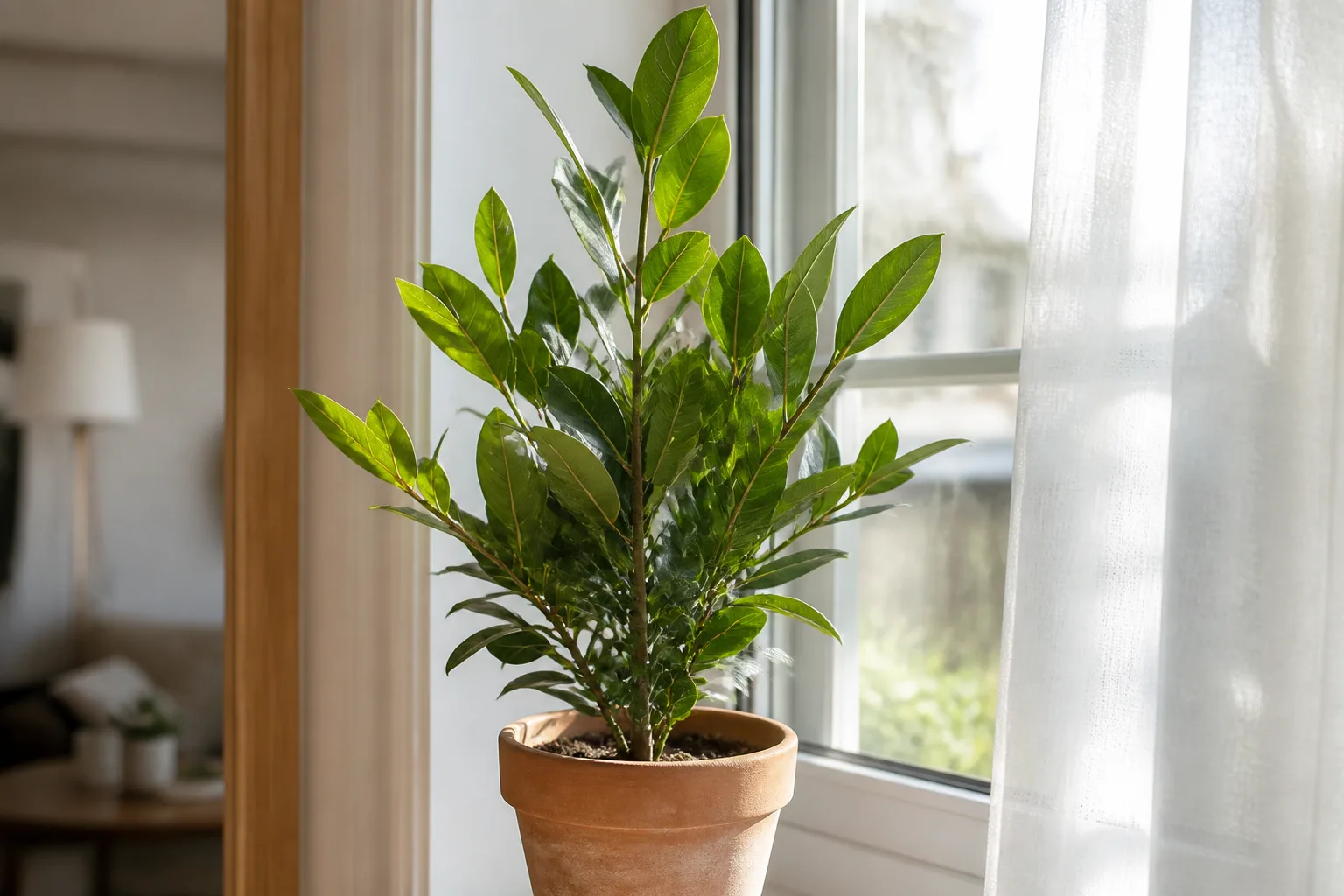
Bay laurel: Bay is a particularly good candidate for a container because the plant can be moved and the leaves are useful year-round. Give it bright light, a pot that drains, and less frequent winter watering as growth slows. Its value rises with age, so a gardener who has kept a healthy bay for several seasons may reasonably give it priority over a new basil pot.
Lavender: Lavender wants bright light, air movement, and a root zone that does not stay wet. In climates where it is marginal, protect the roots and shield the plant from drying wind, but do not wrap it into a damp, airless bundle. If you move it indoors, choose the brightest, coolest suitable spot and resist the urge to compensate for low light with frequent watering.
Sage, thyme, oregano, and marjoram sit between these choices. In many climates they are easiest outdoors with drainage and mulch; in colder or wetter sites, a small division or container in a bright shelter can provide insurance. The decision is not only about a zone number. Cultivar, exposure, soil, winter wetness, and whether the plant is in the ground all change the result.
Why basil, cilantro, dill, and parsley need different calls
Basil is possible indoors but often not economical. Penn State Extension lists basil among herbs that can be grown indoors, yet the requirements are demanding: warmth, strong light, regular harvest, and careful pest monitoring. If your basil is compact and healthy and you already have a grow light, extend it. If it is leggy in a weak window, start fresh rather than carrying a declining plant through the darkest months.
Cilantro is a cool-season annual. It can be a good fall or mild-winter crop outdoors, but it tends to bolt as days lengthen and temperatures rise. A succession of small sowings usually gives more usable leaves than one old plant moved indoors. If winter is severe, grow it from seed in a cool, bright place rather than trying to preserve a mature plant indefinitely.
Dill is quick and taprooted. It dislikes root disturbance and has little reason to occupy a precious winter window when new plants are easy to sow. Harvest seed heads for cooking or future sowing, then clear unhealthy debris. If you try an indoor pot, use a deep container and treat the project as a short extension, not a permanent specimen.
Parsley is the exception worth considering. It is a biennial and can often live through winter with light protection, especially where the ground does not freeze deeply. Keep harvesting the outer stems, but expect the plant to change as it approaches flowering in its second year. Save some leaves in peak condition rather than waiting for winter growth to provide everything.
Cuttings, seeds, or a whole plant? Choose your backup
You do not have to make the whole-plant decision alone. A backup strategy can reduce the emotional and practical cost of winter failure.
Choose the whole plant when the herb is mature, healthy, slow to replace, and you can provide light and drainage. Bay, rosemary, and a favorite lavender often fit. The whole plant gives you the greatest head start, but it also brings the largest root ball, the most pest exposure, and the highest space cost.
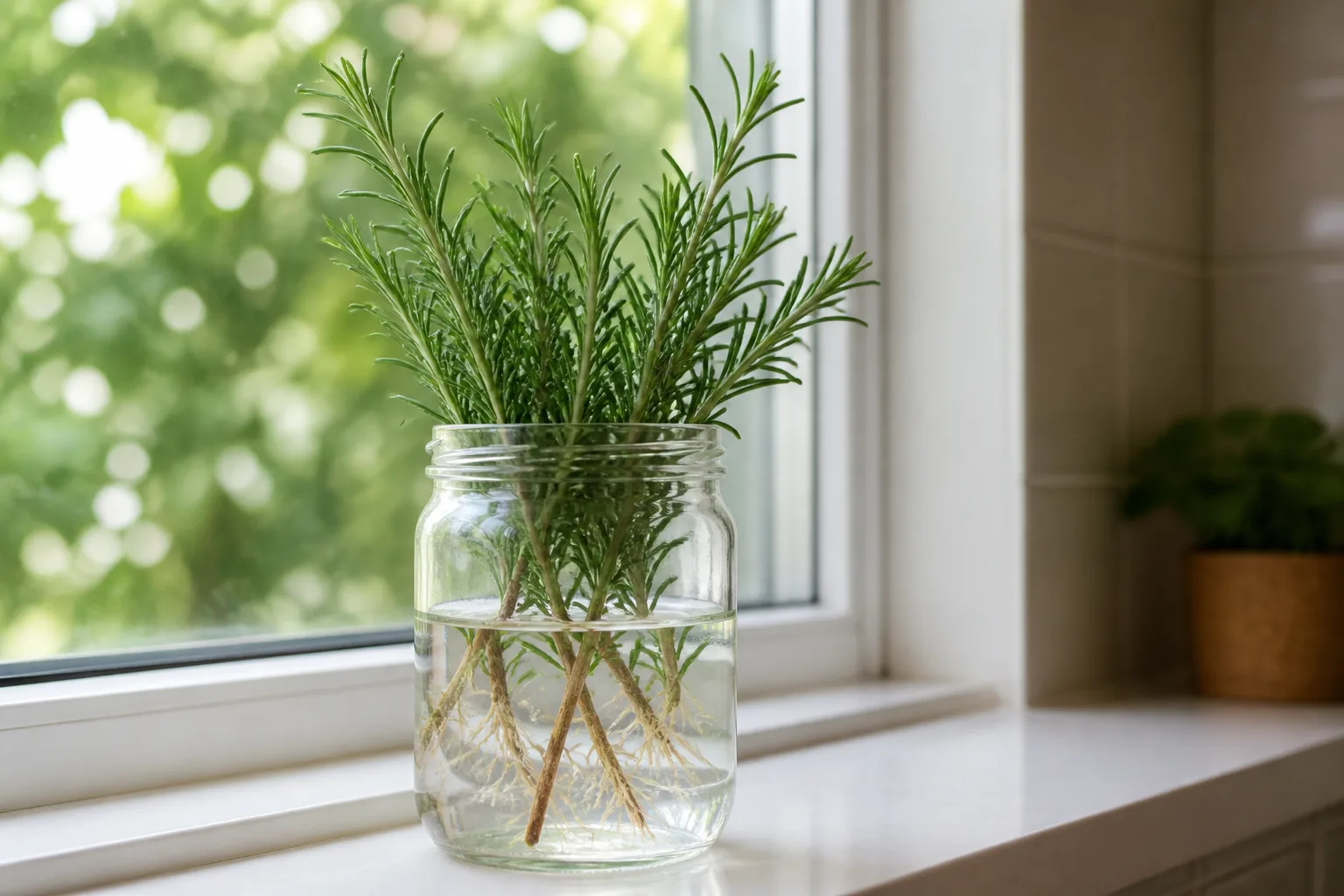
Choose cuttings when you want to preserve a favorite plant without moving a large pot. Take clean, healthy material before the plant is damaged by frost, and label each cutting. Gardenary suggests cuttings as an alternative to potting the entire outdoor herb, while noting that a cutting will spend its early weeks making roots instead of providing a winter harvest. Rosemary, mint, oregano, and basil can all be candidates depending on the variety and your propagation setup.
Choose seeds when the herb is fast, annual, or likely to look worse indoors than a fresh seedling. Basil, cilantro, and dill are the obvious examples. Starting a few extra seeds gives you a safety margin and avoids carrying pests or root disturbance across the season. Seed is not “giving up”; it is often the most efficient form of overwintering the variety’s future.
For a high-value plant, combine methods: bring in the rosemary, take a couple of clean cuttings, and save seed only if the variety comes true enough for your purpose. Redundancy helps when indoor light is uncertain or winter is unusually severe.
When to give up on an herb
Let a plant go when the evidence says you would be preserving a problem rather than a useful plant. Frost-damaged leaves alone do not always mean the roots are dead, but slimy foliage, a foul-smelling crown, blackened soft stems, or a pot that stays waterlogged are strong warnings. If the plant has a known disease, do not bring it into a house full of healthy plants.
For woody herbs that look brown after cold, use a simple scratch test on a few stems. Green tissue beneath the bark means there may be living wood; wait for new growth before doing a hard spring prune. NC State Extension uses this approach for herbs that appear dead after severe weather, while cautioning that not every brown plant will recover.
Give up on a rescue when the plant is infested throughout, the roots are mushy, the crown is collapsing, or the only remaining growth is weak and leafless. Compost clean, disease-free annual debris if your compost system can break it down, but contain or discard diseased or heavily infested material according to local guidance. The cleanest winter garden often begins with refusing to carry one bad pot through the door.
Common overwintering mistakes
The first mistake is waiting for the first frost. Emergency moves combine cold shock, wet roots, pests, and a dramatic light change. Prepare ahead so you can inspect and stage the plant.
The second is using a warm, dark room. Warmth encourages growth, but without enough light that growth becomes thin and weak. Either add a grow light or choose a slower winter goal and a cooler, brighter location.
The third is watering on the summer schedule. Indoor evaporation and winter growth are not the same as July conditions. Check the mix, empty saucers, and match water to the herb’s growth rate.
The fourth is pruning hard too late. Heavy cuts can push tender shoots just before cold. Harvest lightly in late season and save major shaping for spring once you can see what survived.
The fifth is overpotting. A container that is much larger than the root ball stays wet longer, which is especially dangerous for rosemary, lavender, thyme, and sage. Repot for a real root-space problem, not just because you are moving the plant.
The sixth is forgetting the spring transition. A plant that survived a dim indoor winter can scorch, wilt, or break in direct outdoor sun and wind. Returning it is another acclimation process, not a single trip from windowsill to patio.
A spring re-entry plan
Wait until the threat of a damaging freeze has passed for tender herbs, and watch the plant rather than moving by a fixed date. Hardy herbs can return to active outdoor growth earlier, but the pot or plant still needs a sensible temperature transition.
Start by placing indoor herbs outdoors in bright shade or filtered light for a short period. Increase light and wind exposure over several days, extending the time outside as the foliage remains firm. Penn State Extension recommends slowly exposing container herbs to more light when moving them outdoors; that gradual step is what prevents a healthy winter plant from failing in its first sunny afternoon.
Inspect the plant and root ball before planting it back into a bed. Prune dead wood only after new growth makes the boundary clear. Remove excess mulch as shoots emerge, check drainage after spring rain, and begin normal feeding only when the plant is actively growing. If a plant is still stalled after the weather improves, compare its roots, light history, and moisture before assuming it needs more fertilizer.
Use spring to improve next winter’s odds. Sink tender plants into containers that are easy to move, take cuttings before frost, sow fast annuals in succession, and record which herbs actually earned their space. The best overwintering system becomes easier each year because it is built around evidence from your own garden.
Conclusion
You do not need to overwinter every herb. Save the herbs that are slow, valuable, healthy, or difficult to replace; leave hardy perennials outside when your climate allows; and restart fast annuals when fresh seed is the better bargain.
For a mature rosemary, bay, or favorite lavender, a bright frost-free shelter and a backup cutting can be worth the trouble. For basil, cilantro, and dill, harvest well, save seed or take a small cutting if you want to experiment, and be ready to start fresh. Give every plant the conditions it actually needs—especially light, drainage, and the right watering rhythm—and overwintering becomes a deliberate garden choice instead of a winter rescue mission.