Should You Let Coneflowers Go to Seed? The Trade-Off
Should you let coneflowers go to seed? Learn when to leave heads for birds, when to deadhead, how to control volunteers, and how to save seed.
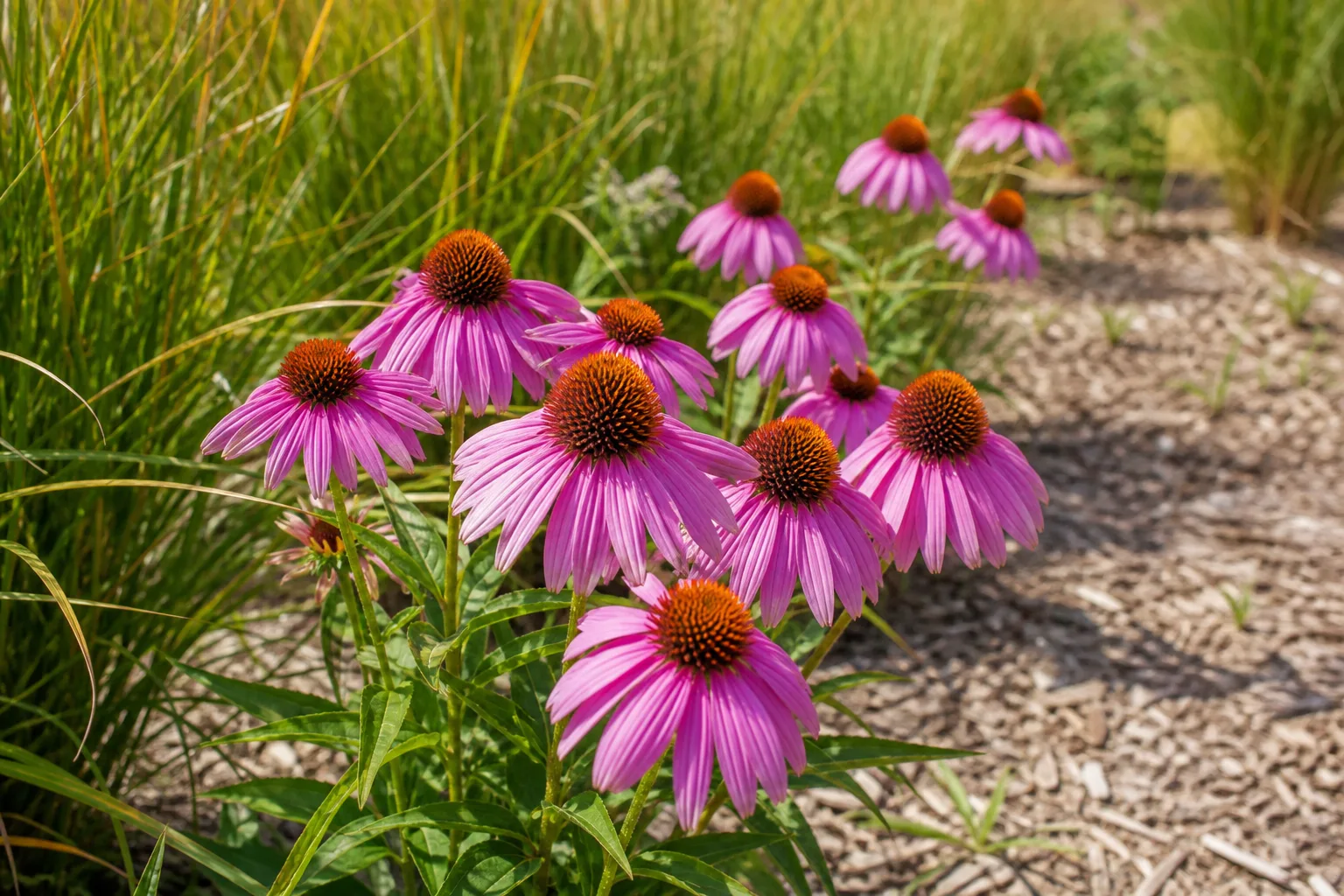
If your coneflower petals are fading and the raised central cones are turning dark, you have reached a choice—not a chore with one correct answer. Leave some seed heads if you want finches, winter structure, or volunteer plants. Remove some if you need the bed contained, want a tidier look, or see disease.
The most useful plan for many gardens is a middle course: deadhead the flowers that are blocking a path or dropping seed where you do not want it, then leave a portion of healthy heads standing. That preserves wildlife value without turning every future seedling into a surprise. It also acknowledges an important distinction: letting a coneflower go to seed may produce new plants, but it does not make the existing crown flower more heavily next year.
The short answer: leave some, not necessarily all
Purple coneflower (Echinacea purpurea) is a long-lived herbaceous perennial that can reseed in a garden. NC State Extension describes seed as one propagation option, notes that the plant can reseed itself, and identifies the seed heads as food for birds. That is a strong case for waiting before you cut everything to the ground, but it is not a command to leave every faded flower.
Use your garden’s purpose as the deciding factor. A loose native planting, meadow edge, or large border can absorb volunteers and benefit from standing seed heads. A narrow foundation bed beside a walkway may be better with only a few heads left, especially if falling seed will land in mulch that you do not want to weed next spring.
There is also a practical wildlife distinction. Birds need mature seed, not a freshly faded flower, so cutting every head immediately removes the future food source. On the other hand, a plant with distorted green growths, severe leaf spotting, or rotting stems is not a good candidate for a wildlife display; inspect it before deciding.
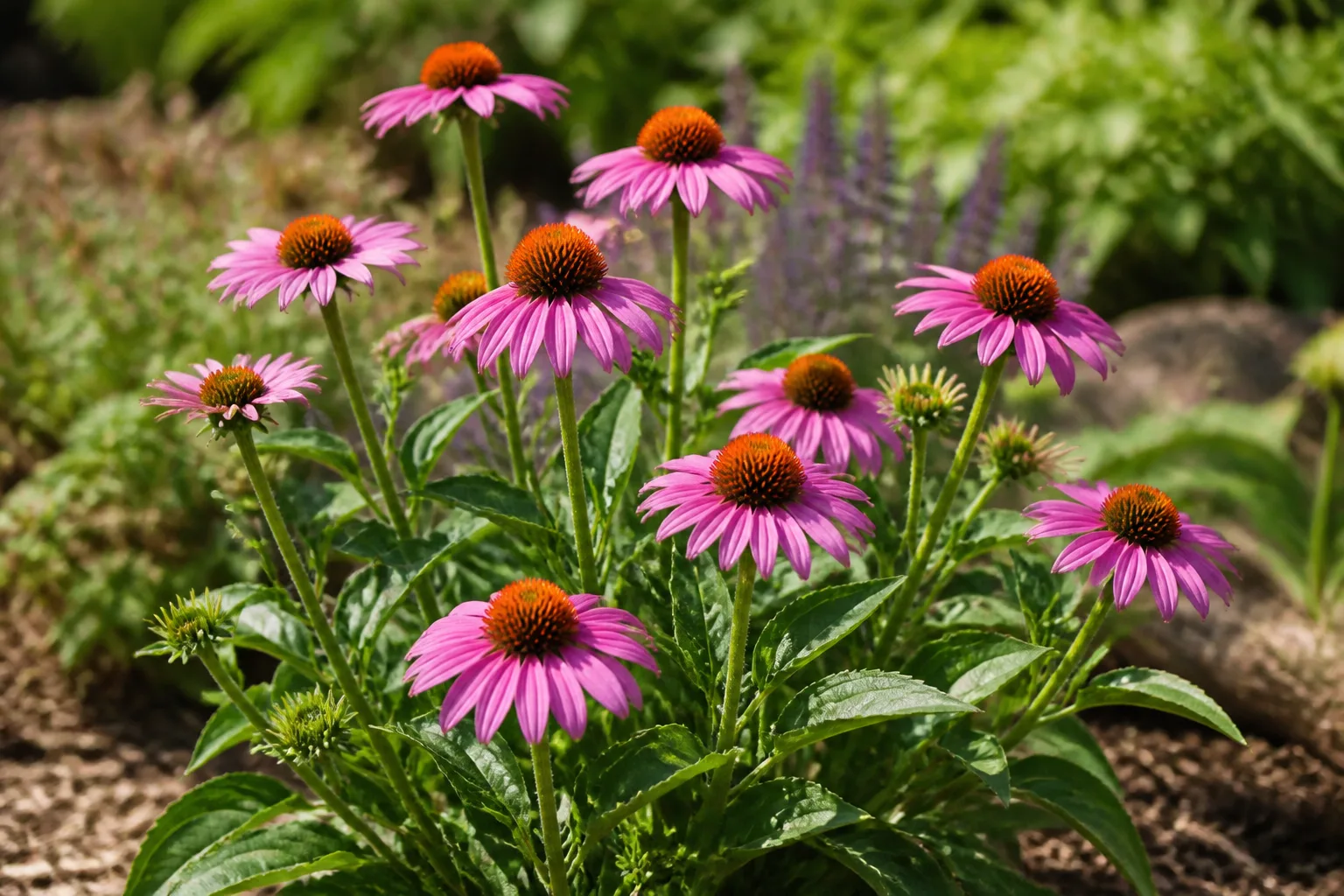
What “going to seed” looks like in a coneflower
A finished coneflower does not suddenly become a different plant. The petals fade, curl downward, and eventually drop while the central disk remains upright. As the disk dries, it becomes darker, firmer, and rough or spiky to the touch. That is the seed head people usually mean when they say they are letting coneflowers go to seed.
Do not confuse a fading bloom with a mature seed head. A flower that has only just lost its color may still be holding developing seeds. If you cut it for appearance, that is ordinary deadheading. If you wait until the cone has dried, then collect or leave it, you are allowing seed to mature.
The stem matters too. A healthy, dry seed head can stand on a rigid stalk through autumn and winter, while a soft, blackened, collapsing stem deserves inspection. Leaving seed heads is a choice about a healthy plant’s natural cycle, not a reason to preserve every piece of dead or diseased tissue.
Decide by your garden goal
Before reaching for pruners, choose the result you want. The same coneflower can be managed three different ways in the same bed because each flower head is an individual decision.
| Garden goal | Best approach | Main trade-off |
|---|---|---|
| Feed finches and add winter structure | Leave healthy seed heads standing | More volunteer seedlings and a less manicured look |
| Keep a border contained | Remove most heads after they dry; leave a few if desired | Fewer free plants and less late-season bird food |
| Encourage another flush of flowers | Deadhead early spent blooms to a leaf joint or side shoot | Those flowers will not mature into seed for birds or collection |
| Save a known seed line | Bag or collect selected dry heads before they scatter | You do the work and must label the seed |
| Protect the bed from disease spread | Remove distorted heads or infected plants | You lose those seed heads, but protect nearby plants |
This approach is more flexible than declaring that every coneflower should be deadheaded or every coneflower should stand until spring. You can leave the back half of a drift for birds, keep the front edge neat, and reserve one healthy plant for seed collection.
Let seed heads stand for birds and winter structure
The dried cones add shape after the petals disappear, especially when frost catches them or low winter light outlines their stems. Country Living’s coneflower guide points out that mature heads can feed goldfinches, cardinals, and other small songbirds through fall and winter, while NC State Extension also identifies coneflower seed heads as food for birds. Volunteers may appear when mature heads remain, but bird value and reseeding are reasons to pause before cutting—not promises that every head will produce a plant.
American goldfinches are frequent visitors to mature coneflowers, but bird activity varies with region, weather, nearby cover, and what other food is available. Leaving a cone does not guarantee a flock. It does give birds another natural food source while keeping the garden more structurally interesting than a bed cut flat in October.
If the stems remain upright, leave them where they do not interfere with paths or snow removal. You can group the standing heads toward the rear of a border and cut only the stems that flop across neighboring plants. Wildlife gardening works best when it is designed, not when “wildlife value” becomes an excuse for ignoring a problem spot.
Remove some heads to control volunteers
Coneflower seedlings are easiest to manage when you decide where you want them before the seed drops. Leave heads over a bare or lightly mulched patch where a few seedlings would fill a gap. Remove heads that hang over gravel, a lawn edge, a stair, a tightly spaced perennial clump, or a neighbor’s side of a shared bed.
You do not have to remove the entire plant. Snip the individual stem below the seed head, collect the cut head in a paper bag if you want to save it, and pull unwanted seedlings while they are small in spring. A volunteer is not a failure; it is simply a plant that has germinated outside your chosen layout.
Heavy mulch can also reduce the number of successful seedlings, while exposed soil or thin leaf cover gives seed a better chance. If you want reseeding but not a thicket, leave a small number of heads and thin the seedlings rather than scattering extra seed across the whole bed.
Deadhead only partway for more flowers
Deadheading has a different job from fall cleanup. Removing an early spent flower can keep the plant looking fresh and may encourage additional side shoots or later flowers, but it also removes that flower’s chance to mature seed. Country Living’s comparison notes that many coneflowers continue blooming without constant deadheading, while Tiny Garden Habit’s practical guide recommends leaving some dry cones when you want bird food or seed. That makes selective deadheading more useful than treating every fading flower the same way.
That makes selective deadheading useful. Cut the first tired flowers while the plant is still producing new buds, then stop cutting later in the season so at least some cones can mature. Do not promise yourself a dramatic second flush: light, moisture, cultivar, age, and the length of your growing season all affect what happens.
Does leaving seed heads create more blooms next year?
No. Letting a coneflower form seed does not directly make the original crown produce more flowers the following summer. Seed production and bloom production are related parts of the same life cycle, but the old plant’s future performance depends more on its health, light, drainage, winter survival, and cultivar than on whether you removed last autumn’s cones.
What leaving seed heads can do is create additional plants. Those seedlings usually spend their first season building roots and foliage, then flower later, so a bed may look no fuller next spring even when germination was successful. Treat volunteer timing as variable rather than assuming every seedling will flower on one schedule.
If the parent plant is declining, letting it seed is sensible insurance, but it is not a substitute for diagnosing the decline. A crowded, shaded, waterlogged, or diseased plant will not be repaired by leaving its seed head in place. Think of reseeding as a way to create replacements, not a bloom-boosting treatment.
Does coneflower reseed reliably?
Coneflower can reseed, but “can” is not the same as “will fill the bed.” Seeds must mature, drop or be placed where they contact suitable soil, receive enough moisture to germinate, and survive competition from mulch, weeds, slugs, drought, and later disturbance. A perfectly healthy plant may produce no visible seedlings if the soil surface is covered or if birds remove much of the seed.
The easiest conditions for volunteers are a sunny, open edge with well-drained soil and a little exposed ground. Seed that lands in a thick layer of wood chips may dry out or fail to reach soil. Seed that falls into a wet pocket may rot. If you want to encourage self-sowing, loosen a few small patches of soil in fall rather than turning the entire bed over.
Species and cultivar also matter. Purple coneflower is generally more dependable from seed than some highly bred selections, and seedlings may vary in color, height, branching, and flower form. A volunteer is worth evaluating as a new plant, but it is not automatically a replacement for the labeled cultivar you bought.
What changes with named hybrids and colored cultivars?
A named coneflower such as a double, orange, yellow, or compact selection may be propagated and marketed for traits that do not reliably pass to seedlings. Even when a hybrid produces viable seed, pollen from another coneflower nearby can add more variation. The result may be attractive, but it may not look like the parent.
Garden Gate notes that seedlings from coneflower varieties eventually tend toward pink-purple flowers. Treat that as a practical warning rather than a promise about every plant: save seed for experimentation and more plants, not for an exact clone of a named hybrid. If you want the same unusual color or double form, buy another plant or use a propagation method appropriate to that selection.
Label any seed you collect with the parent plant, flower color, location, and date. A label saying “coneflower” is less useful after you have several colors in the same border. If the seedlings are not true to type, you will still know what cross or group they came from.
A practical late-season routine
You can finish this decision in one walk around the bed. Work on a dry day so you can see the stems and cones clearly, and use clean, sharp snips for any cuts.
- Inspect before cutting. Look for healthy dry cones versus distorted green flower growth, spreading leaf spots, powdery residue, or blackened stems.
- Choose the standing section. Leave healthy heads where birds can reach them and where seedlings would be welcome. Mark or remember the plants you want to collect from.
- Deadhead the boundary. Remove heads that are in the way, likely to scatter into a problem area, or no longer fit the bed’s design.
- Collect before heavy weather. If you want seed, take dry heads before wind and rain scatter them, then finish drying them indoors.
- Delay the hard cutback. Keep healthy stems standing through the useful winter period, then clean up at the appropriate spring window.
Check plants for disease before you leave heads
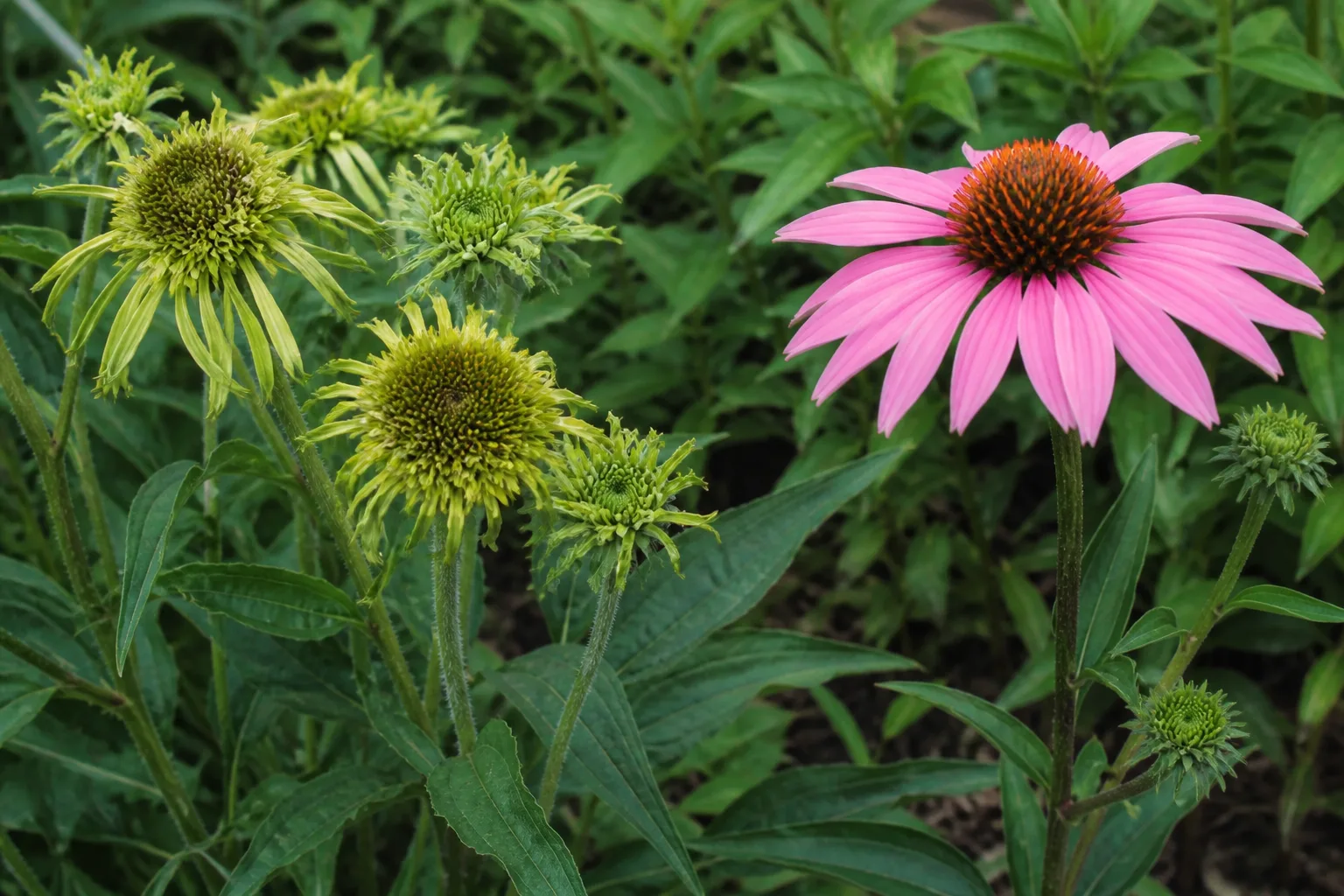
The most important exception is a plant that is not merely finished flowering. Aster yellows can cause green, leafy growths to emerge from the cone, twisted leaves, and stunted or bushy growth. Leafhoppers spread the disease from plant to plant. Do not treat clearly abnormal material as a normal seed-saving opportunity; Tiny Garden Habit’s practical guidance likewise recommends removing obviously diseased material rather than leaving it in the bed.
Coneflower rosette mites can also distort the central cone, while leaf spots, powdery mildew, and stem rot can make foliage or stems deteriorate. A distorted cone is not automatically aster yellows, so avoid diagnosing from one odd flower alone. Look at the whole plant and compare several flowers; if symptoms are widespread or clearly abnormal, remove the affected material and seek a local extension diagnosis before saving seed.
Leave a clean section standing
A “leave some” plan works best when the standing stems are intentionally selected. Choose vigorous plants with normal flowers, healthy foliage, and good spacing. Leave several heads rather than a single token cone if your goal is bird food or future seedlings, but do not preserve every head just because it is already dry.
If a bed is small, reserve one corner for seed heads and keep the front edge deadheaded. This simple visual boundary gives the garden a finished shape while preserving the ecological function you wanted. It also makes spring cleanup easier because you know which stems were deliberately left.
Cut problem stems and remove debris
Cut diseased or collapsing stems at the base or below the affected tissue, then remove them from the bed. Avoid shaking questionable seed heads over healthy plants. Clean pruners between visibly diseased plants, and do not put heavily diseased material into home compost unless a local authority specifically confirms that your composting system reaches conditions appropriate for it.
For ordinary healthy cleanup, leave a little plant litter in place if it does not smother crowns or harbor a known problem. The goal is not sterile soil; it is to remove material that is actively spreading disease or blocking air and access. Good spacing and base watering also reduce the damp foliage conditions that make leaf spots and mildew more troublesome.
How to collect coneflower seeds
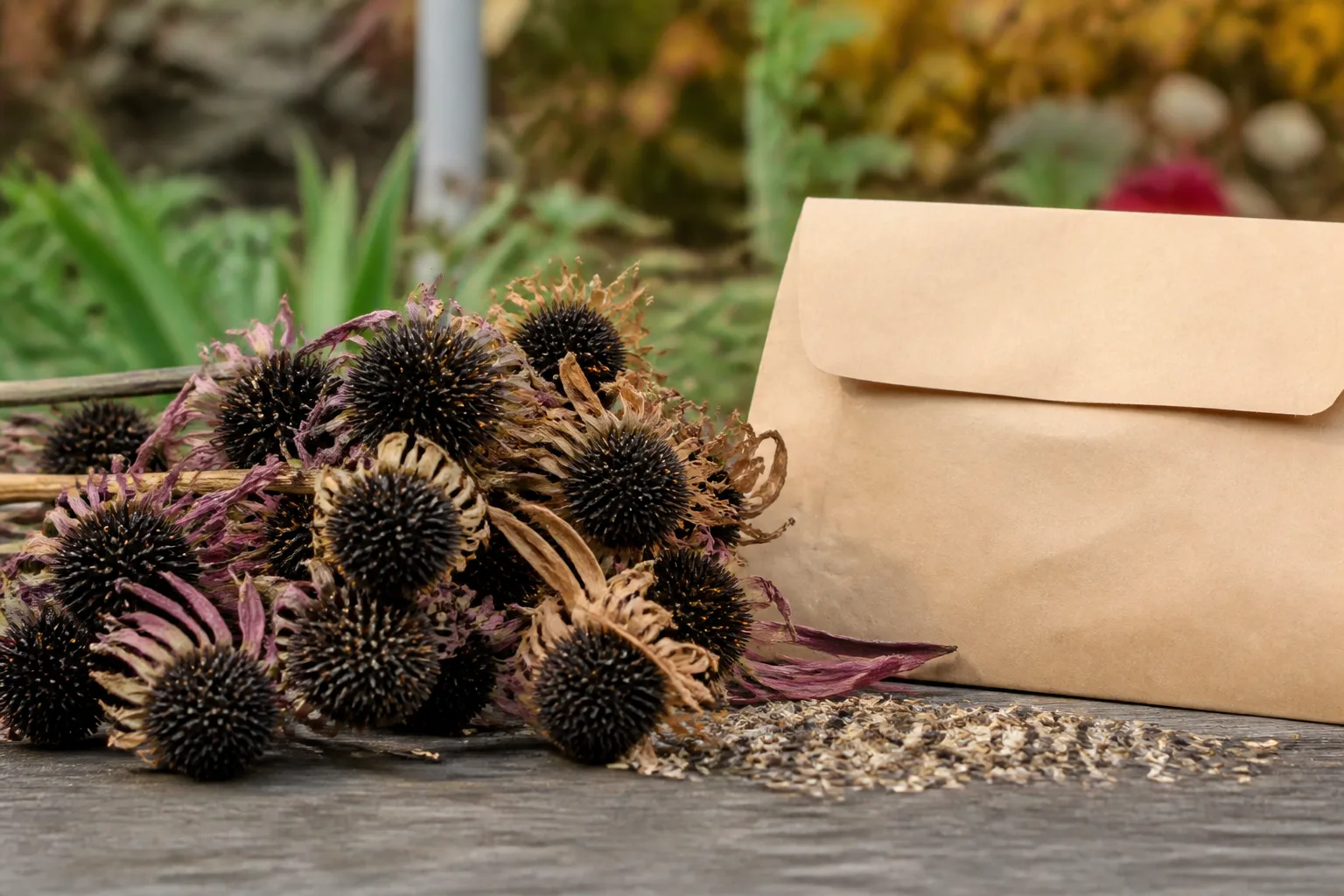
Collect on a dry day once the petals are gone and the cone feels dry and firm. The seed head should look mature rather than freshly faded. Wear gloves if the stiff bristles bother your hands, and use a paper bag or shallow tray so the small seeds do not bounce away.
- Cut the stem below the mature head.
- Place several heads in a labeled paper bag or on a tray for a few days of air-drying.
- Rub or shake the dry cones gently to release the seeds and loose chaff.
- Pick out large pieces of stem and store the remaining seed in a labeled paper envelope.
- Keep the envelope cool, dry, and away from direct sun until sowing.
Do not collect from a plant with suspected aster yellows or a severe, unexplained distortion. Also remember that seed collected from a hybrid may produce a range of offspring. If you want dependable flowers in a particular color, keep the seed as a fun experiment and purchase a true-to-type plant for the main display.
How to sow collected seed outdoors
Fall is the simplest time to let nature handle the calendar. Scatter or press the seeds onto a prepared patch of soil after the seed heads mature, then cover them only lightly. Coneflower seed should not be buried deeply; the point is to keep it in contact with soil while avoiding a heavy blanket that blocks emergence.
Choose a location with enough sun for mature plants and enough room for a clump. Water the patch once if the soil is dry, then monitor it during unusually dry fall weather. Do not keep it soggy. Natural winter exposure may help some Echinacea types, but the exact need varies by species and seed source.
Spring sowing can work too, especially for common purple coneflower or purchased seed whose packet gives specific instructions. If you are sowing in a bed with thick mulch, move mulch aside to expose small patches of soil. Mark the area so you do not mistake slow-growing seedlings for weeds.
How to start coneflower seed indoors
Indoor sowing gives you more control over location and losses, but it also creates more work. Use moist—not saturated—seed-starting mix, shallow sowing, light, and patience. A PubMed-indexed study of three Echinacea species found that four weeks of cold-moist stratification under light improved both germination percentage and germination rate; that makes chilling a reasonable option when the packet calls for it or a seed lot is reluctant, not an automatic requirement for every packet.
Fill clean cells or small pots with pre-moistened seed-starting mix. Place a few seeds on the surface, press them in, and cover them with only about 1/8 to 1/4 inch of mix. Keep the surface evenly moist, provide bright light, and use airflow once seedlings emerge so stems do not sit in saturated conditions overnight.
Read the packet before deciding that stratification is required. Different Echinacea species can have different germination behavior, and a named cultivar may come with instructions that are more useful than a general rule. A short cold-moist treatment can improve or synchronize germination for some seed lots, but it is not automatically necessary for common purple coneflower.
When seedlings have several true leaves and the outdoor conditions are suitable, harden them off gradually instead of moving them straight from a protected room into wind and full sun. Transplant into well-drained soil, water consistently while roots establish, and expect a first season focused more on roots and leaves than on a full flower show.
What to do with stems in winter and spring
Healthy coneflower stems can provide more than seed. NC State Extension notes that native bees use dead, hollow stems for nesting and encourages gardeners to cut dead stems to roughly 12 to 24 inches, leaving them standing until they naturally break down. That is a reason to avoid an aggressive fall haircut when the bed is healthy.
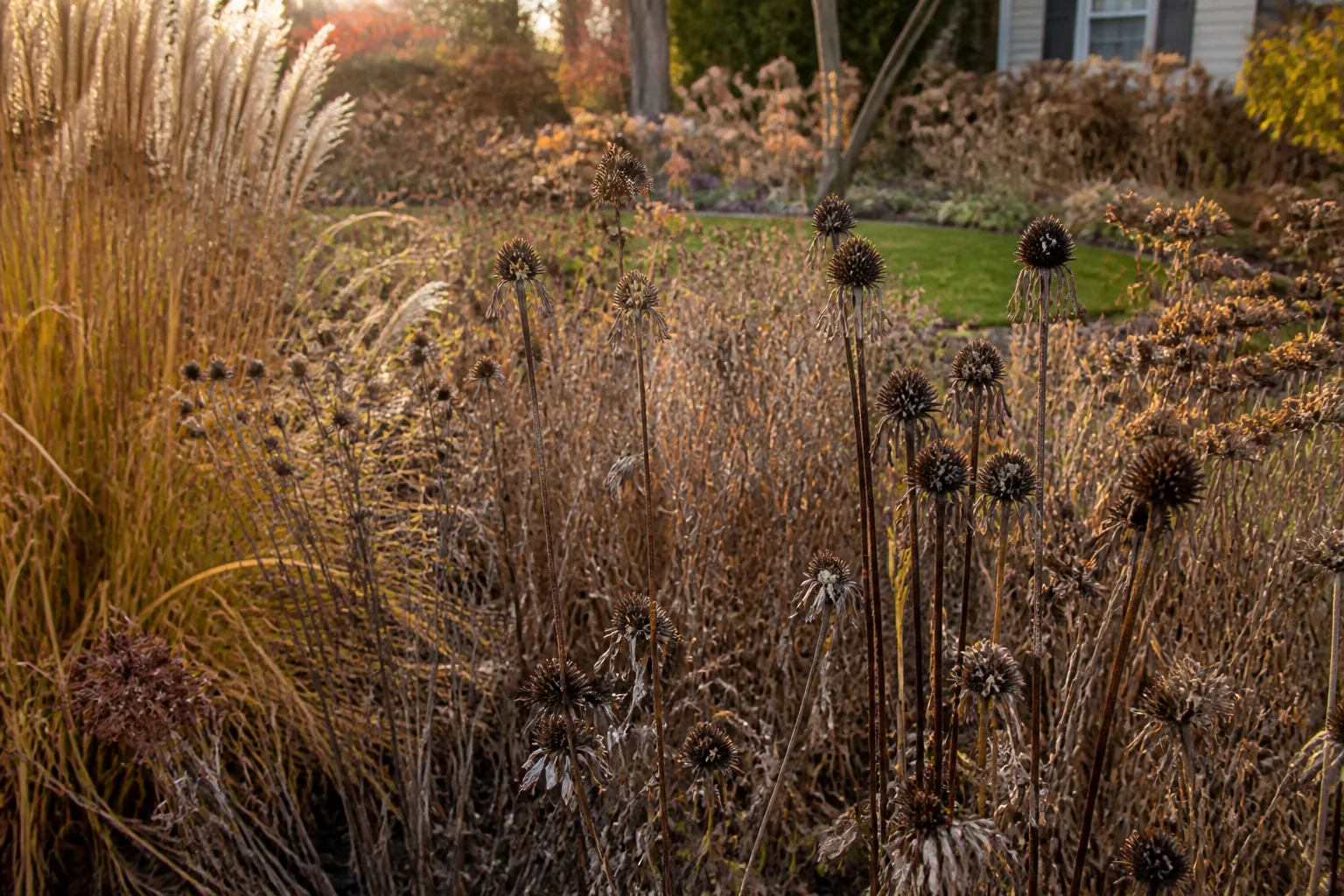
Leave stems standing where they will not become a hazard or interfere with winter work. In late winter or early spring, cut remaining stems as new basal growth begins or when the old stems are clearly breaking down. Lay clean, dry cut stems in a discreet part of the garden if you want to keep habitat available rather than removing every hollow stalk immediately.
This timing does not override disease control. If a plant was clearly infected, remove it according to local extension guidance rather than leaving it for bees or birds. Healthy habitat and sanitary cleanup are not opposites; they apply to different plant material.
Common mistakes that undermine reseeding
Cutting before seeds mature is the most obvious mistake. A brown-looking petal is not proof that the cone contains mature, viable seed, so wait for the central disk to dry before collecting.
Burying seed too deeply is another common failure. Press seed into the soil or add only a light covering. Deep planting can leave tiny seedlings without enough energy to reach the surface.
Expecting every seedling to match the parent leads to disappointment, particularly with unusual colors and double flowers. Label what you collect, treat volunteers as variable, and keep named plants separate if exact appearance matters.
Assuming reseeding replaces care is also a mistake. New plants need suitable light, drainage, moisture during establishment, and room to mature. If the parent is in deep shade or wet clay, its seedlings will face the same site problem.
Leaving diseased heads for wildlife risks spreading the wrong kind of legacy. Aster yellows, severe leaf problems, rosette-mite distortion, and rotting tissue deserve a closer look and often removal, not automatic preservation.
Deadheading every bloom and then expecting birds creates a goal mismatch. If birds are part of the plan, stop cutting early enough for a few cones to mature. If containment is the priority, remove more heads and accept that the bed will offer less seed.
Conclusion
Should you let coneflowers go to seed? Usually, leave some healthy heads—but choose how many based on your garden goal. Leave them for finches, winter shape, stem-nesting bees, and volunteer seedlings. Cut them when you need to contain the bed, keep a path clear, collect seed before it scatters, or remove questionable plant material.
The best routine is selective rather than absolute: inspect the plant, preserve a clean section, deadhead the boundary, collect mature heads you want to sow, and delay the final cleanup until spring. That gives your coneflowers room to complete their cycle without handing the entire garden over to chance.



