Should You Cut Hostas Back in Fall? Best Timing
Should you cut hostas in fall? Learn the leaf-stage rule, how low to trim, when spring is better, and what to do with mulch, pests, and disease.
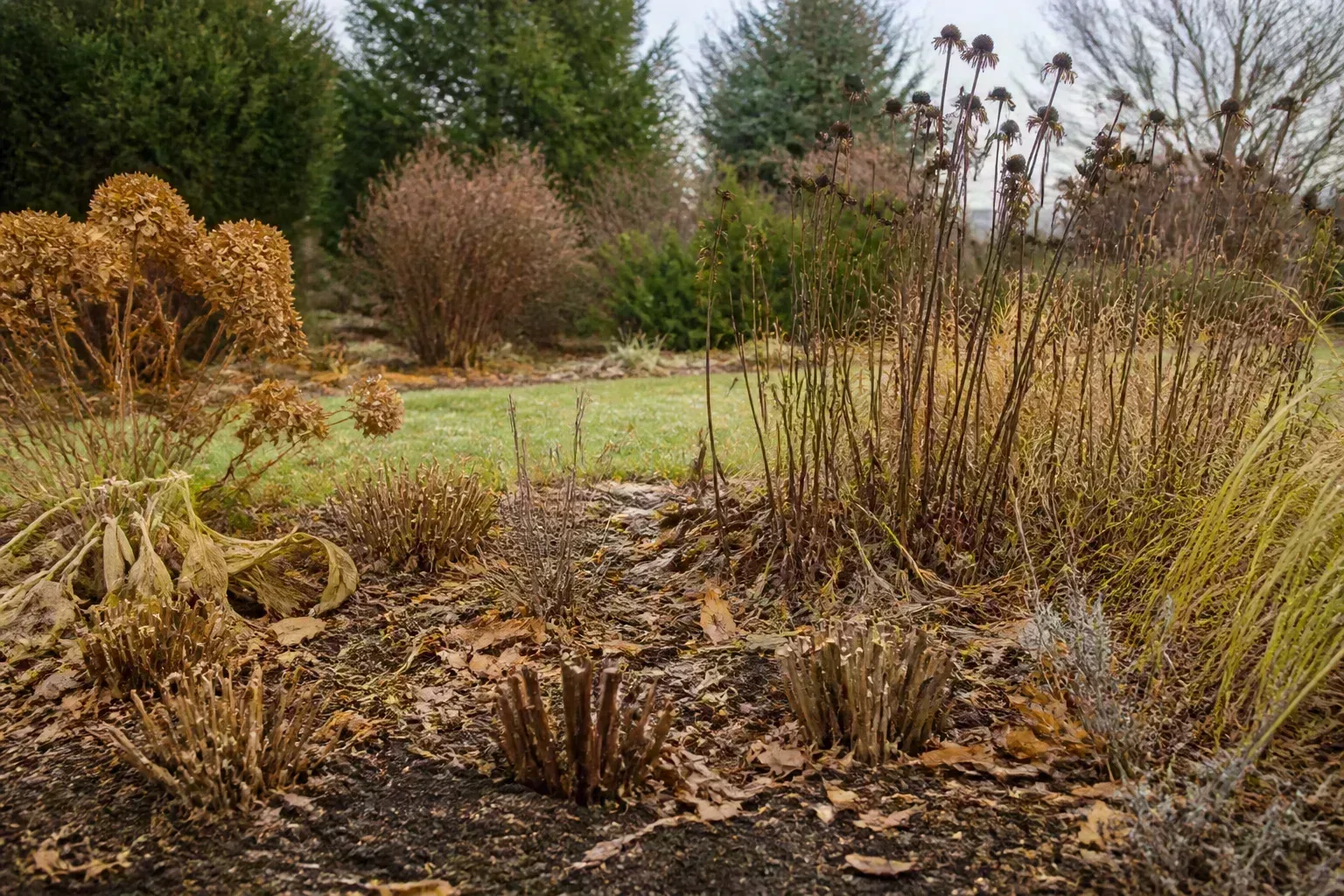
If you are wondering whether you should cut hostas back in fall, the best answer is yes, if the foliage has naturally died back and you want a clean, lower-risk bed; no, if the leaves are still mostly green and the plant is still working. Hostas do not need a haircut on a particular calendar date, and a healthy clump will usually tolerate either fall or early-spring cleanup.
Use the plant as your timer. Wait until the leaves have been collapsed by a killing freeze or have turned fully yellow, brown, and soft, then remove the dead foliage before it mats over the crown. If you prefer to leave the bed standing for winter cover and wildlife habitat, spring cleanup is a sound alternative—provided you clear the old leaves before new shoots emerge.
The short answer: wait for dormancy, not a date
For most established hostas, the ideal fall-pruning window opens after the foliage is no longer contributing useful green growth. In many gardens that is after the first hard freeze, but the date might be October in one location and November or December in another. A mild autumn can keep a thick-leaved cultivar upright and green long after a thin-leaved one has collapsed.
The practical test is simple: if most of the clump is still green and flexible, wait. If the leaves are limp, yellow-to-brown, water-soaked, or pulled down around the crown, the plant is entering dormancy and cleanup will not remove much remaining energy. NC State Extension notes that hosta foliage may die back when temperatures reach about 28°F, but exposure, cultivar, and weather pattern affect what you see in an individual bed (NC State Extension Plant Toolbox).
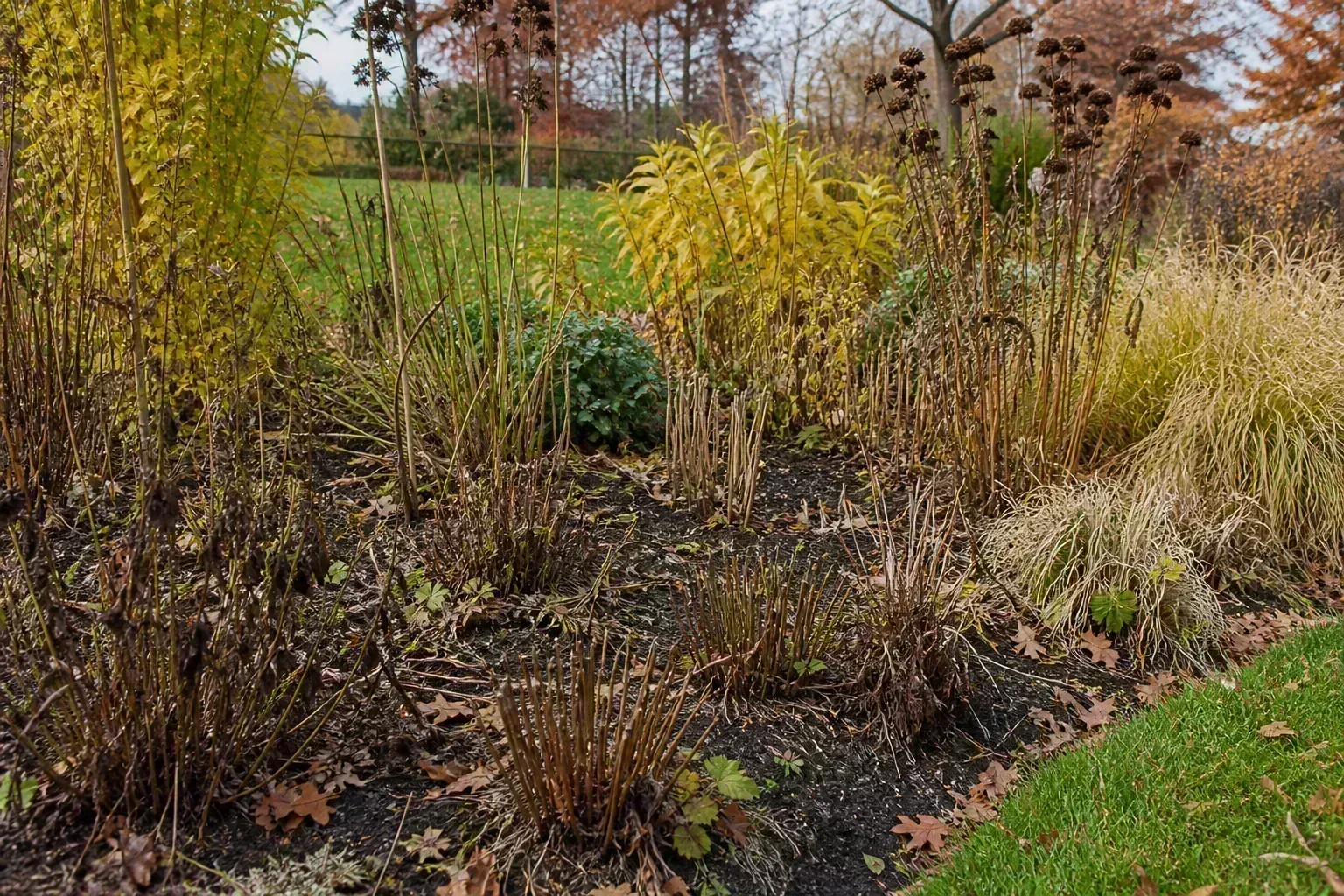
Fall cutback is a cleanup window for dormant perennials, not a reason to remove green foliage early.
There are two good reasons to prune at that point. Cutting removes a wet pile that can shelter pests and make the crown harder to inspect, and it makes spring maintenance easier. There are also two good reasons to wait: standing foliage can provide winter cover, and gardeners who favor a wildlife-friendly cleanup may prefer to postpone disturbance until spring.
Why hosta timing follows the leaves
Hostas are herbaceous, rhizomatous perennials. The visible leaves disappear for winter, while the underground crown and rhizomes carry the plant through dormancy and produce new shoots in spring. That seasonal cycle is why fall pruning is cleanup, not a way to shape the plant or force more leaves before winter.
Green foliage is still feeding the crown
Green hosta leaves are the plant’s solar panels. While they are green, they are still photosynthesizing and helping move carbohydrates into the crown and rhizomes for the next growth cycle. Removing a few damaged leaves is sometimes justified, but cutting an entire clump down just because the calendar says “fall” throws away healthy working tissue.
This is the main reason to resist an early September haircut in a warm climate or after a long summer. A hosta that looks tired is not necessarily dormant; it may be reacting to heat, drought, sun exposure, slugs, deer, or a disease that needs a more specific response. Savvy Gardening’s seasonal pruning guidance likewise recommends waiting until the leaves are completely yellow or brown for a full fall cutback, rather than removing foliage that still has meaningful green tissue (Savvy Gardening).
Do not read “wait” as “ignore problems.” Remove an individual leaf that is fully dead, badly diseased, or broken at any time. The important distinction is selective maintenance during growth versus whole-clump cutback after dormancy.
A light frost is not the same as a killing freeze
The first cold night is a useful signal, but it is not always the finish line. A light frost may silver the bed or mark the outer edges of leaves while the plant remains firm and green. Thick hosta leaves can survive several brief frosts before a harder freeze finally collapses the clump.
Look at the whole plant rather than reacting to one cold morning. When the leaves have folded down, lost their green color, and feel soft or papery, the plant has done most of its seasonal work. BHG’s fall hosta guidance makes the same distinction: several light frosts may pass before a hard freeze kills the foliage, especially on thicker-leaved hostas (BHG).
If an early hard freeze catches the bed while some leaves are still green, you do not need to panic or strip the remaining color immediately. Wait for the foliage to finish collapsing unless diseased debris or a safety issue makes prompt cleanup necessary. One imperfect timing decision is rarely fatal to an established hosta; repeated early removal is the habit more likely to reduce vigor.
Fall or spring? Choose by your garden’s priorities
There is no universal winner between fall and spring. Both seasons can work because the plant is dormant; the better choice depends on disease history, pest pressure, climate, habitat goals, and whether you can reach the bed before spring shoots appear.
| Choose fall cleanup when… | Choose spring cleanup when… |
|---|---|
| The foliage is fully dead and you want the crown visible. | The foliage is healthy and you want winter structure or insect cover. |
| The bed has recurring foliar disease or heavy, wet debris. | Your climate has harsh freeze-thaw cycles and the bed is exposed. |
| Slugs, snails, mice, or voles are a recurring concern. | You can reliably clean the bed before shoots emerge. |
| You need to weed, mulch, or inspect the planting area now. | You prefer less fall disturbance and a softer winter garden. |
Cut in fall for sanitation and a clear bed
Fall is the more practical choice when the clump has a known disease problem, when dead leaves become a soggy mat, or when you need to work around the plant before winter. Removing collapsed foliage also lets you inspect the crown, see volunteer weeds, and place mulch accurately without covering hidden stems.
The sanitation benefit has limits. Fall cutback reduces old plant debris; it does not sterilize the soil, eliminate slug eggs, or cure a virus. It is one part of a broader cleanup routine that includes removing suspect leaves, cleaning tools between plants, correcting drainage, and choosing a better long-term response to browsing or disease.
It is also reasonable to choose fall cleanup for a high-pest bed. A dense layer of wet hosta leaves can give slugs and other small animals more places to hide. The Missouri Botanical Garden describes slug and snail damage as smooth, irregular holes and slime trails, while deer and rabbits leave different browsing patterns; identification matters before you decide that cutting leaves is the solution (Missouri Botanical Garden: Hosta Problems).
Leave foliage for winter cover and spring habitat
Spring cleanup is a good option for a healthy, well-drained clump in a garden where winter cover matters. Dead foliage can soften the look of a bed, offer shelter for overwintering insects, and add a small layer of protection around the crown. This is especially appealing if your fall cleanup already removes diseased material and the remaining hosta debris is dry rather than a heavy, waterlogged mat.
The trade-off is timing. Old leaves can flatten over the crown and hide emerging shoots, so spring cleanup must happen before the pointed hosta tips begin pushing through. Raking aggressively after shoots appear can snap them; lift or hand-pull the loose, dry leaves instead. The RHS lists late-autumn cleanup as a normal hosta task but also notes that hostas remain dormant until mid-spring and can have new leaves damaged by frost (RHS hosta growing guide).
In a very cold or exposed bed, leaving the foliage may feel safer, but do not treat old leaves as a required winter blanket. A healthy crown, good drainage, and appropriate mulch placement matter more than preserving a particular number of inches of dead foliage. If the leaves are diseased, slimy, or packed against the crown, sanitation takes priority over habitat value.
A simple decision rule for your hostas
Use this four-question check when you are standing in front of the bed:
- Is the foliage mostly green? Leave the clump intact and solve the cause of any damage instead of cutting it down.
- Has a hard freeze collapsed the leaves, or are they fully yellow, brown, and soft? Either cut them in fall or leave them for a planned spring cleanup.
- Did the plant have confirmed disease or a heavy, wet debris mat? Cut after natural dieback and remove the material from the bed; do not casually compost it.
- Will you be able to clean before spring shoots emerge? If not, fall is the safer scheduling choice.
When the answer is mixed—some leaves green, some collapsed—do not force an all-or-nothing decision. Remove only the leaves that are genuinely dead or diseased, then return after the next hard freeze. This staged approach preserves useful green tissue while preventing one wet section from smothering the crown.
How to cut hostas back without damaging the crown
Once the plant is dormant, the job is quick. The goal is to remove leaf stalks and old flower stems without slicing into the crown, packing debris around it, or carrying a disease from one clump to another.
Inspect the plant and prepare clean tools
Choose bypass pruners for a small clump or a few precise cuts. Long-handled shears can save time when you have a large bed, but they make it easier to cut blindly into neighboring perennials or hidden hosta crowns. Whichever tool you use, sharpen it first; a clean blade makes a controlled cut and does not crush the soft stem base.
Before moving to the next plant, brush off soil and wipe the blades with an alcohol wipe or an appropriate disinfectant. This matters most when one clump has unusual mottling, puckering, spreading leaf spots, or a soft crown. Epic Gardening recommends sharp, clean blades and notes that a rubbing-alcohol treatment helps minimize pathogen transfer between plants (Epic Gardening).
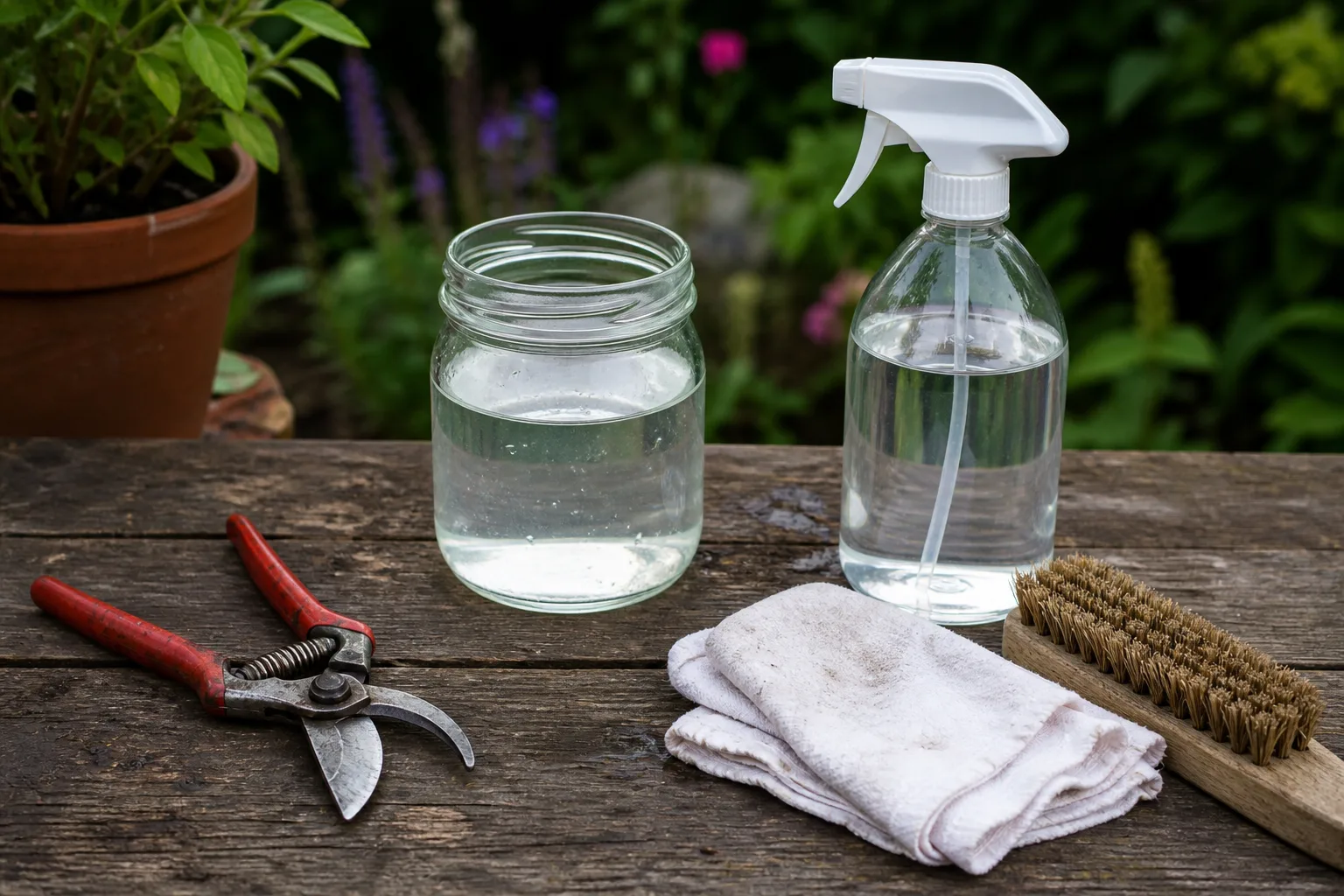
A clean, sharp bypass pruner makes low hosta cuts easier to control and safer between clumps.
Take a moment to look for the crown. Hosta leaves emerge in a clump from a low central growing point; the crown is not a woody trunk that needs to be exposed by digging. Do not pull hard on partly attached stems, especially if the soil is wet. A snip is less disruptive than tearing tissue away from the crown.
Make low, controlled cuts
Gather a manageable handful of limp stalks and cut them to roughly 1–2 inches above the soil line. That short margin gives you a visible marker in spring and leaves room for a clean cut without nicking the crown. If you can clearly see the base, cut closer, but stop before the blade enters the crown or scrapes a new bud.
Work around the clump instead of making one deep, blind chop. Flower stalks can be removed at the same time if they are spent, and there is no benefit to leaving tall brown stems solely because they once held flowers. The RHS says hostas require no regular pruning, but dead foliage and old flower stalks can be cut down at the end of the season when they naturally die back (RHS hosta growing guide).
If a few leaves are still green, leave them unless they are clearly diseased or broken. Those leaves are still contributing energy. A dormant hosta should look short and tidy afterward, but “short and tidy” does not mean shaving into the crown or removing living tissue for cosmetic perfection.
Clear debris without burying the crown
Collect the cut leaves and old stalks from the bed, then check under the clump for wet material that has already fallen. Healthy, dry foliage can be composted if your compost pile reaches conditions appropriate for garden debris. Suspect diseased leaves should be bagged or disposed of according to local guidance rather than added to a cool home compost pile where the problem may persist.
Finish by leaving the crown visible and the surrounding soil open enough to drain. Do not heap chopped leaves or fresh compost directly over the crown. The point of cleanup is to reduce a damp, hidden pocket—not to replace one with a dense blanket of organic matter.
Summer damage needs selective pruning, not a full haircut
Hosta pruning is not only a fall job. During summer, remove individual leaves that are fully dead, badly torn, or confirmed diseased, but keep as much healthy green foliage as possible. Cut the affected stalk at its base, disinfect the blade if disease is possible, and correct the stress that caused the damage.
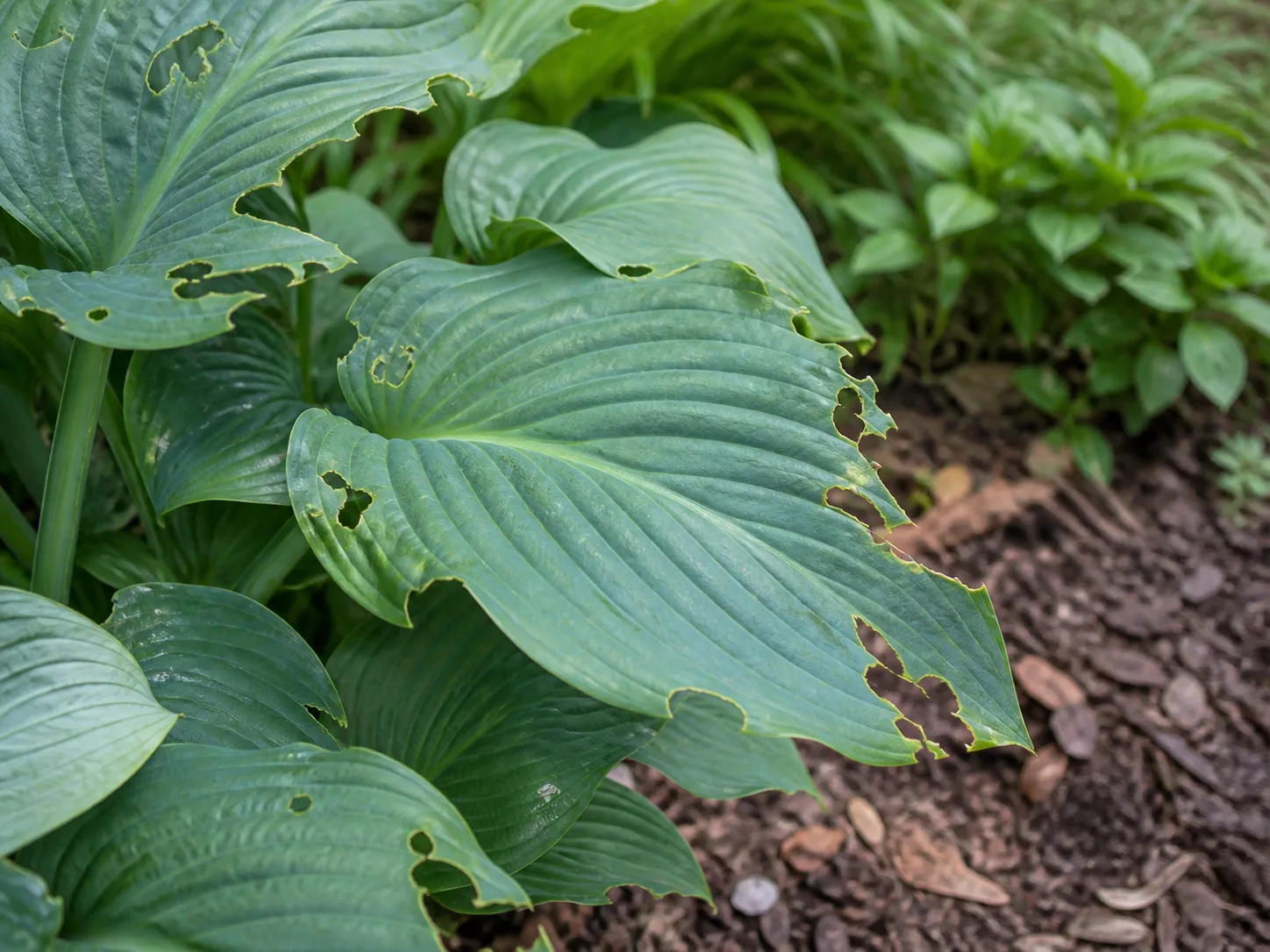
Chewed or ragged leaves call for diagnosis and selective removal, not an automatic whole-clump cutback.
Wilted leaves are not automatically ready for the shears. A hosta can wilt from dry soil, hot wind, or too much sun and still recover if its roots are healthy. The RHS notes that brown and scorched leaves are common when hostas are grown in dry soil or excessive sun; moving the plant to a shadier, adequately moist site is the durable fix, not repeatedly removing the symptoms (RHS hosta growing guide).
Separate cosmetic damage from disease
Smooth holes and slime trails suggest slugs or snails. Ragged missing edges may point to deer, while clean clipped stems can suggest rabbits. Bleached patches followed by brown, brittle tissue can be sunscald; brown margins may reflect scorch or drought. These patterns call for different actions, and none is solved by cutting every leaf in midsummer.
Disease deserves stricter sanitation. Irregular spots with tan centers and dark margins, unusual mottling, puckering, or a soft, collapsing base are reasons to isolate the plant from propagation decisions and seek a reliable diagnosis. Missouri Botanical Garden’s hosta problem guide distinguishes anthracnose, leaf nematodes, virus symptoms, scorch, animal browsing, and rot, which is a useful reminder that “brown leaf” is a symptom, not a diagnosis (Missouri Botanical Garden: Hosta Problems).
Pruning can remove infected tissue and reduce debris, but it cannot cure Hosta Virus X, poor drainage, or an infestation living in the soil. If a plant repeatedly declines despite correct shade and moisture, contact a local extension service before dividing or sharing it. Do not propagate from a clump with unexplained, spreading distortion.
Fall aftercare: water, mulch, and containers
Fall cleanup is only one part of winter preparation. Before the ground freezes, check that the soil is not bone-dry, especially around a recent planting or a hosta under a tree canopy that intercepts rain. Water deeply when needed while the plant is still able to use moisture; do not keep irrigating a dormant clump in saturated soil.
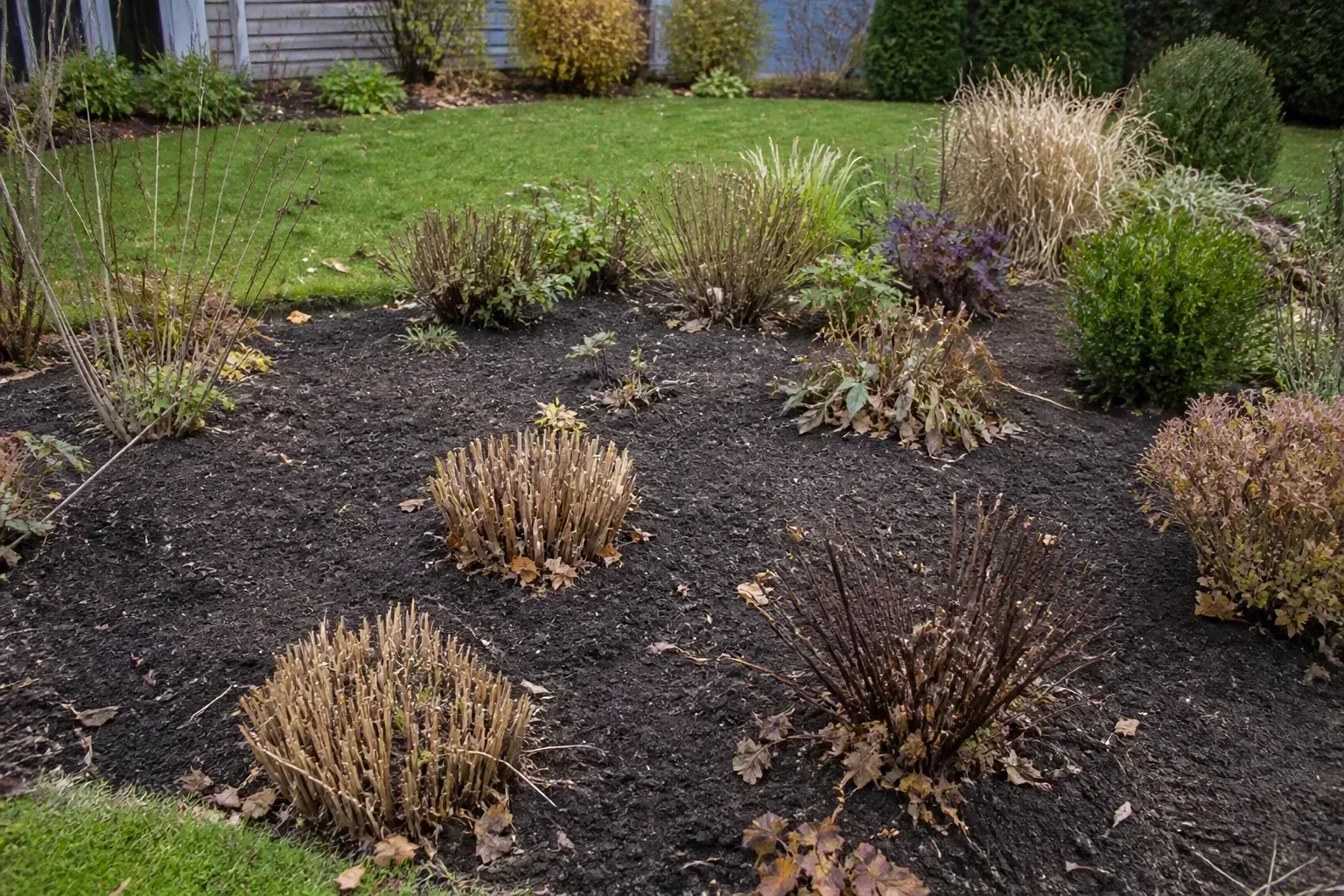
Mulch belongs on the surrounding soil, not piled over the hosta crown.
Hostas prefer moist but well-drained soil and do not appreciate standing winter water. A light top-dressing of finished compost or a loose mulch can protect the root zone and moderate freeze-thaw swings, but mulch should be spread like a donut with the crown uncovered. For a fall-planted or unusually exposed hosta, a 2–4-inch layer of shredded bark or similar material may be useful; remove or thin excess mulch in spring before new growth is crowded.
Container hostas need closer attention because pots experience colder roots and faster swings between wet and dry than in-ground beds. After the foliage dies back, move the container to a sheltered place where rain can drain freely, keep it off a saucer of standing water, and protect it from repeated freeze-thaw exposure. The RHS specifically cautions that hostas in containers are susceptible to waterlogging and recommends sheltering containers from heavy winter rain (RHS hosta growing guide).
Do not fertilize simply because you have pruned. Dormant roots are not asking for a late flush of tender growth, and extra fertilizer cannot compensate for poor drainage or an early cut. Resume normal feeding only when spring growth and your soil conditions call for it.
Can you divide or transplant hostas in fall?
Yes, but division is a separate job from routine cutback. Large, older clumps may benefit from division every four to five years, and hostas can be divided in autumn or early spring. Lift the plant carefully, split between growing points with a sharp spade or knife, and replant each division at the same depth it occupied before.
Fall division makes sense when the foliage has finished naturally and the soil is workable, but it should not be squeezed into the last cold week of the season. A new division needs time to make roots before the ground freezes. If the soil is already cold, waterlogged, or hard to work, wait for spring rather than turning a simple cleanup into a late transplant.
After planting a division, water it in and monitor moisture through the remaining mild weather. Do not bury the crown under mulch, and do not confuse post-transplant leaf loss with proof that the rhizome has failed. When conditions are marginal, spring division is the lower-stress option; the RHS also identifies autumn and early spring as suitable windows for dividing hostas (RHS hosta growing guide).
Common mistakes that set hostas back
The first mistake is pruning by the calendar. A warm October can leave the plant productive, while an early freeze can end the season quickly. Inspect the leaves, not the month name.
The second is cutting living green foliage because it looks a little ragged. Remove the damaged leaf that is truly dead, then fix light, water, browsing, or disease pressure. Hosta leaves cut away during the growing season will not regrow until the following season, so a cosmetic decision can leave the clump sparse for months.
The third is tearing stems loose from the crown. Pulling may feel faster once leaves become mushy, but a close snip gives you control and avoids disturbing growing points. Likewise, do not use a hedge trimmer when you cannot see the crown or when valuable neighboring plants are mixed into the clump.
The fourth is treating fall cutback as pest control by itself. Removing old leaves can reduce hiding cover, but slugs, deer, rabbits, voles, and disease organisms require different management. The right follow-up might be a barrier, a drainage correction, a cultivar change, or a diagnosis—not another round of indiscriminate pruning.
The fifth is burying the crown under mulch, leaf piles, or wet compost. Hosta crowns need winter protection in some settings, but they also need air and drainage. Keep the center of the plant visible and check again after wind or heavy rain moves material into the clump.
What to expect when spring arrives
If you cut in fall at the correct stage, the first sign of success is not immediate. The bed may look bare for months while the rhizomatous crown remains dormant underground. Marking the clump with short stalks or a small, unobtrusive label can prevent accidental digging when the area is being weeded.
If you left the foliage standing, plan a quick cleanup window as temperatures rise. Hand-pull loose leaves or use a light rake before the pointed shoots open. Then remove winter debris from the crown, inspect for vole disturbance or rot, and refresh only the mulch that has thinned away from the root zone.
New hosta shoots can be damaged by a late frost, so avoid piling wet material over them or rushing to fertilize at the first sign of green. Give them light appropriate to the cultivar, even moisture without saturation, and time to expand. RHS describes hostas as dormant until mid-spring, while NC State notes that the foliage cycle and cold requirements are part of normal perennial growth (RHS; NC State Extension Plant Toolbox).
If a clump returns with fewer leaves than expected, review the full season rather than blaming the pruning cut immediately. Drought, excessive sun, crown rot, vole feeding, deer browsing, late frost, and an underlying disease can all reduce spring performance. A correctly timed fall cleanup is usually a small variable in that larger picture.
Conclusion
The best time to cut hostas back in fall is after the foliage has naturally died—usually after a hard freeze or when the leaves are fully yellow, brown, and collapsed. Cut the stalks about 1–2 inches above the soil, use a sharp clean tool, remove suspect debris, and keep mulch off the crown.
If the leaves are still green, leave them working. If the bed is healthy and you value winter cover, spring cleanup is fine as long as you finish before new shoots emerge. Let the plant’s condition and your garden’s priorities decide the timing, and hostas will have the dormant, undisturbed crown they need to return strongly when spring soil warms.