Can You Trim a Neighbor’s Tree Over Your Yard?
Can you trim a neighbor’s tree over your yard? Learn where the property line matters, when permits or an arborist are needed, and how to prune safely.
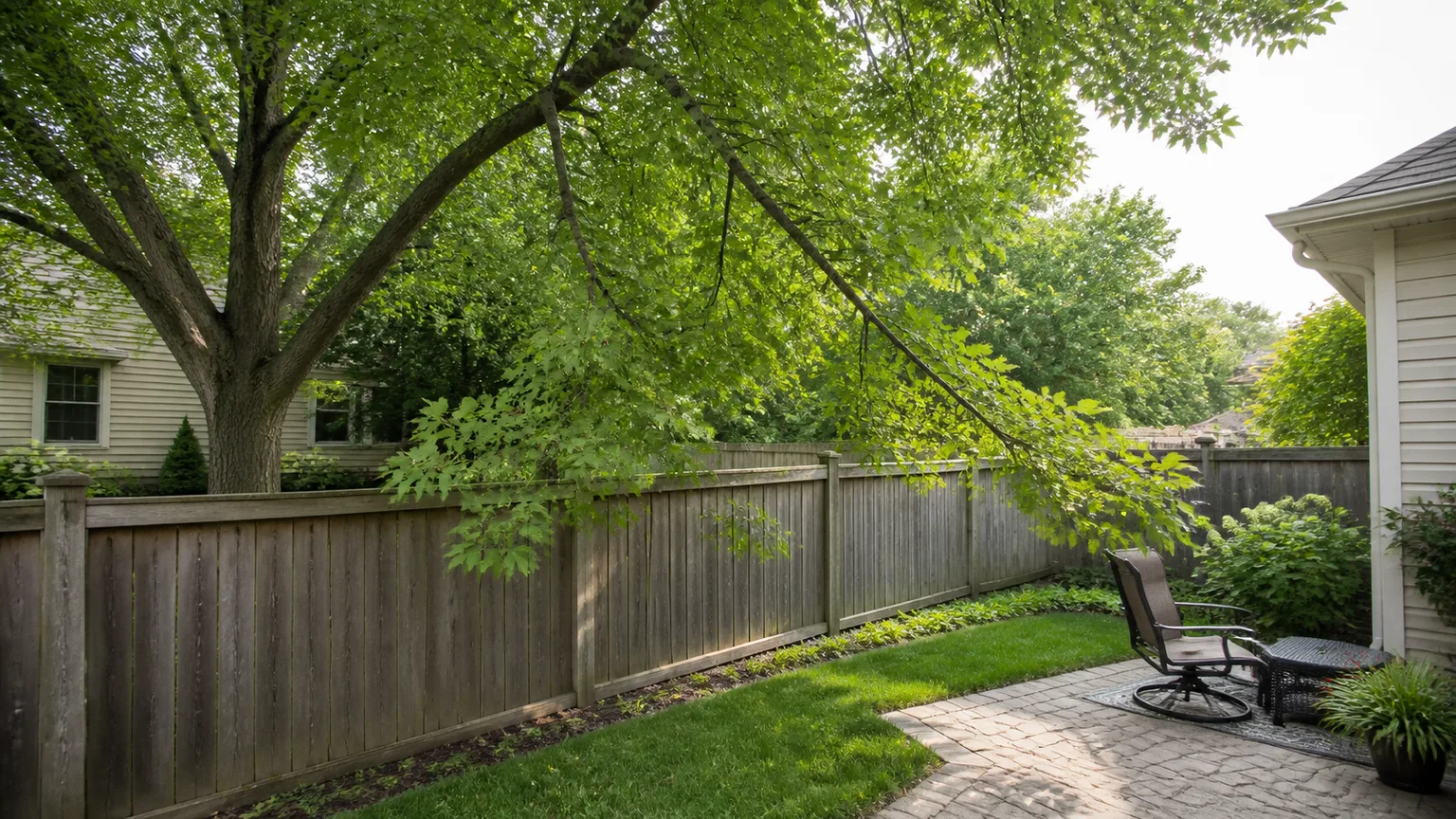
Usually, you can trim branches that extend into your property, but that answer is not a nationwide permission slip. You must first confirm the boundary, stay on your side unless the owner gives permission, follow local tree rules, and avoid pruning that seriously harms the tree.
The practical complication is easy to miss: the property line tells you how far your authority may extend, but it does not necessarily give you a good place to make a pruning cut. A branch may cross the line without having a healthy side branch at the exact point where you want to cut it. If the only way to clear your yard is to make a large, ugly stub, climb a ladder, or reach through the neighbor’s yard, stop and involve the owner or a qualified arborist.
This is general, U.S.-oriented information, not legal advice for a particular property. The Library of Congress Law Library explains that tree ownership, removal, damage, and responsibility are often governed by state and municipal statutes and ordinances. That is why a sensible plan starts with the boundary and local rules, not with a saw.
The short answer: usually yes, but stay on your side
In many U.S. jurisdictions, a property owner may use a form of self-help to cut back an encroaching branch to the property line. The usual boundaries are just as important as the permission: you cannot trespass to reach the tree, cross the line to cut more, or prune so aggressively that you damage the tree or make it unstable.
Do not treat “over my yard” as proof that every cut is allowed. A city may protect trees above a certain size, trees in conservation areas, heritage trees, or trees in a public right-of-way. A homeowners association may also regulate pruning. For example, Mercer Island’s tree-permit guidance specifically lists pruning limbs that reach over a property up to the property line among work that may be allowed without a permit, while warning that exceptions and other tree protections still apply. One city’s exemption is evidence of a local rule, not a rule for your city.
So the useful answer is: you may often trim the portion in your airspace, but only after checking the line, the tree’s status, the cut’s likely effect, and the safety of the work. Permission from the neighbor is still the cleanest route, especially if an arborist needs to enter their property or the work is more than a minor ground-level cut.
Confirm the boundary and who controls the tree
The first mistake in neighbor-tree disputes is assuming the fence is the legal line. Fences are sometimes placed inside an easement, moved over time, or built from an informal understanding. Hedges, retaining walls, mowed strips, and the point where grass changes to mulch are even less reliable.
How to find the actual property line
Start with the documents you already have. Review your deed, recorded plat, closing survey, and any written easement or boundary agreement. Look for survey monuments or pins on the ground, but do not dig around a suspected marker or move it. A county GIS map or online parcel viewer can help you orient yourself, but it is usually not a substitute for a recorded survey.
Use a simple sequence:
- Compare the fence or hedge with your deed, plat, and latest survey.
- Locate visible survey markers without disturbing them.
- Photograph the branch and the suspected boundary from both yards if possible.
- If the line is disputed or the planned cut is valuable, hire a licensed land surveyor before work begins.
Do not estimate the line from the trunk, branch angle, shadow, or where leaves land. If you cannot say where the boundary is with reasonable confidence, you are not ready to trim up to it. A survey may feel excessive for one branch, but it is cheaper than paying to repair a fence, defend a trespass claim, or address a damaged mature tree.
Check for boundary trees and special rules
Look at the trunk, not just the canopy. If the trunk stands entirely on your neighbor’s parcel, the tree will generally be treated as their tree under the applicable local law. If the trunk straddles the boundary, it may be a boundary tree with shared ownership or shared decision-making. Do not remove or heavily prune a boundary tree based on an assumption about who owns it.
Also identify anything that changes the normal homeowner scenario: a street tree, utility easement, public land, a conservation area, a protected species, or a local heritage-tree designation. HOA covenants can add another layer even when city law would otherwise allow minor pruning. The Library of Congress tree-law guide is useful for understanding the issue, but it points homeowners back to state and local codes because the details are not uniform.
Inspect the tree before deciding what to do
A few leaves or pine pitch on a patio are a nuisance. A cracked limb hanging over a roof is a hazard. Treating both situations as “the neighbor’s tree needs trimming” leads to the wrong response.
From the ground, look for dead or loose branches, a fresh split, a large crack at a branch union, hanging limbs, mushrooms or conks near the base, a pronounced lean, exposed or lifting roots, or a branch resting on a structure. Note whether the branch is over a roof, play area, driveway, sidewalk, road, or utility line. Keep people and vehicles away from an obvious hazard while you arrange help; do not stand under it to get a closer photograph.
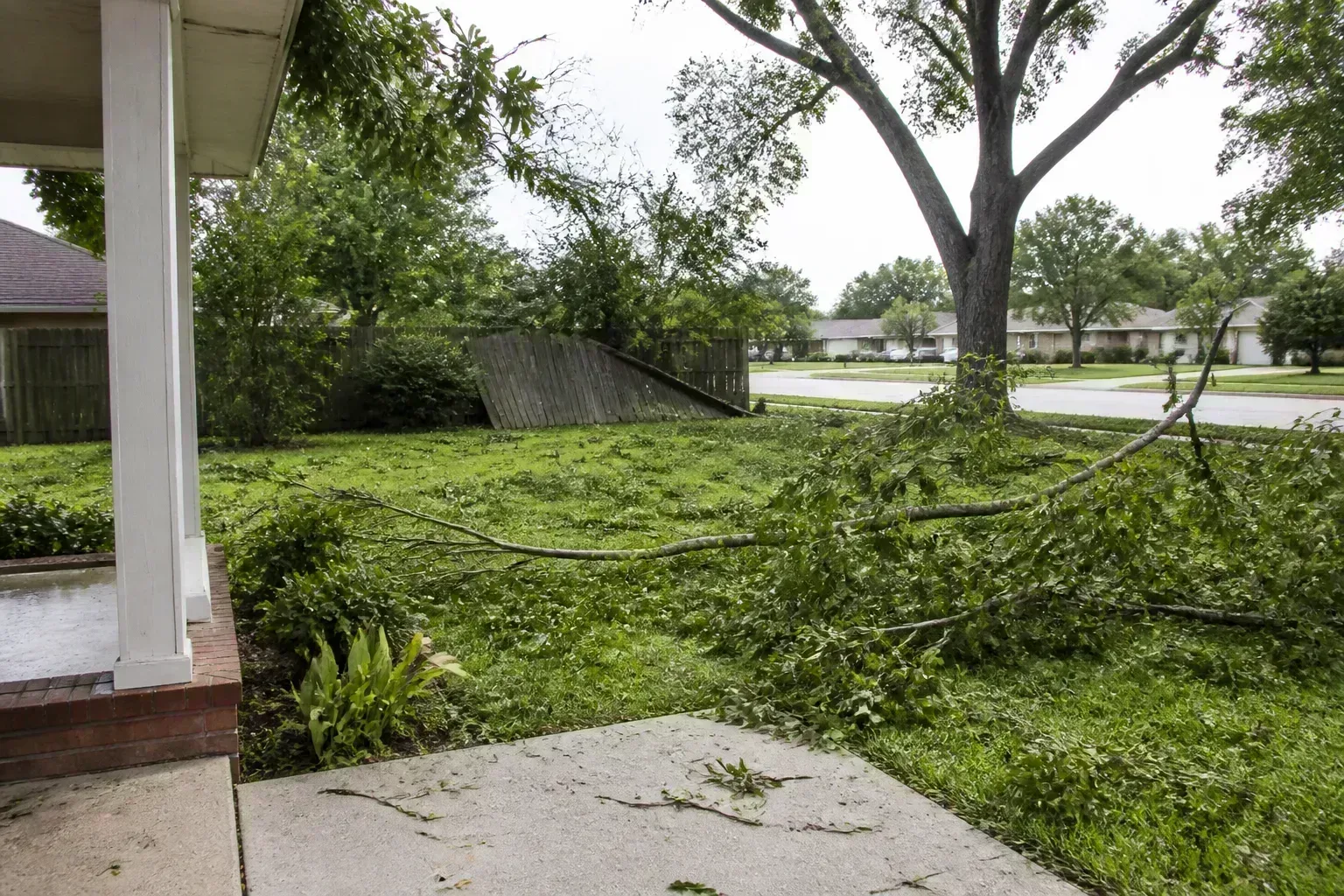
The goal of a hazard check is not to diagnose a tree from a distance. It is to decide whether the next step is a calm conversation, a qualified assessment, or an urgent call to the utility or local emergency channel. A tree that looks healthy can still have a weak union, and a tree that looks untidy is not automatically dangerous.
Timing matters when the issue is ordinary clearance rather than immediate danger. Texas A&M Forest Service explains that mature trees should be pruned for a good reason because each cut affects future growth, and that routine heavy pruning can stress a tree by removing leaves and energy reserves. New York Botanical Garden guidance similarly favors late dormancy for many live-branch cuts and says damaged or dead branches may need removal whenever necessary. Species, climate, disease pressure, and the tree’s current condition can change that timing, so an arborist or local extension service should settle a special case.
Know what you can and cannot trim
Think in three dimensions: your legal space, the tree’s biology, and the work zone. A branch in your airspace may be within your reach legally, but the trunk, the branch collar, and the safest rigging point may all be on the neighbor’s side.
You can generally consider trimming only the portion that crosses onto your side, subject to the law where you live. You cannot cut the trunk, remove the entire tree, cross onto the neighbor’s land without permission, or cut additional growth simply because it would make the canopy more symmetrical. Avoid cutting a major root on your side for the same reason: roots are part of the tree, and root cutting can affect stability.
The property line is the legal limit, not always the best cut
A proper pruning cut is made at a biologically meaningful point, not wherever a measuring tape says the boundary falls. If a branch emerges from the trunk on the neighbor’s side and extends six feet into your yard, the correct removal cut may be at the branch collar close to the trunk—outside your authority if you do not have permission to work there.
The alternative is a reduction cut back to a suitable lateral branch. Texas A&M Forest Service recommends that the lateral be at least one-third the diameter of the portion being removed; a tiny twig cannot safely take over a large limb. If no strong lateral branch lies on your side before the property line, cutting at the line may leave a stub that sprouts weakly, decays, or looks severe.
That is the point where a legal right and a good horticultural decision diverge. Ask the neighbor to authorize access and arrange an arborist, or accept a smaller clearance cut that can be made correctly from your own side. “I can cut it” is not the same as “I can cut it well.”
Talk with your neighbor before the saw comes out
Notification is not merely etiquette. It gives the owner a chance to identify a protected tree, share a survey, arrange access, hire the arborist, or explain that another contractor is already scheduled. It also prevents the owner from discovering a fresh cut and assuming the worst.
Keep the conversation specific. Show the branch, describe the actual impact—pitch on the patio, blocked walkway, contact with the roof, or a possible hazard—and say what you propose to remove. Ask whether they prefer to handle the work, split a professional estimate, or grant written access for a named contractor and date.
Put the practical agreement in writing, even if it is only a short text or email. Clarify the exact branches, who selects and pays the contractor, whether the crew may enter either yard, who protects fences and plants, and who removes the cut material. Written consent is especially important when the work requires climbing, ropes, a bucket truck, a chainsaw, or a final cut on the owner’s side.
If the relationship is tense, avoid promising that the law “clearly” supports you. Say that you are checking the boundary and local rules and want to solve the clearance problem without damaging the tree. That tone preserves options if a survey, arborist, city office, or lawyer later becomes necessary.
Decide whether a small DIY trim is reasonable
DIY is reasonable only when the job is small, visible, reachable, and uncomplicated. You should be able to stand on stable ground in your own yard, use hand tools, see the branch collar or a suitable lateral, and drop or lower the cut without endangering people, roofs, fences, pets, vehicles, or plants.
Use ground-level hand tools and a narrow goal
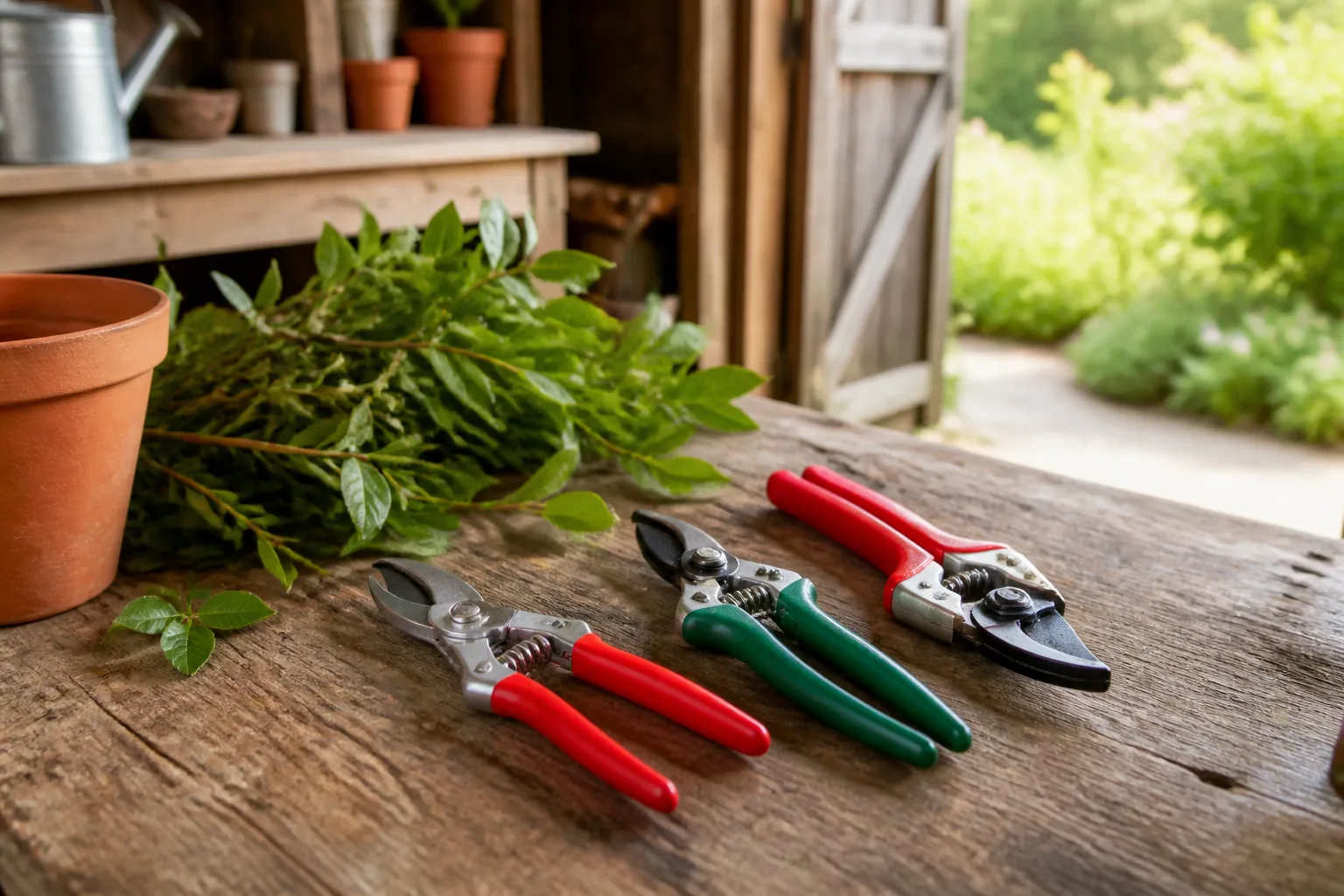
The New York Botanical Garden’s pruning guidance says to prune only what you can reach with hand tools while standing on the ground and advises using a certified arborist rather than a ladder or a climb. Use sharp bypass pruners for small twigs, bypass loppers for manageable branches, and a pruning saw when a branch is too large for loppers. Tool choice does not make a high branch safe.
Set one goal before you cut: remove a dead twig, lift a small branch away from a walkway, or reduce one live shoot back to a strong lateral. Do not turn a clearance job into a canopy makeover. Removing a whole band of foliage from only one side can leave the tree unbalanced and expose interior bark to sun and heat.
For ordinary live branches, work in a suitable weather window when the surface is dry and you can see the structure. Avoid live-branch pruning when the tree is drought-stressed, recently stripped by pests or disease, or already heavily pruned. A dead or storm-damaged branch that poses an immediate risk is a safety problem first; call for help if it is beyond a ground-level hand-tool job.
Make a proper final cut
For a branch that is being removed at its base, identify the branch collar, the swollen tissue where branch and trunk meet, and the branch bark ridge, the raised line of bark above the union. Make the final cut just outside the collar and follow the natural angle of the union. Leave the collar intact; do not slice into it and do not cut flush against the trunk.
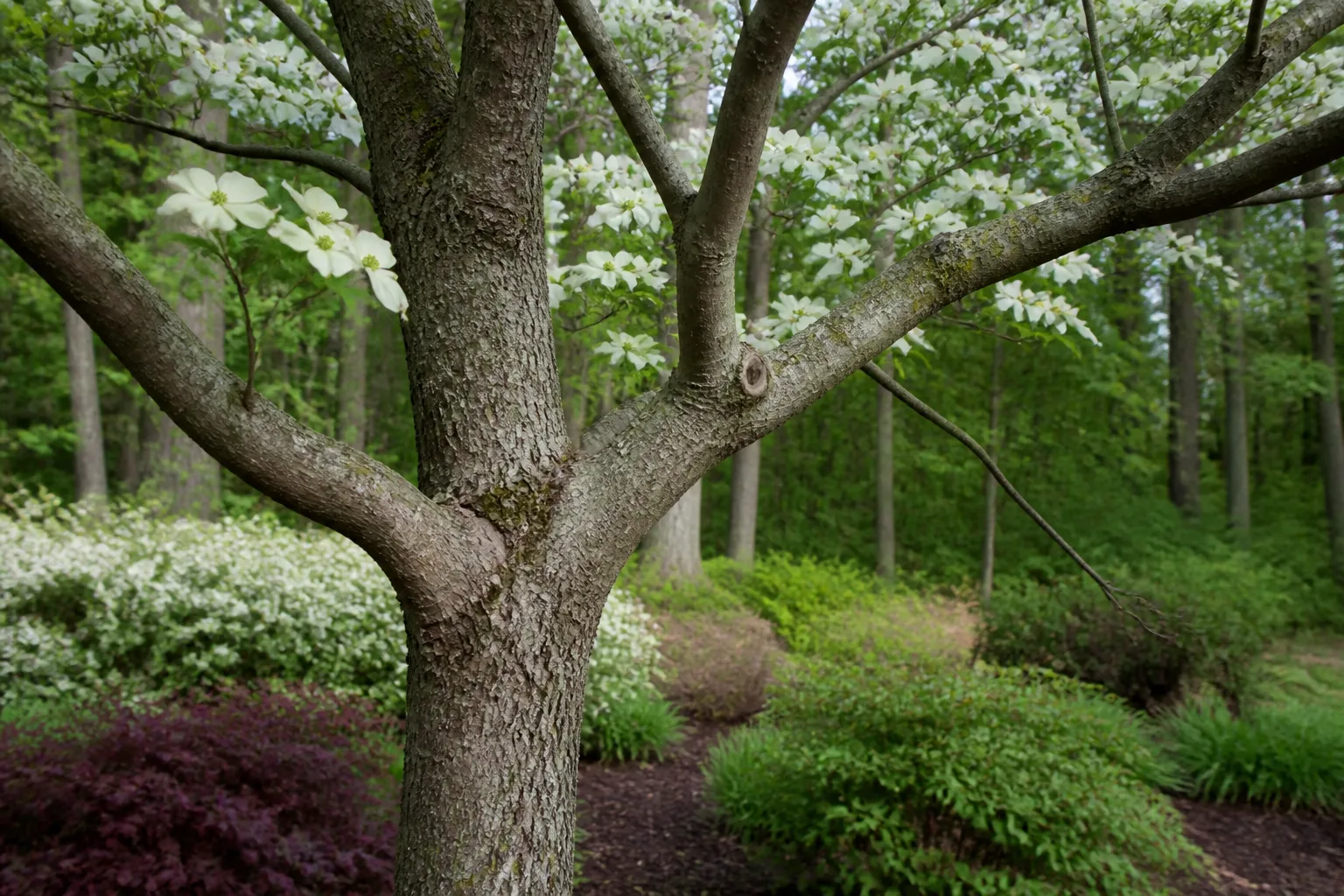
For a branch that is being shortened, cut back to a healthy lateral branch rather than stopping in the middle of bare wood. The lateral should be large enough to assume the growth direction, and it should point where the remaining branch will not immediately recreate the obstruction. A cut made halfway between branches is a weak compromise: it leaves a stub while also removing the point that could have directed new growth.
Do not coat the cut with paint or sealant as a default repair. Texas A&M Forest Service notes that wound paint is not generally necessary, with specific disease exceptions such as oak-wilt management that depend on region and timing. If the tree is an oak in an area with oak wilt, or if a local authority gives disease-specific directions, follow those instructions rather than a generic pruning recipe.
Use the three-cut method for heavier limbs
A heavy branch can tear bark as it falls, even when the final cut is well placed. The practical three-cut method described by Horticulture magazine and the more detailed Texas A&M Forest Service guidance reduces that weight before the final collar cut:
- Make an undercut on the underside of the limb, well out from the branch collar.
- Make a top cut farther out to remove the limb, leaving a short stub.
- Support the remaining stub if needed, then make the final cut just outside the collar.
The exact distance depends on the limb’s weight and structure; Texas A&M describes roughly 12 to 18 inches for a large branch. The important principle is to remove the limb’s weight before the final cut so the bark does not rip. If the branch is high, thick, over a roof, under tension, near a utility line, or too heavy to control from the ground, do not attempt this method yourself. A three-cut sequence is a pruning technique, not a substitute for rigging, insurance, and trained workers.
Know when to stop and hire an arborist
Stop DIY work if any part of the job requires a ladder, climbing, a pole saw that you cannot control, a chainsaw, a bucket truck, or access to the neighbor’s yard. Also stop if the branch is larger than you can comfortably control, if the tree is dead or leaning, if the work is over a structure or public path, or if you cannot identify a correct final cut. A Homes & Gardens overview of attorney and arborist guidance makes the practical access point clear: safe rigging or climbing may require the tree owner’s permission even when a branch extends over your property.
Power lines are an automatic escalation. Do not touch or cut a branch that is contacting a line, is close enough that a tool or falling limb could reach it, or is tangled with utility equipment. Call the utility company or a properly qualified tree professional and keep everyone clear. Public trees, street trees, and trees in an easement may belong to a municipality or utility even when their canopy reaches your yard.
For a contractor, ask for an ISA credential or other relevant local qualification, proof of liability and workers’ compensation coverage where applicable, and a written scope that identifies the branches to be removed. The International Society of Arboriculture’s tree-owner resources and arborist directory are useful starting points. A good estimate should describe access, cleanup, protection of property, and whether the work will be pruning or removal.
An arborist is also the right choice when the legal boundary and the proper pruning point conflict. The owner can authorize entry, the professional can inspect the whole tree rather than just the overhang, and the work can be documented in case a later dispute arises.
Check permits, utilities, HOA rules, and public ownership
Before scheduling work, search your city or county website for tree permit, protected tree, heritage tree, right-of-way tree, and tree removal or pruning ordinance. Read the actual code or call the office that administers it. Do not rely on a contractor’s assumption that a permit is unnecessary; local definitions can depend on trunk diameter, species, location, critical areas, development activity, or the difference between pruning and removal.
HOA rules may require approval even for a private tree, particularly when the tree is visible from common areas or the work changes a shared landscape. If the tree is in a drainage, conservation, or utility easement, the easement holder may also have rights. The Mercer Island example shows why local research matters: it distinguishes ordinary pruning, overhanging limbs, emergency hazards, public right-of-way trees, and protected areas rather than treating every tree as the same.
If the tree is on public land or in a street corridor, contact the municipality instead of trimming it yourself. If the issue is an immediate danger to life or a structure, use the local emergency process; do not create a second hazard by trying to solve the first one with a homeowner saw.
Agree on debris, wood, fruit, and costs
A branch can be legally removable and still create a disagreement about cleanup. Decide before work starts whether the neighbor wants the cut wood, whether you will pay for disposal, where a chipper can park, and how the crew will keep debris from entering drains or damaging beds. Local green-waste rules may limit what can be left at the curb.
Do not assume that trimming a branch transfers ownership of the wood, fruit, or nuts. Ask before keeping firewood or harvesting anything that grew on the neighbor’s tree. Naturally fallen fruit and fruit picked from a branch can be treated differently by local law, so a friendly agreement is safer than arguing over an apple after the pruning is done.
Costs are similarly fact-specific. For an ordinary nuisance, the person who wants the work may end up arranging or paying for it unless the owner volunteers or an agreement says otherwise. If the tree is hazardous, protected, or subject to a municipal code, the city, insurer, property owner, or an attorney may need to determine responsibility. Put the arrangement in writing before the crew arrives.
If your neighbor refuses to act
First separate a nuisance from a hazard. Shade, leaves, fruit, sap, and a branch that brushes a fence may justify a measured request, but they do not automatically justify emergency work. A visibly cracked, hanging, dead, or utility-involved limb needs a faster and more formal response.
Document the problem and use the right escalation path
Take dated photographs from a safe location, keep copies of your messages, note when the issue affects your roof or access, and record any inspection or estimate. Avoid entering the neighbor’s property to collect evidence. If the boundary is disputed, obtain the survey or plat before making a claim about where the branch is.
For an ordinary unresolved dispute, check the HOA, city code, county urban-forestry office, mediation service, or local property-law attorney. Ask the city what office handles protected trees, public trees, or reported hazards; do not assume the police or a general code-enforcement form is the right channel. A formal report is more useful when it includes the address, photographs, location of the tree, observed hazard, and dates of prior notice.
If a utility line is involved, report it to the utility. If a tree is on public land, contact the municipality. If the tree is on private land and the potential damage is substantial, an arborist’s written assessment can distinguish a genuine structural problem from an appearance complaint. If you believe you have a legal claim or face a demand for damages, consult a local property attorney rather than relying on a general internet rule.
Common mistakes that turn a small nuisance into a big dispute
Trusting the fence as the boundary. A fence is a visual clue, not necessarily a survey line. Confirm the legal boundary before measuring or cutting.
Cutting at the trunk because the branch is annoying. The proper collar cut may be on the neighbor’s side. Removing the branch at the line can leave a biologically poor stub; ask for access or choose a smaller, proper reduction cut.
Using a ladder or pole saw from unstable ground. If you cannot reach the branch while standing securely with a hand tool, the job has moved into arborist territory.
Making a flush cut or leaving a long stub. Cutting into the collar damages protective tissue; cutting too far away leaves decay-prone wood and unwanted sprouts. The correct position follows the branch structure, not a guess.
Topping or stripping one side of the canopy. Topping creates large wounds and weak regrowth, while severe one-sided thinning can stress the tree and change its balance. Remove only what solves the defined clearance problem.
Ignoring the season and tree condition. Heavy live pruning during drought, after severe leaf loss, or immediately after a major spring flush can add stress. Hazard removal is different from elective shaping; get advice when timing is uncertain.
Skipping permits, utility checks, or HOA approval. A branch over your yard can still be part of a protected, public, or regulated tree.
Assuming the neighbor’s refusal ends the options. Document the issue and use the appropriate local channel for a hazard, utility conflict, public tree, or ordinary property dispute. Do not escalate by cutting more aggressively.
Conclusion: protect the tree, your property, and the relationship
When a neighbor’s tree hangs over your yard, the safest sequence is verify, communicate, assess, then act. Confirm the property line from documents or a survey, identify whether the tree is protected or shared, and decide whether the branch is an ordinary nuisance or a genuine hazard.
If a small branch can be reached from your ground with hand tools and shortened to a sound lateral without crossing the boundary, a careful trim may be reasonable where local law allows it. If the correct cut is on the other side, the branch is heavy or high, utilities are involved, or the tree shows structural warning signs, get the owner’s written cooperation and hire an arborist. The best result is not simply the most clearance; it is a safe, lawful cut that leaves the tree sound and gives both neighbors a record of what was agreed.