5 Trees to Avoid Planting Near a Driveway
Before you dig, compare five trees to avoid planting near a driveway, practical distance rules, root and branch risks, and safer landscape alternatives.
A driveway is a high-consequence place to plant a tree. It combines hard pavement, parked vehicles, compacted soil, limited room for roots, and a walking surface that needs to stay clear after rain, wind, and fruit drop.
“Never” needs a little translation here. The five trees below are poor default choices in a driveway’s immediate planting footprint because they combine one or more high-risk traits: shallow or vigorous roots, weak branch structure, large mature size, water-seeking roots, or messy fruit. A healthy specimen planted well away from pavement may be perfectly manageable; a small nursery tree planted two feet from the edge is a very different proposition.
The real driveway test: roots, branches, litter, and clearance
Judge a tree beside a driveway by four separate failure modes rather than by the vague label “aggressive.” Root risk means surface roots can lift lightweight pavement or interfere with drainage. Branch risk means dead, weak, or storm-damaged limbs can fall where cars are parked. Litter risk means fruit, seed pods, sticky residue, or heavy leaf drop creates staining, slipping, or constant cleanup.
The fourth test is clearance. A tree can have reasonable roots and still be wrong for a narrow drive if its mature canopy blocks sight lines, scrapes vehicles, shades pavement so it stays damp, or grows into overhead utilities. The Royal Horticultural Society’s guidance on trees near buildings makes the larger point well: most trees do not cause damage, but risk rises with the tree’s size, distance, water demand, soil, drainage, and surrounding structures.
Start with mature size, not the nursery container
The tree in the pot is not the tree you are placing beside a driveway. Read the mature height and spread, then picture the trunk at that final size; the canopy’s drip line and the root zone may extend well beyond the branches over time.
As a conservative starting screen—not a building code or a guarantee—keep a small ornamental tree roughly 8 to 12 feet from the driveway edge, a medium tree about 15 to 20 feet away, and a large or known surface-rooted tree 20 to 30 feet or more away. For a tree with water-seeking roots, a leaking drain, a septic field, or a driveway already showing movement, increase the separation and get local advice instead of relying on a generic number.
Why “aggressive roots” is only part of the risk
Roots do not usually crush sound, properly supported concrete simply by touching it. They take advantage of cracks, weak edges, shallow pavement, trapped moisture, leaking pipes, and soil movement. The RHS notes that roots are unlikely to penetrate sound footings, while expanding roots and trunk-base buttresses can lift surface paving close to the trunk; large roots near the tree should not be cut casually.
That distinction matters because it changes the fix. A root barrier will not repair a failing driveway base, stop a leaking drain, or make a 50-foot tree suitable for a five-foot planting strip. The most reliable prevention is matching the tree’s mature size and root behavior to the site before planting.
1. Bradford pear (Callery pear)
Bradford pear is a cultivar of Callery pear, Pyrus calleryana, and its spring flowers are not enough to offset its structural and ecological drawbacks beside a driveway. It is one of the clearest examples of a tree that looks tidy when young but becomes a liability when several narrow branch unions mature together.
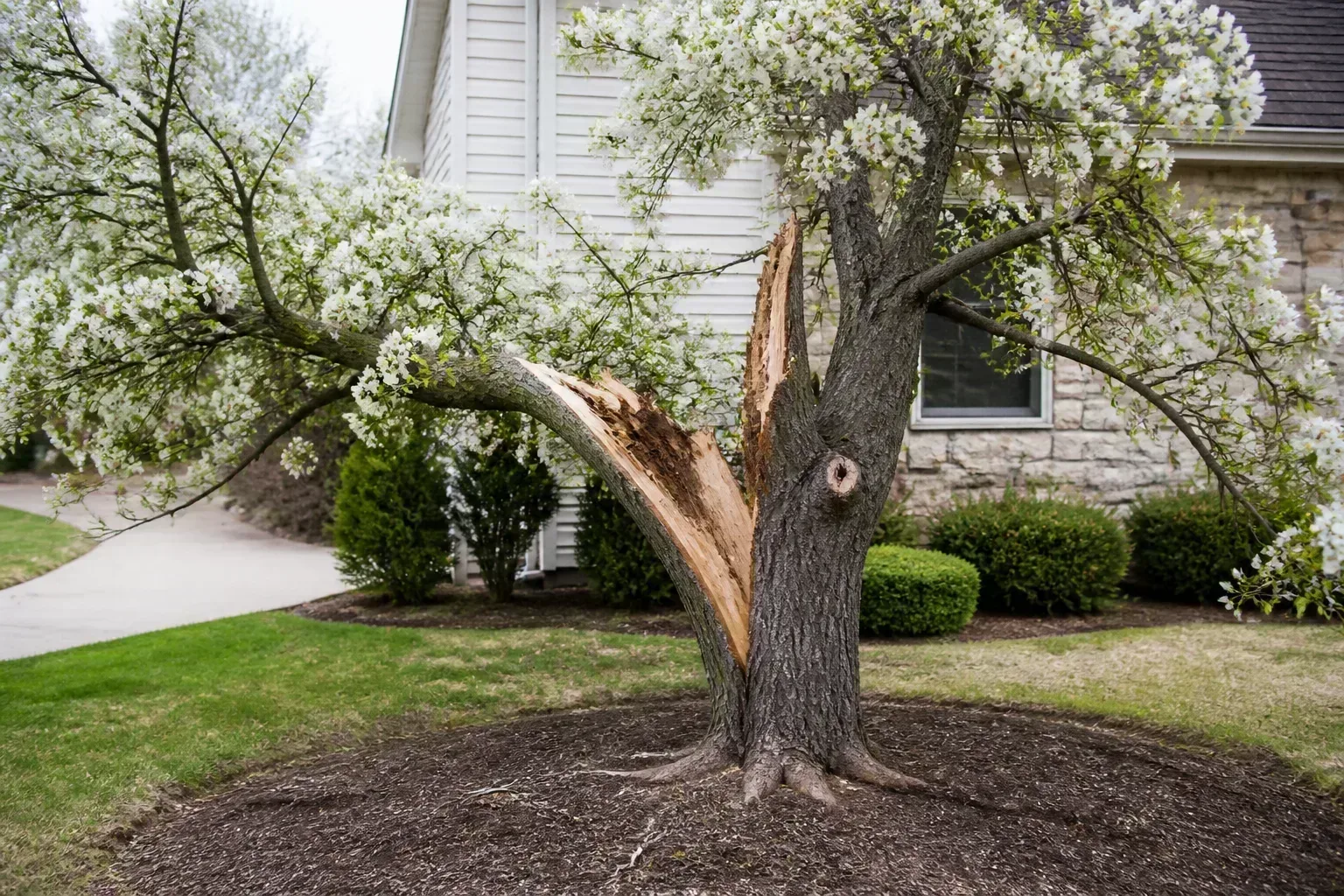
Weak branch unions, fruit, and invasive spread
The main vehicle hazard is branch attachment. Bradford pears often develop multiple upright limbs with narrow, included unions; snow, ice, wind, or simply increasing limb weight can split the crown. A branch that fails over a driveway is not just a pruning inconvenience—it lands above the exact place where a car, person, or delivery worker may be standing.
There is also a smell and fruit problem. The white flowers can have an unpleasant odor, and the small, hard fruits can roll underfoot or become a nuisance around tires. Michigan’s official Callery pear information also documents weak branches, fruit hazards, thorns on some twigs, and spread by seeds and root suckers. Callery pear is restricted or being restricted in some jurisdictions, so check your state or province before buying a cultivar.
If you already own one, do not assume a single thinning job makes the structure safe forever. A qualified arborist can assess included unions, codominant stems, decay, and target areas, then decide whether staged pruning, removal, or replacement is the responsible path. For a new flowering tree, consider a locally appropriate serviceberry, eastern redbud, flowering dogwood, or smaller magnolia cultivar—but verify mature width and regional performance before planting.
2. Norway maple
Norway maple, Acer platanoides, is a large shade tree with a dense canopy and a root system that is a poor match for narrow paved spaces. Its apparent toughness is part of the problem: it tolerates urban stress, compaction, drought, and pollution well enough to outgrow the space you gave it.
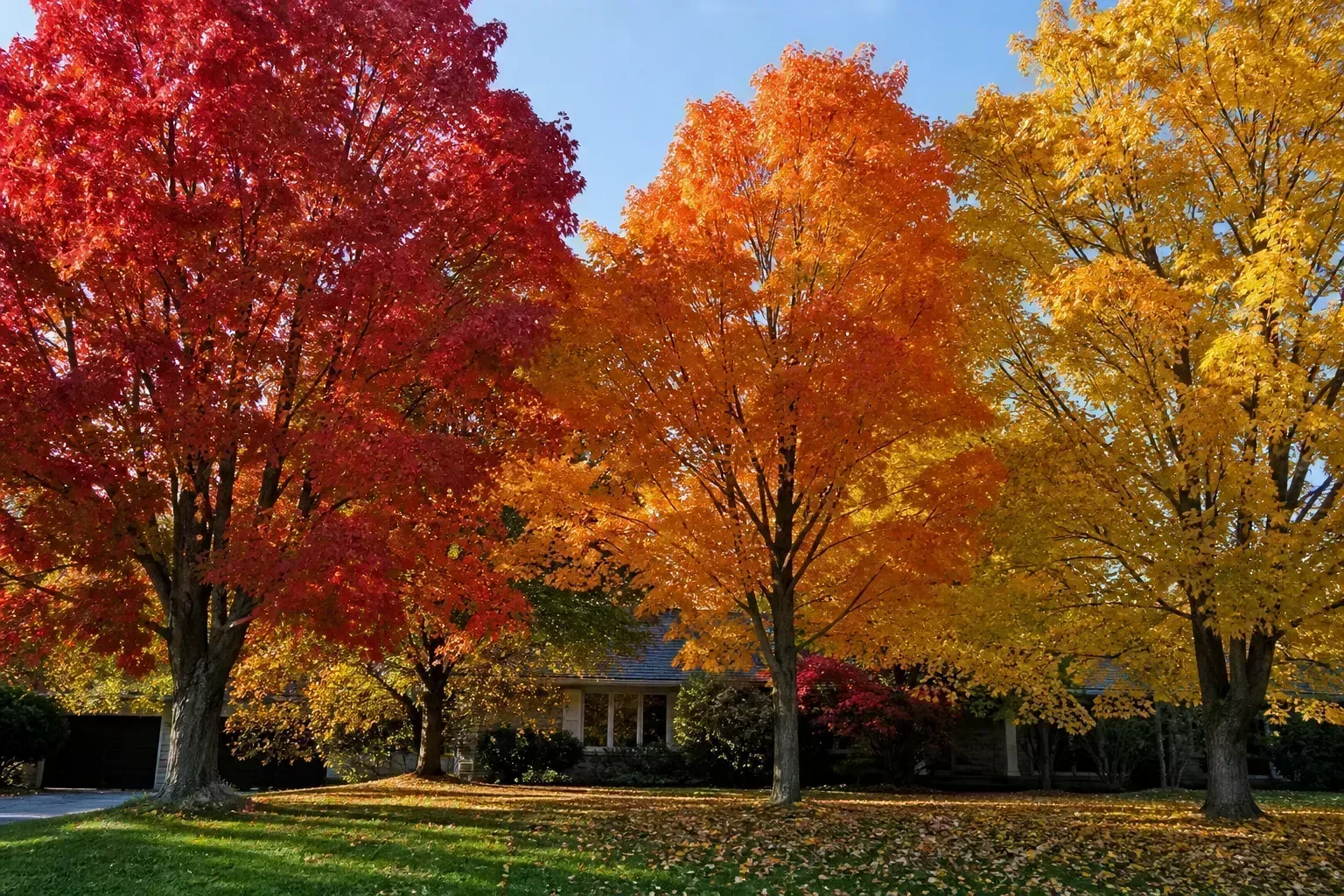
The University of Connecticut Extension’s Norway maple profile describes it as a 40- to 90-foot tree with shallow, vigorous, wide-spreading roots that often damage sidewalks. NC State Extension’s profile likewise notes its shallow root system, dense canopy, messy self-seeding, and difficulty growing turf beneath it. Beside a driveway, that combination means surface roots, a large shade footprint, persistent cleanup, and little usable planting space under the crown.
Norway maple is also considered invasive in parts of the Northeast and Midwest. Do not swap it automatically for another maple without checking the replacement’s mature roots and width. A locally selected red maple or sugar maple may fit a broad site, while black gum, ginkgo, or a smaller native tree may be a better choice for a constrained drive; the correct option depends on climate, soil, overhead clearance, and the space available.
3. Weeping willow
Weeping willow, Salix babylonica, belongs beside a pond, stream, or generously sized moist landscape—not in the narrow strip between a driveway and a house. Its graceful canopy hides an extensive, moisture-seeking root system and branches that can become difficult to manage in storm-exposed sites.
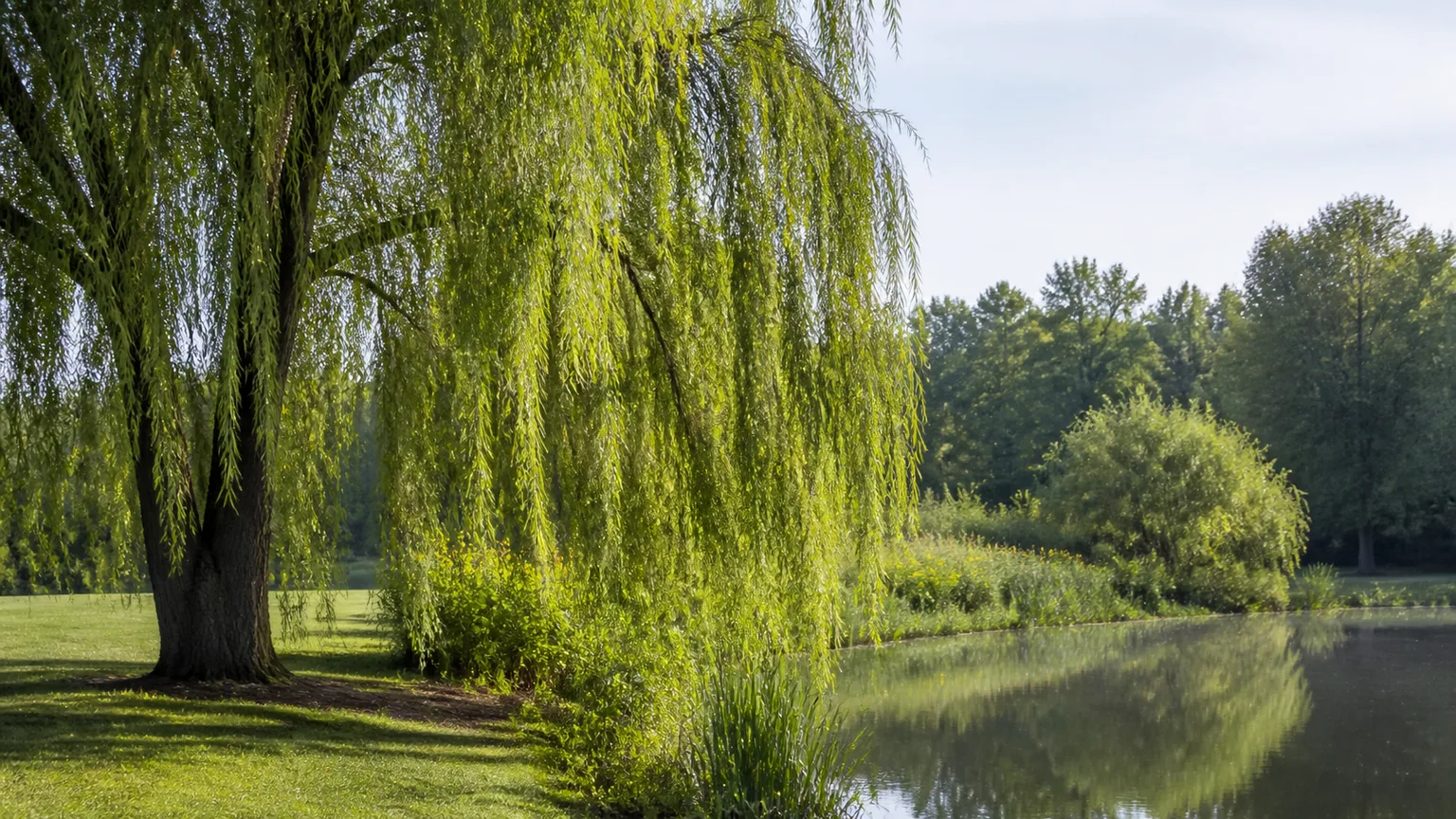
Willows are especially poor choices near septic lines, irrigation, drains, or any area where water routinely collects. Gardening Know How’s root guidance identifies weeping, corkscrew, and Austree willows as moisture-loving trees with aggressive roots that can invade sewer and septic lines, lift sidewalks, and complicate lawn care. If a pipe leaks, roots are drawn toward that reliable source of moisture; the leak, not the mere presence of a tree, often starts the expensive chain of events.
A willow can also drop long twigs and branches after wind or ice, and its canopy can shade the driveway so heavily that the surface dries slowly. A small ornamental weeping tree may reproduce the shape, but it does not automatically reproduce the safety profile. Check the replacement’s mature spread, branch strength, and root behavior; a serviceberry, redbud, or another locally suitable small tree is usually easier to place than a full-size willow.
4. Mulberry
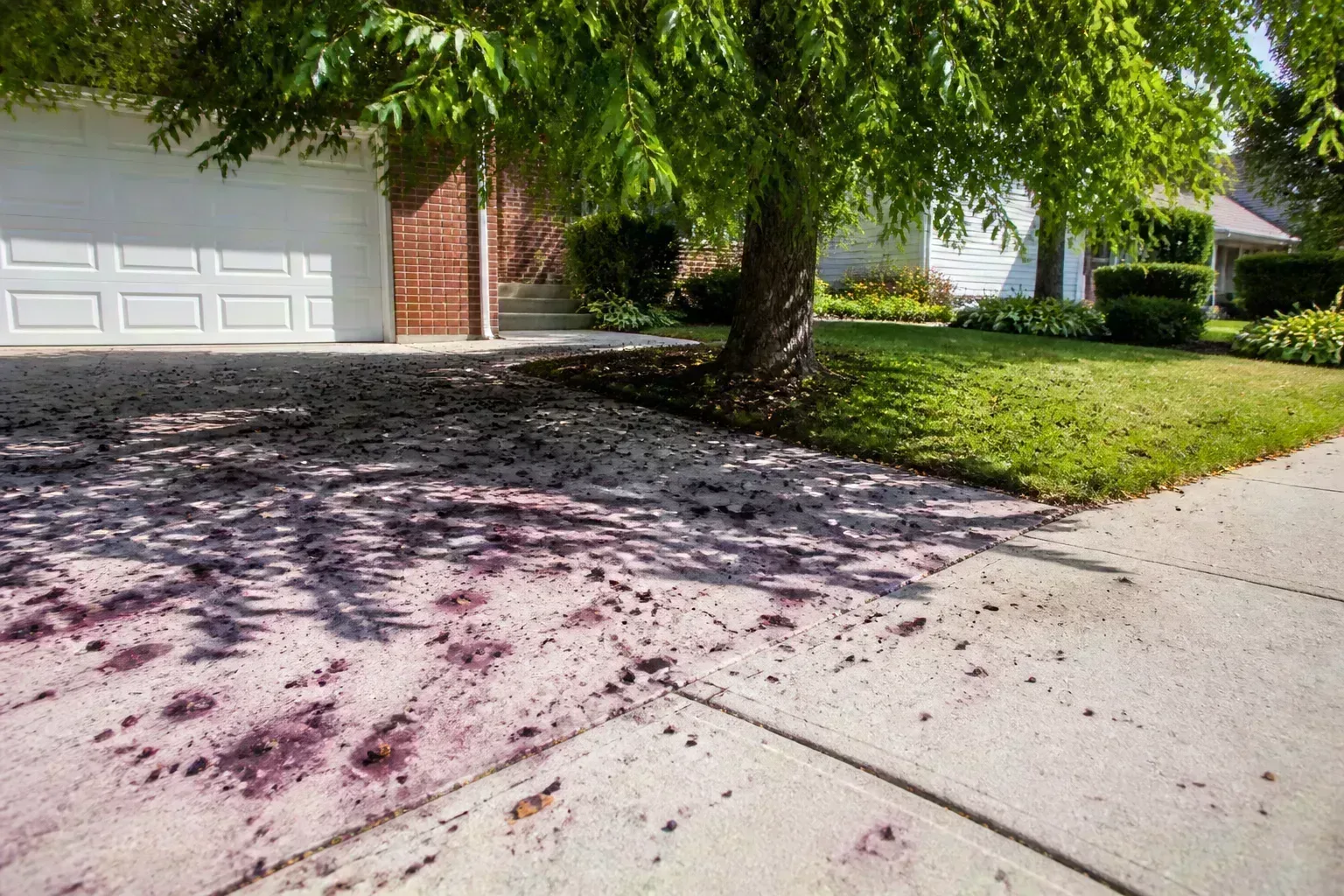
Mulberry is the exception on this list: the primary driveway problem is often not pavement lifting but fruit drop. Fruiting trees are valuable when their crop falls onto a garden bed or can be harvested, but a mulberry planted over a parking pad turns ripe fruit into a recurring cleanup and traction problem.
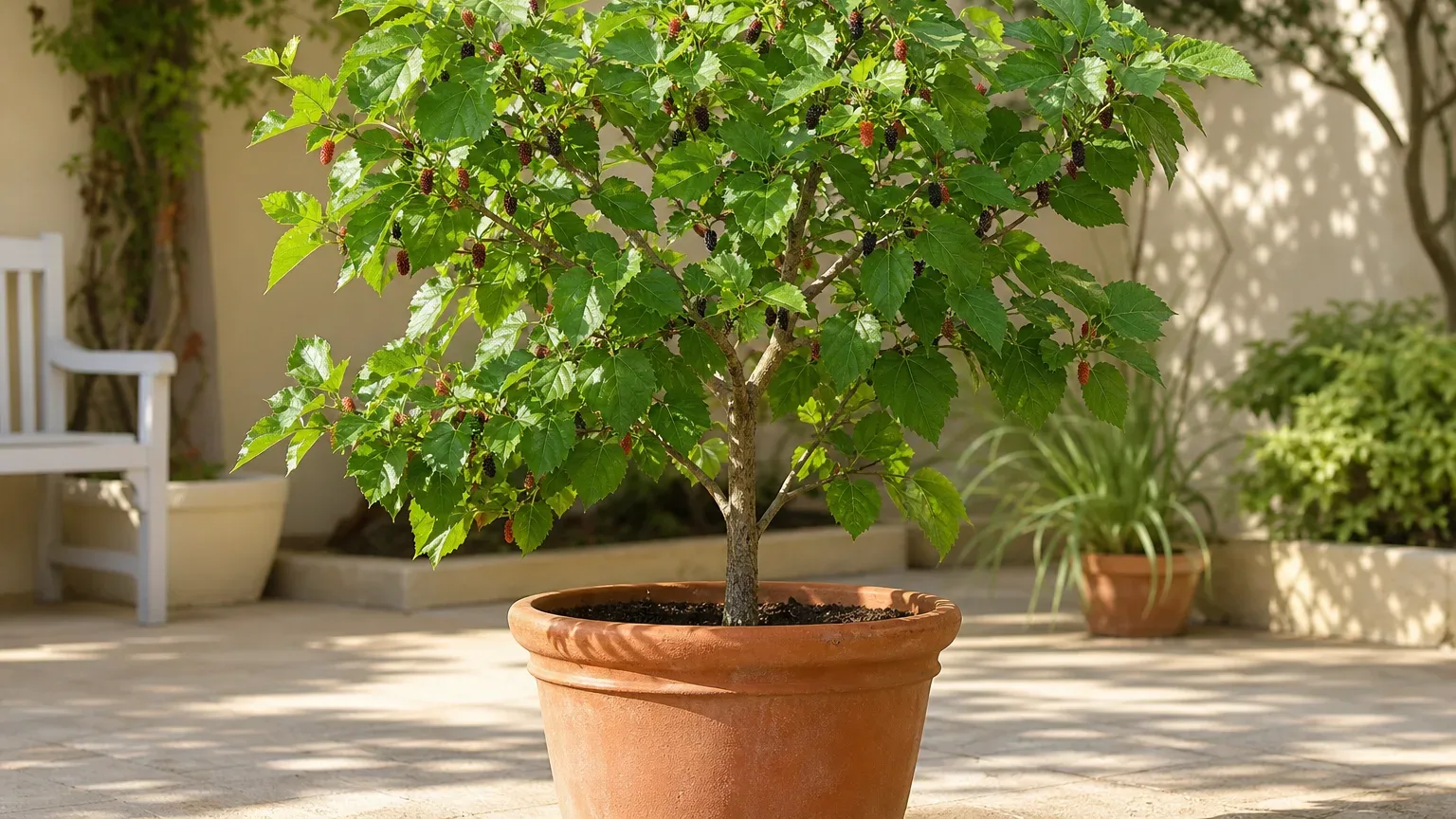
Soft berries stain concrete, asphalt, shoes, and tires, and birds can spread the mess beyond the canopy. In warm weather, fallen fruit can ferment quickly and attract insects. The cleanup burden peaks during the exact season when you want to leave windows open, walk barefoot, or park without checking the ground first.
“Fruitless” mulberry cultivars can reduce the obvious problem, but do not treat a plant tag as a complete site assessment. Cultivar identity can be mistaken, some trees still produce a small crop, and a fruitless tree may remain too large or too close to the pavement. If you want edible fruit, put a mulberry where drop is useful and access is easy; if you want driveway shade, choose a clean, site-appropriate shade tree and confirm the mature canopy before planting.
5. Silver maple
Silver maple, Acer saccharinum, grows quickly and looks like an inexpensive way to get shade. That speed is exactly why it becomes a bad driveway neighbor: the tree can produce a large canopy and exposed surface roots before the surrounding pavement or planting space has room to accommodate it.
Silver maple roots commonly become visible at the soil surface, interfering with mowing and competing with grass. Gardening Know How’s overview of invasive tree roots specifically advises keeping silver maple well away from driveways, sidewalks, and foundations. Its large mature size and reputation for weaker wood add a second concern when cars are parked under the canopy during storms.
Do not assume every maple is equally risky, and do not assume a narrow cultivar eliminates root needs. A columnar tree can reduce width while still needing a strong root zone and adequate distance from pavement. For a small driveway, look first at genuinely smaller trees such as serviceberry, Japanese maple where climate permits, eastern redbud, or a locally recommended hornbeam; for a wide property, a well-sited native maple may work if the trunk and mature crown are kept clear.
How far should a tree be planted from a driveway?
There is no single universal setback that makes every species safe. The distance depends on mature height and spread, root behavior, soil, pavement construction, drainage, storm exposure, utility corridors, local rules, and whether the driveway is concrete, asphalt, pavers, or a thin edge over compacted fill.
Use mature canopy and trunk clearance together
Measure from the center of the future trunk to the nearest pavement edge, not from the planting hole’s rim. Start with the nursery’s mature spread, then add room so the trunk flare, major roots, and future maintenance do not occupy the driveway’s edge. If a tree is advertised as 20 feet wide, planting it four feet from the drive means the crown is likely to overhang the drive by a substantial amount even before pruning.
Use these bands as a planning screen:
| Mature tree type | Starting distance from driveway edge | Why the band may need to grow |
|---|---|---|
| Small ornamental, under about 20 feet wide | 8–12 feet | Increase for surface roots, low branches, or tight sight lines |
| Medium tree, about 20–35 feet wide | 15–20 feet | Increase on thin pavement, compacted soil, or storm-exposed sites |
| Large tree or known surface-rooted species | 20–30 feet or more | The canopy, buttress roots, and maintenance zone need real room |
| Water-seeking tree near septic, drains, or irrigation | Use the local system’s required setback and add margin | A generic driveway distance does not protect a leaking or fragile pipe |
These are deliberately conservative starting points, not a permit standard. The RHS explains that root influence varies by water demand and tree size, and that most trees do not damage nearby structures. Use local arborist or municipal guidance when the tree is large, the site is on shrinkable clay, the driveway is already moving, or property-line and utility rules apply.
Check utilities, septic, drainage, and sight lines
Before digging, locate underground utilities and identify the route of sewer, water, irrigation, and septic infrastructure. Keep roots and future trunk growth out of the access area for septic tanks and drain fields, and do not plant a water-loving species where a leaking line would reward it.
Look up as well as down. A tree that fits the driveway width can still grow into power lines, block a driver’s view of the street, hide pedestrians, or force vehicles to swing wide around a low branch. In a corner lot or shared drive, sight-line rules may matter more than the tree’s decorative value.
Do not count on a root barrier as a magic wall. Barriers can redirect roots in some new plantings, but the RHS cautions that installing one deep enough can be impractical and that roots may grow under or around it. A barrier is a design component for a suitable tree, not permission to plant a willow or silver maple inches from pavement.
Better alternatives for shade, flowers, fall color, and screening
The best replacement is not one universally “safe” species. It is a tree whose mature size, root behavior, branch structure, litter, and site requirements match the actual job. Start by writing down what you want—spring flowers, shade, fall color, privacy, evergreen screening, or a narrow vertical accent—then reject anything that cannot fit at maturity.
Match the alternative to the job, not just the silhouette
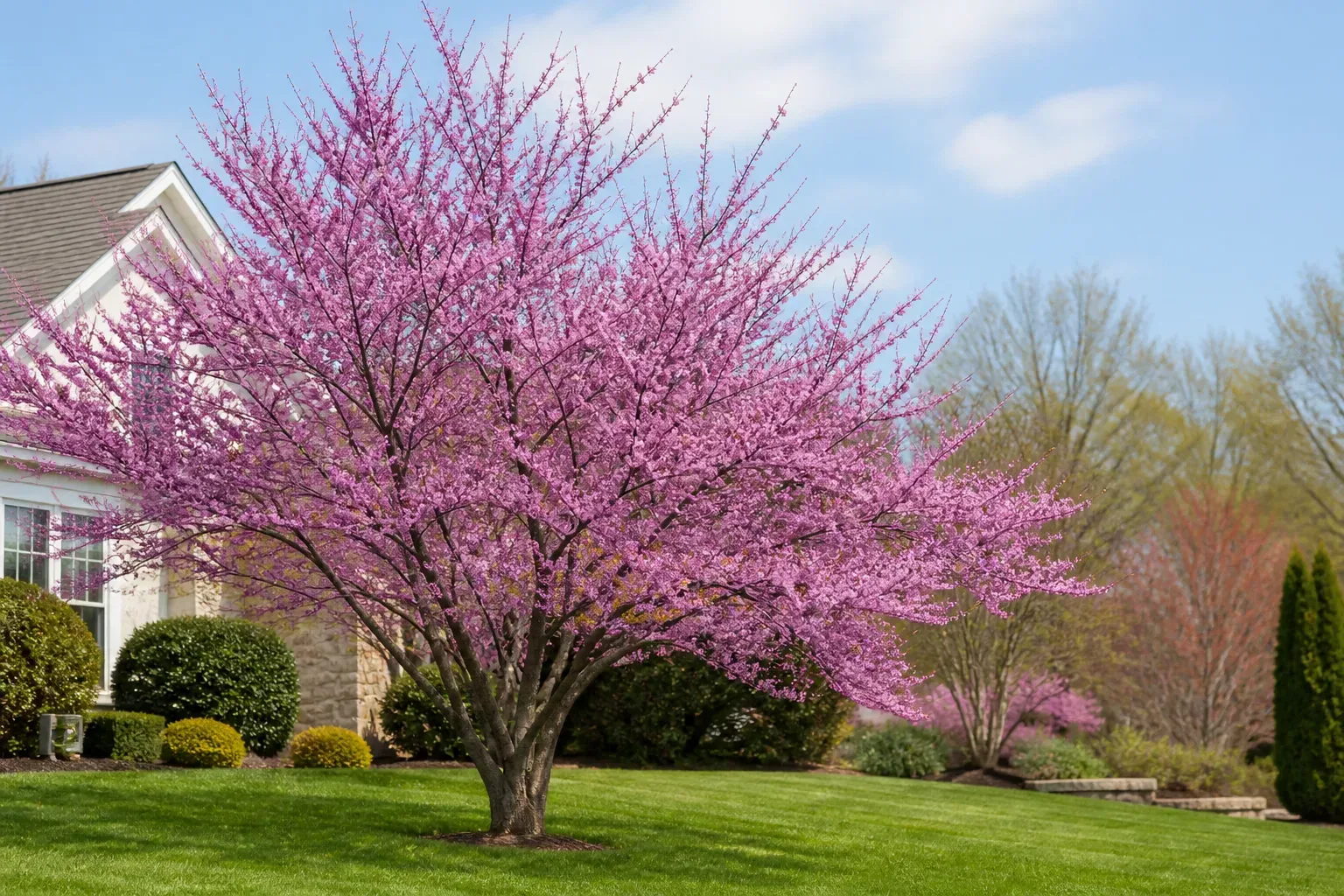
For spring flowers, serviceberry, eastern redbud, and appropriately sized flowering dogwood can offer seasonal interest without copying the Bradford pear’s weak, upright forked structure. Their performance still depends on climate, soil, disease pressure, and cultivar, so ask the nursery for mature width and a locally verified selection.
For fall color, black gum, a properly sited red maple, or a male ginkgo cultivar may be options on a larger property. A ginkgo can become a very large tree, and a red maple can develop surface roots with age, so “alternative” does not mean “plant at the pavement edge.” The goal is to trade a risky default for a better-matched tree and a larger planting footprint.
For a small driveway or narrow side yard, look at Japanese maple where it is hardy, compact hornbeam cultivars, serviceberry, or a small native tree recommended by your local extension office. For screening, a row of appropriately spaced arborvitae may be easier to manage than a large shade tree, but spacing, snow load, mature width, and access for pruning still matter.
A quick comparison of driveway-friendly options
| Your goal | Options to investigate | Check before planting |
|---|---|---|
| Spring flowers | Serviceberry, eastern redbud, flowering dogwood | Mature width, disease pressure, and local hardiness |
| Small specimen | Japanese maple, serviceberry, compact hornbeam | Sun, drought tolerance, trunk clearance, and cultivar size |
| Fall color | Black gum, selected red maple, male ginkgo cultivar | Final height, surface roots, soil moisture, and overhead space |
| Narrow vertical form | Columnar hornbeam, selected red maple, narrow ginkgo cultivar | Width at maturity, branch clearance, and utility conflicts |
| Evergreen screening | Properly spaced arborvitae or locally suitable conifer | Snow or wind exposure, mature width, and access between plants |
Trusted horticulture guidance for road and driveway planting also emphasizes choosing trees for site tolerance, mature size, root behavior, and litter rather than choosing by flower color alone. Gardening Know How’s driveway-tree suggestions are useful for generating ideas, but local extension recommendations should decide which options are actually adapted to your soil and climate.
If one of these trees is already near your driveway
Do not remove a mature tree merely because its name appears on a list. First photograph the trunk, root flare, canopy, pavement edge, and any cracks or lifted sections; note whether the damage changes after drought, heavy rain, freezing weather, or major storms. A record helps separate normal pavement aging from tree-related movement and gives a professional something more useful than “the roots look aggressive.”
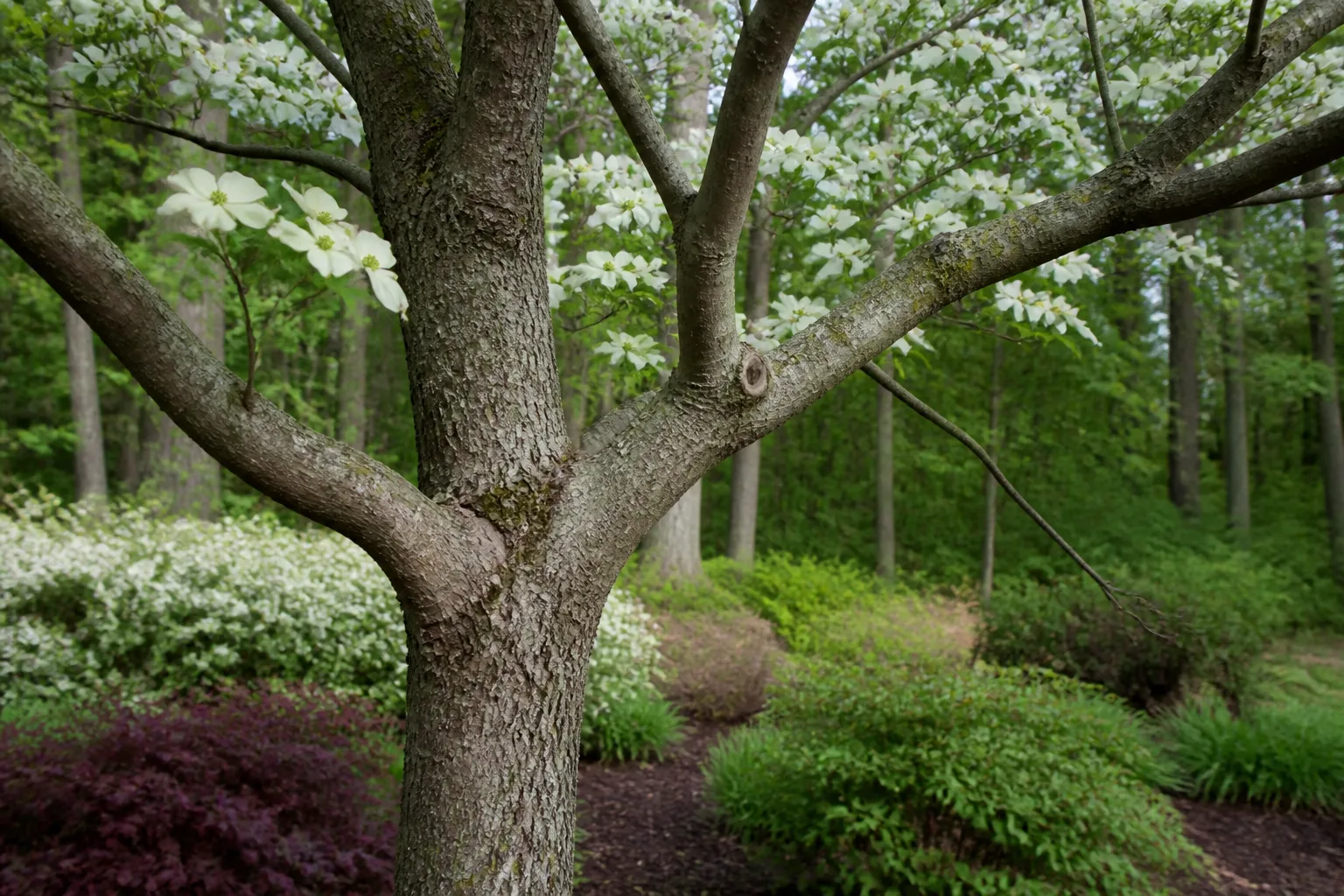
Inspect for hanging or dead limbs, cracked unions, cavities, trunk lean, root damage from construction, and branches over the parking target. If the tree is tall enough to reach a car, house, road, or utility line, have a qualified arborist assess the target and the tree’s structure before attempting work yourself.
When pruning helps—and when it does not
Pruning can reduce a specific branch hazard and can guide a young tree toward stronger structure. It cannot turn a large, surface-rooted species into a small tree, restore pavement lifted by a buttress root, or guarantee that a weakly attached crown will never fail.
The USDA Forest Service guidance collected by USDA Climate Hubs recommends regular maintenance and structural pruning to foster mechanically stronger branch structure, while recognizing that even maintained trees can fail. Have dead, cracked, or target-facing limbs addressed promptly, especially before a forecast storm.
Never top a tree to make it “fit” the driveway. Topping leaves large wounds, stimulates weak regrowth, and often replaces one clearance problem with several fast-growing branches. Do not sever large roots beside the trunk to save a slab; cutting anchoring roots can destabilize the tree, invite decay, or kill it. A tree professional and a pavement professional may need to coordinate on whether to reroute a root, redesign the edge, lift or replace a section, or remove the tree.
Common planting mistakes that create driveway damage
The first mistake is planting to the current trunk size. A one-inch caliper tree can look absurdly far from the drive when young, but that empty space is what protects the pavement and gives the canopy room to develop. Use the mature spread and the species’ root behavior, not the size on planting day.
The second is choosing by a single attractive trait. Fast growth, deep shade, a weeping shape, or brilliant spring flowers can hide the cost of weak wood, shallow roots, fruit drop, or frequent pruning. Write down the trait you want and the failure you cannot tolerate before you shop.
The third is planting over infrastructure because the area is already watered. A damp strip beside a downspout may look ideal for a willow, but it can also indicate a drainage issue or create a root target beside the foundation and driveway. Fix the water path first; do not use a thirsty tree to disguise it.
The fourth is assuming any damage must be caused by roots. Photograph the timing and direction of pavement movement, inspect drainage and the base beneath the drive, and look for frost heave, poor compaction, or a failed edge. Good diagnosis prevents unnecessary root cutting and avoids blaming a healthy tree for a separate construction problem.
The final mistake is forgetting the car itself. Ask where branches, fruit, seed pods, sap, and snow will land—not just where the trunk will stand. A tree can be botanically healthy and structurally sound yet still be the wrong choice above the only place your family parks.
Conclusion
Bradford pear, Norway maple, weeping willow, mulberry, and silver maple are poor default choices near a driveway because each creates a different kind of trouble: branch failure, surface roots, water-seeking roots, fruit mess, oversized growth, or several of these at once. The right response is not a blanket ban on trees; it is a better match between species, mature size, pavement, utilities, drainage, and the place people and cars actually use.
Measure from the future trunk to the pavement edge, check mature spread and root behavior, locate utilities and septic infrastructure, and increase the distance when the tree or site is high risk. If a tree is already established, document the condition and get an assessment before pruning roots, topping the canopy, or replacing the driveway around a problem you have not diagnosed.