Jasmine Care Guide: Light, Watering, Soil and Problems
A practical jasmine care guide covering light for blooms, watering, soil, cool rest, pruning, and why star jasmine and jessamine are different plants.
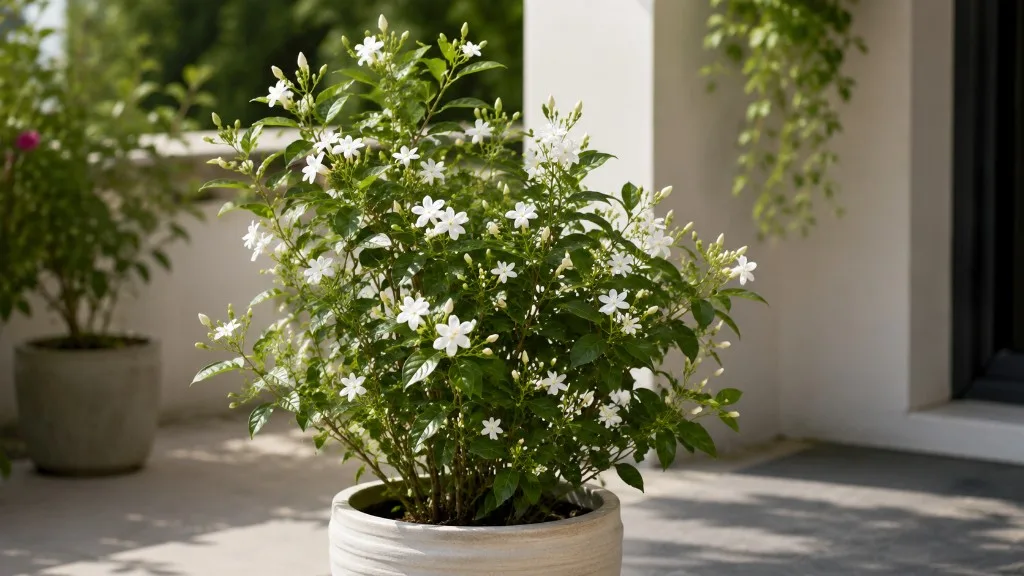
Jasmine earns its reputation on fragrance, not on easygoing foliage. A well-grown vine can perfume a room or patio with white or pale pink star-shaped flowers, but the same plant can sit green and mute for months if light, moisture, and seasonal rhythm are only “good enough.” This page is the full care overview for home growers: identify what you actually bought, set light and watering correctly, keep roots in fertile well-drained mix, protect bloom cycles with pruning timing and a cool winter rest when your species needs it, and open deeper topic pages when a symptom needs its own walkthrough.
Use the canonical jasmine care hub when you already know the problem and want step-by-step depth on light, watering, soil, pruning, or a named symptom.
Who This Guide Is For (and How We Reviewed It)
This guide is for growers who bought a plant labeled “jasmine,” want reliable fragrance, and keep hitting the same walls: lush leaves with no buds, buds that form then drop, confusion between true jasmine and star jasmine, or pet-safety questions after a yellow “jessamine” showed up at the nursery.
Written by Sai Ananth (B.Pharmacy; LeafyPixels lead writer) and reviewed by the LeafyPixels Review Board. Care ranges were checked against NC State Extension, Missouri Botanical Garden, the Royal Horticultural Society, Clemson HGIC, and ASPCA toxic-plant listings via primary-page research, then aligned with LeafyPixels jasmine hub data and real container constraints. Species and hardiness statements vary by cultivar and microclimate — confirm the botanical name on your tag before copying any winter plan.
Honest experience note (not a lab trial): In a heated apartment, a nursery Jasminum polyanthum kept all winter near 68–72°F (20–22°C) with only “bright room” light stayed leafy and produced almost no late-winter buds. The following season, the same plant spent October–February on a cool enclosed porch averaging about 50–55°F (10–13°C) nights, with reduced watering and a south window plus a full-spectrum LED for roughly 12–14 hours. Flower clusters formed on the tips by late winter. A separate balcony J. officinale in a terracotta pot with a simple trellis bloomed more heavily after a post-bloom prune that shortened flowered stems to strong side shoots rather than shearing the vine into a hedge mid-summer. Your climate and pot will shift timelines — treat these as condition-and-outcome notes, not guarantees.
Confirm You Have True Jasmine (Not Star Jasmine, Jessamine, or Gardenia)
True jasmine belongs to the genus Jasminum in the olive family (Oleaceae). The species most general care advice assumes is Jasminum officinale — common jasmine, poet’s jasmine, or true jasmine — a vigorous twining climber native from Turkey through Iran and northern India to central China. Outdoors it can climb roughly 20 to 30 feet on strong support (NC State notes vigorous specimens can reach even taller); in a container with regular pruning it often behaves more like a 2 to 3 foot supported shrub.
Fragrance is the product. Leaves can look respectable in mediocre conditions for a long time. Flowers usually reveal whether the plant is truly getting what it needs. That is why jasmine care is bloom-driven: you manage energy income (light), root comfort (moisture and drainage), and seasonal cues (temperature and pruning), not just “keep it alive.”
Nursery tags often say “jasmine” when the plant is not Jasminum at all. That mix-up changes cold hardiness, bloom timing, and — critically — pet safety.
- Star jasmine / Confederate jasmine (Trachelospermum jasminoides) is a fragrant evergreen climber in the dogbane family, not a true jasmine. Clemson Extension notes it is commonly confused with Jasminum despite the shared common name. See the star jasmine hub for its own care profile.
- Carolina jessamine (Gelsemium sempervirens) produces yellow trumpet flowers and has high-severity poison characteristics if ingested — the opposite risk profile of true jasmine.
- Cape jasmine (Gardenia jasminoides) is a fragrant Rubiaceae shrub, not Jasminum, and is listed toxic to pets by the ASPCA.
If your tag lacks a botanical name, use habit clues: pink buds opening white on a tender vine often point to J. polyanthum; compact shrubby white pinwheels suggest J. sambac; yellow flowers on bare green stems in late winter suggest J. nudiflorum. Confirm before you copy a care routine from a random label.
True Jasmine vs Star Jasmine Care Differences
| Factor | True jasmine (Jasminum) | Star jasmine (Trachelospermum jasminoides) |
|---|---|---|
| Family | Oleaceae | Apocynaceae (dogbane) |
| Typical look | Twining climber; deciduous to semi-evergreen by species | Evergreen twiner; glossy opposite leaves; milky sap |
| Bloom cue | Species-specific; J. officinale often needs cool winter rest indoors | Late-spring flush; prune after flowering |
| Hardiness (typical) | J. officinale ~Zones 7–10; J. nudiflorum ~Zones 6–10; tender types frost-free | Often ~Zones 8–10 outdoors; containerize colder climates |
| Pet note | Jasminum listed non-toxic by ASPCA | Confirm label; do not assume “jasmine” = Jasminum |
NC State describes star jasmine as wanting fertile, well-drained soil in a sheltered sunny spot, with prune-after-flowering and sticky sap on cut stems. If your plant matches that profile, follow the star jasmine hub — not every tip on this page.
Which Jasminum You Likely Own (and What That Changes)
Species choice changes winter strategy more than summer watering.
| Species | Common name | Bloom window (typical) | Hardiness cue | Prune timing |
|---|---|---|---|---|
| J. officinale | Common / poet’s jasmine | Spring into fall | USDA Zones 7–10 | After main flush (late summer/early autumn) |
| J. polyanthum | Pink / Chinese jasmine | Late winter–spring indoors | Tender; keep nights above about 13–15°C (55–59°F) outdoors | After indoor/spring flush |
| J. sambac | Arabian jasmine | Repeated flushes in warmth | Warm-climate / frost-free containers | Light shaping after flushes; avoid mid-bud hard cuts |
| J. nudiflorum | Winter jasmine | Late winter on bare stems | Often near USDA Zone 6–10 | Spring, immediately after yellow show |
Missouri Botanical Garden lists J. officinale for USDA Zones 7–10, full sun to part shade, and notes indoor plants need plenty of light, high humidity, and a cool winter rest from October through March to flower well. That winter rest is the care fact many indoor growers skip while chasing bloom fertilizer.
The RHS groups summer-flowering climbers (J. officinale), hardy winter jasmine (J. nudiflorum), and tender types such as J. polyanthum as house or conservatory plants. Match your plant to a group before you invent a calendar.
Quick Care Snapshot
For reliable growth and fragrance, give jasmine full sun to strong partial shade (about 4–6+ hours of direct sun on growing tips when possible), water when the top inch of mix is dry, use a fertile, well-draining potting mix around pH 6.0–7.5, and keep growing-season temperatures roughly 15–32°C (60–90°F) with a cooler winter rest for species that need bud set. Train climbing stems on a trellis, prune after the main bloom for your species, and reduce water while the plant rests.
| Care factor | Baseline target | Deeper guide |
|---|---|---|
| Light | Full sun to partial shade; bright south/west window indoors | Light |
| Water | Top inch dry, then soak and drain; reduce in cool rest | Watering |
| Soil | Fertile, well-draining mix; drainage hole required | Soil |
| Feed | Light feeding in active growth; skip stressed plants | Fertilizer |
| Support | Trellis or hoop; prune after flowering | Pruning |
A jasmine in a hot balcony pot, a cool conservatory, and a heated apartment bedroom will not dry on the same calendar. Check soil and pot weight before you water; schedules are only reminders.
Light for Blooms (Outdoor Walls, Windows, Grow Lights)
Jasmine is a bloom-driven climber, not a low-light foliage plant. NC State Extension classifies common jasmine for full sun (six or more hours of direct sunlight) or partial shade (about two to six hours). More sun generally means heavier flowering; too much shade produces fewer blooms and longer, weaker internodes. Leaves can persist in mediocre brightness while buds never form — that is the most common indoor disappointment.
Clemson HGIC is even more specific for indoor culture: jasmines need at least four hours of direct sunlight daily or 14 to 16 hours of strong artificial light, with day temperatures about 68–72°F and nights about 50–55°F. (Clemson HGIC)
Outdoors, a sheltered south- or west-facing wall with morning-to-midday sun is often ideal. In very hot climates, light afternoon shade can reduce leaf scorch without starving flower wood. Indoors, place growing tips within a few feet of the strongest window glass you have. A “bright room” across the floor from a window is usually not enough photon income for reliable bloom.
Indoor Windows, Acclimation, and Grow Lights
A south-facing window is the strongest default for indoor blooms when summer heat is diffused with a sheer curtain. East windows give cooler morning sun and are safer for unacclimated plants. West windows work in spring and fall but may need afternoon shading in hot summers. North windows rarely support flowering without supplemental light.
Acclimate gradually when moving a shade-grown nursery plant into strong sun — add direct exposure over one to two weeks. Sudden midday glass can bleach or crisp leaves that formed indoors. If natural light falls short, pair the plant with a full-spectrum grow light for roughly 12–14 hours daily rather than accepting a permanently budless vine. For fixture choice and placement distance, see the grow lights complete guide and the dedicated jasmine light page.
Judge success by new tips and buds, not old leaves. Compact internodes and swelling flower clusters mean light is working. Long gaps between leaves and empty tips mean move brighter before you change fertilizer.
Watering by Soil Check and Season
Jasmine wants consistently moist, well-drained soil — not bog conditions and not cactus drought. NC State notes a preference for moist, well-drained, light soil enriched with organic matter, with drought tolerance once established in the ground. Container plants are different: the RHS emphasizes regular watering through the growing season because pots have little moisture reserve beyond what you supply. (RHS)
The practical routine is simple. Check the top one to two inches of mix and the pot’s weight. When the surface zone is dry and the pot feels noticeably lighter, water thoroughly until a little runoff appears, then empty the saucer within about thirty minutes. Finger tests, wooden skewers, and pot-weight memory beat any fixed “every Tuesday” rule. For deeper moisture-check habits that transfer across houseplants, use how to water indoor plants the right way.
During active growth and open flowers, keep moisture steadier — check daily in hot, bright weather without letting the root ball go bone dry for long stretches. Drought stress and soggy soil can both trigger bud drop. In cool, dimmer months, stretch intervals; many indoor containers move from roughly every 2–3 days in warm summer brightness toward about weekly or every 10–14 days during rest, always confirmed by soil checks.
Missouri Botanical Garden advises generous moisture in the growing season with good drainage, then a cooler winter rest with reduced watering. If leaves wilt while soil is still wet, stop watering and inspect drainage and roots — that pattern usually signals oxygen-starved roots, not thirst. Full diagnostics live on the jasmine watering guide and problem pages for overwatering and root rot.
Field note on mix dry-down: In our 50/30/20 potting-soil / compost / perlite blend, the same root mass in terracotta often needed water one to two days sooner than in plastic under identical south-window heat. Use that as a calibration cue, not a universal schedule.
Soil, Pot, and Drainage
The Royal Horticultural Society describes cultivated jasmine as preferring fertile, well-drained soil. In pots, that means a mix that holds enough moisture for steady growth while still letting excess water leave within minutes. A reliable home blend is roughly 50% quality potting soil, 30% compost or worm castings, and 20% perlite, pumice, or coarse sand, targeting about pH 6.0–7.5. Amend bagged mix with extra drainage material if it feels dense; avoid moisture-control gels and garden topsoil that compact in containers.
Always use a pot with a drainage hole. Terracotta dries faster and forgives heavy watering; plastic holds moisture longer in bright heat. Skip oversized pots that leave a large wet soil mass around a small root system. Repot every two years or when roots circle and flowering stalls despite good light — early spring or right after the main bloom when you prune is a practical window. Mix recipes, drainage tests, and pot sizing are expanded on the jasmine soil and repotting guides.
Temperature, Cool Winter Rest, and Humidity
Most Jasminum species enjoy warm active growth and cooler short-day rest. A working comfort band for many growers is about 15–32°C (60–90°F) in the growing season, with nights somewhat cooler than days. Frost tolerance is species-specific: J. officinale is typically hardy in Zones 7–10 in the ground, while tender pink and Arabian jasmines need frost-free nights or indoor shelter. The RHS advises bringing tender types indoors before nights fall below about 13–15°C (55–59°F). (RHS)
For indoor bloom on common jasmine, the Missouri Botanical Garden culture note is blunt: keep plants cool in winter and let them rest, with high humidity and plenty of light required to flower. Overheated living rooms with weak winter light are a classic reason for lush leaves and no perfume. Tender J. polyanthum still wants warmth above the mid-50s°F, but even then it needs strong winter light to carry its late-winter show — cool rest and “never frost” are not the same instruction for every species.
Humidity around 40–60% suits most homes. Very dry heated air encourages spider mites. A pebble tray with the pot elevated above the water line, plant grouping, or a small humidifier helps more than brief misting. When dry air is the limiter, pair this page with the houseplant humidity guide and why houseplants struggle in winter. For outdoor-to-indoor transitions and cool-room strategy, see winter houseplant care.
Feeding Without Trading Blooms for Leaves
Feed lightly during active growth once the plant is established and producing new shoots. A balanced liquid fertilizer at half label strength every few weeks in spring and summer is enough for most container vines. Do not use fertilizer to “force” flowers in weak light — extra nitrogen mostly buys longer stems and larger leaves.
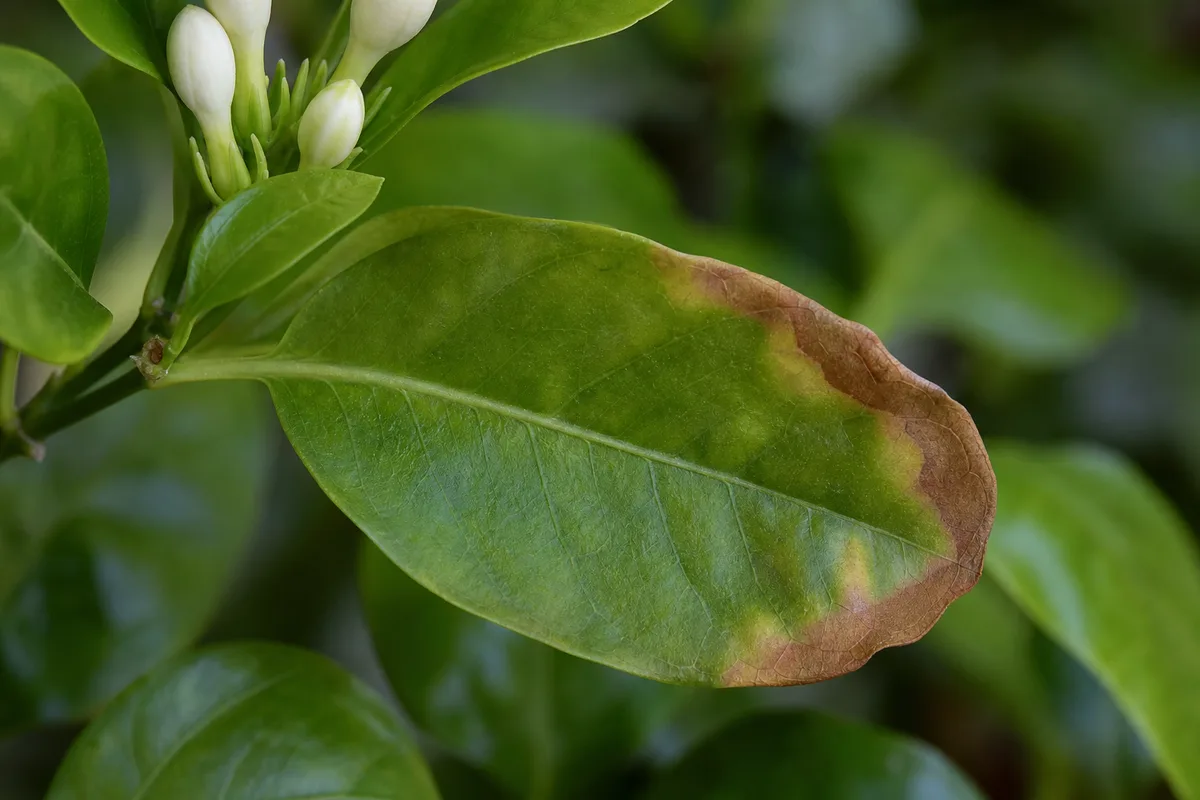
Hold feed on freshly repotted plants for several weeks, on plants in cool rest, and on any vine with wet-soil stress or pest pressure. Salt crust on the soil surface or crispy leaf margins after feeding can mean you need a clear-water flush and a lighter schedule. Species-specific timing and overfeed symptoms are covered on the jasmine fertilizer guide and fertilizer burn page.
Pruning and Training After Your Species’ Main Flush
Jasmine climbs toward light. Without training and pruning, flowers end up at the ceiling while the base turns woody and bare. Give climbers a trellis, hoop, or wires from day one, and guide soft stems with soft ties rather than forcing old woody sections into sharp bends.
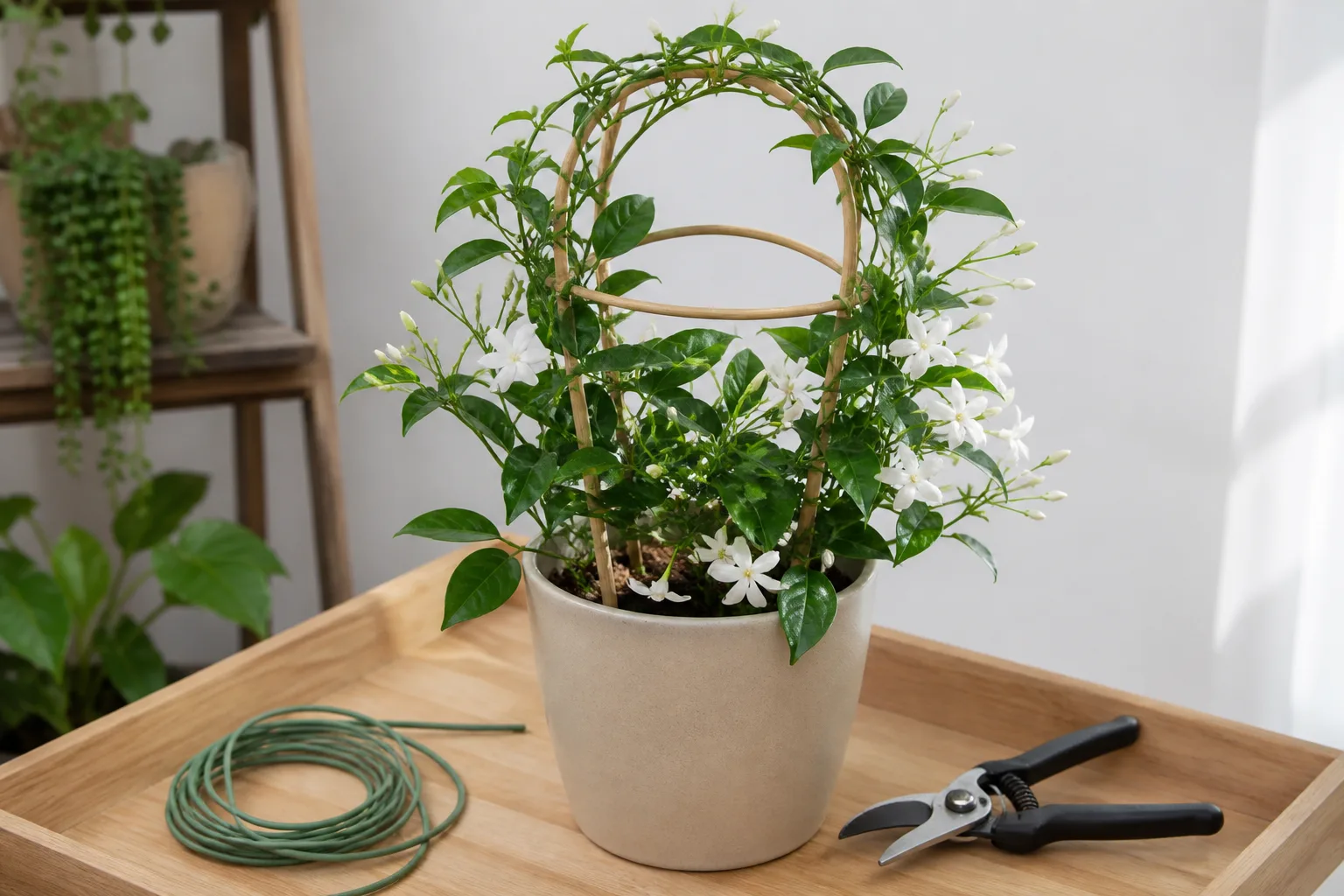
Prune on a bloom calendar, not a calendar month alone. The RHS recommends pruning summer-flowering jasmines just after flowering in late summer or early autumn so new wood can mature for the next season, and pruning winter jasmine in spring immediately after its yellow show. Tender pink jasmine is usually cut after its indoor late-winter or spring flush. Start every session by removing dead or damaged wood, then shorten flowered stems to strong side shoots, and limit routine shaping on healthy plants to roughly one-third of volume. Hard renovation is possible on overgrown vines but can delay heavy flowering for a season or two. Step-by-step cuts belong on the jasmine pruning guide.
NC State notes common jasmine responds well to severe pruning after blooms fade and that indoor plants need hard pruning plus a trellis. (NC State Extension) Winter jasmine flowers on last year’s wood, so spring prune-after-bloom protects next year’s display. (NC State; MOBOT)
Propagation Basics (and Where to Go Deeper)
Healthy jasmine multiplies readily from semi-hardwood / semi-ripe stem cuttings and by layering outdoor vines. This guide does not repeat the full rooting workflow. Use the dedicated jasmine propagation page for node selection, humidity covers, rooting hormone notes, and aftercare. The RHS semi-ripe cuttings method — firm base, soft tip, warm humid rooting conditions, typically late summer to mid-autumn — is the home-grower standard for many woody climbers including jasmine relatives.
One-sentence success check: a cutting is on track when new tip growth appears and the stem stays firm after gentle tug resistance develops — usually within several weeks in warm humidity, not overnight.
Propagate from vigorous, correctly lit parent plants. Cuttings from a chronically shaded, overwatered vine inherit the same stress pattern unless you fix the parent’s environment first.
Troubleshooting: No Flowers, Bud Drop, Yellow Leaves, Pests
Most jasmine failures are environmental, not mysterious disease. Start with light income, soil moisture, drainage, and whether your species received a cool rest. Then inspect undersides of leaves for pests. Missouri Botanical Garden notes that mealybugs, scale, and whiteflies are the usual indoor troublemakers on plants overwintered inside.
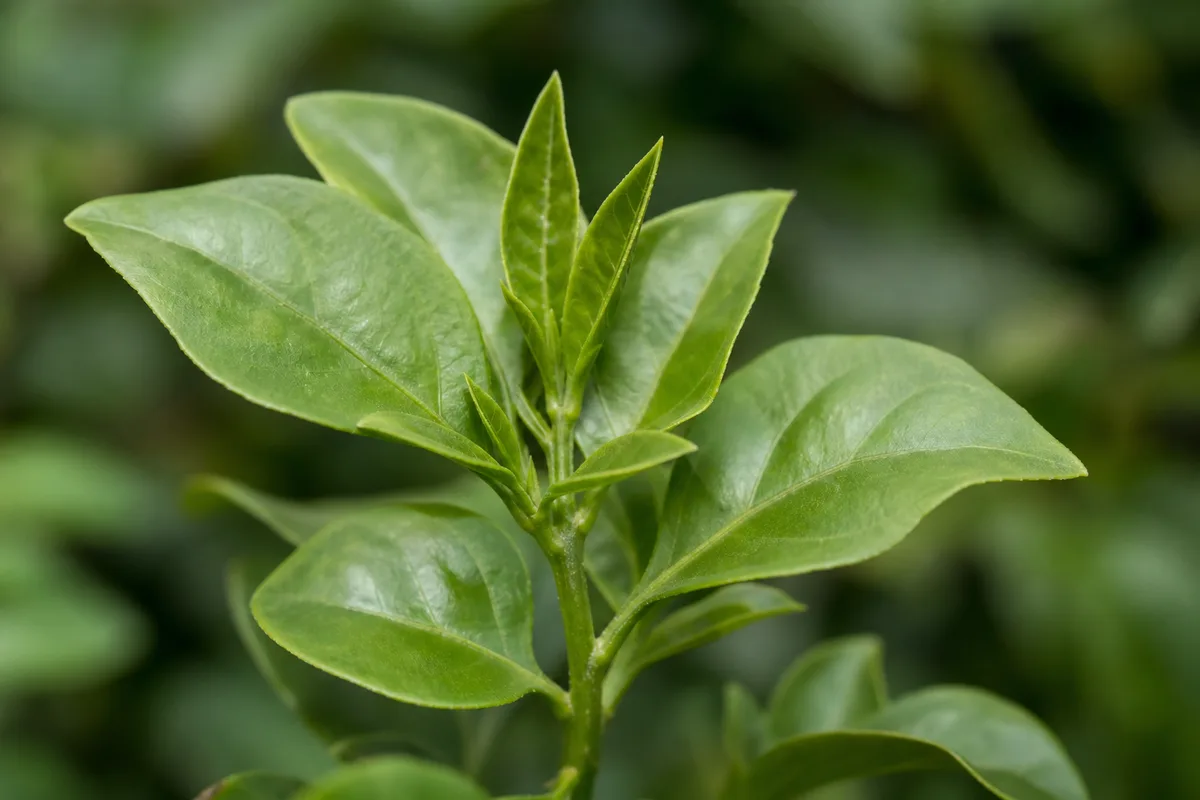
| Symptom | Likely cause | First move |
|---|---|---|
| Lush leaves, no buds | Weak light or missed cool rest | Brighten tips; review winter temps |
| Buds form then drop | Dry/wet swings, drafts, low light | Stabilize moisture; check placement |
| Yellow leaves, wet mix | Overwatering / poor drainage | Stop water; inspect roots |
| Long bare stems | Not enough light / no pruning | Move brighter; prune after bloom |
| Speckling, fine webbing | Spider mites in dry air | Raise humidity; treat pests |
No flowers almost always starts with insufficient direct sun on growing tips, or with warm, dim winters for species that need a rest period. Fertilizer is a late fix. Work through the no flowers page after you correct light.
Bud drop follows moisture extremes, sudden temperature swings, or relocating a plant mid-bud. Keep checks tighter during flowering and avoid stacking repot, hard prune, and fertilizer changes in the same week. See bud drop.
Yellow leaves need a soil check first. Wet mix with soft yellow leaves suggests overwatering; dry mix with crisp yellowing suggests drought or heat. Natural aging of a few older lower leaves is normal. Use yellow leaves and overwatering for the decision path.
Pests — spider mites in dry rooms, aphids on soft tips, plus mealybugs, scale, and whiteflies indoors — deserve early mechanical removal and targeted treatment. Check spider mites, mealybugs, scale insects, and whiteflies rather than spraying blind.
Buds Never Form vs Form Then Drop vs Yellow Flowers on Bare Stems
Use this short decision path before you rewrite the whole care routine:
- Buds never form — Count hours of direct light on growing tips. If you have J. officinale indoors, ask whether October–March was cool and bright enough for rest, or only warm and dim. Fix light and season first; then review nitrogen-heavy feeding.
- Buds form, then drop — Stabilize moisture (no bone-dry then flood cycles), stop moving the pot, and shield from cold drafts or hot heater blast. See bud drop.
- Yellow flowers on bare green stems in late winter — You likely have winter jasmine (J. nudiflorum), not common jasmine. Prune in spring after bloom; do not apply a summer-climber prune calendar. (MOBOT)
Pet Safety and Toxic Lookalikes
True jasmine (Jasminum) is listed by the ASPCA as non-toxic to dogs, cats, and horses. That is a real advantage in pet-aware homes, but “non-toxic” does not mean the plant should be chewed — soil digging and shredded vines still cause mess and stress.
The danger is misidentification. Carolina jessamine (Gelsemium) is highly toxic; gardenia (cape jasmine) is toxic to pets; other “jasmine” common names may hide different genera. Verify the botanical name on the tag before you assume safety. If an unidentified plant was ingested, contact your veterinarian or ASPCA Animal Poison Control at (888) 426-4435 (a fee may apply).
30-Day Setup Checklist
- Days 1–3: Confirm botanical name. Quarantine and check undersides for mites/scale. Do not repot unless the mix is failing.
- Days 3–7: Place growing tips in the strongest practical light. Install a trellis or hoop. Learn pot weight after a thorough drain-through watering.
- Days 7–14: Water only when the top inch is dry. Note how fast terracotta vs plastic would dry if you are comparing pots.
- Days 14–21: If winter and your species is J. officinale, prioritize cool nights and strong light over fertilizer. If tender pink jasmine, protect from frost while maximizing winter light.
- Days 21–30: Judge by new tip growth and any bud swell — not by older leaves. Only then consider light feeding in active growth, or open no flowers if tips stay empty after light is fixed.
- What success looks like: In about 30 days, expect stable new growth and a watering rhythm you trust. In about 90 days across a proper cool rest + return to warmth, expect bud set on species that flower after rest — not overnight perfume from a dim shelf.
Related Jasmine Guides
- Jasmine plant hub — overview, topic guides, and problem index
- Star jasmine care hub — lookalike evergreen climber (Trachelospermum), not true Jasminum
- Why jasmine has no flowers — bloom troubleshooting after light and rest checks
- Jasmine bud drop — moisture and draft causes mid-bud
- Winter houseplant care — cool-room and overwintering context for tender vines
- Why houseplants struggle in winter — low light + dry heat patterns that stall blooms
- How to water indoor plants the right way — soil-check habits that prevent root rot
- Grow lights for indoor plants — supplemental light when windows cannot bloom jasmine
- Houseplant humidity guide — dry-air strategies that also deter spider mites
Conclusion
Good jasmine care is a short system done consistently: strong light on the growing tips, moist but never stagnant roots, fertile well-drained mix, training and post-bloom pruning, and — for many fragrant species — a cool winter rest that actually allows buds to form. Identify true Jasminum before you copy advice meant for star jasmine or jessamine, water by soil checks instead of calendars, and treat missing blooms as an energy and season problem before you reach for fertilizer.
This week’s actions: confirm the botanical name, move tips into stronger light (or add a timed grow light), check whether your species needs cool rest right now, and water only after the top inch dries. When a symptom needs its own walkthrough, open the jasmine hub and follow the matching topic or problem page instead of guessing from leaf color alone.