How to Grow and Care for Eastern Redbud
Grow eastern redbud (*Cercis canadensis*) with the right site, water, pruning, and cultivar picks—plus fixes for canker, weak bloom, and wind damage.
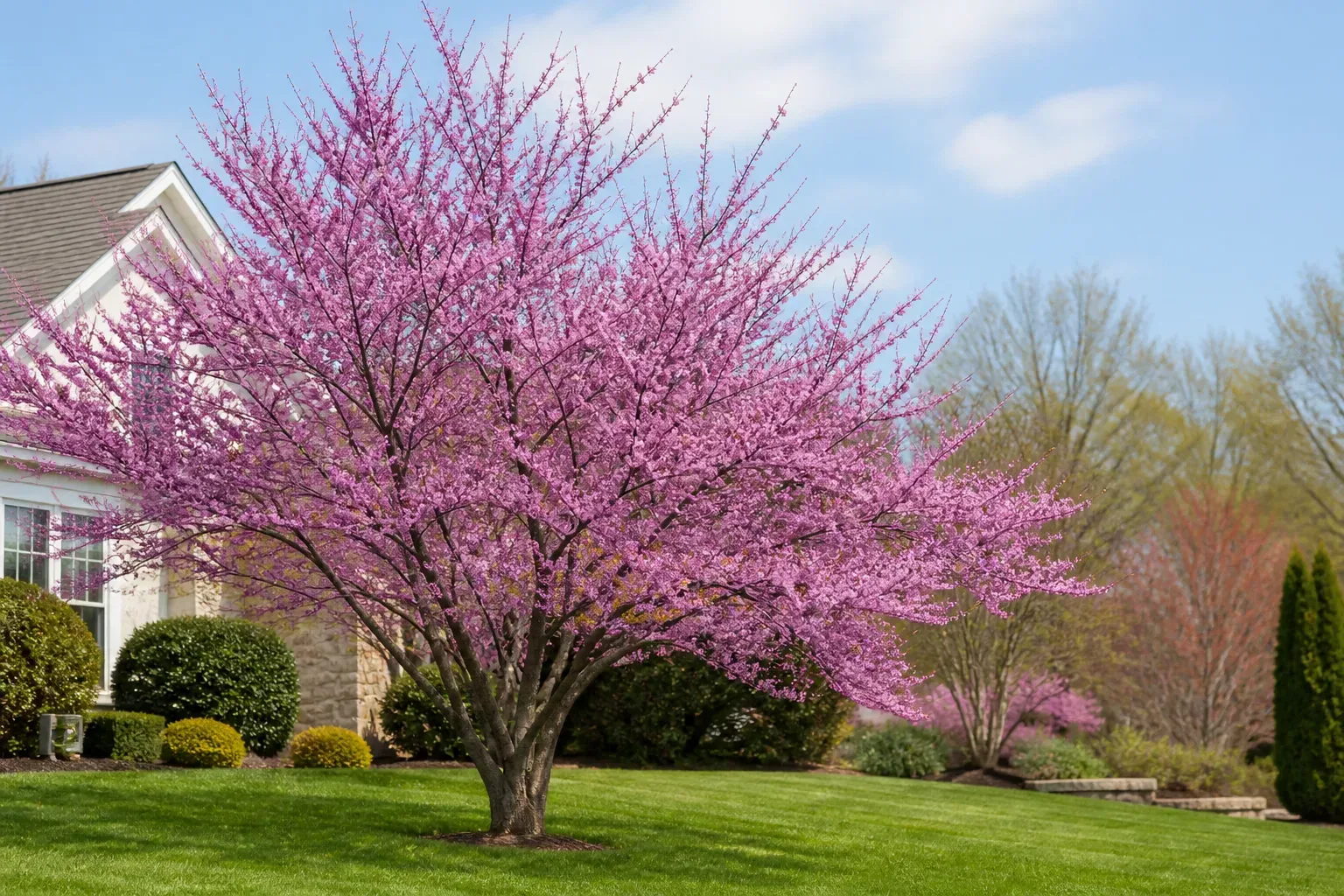
Eastern redbud (Cercis canadensis) is the small native tree that paints woodland edges and front yards in rose-pink weeks before most leaves appear. The flowers open directly on bare branches—and sometimes on the trunk itself—a habit called cauliflory that makes redbud one of the most recognizable spring sights in eastern North America. Gardeners plant it for that early color, for pollinator value, and because it stays residential in scale compared with maples or oaks.
The trade-off is honesty about lifespan and structure. NC State Extension notes eastern redbud is often short-lived, typically under 75 years, and branches can be brittle in wind. Treat it as a high-impact spring tree you site carefully and maintain proactively—not a set-and-forget shade tree for the next century. Get drainage, sun, and wind protection right early, and you buy years of reliable bloom.
What Makes Eastern Redbud Worth Planting
Eastern redbud belongs to the pea family (Fabaceae). Like other legumes, it can fix atmospheric nitrogen through root nodules, which means it rarely needs supplemental fertilizer in average garden soil. That nitrogen bonus helps neighboring plants too, making redbud a useful anchor in mixed borders and native plantings.
Wildlife value is substantial. Spring flowers feed early bees and butterflies, including the specialized bee Habropoda laboriosa that associates with Cercis species, according to NC State Extension. Redbud is also a larval host for Henry’s elfin butterfly. Seed pods mature in late summer and feed birds and small mammals through fall and winter. If you want spring drama without importing a fragile exotic, redbud delivers.
One practical advantage surprises people planning under black walnut (Juglans nigra): eastern redbud tolerates juglone, the allelopathic compound walnut roots release. That opens understory spots where many ornamentals fail. Pair redbud with other juglone-tolerant natives and you build a spring layer that actually survives the walnut’s chemical shadow.
Eastern Redbud at a Glance
| Feature | Details |
|---|---|
| Botanical name | Cercis canadensis |
| Common names | Eastern redbud, American redbud, Judas tree |
| Family | Fabaceae (legume) |
| Mature size | 20–30 ft tall, 25–35 ft wide |
| Growth rate | Moderate; up to 24 in. per year in ideal sun and drainage |
| Sun | Full sun to part shade; best bloom in 6+ hours direct sun |
| Soil | Adaptable pH; prefers well-drained loam, tolerates clay if drainage is good |
| Hardiness | USDA zones 4–8 |
| Bloom time | Late winter to early spring (roughly February–April by region) |
| Flower color | Rose pink to lavender-pink; white forms available |
| Native range | Eastern North America, from southern Ontario to northern Florida and west to Nebraska |
| Typical lifespan | Often under 75 years; disease and siting strongly affect longevity |
| Special traits | Nitrogen-fixing, juglone-tolerant, cauliflorous spring bloom |
Where Eastern Redbud Grows Best
Redbud is adaptable, not indestructible. It survives a wide climate band but punishes two mistakes: planting in sustained wet soil and leaving young trunks exposed to southwest winter sun and drying wind.
Native Range and Natural Habitat
In the wild, eastern redbud appears in deciduous forest margins, open woods, and along slopes—often on south-facing woodland edges where light is brighter. GrowItBuildIt describes it along highway ditches and forest transitions throughout the eastern U.S., which explains why the species handles urban pollution and variable soils better than finicky ornamentals.
It also grows as an understory tree, but specimens in deep shade stretch toward light, bloom thinly, and look leggy. For landscape use, treat full sun to bright partial shade as the target—not dense canopy shade.
Choosing the Right Planting Site
Pick a spot with these priorities in order:
- Drainage first. Roots need oxygen. Constantly wet soil invites root stress, beetle damage, and canker entry points.
- Wind shelter. Multi-trunk forms and zig-zagging branches break in exposed sites. A fence line, house corner, or shrub windbreak helps.
- Room to spread. Mature width often equals height. Plant at least 15–20 ft from structures and 10–12 ft from driveways so low branches do not scrape vehicles.
- Afternoon relief in hot climates. In zones 7–8, light afternoon shade reduces heat stress on purple-leaf cultivars especially.
Avoid low lawn bowls where water collects after rain. If your yard is flat and heavy clay, raise the planting area or choose a higher berm rather than sinking the root flare below grade.
Light Requirements for Peak Bloom
Eastern redbud grows in full sun to partial shade, but bloom density follows light. Six or more hours of direct sun produces the thickest flower display and the most compact habit. In partial shade—common when planted under taller trees—expect fewer flowers and a more open, arching silhouette.
Hot-summer regions add nuance. Full morning sun with light afternoon shade often keeps purple-leaf selections such as ‘Forest Pansy’ from scorching while still delivering strong spring color. Do not interpret “tolerates part shade” as “blooms well in shade.” If your tree flowers lightly every year, observe the canopy at noon in June before assuming disease.
Soil, Water, and Drainage
Redbud tolerates sandy loam, clay loam, and a range of pH levels from slightly acidic to alkaline. Fertility matters less than structure. A moderately fertile, well-drained soil with consistent moisture during establishment is the sweet spot NC State Extension describes.
Because the species fixes nitrogen, routine fertilizer is unnecessary unless a soil test shows a clear deficiency. Over-fertilizing lush growth can actually increase susceptibility to some fungal issues without improving bloom.
Watering Young vs Established Trees
Years 0–2: Water deeply once a week when the top 2–3 inches of soil are dry. Extend to twice weekly during heat waves or drought. A 2–3 inch mulch ring (not touching the trunk) conserves moisture and moderates soil temperature.
Years 3+: Established redbuds tolerate dry spells but bloom best with occasional deep watering during extended heat. If leaves cup or yellow in late summer after weeks without rain, slow deep irrigation beats daily sprinkles.
Always water at the dripline, not against the trunk. Sprinklers that wet bark repeatedly encourage disease on lower branches.
Why Poor Drainage Kills Redbuds Faster Than Drought
Oxygen-starved roots change the tree’s chemistry. Research cited by GrowItBuildIt links waterlogged soils to ethanol production in roots, which attracts wood-boring beetles; their wounds become infection highways for canker fungi. Drought stresses redbud too—NC State Extension flags heat and drought as stressors—but chronic wet feet is the faster killer in clay yards with poor grading.
Before planting, dig a test hole 12 inches deep, fill with water, and check drainage after 24 hours. If water still pools, improve drainage or relocate the tree.
Planting an Eastern Redbud
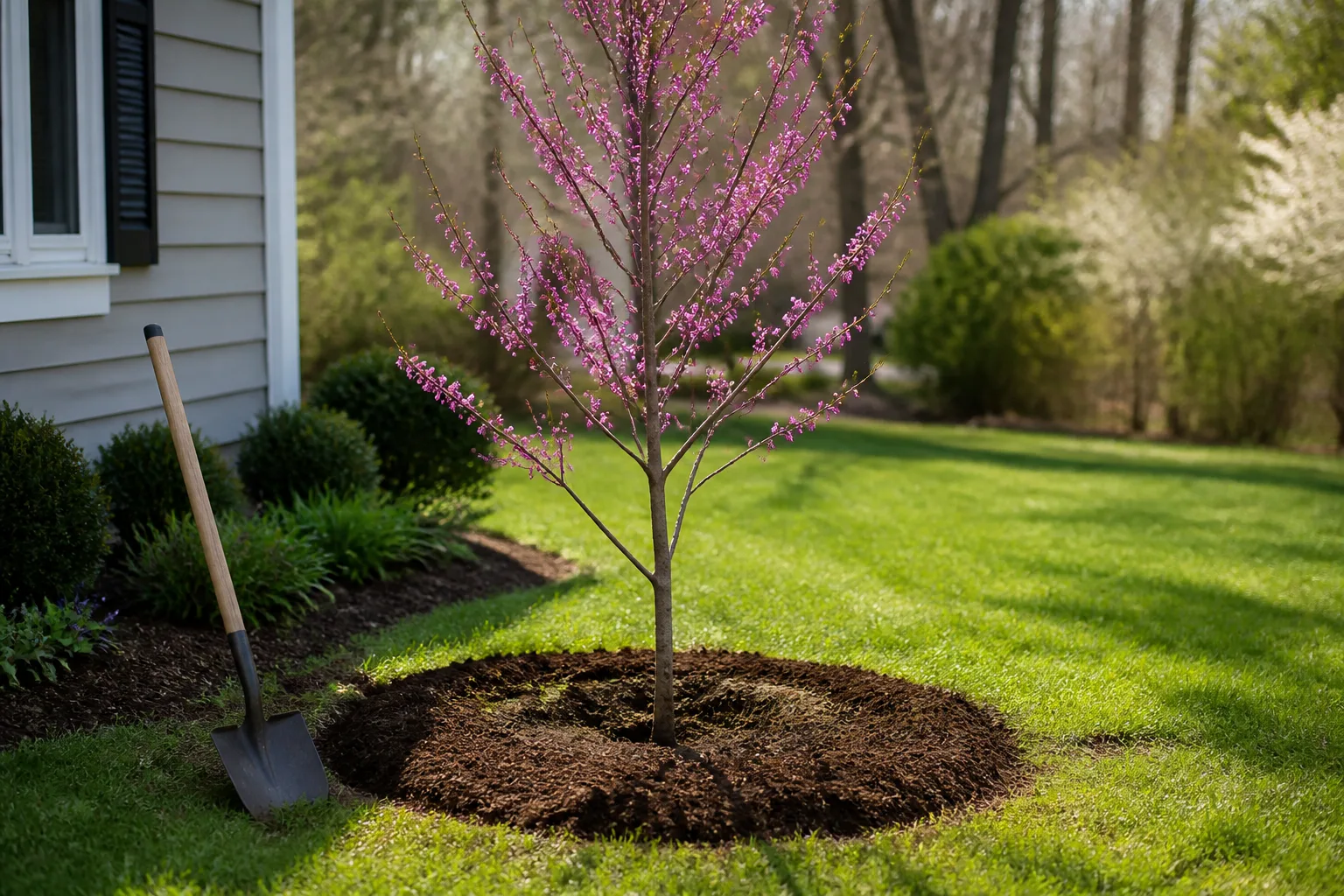
Best timing: Early spring before bud break, or fall at least six weeks before your first hard freeze so roots establish.
Steps:
- Dig a hole two to three times wider than the root ball and only as deep as the root flare. Redbud resents deep planting and root disturbance—NC State Extension warns to set the final position early and avoid repeated transplants.
- If soil is heavy clay, score the hole sides so roots do not circle in a glazed bowl.
- Place the tree so the root flare sits slightly above grade. Backfill with native soil; skip rich planting mixes that hold excess moisture against the flare.
- Water thoroughly to settle soil. Stake only if the site is windy; remove stakes after one growing season so the trunk strengthens.
- Mulch in a donut shape, keeping mulch 3–4 inches from the bark.
Balled-and-burlapped and container stock both work. Container plants may need root teasing if circling. Do not prune heavily at planting beyond broken branches—structure pruning comes in year two or three.
Best Cultivars and Varieties
Species redbud is excellent where you want maximum hardiness and a vase-shaped native form. Cultivars trade size, leaf color, or flower form for slightly narrower adaptability. Match the plant to your space before falling for foliage photos.
| Cultivar | Size / habit | Standout trait | Caveat |
|---|---|---|---|
| ’Forest Pansy’ | ~20 ft | Purple heart-shaped leaves, rose-purple flowers | Foliage fades to bronze-green in summer heat; more verticillium-sensitive per NC State |
| ’Ace of Hearts’ | 10–12 ft dwarf | Compact, bright pink blooms | Slower to reach full presence |
| ’Covey’ / ‘Lavender Twist’ | 5–6 ft tall, weeping | Umbrella form for small beds | Needs staking early; train leader |
| ’Pink Pom Poms’ | ~15 ft | Double pink flowers; sterile—no pods | Less wildlife seed value |
| ’Alba’ / ‘Vanilla Twist’ | Varies | White flowers | Can green up less dramatically than pink forms in photos |
| ’Appalachian Red’ | Standard | Intense red-pink flowers | Verify cold hardiness in zone 4 microclimates |
| ’Hearts of Gold’ / The Rising Sun™ | ~12 ft | Gold to apricot new foliage | Protect from harsh afternoon sun in South |
Texas redbud (C. canadensis subsp. texensis) and Mexican redbud (subsp. mexicana) offer glossier, more heat-tolerant leaves for southern gardens. In the Midwest and Northeast, straight C. canadensis or northern-proven cultivars remain the safer default.
Pruning for Structure and Flowers
Redbud blooms on old wood—flower buds form on prior seasons’ growth. Prune in late winter while the tree is still dormant and before buds swell, or immediately after flowering finishes if you must remove spent blooms or shape lightly.
Year 1–3 focus: Establish one to three main trunks or a single leader, depending on desired form. Remove crossing branches that rub bark—redbud’s zig-zag branching naturally creates conflicts. Cut back to a lateral or the trunk; never leave stubs.
Ongoing maintenance: Take out dead, diseased, or damaged wood anytime with sanitized tools (10% bleach solution or rubbing alcohol between cuts on diseased material). Limit live-wood removal to 25% in a year. Heavy shearing destroys the natural vase shape and removes next spring’s flowers.
Multi-trunk clumps are normal and attractive. If you want a tree form, select the strongest trunk early and remove competing shoots at the base.
Propagating Eastern Redbud
From seed (most reliable): Collect brown dry pods in fall. Seeds have hard coats and often need scarification (light sanding or hot-water soak) plus cold stratification for 60–90 days before spring sowing. Expect genetic variation—seedlings may differ from parent flower color.
From cuttings: Softwood cuttings in early summer can root under mist with hormone, but success rates are low for home gardeners. Nurseries graft desirable cultivars onto seedling understocks for consistency.
From layering: Bend a low branch to the ground, wound the underside, pin with a staple, and mulch over the contact point. Sever rooted sections the following year.
Seed-grown trees typically bloom in three to five years. Grafted cultivars may flower sooner on older understock.
Winter Protection for Young Trees
Young redbud bark is thin and smooth for the first several years. In zones 4–6—and anywhere southwest winter sun reflects off snow—trunks can suffer sunscald and frost cracking. Wrap trunks with commercial tree wrap or white spiral guards from late fall through early spring. Remove wraps when temperatures stabilize in spring to avoid moisture buildup.
Avoid piling mulch against the trunk in winter; rodent gnawing and rot both start at the collar. Water deeply before ground freeze in dry autumns so desiccation does not compound bark injury.
Common Pests and Diseases
Eastern redbud is not pest-free, but serious problems are usually siting- or stress-related. NC State Extension lists leafhoppers, Japanese beetles, scale, borers, and caterpillars as occasional feeders. Rake and destroy heavily infested leaves in fall if leafrollers or webworms appear repeatedly.
| Problem | Symptoms | Response |
|---|---|---|
| Anthracnose | Brown leaf spots, twig dieback in wet springs | Improve air flow; prune affected twigs; copper fungicide only if severe and recurring |
| Verticillium wilt | One-sided wilting, branch death, streaking in sapwood | No cure; prune dead wood; reduce stress; avoid replanting Cercis in same spot |
| Leaf spots / mildew | Cosmetic foliage marking | Usually minor; avoid overhead irrigation |
| Borers | Entry holes, sawdust, branch decline | Address drainage and drought stress first; remove infested limbs |
Canker and Botryosphaeria Dieback
Canker diseases—including Botryosphaeria dieback—are the primary reason redbuds die young in landscapes. Look for sunken, discolored bark, orange-ish fungal fruiting bodies, and branch flagging that starts on one side of the canopy.
Action plan:
- Prune infected branches 6–12 inches below visible canker into healthy wood.
- Sanitize tools between every cut.
- Do not wound bark with string trimmers or lawn mowers.
- If cankers appear on the main trunk or multiple limbs reappear within two years, replacement is often more rational than repeated surgery.
Keeping the tree vigorous with correct watering beats fungicide sprays after infection is established. Fungicides may help protect high-value specimens in wet springs but will not heal trunk cankers.
Encouraging Strong Spring Bloom
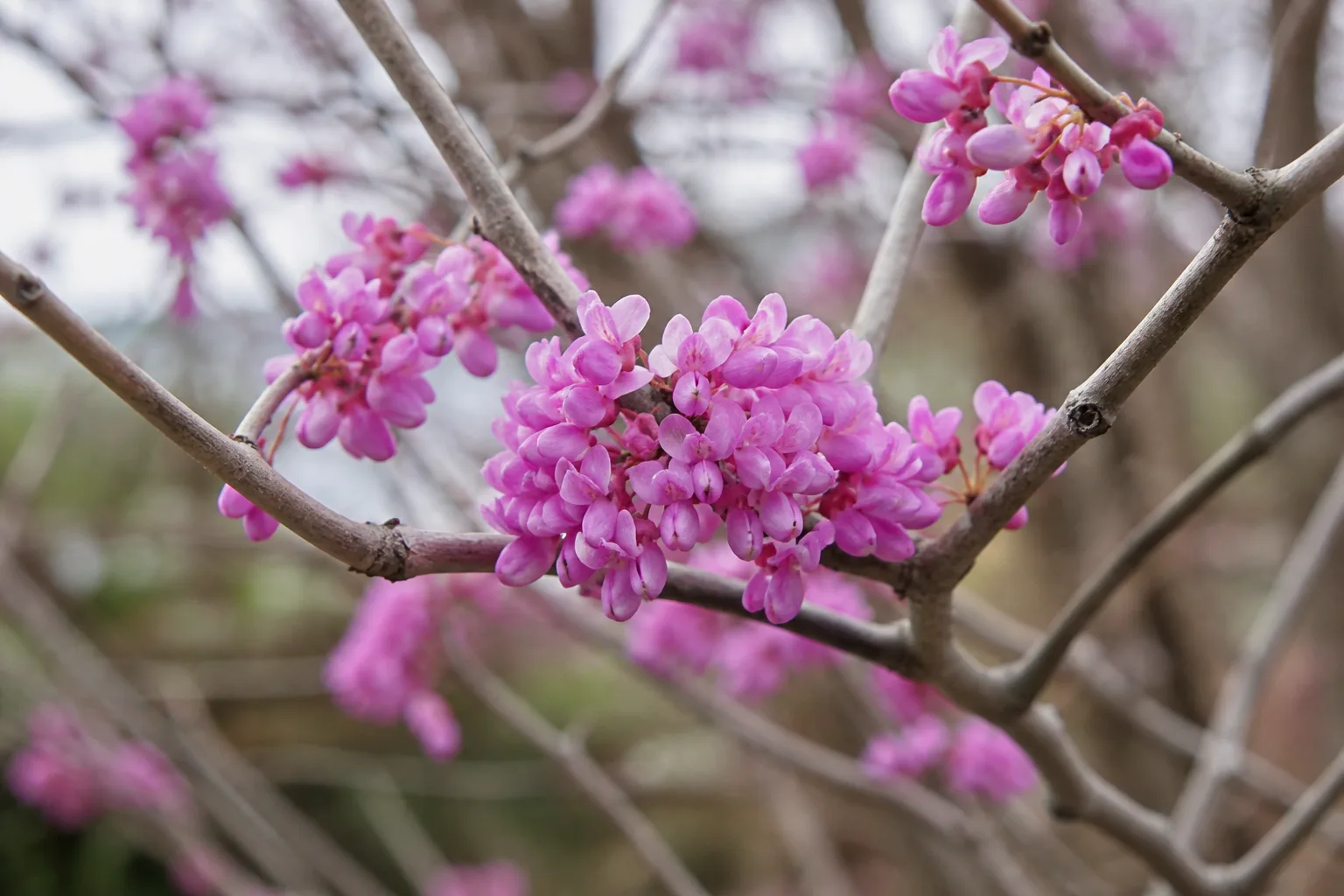
Bloom timing tracks latitude and winter chill. Southern gardens may see flowers in February; northern sites peak in April. Cold winters generally enhance flower bud set for the following spring—a pattern GrowItBuildIt notes from field observation.
To maximize flowers:
- Site in full sun with good drainage.
- Avoid late-summer nitrogen spikes that push foliage over bud formation.
- Do not prune after midsummer unless removing dead wood—you remove next year’s buds.
- Maintain even soil moisture during the prior summer drought; stressed trees abort buds quietly.
Flowers are pea-shaped, about half an inch wide, fragrant, and edible raw in salads—use only trees free of pesticides. Pods follow bloom: green in summer, brown and papery by fall, each holding hard dark seeds.
Troubleshooting Common Problems
Sparse or no bloom on a mature tree: Check recent pruning timing, increasing shade from maturing neighbors, and last summer’s drought. Transplant shock can skip a bloom cycle for one to two years.
Yellow leaves in summer: Often drought stress—even from a drought two seasons prior as roots recover. Less commonly, verticillium or root compaction. Probe soil moisture at 6 inches before assuming disease.
Wind breakage: Reduce sail by thinning crossing interior branches in late winter; plant in sheltered locations for multi-trunk forms. Avoid topping—it weakens structure and ruins form.
Purple leaves turning green-bronze (‘Forest Pansy’): Normal in heat and direct afternoon sun. Provide light shade or accept summer color shift.
Herbicide damage: Redbud is sensitive to lawn herbicides and drift. NC State Extension specifically warns against chemical exposure for street and lawn plantings. Maintain a mulch ring instead of turf against the trunk.
Conclusion
Eastern redbud rewards gardeners who treat siting as the main decision: well-drained soil, enough sun for bloom, wind protection for brittle wood, and realistic expectations about lifespan. Plant in spring or fall, water steadily the first two years, prune in late winter for structure, and scout bark for canker before it reaches the trunk. Choose species stock for hardiness and wildlife, or pick a named cultivar that fits your square footage and leaf-color goal. Get those calls right and you get a native spring show that needs no apology—just a little ongoing attention.