Houseplant Leaf Drop: Diagnose Sudden or Ongoing Falling Leaves
Sudden or ongoing falling leaves? Separate shock from chronic causes, then check drafts, moisture, light, humidity, roots, and pests in order.
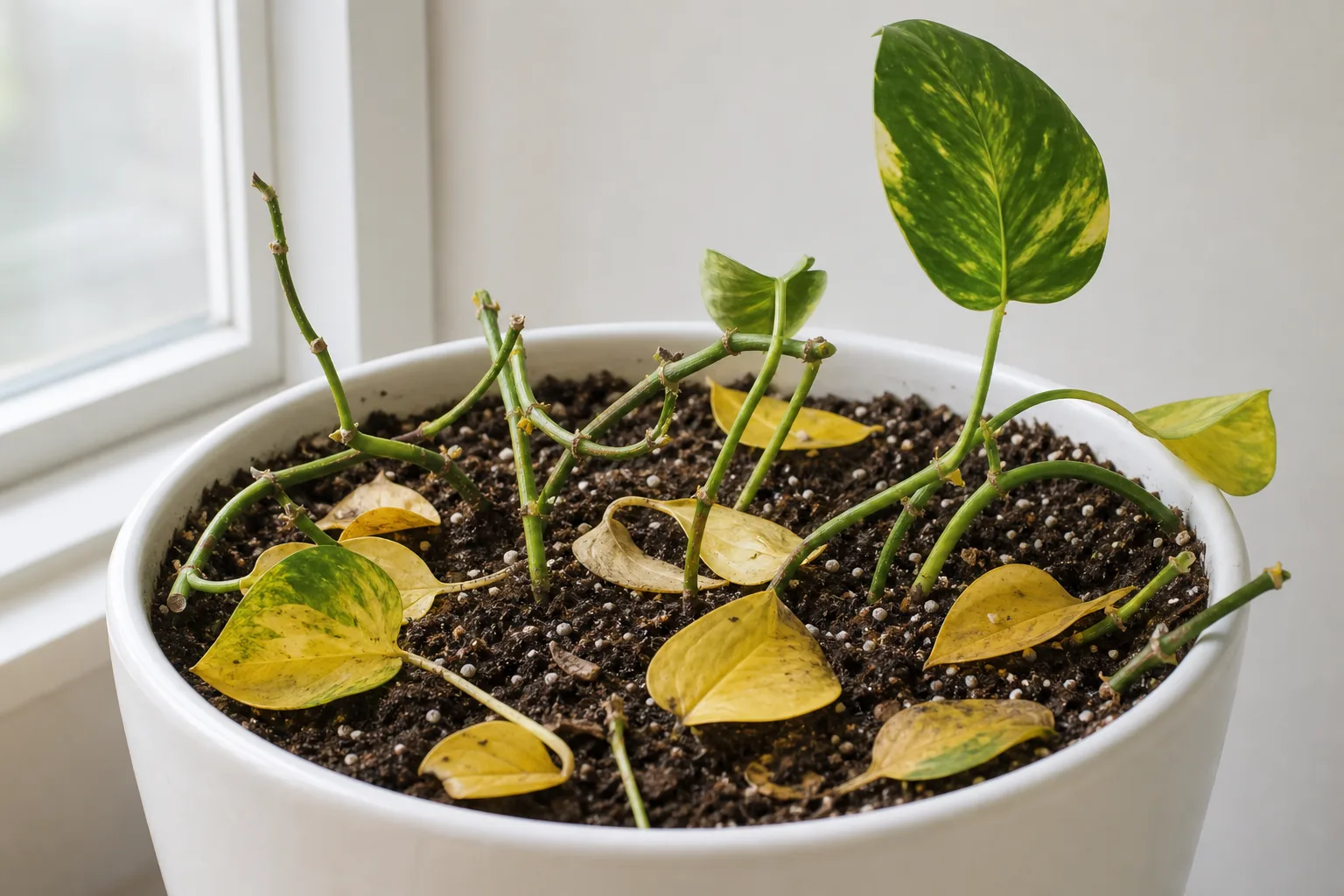
You walk into the room and the floor under your plant is covered in leaves. Some are yellow. Some still look green. Yesterday the plant looked fine. Today it looks like it is undressing in public.
Leaf drop is not a disease name. It is a stress response: the plant sheds foliage it cannot afford to keep under the current conditions. A few older lower leaves falling over months is normal. Rapid, continuous, or healthy-looking leaf drop is a diagnostic problem — and the fastest way to make it worse is to water, fertilize, and move the plant all at once.
Written by Sai Ananth (B.Pharmacy; pharmacognosy background; LeafyPixels lead writer) and reviewed by Dr. Priya Menon (botanist and indoor plant specialist) on the LeafyPixels Review Board. The cases below come from editorial plants in a north-central Ohio apartment (USDA zone 6a). Your rooms will differ — treat drop rates as lived benchmarks, not guarantees.
This guide separates shock causes from chronic causes, then walks a fixed diagnostic order so you fix the real trigger. For the short symptom overview, start at the leaf drop symptom hub. For season-specific patterns, use plants dropping leaves in winter or plants dropping leaves in summer.
Do this first (next 10 minutes):
- Count fresh fallen leaves from the last 24–48 hours (baseline drop rate).
- Note any move, draft, AC/heat change, or delivery in the last two weeks.
- Finger-check soil 5 cm / 2 in deep and lift the pot — do not water yet.
What Leaf Drop Actually Means (Abscission ≠ Disease Name)
Plants form a separation layer at the base of the leaf stem when they decide a leaf is no longer worth supporting. That process can be triggered by drought, waterlogged roots, cold drafts, a sudden light change, pest feeding, or simply being moved from a nursery to your living room. The leaf may yellow first, or it may fall while still green — green drop usually points to abrupt environmental shock rather than slow nutritional fade.
Clemson HGIC groups leaf drop under cultural and environmental problems and notes that either overwatering or underwatering can cause it, that plants in pots that are too small will drop leaves, that chilling causes leaf drop, and that insects and diseases occasionally do as well. RHS adds that yellowing leaves in large numbers can come from too much or too little water, a pot that is too large, shade that is too deep, temperatures that are too cold, a sudden temperature drop, or draughts.
The practical takeaway: leaf color alone does not name the cause. Pattern, timing, soil moisture, and what changed last week do.
| Leaf look when it falls | Likely bucket to check first |
|---|---|
| Still green or lightly yellow, sudden burst | Shock — moves, drafts, temperature, abrupt light |
| Soft yellow; pot heavy; mix wet days later | Overwatering / root oxygen stress |
| Crispy edges; oldest basal leaves first; pot light | Underwatering / dry root zone |
| Stippling, bronzing, webbing, sticky residue | Pests (mites, sap feeders) after a quick abiotic scan |
Shock Drop vs Chronic Drop
Before you open a fertilizer bottle, decide whether you are looking at a shock event or a chronic mismatch. That split changes what you do in the next 48 hours.
Shock drop is fast and tied to a clear change. Leaves may fall while still green or only lightly yellow. Drop often starts within days of a move, repot, delivery, window swap, AC season start, or a cold night with curtains trapping the plant against glass. Clemson notes that leaf drop after a significant environmental change should typically last about three weeks if the new conditions are stable. (Clemson HGIC on acclimation leaf drop) RHS flags draughts and sudden temperature drops as classic triggers for mass yellowing and drop. (RHS on draughts and temperature drop)
Shock drop is scary because it looks catastrophic. It is often recoverable if you stop adding new stressors and let the plant acclimate.
Chronic drop is slower and repeats. You lose a few leaves each week for a month or more. Soil stays wrong (always soggy or always bone-dry). Light is consistently too dim. Humidity stays desert-low all winter. Roots are circling a tiny pot. Pests have been feeding unnoticed. The canopy thins from the inside or bottom first, and new growth is weak or absent. Chronic drop rarely fixes itself with “wait and see.” You need to correct the ongoing mismatch — but still one variable at a time after you confirm the primary cause.
| Clue | Shock drop | Chronic drop |
|---|---|---|
| Speed | Sudden burst over days | Steady trickle over weeks |
| Leaf color | Often green or lightly yellow | Usually yellow, brown-edged, or faded |
| Recent change | Move, repot, draft, temp swing | Care routine has been “the same” for months |
| Expected duration if fixed | Often eases within ~3 weeks | Stops only after the ongoing stress is corrected |
| First action | Stabilize; do not repot/fertilize yet | Diagnose moisture, light, roots, pests in order |
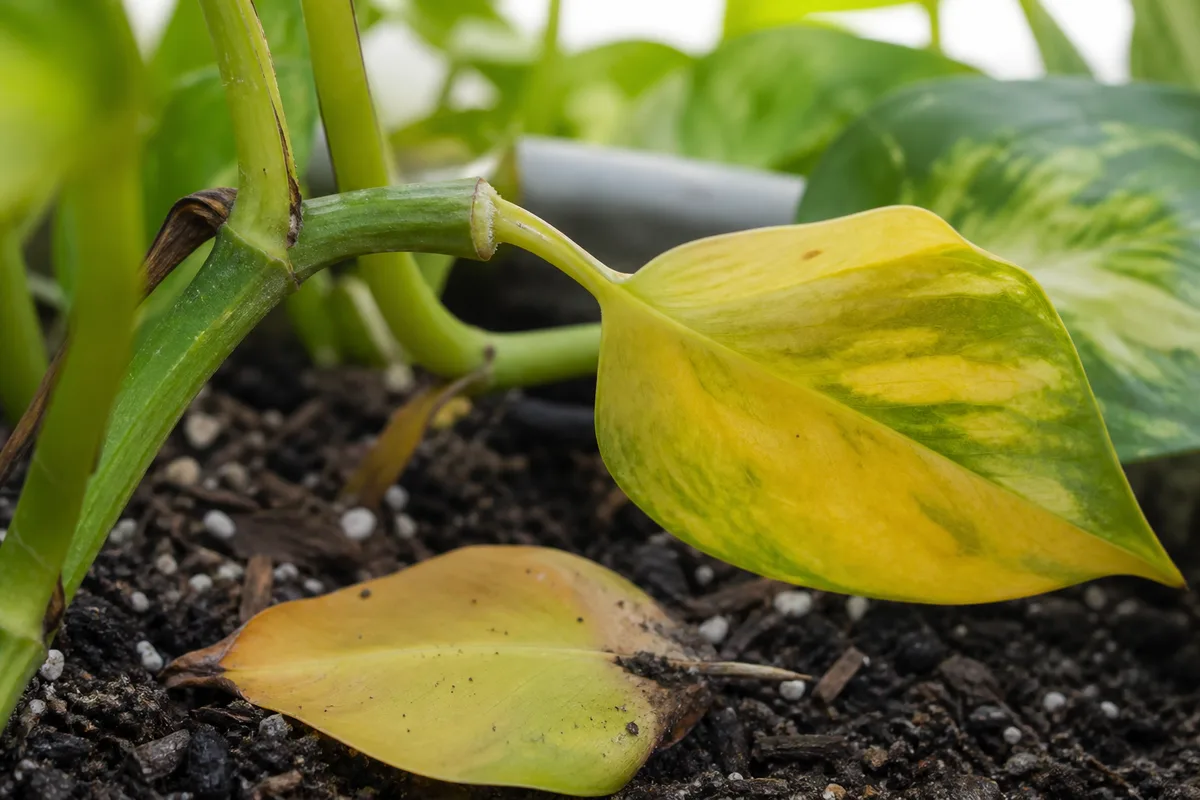
Start Here: 60-Second Triage and Skip-Ahead Rules
Use this screen before you rebuild the plant’s whole life:
- Green burst after a move, delivery, or window swap → start at Step 1; hold fertilizer and repotting.
- Soft yellow leaves + heavy pot + wet mix deep → jump to Step 2 (overwatering path); check fungus gnats later, not fertilizer.
- Crispy basal leaves + light pot + dry mix deep → Step 2 (underwatering path); soak once, then return to moisture checks.
- Soft stem base, sour soil, or collapsing crown → skip ahead to Step 5 (roots/rot) now.
- Stippling, webbing, sticky residue, or crawling insects → confirm abiotic basics quickly, then Step 6.
- Several plants on the same shelf shedding together → hunt a shared vent, cold snap, or group watering habit before treating each plant as a unique mystery.
If the picture is mixed, use the houseplant symptom checker to route companion symptoms, then return here for the leaf-drop order.
Diagnostic Order: Check Causes in This Sequence
Guessing wastes plants. Use this order every time:
- Recent change, drafts, and temperature — cheapest and fastest to confirm
- Soil moisture at depth — separates overwatering from underwatering before you “help”
- Light consistency — especially after a move or seasonal day-length shift
- Humidity and dry HVAC air — common accelerator, rarely the only cause
- Roots, pot size, and drainage — when drop continues despite stable care
- Pests and disease — when patterns do not match abiotic stress
Do not jump to roots on day one unless the stem base is soft, the soil smells sour, or the plant is collapsing. Do not fertilize a dropping plant. Do not repot “just in case.” Work the list.
Step 1: Moves, Drafts, and Temperature Swings
Ask what changed in the last two weeks. New plant from a shop. Moved to a brighter window. Overnight delivery. Curtains closed over a cold sill. Plant sitting in the path of an AC vent or heater. Weekend trip with the thermostat dropped.
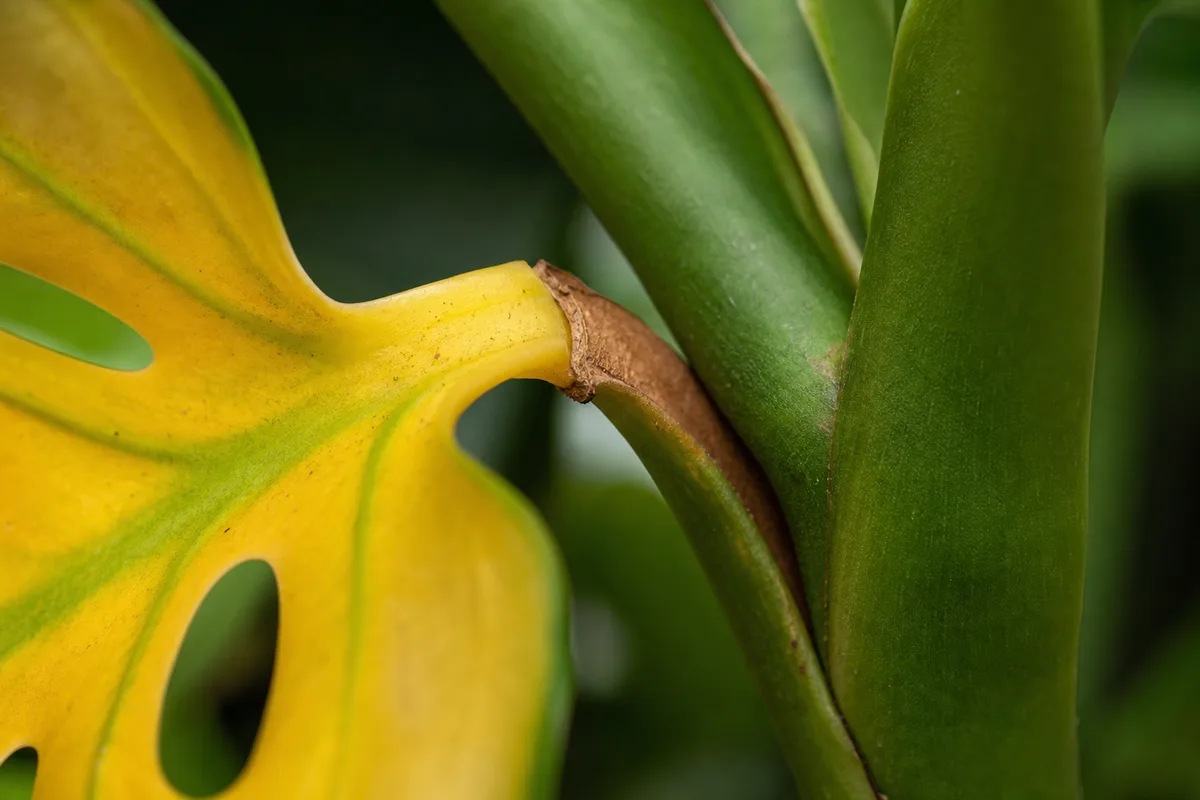
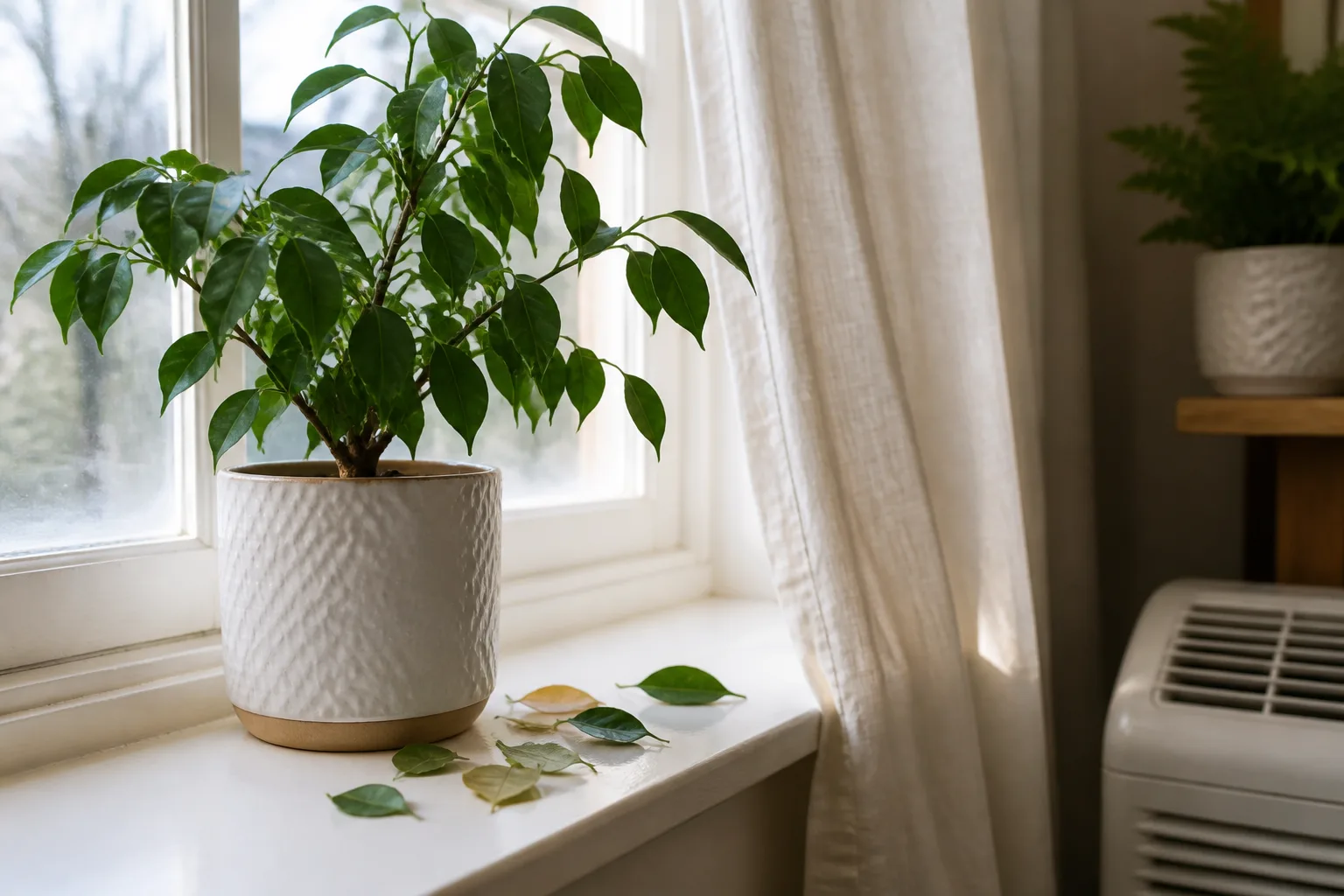
RHS notes that plants near radiators often scorched, while draughts cause yellowing and dry edges, and that windowsill plants behind closed curtains can suffer cold air trapped against the glass. Cold damage can blacken tissue, cause droop, and collapse plants in unheated rooms. Clemson HGIC explicitly lists chilling as a leaf-drop cause.
What to do: move the plant out of the draft or heat blast, keep day/night temperatures steadier, and avoid another location change for at least three weeks. Leave watering frequency alone until you complete Step 2. If the only change was a move and stems are firm, patience is the treatment — constant “fixes” restart the shock clock.
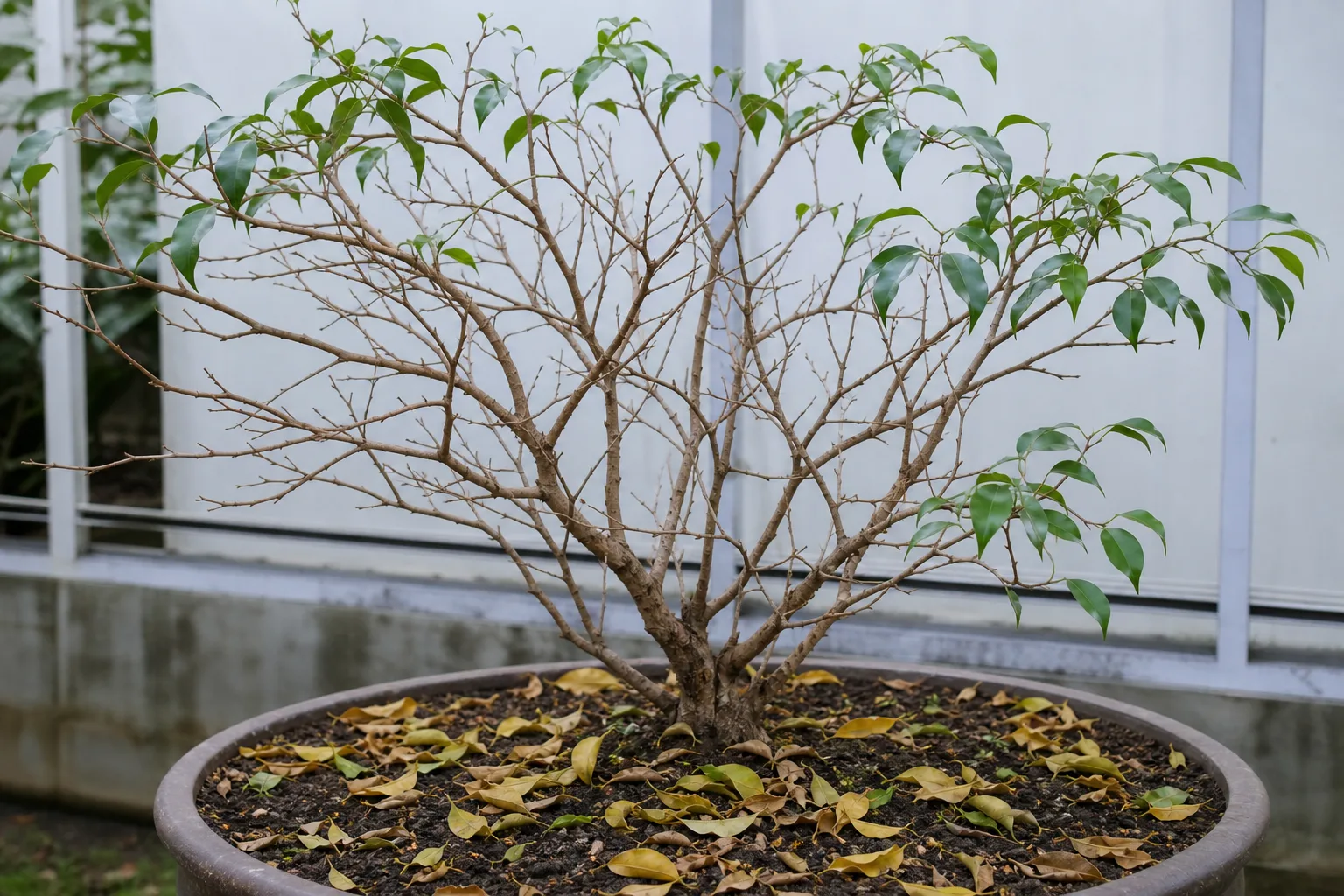
Species that are famous for drama after relocation include ficus benjamina, fiddle leaf fig, and jade plant. Expect more drop from these after a move even when the new spot is objectively better.
Step 2: Soil Moisture — Overwatering vs Underwatering
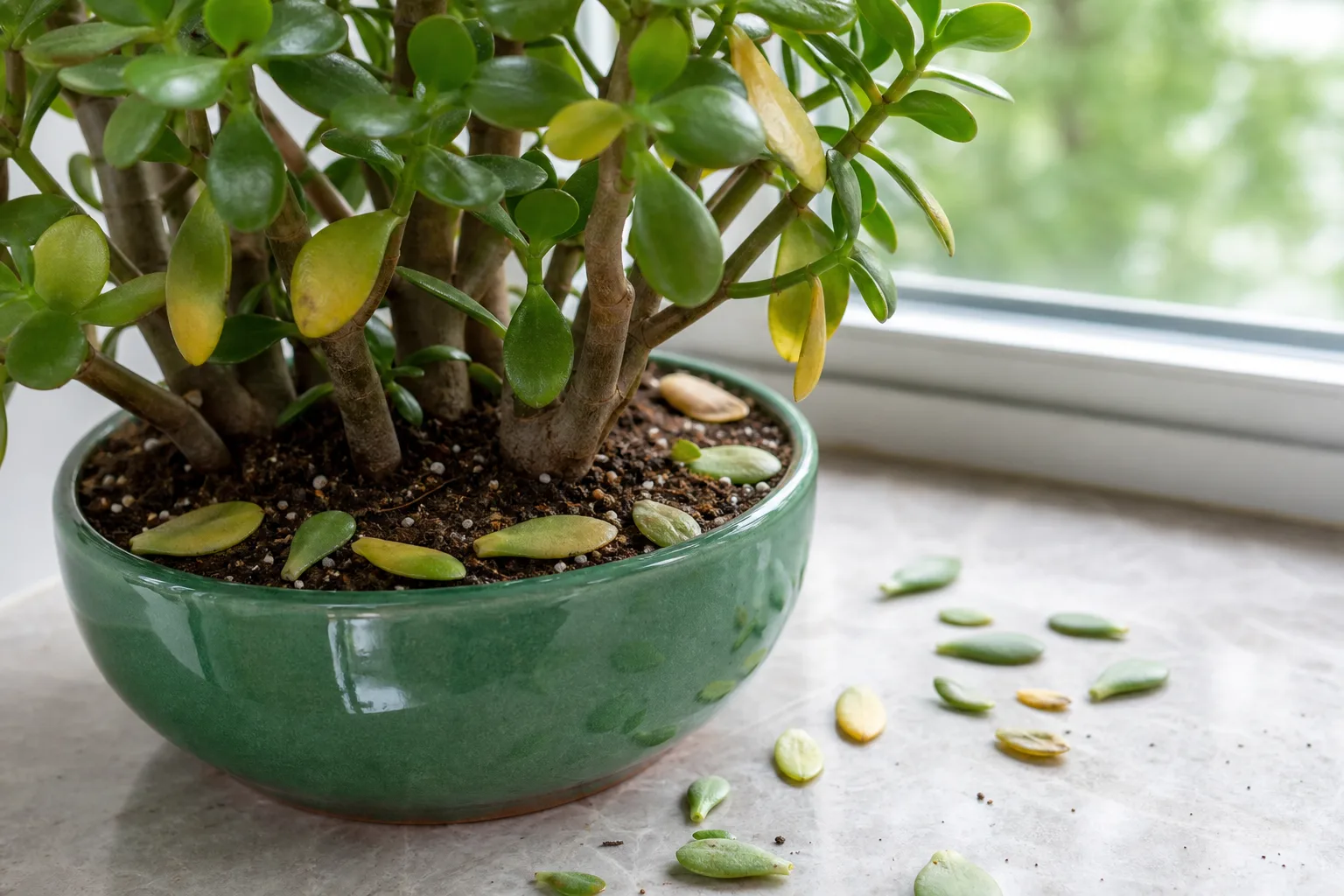
Watering mistakes are the most common chronic drivers of leaf drop, and overwatering and underwatering can look alike above the soil line. Clemson is direct: overwatering or underwatering can both cause leaf drop, and overwatering is a major contributor to houseplant decline because saturated soil reduces oxygen for roots and favors root disease. (Clemson HGIC watering) RHS notes that underwatered plants often yellow and drop older basal leaves first, with crispy edges, while overwatering can yellow and drop old and new leaves at the same time, with browning in the middle of leaves, mouldy patches, stem rot, and dark mushy roots. (RHS poorly houseplant checks)
Push a finger or wooden skewer 5 cm (2 inches) into the mix. Lift the pot. Smell the soil. Those three checks beat any calendar schedule.
Overwatering Patterns
Suspect overwatering when the mix is still wet days after watering, the pot feels heavy, lower leaves are soft and yellow, and the plant may wilt despite wet soil. New and old leaves may yellow together. Fungus gnats or a musty smell raise the odds — see the fungus gnats houseplants guide when adults keep rising from wet media. For the full rescue workflow, use the overwatered plant guide and escalate to root inspection if roots are brown and mushy.
Do not mist the canopy “for humidity” while the root ball is already wet. You only add surface moisture while the oxygen problem underground continues.
Underwatering Patterns
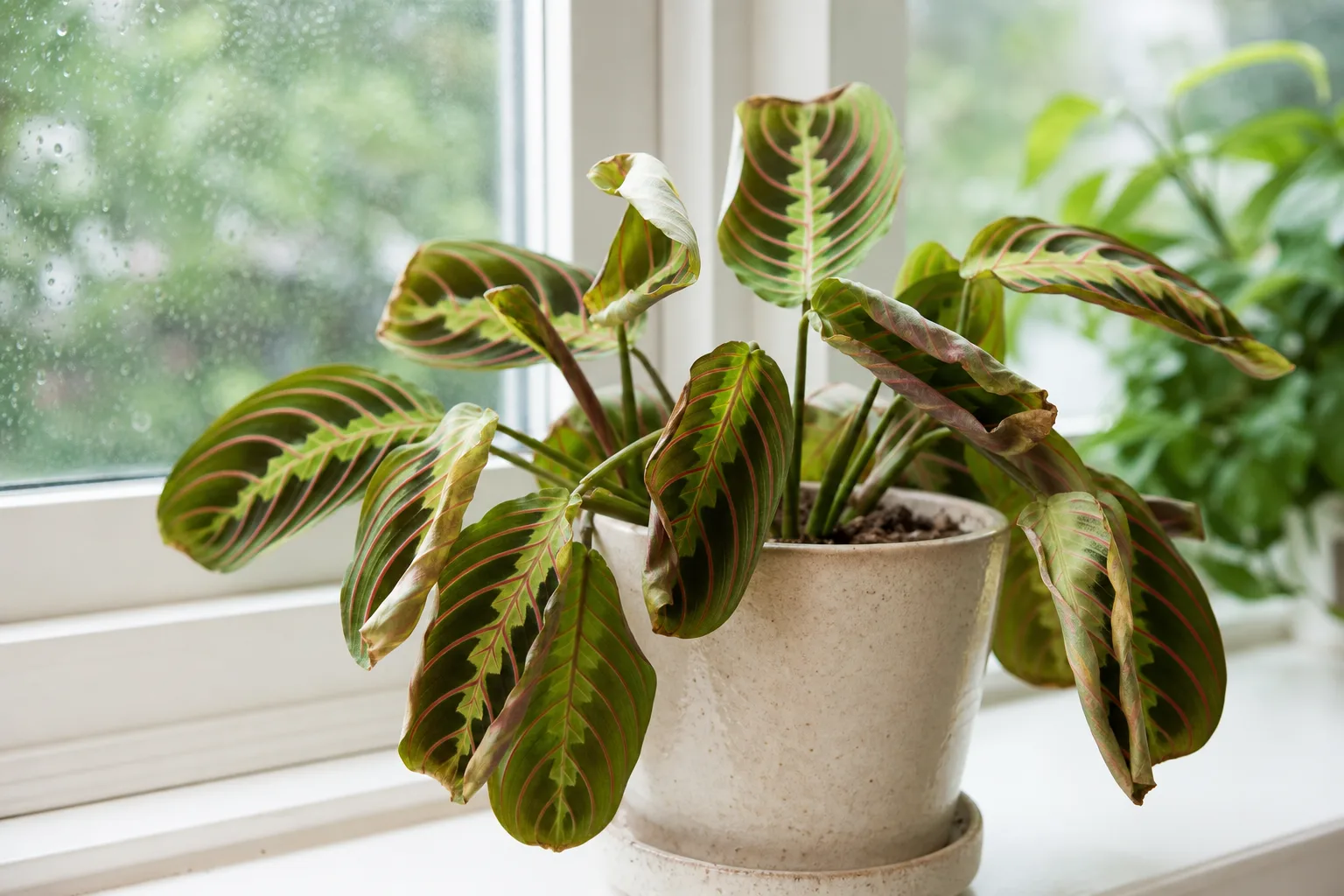
Suspect underwatering when the mix is dry deep in the pot, the pot feels light, soil pulls from the pot walls, and older leaves yellow with dry, crispy edges before they fall. Tips and margins often brown first. Wilt improves after a thorough soak if roots are still alive. Use the underwatered plant guide for rehydration technique, and compare soft wet wilt vs dry wilt with why is my plant drooping.
| Check | Overwatering | Underwatering |
|---|---|---|
| Soil at depth | Wet or soggy days later | Dry throughout |
| Pot weight | Heavy | Light |
| Leaf feel | Soft, limp | Thin, papery, crispy edges |
| Which leaves drop | Often lower plus newer together | Usually oldest basal leaves first |
| Roots (if inspected) | Brown/black, mushy, sour | Dry, brittle, pale to tan |
Clemson HGIC watering also reminds growers that symptoms of overwatering and underwatering are similar because both damage roots — which is why the soil check comes before any watering change.
Step 3: Light Consistency and Seasonal Shifts
A plant that “always lived” in a north corner may tolerate summer light and then shed in winter when day length and intensity collapse. RHS notes that too shady a position can drive mass yellowing, and that winter light is weaker enough that many houseplants benefit from moving closer to south- or west-facing windows. Sudden jumps the other way — nursery shade into harsh afternoon sun — can scorch tissue and trigger drop as damaged leaves abort.
Ask: Did day length change? Did you move the plant farther from the window? Is dust coating the leaves? Wipe foliage so more light reaches the surface, then adjust placement gradually over several days rather than leaping across the room. If yellowing is the dominant companion symptom, cross-check indoor plant yellow leaves.
Step 4: Humidity and Dry Indoor Air
Dry indoor air rarely acts alone, but it accelerates drop on tropical foliage — especially in heating season. Penn State Extension explains that outdoor winter air holds less moisture and heating removes more, so indoor relative humidity can easily fall below 30%, while ASHRAE recommends keeping indoor RH between 30% and 60%. RHS links low humidity to crispy tips and edges plus early dropping of leaves, buds, and flowers. (RHS on low humidity drop)
Fix humidity with methods that actually hold: a room humidifier, grouping plants with airflow between them, or a carefully managed pebble tray. Penn State notes that misting only raises humidity until droplets evaporate — often minutes — and that pebble trays have limited room-scale impact because vapor diffuses. (Penn State on misting) For tactics that work indoors, see the houseplant humidity guide. Do not drown the root ball trying to “create humidity.”
Step 5: Roots, Pot Bind, and Rot
If Steps 1–4 are clean and leaves keep falling, inspect the roots. Clemson HGIC notes pot-bound plants drop leaves because there is not enough soil volume to buffer water for the root mass. Overwatering plus poor drainage leads toward root and stem rot: wilt, girdling brown/black tissue at the soil line, and roots that are brown to black and soft.
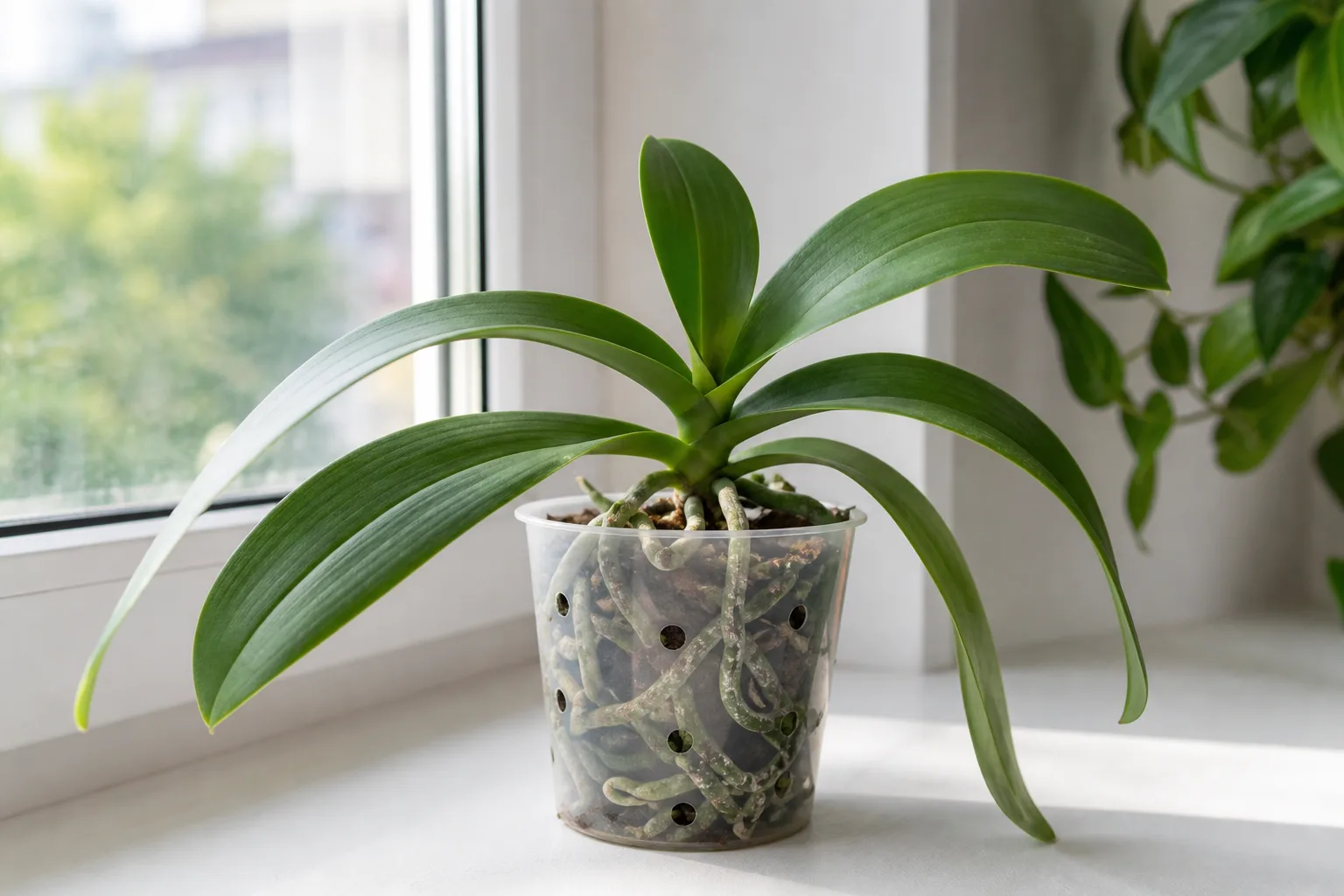
Slide the plant from its pot. Healthy roots are firm and light-colored for most tropicals. Soft, black, sour-smelling roots need trimming and a fresh, free-draining mix — follow the root rot guide. Tight circling roots with almost no loose mix left point to a pot that is too small; plan a modest upsize during the growing season using when to repot and repotting houseplants. Avoid emergency repotting during peak shock drop unless rot is confirmed — repotting is itself a shock.
Step 6: Pests and Disease
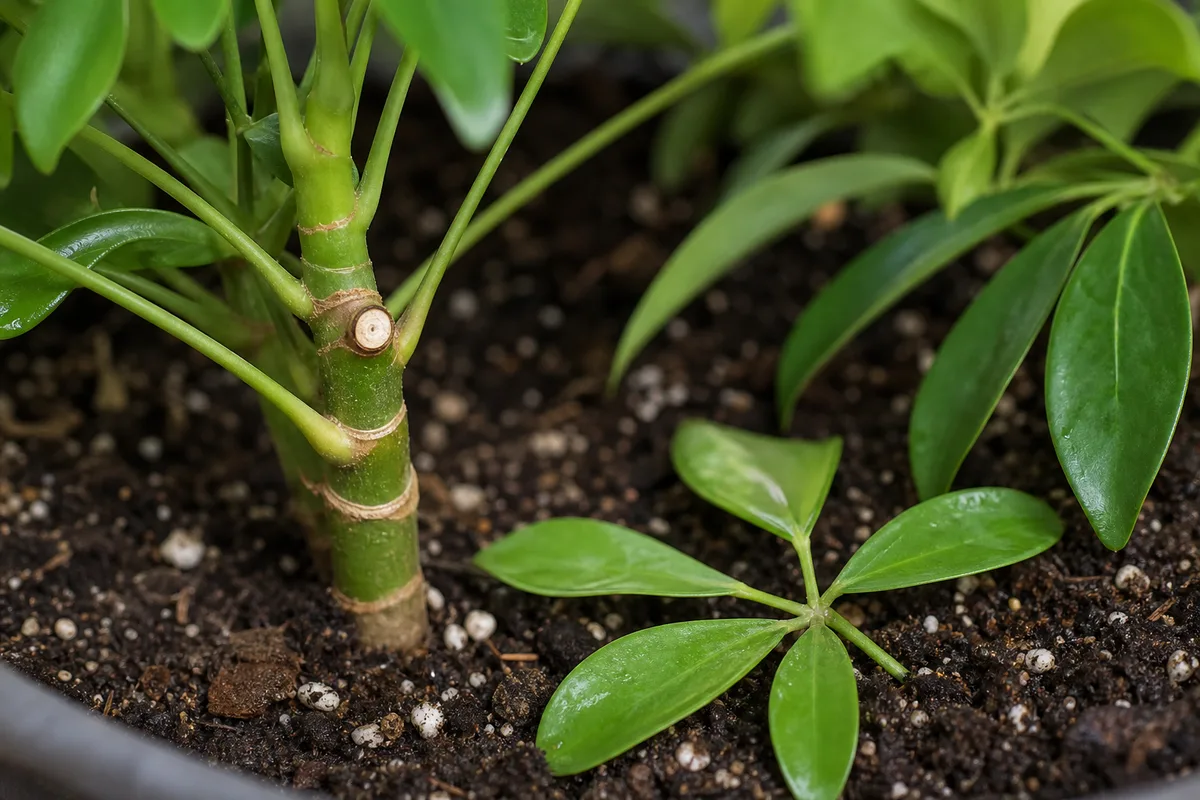
When drop does not match drafts or moisture, check undersides, petiole joints, and new growth. Colorado State University Extension notes that heavy spider mite infestations can cause premature leaf drop, with stippling, bronzing, and webbing on hosts such as ivy, figs, and schefflera. Soft scales and whiteflies can also weaken plants until leaves fall. Sticky residue suggests sap feeders; fine silk and pale stippling suggest mites.
Treat pests before you invent a new watering schedule. For mite outbreaks, follow the collection-wide indoor plant pest guide and compare lookalike scarring on the thrips on houseplants page when damage is silvery rather than finely stippled. Species that drop hard under combined stress — such as monstera deliciosa leaf drop — still need the same abiotic checks first. Clemson HGIC notes insects and diseases only occasionally cause leaf drop compared with watering and environment, so check pests after the abiotic list unless signs are obvious.
Disease clues include fuzzy grey mould, powdery white coatings, or discrete leaf spots with yellow margins. Improve airflow and remove badly infected leaves; do not assume a fungicide will reverse environmental drop.
How to Stabilize a Plant Mid-Drop
Once you have a leading cause, stabilize — do not redesign the plant’s whole life overnight.
- Keep the plant in one spot with steady light.
- Correct only the primary issue (draft, wet soil, dry soil, mite treatment).
- Water by moisture, not by calendar; empty saucers after every watering.
- Raise humidity if air is arid, without soaking roots.
- Remove leaves that are fully spent and already detached or hanging by a thread; leave partially green leaves that still photosynthesize.
- Do not fertilize until new growth is consistent.
- Do not prune hard “to stimulate growth” while the plant is shedding — that removes the canopy it still needs.
- Track weekly fallen-leaf count; fewer new falls each week is success, even if the plant looks sparse.
If several plants on the same shelf are dropping at once, look for a shared environmental cause before treating each plant as a unique mystery. Shared timing is one of the strongest abiotic clues.
Recovery Timeline: What Improvement Looks Like
For relocation or environment-change shock, Clemson HGIC’s roughly three-week window is a useful expectation if conditions stay stable. Chronic cases take longer: leaf drop should slow within one to three weeks after the real cause is corrected, while filling back in can take months of active growth.
LeafyPixels drop-rate scoring (editorial working band):
- Worsening: fresh falls stay the same or rise week over week after you thought you fixed the cause.
- Stabilizing: week-two fresh falls are clearly lower than week-one (often roughly half or better once the trigger is gone).
- Recovering: fresh falls near zero for two consecutive weeks and new shoots appear at tips or nodes.
Do not expect yellowed leaves to turn green again. Judge recovery by new growth and by the drop rate, not by whether the plant looks as full as it did before the event. Sparse-but-stable beats dense-and-still-shedding.
If winter is the backdrop and growth has slowed, lengthen your patience window and reduce water volume accordingly. Pair this guide with why houseplants struggle in winter and the winter houseplant care checklist so you do not water summer-style into a slow-growing root zone.
When Leaf Drop Is Normal Aging
Mature houseplants routinely shed an occasional oldest lower leaf while new growth continues at the top. RHS notes that the odd lower leaf yellowing and falling on a mature plant is normal. That kind of drop is slow, limited, and paired with an otherwise healthy canopy.
Panic is warranted when drop is rapid, includes healthy green leaves, continues beyond a couple of weeks after conditions stabilize, or pairs with soft stems, sour soil, sticky residue, or stippling. Normal aging does not empty half the canopy in a weekend. If you are unsure, photograph the plant weekly — a visual record makes “a few leaves” versus “a crisis” obvious.
Bare stems are not automatically a lost cause. If wood or stems stay firm and buds or nodes remain alive, wait for new growth rather than cutting everything to soil level mid-crisis. Hard-prune only after drop has slowed and you can see which tissue is truly dead.
Common Mistakes That Make Leaf Drop Worse
The top mistake is watering a drooping plant without checking soil depth — drowning an already overwatered root system. The second is changing light, pot, fertilizer, and location in the same weekend. The third is fertilizing to “help it bounce back,” which burns stressed roots. The fourth is ignoring drafts because the room “feels fine” while the plant sits in a vent path. The fifth is waiting months to inspect roots while the canopy keeps thinning from rot or a tiny pot. The sixth is misting wet-soil plants and calling it a humidity fix.
Fix the diagnostic order and those mistakes largely disappear.
First-Hand Notes From Leaf-Drop Cases
These are editorial observations from LeafyPixels plants in a north-central Ohio apartment (USDA zone 6a). They are not clinical trials — they show how drop rate, not canopy fullness, told us we were improving.
Case A — Ficus benjamina after a room move (March 12–April 2, 2026). We moved a 10-inch weeping fig from a bright east living-room corner to a cooler north office about six feet from a window. Green leaves hit the floor within three days. Week 1 fresh falls: 18. We did not repot or fertilize. We kept the same watering rhythm after confirming the mix was only lightly dry at 5 cm, blocked a nearby HVAC register with a deflector, and left the plant unmoved. Week 2: 11 fresh falls. Week 3: 4. Week 4: 1, then a small flush of new tip growth. Timeline matched Clemson’s roughly three-week acclimation window once conditions stayed stable.
Case B — Monstera deliciosa chronic overwater (January 8–February 5, 2026). A pole-trained monstera in a decorative cachepot sat in runoff after weekend waterings. Soft yellow leaves dropped from old and mid-canopy together; pot stayed heavy four days later. Week-before-fix baseline: 9–12 leaves/week. We lifted the grow pot, dumped standing water, switched to sink watering with full drain-through, and held fertilizer. After confirming firm (not mushy) roots, we did not repot. Week 1 after the change: 7 fresh falls. Week 2: 3. Week 3: 1. New fenestrated leaf emerged in week 5. Fungus gnats declined as the surface dried between waterings.
Case C — Schefflera mite drop (May 3–May 24, 2026). A schefflera on a dry south sill showed fine stippling, light webbing at leaflet joints, and accelerating leaf fall (14 leaves in one week). Soil checks were fine. We isolated the plant, rinsed undersides in a sink, and treated with horticultural oil per label, repeating after seven days. Fresh falls: 14 → 8 → 3 across three weeks. New leaflets arrived clean; we discarded the worst webbed leaflets only after they hung by a thread.
Related Guides
Use these as next actions, not a sitemap:
- If you need a short symptom overview → Leaf drop symptom hub
- If symptoms are mixed and you are not sure where to start → Houseplant symptom checker
- If the pot is heavy and leaves are soft yellow → Overwatered plant and Fungus gnats
- If the pot is light and basal leaves are crispy → Underwatered plant
- If the stem base is soft or roots smell sour → Root rot in houseplants
- If winter multi-stress is the backdrop → Plants dropping leaves in winter
- If heat, AC, and watering swings dominate → Plants dropping leaves in summer
- If you need a shock-sensitive species deep dive → Fiddle leaf fig leaf drop or Ficus benjamina leaf drop
Conclusion
Stabilize checklist for a dropping houseplant:
- Separate shock from chronic stress.
- Work the order: drafts/recent changes → soil moisture → light → humidity → roots → pests.
- Fix one confirmed cause at a time.
- Skip fertilizer and hard pruning until drop slows and new growth appears.
- Judge progress by weekly fallen-leaf count, not by whether yellow leaves re-green.
Most houseplants can rebuild a canopy once the trigger is gone. They cannot outgrow constant relocation, soggy roots, or dry-air neglect stacked on top of each other.