Why Is My Plant Drooping? Underwatering vs Overwatering Guide
Is your plant drooping? Learn to tell underwatering from overwatering with a simple checklist, compare symptoms side-by-side, and fix drooping houseplants fast.
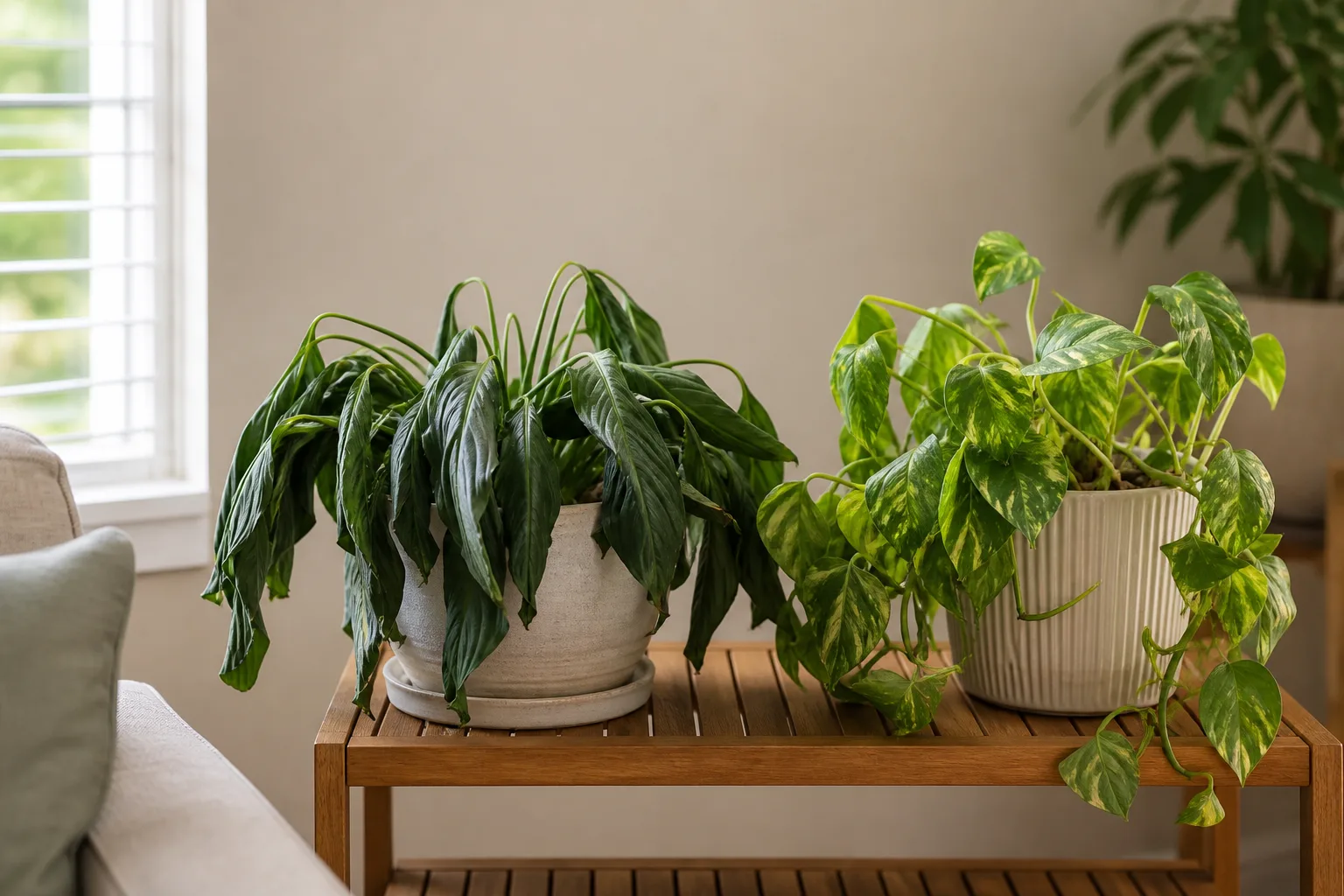
A drooping houseplant does not always need water. That is the most important sentence on this page, and the one that saves more plants than any watering tip. Drooping is a stress signal, not a diagnosis. The plant is telling you something is wrong — but it could be thirsty, drowning, overheated, rootbound, or simply sitting in the wrong light. Your job is to figure out which one before you reach for the watering can.
Watering a drooping plant without checking the soil first is the most common way indoor plant problems turn into indoor plant emergencies. University of Maryland Extension explains that plants exposed to excess moisture show the same wilting symptoms as plants under drought stress because both conditions damage root function. (University of Maryland Extension) That means a limp, sad-looking plant could become worse if you add water when the real issue is soggy roots that cannot breathe.
This guide walks through the difference between underwatering and overwatering drooping, gives you a simple pre-watering checklist, and covers the other common causes that make healthy plants suddenly go limp.
Why Plants Droop: Turgor Pressure in Plain Terms
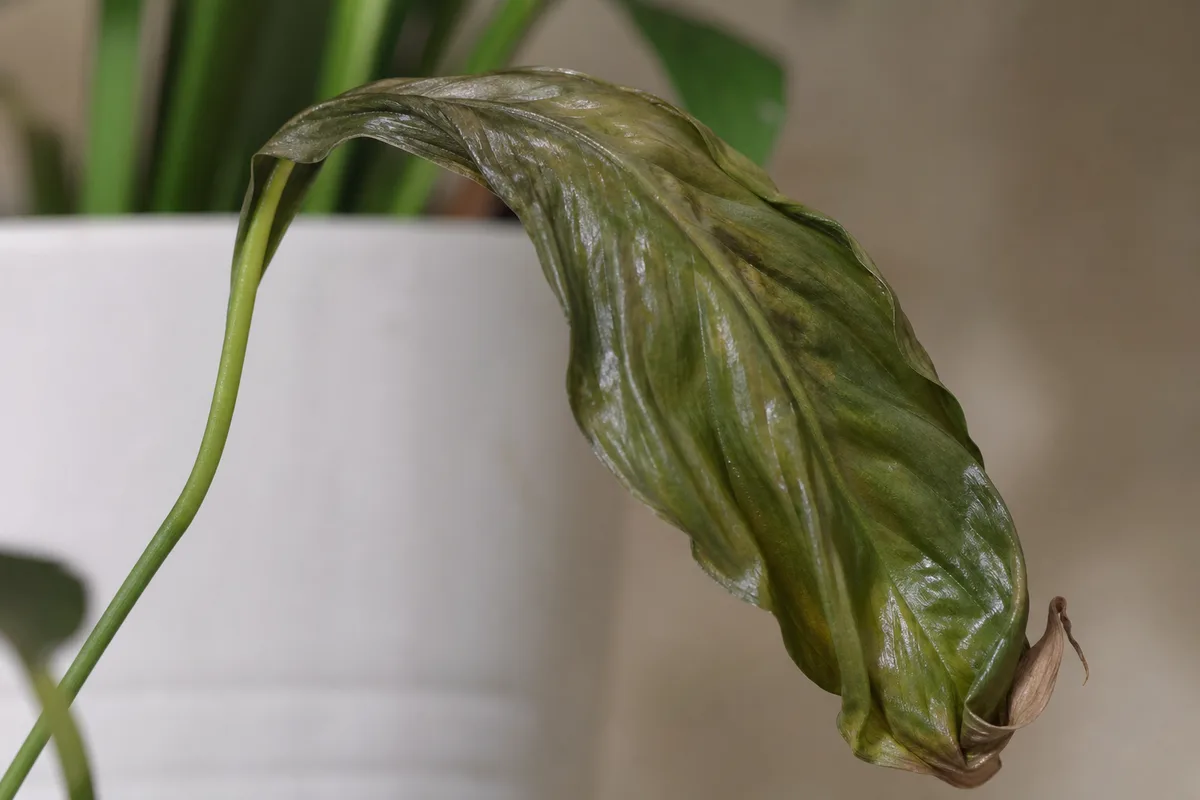
Drooping happens when plant cells lose internal water pressure, called turgor pressure. Think of each cell like a tiny water balloon. When the balloon is full, it is firm and pushes outward against the cell wall, keeping stems upright and leaves spread open. When the balloon loses water, it goes limp. Multiply that by millions of cells across every leaf and stem, and the whole plant sags.
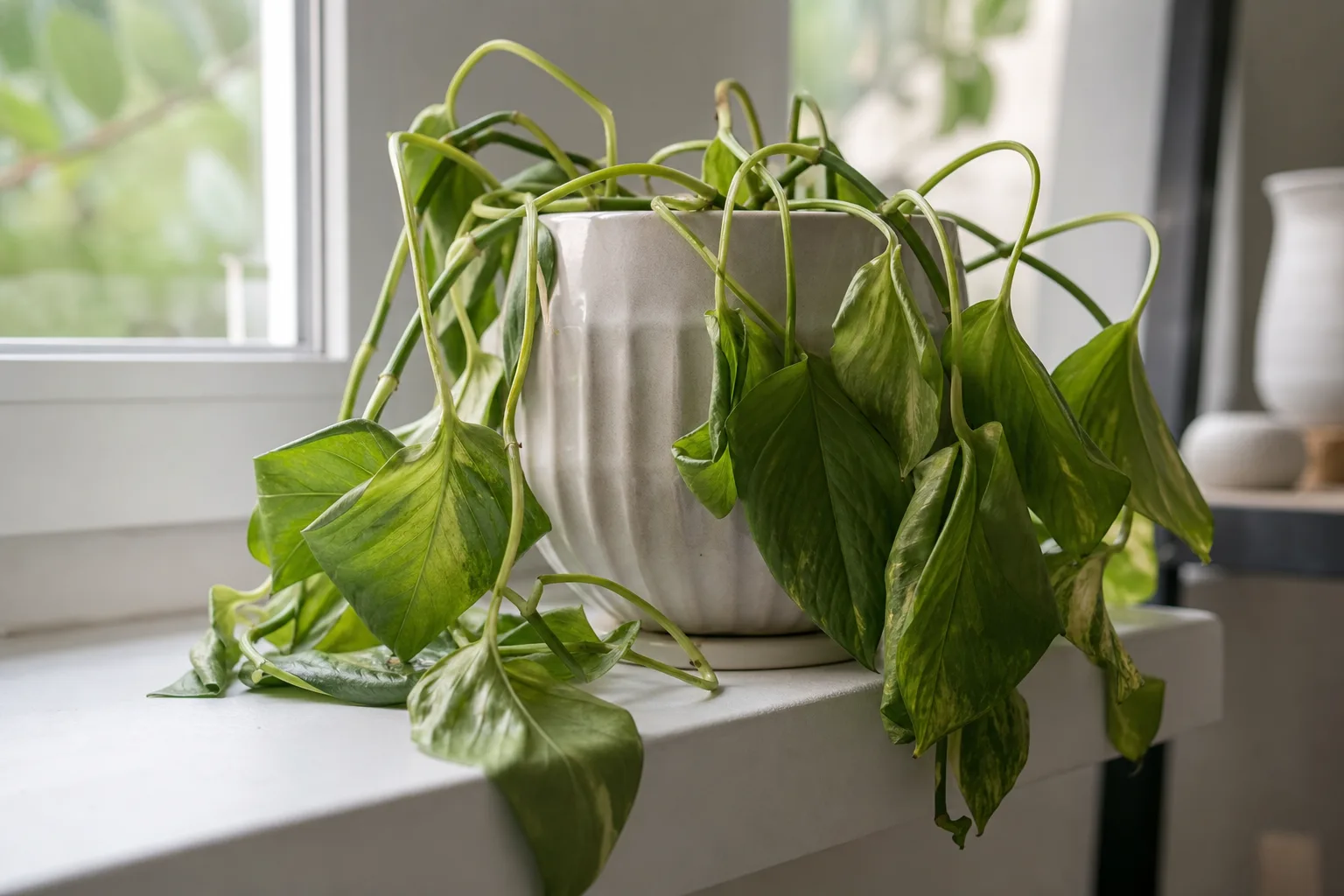
UCANR explains this directly: when overwatered, droopy stems occur because the plant loses turgidity — the pressure against the cell wall from water within the cells that keeps them erect. (UCANR) The same collapse happens when cells run dry. The visible symptom looks identical, but the fix is completely different.
This is the core reason you cannot diagnose drooping by looking at the leaves alone. Two plants can droop in almost the same way — one because its cells are empty, the other because its roots are suffocating in wet soil and can no longer pump water upward. The soil holds the answer.
The 60-Second Check Before You Water
Before you add a single drop, run through this quick checklist in order. It takes less than a minute and prevents the most common watering mistake: treating every droop like thirst.
-
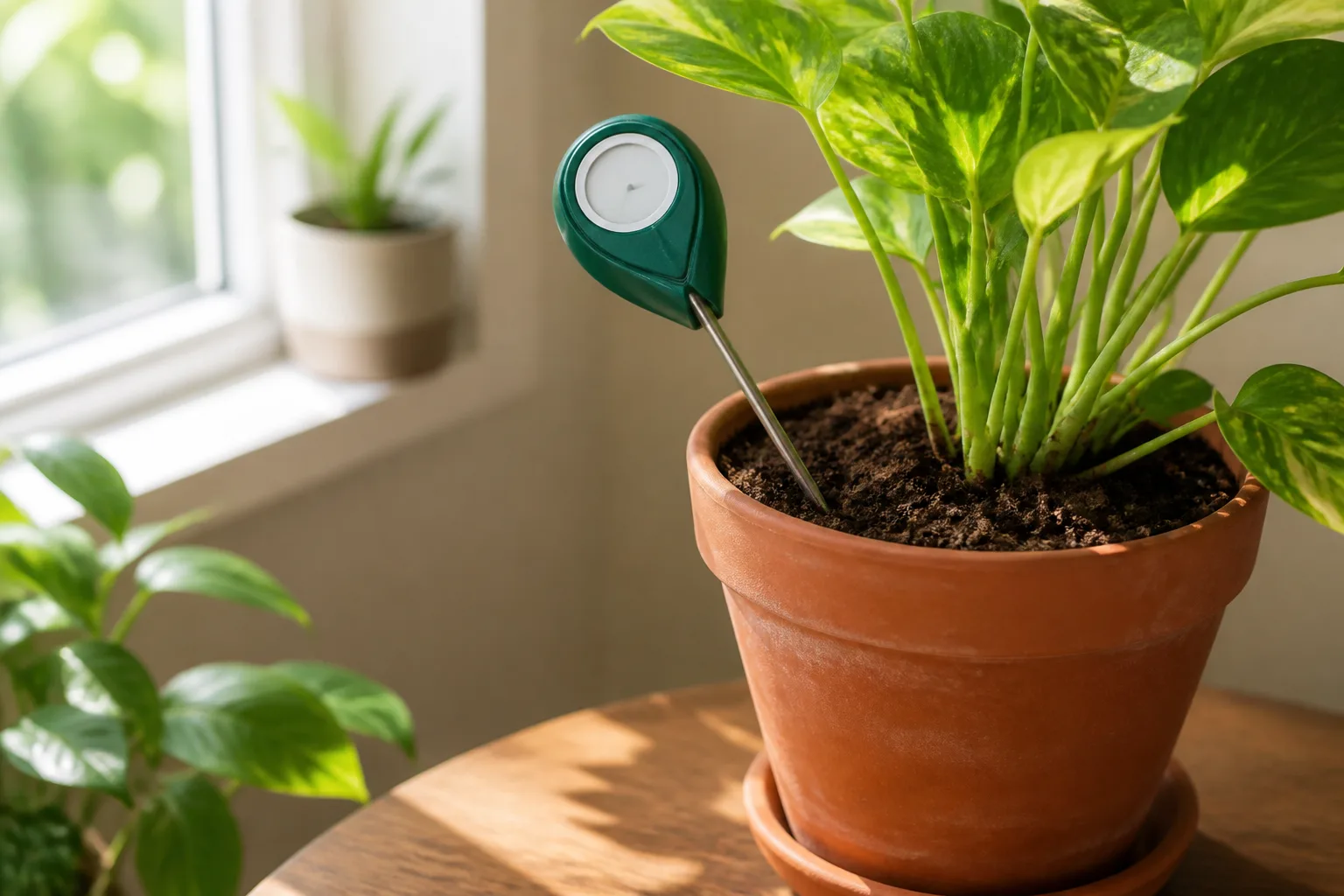
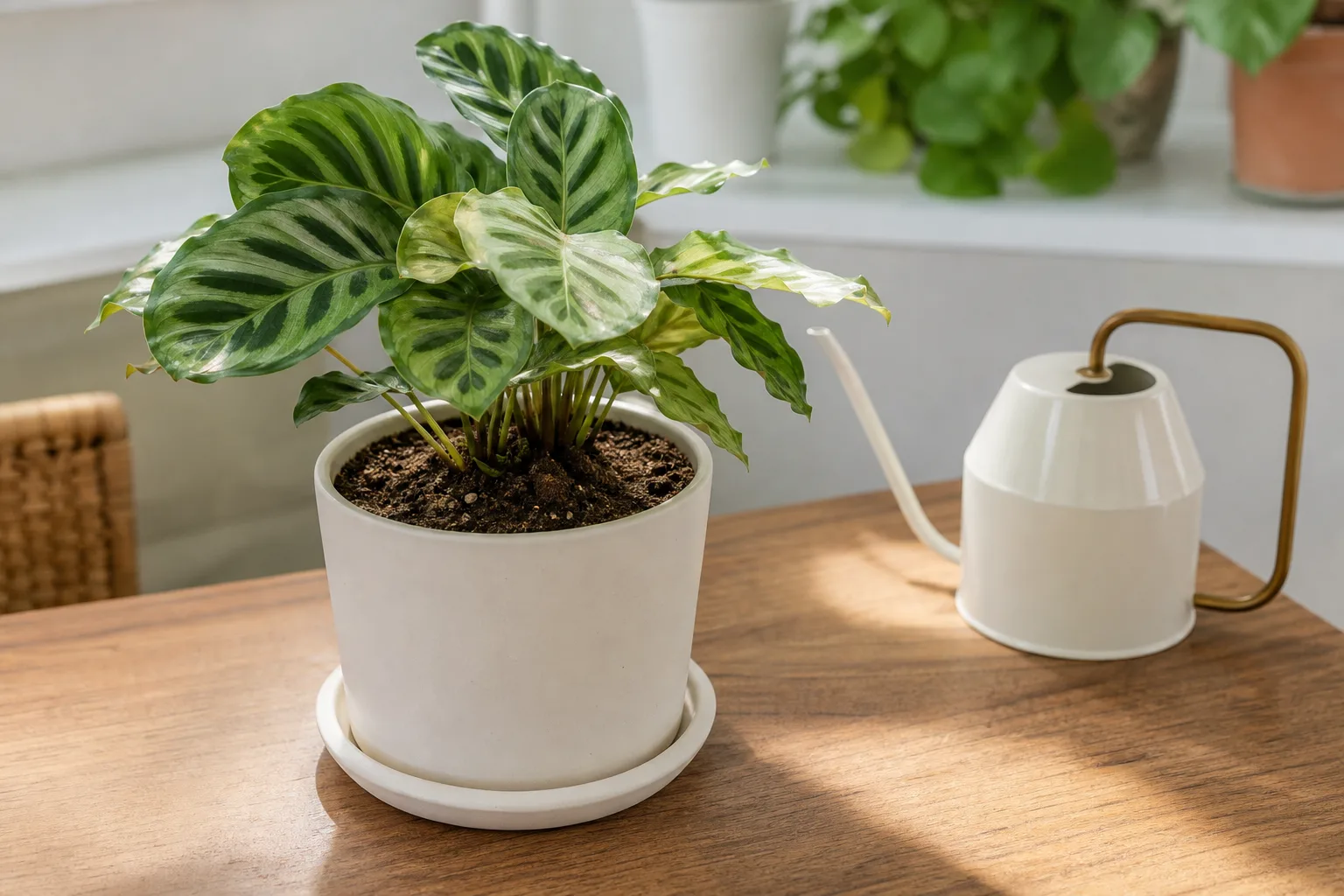
Stick your finger into the soil. Push about two inches down for most tropical houseplants. If it feels cool and damp, stop. Do not water. University of Maryland Extension recommends testing potting mix with your finger to about two inches. If it feels dry at that depth, the plant probably needs water. (University of Maryland Extension)
-
Lift the pot. A dry pot feels noticeably light. A wet pot feels heavy and dense. This one check, once you learn the feel of your own pots, is more reliable than any schedule.
-
Look at the drainage. Is water pooling in the saucer? Is the pot sitting in a decorative outer container with no drainage holes? A plant with wet feet will droop even if you have been watering “correctly.”
-
Check leaf texture. Gently feel a drooping leaf. Dry and papery? More likely underwatered. Soft, limp, and almost floppy? More likely overwatered. Yellowing alongside the droop pushes the needle further toward overwatering.
-
Smell the soil. A sour, musty, or swampy smell near the soil surface often means anaerobic conditions — roots rotting in standing water. This is a strong overwatering signal.
If the soil is dry and the pot is light, water thoroughly and drain well. If the soil is wet and the pot is heavy, do not water. Move the plant into brighter indirect light, improve airflow, and let the root zone dry. If the soil stinks or the plant keeps declining, you may need to inspect the roots.
Dry soil + light pot + crispy leaves → water thoroughly.
Wet soil + heavy pot + soft leaves → stop watering, improve drainage.
Underwatering: When Your Plant Is Actually Thirsty
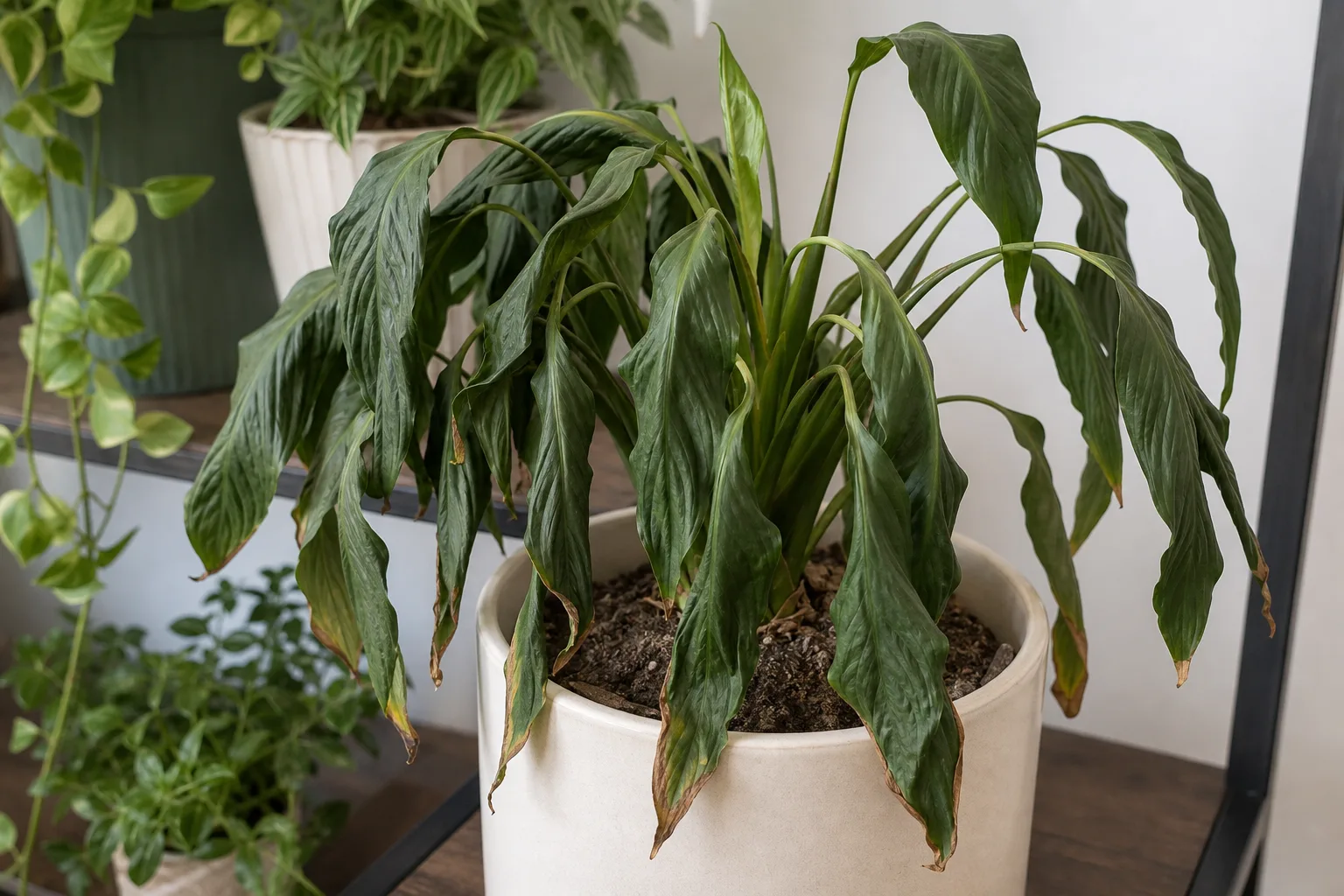
Underwatering is the simpler problem to fix, but it still needs a proper approach. A plant that has gone too dry loses turgor pressure across its leaves and stems. The potting mix may pull away from the sides of the container. Water may bead on the surface or run straight through without soaking in because extremely dry peat-based mixes become hydrophobic — they repel water rather than absorbing it.
Signs of Underwater Drooping
- Soil is dry well below the surface, sometimes pulling away from the pot edge
- Pot feels unusually light when lifted
- Leaves feel thin, papery, or crispy at the edges
- Browning starts at leaf tips and edges, spreading inward
- Whole plant looks dull, grayish, or less vibrant than usual
- Leaves may curl inward or downward
Clemson HGIC notes that plants with large or thin leaves and fine surface roots usually need more frequent watering than succulents with fleshy leaves that store water. (Clemson HGIC) A peace lily or fern will show thirst much faster than a snake plant or ZZ plant, so species matters.
How to Fix an Underwatered Drooping Plant
-
Do not pour a trickle. A small sip only wets the surface while the deeper root zone stays dry.
-
Water slowly and thoroughly. Pour water evenly around the soil surface until you see it drain from the bottom. University of Maryland Extension advises watering plants thoroughly so that water comes out of the bottom of the pot, and notes that plants that have dried to the point where media has pulled away from the sides may need several applications to rehydrate. (University of Maryland Extension)
-
Bottom water if the mix is hydrophobic. If water runs straight through without soaking in, place the pot in a basin with a few inches of room-temperature water for 20 to 30 minutes. Let the mix absorb moisture upward through the drainage holes. Remove once the top feels lightly moist and let the pot drain fully.
-
Drain completely. Empty the saucer or outer pot within 30 minutes. Do not leave the plant sitting in drained water.
-
Place in bright indirect light. Give the plant good light while it rehydrates, but avoid harsh direct sun on already stressed leaves.
Most mildly underwatered plants perk up within a few hours to a day. A peace lily may rebound dramatically in hours. Other plants may take longer. Crispy brown leaf edges will not heal — judge recovery by stem firmness, leaf posture, and whether new growth looks healthy.
Overwatering: When Your Plant Is Drowning
Overwatering is the more dangerous of the two because the damage happens below the soil where you cannot see it. It is also more common. Carrie Harmon, Ph.D., who directs the UF-IFAS Plant Diagnostic Center at the University of Florida, puts it bluntly: “Overwatering is actually the number one way we kill houseplants. The number two way is forgetting to water. So, water is a big deal.” (UF Emerging Pathogens Institute)
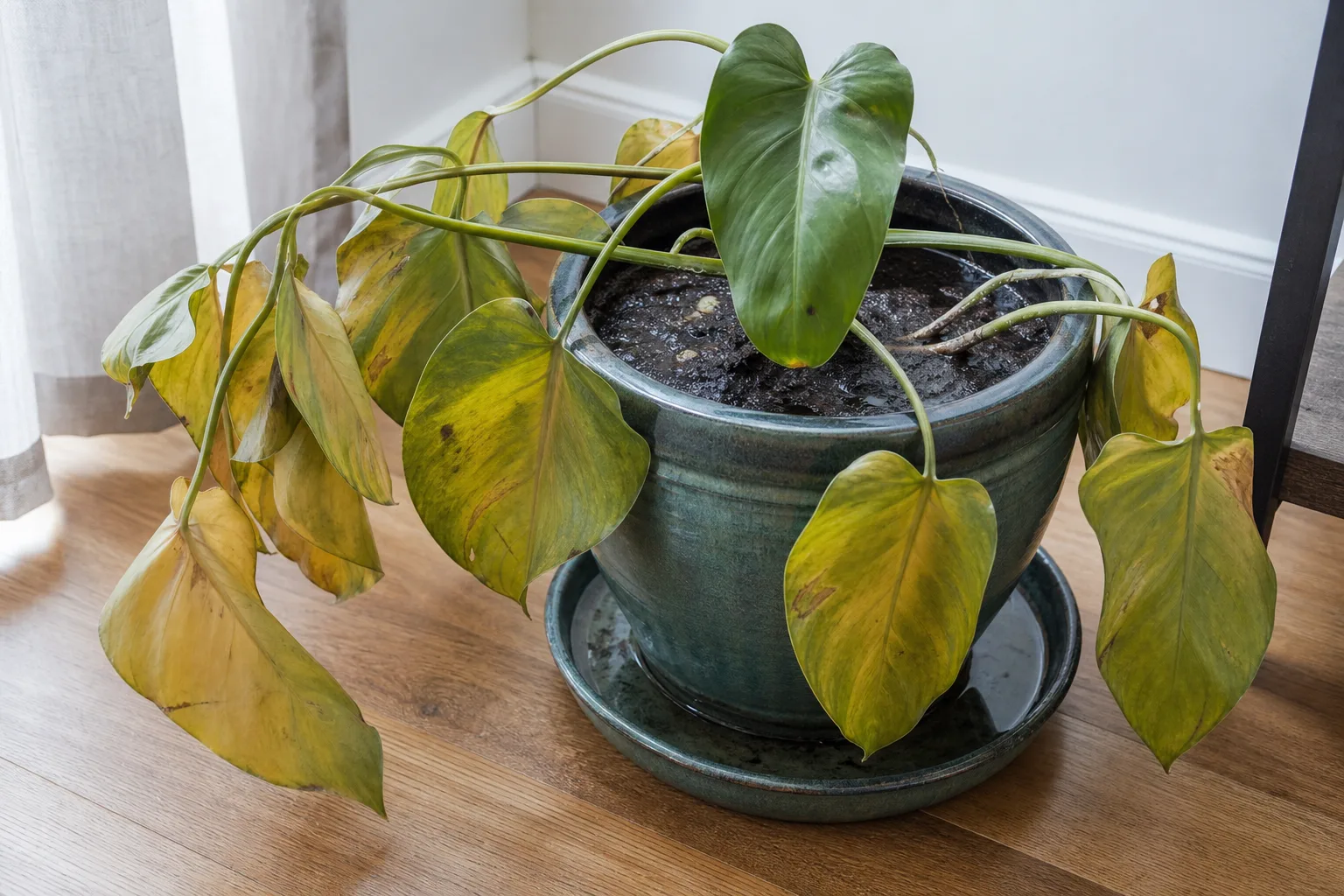
Overwatering usually does not mean pouring too much water in one session. It means watering too often, using a pot or soil mix that stays wet too long, or letting roots sit in standing water. When soil stays saturated, the air spaces between particles fill with water, and roots begin to suffocate. University of Maryland Extension explains that excess water reduces oxygen in the soil, which damages fine roots and renders the plant unable to take up water. (University of Maryland Extension) The cruel irony: an overwatered plant wilts because its roots are too damaged to absorb the very water surrounding them.
Signs of Overwater Drooping
- Soil feels damp or soggy below the surface, even days after watering
- Pot feels heavy and waterlogged
- Leaves feel soft, limp, or mushy — not thin and crispy
- Yellowing starts on lower and inner leaves first
- Leaf drop, often starting with older growth
- Soil or pot smells sour, musty, or swampy
- Fungus gnats hovering near the soil surface
- Stems may become soft or mushy at the base
How to Fix an Overwatered Drooping Plant
-
Stop watering immediately. Do not add any more water until the root zone has dried appropriately.
-
Empty all standing water. Remove saucers, cachepots, or decorative outer containers that may be trapping water.
-
Move to brighter indirect light and improve airflow. Light helps the plant use water, and airflow speeds surface drying. Avoid direct harsh sun on a stressed plant.
-
Check drainage. If the pot has no drainage hole, repot into one that does. If using a decorative outer pot, keep the plant in a nursery pot with drainage and empty the outer pot after every watering.
-
Inspect the roots if the plant does not improve. Slide the root ball out gently. Healthy roots are firm and pale, cream, or tan. Rotten roots are brown or black, mushy, hollow, or foul-smelling. Trim away any rotten tissue with clean scissors, then repot into fresh, well-draining mix in a clean pot with drainage holes.
-
Reduce foliage if root loss is severe. If you removed a large portion of rotten roots, also remove some damaged leaves so the smaller root system is not supporting too much top growth.
-
Hold fertilizer. A stressed plant with damaged roots cannot process fertilizer. Wait until you see healthy new growth before feeding.
Cornell Cooperative Extension notes that houseplants generally need less frequent watering in winter than in spring and summer, and that plants should not be watered if the soil is still wet. (Cornell Cooperative Extension) This seasonal slowdown is a common trap — people keep summer watering schedules into winter when plants are using far less water.
Recovery from overwatering is slower than from underwatering. The plant may drop more leaves after repotting as it adjusts to root loss. Judge progress by whether the decline has stopped, stems are firm, and new growth emerges. That may take weeks.
Side-by-Side: Underwatering vs Overwatering at a Glance
| What to check | Underwatering | Overwatering |
|---|---|---|
| Soil moisture | Dry deep into the pot | Wet or soggy below the surface |
| Pot weight | Noticeably light | Noticeably heavy |
| Leaf texture | Thin, papery, crispy edges | Soft, limp, mushy, sometimes yellow |
| Leaf color | Dull, grayish, browning tips and edges | Yellowing, starting with lower inner leaves |
| Soil smell | Usually neutral or dusty | Sour, musty, swampy |
| Roots | Dry, brittle, pale | Brown, black, mushy, smelly |
| Recovery speed | Hours to a day (if roots are healthy) | Days to weeks (depending on root damage) |
| First action | Water thoroughly and drain | Stop watering, improve drainage, check roots |
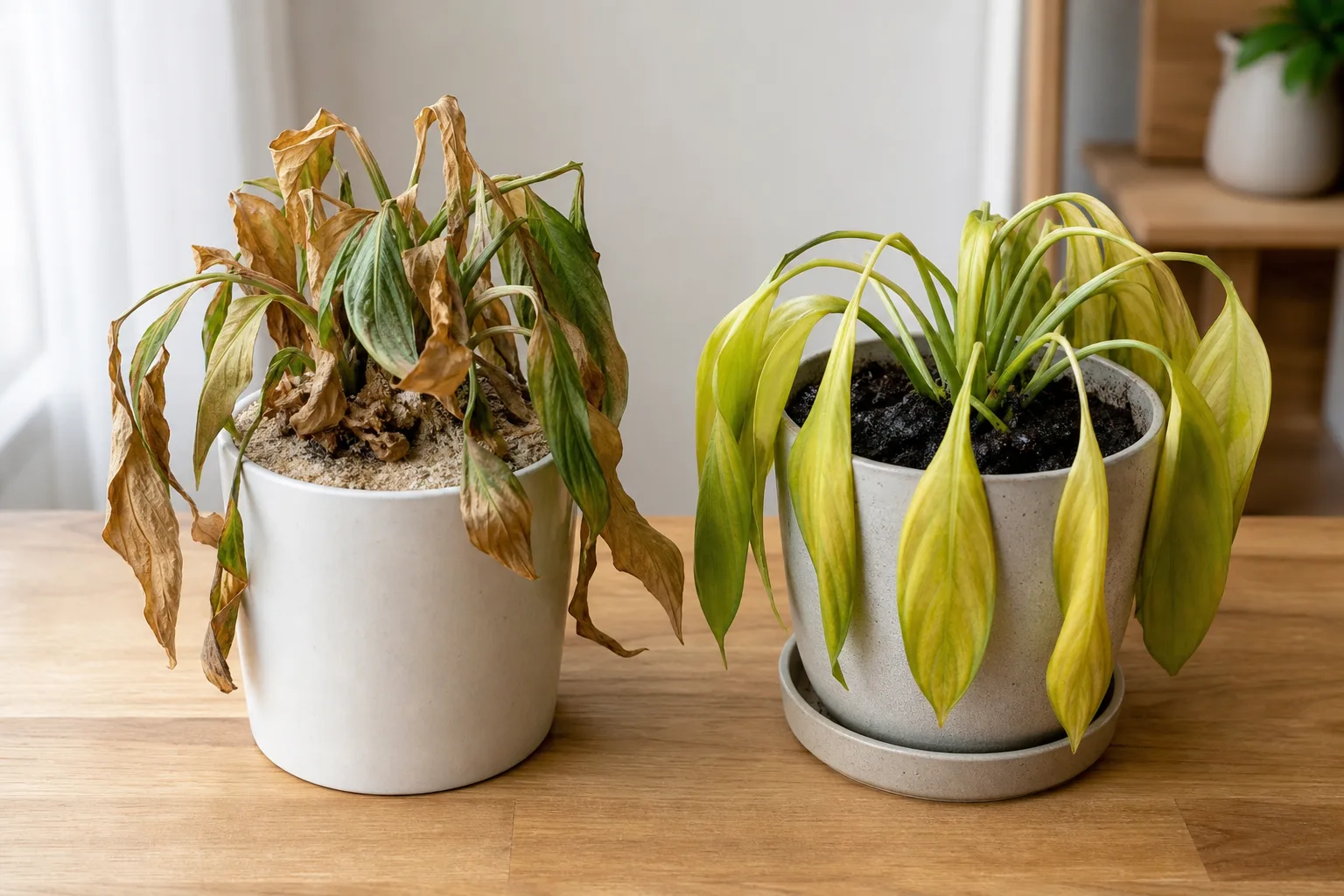 |
University of Minnesota Extension confirms that symptoms of too much and too little water can look similar because both damage root health, which is why checking the soil is essential. (University of Minnesota Extension)
Other Reasons Your Plant Is Drooping
Water is the most common cause of drooping, but it is not the only one. If the soil moisture checks out and your plant is still sagging, work through these possibilities.
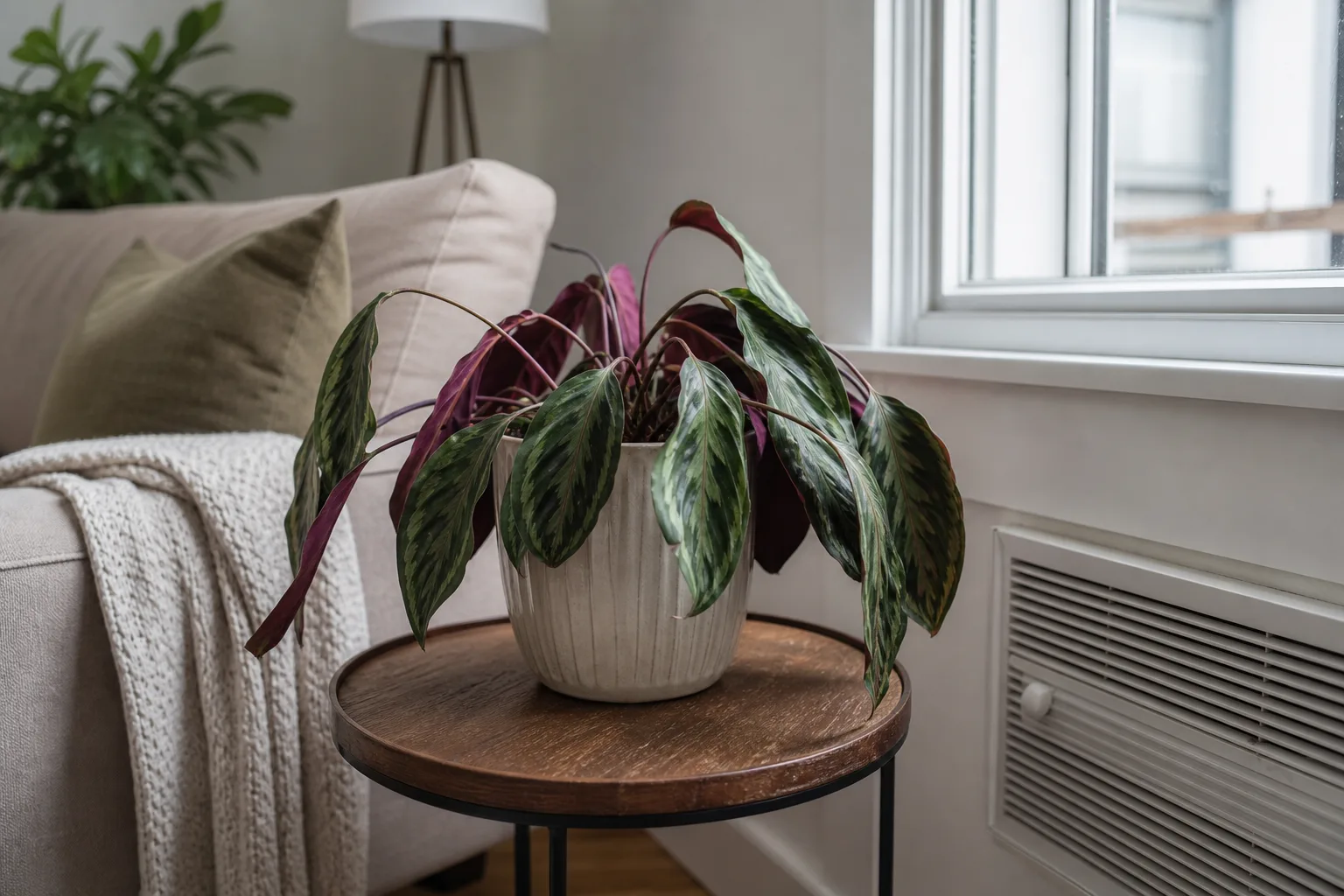
Light Stress
Plants in low light grow slowly, use less water, and develop weaker, stretched stems that struggle to hold leaves upright. A plant that was perky in a bright spot may droop after being moved to a dim corner — not because it needs water, but because the stems are not getting the light energy they need to maintain turgor.
On the flip side, a plant suddenly moved into intense direct sun may droop from heat and light shock. Scorched patches, bleached areas, or crisp brown spots on the side facing the window point toward light stress rather than a watering issue. Move the plant to bright indirect light and avoid sudden relocations between extremes.
Temperature and Drafts
Most common tropical houseplants prefer stable temperatures between roughly 65 and 75°F. A plant near a cold draft, air conditioner, heating vent, or hot radiator may droop even if the soil moisture is perfect. The stress is environmental, not water-related. Move the plant away from the draft source and give it time to stabilize.
Transplant Shock
A plant that was recently repotted or brought home from a nursery may droop for several days. Moving between environments — different light, humidity, temperature, airflow, and watering rhythm — is stressful. The best response is stability: suitable light, checked moisture, no fertilizer, and no further repotting. Let the plant settle.
Rootbound Plants
A severely rootbound plant may droop because the root mass has displaced most of the potting mix, leaving little soil to hold moisture. Water may run straight through without being absorbed. If roots are circling the pot, poking out drainage holes, or forming a dense mat at the surface, the plant likely needs a slightly larger pot with fresh mix. See the repotting houseplants guide for when and how to up-pot.
Pest Damage
Spider mites, mealybugs, scale, thrips, and aphids all stress plants by feeding on sap, which can cause general drooping, yellowing, and decline. Check leaf undersides, stem joints, and new growth. Fine webbing, sticky residue, white cottony clusters, or small bumps on stems are all pest signals. If pests are present, isolate the plant and check the indoor plant pest guide for identification and treatment.
How to Prevent Drooping in the Future
Prevention is simpler than rescue. Most drooping episodes trace back to one of a few patterns. Fix the pattern, and the plant stays upright.
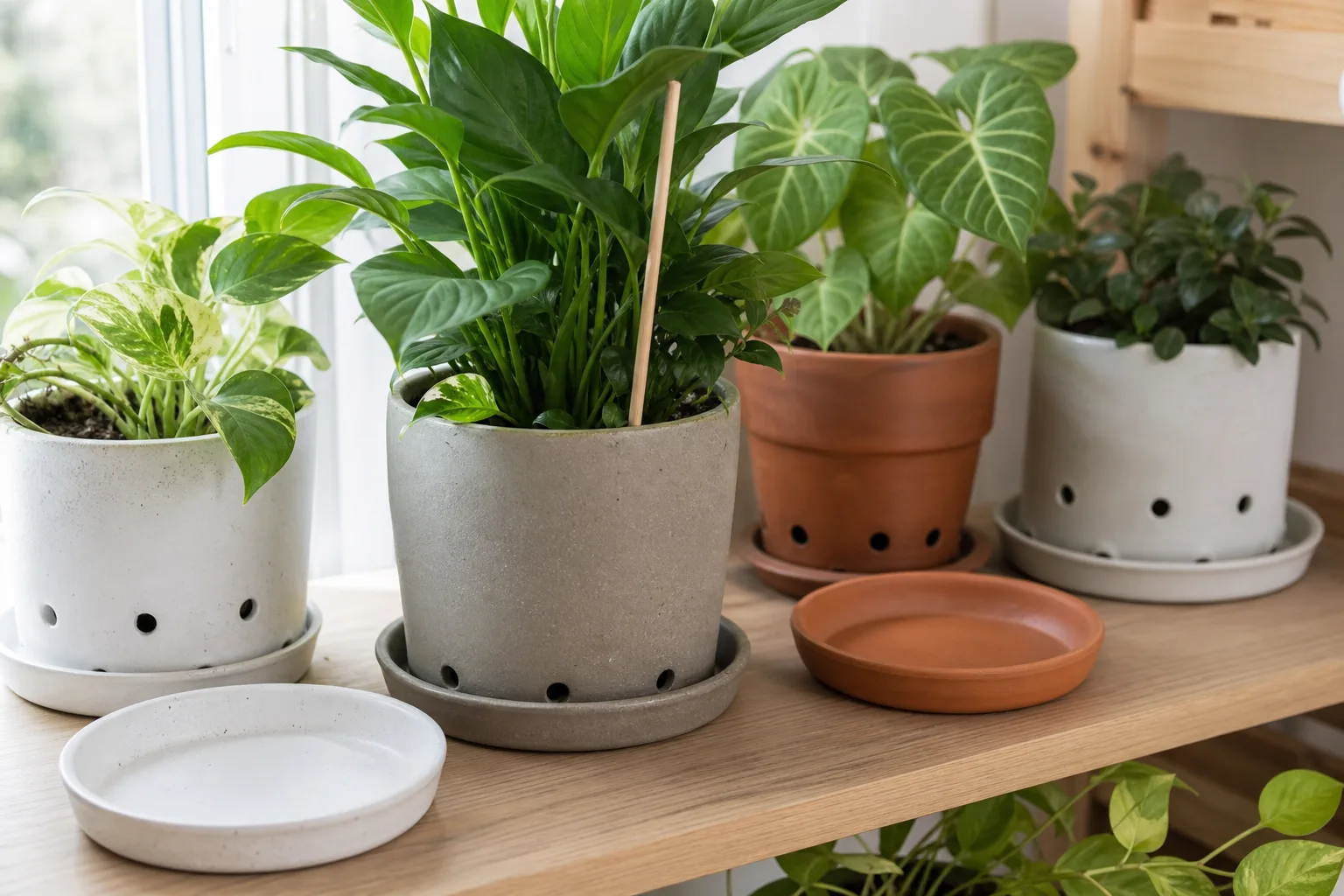
Check before you water, every time. The finger test, pot weight, or a wooden chopstick inserted into the soil are all reliable. Calendar-based watering is not. University of Maryland Extension is explicit: plants should not be watered on a schedule, but rather should be watered when they need it. Factors that influence watering include potting media, humidity, and temperature. (University of Maryland Extension)
Use pots with drainage holes. Without drainage, every watering is a guessing game. Decorative outer pots are fine as cachepots, but the inner nursery pot should drain freely, and standing water in the outer pot must be emptied after watering.
Match pot size to root size. Pots that are too large hold excess soil that stays wet too long around a small root system. Size up gradually, usually by one pot size at a time.
Adjust for the season. Most houseplants need less water in fall and winter when light is lower and growth slows. Keep the checking habit, but expect longer gaps between waterings. For seasonal depth, see the winter houseplant care guide.
Group plants by water need. Put drought-tolerant plants like snake plants, ZZ plants, and succulents on one mental track. Keep average tropicals like pothos, philodendrons, and monsteras on another. Track thirstier plants like ferns, calatheas, and peace lilies separately. Checking everything on the same day is fine. Watering everything on the same day is where problems start.
Learn your pots by weight. After a few watering cycles, the difference between a wet pot and a dry pot becomes obvious by feel. This is one of the fastest ways to know whether a drooping plant actually needs water.
When Drooping Is Normal
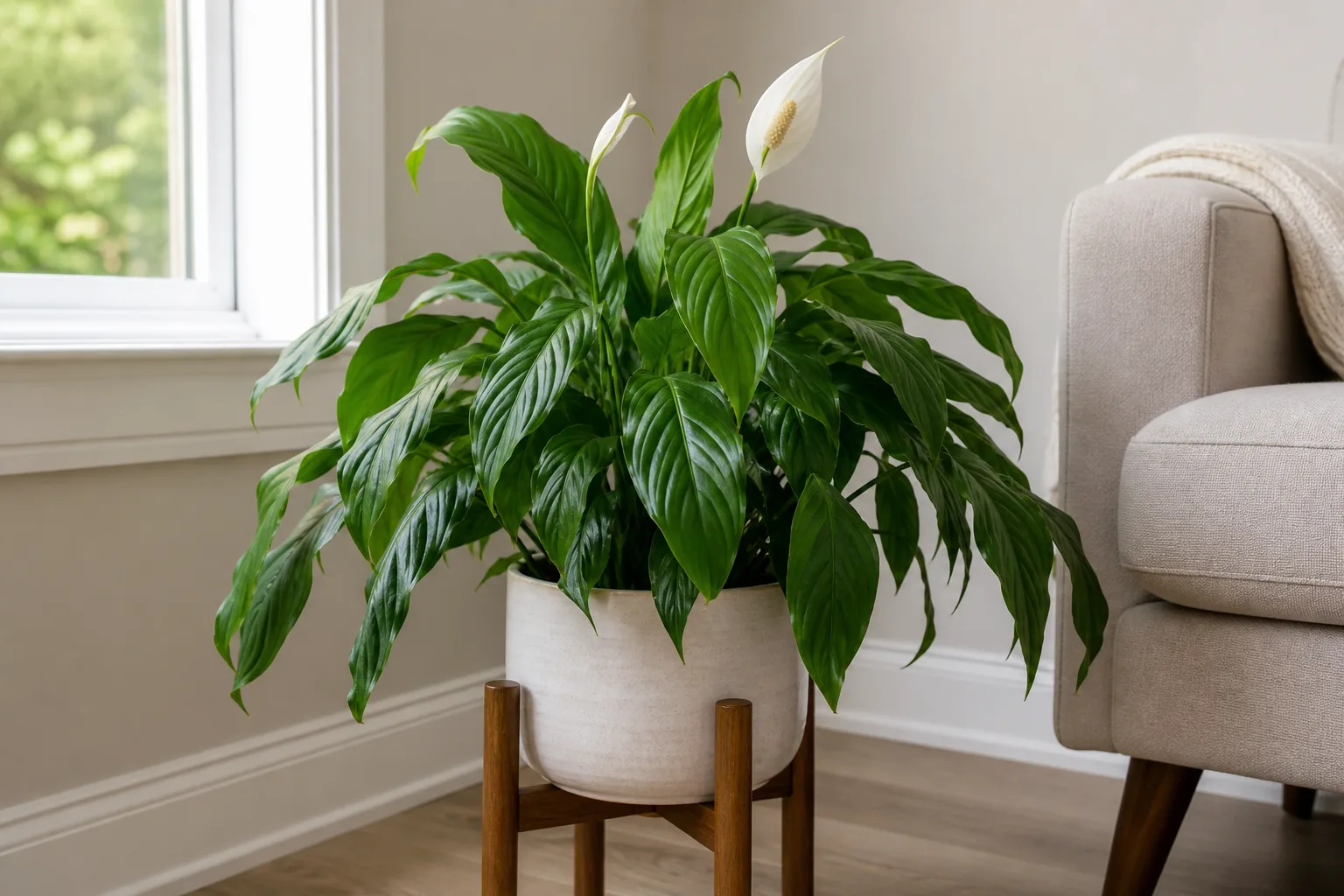
Not every droop is a crisis. Some plants naturally have a more relaxed posture. Others droop slightly at certain times of day. A peace lily that goes dramatically limp by evening and perks up by morning after watering is behaving typically for the species, though consistent underwatering to the point of wilt should not be the routine watering signal.
Some leaf drop and temporary drooping after repotting, moving, or bringing a plant home is normal adjustment. If the droop is mild, the soil moisture is appropriate, and the plant otherwise looks healthy, give it stable conditions and time.
If drooping is accompanied by rapid yellowing, leaf loss, mushy stems, foul smell, or blackened roots, act sooner. That is not adjustment — that is active decline.
Species-Specific Notes
Different plants droop for different reasons and at different rates. Here is how the pattern breaks down for common houseplants:
- Peace lily: Dramatic, fast wilting when dry. Usually perks up within hours of watering. Repeated wilting weakens the plant, so do not use droop as your routine watering signal.
- Pothos and philodendron: Droop gradually when dry. Leaves feel thin and curl slightly. Also droop when overwatered, usually with yellowing leaves first. Check soil before deciding.
- Monstera: Drooping often means the plant is rootbound, in low light, or inconsistently watered. Large specimens in big pots need deep moisture checks — the top can dry while the bottom stays wet.
- Snake plant and ZZ plant: Rarely droop from thirst. Drooping or leaning leaves usually mean overwatering or severe low light. Mushy, falling-over leaves are a rot emergency.
- Calathea and prayer plants: Droop when dry, but also react to low humidity, drafts, and inconsistent watering. Leaves may curl inward before drooping.
- Ferns: Crisp, droop, and shed when dry. Soil should stay lightly moist but not wet. A fern that collapses suddenly in wet soil is likely rotting.
For detailed species-level recovery, see the save a dying houseplant guide, which covers root rot rescue, pest treatment, and species-specific triage.
Related Guides
- Indoor Plant Watering Basics — one-screen cheat sheet with moisture-check tables and triage rules.
- How to Water Indoor Plants the Right Way — step-by-step watering methods, plant-type adjustments, and recovery protocol.
- How to Save a Dying Houseplant — root rot rescue, pest treatment, and full revival workflow.
- Winter Houseplant Care — seasonal slowdown adjustments for watering and environment.
- Repotting Houseplants — when a pot or soil change fixes the real problem.
- How to Tackle Indoor Plant Pests at Home — pest identification and treatment when bugs are behind the droop.
- Houseplant Humidity Guide — when crispy drooping is an air-moisture issue, not a watering issue.
Conclusion
A drooping plant is asking you to check, not guess. Before you water, put your finger in the soil, lift the pot, and feel the leaves. Dry soil and a light pot mean thirst — water thoroughly and drain well. Wet soil and a heavy pot mean the roots are struggling — stop watering, improve drainage, and check the roots if the plant does not improve. Most drooping plants recover once the real cause is identified. The ones that do not are usually the ones that got watered when they needed the opposite.