Maidenhair Fern Care: Light, Water, Humidity & Fixes
Maidenhair fern care for Adiantum: even moisture, high humidity, bright indirect light, and pot-weight triage when fronds collapse overnight.
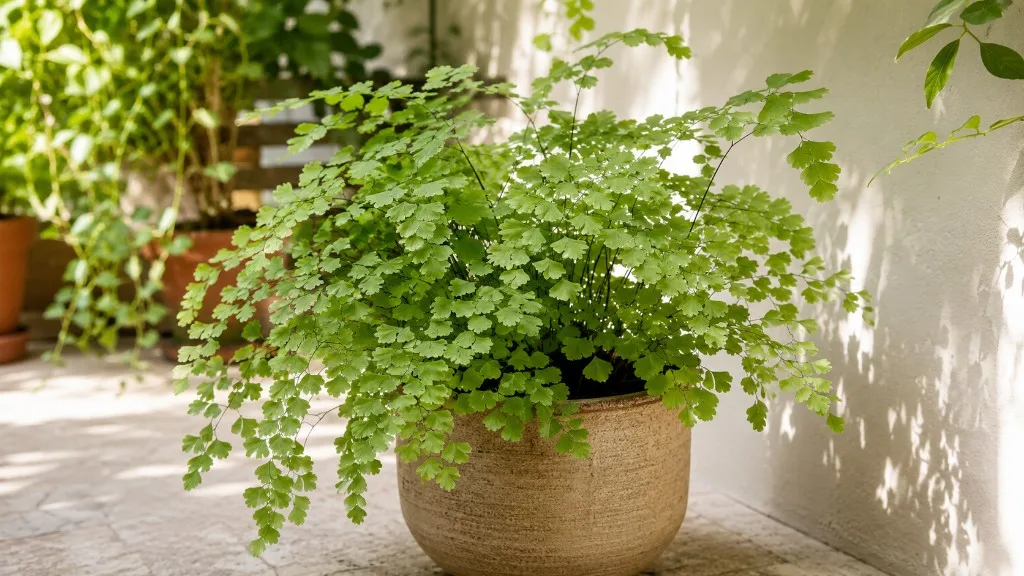
Maidenhair fern (Adiantum raddianum) usually fails for one boring reason: a heated living room is too dry for thin fronds, and a calendar watering schedule is too coarse for a rhizome that cannot go bone dry. The plant that looked fine at breakfast can hang like wet paper by evening. Tip burn shows up even when you “water perfectly,” because air around the leaflets sits at 30–40% relative humidity while the plant wants roughly 50% or higher.
Good maidenhair fern care is a narrow balance, not a long trick list: evenly moist soil that still drains, humidity high enough that new croziers unfurl without crisping, bright indirect light, and stable warmth away from vents. Misting feels productive and barely helps—water beads off Adiantum leaflets. This guide is written for indoor growers who need first-week setup and first-collapse triage in one place.
Written by Sai Ananth · Reviewed by Dr. Priya Menon, Botanist and Indoor Plant Specialist (Ph.D. in Botany; houseplant physiology and tropical foliage) on the LeafyPixels Editorial Review Board · Reviewed 2026-08-02. Practice tips below that are not tied to a cited source are labeled as editorial heuristics—starting points for real homes, not measured greenhouse protocols.
Why Maidenhair Fails in Normal Living Rooms
Most shop tags simply say “maidenhair.” Indoors that usually means delta maidenhair, a true fern in the Pteridaceae family. NC State Extension describes A. raddianum as a herbaceous perennial that spreads by creeping rhizomes, grows about 1 to 2 feet high and wide, needs moist to wet soil, and should not have roots allowed to dry out. Missouri Botanical Garden calls it one of the most commonly grown non-hardy maidenhairs and notes it can be difficult outside a humid atmosphere.
That reputation is fair, but it is specific. Maidenhair is not hard because it wants constant fussing. It is hard because:
- Thin fronds lose water fast while the leaflets shed water rather than absorbing it—so surface misting does little for plant-level humidity.
- The rhizome has a short moisture window—dry soil collapses fronds quickly; stagnant wet mix invites rot.
- Typical rooms are dry—especially with heat or AC—while bathrooms and terrariums only work when light is still adequate.
Boston fern and bird’s nest fern share fern basics; maidenhair sits at the strict end of the same spectrum. If you want a fern that forgives missed weekends, choose a tougher species. If you want lacey black-stemmed foliage and can support humidity plus frequent moisture checks, maidenhair rewards the setup.
Editorial heuristic — dry apartment vs bright bathroom: In a dry apartment with winter heat, plan on a cool-mist humidifier near the plant plus soil checks every couple of days in a small plastic pot. In a bright bathroom with a frosted but readable window, humidity may carry more of the load, but steam does not replace light—if you cannot read a book by the window at midday, the fern will stall even if the air feels moist after showers. These are illustrative home paths, not logged grow trials.
What You Are Growing: Adiantum raddianum and Lookalikes
The genus name comes from the Greek adiantos, “unwetted,” because water beads off the leaf surface. Fronds are triangular and finely divided, with dark stalks emerging from a dense rhizome mat. Missouri Botanical Garden notes fronds typically reach about 12 inches wide and 18 inches long, with pinnae opening light green and darkening with age. Outdoors, A. raddianum is winter hardy only in roughly USDA zones 10–11; most growers treat it as a houseplant.
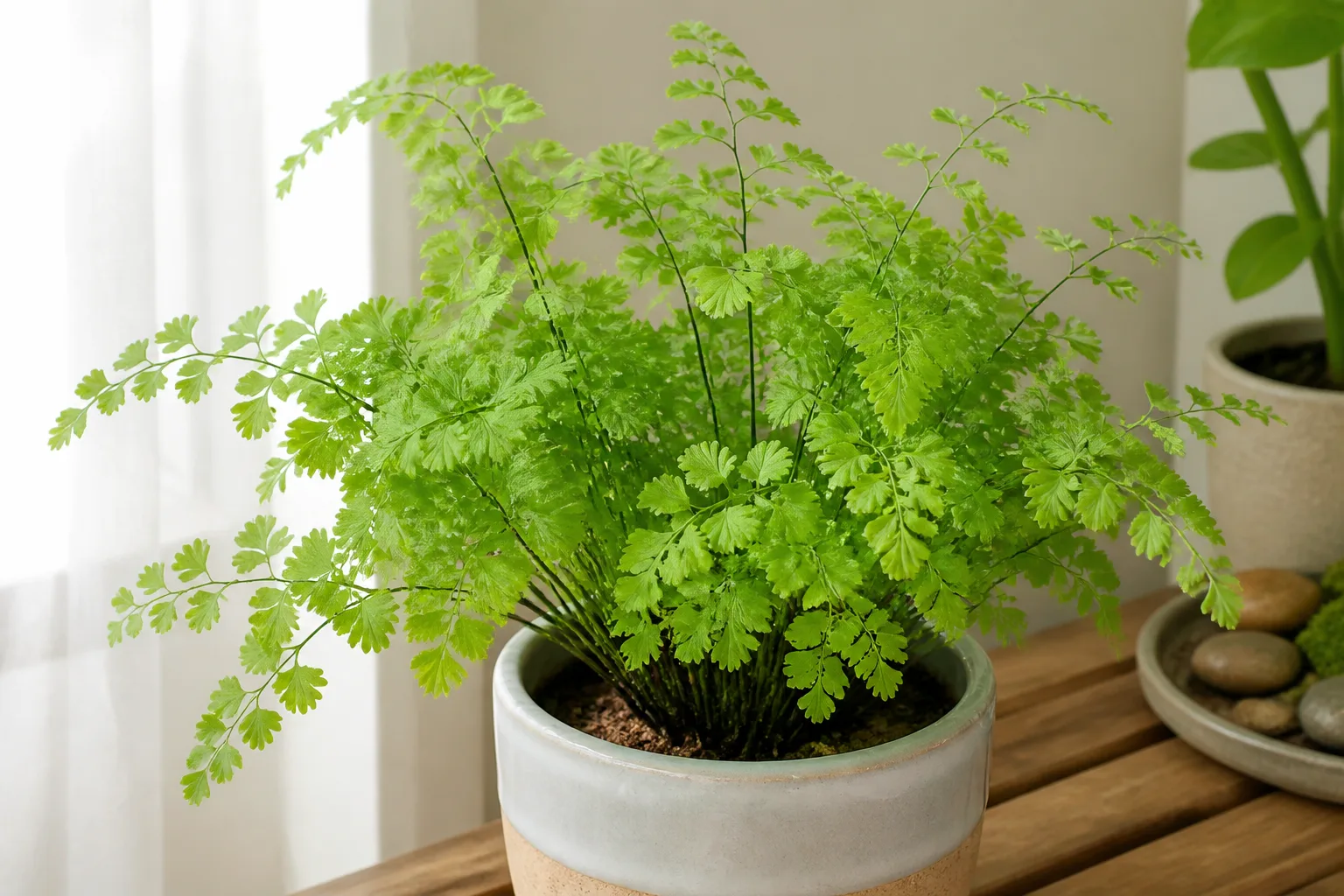
UF/IFAS covers Adiantum species more broadly as fine-textured ferns for shade, moist organic soils, containers, and indoor use, with poor drought tolerance and real root-rot risk when soil stays too wet. Other shop plants labeled “maidenhair” may be A. capillus-veneris (southern maidenhair) or related species. Care overlaps—even moisture, high humidity, filtered light—but assume A. raddianum unless the tag or frond form clearly says otherwise. NC State notes A. raddianum is often confused with A. capillus-veneris and A. pedatum; when pet safety or hardiness matters, buy and label by botanical name.
Quick Maidenhair Care Snapshot
For healthy indoor maidenhair, place the plant in bright indirect light, keep the root ball evenly moist without standing water, raise humidity toward 60% or higher when you can, use a moisture-retentive but airy mix in a pot with drainage holes, and keep temperatures roughly in the mid-60s to mid-70s °F away from vents and cold glass.
| Care factor | Baseline target | Notes |
|---|---|---|
| Light | Bright indirect; no harsh direct sun | Dim corners stall growth and keep soil wet longer |
| Water | Top ~1 cm barely dry, then soak and drain | Never bone-dry rhizome; never saucer of standing water |
| Humidity | Aim 60–80% when possible; ~50% is a useful floor | Heated rooms often sit at 30–40% |
| Soil | Moisture-holding mix with pore space | Drainage holes non-negotiable |
| Feed | Half-strength liquid monthly in active growth | Skip while collapsed or newly repotted |
Calendar intervals are only starting points. A terracotta pot on a bright east sill in summer is not the same plant as a plastic pot in a closed bathroom terrarium. Check the pot, then water.
Watering: Never Bone Dry, Never Sitting Wet
If you remember one watering rule, make it this: roots must never be allowed to dry out. Missouri Botanical Garden states that plainly, and NC State repeats that roots should not dry. At the same time, do not leave the pot sitting in a saucer of runoff. The target is a cool, springy sponge: evenly damp after a thorough drink, with air returning as the top centimeter shifts from moist to barely dry.
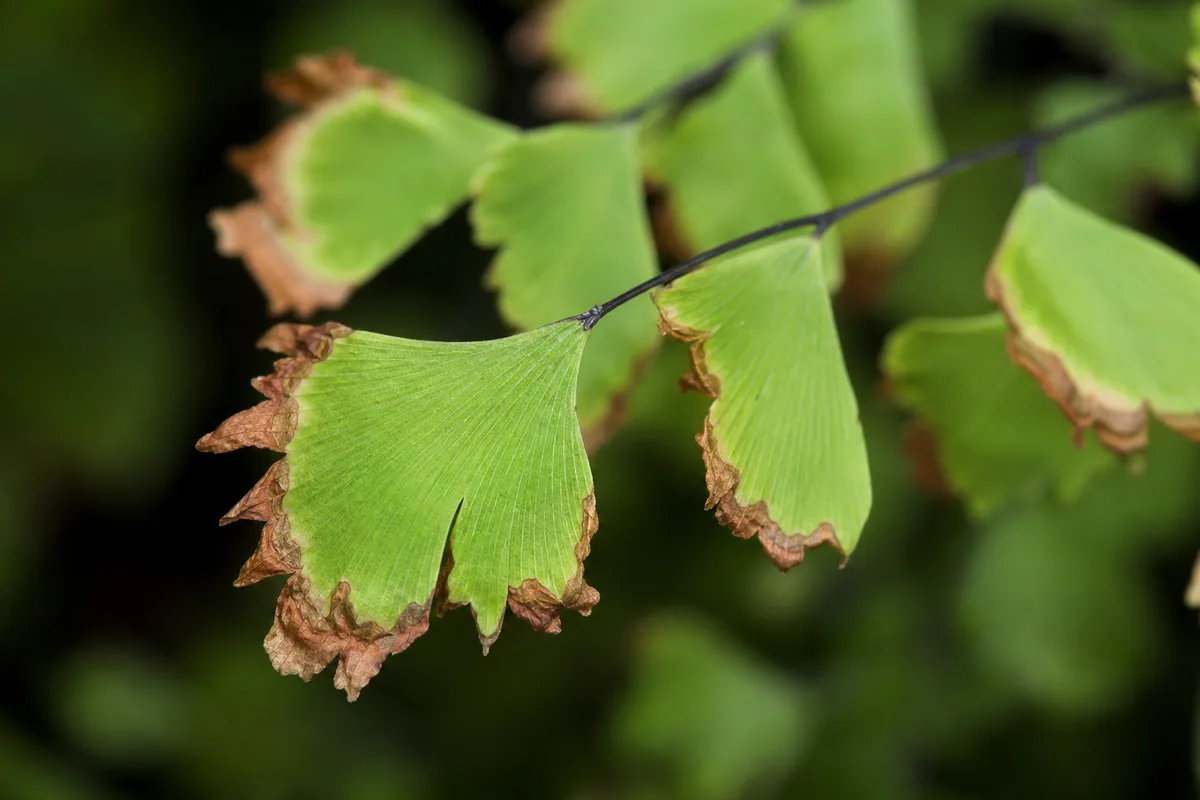
What “top centimeter barely dry” feels like depends on the mix. In a coir-heavy blend, the surface can feel springy while deeper roots are still wet—push a finger or wooden skewer deeper before you water again. In a peat-heavy nursery mix, the top crust can dry while the core stays soggy; weigh the pot and check below the crust. Clemson HGIC groups maidenhairs among delicate ferns that should never dry out completely and notes brown leaflets are especially common when humidity is low. Watering and humidity are linked, but they are not interchangeable. Dry air browns tips. Dry soil collapses fronds.
Seasonal Check Intervals (Editorial Starting Points)
Treat these as editorial check intervals for a typical 10–15 cm pot in bright indirect light—not automatic watering days and not extension-mandated schedules:
- Spring: every 2–3 days
- Summer: every 1–3 days depending on heat and AC
- Fall: every 3–4 days
- Winter: every 5–7 days, still never bone dry
Water thoroughly until excess leaves the drainage holes, then empty the saucer within about 30 minutes. In winter, reduce volume if the pot stays heavy, not the moisture standard at the rhizome. Heated rooms often combine dry air with deceptively wet lower soil. For seasonal bands, moisture tests, and recovery after overnight collapse, open the dedicated watering guide. Pair the logic with how to water indoor plants the right way, then tighten the dry-down trigger so this fern never reaches bone dry.
Pot-Weight Triage When Fronds Collapse
Overnight collapse is the signature maidenhair scare. Do not “fix wilt” with more water until you know what the pot feels like.
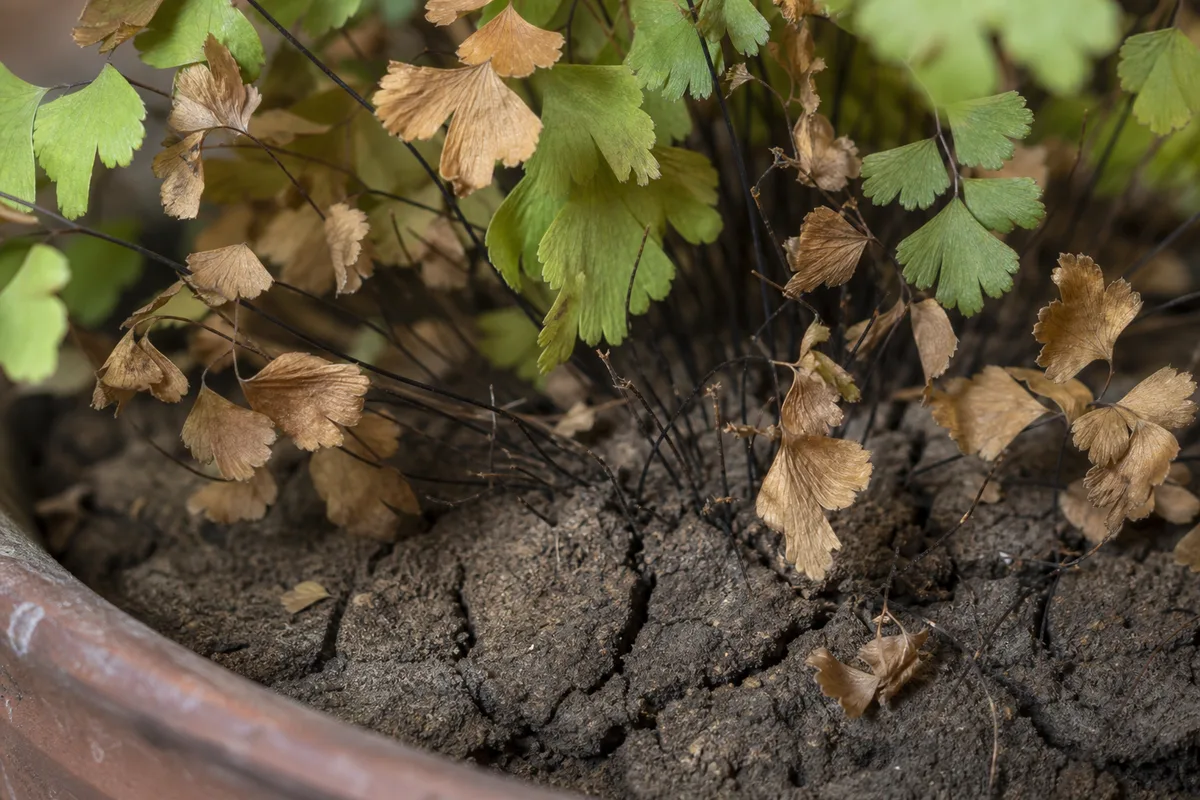
- Lift the pot. A light pot with dry, shrinking mix means drought collapse. Cut fully collapsed fronds to the soil line, water slowly until the mix is evenly moist, raise humidity, and keep bright indirect light. Do not fertilize.
- Feel the rhizome crown gently at the soil line. Firm and pale-to-tan tissue can still push new croziers. Soft, black, foul-smelling crowns cannot be saved—discard the plant and scrub the pot.
- A heavy, sour pot with limp fronds is a different problem (see diagnosis below). Adding water into saturation makes rot worse.
Editorial revival window: When the rhizome is firm, room temperatures stay roughly in the mid-60s to mid-70s °F, humidity is lifted toward about 60%, and light is bright but filtered, new croziers often appear within about 2–4 weeks. That timeline is an editorial observation band for attentive recovery setups—not a guaranteed clock. Cooler rooms, dim light, or RH still stuck near 30% stretch the wait or stall recovery entirely.
Water Quality and Brown Tips
Maidenhair can show tip burn from mineral or fluoride stress in some municipal supplies, especially with white crust on the pot rim. Prefer room-temperature rainwater, distilled water, or filtered water when you can. If tap water is your only option, keep it consistent and watch for crust; flushing the pot with clean water periodically helps when salts accumulate. Do not confuse tip burn with sun scorch or whole-frond collapse. Tan crisping at leaflet margins with firm black stipes is classic tip stress. Dark patches on the window-facing side suggest light damage. Route margin burn to the brown tips problem page when that pattern dominates.
Humidity That Actually Works
High humidity is the other half of success. Aim for 60–80% relative humidity when you can; Clemson cites roughly 50% as a meaningful floor for southern maidenhair and similar delicate types. Heated winter air often sits at 30–40%, which pulls moisture from thin fronds even when soil care is correct. That is why people insist they water perfectly and still watch the plant crisp.
Rank humidity tools by reliability for real homes:
- Cool-mist humidifier near the plant with a hygrometer—most dependable in dry apartments.
- Pebble tray with water kept below the pot base—local help; Missouri Botanical Garden recommends a tray of wet pebbles, and the RHS Adiantum raddianum profile supports moist, well-drained culture with high humidity via a moist gravel tray.
- Bathroom or kitchen placement when light and temperature are still good.
- Terrarium or glass cabinet for small specimens—excellent moisture retention, but give brief ventilation so fronds are not constantly cold and wet (sealed mold risk is real in stagnant setups).
- Misting—weakest tool. Water beads off Adiantum leaflets, so spray bottles create a brief local bump and can leave wet foliage in stagnant air. Use only as a minor supplement, never as the humidity plan.
If new croziers brown as they unfurl in dry rooms, start with the low humidity guide and our broader indoor fern plant care guide for cross-species humidity context.
Light and Placement Without Scorch or Stall
Maidenhair ferns evolved as forest-floor and moist rock-crevice plants. Indoors they want bright, filtered light, not a dark hallway and not a hot sun patch on the glass. Missouri Botanical Garden is explicit: the plant responds best in bright indirect light including diffused sun, dislikes direct sun, and loses vitality in full shade. BBC Gardeners’ World recommends plenty of bright, indirect light but no direct sunshine on the fronds.
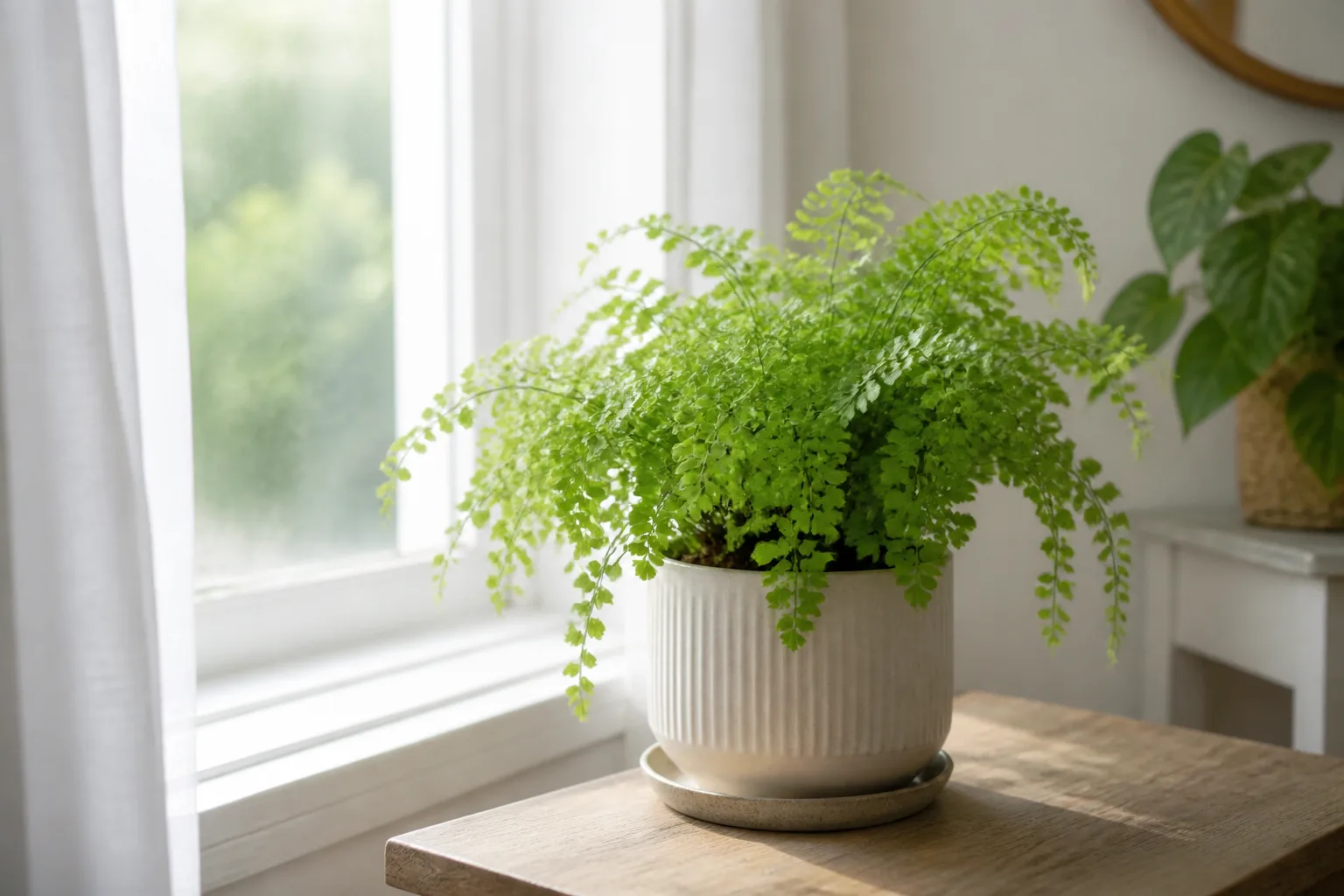
Light also controls watering risk. In brighter placement, fronds transpire faster and the mix dries on a predictable rhythm. In a dim corner, soil stays wet longer while fronds stay weak, so the same “water every three days” habit that worked near a window can quietly invite rot. Fix light before you add fertilizer.
Window Placement and Bathrooms
An east-facing window is often the easiest indoor placement: gentle morning light, bright ambient conditions later, and less risk of afternoon scorch. A bright north exposure can work if the plant sits close enough that fronds actually receive light. West and south windows need distance or a sheer curtain; Clemson HGIC warns against placing ferns directly in south or west sun because foliage damages quickly.
Rotate the pot a quarter turn weekly if growth leans hard toward the glass. Bathroom placement works when the room is humid and bright enough. Steam does not replace photons. A frosted bathroom window that barely lights a book will not support dense fronds long term. For placement troubleshooting, use the dedicated light guide.
Grow Lights as an Editorial Backup
Maidenhair can survive brief low light, but it is a poor long-term setup. Expect smaller fronds, wider spacing, slower crozier production, and a plant that collapses faster when soil finally dries. If natural light is weak in winter or in a north room, a full-spectrum horticultural LED can stabilize growth.
Editorial starting point (not a manufacturer prescription): hang the fixture roughly 12–18 inches above the crown for about 10–12 hours, then watch frond color and pot dry-down for a week before changing height or duration. Keep fixture heat off the fronds; thin leaflets scorch easily. Move the plant gradually when increasing light—a fern grown in a dim shop corner and dropped onto a hot south sill often browns within a day. For deeper supplemental-light strategy across houseplants, see grow lights for indoor plants.
Soil, Pot Size, and Drainage
UF/IFAS notes maidenhair ferns need high organic matter and good drainage, and that root rot follows soil kept too wet. The mix must hold moisture near fine roots without turning anaerobic. RHS language for A. raddianum points to moist but well-drained peat-free houseplant compost with good surface ventilation.
Editorial mix starting point aligned with that organic-plus-drainage target (not a universal recipe): roughly 50% quality potting compost, 30% coco coir, and 20% fine orchid bark, with optional perlite in humid rooms or plastic pots. Adjust by feel—if the pot stays heavy for days in a dim room, add more bark or perlite; if terracotta dries the ball too fast in a warm room, lean slightly more coir and check more often.
Drainage holes are non-negotiable. Glazed ceramic and plastic hold moisture longer; terracotta breathes and may dry too fast for this species in warm rooms unless you check more often. Choose a pot only slightly larger than the root ball. An oversized decorative cachepot of dense mix is a common post-purchase death sentence because unused soil stays wet while fronds still look thirsty. For recipes, drainage tests, and rhizome depth at repot, use the soil guide.
Temperature and Draft Protection
Keep maidenhair in stable indoor warmth. Gardeners’ World comfort guidance sits roughly 15–21°C (59–70°F); common extension ranges often sit around 60–75°F. Avoid letting the plant drop below about 10°C (50°F). Missouri Botanical Garden warns against drafty areas and heat registers. Cold window drafts, AC vents, and radiator microclimates all trigger frond drop or edge burn even when soil moisture looks correct.
Move the pot a few feet from heating and cooling sources. In deep winter, pull it back from icy glass at night if the pane radiates chill. A slight winter rest with cooler nights and reduced watering volume is fine; neglect is not. Winter dry-air traps are covered in why houseplants struggle in winter.
Feeding, Repotting, and Division Basics
Feed lightly only during active growth. RHS-style guidance for A. raddianum is a half-strength balanced liquid fertilizer monthly from mid-spring through late summer, then ease off in fall and winter. Always water first so fertilizer never hits a dry root ball. Brown tips with mineral crust after heavy feeding often mean salt stress, not a need for more product. Skip fertilizer entirely while the plant is collapsed, newly repotted, or recovering from rot. Deeper feeding nuance lives in the fertilizer guide.
Repot every 1–2 years in spring when roots crowd the pot, mix breaks down, or the plant dries unusually fast—Gardeners’ World likewise suggests yearly or biennial spring repots when roots fill the pot. Keep rhizomes at the same depth; burying the crown deeper is a frequent cause of post-repot wilt. Pre-moisten the new mix and raise humidity while roots reattach. Details live in the repotting guide and the general repotting houseplants walkthrough.
Propagation for home growers means division, not water cuttings. Ferns do not root from detached fronds the way pothos roots from nodes. NC State lists division as the practical method; RHS fern guidance likewise favors splitting crowns or rhizomes that already carry roots. In spring, separate sections with rhizome, fine roots, and several healthy fronds, pot into fresh moist mix, and use a humidity cover for a couple of weeks in dry homes. Step-by-step division is in the propagation guide.
Diagnose Lookalike Problems
Most maidenhair problems are environmental before they are pest or disease issues. Work this evidence order for brown tips: pot weight → RH reading near fronds → crust on pot rim → sun-facing scorch pattern. Then pests.
Missouri Botanical Garden flags scale and mealybugs. Clemson notes pesticide sprays can injure many ferns, so test any product carefully and prefer mechanical removal plus cultural fixes first. UF/IFAS adds that pests are usually not devastating long-term, but root rot in soggy soil is a real management risk.
Brown Tips vs Overnight Collapse vs Root Rot
| Pattern | What you see | Pot / smell | First action |
|---|---|---|---|
| Low-humidity tip burn | Tan crispy leaflet margins; black stipes still firm | Mix may still be moist | Raise RH; check water quality; do not fertilize |
| Drought collapse | Whole fronds limp overnight; plant looks “fried” | Pot light; mix dry | Cut dead fronds; rehydrate slowly; raise humidity |
| Root rot / wet wilt | Limp fronds despite “watering” | Pot heavy, sour smell; soft crown | Stop watering into saturation; inspect roots; see hub |
Do not fertilize a collapsed plant. Do not assume wilt means “add water” before you weigh the pot. Use underwatering, overwatering, and root rot pages when the symptom pattern needs a dedicated workflow.
Pet Safety and Name Confusion
True maidenhair fern (Adiantum) is widely treated as a pet-safer foliage choice compared with many toxic ornamentals, and ASPCA Animal Poison Control’s toxic and non-toxic plant resources are the usual place owners confirm listings by botanical name. Still, “non-toxic” does not mean chew-proof. ASPCA notes that eating any plant material can cause vomiting or gastrointestinal upset in dogs and cats. Keep the pot on a shelf or in a hanging spot if cats graze, and call a veterinarian or ASPCA Animal Poison Control at (888) 426-4435 if a pet becomes ill after chewing houseplants.
Name confusion matters. Asparagus fern (Asparagus densiflorus) is not a true fern; ASPCA lists it as toxic to dogs and cats, with allergic dermatitis from repeated skin exposure and gastric upset from berry ingestion. Identify plants by botanical name when pet safety is the buying filter. Maidenhair suits humid bathrooms, terrariums, and attentive growers; it is a poor fit for dry apartments, frequent travelers, and anyone who prefers sparse watering.
Where to Go Next in the Maidenhair Hub
Use this page for the full moisture–humidity–light framework and first-pass triage. Open the canonical Maidenhair Fern care hub when you need deeper topic steps or a symptom-first workflow. Start with the action that matches what you just found:
- Moisture timing → watering
- Scorch or stall → light
- Mix and pot sizing → soil
- Margin burn → brown tips
- Dry-air crozier burn → low humidity
- Heavy sour pot → root rot
- Division after recovery → propagation
How this guide was researched
Recommendations were checked against NC State Extension, Missouri Botanical Garden, UF/IFAS, Clemson HGIC, RHS profiles and fern guidance, BBC Gardeners’ World, and ASPCA plant listings, plus LeafyPixels maidenhair hub data and practical indoor constraints. Claims that cite those sources are anchored inline. Mix ratios, seasonal check intervals, grow-light distance/photoperiod, and revival week bands are editorial starting points unless a source is named. Drafted with research assistance; factual care and toxicity claims were human-reviewed by Dr. Priya Menon on 2026-08-02.
Related guides
- Maidenhair Fern care hub — canonical overview, care topics, and problem pages
- Indoor fern plant care guide — cross-species fern light, water, and humidity basics
- How to water indoor plants the right way — soil-check watering logic for all houseplants
- Grow lights for indoor plants — supplemental lighting when windows are weak
- Why houseplants struggle in winter — dry heated air and winter watering traps
Conclusion
Maidenhair fern care succeeds when you treat moisture and humidity as one system, not separate chores. Keep the rhizome evenly moist with real drainage, raise humidity with tools that actually change the reading near the fronds, give bright indirect light, and keep drafts and hot sun off thin leaflets.
Before you leave the plant for the day, run a three-check ritual: (1) pot weight (light vs heavy), (2) RH near the fronds if you own a hygrometer, and (3) rhizome firmness if fronds have collapsed. Then open the Maidenhair Fern hub page that matches the pattern—watering, brown tips, low humidity, or root rot—instead of stacking fertilizer, misting, and a bigger pot at once.