Low Humidity on Maidenhair Fern: Causes, Checks & Fixes
Quick answer
Low humidity hits Maidenhair Fern first at frond tips and margins. Run a humidifier toward 60–80%, relocate to a bright bathroom, or use a pebble tray while keeping soil evenly moist.
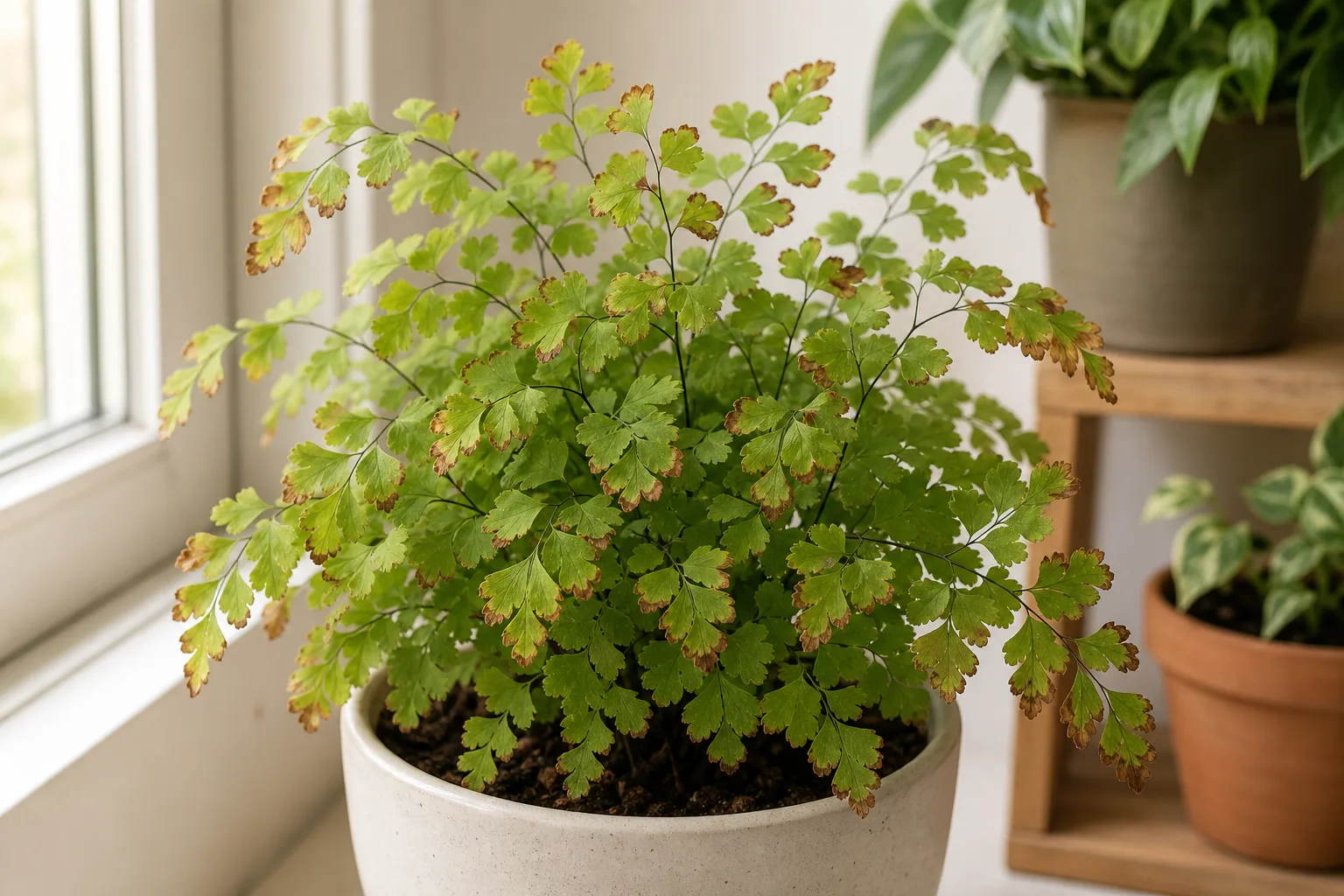
Low Humidity on Maidenhair Fern: Causes, Checks & Fixes
This guide covers low humidity on Maidenhair Fern. See also the general Low Humidity guide, watering, and light pages for this plant.
Low Humidity on Maidenhair Fern: Causes, Checks & Fixes
Quick answer
Low humidity on Maidenhair Fern shows as brown tips, crisp margins, and limp fronds while soil may still be moist - dry air pulls water from thin leaflets faster than roots can supply it. First step: raise humidity toward 60–80% with a humidifier or bathroom placement while keeping soil evenly moist.
This fern needs a very humid atmosphere and can be a difficult plant to grow in standard home environments because it dislikes dry air. Central heating often holds 20–35% humidity - far below what Adiantum raddianum tolerates long term.
What low humidity looks like on Maidenhair Fern
Low humidity damage on Maidenhair Fern typically appears as:
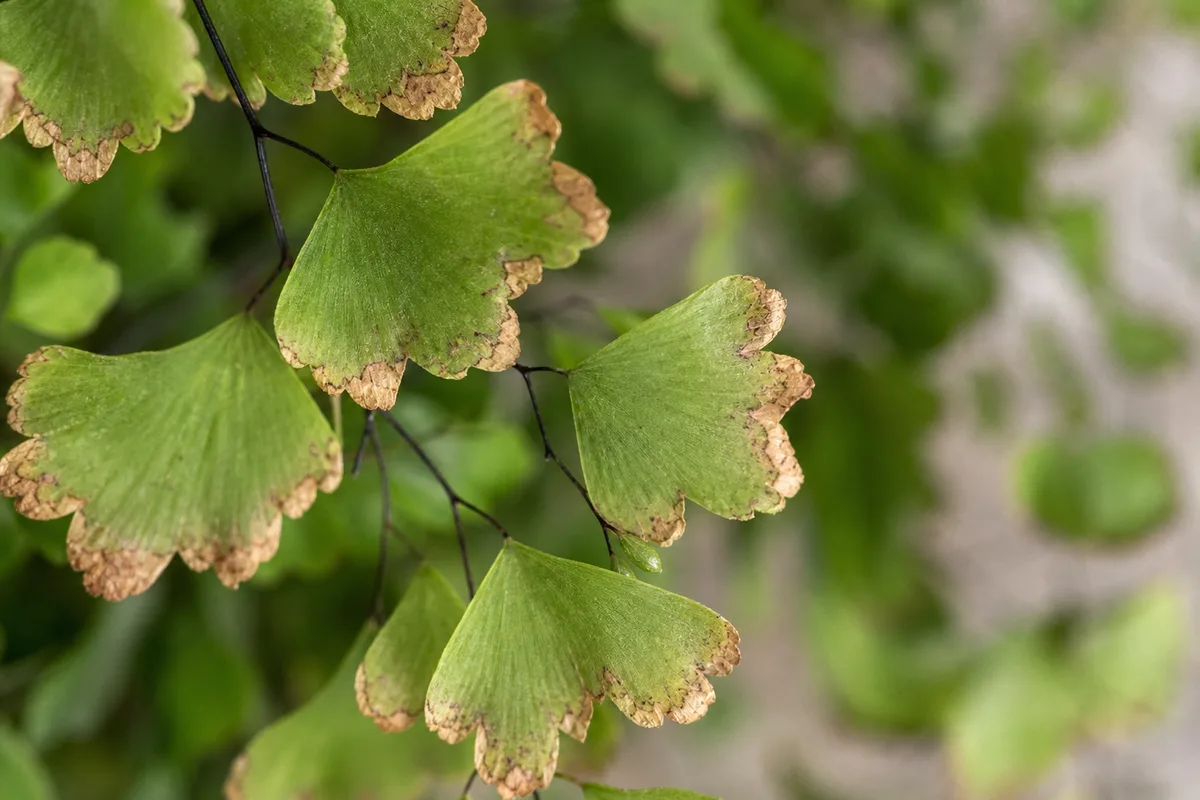
Low Humidity symptoms on Maidenhair Fern - compare with healthy tissue on the same plant.
- Dry brown tips on Maidenhair Fern on fan-shaped leaflets while stems stay black
- Crisp margins spreading from tips inward on outer fronds
- New croziers browning as they unfurl - a serious sign
- Dull limp leaflets even when soil is moderately moist
- Accelerated frond loss in winter near heat sources
Fronds die back quickly if soils are allowed to dry out - low humidity plus even brief underwatering on Maidenhair Fern compounds collapse faster than either alone.
Why Maidenhair Fern suffers in low humidity
Thin leaflet structure - Maidenhair Fern leaflets have high surface-area-to-volume ratio; they desiccate rapidly in dry air.
Indoor heating and AC - Winter furnaces and summer air conditioning strip moisture from air consistently.
Heat register and window placement - Avoid placing plant in drafty areas or near heat registers where localized dryness is extreme.
Misting without humidity infrastructure - Brief mist raises humidity minutes; a humidifier or pebble tray provides sustained moisture.
Terrarium exit - Plants moved from humid enclosures to open shelves crash quickly.
How to confirm the cause
- Hygrometer at frond level - Below 50% supports low-humidity diagnosis.
- Soil moisture - Appropriate moisture with tip burn implicates air, not roots.
- Placement audit - Near vents, radiators, or dry sunny sills?
- Season - Worsening in October–March matches heating season.
- New frond pattern - Tip burn on newest growth confirms active low humidity.
Rule out fluoride burn (mineral spots on leaves) and direct sun scorch (dark patches on sun-facing side).
First fix for Maidenhair Fern
Add sustained humidity - not occasional misting.
Run a cool-mist humidifier near the fern, targeting 60–80% at frond height. Alternatively, consider siting pots in bathrooms where atmospheric humidity is generally higher if Maidenhair Fern light guide is available.
Pots may be set in a tray of wet pebbles to increase humidity - keep pot base above water line.
Move away from heat registers and dry window drafts. Continue watering when top centimeter is barely dry; low humidity is not fixed by overwatering on Maidenhair Fern.
Step-by-step recovery
- Measure humidity; add humidifier if below 60%.
- Relocate away from heat sources and dry drafts.
- Optional pebble tray or bathroom move with adequate light.
- Switch to filtered water to avoid compounding mineral tip burn.
- Trim fully crisp fronds at soil line.
- Maintain even soil moisture - dry root balls worsen humidity stress.
- Monitor new croziers for clean unfurling over 2–4 weeks.
Recovery timeline
Humidity correction often shows clean new fronds within 2–4 weeks. Existing brown tips persist until trimmed or replaced.
Winter recovery may slow until humidifier runs consistently - partial improvement within days of stable 60%+ air.
Causes to rule out
- Underwatering - Dry pot with full frond collapse, not tips alone.
- Fluoride in tap water - Mineral crust on soil; spots on leaflets.
- Direct sun scorch - Dark brown patches, not gradual tip crisping.
- Spider mites - Stippling and webbing in dry air; inspect undersides.
What not to do
Do not overwater to compensate for dry air - rot risk rises. Do not rely on misting alone twice daily. Avoid grouping with succulents that prefer dry air. Do not place humidifier so far away it never reaches the fronds.
How to prevent low humidity damage next time
Treat 60–80% humidity as mandatory, not optional, for Maidenhair Fern. Humidifier, bathroom, terrarium, or glass case are reliable solutions. It needs a humid environment with moist soil - replicate streamside conditions indoors.
Use filtered water and even moisture. Inspect new fronds weekly in heating season.
Maidenhair Fern care cross-check
Humidity and watering are paired requirements - this fern fails in dry air even with perfect watering, and fails in drought even with perfect humidity. Both must align.
When to worry
Worry when new croziers brown during unfurling or multiple fronds crisp within a week - humidity is critically low. Slow winter tip browning responds to humidifier addition before crown loss.
Conclusion
Low humidity on Maidenhair Fern attacks thin leaflets before roots show stress. Confirm with hygrometer readings and tip-burn patterns, add sustained humidity at 60–80%, and keep soil evenly moist. Trim damaged fronds and judge recovery by clean new growth - not old crisp tissue.
When to use this page vs other Maidenhair Fern guides
- Maidenhair Fern watering guide - Use for routine moisture checks before assuming low humidity is the main issue.
- Maidenhair Fern problems hub - Browse all 55 common issues on this species.
- Brown Tips on Maidenhair Fern - Different entry point when symptoms overlap with low humidity.