Marigold Care Guide: Light, Watering, Soil and Problems
Marigold care for French and African Tagetes: full sun, base watering, soil, deadheading, pests, and Tagetes vs pot marigold pet safety.
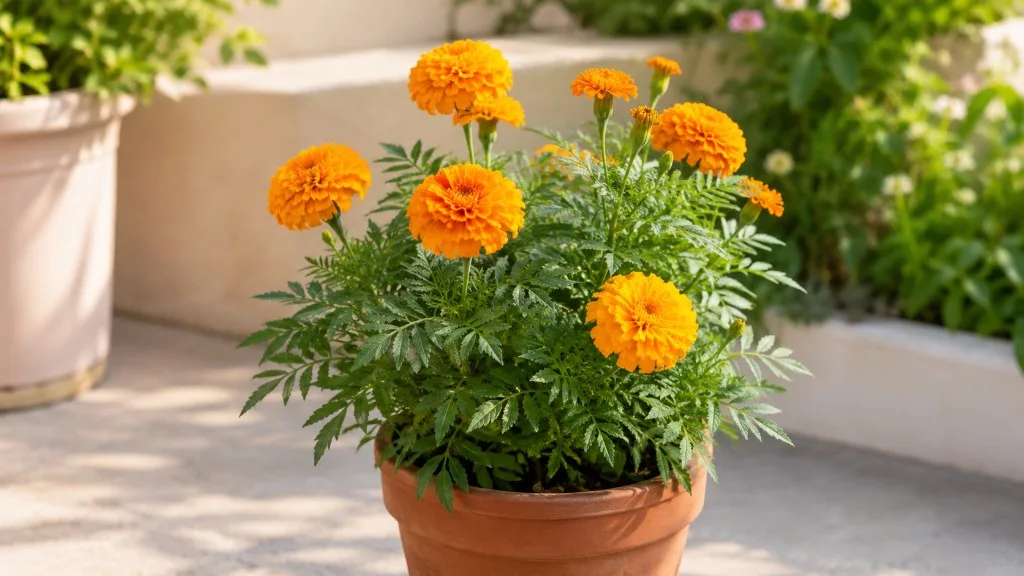
Marigolds fail in predictable ways. Stems stretch and blooms shrink in “bright” shade that is not direct sun. Large African doubles collapse after overhead water sits on petals overnight. Patio pots wilt by midafternoon because the mix cooked dry while you watered on a bed calendar. Good marigold care is not a mystery fertilizer schedule. It is full sun, base watering, well-drained soil, and deadheading that keeps buds coming until frost.
This guide covers outdoor Tagetes marigolds — African, French, and Signet types — for beds, borders, containers, and balconies. Depth pages for single symptoms live on the Marigold care hub once the framework below is honest.
Written by Sai Ananth (B.Pharmacy, Andhra University; LeafyPixels lead writer) and reviewed by Dr. Ananya Rao on the LeafyPixels Review Board.
Who Wrote This Guide and How We Reviewed It
This page was researched and written by Sai Ananth, whose pharmacy background shapes how LeafyPixels handles pet-toxicity wording, and whose growing notes focus on real balcony and patio constraints rather than greenhouse idealizations. Horticulture review sits with Dr. Ananya Rao and the LeafyPixels Review Board, which cross-check care thresholds against extension and botanical sources before publication. Our editorial policy covers sourcing and correction standards.
How this guide was built (marigold-specific):
- Compared Wisconsin Horticulture type heights and sun/soil baselines with Penn State Extension spacing, watering, and fertilizer rules — including an explicit Signet height reconciliation.
- Mapped UC IPM overhead-water and pest lists onto balcony Botrytis and spider-mite triage.
- Checked nematode claims against UF/IFAS NG045 cover-crop timing and interplanting limits, not garden folklore.
- Verified pet wording against Pet Poison Helpline and ASPCA Tagetes vs Calendula listings.
- Labeled LeafyPixels balcony dry-down notes for French and Signet pots under named conditions (pot size, material, weather window) — single-setup editorial observations, not multi-city trials.
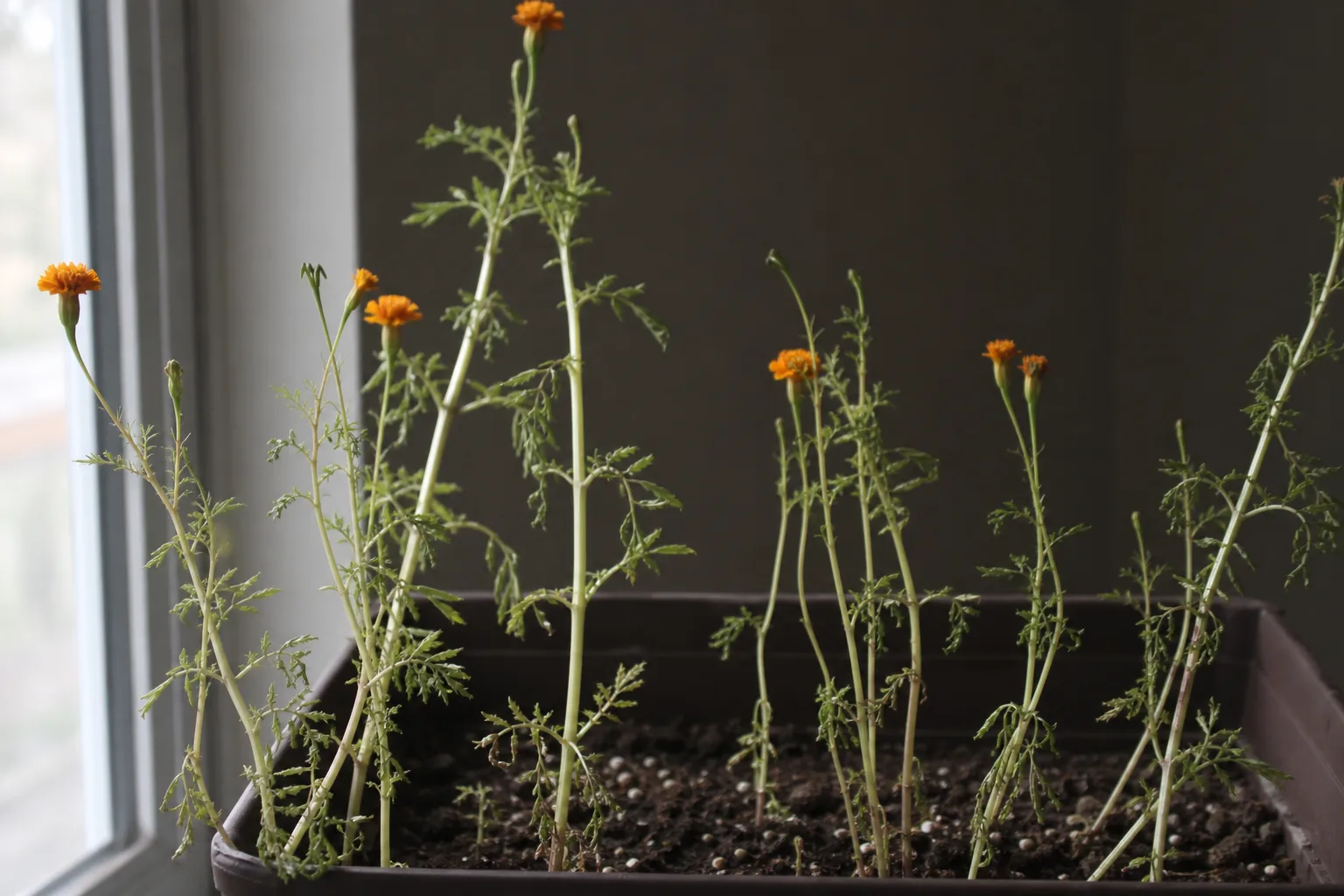
Diagnostic photos below reuse LeafyPixels plant-problem assets for teaching — not claimed as personal garden diary shots. Your climate, pot, and cultivar will differ; treat intervals as benchmarks.
What Usually Goes Wrong First
Three Tagetes patterns show up before fertilizer or spray shopping helps:
- Shade stretch — internodes elongate, blooms shrink, and powdery mildew risk rises because leaves stay damp longer in cool corners. Fertilizer cannot replace photons.
- Flower rot after wet heads — large African doubles and spent blooms hold water; Botrytis and petal collapse follow overhead sprinkling or evening rain sitting on heads.
- Container drought vs bed sog — pots in full sun may need water every one to two days; in-ground plants often need deep soaks with slight dry-down between. Treating both the same way produces wilted pots or soggy crowns.
Fix sun, base watering, and drainage before you chase sprays or richer feed. Choose French or Signet types for crowded balcony troughs; reserve tall Africans for open, wind-aware positions.
What Marigolds Are (Tagetes vs Pot Marigold vs Marsh Marigold)
Marigold, in modern bedding, usually means plants in the genus Tagetes, family Asteraceae. Wisconsin Horticulture lists Tagetes as an ornamental annual valued for vivid flowers and low-maintenance culture. Native range is Mexico and Central America, which explains the preference for bright sun, warm soil, and freely draining ground.
Naming causes real confusion. Three different plants share the marigold name:
- Tagetes spp. — African, French, and Signet bedding marigolds (this guide).
- Calendula officinalis — pot marigold or garden marigold; different genus, different care and toxicity profile.
- Caltha palustris — marsh marigold; a wetland perennial unrelated to Tagetes.
In India and South Asia, Tagetes is widely known as Genda Phool. In Mexico, Tagetes erecta is central to Day of the Dead traditions. Those cultural uses matter because the plants are bred to bloom heavily under sun and heat — not to perform as shade houseplants.
African, French, and Signet — Pick by Job and Pot Size
Penn State Extension and Wisconsin Horticulture describe the same practical split:
| Type | Botanical name | Typical height | Best job | Notes |
|---|---|---|---|---|
| African | Tagetes erecta | About 1–4 ft (often 3–4 ft for tall series) | Back of border, cut flowers, hot dry sites | Large doubles; needs staking when loaded; less happy in cool wet soil |
| French | Tagetes patula | About 6–24 in | Edging, containers, dense bedding | Bushier; more tolerant of rainy conditions than Africans |
| Signet | Tagetes tenuifolia | Typically under ~12 in (Gem types often much shorter, sometimes under ~6 in) | Containers, herb edges, rock gardens | Fine foliage; Gem cultivars often sold as culinary; less deadheading |
Signet height reconciliation: Wisconsin describes Signets as the smallest type, often under about 6 inches, while Penn State says they rarely grow more than 12 inches. Both are useful: treat under ~12 in as the working upper bound, and expect many Gem-series plants to stay much shorter in pots.
Despite the names, African and French marigolds both originate in the Americas. NC State Extension notes T. erecta does well in full sun, prefers evenly moist well-drained soil, and benefits from prompt deadheading because heavy heads can snap stems. Illinois Extension HortAnswers groups French and African types for beds and containers and notes deadheading improves rebloom.
Named Series Worth Knowing
| Series / type | Care difference that matters |
|---|---|
| Inca / Antigua Africans | Compact-to-medium African doubles for pots and front borders; still need base watering so dense heads do not stay wet |
| Tall cut-flower Africans | Stake early; rain-loaded heads snap stems; worse in cool wet soil than French types |
| Bonanza / Disco French | Dense bedding and 10–12 inch pots; bushier habit; better rainy-weather tolerance than tall Africans |
| Gem Signets | Fine foliage, edible-flower marketing on many packs; light deadheading load; excellent railing troughs |
For a 10-inch balcony pot, one compact French (Bonanza/Disco class) or a Gem Signet trio beats one tall African that will tip and demand staking.
Care Decisions at a Glance
| Care factor | Baseline target | Deeper guide |
|---|---|---|
| Light | Full sun, 6–8 hours direct | Marigold light |
| Water | Top inch dry, then soak at base | Marigold watering |
| Soil | Well-drained, moderately fertile; pH ~6–7 | Marigold soil |
| Feed | Low; avoid high nitrogen | Marigold fertilizer |
| Grooming | Deadhead; pinch young tips | Marigold pruning |
Plant in full sun (6–8 hours of direct light), water when the top inch of soil feels dry, use well-drained soil near pH 6–7, feed lightly, deadhead spent blooms, and water at the base. Containers dry faster than beds. (Wisconsin Horticulture) (Penn State Extension)
Light for Beds and Balconies
If you remember one rule, remember this: marigolds need full sun. Wisconsin Horticulture specifies 6 to 8 hours of direct sun daily. Penn State is equally clear that marigolds thrive in full sun and usually withstand very hot summers, while shade and cool moist sites cut bloom and invite powdery mildew. (Wisconsin Horticulture) (Penn State Extension)
Place beds along open lawn edges, south-facing borders, and driveway strips — not under dense tree shade. On balconies, put pots where they receive direct sun for most of the day, not only bright reflected light. Indoors, Tagetes are poor long-term houseplants without strong supplemental light; treat them as seasonal outdoor annuals.
Acclimate nursery packs over 7 to 10 days if they came from a shaded greenhouse bench. A hard move into blazing afternoon sun can scorch soft leaves.
Full Sun vs Partial Shade Outcomes
In full sun, internodes stay shorter, stems thicken under flower weight, and bud production stays continuous when you deadhead. In partial shade, plants often survive while looking “fine,” then reveal the cost: elongated stems, fewer buds, and foliage that stays humid long enough for mildew. Use new growth as the diagnostic. Compact, stiff tips with steady buds mean light is adequate. Thin, leaning stems with long gaps between leaves mean the plant is searching for sun — see leggy growth and not enough light.
Watering: Base Soaks, Dry-Down Checks, Container Heat
Marigolds want moderate, even moisture without waterlogging. Wisconsin lists moderate water with even moisture and no soggy soil. UC IPM lists moderate to regular water and warns that overhead sprinkling on taller plants can break stems under water weight. Penn State’s practical rule is to allow soil to dry slightly between waterings, then water thoroughly and deeply, increasing frequency in hot weather. (UC IPM) (Penn State Extension)
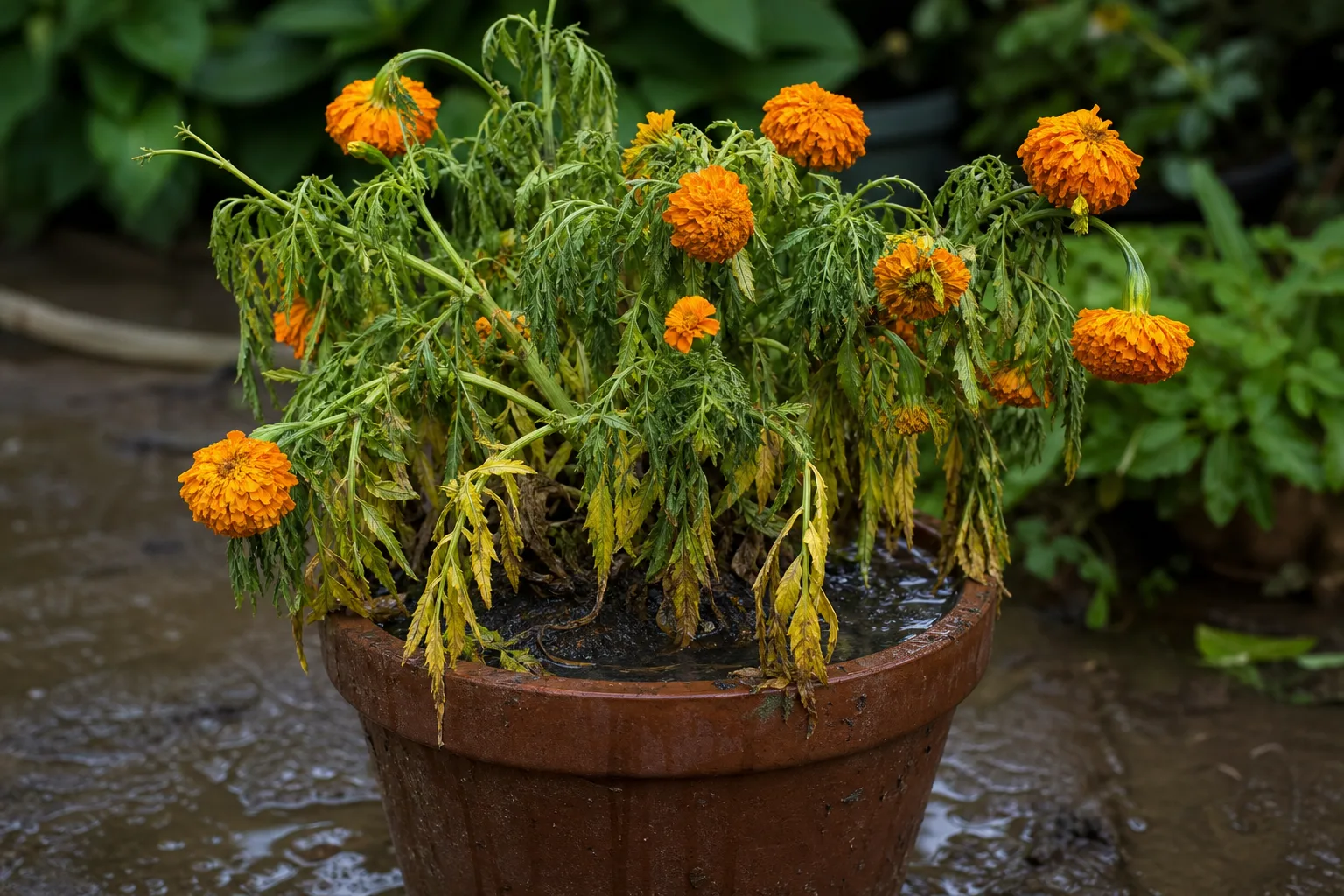
Water at the base, not overhead. Wet flower heads decay quickly in humid weather and invite Botrytis (gray mold). Early morning base watering gives any splash time to dry. Deep, infrequent soaks beat daily surface sprinkles that train shallow roots and keep foliage damp.
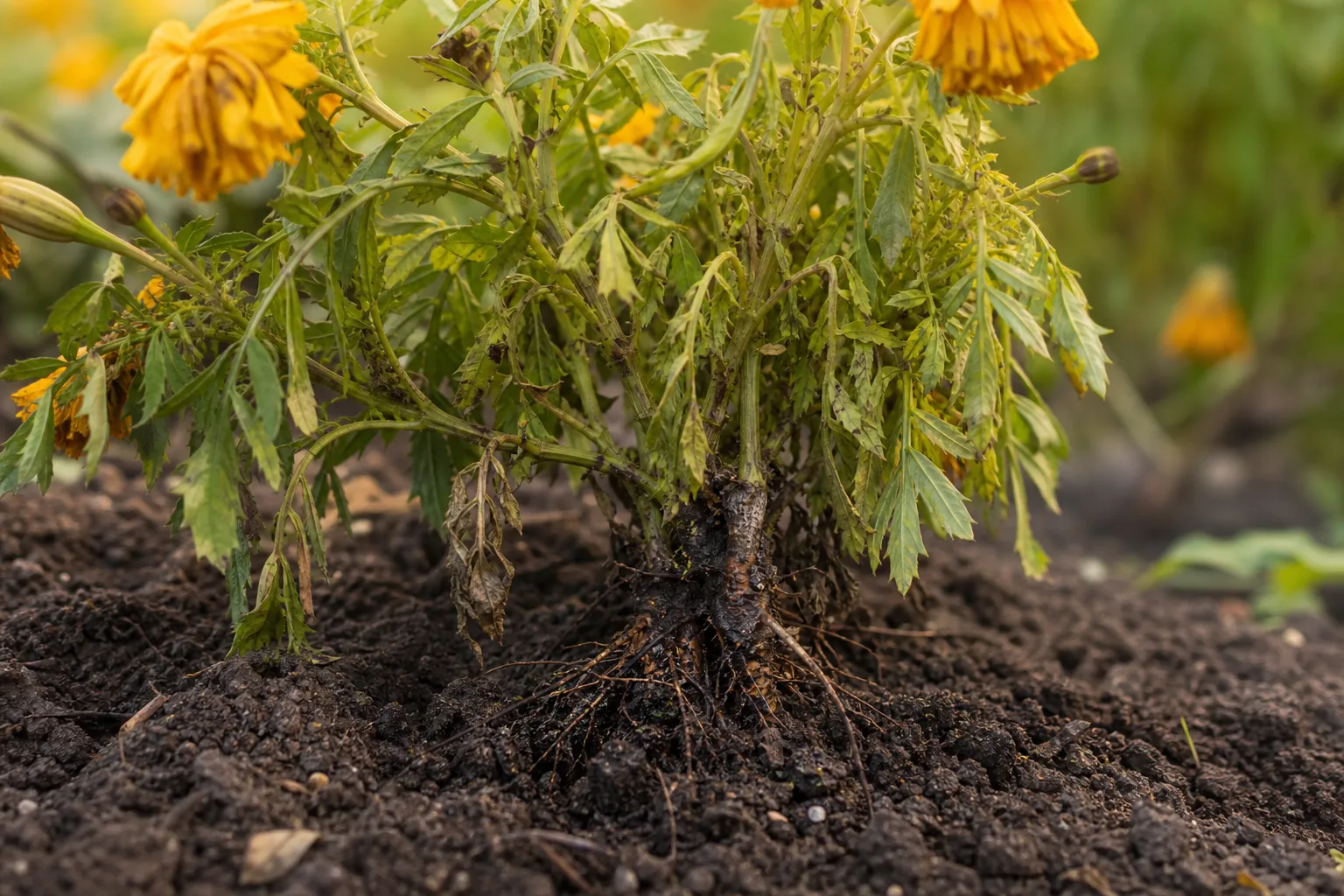
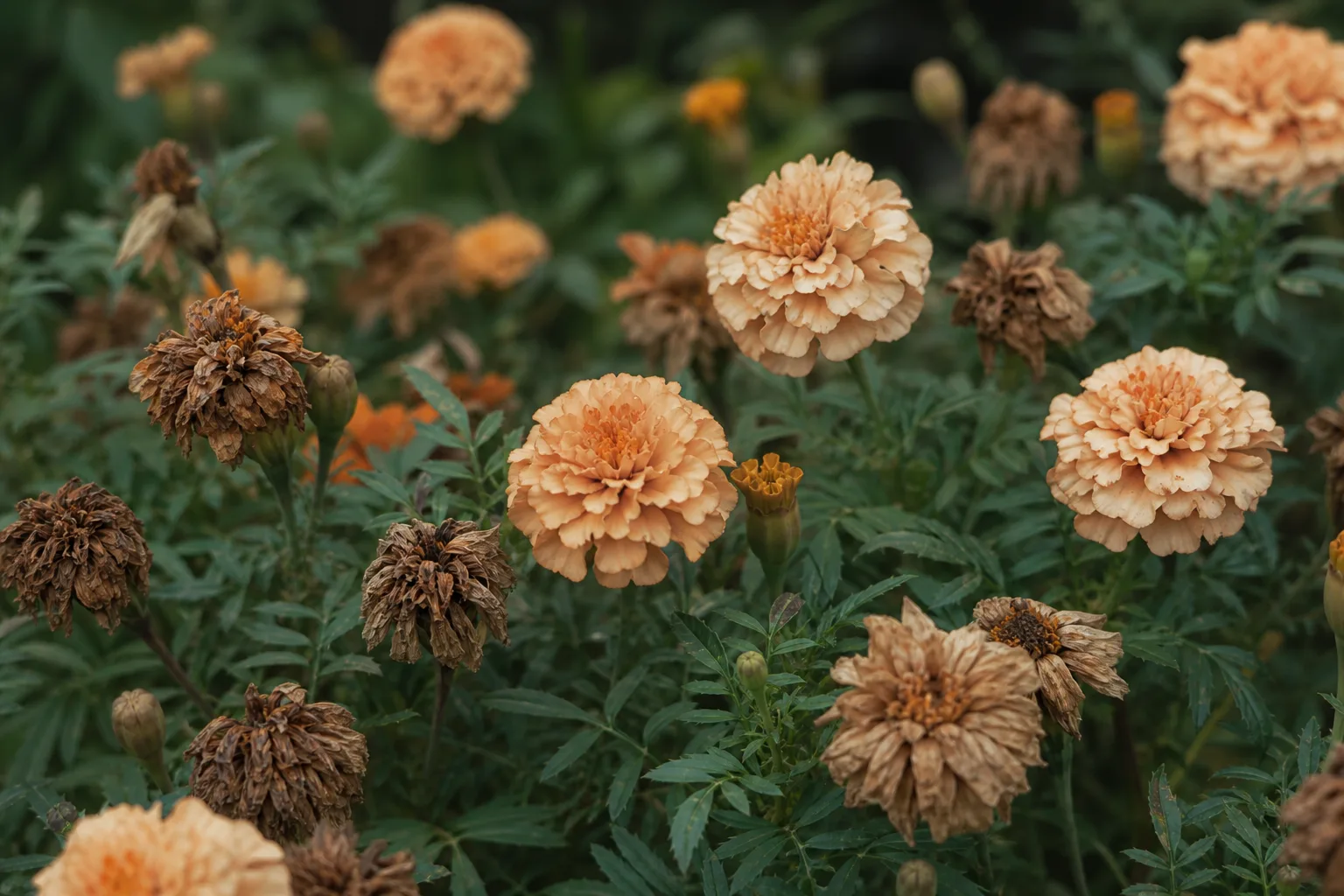
Signs of overwatering include yellow lower leaves, soft stems at the base, gray mold on flowers, and sour-smelling soil. Signs of underwatering include midday wilt, dry soil to depth, and drooping leaves or heads that recover after a deep soak. Soft collapse in constantly wet mix points toward root rot; spent blooms that brown after wet nights also track with faded flowers.
LeafyPixels Balcony Notes for French and Signet Pots
Containers and garden beds are different watering systems. In-ground marigolds access a larger soil volume and often need deep soaks with slight surface dry-down between sessions. Patio pots, railing boxes, and fabric grow bags heat from all sides, hold less water, and may need checking daily in peak heat.
LeafyPixels practice note (labeled experience, not universal law): In May–June 2026 west-facing balcony trials (humid hot-summer coastal India pattern), we grew compact French marigolds (Bonanza-type orange doubles) in 10-inch terracotta and Signet Gem seedlings in 8-inch dark plastic. After clear 32–35°C days, French terracotta usually needed a full soak when the top 2–3 cm felt dry by late morning — often about every 24–36 hours. Signet plastic stayed heavier longer after evening showers and needed water closer to every 48 hours unless monsoon drizzle kept the surface wet. After one overnight storm left African-style double heads soggy in a neighboring trial pot, petal collapse started within a day until we deadheaded wet blooms and switched to base-only watering. We stopped sharing a bed “Tuesday/Friday” calendar with pots. The check that worked: finger into the top inch, water until runoff, empty saucers. Terracotta dried faster than plastic; small dark plastic dried faster than larger light-colored pots of the same French type.
If a container plant wilts repeatedly despite wet mix, suspect clogged drainage or root rot rather than “more water.”
Soil, Spacing, and Airflow
Marigolds are not fussy about rich soil. In fact, too much nitrogen is a common reason for leafy plants with few flowers. Wisconsin lists well-drained soil at pH 6–7 and low fertilization needs. Penn State says marigolds grow in almost any soil but prefer moderately fertile, well-drained ground, and warns against high-nitrogen fertilizers. (Wisconsin Horticulture) (Penn State Extension)
For beds, loosen the top 6–8 inches, clear weeds, and mix compost into heavy clay so water moves through. African types are especially vulnerable when soil stays cool and wet. For containers, use a soil-less potting mix with drainage — a practical blend is roughly 60% potting mix, 20% compost, and 20% perlite or coarse sand. Avoid packing garden clay into pots.
Spacing matters for airflow and disease. Penn State recommends planting French and Signet types about 8–10 inches apart and larger African types about 12 inches apart. Crowding French types in a trough for a hedge effect is fine if leaves can still dry after rain. Mulch between plants to suppress weeds and buffer moisture swings without burying crowns.
RHS guidance for Tagetes erecta places African marigold in full sun with moist but well-drained or well-drained soil across acid to alkaline pH — confirmation that drainage and light matter more than exotic soil chemistry. Match pot material to your habits: underwaterers often do better in plastic; overwaterers in terracotta.
Deadheading, Pinching, and Midseason Renovation
Deadheading is the highest-return maintenance task for Tagetes. UC IPM says you can extend the blooming period by pruning off old flowers. Penn State and Wisconsin both recommend removing spent blooms to encourage new flowers and keep plants tidy; Wisconsin also notes deadheading helps reduce disease prevalence. (UC IPM) (Penn State Extension) (Wisconsin Horticulture)
Technique: follow the spent flower stem down to just above the nearest leaf joint or branching point and cut or pinch cleanly. For African marigolds with heavy heads, remove the entire stem section rather than leaving a naked stalk. Check plants every few days at peak season. Spent heads that stay wet become Botrytis nurseries — deadheading is disease prevention, not only cosmetics.
After a humid evening storm on African doubles: next morning, pull soft brown petals and any heads that feel mushy, water only at the base for several days, and improve airflow. Waiting until the whole plant looks “ugly” lets gray mold jump from bloom to bloom.
Pinch young plants when they have several sets of true leaves but before heavy budding. Removing tips early encourages branching and a bushier habit instead of one long stem with a flower on top. Stake tall Africans before wind or heavy rain if you grow 24–36 inch series.
Midseason renovation rescues tired beds. If plants look leggy or bloom-sparse, cut back by up to about one-third, water deeply, feed lightly if foliage is pale, and let fresh growth reflower. This works especially well on French and Signet types. Step-by-step cut points live in the pruning guide.
Fertilizer Without Trading Blooms for Leaves
Marigolds are low feeders. Wisconsin lists low fertilization needs. Penn State advises avoiding fertilizers that are high in nitrogen (the first number on the label) because nitrogen pushes foliage at the expense of flowers; use a balanced fertilizer or one with a higher middle number to encourage flowering. In containers, use potting mix with slow-release fertilizer or occasionally water with diluted liquid feed. (Wisconsin Horticulture) (Penn State Extension)
At planting, modest compost in the bed or a charged potting mix is often enough. During growth, if plants look pale on poor sand, apply a diluted balanced feed every few weeks — not a weekly high-nitrogen blast. Do not feed drought-shocked or disease-hit plants, and do not load fertilizer onto dry soil. Dark green, bushy, flowerless plants usually need more sun and less nitrogen, not another dose of feed. See no flowers and the fertilizer guide when bloom stalls despite healthy leaves.
Pests and Diseases You Will Actually See
Marigolds have few catastrophic pests, but they are not pest-proof. UC IPM lists aphids, spider mites, thrips, whiteflies, snails and slugs, caterpillars, and others among invertebrates, plus diseases including Botrytis blight, leaf spots, root/stem/crown rots, and aster yellows. NC State notes spider mites, Japanese beetles, and slugs may appear, with wilt, stem rot, leaf spots, Botrytis, and aster yellows among disease risks. Penn State highlights spider mites and aphids as the usual insect issues, often managed with insecticidal soap used to label directions, and powdery mildew when plants sit in wet, humid shade. (Penn State Extension)
Practical triage:
- Aphids — soft clusters on soft tips; hose off or use labeled insecticidal soap; see aphids on marigold.
- Spider mites — fine stippling and webbing in hot dry spells; rinse undersides, reduce drought stress; see spider mites. Clemson’s spider mite IPM factsheet emphasizes monitoring and cultural control before broad sprays that harm beneficials visiting blooms.
- Botrytis / gray mold — soft brown rotting petals; remove infected heads promptly; stop overhead water.
- Root and crown rot — collapse in soggy soil; improve drainage; discard severely rotting plants.
- Slugs — night feeding holes on lower leaves; handpick or use labeled baits away from pets.
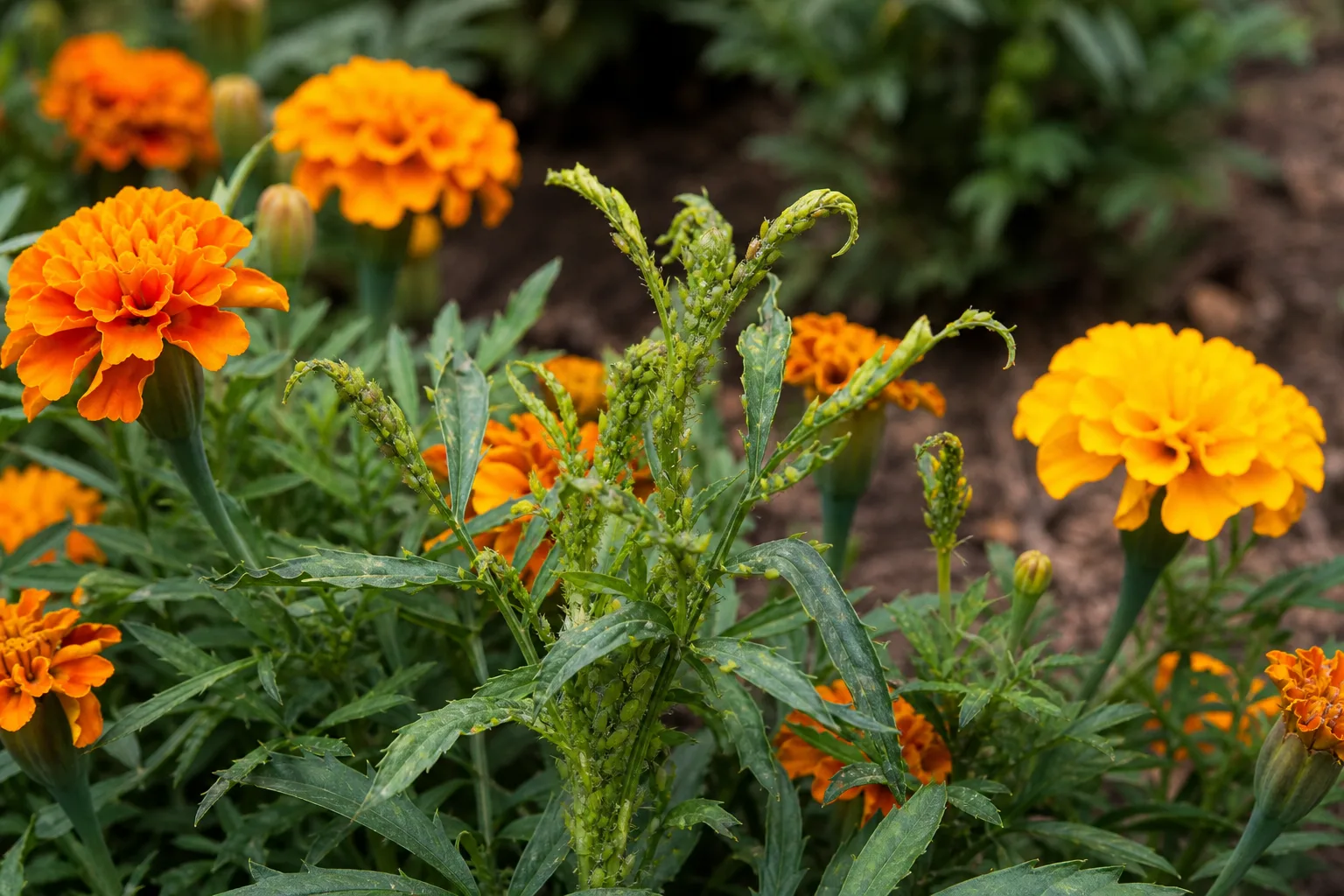
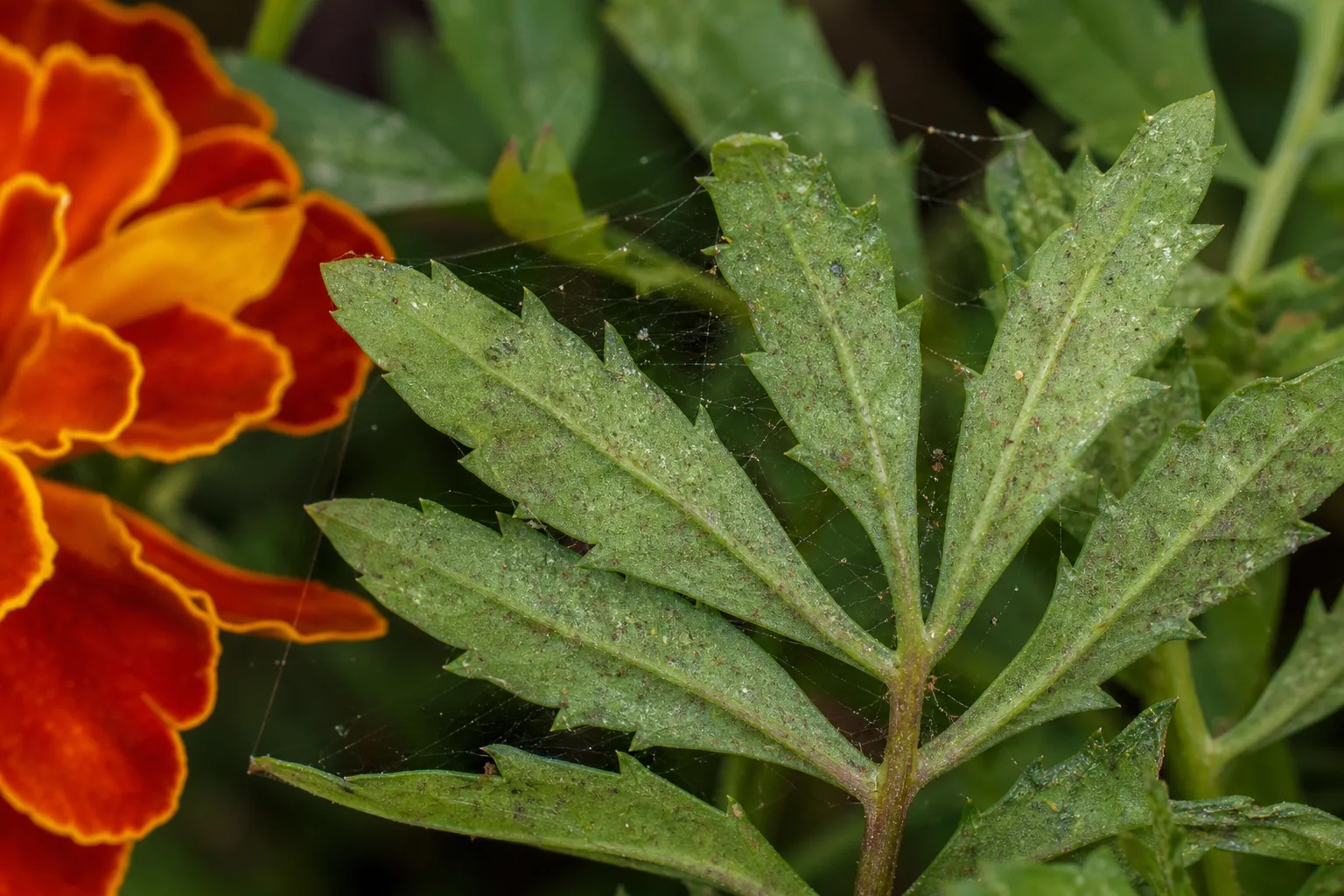
Culture comes first: full sun, spacing, base watering, and cleanup of rotting blooms beat stacking random pesticides on flowering plants that bees visit. If you do spray soap, do it in cool hours and avoid open blooms when bees are active.
Nematode Claims vs Cover-Crop Reality
French marigolds are famous for nematode stories. Wisconsin notes cover cropping with French marigolds can reduce root-knot nematodes because roots release alpha-terthienyl, which is toxic to nematode eggs. UF/IFAS explains the same chemistry and is clear about method: grow a dense marigold cover for at least two months in the same spot before the vegetable crop, then incorporate plants; variety matters, and marigolds do not suppress every nematode species. Critically, interplanting a few marigolds beside tomatoes is not a reliable substitute for a dedicated cover crop — UF/IFAS notes intercropping often fails to protect susceptible roots, and Penn State likewise states interplanting does not impact root-knot populations the way a dense cover crop does. (Wisconsin Horticulture) (UF/IFAS) (Penn State Extension)
Use marigolds as color and, when you plan for it, as a soil-management cover crop — not as a magic scent barrier against aphids.
Pet Toxicity and Contact Irritation
Tagetes marigolds are not pet-safe chew toys. Pet Poison Helpline treats Tagetes marigolds as toxic to dogs: mild gastrointestinal irritation is the usual ingestion concern, and sap may irritate skin. The ASPCA Tagetes marigold page is the listing path for garden Tagetes. By contrast, the ASPCA lists pot marigold (Calendula officinalis) as non-toxic to dogs and cats. Always verify the botanical name on the tag.
NC State also notes low-severity poison characteristics for humans: phototoxic thiophene derivatives can cause skin redness, burning, or blisters when cell sap contacts broken skin in sunlight, and flower aroma may irritate nose and eyes. Wear gloves if you have sensitive skin when deadheading large plantings.
On edibility: Penn State treats typical ornamental Tagetes flowers as generally inedible and distinguishes them from culinary Calendula. Wisconsin and NC State note that some Signet Gem cultivars are grown for edible petals — only eat flowers from packs or sources labeled for culinary use, and do not assume French or African doubles from the bedding aisle are food.
Keep pots out of reach of chewing pets. If significant ingestion occurs, contact your veterinarian or ASPCA Animal Poison Control at (888) 426-4435 (US; a consultation fee may apply). This is general safety information, not veterinary advice.
Starting from Seed and Season Timing
Marigolds are easy from seed. Wisconsin recommends direct sowing when soil temperatures exceed 65°F (18°C), or starting indoors about 8 weeks before transplanting after frost risk passes. Penn State notes seeds typically sprout within a week in warm soil and plants often flower in about two months; sow about ¼ inch deep, thin while young, plant French/Signet 8–10 inches apart and Africans 12 inches apart. Plant French and Signet anytime from spring through midsummer; plant tall Africans earlier in the spring window because they are slower to mature. (Wisconsin Horticulture) (Penn State Extension)
Penn State lists Tagetes performance across roughly USDA Zones 3–11 as warm-season annuals in temperate gardens. In frost-free or subtropical climates, match sowings to cooler dry seasons for best flower quality. Harden transplants 7–10 days before planting out. Choose compact plugs with buds rather than root-bound packs already exhausted in flower.
First 14 days after planting packs: harden off if needed, plant at the same depth as the nursery tray, water deeply at the base, check pot weight or top-inch dryness daily for containers, deadhead any crushed transit blooms, and do not fertilize hard until new growth shows. Succession sowing every 10–14 days staggers peak bloom and cushions losses from slugs or early disease. Seed-saving and cuttings detail live in the propagation guide.
Related Guides
- Zinnia care guide — another full-sun summer annual; useful when you want taller cutting stems with mildew-aware spacing, not Tagetes doubles.
- Petunia care guide — container and basket annual care when deadheading cadence and soft growth matter more than marigold heat toughness.
- Portulaca care guide — heat-tolerant balcony color when you want even faster dry-down than French Tagetes.
- West-facing balcony plants (India) — placement ideas when Tagetes share a harsh afternoon rail with other heat lovers.
- Marigold overview — hub for light, watering, soil, fertilizer, pruning, and symptom pages when one issue needs its own workflow.
Conclusion
Use this as a first-two-weeks checklist, then keep the four season habits:
- Confirm Tagetes type matches the site (French/Signet for 10-inch pots; tall Africans for open beds with stakes).
- Place in 6–8 hours of direct sun; move shade stretch before buying bloom booster.
- Water at the base when the top inch is dry; treat pots and beds as different systems.
- Deadhead spent and storm-wet heads before Botrytis spreads.
- Feed lightly; dark leafy plants with no buds usually need sun, not more nitrogen.
- For nematodes, plan a dense ≥2-month cover crop — do not rely on a few plants beside tomatoes.
- Keep Tagetes away from chewing pets; do not confuse them with non-toxic pot marigold (Calendula).
When one symptom dominates, jump to a matching drill such as marigold watering or spider mites rather than rewriting the whole routine.