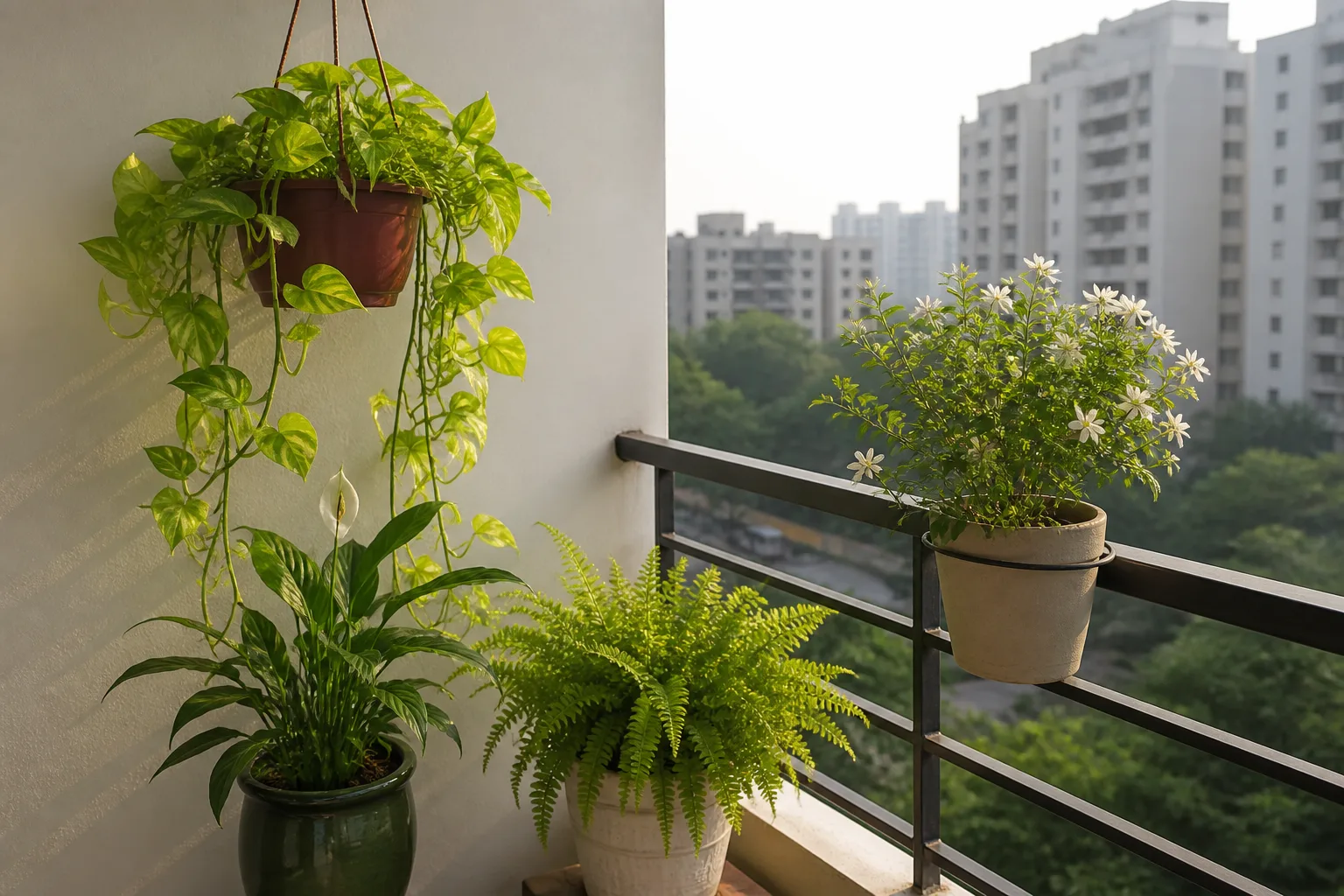
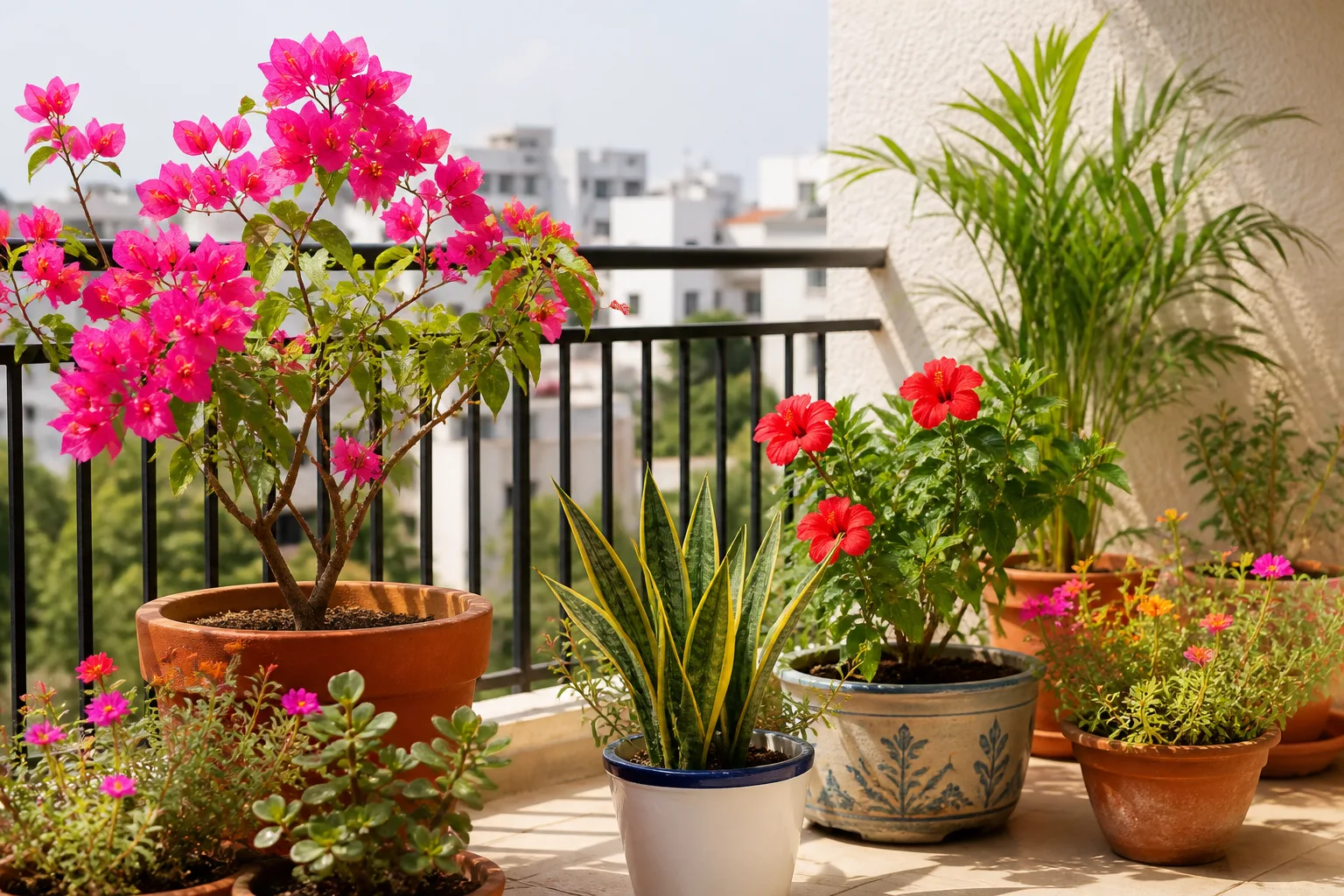
Best Plants for West-Facing Balconies in India
Survive west-rail heat in India: shortlist by water workload, shade net 30 vs 50, pet/spine risks, and frying-now rescue steps.
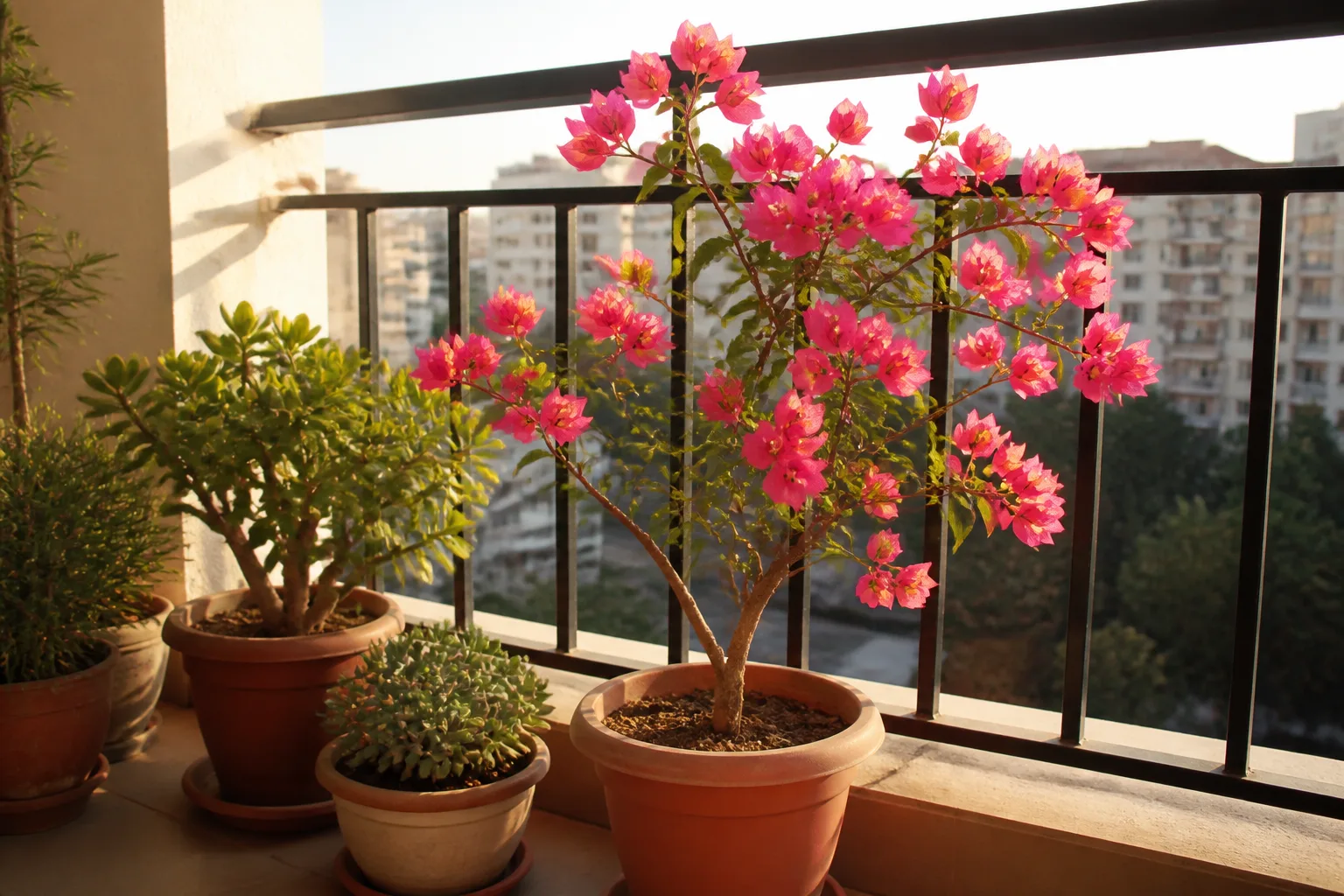
A west-facing Indian balcony is not “just a sunny spot.” From about 1 p.m. onward it stacks hot direct sun, wall glare, and radiant heat from tiles — the combination that fries soft nursery plants in a week. Soft foliage houseplants and cool-room east advice fail here for the same reason: the afternoon heat load is different, not merely “more light.”
This page is the west-aspect decision guide for apartment and terrace gardeners with open or lightly buffered west rails. You get aspect physics, a short heat shortlist by watering role, shade-net and acclimation rules, dry inland vs humid coastal notes, and a frying-now rescue checklist. For the broader seasonal view (west and east picks, monsoon handoff depth), use best balcony plants for Indian summer. For cooler morning light, see east-facing balcony plants in India.
Species biology below cites extension and ASPCA sources. India placement, shade-net percentages, pot dry-down intervals, and city-band tips are editorial synthesis from Indian balcony practice — not claims that US fact sheets are Indian climate authorities.
Written by Sai Ananth (B.Pharmacy, Andhra University; LeafyPixels lead writer) and reviewed by Dr. Priya Menon (botanist, LeafyPixels Editorial Review Board).
Why West Balconies Cook Plants
University of Georgia Extension notes that eastern exposures stay cooler because the building absorbs less radiant heat, while light from the west is hotter and drives more water loss from plants. (UGA Extension) On Indian west balconies that physics shows up as:
- Harsh afternoon sun after a milder morning
- Reflected heat and glare from white walls, glass, and dark floor tiles
- Faster pot dry-down in small black plastic containers
- Scorch risk when nursery plants jump from shade cloth to raw 3 p.m. sun
- High-rise wind that tips tall pots and desiccates leaf edges even faster
Tamil Nadu Agricultural University’s roof-garden guidance flags the same outdoor extremes apartment growers face: plants in exposed positions must withstand wind, and some species are sensitive to reflected light and thermal build-up. (TNAU Agritech Portal) Soft low-light plants (calathea, ferns, peace lily) belong indoors or under deep shade — not on an open west ledge.
ICAR-IIHR field notes on sunburn in hot Indian states also record that injury intensity on the western side of exposed stems can be markedly higher when summer temperatures climb past about 38 °C — useful context for why west rails punish unacclimated tissue even when the species is “sun-loving” on a label. (ICAR-IIHR) That page is orchard crop guidance, not balcony pot culture; we cite it only for the west-aspect radiation pattern.
Observed west-rail notes (editorial, anonymized, May–June peak): On a mid-rise Mumbai west balcony with dark tiles, an 8-inch black plastic portulaca often needed a midday moisture check on 40 °C+ days, while a 14-inch terracotta hibiscus dried by evening but held overnight moisture better. Behind a 50% shade net for the hottest 1–4 p.m. window, newly moved adenium kept softer leaves from bleaching during the first acclimation week; open-rail bougainvillea in a 16-inch pot still flowered with only occasional 30% buffering on glare days.
West vs East: What Changes in Practice
| Decision | Open west rail | Typical east rail |
|---|---|---|
| Peak stress hours | ~1–5 p.m. direct + radiant heat | Cooler morning sun; less late glare |
| Default plant type | Full-sun flowerers and dry specialists | Soft foliage and morning-sun bloomers |
| Watering pattern | Split by role: dryish vs thirsty flowerers | More even moisture for foliage plants |
| Shade net | Often useful (30–50%) on glare walls | Usually unnecessary for true east |
| First plant to buy | Portulaca or adenium if pots are small | Pothos / spider plant style foliage |
If your “west balcony” is mostly slab-overhang shade after noon, treat it closer to bright filtered light — and prefer the east-facing balcony shortlist plus indoor plants for India rather than forcing desert plants into deep shade.
How We Chose These West-Rail Plants
Only plants from the LeafyPixels inventory with live /plants/ pages were considered. Each pick had to clear five filters:
- Documented full-sun or bright heat tolerance from extension sources
- Realistic pot culture on Indian apartment west balconies
- Distinct west-rail role (color, low water, compact flowerer, or dry-shelf foliage)
- Clear watering trade-off so you choose by workload, not marketing photos
- Honest pet or handling risk where ASPCA or extension flags toxicity, spines, or latex
Excluded: soft shade houseplants, “bright indoor light” plants without true afternoon-sun tolerance, and plants already covered as east/seasonal depth on sibling pages (for example snake plant and plumeria live on the Indian summer balcony guide rather than being re-essayed here).
TNAU’s roof-garden plant lists explicitly include low-growing Portulaca and Crassula, plus larger succulents such as Aloe and jade plant, for extreme rooftop conditions — useful India-authority alignment for the dry west shortlist below. (TNAU Agritech Portal)
Quick Comparison: Sun, Water Workload, Pot Size, Pet Risk
Pet and handling risk belongs in the first decision — many west-sun winners are poor floor-level chew targets.
| Plant | Best for | Sunlight | Water workload | Pot size | Pet / handling | Difficulty |
|---|---|---|---|---|---|---|
| Bougainvillea | West-rail color | Full sun | Moderate; keep slightly dry | Large | Thorns; keep out of reach | Medium |
| Adenium | Hot dry flowering | Full sun | Low | Medium | Toxic (ASPCA desert rose) | Medium |
| Portulaca | Small hot pots | Full sun | Low | Small | Generally low concern; still deter chewing | Easy |
| Crown of thorns | Dry sunny corners | Full sun | Low | Small–medium | Spines + toxic latex | Easy–medium |
| Hibiscus | Large flowers | Full sun; light PM shade in extremes | High | Large | Not a pet-safe pick | Medium |
| Ixora | Compact clusters | Full sun; light PM shade OK | Medium–high | Medium–large | Keep away from chewers | Medium |
| Aloe vera | Useful heat survivor | Full sun–partial shade | Low | Medium | Toxic if ingested (ASPCA) | Easy |
| Jade plant | Dry bright shelves | Bright + some direct sun | Low | Small–medium | Toxic (ASPCA) | Easy |
Start Here by West Situation
- Brutal open west rail, want color: bougainvillea + portulaca
- West rail, low water: adenium + crown of thorns
- You can water daily in large pots: hibiscus or ixora
- Narrow ledge / railing trough only: portulaca first; skip full-size hibiscus
- Useful plant with heat tolerance: aloe vera on a bright shelf behind the hottest rail
- Beginner west setup: start with portulaca and jade; add bougainvillea once you have a large pot and trellis
- Pets on the balcony floor: skip this heat shortlist at floor level — jump to Pet safety and safer alternatives
- High-rise wind: prioritize heavy pots, low center of gravity, and railing ties for bougainvillea; avoid tall top-heavy hibiscus until you have a windbreak
West Heat Specialists (Dryish Watering Rhythm)
These four belong on the hottest edge. They fail when people treat them like rainforest houseplants — or when monsoon water sits in the pot.
1. Bougainvillea
Best for: West-facing rails that need big color in hard afternoon sun
Sunlight: Full sun (6+ hours direct)
Water: Moderate; let the mix dry slightly between deep waterings
Pot size: Large (12–16 inch / bigger for mature vines)
Difficulty: Medium
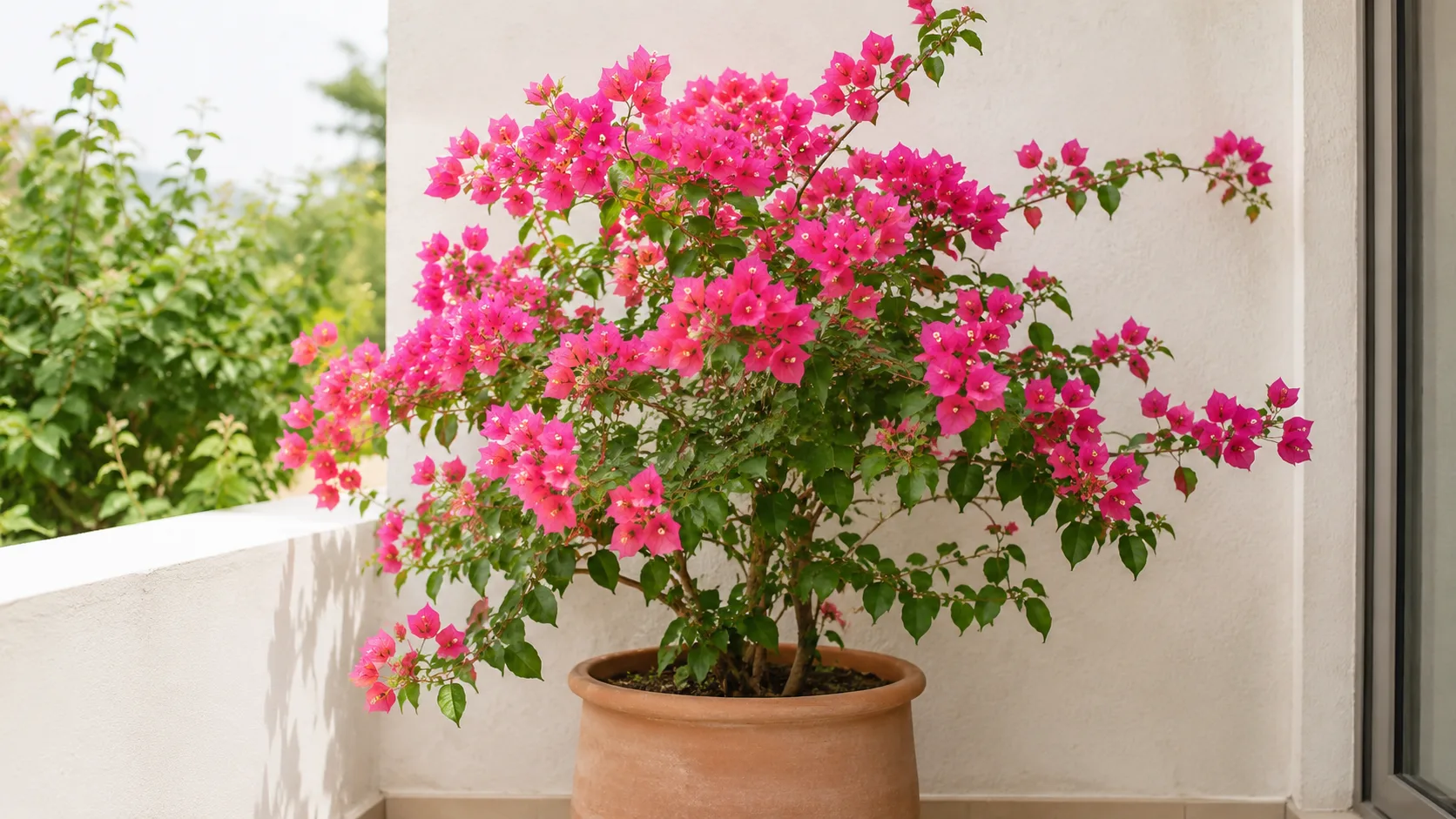
If one plant defines a sun-baked west balcony, it is bougainvillea. NC State Extension describes it as tolerant of drought, heat, and salt, happiest in full sun with well-drained soil, and trainable in containers. (NC State Extension) UF/IFAS notes it performs better when soil is left a little dry — overwatering is a common bloom killer. (UF/IFAS Gardening Solutions)
On west rails, place it where afternoon sun hits the canopy and the root ball sits in a heavy pot that will not tip in monsoon wind. A light shade cloth during the hottest hour can spare soft new growth without collapsing flowering. Wear gloves when pruning; keep thorny stems away from walkways and pets.
West-rail tip (editorial): Small pots overheat and stall bloom — size up before you blame “bad variety.”
Common mistake: Daily shallow watering; wet feet reduce bracts more often than heat does.
Deeper care: Bougainvillea watering · Bougainvillea problems
2. Adenium (Desert Rose)
Best for: Hot, dry west corners when you want flowers without daily watering
Sunlight: Full sun
Water: Low; dry thoroughly between waterings
Pot size: Medium with multiple drainage holes
Difficulty: Medium
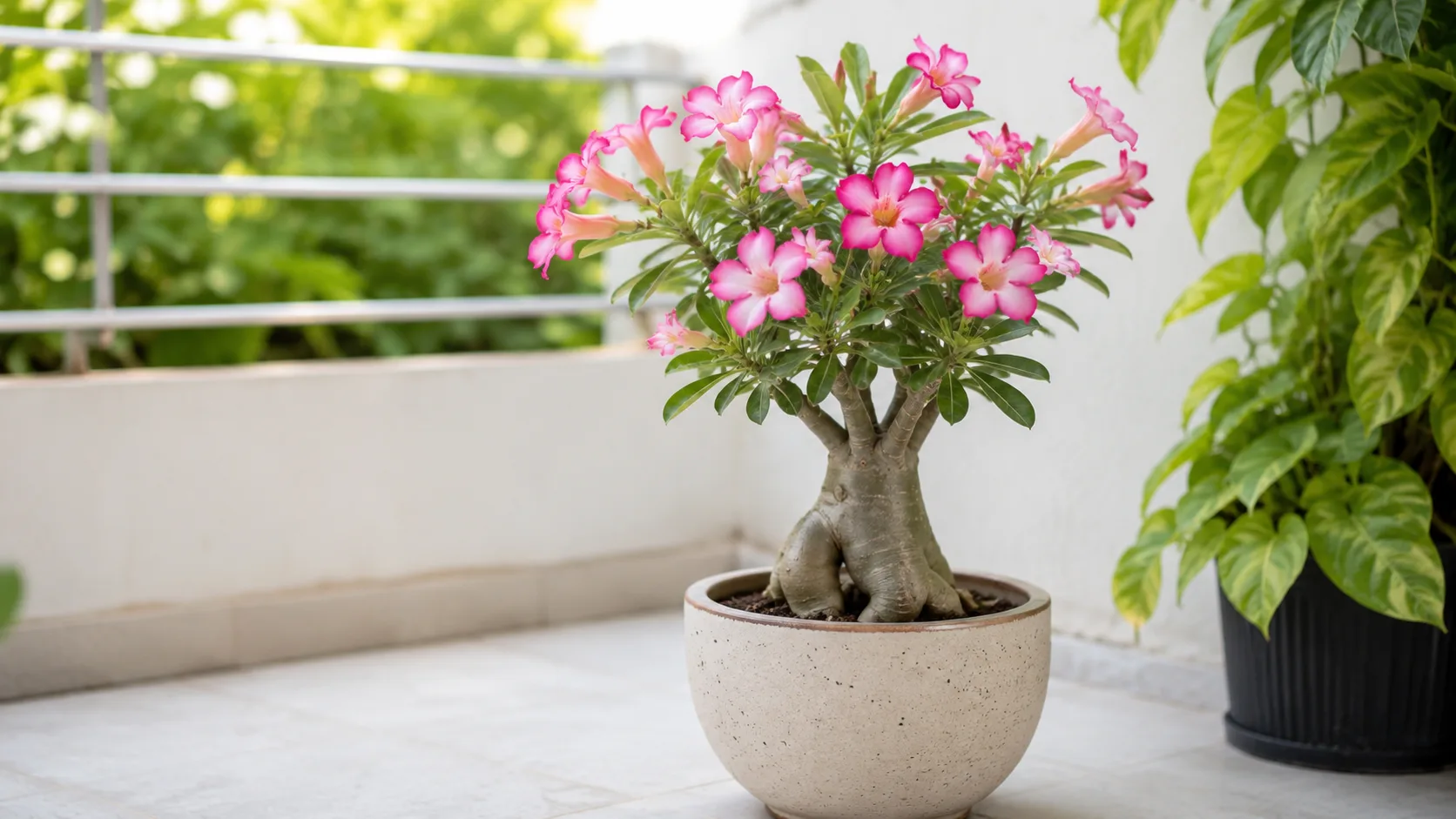
Adenium is built for heat. NC State recommends full sun, cactus/succulent potting mix, several drainage holes, and drying between waterings — it is quite drought tolerant and blooms in warm weather. (NC State Extension) ASPCA lists desert rose as toxic to dogs, cats, and horses (cardiac glycosides). (ASPCA)
Put it on the hottest ledge you have. Soft afternoon shade is optional for newly moved plants; deep shade wastes flowering. Keep children and pets from chewing the caudex or sap.
West-rail tip (editorial): In humid coastal cities, elevate the pot and cut watering harder once monsoon starts — wet rot is the west-balcony killer for adenium, not sun.
Common mistake: Rich garden soil that stays wet after evening watering.
Deeper care: Adenium watering · Adenium care guide
3. Portulaca
Best for: Small sunny pots, railing troughs, and hanging planters on west rails
Sunlight: Full sun
Water: Low
Pot size: Small to medium
Difficulty: Easy
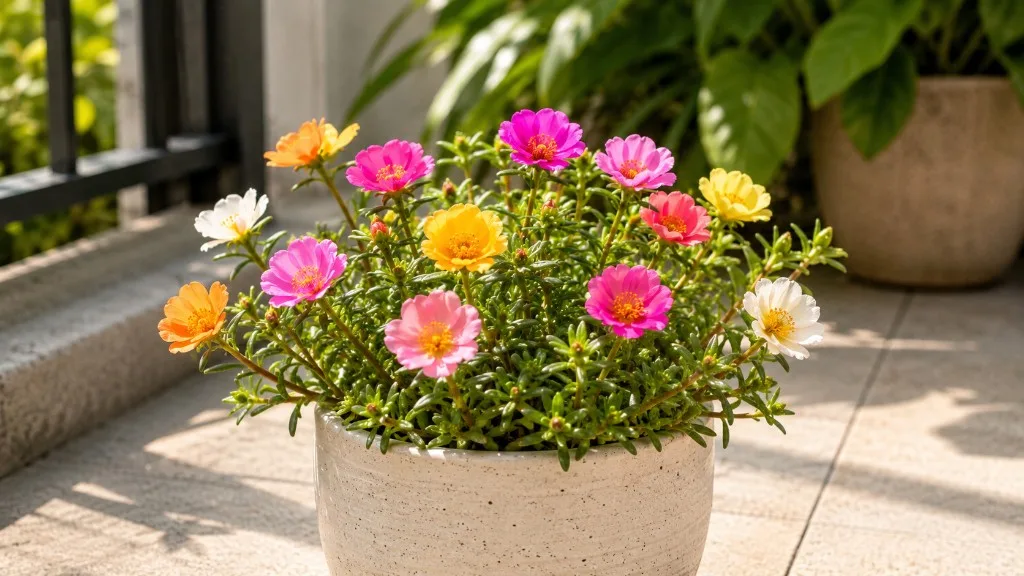
Portulaca is the honest summer annual for Indian west balconies. NC State rates it high for drought and heat tolerance and recommends full sun in well-drained sandy or rocky soils — including pots and hanging planters. (NC State Extension) Flowers open brightest in strong light and sulk in shade. TNAU also lists Portulaca among low-growing succulents suited to extreme roof conditions. (TNAU Agritech Portal)
Use it where hibiscus would wilt: narrow ledges, railing boxes, and black plastic pots that cook by afternoon. Skip saucers that hold hot water.
West-rail tip (editorial): On 40 °C+ west rails, check small pots midday — they can dry completely between morning and evening.
Common mistake: Planting under a deep overhang “to protect it,” then wondering why it never flowers.
Deeper care: Portulaca light · Portulaca care guide
4. Crown of Thorns
Best for: Dry sunny corners and low-water flowering structure
Sunlight: Full sun
Water: Low
Pot size: Small to medium
Difficulty: Easy to medium
Crown of thorns (Euphorbia milii) is a tough flowering succulent for hot ledges. NC State tags it as full-sun tolerant, drought tolerant, and suitable as a container plant, with spines and milky latex. (NC State Extension) ASPCA also lists crown of thorns among plants toxic to pets. (ASPCA)
Pair it with adenium or bougainvillea so the whole ledge shares a dryish watering rhythm. Keep the mix gritty. Handle with gloves; place above pet reach. Latex in eyes is an emergency — rinse and seek care.
West-rail tip (editorial): This is the compact “flowers without hibiscus water bills” pick for a sunny stair landing or rail corner.
Common mistake: Soft peat indoor mix that stays wet after one monsoon shower.
Deeper care: Crown of thorns soil · Crown of thorns watering
Thirsty Flowerers — Only If You Can Water
Sun-tolerant is not drought-tolerant in pots. These two earn west show only if you accept the water bill — or light afternoon shade on extreme glare walls.
5. Hibiscus
Best for: Large west balconies when you can water deeply and consistently
Sunlight: Full sun to bright light; light afternoon shade helps in extreme heat
Water: High — keep roots moist, not waterlogged
Pot size: Large
Difficulty: Medium
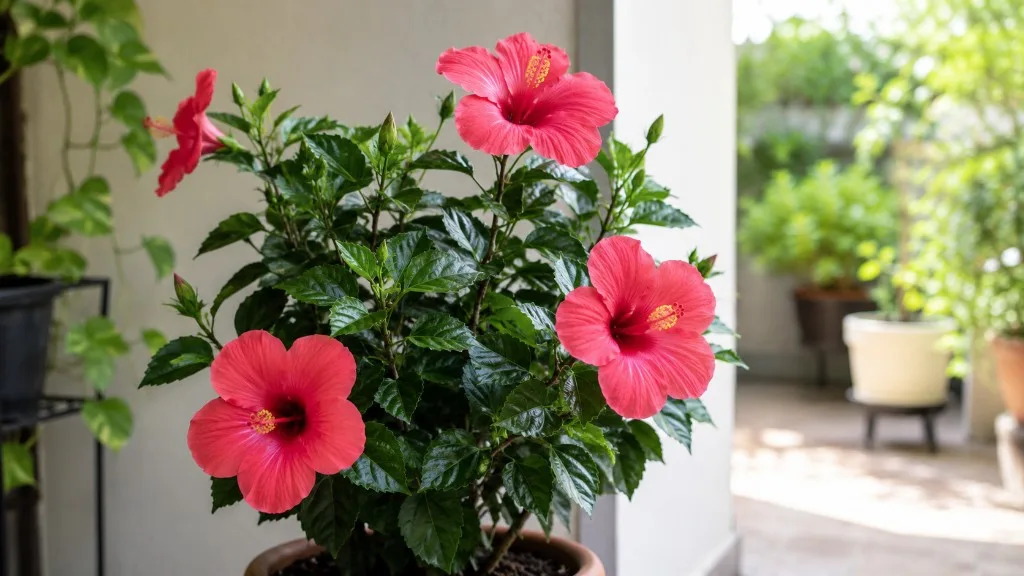
Hibiscus (Hibiscus rosa-sinensis) flowers hard in Indian heat — if moisture stays steady. NC State says plant in full sun to partial shade with rich, moist, well-drained soil; container plants need bright light and space. (NC State Extension)
On a west balcony, a light shade cloth from roughly 1–4 p.m. often prevents flower and leaf scorch better than moving the plant indoors. Mulch the pot surface to slow evaporation. Expect bud drop after sudden moves or watering swings. Do not choose hibiscus for a “low-maintenance dry balcony.”
West-rail tip (editorial): Tiny decorative pots overheat and dry before noon — if you cannot upsize, pick portulaca instead.
Common mistake: Buying hibiscus because the nursery photo looked “sunny,” then traveling for a week in May.
Deeper care: Hibiscus watering · Hibiscus light
6. Ixora
Best for: Compact flowering shrubs in large west pots
Sunlight: Full sun; tolerates a little afternoon shade
Water: Medium to high
Pot size: Medium to large
Difficulty: Medium
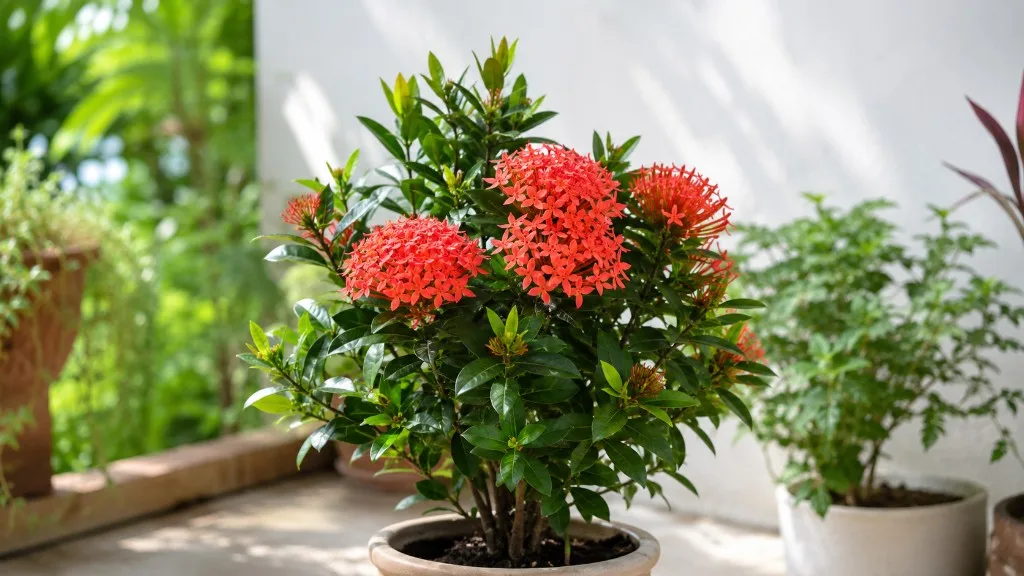
Ixora adapts well to large pots and is native to parts of South Asia. NC State notes Ixora coccinea prefers full sun in moist, well-drained, organically rich acidic soils and can tolerate small amounts of afternoon shade; it is commonly grown in containers in warm climates. (NC State Extension)
Pair with morning sun and filtered west sun rather than reflected heat against a white west wall with no airflow. Alkaline mixes can cause chlorosis — keep the mix slightly acidic and well drained. In peak May–June heat, a 30–50% shade net for the hottest hours often keeps clusters from bleaching without turning the plant into a shade houseplant.
West-rail tip (editorial): Ixora sits between hibiscus and bougainvillea on the water bill — more moisture than desert plants, less drama than a wilting hibiscus if you miss one day.
Common mistake: Letting monsoon water sit in saucers — moisture yes, stagnant heat-bath roots no.
Deeper care: Ixora soil · Ixora problems
Low-Water Structure Behind the Hottest Rail
These are not west-rail flower bombs. They are the bright-shelf survivors that keep structure when you cannot babysit bloomers. TNAU lists Aloe and jade plant among large succulents for roof gardens with extreme conditions. (TNAU Agritech Portal)
7. Aloe Vera
Best for: Useful, heat-tolerant pots on bright west shelves with drainage
Sunlight: Full sun to partial shade
Water: Low; dry completely between waterings
Difficulty: Easy
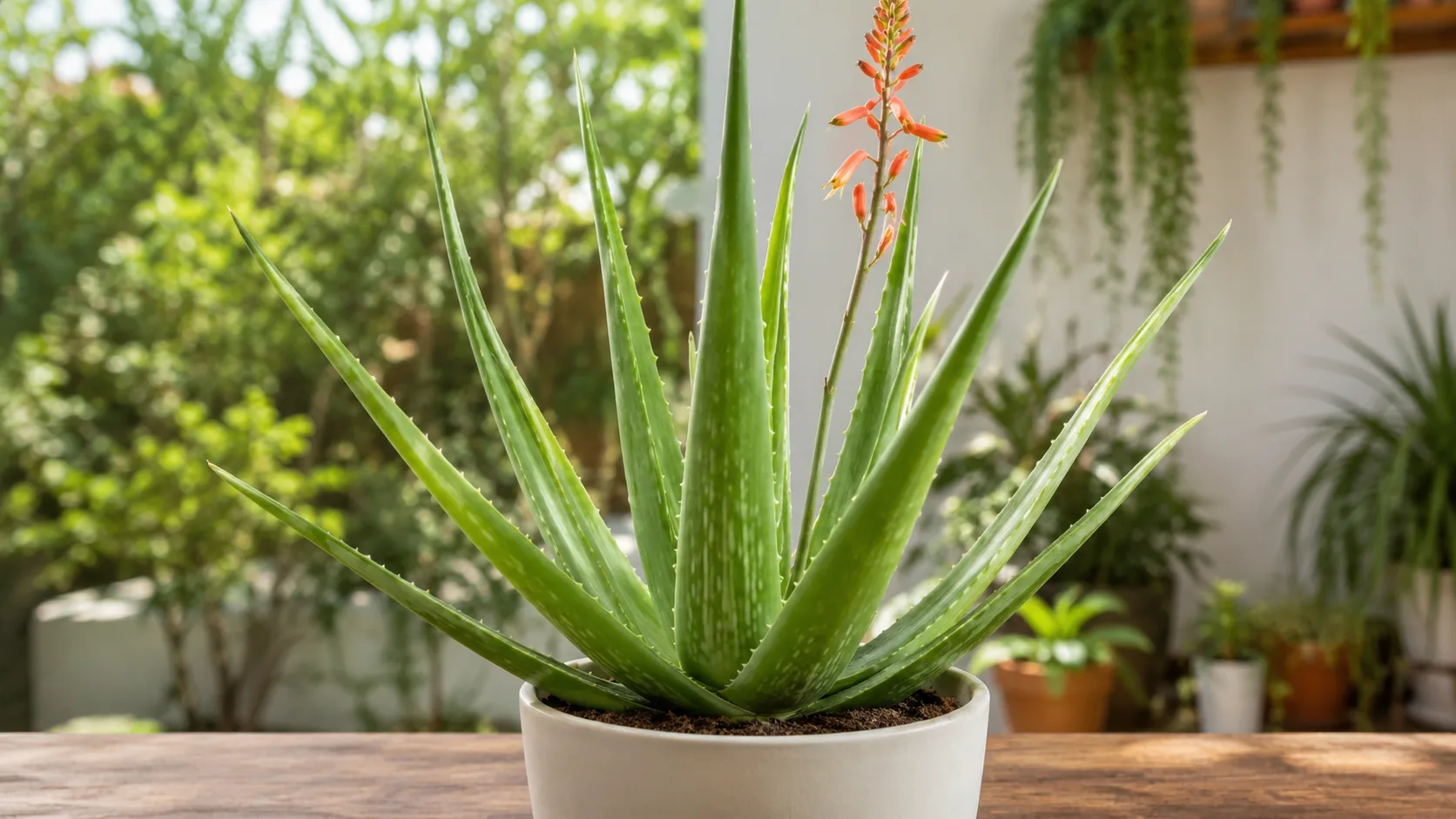
Aloe vera tolerates heat and dry cycles when drainage is excellent. NC State recommends full sun to partial shade and warns that overwatering leads to root rot. (NC State Extension) ASPCA lists aloe as toxic to dogs, cats, and horses if ingested. (ASPCA)
Acclimate nursery aloes over a week before leaving them in raw afternoon sun. Keep aloe on the bright shelf behind taller sun plants if your west wall reflects hard glare onto leaf tips. Clay pots help excess moisture escape in humid coastal cities.
Common mistake: Mist-spray “humidity care” on a west ledge — wet crowns plus heat invite rot.
Deeper care: Aloe vera soil · Aloe vera watering
8. Jade Plant
Best for: Dry, bright west shelves and low-water structure
Sunlight: Bright light with four or more hours of direct sun when acclimated
Water: Low
Difficulty: Easy
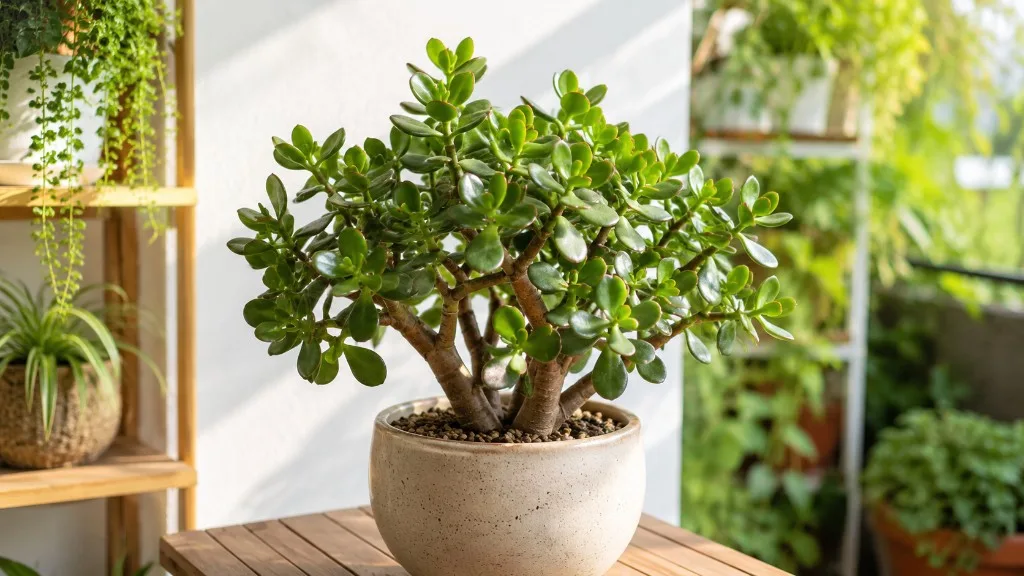
Jade plant (Crassula ovata) likes the warm, dry conditions many Indian homes already have. Clemson Extension says jades prefer full sun or bright filtered light and do best with four or more hours of direct sun; they need well-drained mix. (Clemson HGIC) ASPCA lists jade as toxic to dogs, cats, and horses. (ASPCA)
It is not a west-rail flower bomb. Acclimate gradually — sudden 3 p.m. sun on a shop plant causes bleached patches. Terracotta helps in humid coastal west balconies; in very dry northwest summers, plastic holds moisture longer between waterings (editorial).
Common mistake: Watering on a fixed weekly calendar after monsoon humidity arrives.
Deeper care: Jade plant watering · Jade plant care guide
Shade Net, Pots, and Acclimation for West Rails
- Acclimate new plants over 7–10 days — morning exposure first, then longer west sun. UGA’s indoor-plant guidance similarly stresses a staged move into brighter conditions rather than a day-one shock. (UGA Extension)
- Water by soil feel, not a shared calendar. Clemson advises watering when the mix feels dry at fingertip depth; warm sunny spots need water more often than cool shady ones. (Clemson HGIC)
- Size pots for radiant heat. Hibiscus, bougainvillea, and ixora need large containers; tiny pots bake roots.
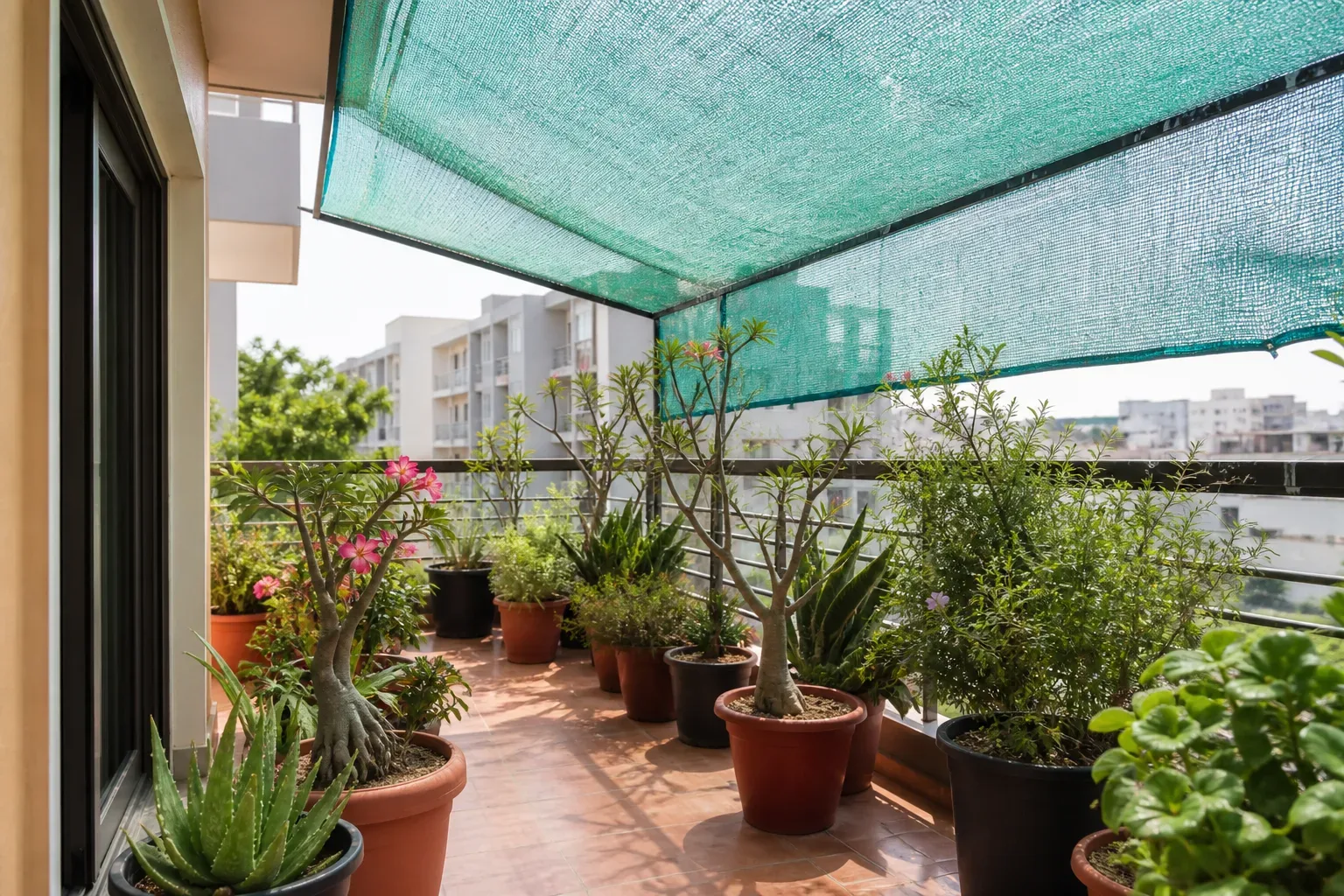
- Shade net (editorial): about 30% when plants are acclimated and you only need mild buffering from reflected heat; about 50% during heat waves, for newly moved nursery plants, or when dark tiles and west walls create harsh glare. Mount netting so hot air can escape — a sealed plastic “greenhouse” against a west wall cooks plants. Keep sun lovers in strong light; the goal is less leaf fry, not deep shade that stops flowering.
- Empty saucers. Standing hot water plus wet mix invites rot when monsoon arrives. See monsoon houseplant care in India and root rot in houseplants.
- Pot material trade-offs for baking ledges: terracotta vs plastic pots.
- High-rise wind: use heavy bases, avoid top-heavy pots on open rails, and tie climbers; wind accelerates dry-down even when the plant is “drought tolerant.”
When Leaves Are Already Scorched This Week
If leaves are bleached, papery, or crispy on the west-facing side of the canopy:
- Move fried pots under the slab overhang or to a brighter east position for 3–5 days.
- Water deeply once if the mid-pot is bone dry — do not daily mist scorched tissue.
- Snip only fully dead tissue; leave partially damaged leaves that still feed the plant.
- Add 30–50% shade net before returning to west sun; resume acclimation instead of day-one full exposure.
- Pause fertilizer until new growth looks normal.
- Diagnose ongoing leaf drop with plants dropping leaves in summer and sunburn and scorched leaves. For heat-stress patterns beyond pure scorch, see heat stress in houseplants.
Pet Safety and Safer Alternatives
Most of the best open-west heat plants are not pet-safe floor plants. ASPCA lists desert rose (adenium), crown of thorns, aloe, and jade as toxic if ingested; crown of thorns adds spines and latex. (ASPCA) Keep chewable or spiny plants elevated and confirm each species before floor-level placement.
Honest west alternatives for households with pets:
- Filtered west / slab-overhang shelves: spider plant — ASPCA lists spider plant as non-toxic to dogs and cats. (ASPCA) It is not an open-rail desert substitute; expect afternoon shade or netting.
- Bright but buffered west: prefer the east-facing balcony shortlist plants moved just behind the hottest rail rather than forcing toxic heat specialists onto the floor.
- Still want open-rail flowers with pets: elevate portulaca troughs out of reach and skip adenium / crown of thorns / jade at nose height.
“Non-toxic” does not mean unlimited chewing is fine — contact a veterinarian or poison control if a pet eats any plant material.
Dry Inland vs Humid Coastal West Rails
| Band (editorial) | What changes on west rails | Pot / water cue |
|---|---|---|
| Dry inland / northwest heat (Delhi–Rajasthan–Gujarat) | Faster dry-down; plastic often holds moisture longer than terracotta between waterings | Check small pots twice on 40 °C+ days |
| Humid coastal pre-monsoon (Mumbai–Chennai–Kolkata) | Heat plus sticky air; fungal risk starts earlier | Empty saucers aggressively even before rains; terracotta helps desert plants shed moisture |
| Open high-rise vs slab overhang | Wind + full west sun vs filtered afternoon light | Different plant sets — do not force one shortlist onto both |
For dry-climate indoor rooms behind the balcony door, see houseplant care for dry India. For coastal humidity after rains begin, hand off to monsoon houseplant care in India.
Common West-Balcony Mistakes
- Buying shade houseplants for unshaded west rails
- Assuming east advice works unchanged on west heat
- Using pots without drainage “to keep water longer”
- Watering every plant on the same daily schedule
- Moving nursery plants into full 3 p.m. sun on day one
- Choosing hibiscus for a dry, low-maintenance ledge
- Ignoring spines, latex, and pet toxicity on floor-level succulents
- Skipping the monsoon drainage switch until roots are already rotting
- Sealing a west rail into a plastic greenhouse with zero airflow under shade cloth
How This Differs From Our Indian Summer Balcony Guide
Use this page when the question is aspect: “My balcony faces west — what survives afternoon sun, and how do I buffer glare?” Use the Indian summer balcony guide when the question is season: heat across west and east, plumeria/snake plant roles, and monsoon handoff depth. This page keeps short west-role cards instead of a second full encyclopedia of the same eight plants. If you only need a wider balcony filter beyond west heat, see plants for balcony.
Conclusion
For most Indian west-facing balconies, start with bougainvillea for afternoon-sun color, portulaca for small hot pots, and adenium or crown of thorns when you want flowers on a dry watering rhythm. Add hibiscus or ixora only if you can keep moisture steady in large pots. Use aloe vera and jade plant for bright, low-water structure on shelves behind the hottest rail.
Match the plant to west afternoon heat first. Check pet and handling risk before floor placement. Size the pot for radiant heat, water to the species, buffer glare with the right shade-net percentage, and rewrite care when monsoon humidity arrives. That sequence keeps more west-balcony plants alive than any interchangeable “top 10” list.
Related guides
- Best Balcony Plants for Indian Summer — seasonal heat overview with west and east picks plus monsoon handoff
- East-Facing Balcony Plants in India — cooler morning-sun shortlist when west heat is the wrong tool
- Monsoon Houseplant Care in India — drainage and watering switch after dry west heat
- Sunburn and Scorched Leaves — rescue steps when west glare fries foliage
- Heat Stress in Houseplants — wilt and stress patterns beyond pure leaf bleach
- Terracotta vs Plastic Pots — pot material choices when ledges bake
- Root Rot in Houseplants — what happens when monsoon moisture meets poor drainage
- Indoor Plants for India — when the “balcony” is really a low-light ledge or AC room
- Plants for Balcony — broader balcony shortlist beyond west afternoon heat