Best Plants for Hyderabad Heat: Deccan Summer and Balcony Picks
Hyderabad Deccan summer plants — pot surface heat, bone-dry pre-monsoon May, light-colored containers, and AC flats. Not a Delhi dust-and-cooler copy.
Hyderabad summer is dry Deccan heat — not Chennai humidity. Banjara Hills west rails bake by 2 PM; Gachibowli apartments run AC fourteen hours while balcony pots lose an inch of soil moisture overnight. The failure mode here is not salt spray or NCR dust film — it is radiant pot heat and bone-dry pre-monsoon air that tricks you into underwatering thin-leaved plants while overwatering succulents in cool AC bedrooms.
For Delhi NCR dust, desert coolers, and particulate rinse routines, use plants for Delhi summers. This page owns Telangana Deccan balcony and AC-flat behavior.
Hyderabad Dry Heat Is Not Delhi NCR Summer
| Factor | Hyderabad Deccan | Delhi NCR |
|---|---|---|
| Air mass | Dry pre-monsoon; low humidity | Hot-dry plus heavy dust/smog |
| Indoor culture | Mostly sealed AC | AC + desert coolers common |
| Container risk | Black plastic pot surface heat | Dust-blocked leaves |
| Coastal comparison | Link South India summer indoors | Different again |
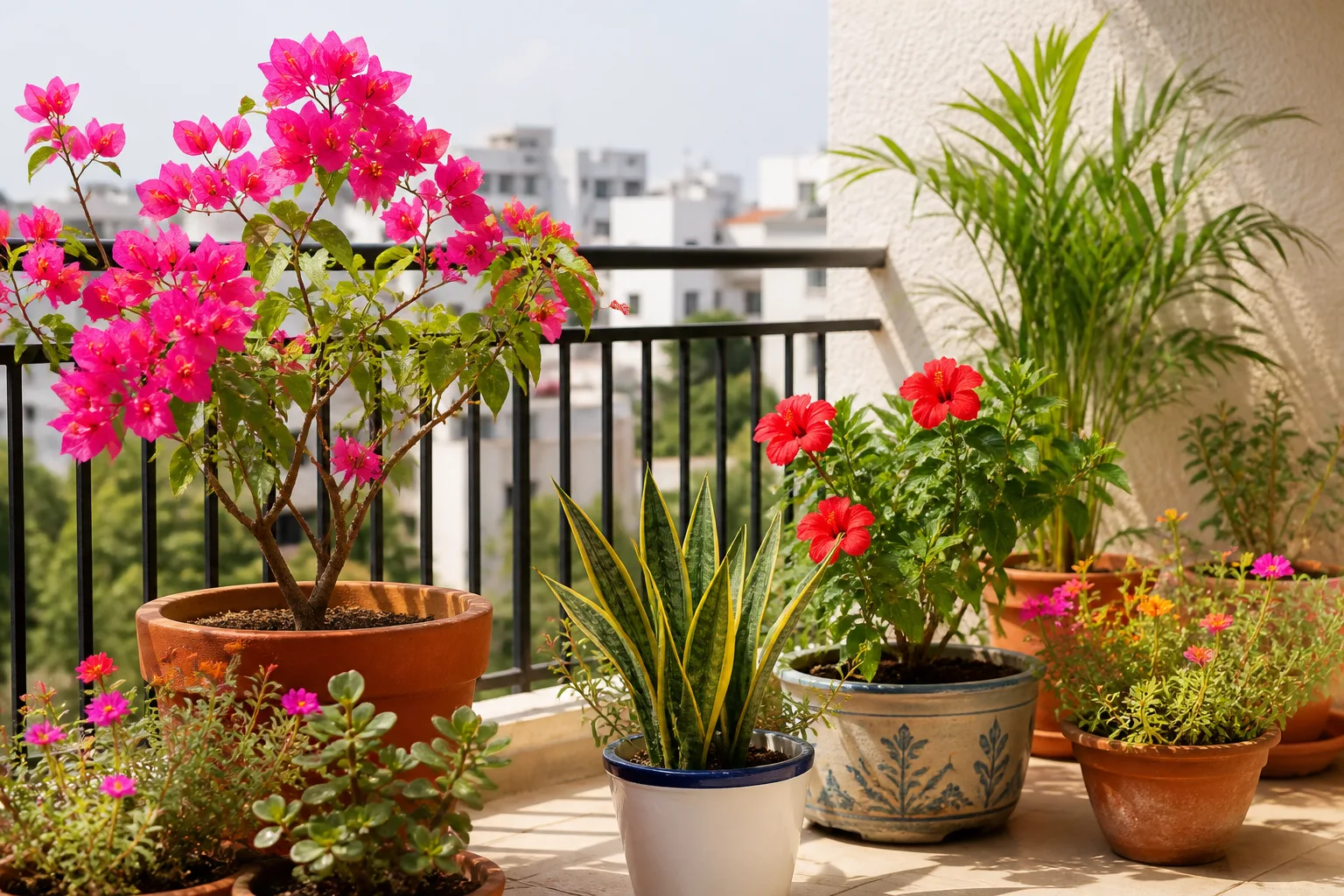
Shared balcony species overlap — bougainvillea, adenium, portulaca — but placement and pot choice differ.
Hyderabad Microclimates: Banjara Hills vs Gachibowli
Banjara Hills and older west-facing homes — afternoon sun on rails is fierce; shade net is mandatory March–June. Established adenium in terracotta often outperforms thin plastic.
Gachibowli and HITEC corridor towers — high-floor west balconies get wind plus heat; secure pots before pre-monsoon storms. Lower floors may be dimmer — route indoor picks to low-light plants for Indian flats.
Old city interior flats — narrow light wells; snake plant and ZZ plant beat flowering rails.
Hyderabad Heat Plant Matrix
| Plant | West balcony | Indoor AC | Water in May | Pet note |
|---|---|---|---|---|
| Bougainvillea | Excellent (with net) | No | Moderate | Thorns |
| Adenium | Excellent | No | Low | Toxic sap |
| Portulaca | Excellent | No | Low | — |
| Aloe vera | Excellent | Good | Low | Mild toxicity |
| Jade plant | Good | Good | Low–moderate | Mild toxicity |
| Snake plant | Filtered | Excellent | Very low | Toxic if chewed |
| ZZ plant | Sheltered | Excellent | Very low | Toxic if chewed |
| Crown of thorns | Sunny dry | No | Low | Sap irritant |
| Tulsi | East morning | Near window | Daily–alternate | — |
| Hibiscus | Bright; net PM | No | High | — |
Pot Surface Heat and Container Choice
When afternoon pot surface temperatures exceed about 40°C in direct sun, even heat-tolerant plants scorch roots from below. Hyderabad-specific fixes:
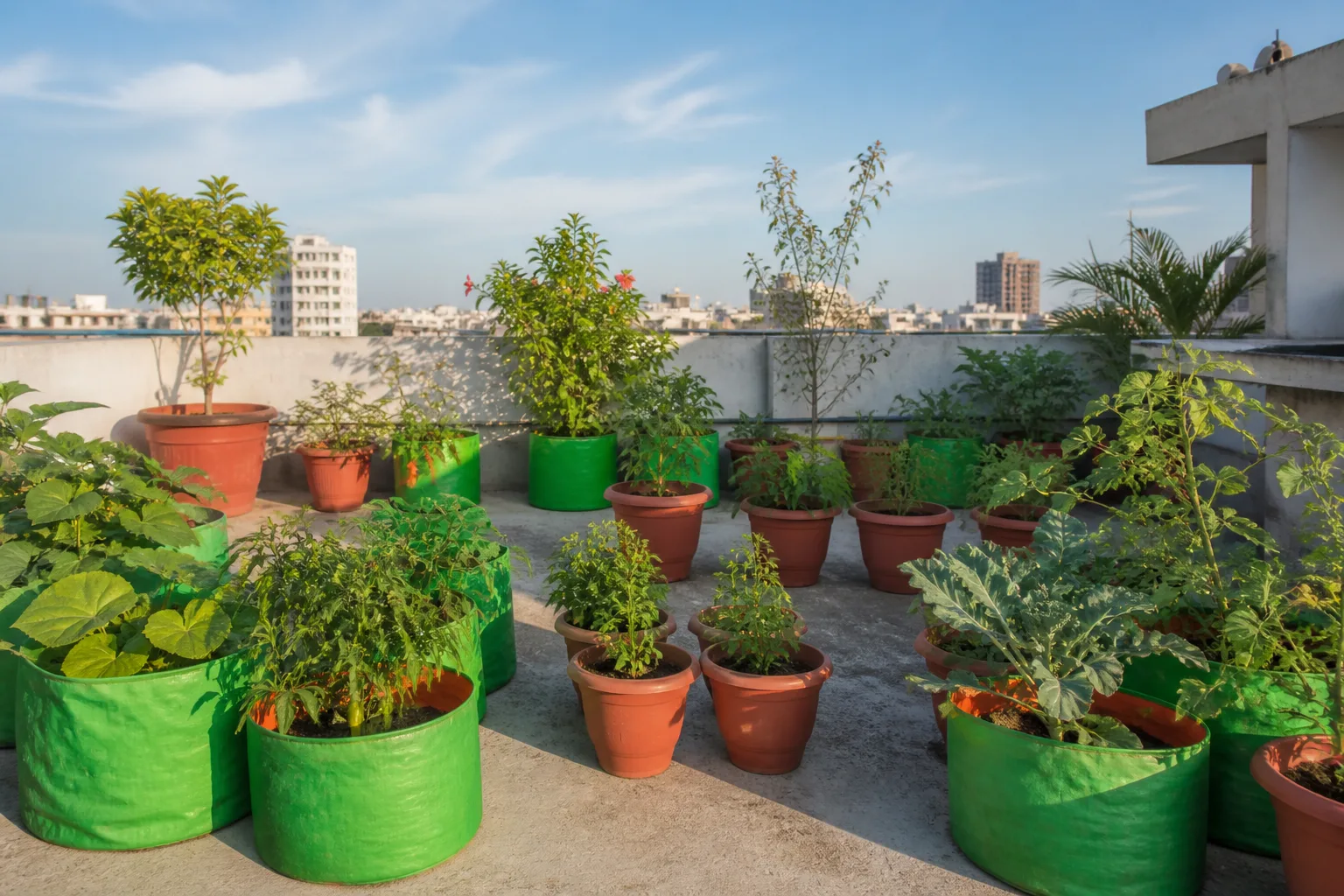
- Light-colored pots — white or terracotta beats black plastic on west rails
- Pot feet or risers — air gap reduces conducted heat from floor tiles
- Shade net 40–50% on west exposure March–June
- Water early morning — never on hot afternoon soil
This section replaces generic hot-dry advice copied from Delhi pages.
Balcony Champions for Deccan Sun
Adenium — NC State recommends full sun, succulent mix, and drying between waterings. Ideal Hyderabad west rail with afternoon net.
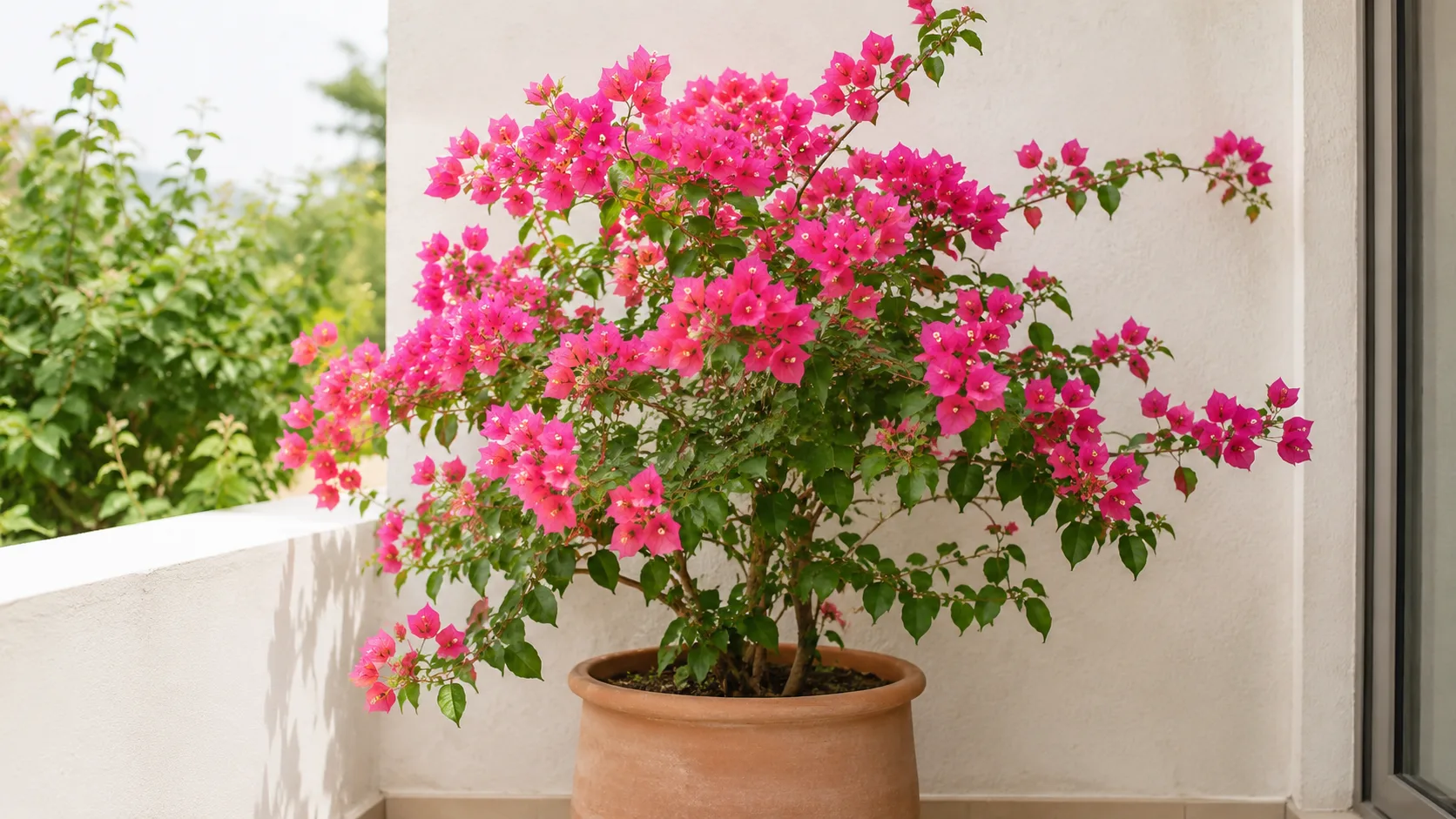
Bougainvillea — color without daily watering once established in a large draining pot. NC State bougainvillea profile notes heat and drought tolerance.
Portulaca — seasonal color in small sunny pots with minimal water.
Aloe and jade — east morning sun or west with afternoon net.
See balcony plants for Indian summer and west-facing balcony plants in India.
Crown of Thorns and Flowering Dry-Rail Picks
Crown of thorns suits sunny dry rails with infrequent deep watering — watch sap when pruning. Hibiscus needs more water and benefits from afternoon shade net on west exposure; do not keep in sealed AC indoors.
Tulsi on east rails is a Hyderabad staple — daily to alternate watering in dry May, reduced when humidity rises pre-monsoon.
Indoor AC Flats in Hyderabad
Balconies are bone-dry and blazing; AC bedrooms are cool and dry — different species sets.
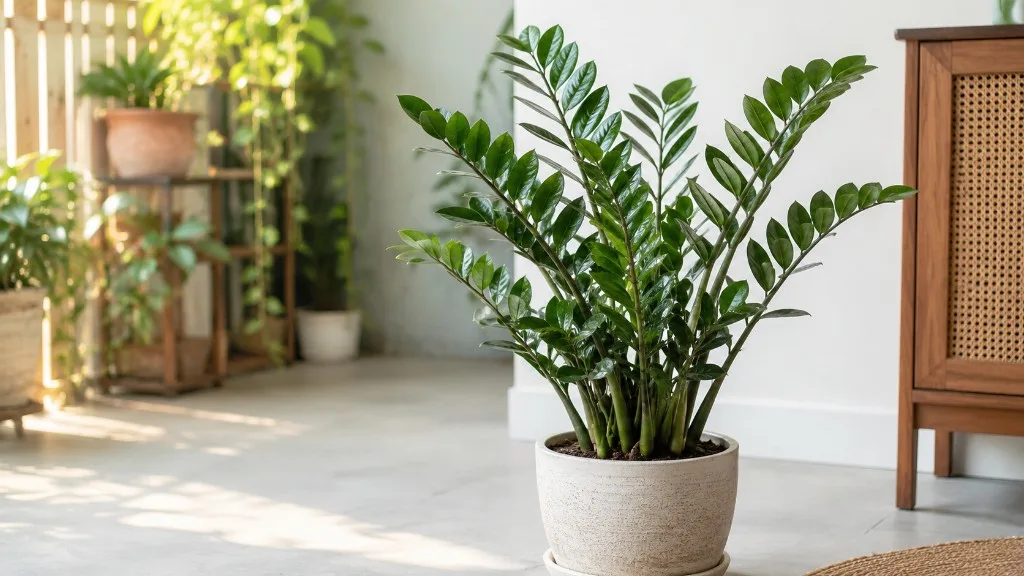
Snake plant and ZZ plant — default for dry AC bedrooms. Water every two to three weeks; overwatering in 24°C AC while May heat builds outside is the top kill.
Aloe on brightest kitchen sill — tolerates AC if soil dries between waterings.
Rubber plant and pothos — brighter living rooms only; brown tips near vents signal dry air per Penn State humidity guidance. Use houseplant care for dry Indian climates for full AC tactics.
For pan-south indoor species comparison, see houseplants in South India summer.
Pre-Monsoon May: The Harshest Window
May in Hyderabad is often drier and harsher than June humidity — do not assume monsoon has arrived because a single storm passed. Check soil daily on west rails; succulents still need deep then dry cycles, while hibiscus may wilt by noon.
Do not fertilize during heat waves above 42°C forecast.
Hyderabad Summer Checklist
- 40–50% shade net on west rails March–June
- Light-colored pots; avoid black plastic in full sun
- Water early morning; never on hot afternoon soil
- Rinse dust weekly in dry weeks — less critical than Delhi but still helps
- Cut watering when monsoon houseplant care in India conditions arrive
- Dim interiors: low-light plants for Indian flats
Monsoon Handoff
When humidity rises and pots stay wet longer — often June onward per IMD monsoon progression — cut watering 50% or more even if days stay hot. Pre-monsoon May remains the driest, harshest balcony window.
Conclusion
Hyderabad rewards drought-tolerant balcony plants in light pots with shade net and AC-hardy indoor succulents. Outdoors: adenium, bougainvillea, portulaca. Indoors: snake plant, ZZ plant, aloe. For Delhi dust and cooler zones, switch guides — do not merge the two cities into one template.
Related guides
- Plants for Delhi summers — NCR dust and desert coolers
- Houseplants in South India summer — indoor pan-south picks
- Houseplant care for dry Indian climates — AC playbook
- Indoor plants for Indian homes — national shortlist
- Gardening in India — regional hub