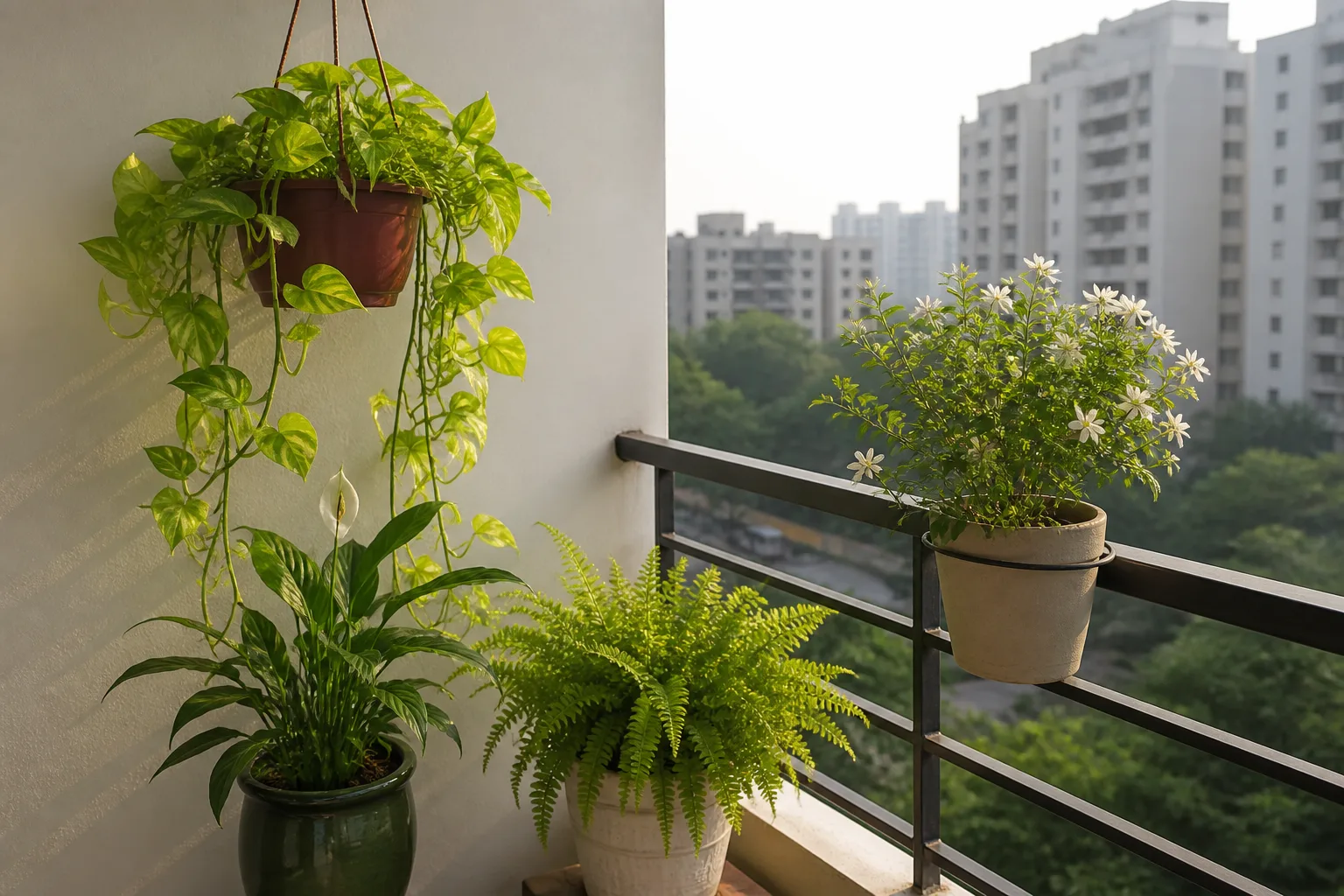
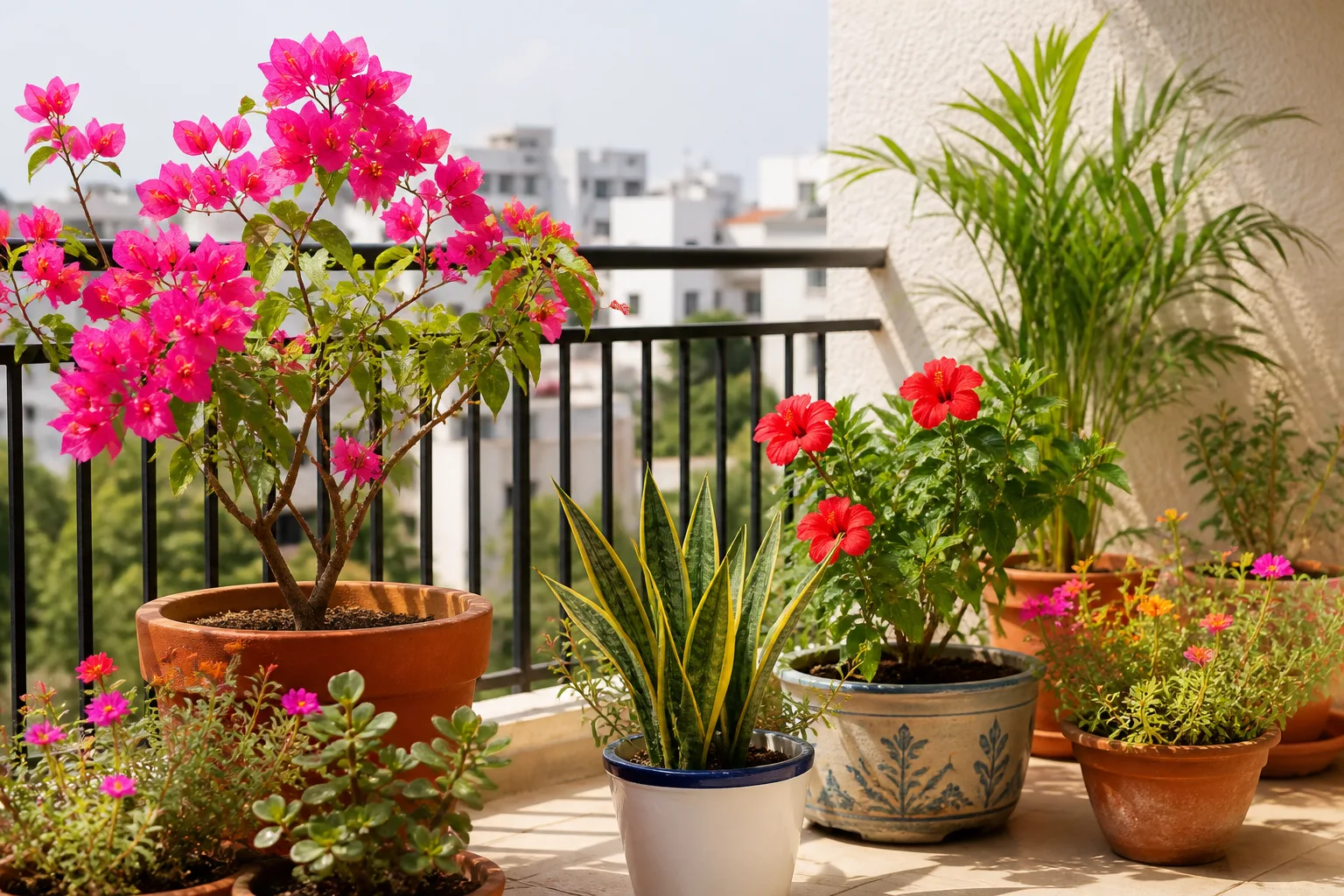
Gardening in India: Regional Guides for Homes, Balconies, and Apartments
Start here for gardening in India — city balcony picks, monsoon and dry-season care, north winter and south summer playbooks, and links to every regional guide.
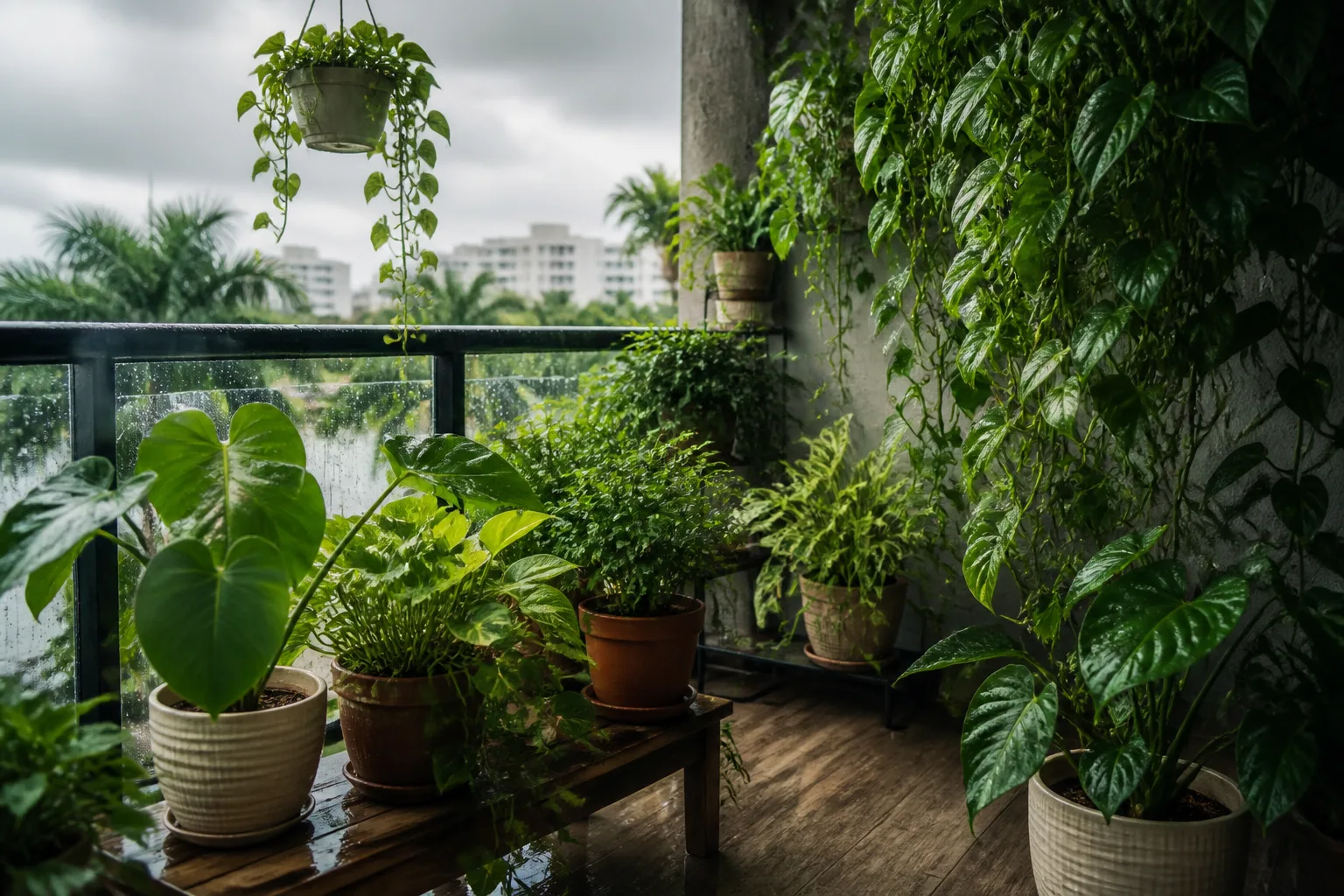
Most gardening advice online is written for temperate backyards — mild summers, short winters, and predictable rain. India is the opposite problem set: a Mumbai flat where humidity never drops below 70% for weeks, a Delhi balcony that hits 44°C in May and 4°C in January, a Bengaluru shelf that gets four hours of filtered light between two towers, and a Chennai west rail that scorches anything not built for tropical sun. Gardening in India works when you match plants to city, orientation, and season — not when you copy a list from a London blog.
This page is the hub. Use it to route to the right regional guide, then drill into plant hubs for species-specific watering, light, and problem fixes.
Start With Your Situation
Before buying plants, answer three questions:
Which city? Coastal metros (Mumbai, Chennai, Kochi) need humidity and salt-air playbooks. Hot-dry inland cities (Delhi, Jaipur, Hyderabad) need summer heat and winter chill guides. Moderate-climate cities (Bengaluru, Pune) sit between extremes but still have dry winters and sharp summer afternoons.
Indoor or balcony? Interior rooms with tower shade need low-light plants for Indian flats. Sunny balconies need heat-tolerant picks from the balcony plants for Indian summer guide or city-specific balcony articles below.
Which season is active right now? Monsoon, dry summer, and north-India winter each change watering more than the plant species does. The wrong season playbook kills healthy plants faster than the wrong species choice.
Regional and City Guides
National and seasonal playbooks
| Guide | Best for |
|---|---|
| Indoor plants for Indian homes | Year-round beginner shortlist for apartments |
| Monsoon houseplant care in India | July–September wet-soil and fungus prevention |
| Houseplant care for dry Indian climates | AC rooms, desert coolers, pre-monsoon heat |
| Low-light plants for Indian flats | North rooms, deep corridors, tower shade |
| Houseplant care in coastal India | Salt spray, sticky humidity, mildew |
| Winter houseplant care in North India | Fog, heaters, cold-wave shelter |
| Houseplants in North India winter | Plant picks and placement for Delhi, Punjab, UP |
| Houseplants in South India summer | Chennai, Bengaluru, Hyderabad heat survival |
City-specific guides
| City | Guide | Focus |
|---|---|---|
| Bengaluru | Plants for Bangalore balconies | Filtered light, sudden showers, apartment rails |
| Mumbai | Plants for Mumbai humidity | Sticky air, salt, monsoon mold |
| Delhi | Plants for Delhi summers | Heat, dust, AC-dried rooms |
| Delhi | Plants for Delhi winters | Cold nights, fog, heater drafts |
| Chennai | Plants for Chennai balconies | Coastal heat, salt, harsh west sun |
| Hyderabad | Plants for Hyderabad heat | Dry Deccan summer, intense afternoon sun |
| Pune | Plants for Pune apartments | Compact flats, mild winters, monsoon swings |
Balcony orientation guides
- East-facing balcony plants in India — morning sun, gentler afternoons
- West-facing balcony plants in India — afternoon scorch management
- Terrace gardening in India — larger containers, wind, and drainage
Reliable Plants Across Most Indian Cities
These species appear in multiple city guides because they handle heat, missed watering, and uneven light better than most common houseplants:
- Snake plant — bedrooms, AC rooms, low light
- Money plant / golden pothos — shelves, hanging baskets, fast recovery
- ZZ plant — dark corners, travel-friendly
- Aglaonema — colorful foliage in moderate light
- Aloe vera — sunny kitchen windows and balconies
- Tulsi — balconies with four-plus hours of sun; cultural staple
- Bougainvillea — west-facing balcony color where you can water consistently
No single plant works in every Indian room. A peace lily that thrives in a humid Mumbai bathroom will crisp in a Delhi AC bedroom unless you raise humidity or move it.
Seasonal Calendar for Indian Gardeners
Pre-monsoon heat (March–June). Check soil more often. Move pots away from west-facing afternoon sun. In dry cities, read houseplant care for dry Indian climates. On balconies, use balcony plants for Indian summer.
Monsoon (July–September). Cut watering 50–100% versus summer in humid cities. Read monsoon houseplant care in India. Empty saucers within 30 minutes. Improve airflow between pots.
Post-monsoon and mild autumn (October–November). Resume normal watering gradually as pots dry faster. Good time to repot root-bound plants before winter slowdown in the north.
North India winter (December–February). Slow watering. Shelter balcony tropicals during cold waves. Use plants for Delhi winters and houseplants in North India winter.
South India summer (March–June). Coastal and inland south face intense heat before monsoon relief. Use houseplants in South India summer and city guides for Chennai, Hyderabad, and Bengaluru.
Common Mistakes in Indian Homes
One watering schedule all year. Clemson Extension stresses that overwatering is the main cause of death in potted plants because roots need oxygen. Indian seasons make calendar watering especially dangerous.
Decorative pots without drainage. Water pools at the bottom; roots rot during monsoon even when the top soil looks dry.
Moving plants daily between deep shade indoors and harsh balcony sun. Light shock yellows leaves faster than steady mediocre light.
Ignoring AC and fan drafts. Snake plant and ZZ plant tolerate dry AC air; peace lily, areca palm, and ferns need grouping or a humidifier shelf.
Conclusion
Gardening in India is regional gardening. Pick your city guide, match the current season playbook, then choose two or three plants that fit your actual light and watering habits. Start with indoor plants for Indian homes if you want a proven shortlist, then branch into monsoon, dry-climate, or city-specific guides as your collection grows.
Related guides
- Indoor plants for Indian homes — 12 easy year-round picks
- Monsoon houseplant care in India — wet-season watering and fungus prevention
- Houseplant care for dry Indian climates — AC rooms and hot-dry belts
- Low-light plants for Indian flats — tower shade and north rooms
- Best low-maintenance indoor plants — filterable list from plant data