Best Houseplants for North India Winter: Cold-Tolerant Picks
Eight cold-tolerant houseplants for North India winters — fog weeks, heater-dry air, cold nights, and slower watering in Delhi, Punjab, and UP flats.
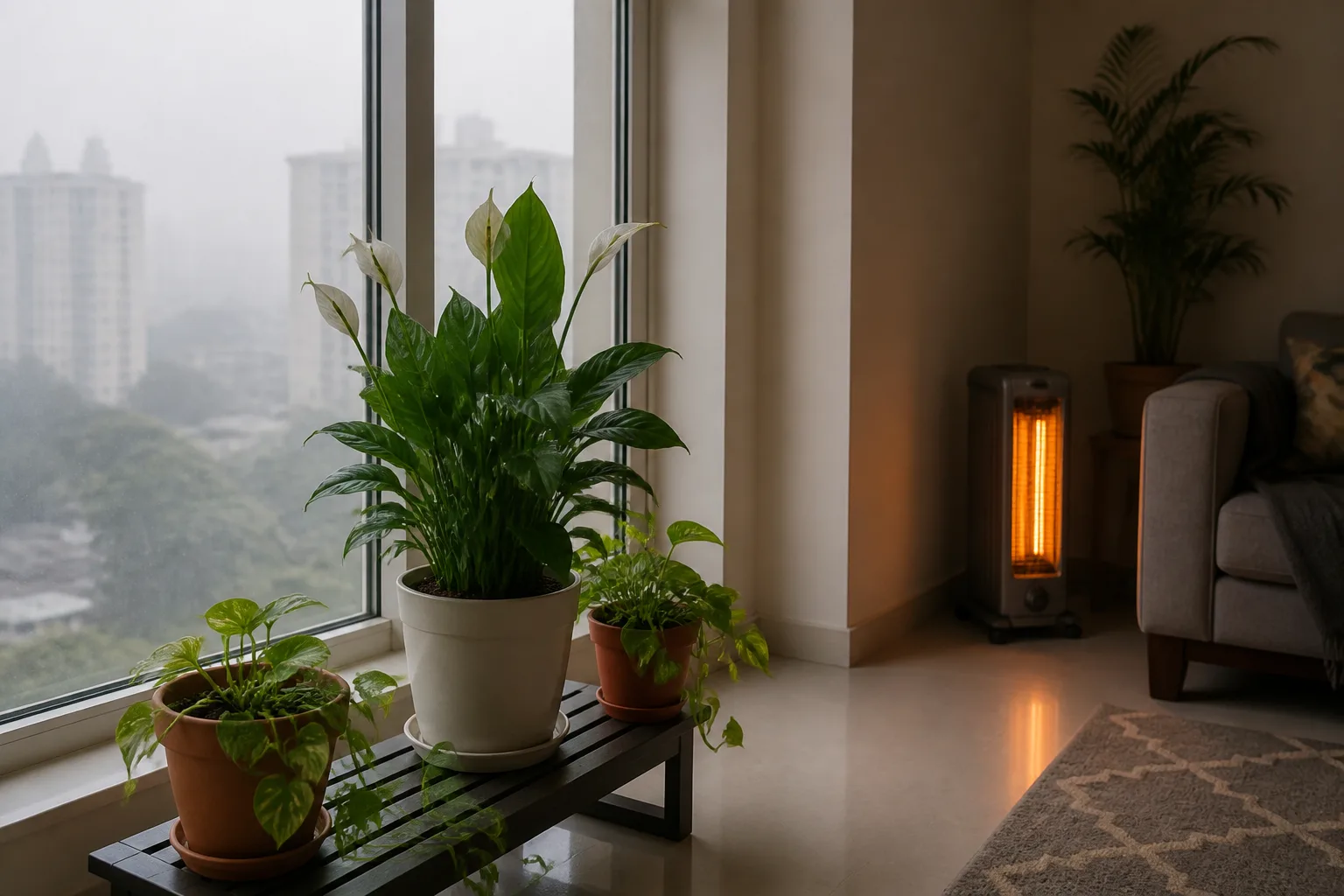
Last January in a Noida tower flat, a healthy pothos went from glossy to limp in ten days — not because the room was freezing, but because fog kept the curtains shut, growth stopped, and the owner kept watering every four days out of habit. The soil stayed cold and wet while a room heater dried the leaves on one side. That combination — slow metabolism, wet roots, dry air, and dim light — is how most North India winter houseplant deaths actually happen.
This page is the species guide for North India winter: which plants to buy and how they behave in fog, heater air, and cold waves across Delhi NCR, Punjab, Haryana, and western UP. It is not the season playbook. For watering calendars, fertilizer holds, and post-cold-wave ramp-up, use winter houseplant care in North India. For Delhi-only smog density, balcony orientation, and NCR neighborhood placement, use plants for Delhi winters — that guide deliberately avoids repeating this species list.
Who This Guide Is For (and Which Guide to Use Instead)
Use this guide if you are choosing plants for any North Indian plain city in winter and want a vetted shortlist with pet notes and balcony tolerance.
Use the winter care playbook if you already own plants and need month-by-month watering and shelter timing.
Use the Delhi winters guide if you live in NCR and need smog-window cleaning, west-rail fog behavior, or colony-specific placement — not another plant list.
Reviewed by Sai Ananth and Dr. Priya Menon. Picks were checked against IMD cold-wave criteria, NC State winter houseplant guidance, and Clemson indoor watering factsheets.
Why North India Winter Kills the Wrong Plants
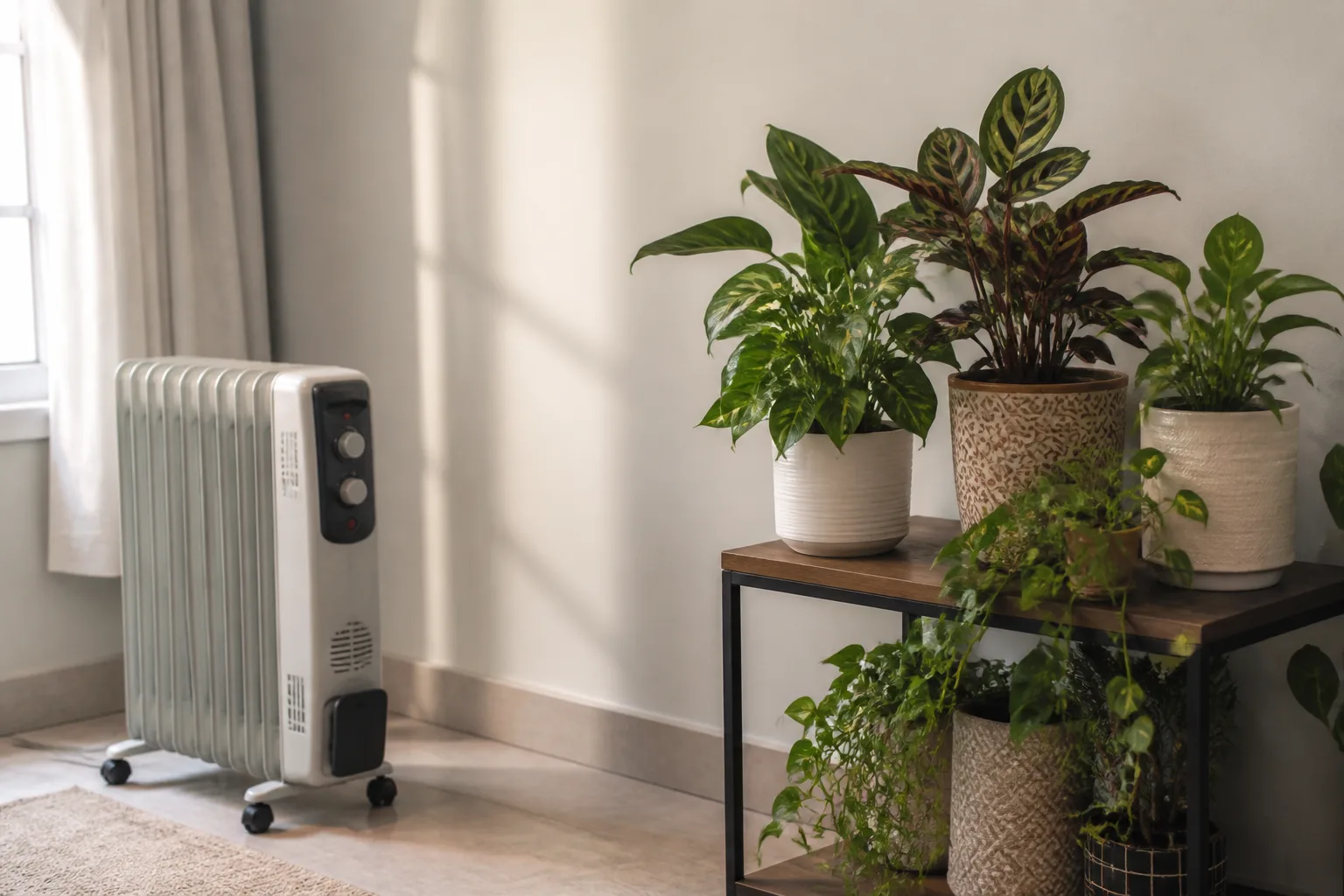
Temperate winter lists assume short days and dry central heating. North Indian flats add cold waves on the plains, particulate haze that keeps curtains shut, and room heaters that crisp leaf edges in one corner while window glass stays cold at night. Plants that demand constant warmth and high humidity — calatheas, maidenhair ferns, most orchids — struggle unless you run a humidified grow shelf.
The eight plants below tolerate cooler rooms, slower winter metabolism, and dry heater air. They are not frost-hardy outdoors; they are indoor survivors for the plains winter stack.
Quick Comparison: Eight Winter Survivors
| Plant | Best room | Winter watering (rule of thumb) | Heater tolerance | Fog-week light | Balcony sheltered | Pet safety |
|---|---|---|---|---|---|---|
| Snake plant | Bedroom, corridor | Every 3–4 weeks | Good | Low OK | Yes if nights >8–10°C | Toxic if chewed (ASPCA) |
| ZZ plant | Interior, office | Every 3–4 weeks | Good | Low OK | Sheltered only | Toxic if chewed |
| Jade plant | Sunny sill (not on glass) | Every 2–3 weeks | Good | Needs brightest spot | Yes if dry and draining | Mild toxicity |
| Cast iron plant | North room | Every 2 weeks | Moderate | Low OK | No | Non-toxic |
| Pothos | Shelf near window | Every 10–14 days | Moderate | Medium preferred | Bring in before cold wave | Toxic if chewed |
| Rubber plant | Living room | Every 10–14 days | Moderate | Medium–bright | Bring in | Mild toxicity (sap) |
| Aglaonema | Low–medium light | Every 10–14 days | Moderate | Low–medium OK | Bring in | Toxic if chewed |
| Spider plant | Hanging, bright spot | Weekly to 10 days | Moderate | Medium preferred | Bring in | Non-toxic to cats and dogs |
Intervals are rules of thumb — always finger-test soil and pot weight. Clemson Extension stresses that overwatering in slow-growth seasons kills more plants than underwatering because roots need oxygen.
Snake Plant — Bedroom and Corridor Default
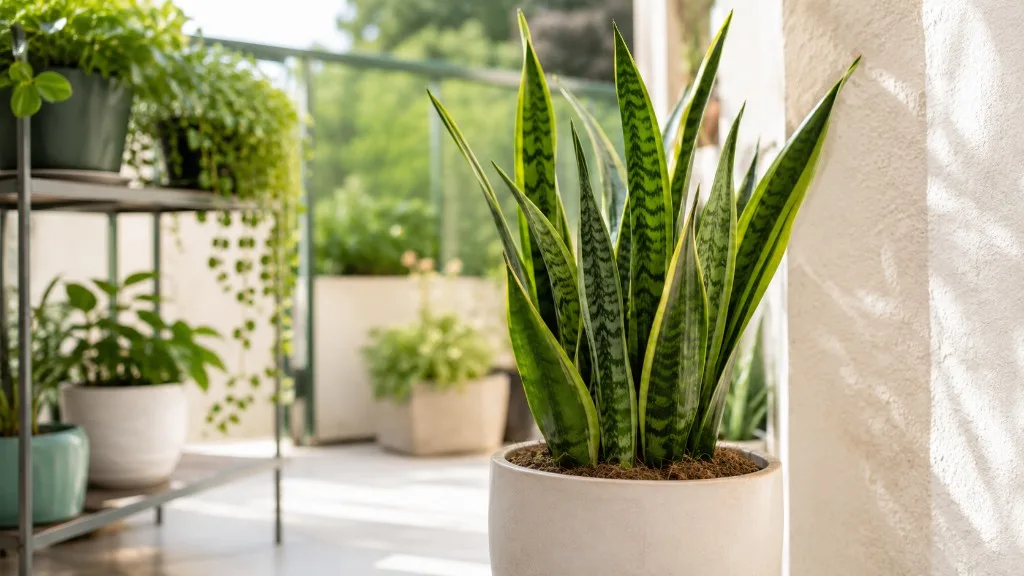
Snake plant stores water in thick leaves and slows growth sharply in winter. It handles the dry air of a heated Delhi bedroom better than almost any tropical. Water only when soil is dry several inches down — often three to four weeks in December–January. Pull pots six inches back from cold window glass on cold-wave nights; never place directly in a heater jet.
For deeper care: snake plant overview and snake plant watering.
ZZ Plant — Interior Low-Light Backup
ZZ plant’s rhizomes store water and tolerate the dim corridors common in fog weeks when even “bright” rooms feel medium-low. Resist watering when soil feels cool and damp — the classic winter kill is sympathy watering. Pair with low-light plants for Indian flats if tower shade is year-round, not just seasonal.
Jade Plant — Brightest Sill, Dry Roots
Jade plant wants the best available light during fog season but cold plus wet roots is the main winter killer. Place on the brightest window but move back from freezing glass when IMD cold-wave advisories forecast minimum temperatures 4–6°C or more below normal for the plains. Water sparingly; a jade in wet soil through a fog week rots faster than one left slightly dry.
Cast Iron Plant — True North Rooms
Cast iron plant is one of the few non-succulent options that stays green in genuinely low light through North India winters. Slower dry-down means checking soil before every water — not watering on a calendar left over from summer.
Pothos — Fast Green That Needs Light Management
Pothos survives winter but grows slowly without adequate light. Leggy growth toward the brightest strip signals you need a grow light, not more fertilizer. Do not overwater when leaves look dull — check soil first. In Old Delhi homes with heavier smog layers, wiping dust weekly matters as much as species choice.
Rubber Plant — Living Room Statement
Rubber plant drops lower leaves if light is too poor or if it sits in the heater-and-cold-window sandwich zone — warm dry air on one side, cold draft on the other. Missouri Botanical Garden environmental guidance notes that cold drafts and heat stress show up as leaf drop before root problems appear.
Aglaonema — Color Without Calathea Demands
Aglaonema handles lower winter light better than most colorful tropicals. Brown tips near heaters are an air-humidity problem, not thirst — see houseplant care for dry Indian climates for AC and heater tactics that apply in winter too.
Spider Plant — Pet-Safer Trailing Option
Spider plant is one of the safer picks for homes with cats or dogs that chew foliage. It needs more light than snake plant or ZZ plant to stay bushy through fog weeks — a covered east kitchen window often works better than a deep interior shelf.
Winter Placement Rules for North India
Window glass gets colder than the room. Pull pots six inches back on cold-wave nights or move tender leaves off the sill.
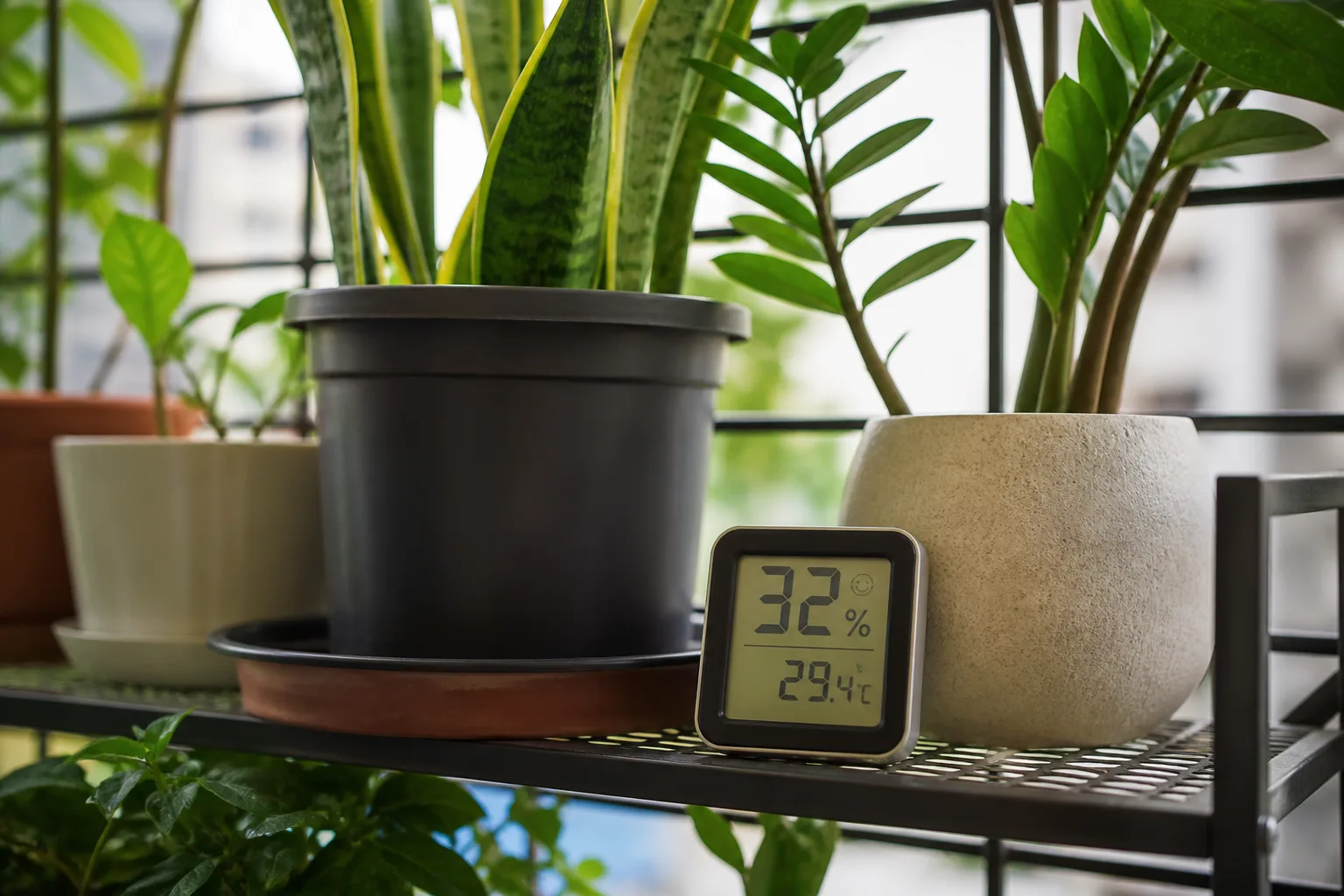
Heaters dry faster than misting fixes. Penn State Extension notes misting raises humidity only until droplets evaporate. Use a small humidifier or plant grouping for peace lily and ferns — or stick to the hardy list above.
Do not fertilize into dormancy. NC State winter houseplant guidance recommends holding fertilizer until growth resumes in late winter or spring.
Monsoon habits do not apply. If you adjusted watering during monsoon houseplant care in India, reverse gradually only when spring dry-down returns — not on a calendar date alone.
Balcony Cold-Wave Decisions
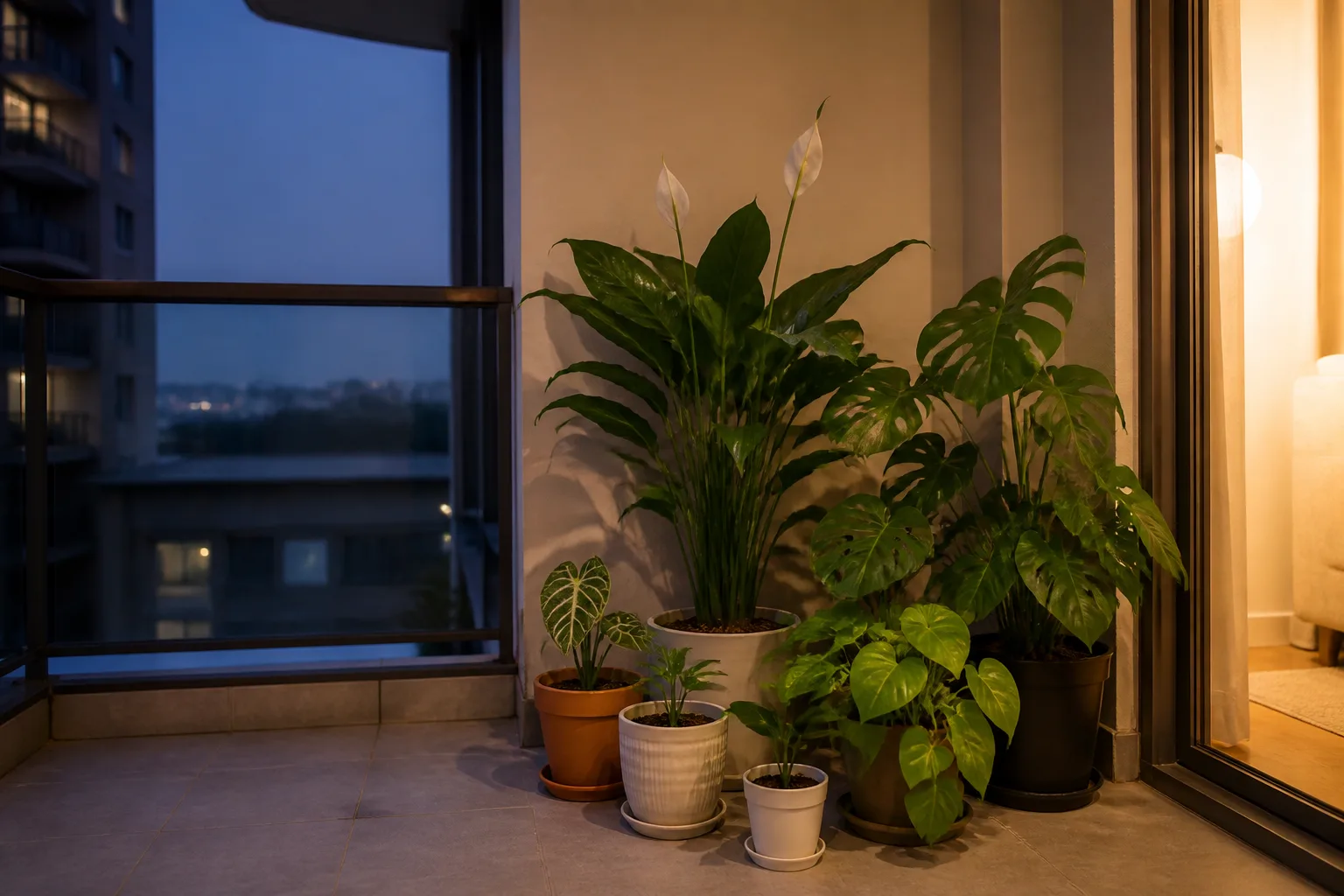
IMD defines a cold wave for plains stations when minimum temperatures fall significantly below normal — often associated with 4°C or lower in plains terms depending on region and departure from normal. Treat nights forecast below about 8–10°C as the signal to bring in pothos cuttings, hibiscus, and most flowering tropicals.
| Situation | Leave out (sheltered, draining) | Bring indoors |
|---|---|---|
| Established snake plant in corner | If nights stay mild | Before cold-wave alert |
| Jade in terracotta on east rail | Often yes | When glass-adjacent nights dip |
| Pothos, rubber plant, aglaonema | Rarely | Before first cold wave |
| Peace lily, ferns, cuttings | Never | As soon as nights cool |
Avoid daily moves between deep indoor shade and harsh afternoon sun — that shock shows up as yellowing within a week.
Grow Lights for Multi-Day Fog
When fog and smog keep curtains shut for several days, pothos and rubber plant may stretch or drop leaves. A full-spectrum grow light for 10–12 hours at 30–45 cm above foliage helps more than winter fertilizer. Snake plant and ZZ plant need less supplemental light. For a full buying framework, see grow lights complete guide for indoor plants.
Conclusion
North India winter rewards boring, hardy plants placed thoughtfully. Start with snake plant or ZZ plant for dim, dry rooms; add pothos or rubber plant where you have a brighter window; use spider plant if pets chew leaves. Match watering to soil moisture, not the calendar. For Delhi-specific placement and smog-window tactics, switch to plants for Delhi winters. For the full season playbook, use winter houseplant care in North India.
Related guides
- Winter houseplant care in North India — season playbook
- Plants for Delhi winters — Delhi placement and smog
- Houseplant care for dry Indian climates — heater and AC dry air
- Low-light plants for Indian flats — tower shade year-round
- Gardening in India — regional hub