Best Plants for Delhi Winters: Fog, Smog, and Heater Placement
Delhi winter plant placement — fog-week windows, smog dust, heater jets, NCR balcony shelter, and when to use the North India species guide instead.
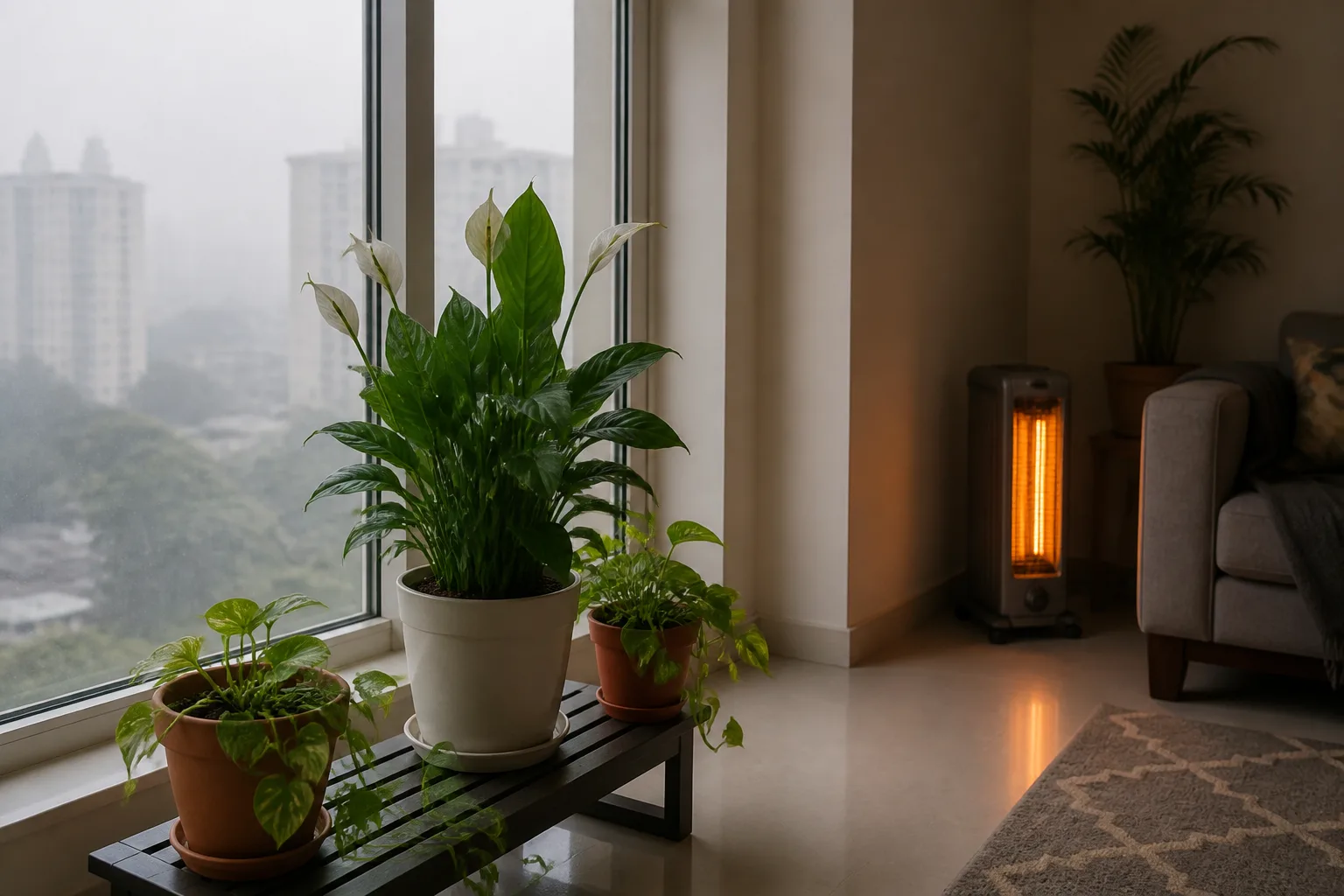
A Gurgaon high-rise flat can lose usable window light for nine mornings straight in January — not because the building faces north, but because fog and smog keep curtains closed and particulate dust coats every leaf by mid-week. The pothos did not fail because Delhi picked the wrong species; it failed because it sat between an oil room heater and a single-glazed west window while the owner kept a summer watering schedule.
This is a Delhi placement guide, not a plant shopping list. For which species tolerate North India winter indoors, use houseplants in North India winter — that page owns the eight-plant comparison table with pet and balcony columns. For month-by-month watering and fertilizer holds, use winter houseplant care in North India. This page answers: where to put plants in Delhi NCR fog, smog, heater air, and cold-wave weeks.
Reviewed by Sai Ananth and Dr. Priya Menon. Shelter timing references IMD cold-wave FAQ criteria; humidity notes follow Penn State Extension houseplant humidity guidance.
What This Delhi Guide Covers (and What It Skips)
| Question | Read this Delhi page | Read the species guide instead |
|---|---|---|
| Where should my rubber plant sit in fog week? | Yes | — |
| Which eight plants survive North India winter? | Link out | North India winter picks |
| How much less should I water in January? | Brief notes | Winter care playbook |
| Smog-layer Old Delhi vs open Noida rail | Yes | — |
Skipping a second species list avoids cannibalizing the regional guide and keeps this URL useful for “Delhi winter balcony” and “Delhi fog plants” intent without duplicating paragraphs.
Delhi Winter Microclimates Inside NCR
Old Delhi and dense central colonies — multi-day smog layers block light even when fog lifts. Leaves collect fine dust that acts like a second curtain. Wipe foliage weekly; do not assume a south window delivers “bright indirect” if panes are filmed.
Noida and Greater Noida towers — lower floors lose hours to neighboring tower shade plus fog. Upper floors get more light but colder night exposure on glass-adjacent sills.
Gurgaon and Dwarka west-facing rails — afternoon sun can still warm a balcony pocket on clear January days while nights plunge. The dangerous zone is a pot against the exterior wall that cools after sunset.
South Delhi leafy colonies — tree shade plus fog pushes medium-light plants into low-light behavior. Pothos and rubber plant need grow-light backup sooner than the same species in a sunnier Noida flat.
Which Plants to Buy for Delhi Winter
Start with the vetted shortlist on houseplants in North India winter. For Delhi specifically:
- Bedrooms with 16-hour heaters: snake plant, ZZ plant
- Living rooms with one bright fog-week window: rubber plant, pothos
- Pet-chewing households: spider plant, cast iron plant (see species guide pet column)
- Sheltered east balcony corners: jade plant, established snake plant when nights stay above ~8–10°C
Do not buy calatheas or maidenhair ferns for a Delhi bedroom with a blower heater unless you plan a humidified grow shelf.
Fog-Week Window Strategy
When IMD dense-fog advisories run multiple days:
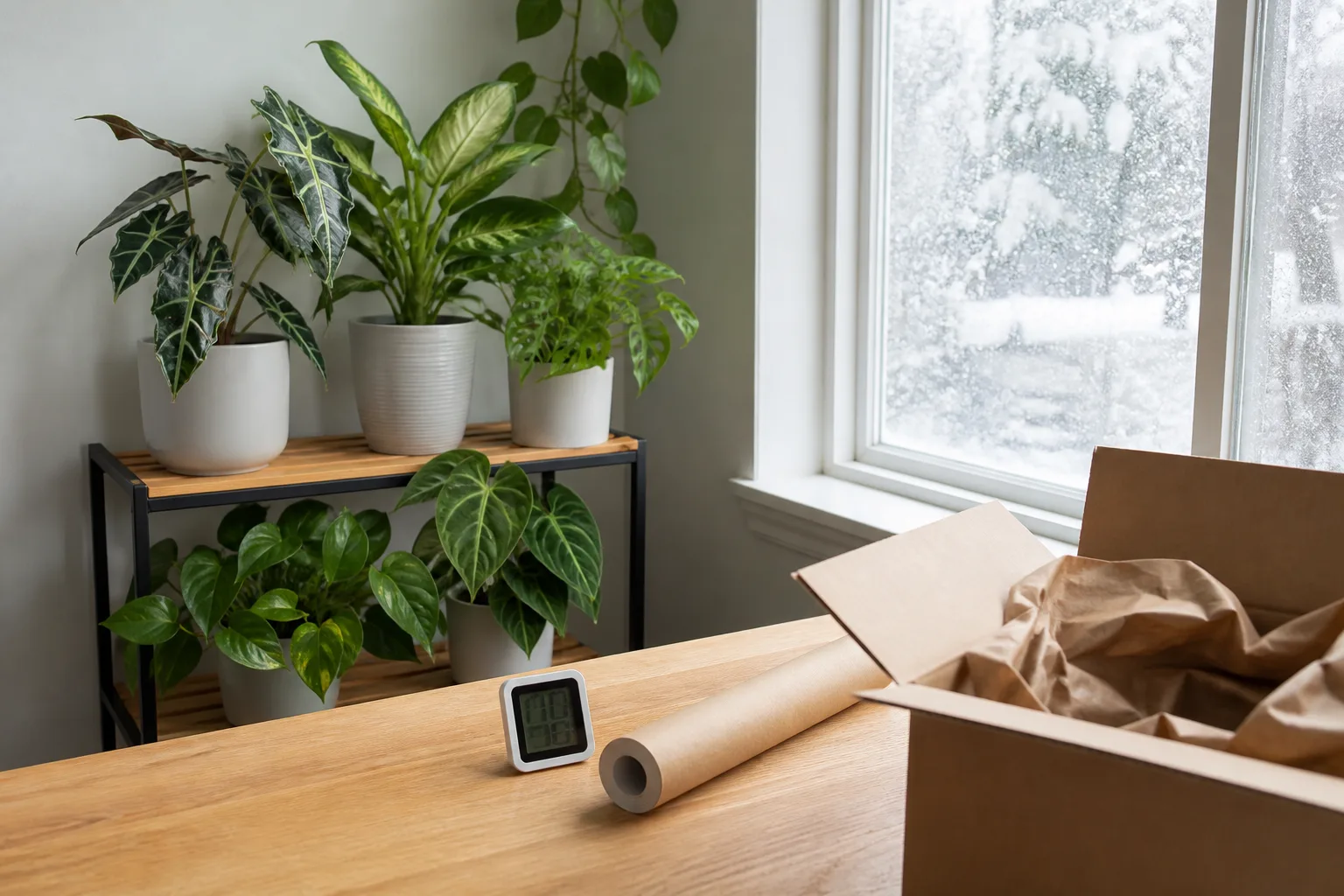
- Open curtains fully during the brightest two-hour window — even grey light beats closed drapes.
- Rotate pots 90° every four days so one side does not permanently face away from the light strip.
- Move the thirstiest foliage (pothos, rubber plant) to the brightest sill; leave snake plant and ZZ plant in place.
- Stop sympathy watering — fog weeks slow evaporation. Clemson Extension warns that cold, wet soil suffocates roots.
Smog, Dust, and Leaf Cleaning
Delhi NCR particulates settle on leaves and reduce photosynthesis exactly when light is already limited. Rinse hardy leaves (rubber plant, pothos, snake plant) with lukewarm water monthly in peak smog weeks. Avoid leaf shine sprays — they trap dust.
For dry heater corners after cleaning, see houseplant care for dry Indian climates.
Heater Jets and the Cold-Glass Sandwich
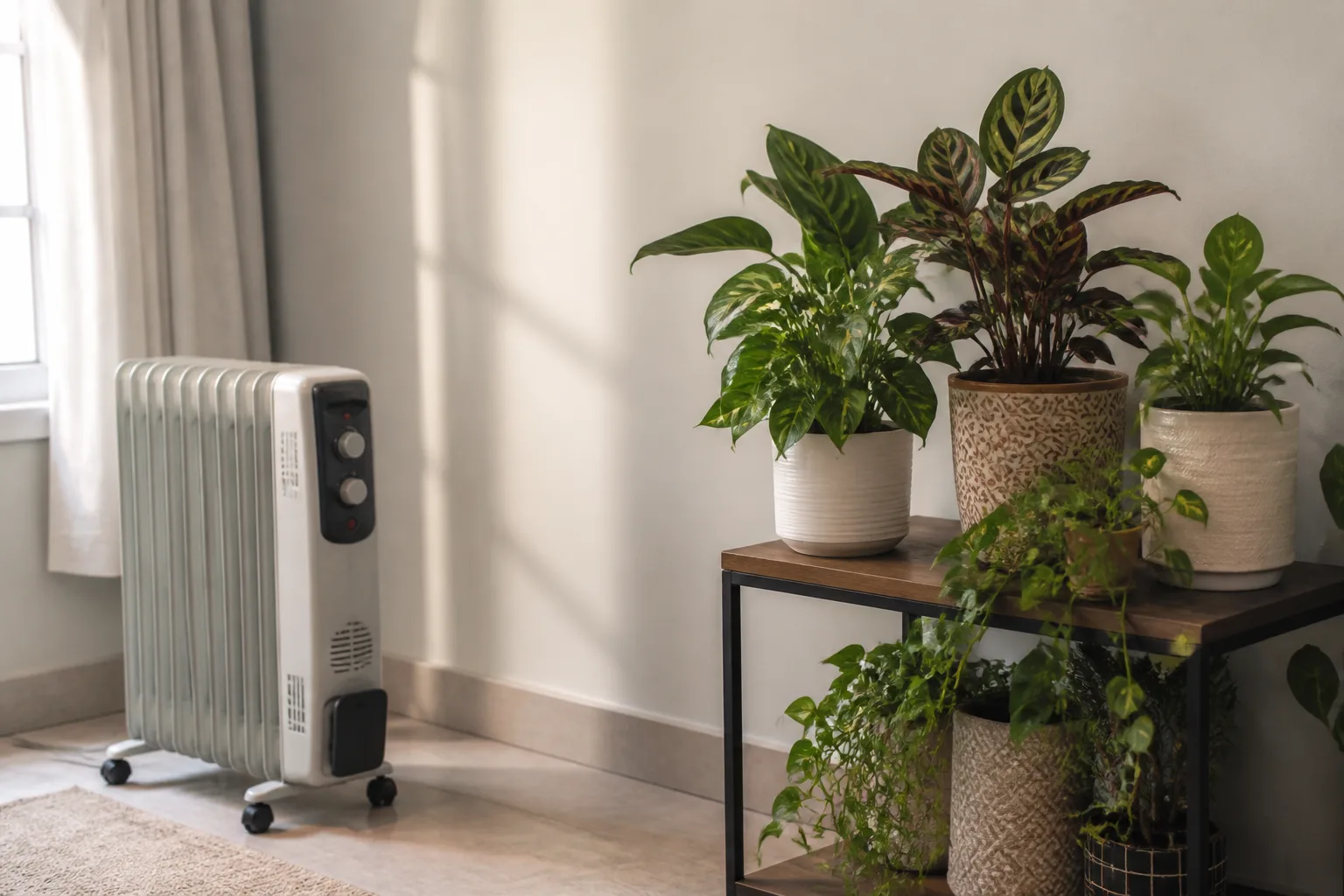
Missouri Botanical Garden lists cold drafts and heat stress among the top indoor environmental killers. In Delhi flats the worst spot is simultaneous cold window glass and a room heater or oil blower within one meter.
Fix: Pull pots at least 15–20 cm back from glass on cold-wave nights. Never place foliage in the direct path of a blower. If brown tips appear on one side only, it is almost always air movement, not underwatering.
Delhi Balcony Orientation in Winter
| Exposure | Winter behavior | Placement note |
|---|---|---|
| East | Morning sun, cold nights | Best winter balcony pocket for jade, tulsi |
| West | Afternoon warm, glass-adjacent cold | Pull pots inward after 4 PM on cold-wave days |
| North | Low light | Use for dormant succulents only if covered |
| South | Brightest when air clears | Watch smog film on leaves |
Match rail picks to west-facing balcony plants in India if your Delhi flat is west-heavy year-round.
Cold-Wave Shelter Timing for NCR Balconies
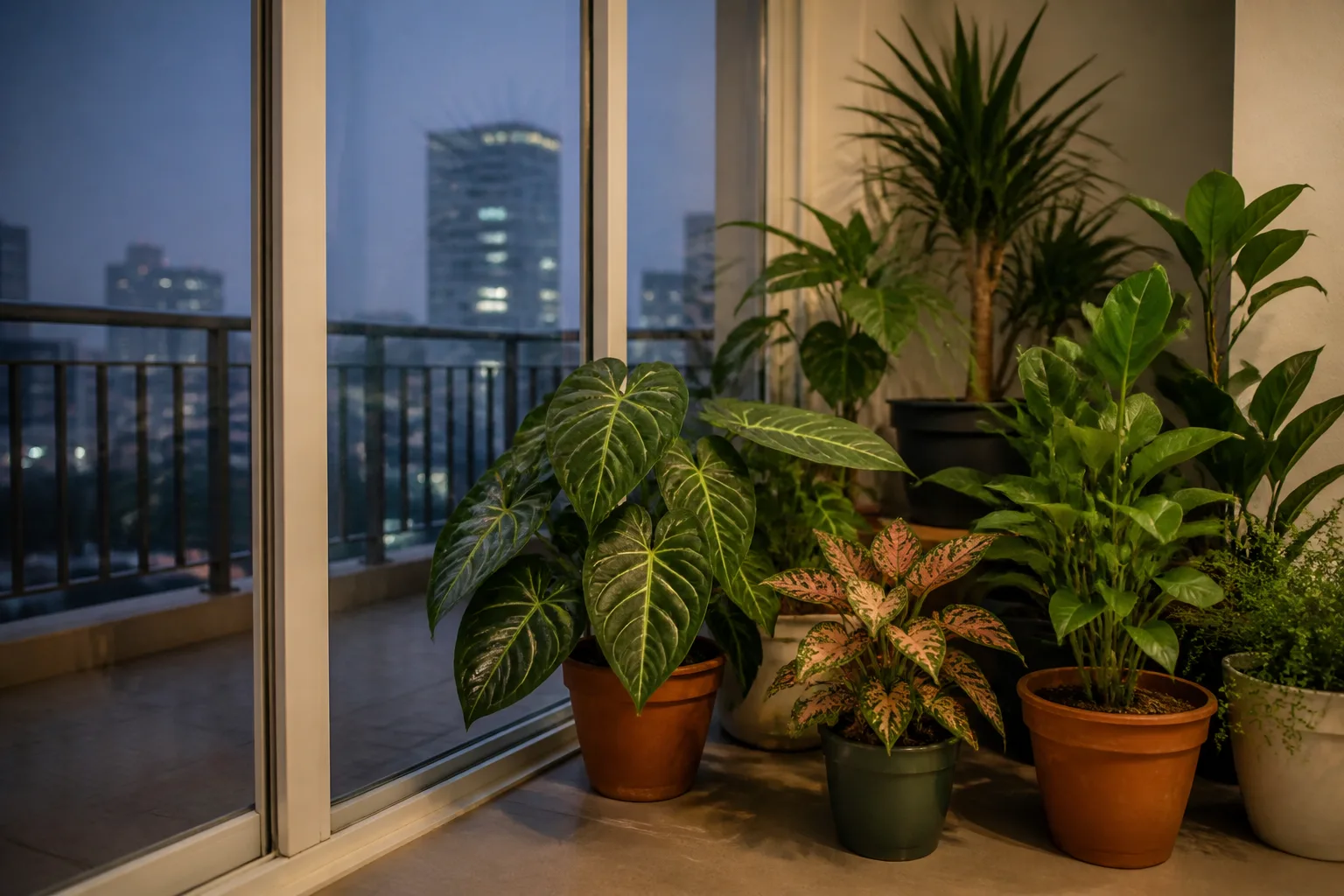
IMD cold-wave guidance matters for shelter timing more than a casual “feels cold” guess. When minimum temperatures are forecast well below normal — often associated with plains nights near 4°C or lower in cold-wave terminology — bring in:
- All pothos cuttings and trailing tropicals
- Peace lily, ferns, hibiscus in small pots
- Anything in thin plastic on an exposed west rail
May stay out in draining terracotta: established jade and snake plant in a covered east corner when nights stay above about 8–10°C. Empty saucers — wet cold roots rot faster than dry cold.
Grow-Light Shelf Setup for Fog Streaks
If stretchy pothos or leaf drop on rubber plant appears during a two-week fog streak, add a full-spectrum LED 10–12 hours daily at 30–45 cm above foliage. This beats winter fertilizer. See grow lights complete guide for indoor plants for distance and timer setup. Snake plant and ZZ plant rarely need supplementation.
Watering Rhythm in Delhi Fog Weeks
Finger-test the top inch. Many Delhi tropicals shift from every four days in May to every 10–14 days indoors in January. Succulents on sheltered balconies may need water only every three weeks. Pot weight is more reliable than calendar apps when fog keeps soil cool and damp.
When Delhi Winter Ends (and What Changes)
Do not ramp watering on a fixed February date. Resume summer frequency only when:
- Pots dry noticeably faster for two consecutive weeks
- New growth appears on pothos or rubber plant
- Night temperatures stabilize and cold-wave alerts stop
Link forward to plants for Delhi summers when west-rail heat returns.
Conclusion
Delhi winter success is placement and timing more than species novelty. Use the North India winter species guide to choose plants, then apply Delhi rules: clean smog dust, avoid heater-and-glass sandwiches, shelter balconies before cold waves, and add grow lights during fog streaks. For the full seasonal playbook, keep winter houseplant care in North India bookmarked.
Related guides
- Houseplants in North India winter — species picks and comparison table
- Winter houseplant care in North India — season playbook
- Houseplant care for dry Indian climates — heater dry air
- Plants for Delhi summers — hot-season counterpart
- Gardening in India — regional hub