Houseplant Care for Dry Indian Climates
Dry Indian climates and AC rooms often sit under 30–40% RH. Learn soil-check watering, hygrometer targets, coolers vs mist, and hardy picks.
The Crispy-Tips Trap in Dry Indian Homes
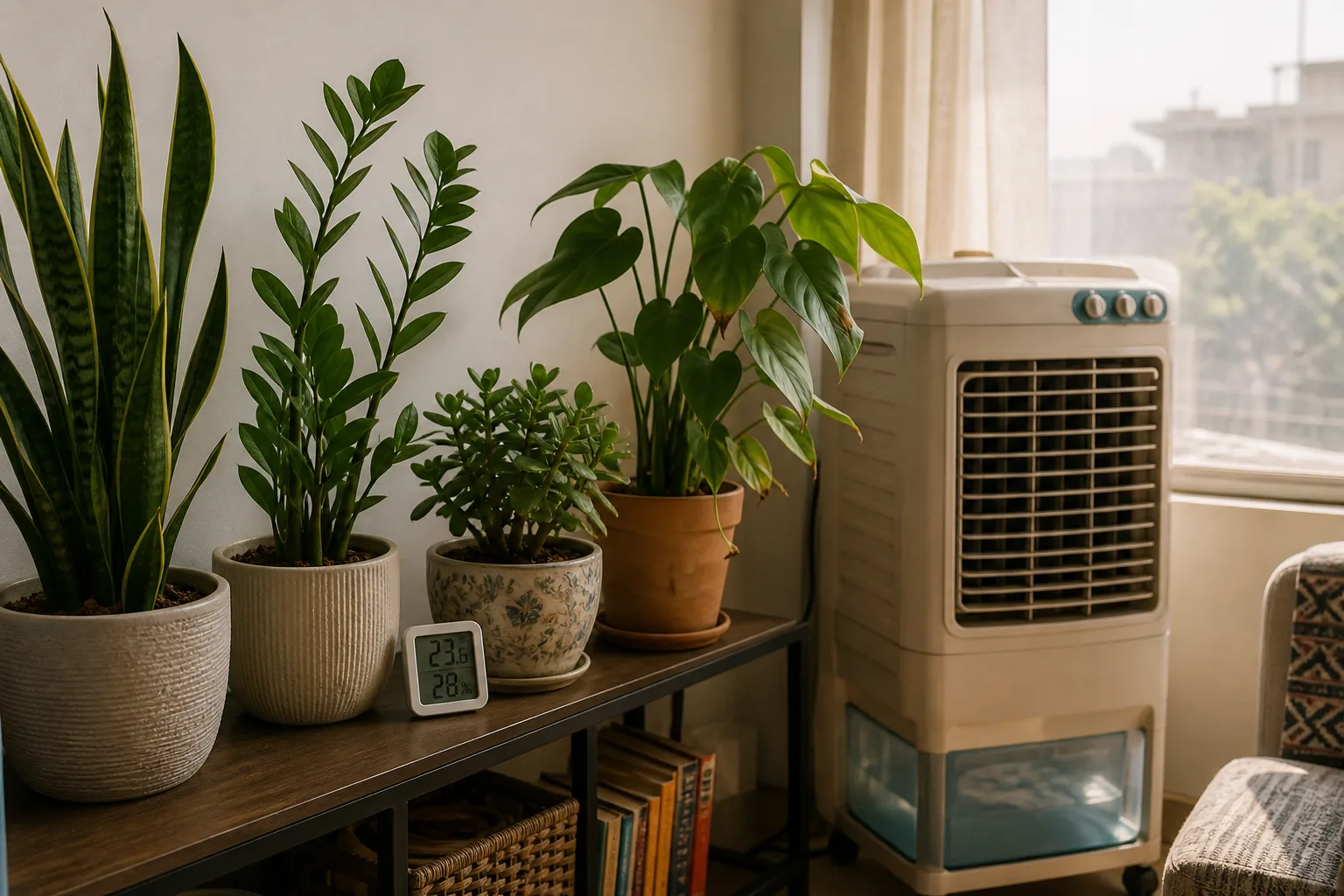
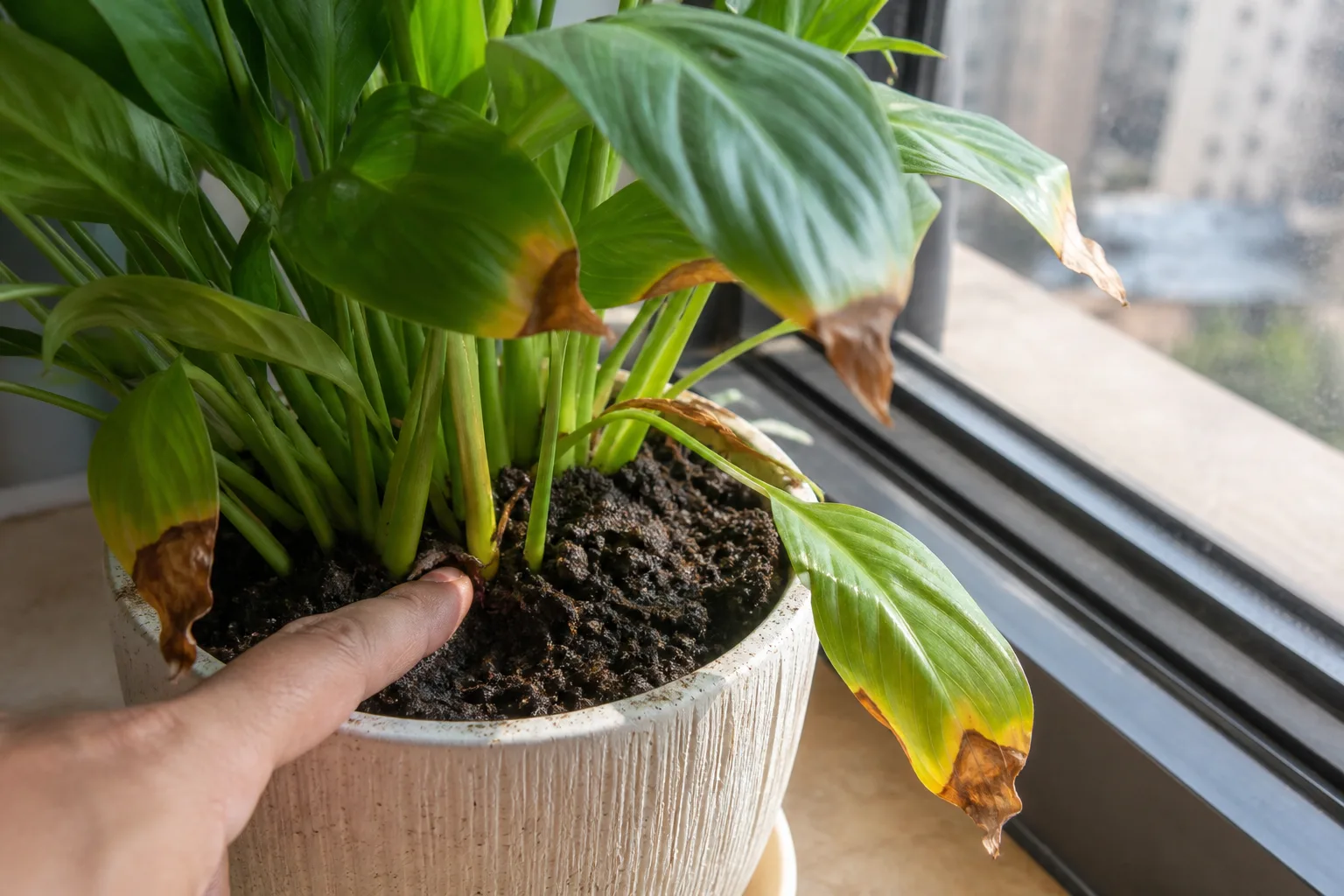
In a Delhi NCR AC bedroom in May, a peace lily kept crisping at the tips even though the 14 cm plastic pot still felt heavy three days after a thorough soak. The hygrometer on that shelf sat near 28–32% RH for most of the afternoon while the mix stayed cool and dark halfway down. The plant was not thirsty at the roots. The air was stripping water from the leaves faster than the pot could usefully supply it — and every “rescue” watering made oxygen scarcer for the roots.
That mismatch is the dry-India problem in one scene. Hot-dry belts, composite cities between rains, desert-cooler seasons, and sealed AC flats all push the same leaf into high vapor-pressure-deficit stress. This guide is the watering-and-humidity playbook for those homes. It is not monsoon houseplant care in India, not coastal humidity and salt-air care, and not a full eight-plant AC shortlist. For broader India picks, start with indoor plants for India.
What “Dry Indian Climate” Means Indoors
Outdoor climate labels matter less than what your plant shelf experiences. A Jaipur terrace in May, a Delhi bedroom with a heater in January, and a Bengaluru flat with 16-hour AC can all create the same leaf-edge burn. The shared factor is dry air pulling moisture from foliage faster than roots can refill it — even when the mix is not bone dry.
Indoor plants from rainforest or understory habitats did not evolve for that stack. Arid-adapted species shrug; calatheas and maidenhair ferns do not. Your job is not to recreate a cloud forest in every room. Keep RH out of the danger zone for the plants you keep, water by root need instead of air panic, and choose species that match the home you already have.
Hot-Dry, Composite, and AC-Dried Rooms
India’s hot-dry belts — much of Rajasthan, Gujarat, western Madhya Pradesh, and parts of the Deccan in the pre-monsoon stretch — combine heat with low outdoor humidity. Composite cities (Delhi NCR, inland Maharashtra, many north and central towns) swing: dry and dusty for long stretches, then humid when monsoon arrives. Coastal metros are usually the opposite problem, but their AC bedrooms can still behave like mini deserts.
NZEB India’s evaporative cooling notes explain why desert coolers are common in hot-dry Indian households: evaporative cooling works best where humidity is already low. That same physics is why plant shelves near a running cooler often feel kinder than shelves next to a closed AC vent.
| Room type | What the shelf usually feels like | First care move |
|---|---|---|
| Hot-dry balcony / open west window | Fast soil dry-down, leaf scorch risk, dust on foliage | Shade cloth or deeper setback; water by weight; rinse dust |
| Evaporative-cooler room | Cooler air, modest RH bump, slower pot dry-down | Keep plants in the zone; still soil-check before watering |
| Sealed AC room | Comfortable for people, harsh for thin-leaved tropicals | Hygrometer first; humidifier only for sensitive shelves |
How Low Humidity Stresses Houseplants
Low RH does not always look like “thirst.” The soil can still feel moist while leaf margins burn. Pouring more water into an already damp pot makes crispy-tip plants worse: roots lose oxygen, then the plant wilts and the edges keep browning.
Penn State Extension notes that ASHRAE recommends indoor relative humidity between 30% and 60%, and that heated winter homes can fall below 30%. Most houseplants benefit from humidity above a typical dry heated home; cacti and many succulents are the usual exceptions. Use that band as a home-health and plant-survival frame, not a promise that every tropical wants 70% RH all day.
Air Stress vs Soil Stress
| Signal | Points to air stress | Points to soil stress |
|---|---|---|
| Leaf tips/margins | Brown, thin, papery while pot still heavy | Brown with mix bone-dry or rock-hard |
| Pot weight / finger test | Mix still cool and moist mid-depth | Mix light, dry to the first joint or deeper |
| New growth | Dull, stalled despite decent light | Wilting that firms after a thorough soak and drain |
| First fix | Raise local RH / move off AC blast | Water thoroughly, then empty the saucer |
Classic dry-air signs include brown or translucent leaf tips, inward curl, dull new leaves, and growth that stalls even in good light. Thin-leaved plants (ferns, calatheas, peace lilies) show it first. Thick-leaved ZZ plants and snake plants may look fine until spider mites or chronic underwatering join the party. For symptom triage beyond humidity, keep crispy leaves on plants open as a companion.
Spider Mites Love Arid Rooms
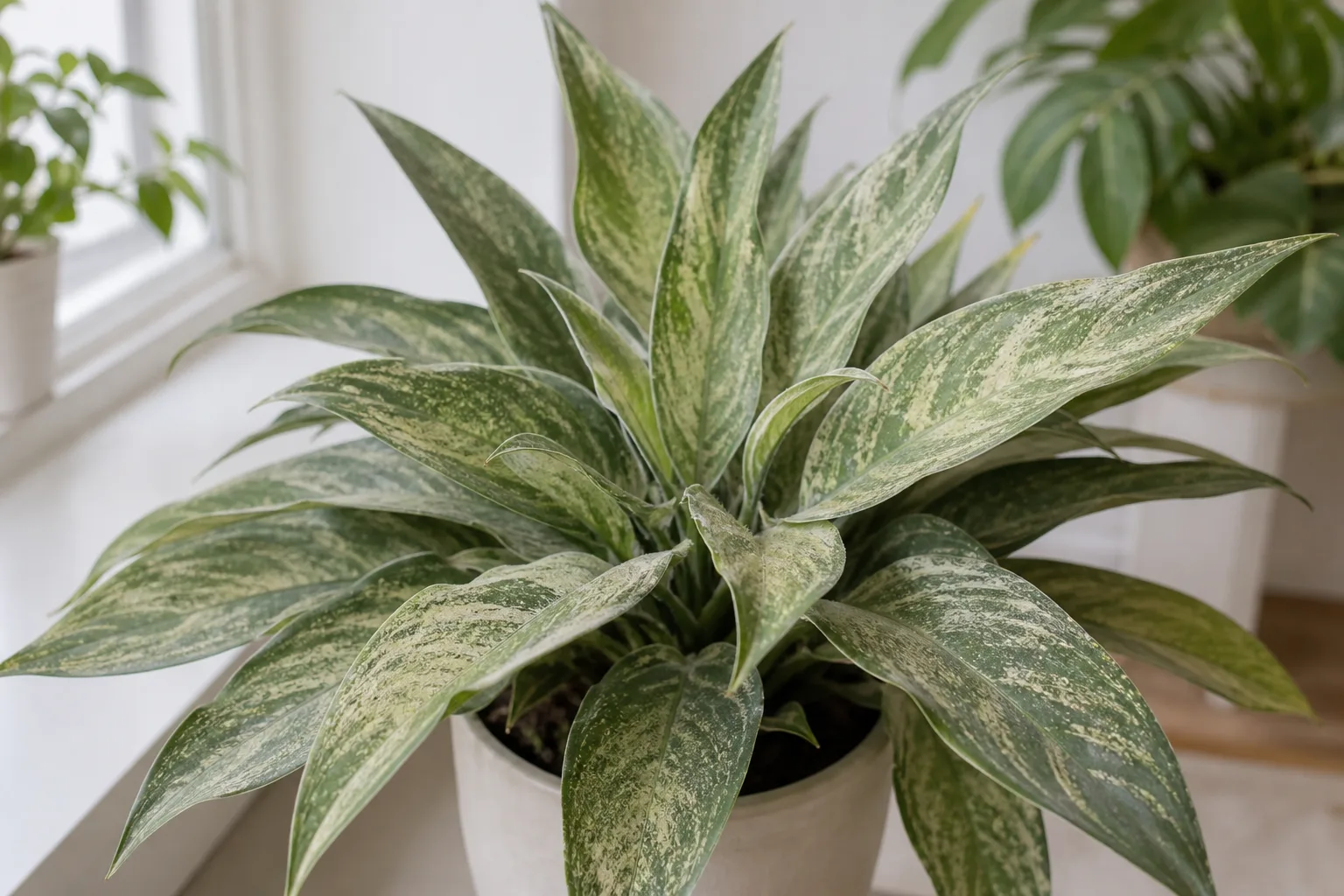
Colorado State Extension is blunt: dry conditions greatly favor spider mites. They feed more when humidity is low, many natural enemies prefer more humid air, and drought-stressed plants can become more nutritious to mites. Twospotted spider mite is also the key species on houseplants.
In dry Indian rooms, check the undersides of leaves weekly for fine webbing and salt-and-pepper stippling — especially on pothos, hibiscus, croton, and anything near a heat or AC blast. Raising RH into the mid band, rinsing foliage, and avoiding pesticide panic that kills predators are more durable than endless chemical cycles. When you already see webbing, hand off to spider mites on houseplants rather than inventing a spray stack on this page.
Measure Before You Fix: Hygrometer Targets
Buy a cheap digital hygrometer and put it at shelf height near the foliage, not on sunny sill glass and not inside the humidifier plume. Log morning and evening readings for a few days. Numbers tell you whether you have a dry-air problem, a watering problem, or both.
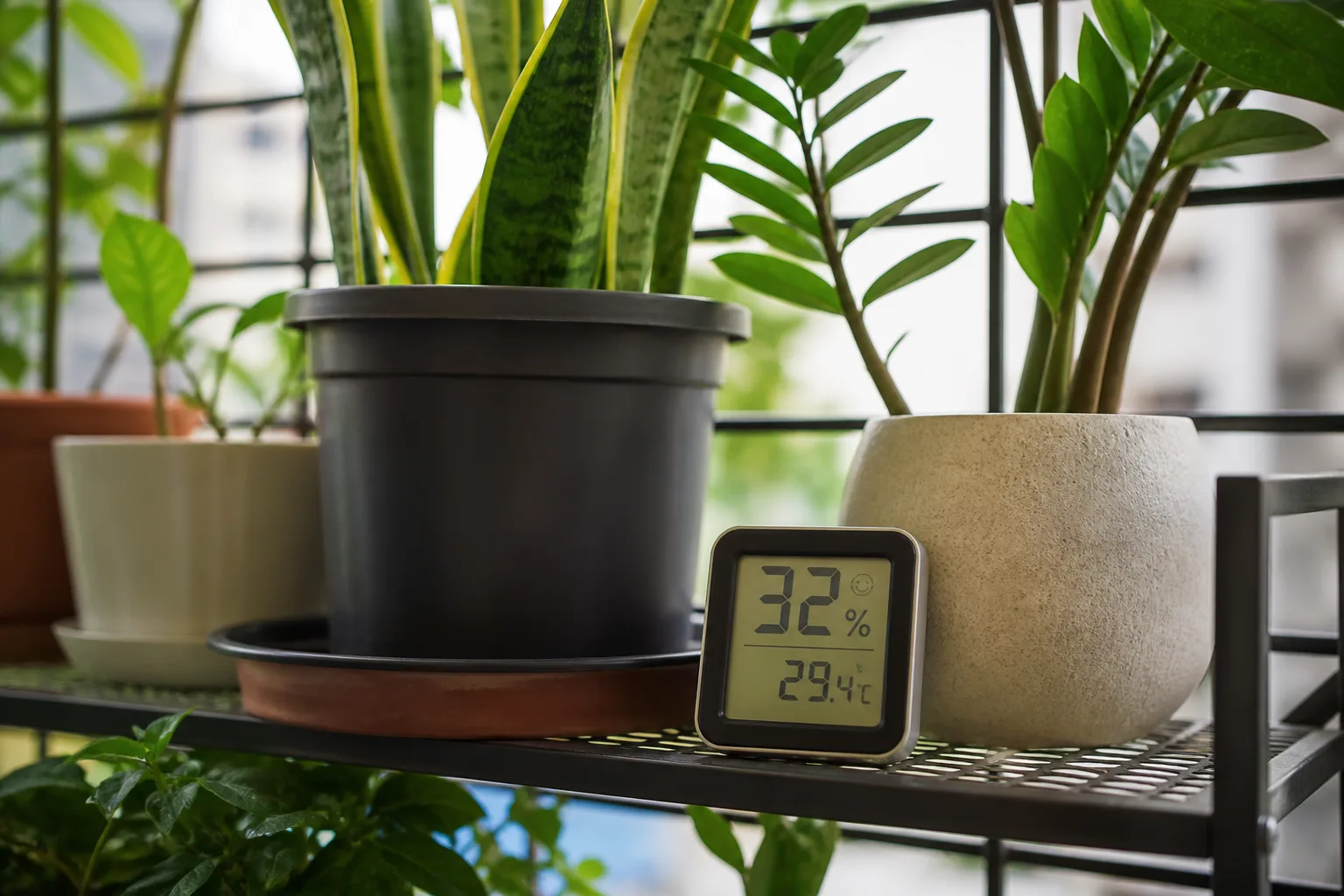
| Shelf RH (sustained) | What it usually means | First move |
|---|---|---|
| Below ~30% | Harsh for most tropicals; mite-friendly | Local humidifier or cooler-room grouping; stop relying on mist |
| ~30–40% | Survival for tough plants; stress for ferns/calatheas | Raise RH for sensitive shelves; keep hardy picks elsewhere |
| ~40–55% | Comfortable compromise for mixed collections | Maintain; watch mold only if airflow is zero |
| Above ~60% for long stretches | Mold and fungus risk rises in stagnant rooms | Ventilate; pause humidifiers |
For household mold and indoor moisture, US EPA mold guidance frames sustained high indoor moisture as a problem and commonly pairs comfort targets around 30–50% RH with caution against prolonged readings much above 60%. In dry Indian climates you will fight the bottom of the band more often than the top — until monsoon arrives and the whole playbook flips. North-India heater dryness in fog weeks is a close cousin of May AC dryness; use winter houseplant care in north India when cold nights and heaters join the stack.
Watering Rules When Air Is Dry but Roots Still Rot
Dry air does not mean “water every day.” It means leaves may need higher ambient humidity while roots still need oxygen between drinks. Clemson Extension states the main cause of death in potted plants is over-watering: roots need water and oxygen, and waterlogged media invite decline. Symptoms of over- and underwatering can look similar, which is why calendar watering fails in AC flats.
Check Soil, Not the Calendar
Use Clemson’s practical checks: finger test to the first joint, pot weight, and soil color change as the mix dries. When you do water, soak until water leaves the drainage holes, then empty the saucer — do not let the pot sit in runoff. Warm, dry, sunny placements dry faster than cool, low-light corners; the same species may need water twice as often on a west sill as in a shaded hallway.
In evaporative-cooler rooms, dry-down often slows compared with sealed AC rooms because air is cooler and a bit moister. Re-check intervals instead of copying a neighbour’s “every Sunday” rule. For technique depth, use how to water indoor plants the right way.
Terracotta, Plastic, and Room Type
Unglazed terracotta loses water through the walls, so it suits growers who overwater or keep moisture-loving mixes in humid rooms. In hot-dry Indian apartments, terracotta can dry too fast for thin-leaved tropicals — you will water more often, and salt crusts show up sooner with hard water. Plastic and glazed pots hold moisture longer and often suit ZZ plants, snake plants, and busy schedules.
Match pot to plant and room:
- Succulents / adenium / jade — terracotta or very free-draining mix; long dry-downs; bright balcony or sunroom
- Pothos / aglaonema in AC rooms — plastic is fine if you still wait for partial dry-down
- Near desert cooler — expect slower drying; downsize water volume before you stretch the calendar blindly
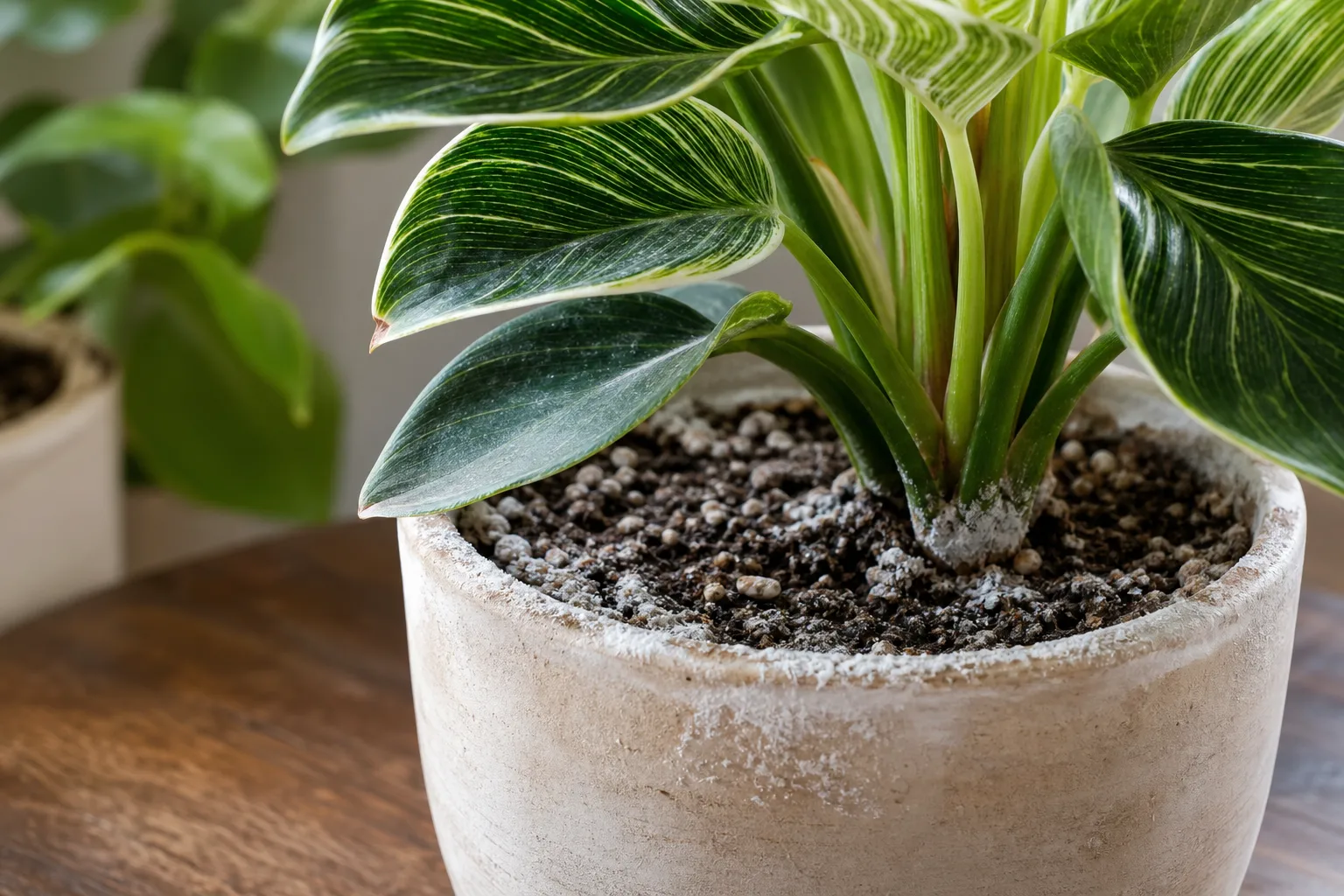
Hard water leaves white crust on rims and mix surfaces faster in arid flats where you water more often and evaporation is high. Leach occasionally with a thorough soak and emptied saucer, cut feed if crust builds, and use hard water and houseplants when tips brown with visible mineral rings — that is not the same as dry-air tip burn alone.
Raising Humidity Without Creating Mold
Raise humidity locally for the plants that need it. Do not try to turn a whole dry flat into a cloud forest. Grouping, a small humidifier on a humidistat, bathroom/kitchen placement for humidity lovers, and smarter use of evaporative cooling beat daily misting.
Humidifiers vs Pebble Trays vs Misting
Penn State Extension is clear that misting’s humidity bump lasts only until droplets evaporate — often minutes — so even daily misting does not raise lasting RH. Wet pebble trays sound helpful, but evaporated moisture diffuses into the whole room and rarely moves the hygrometer. A portable humidifier is the tool that actually changes room or zone RH.
Decision shortcuts for dry Indian homes:
- RH stuck under ~35% and you keep calatheas/ferns — humidifier near the shelf; see pebble tray vs humidifier and humidifier placement for houseplants
- Mixed tough plants only — improve grouping and placement; skip buying gear
- Pebble tray — fine as a drip saucer with a tiny local bump, not a desert-climate cure
- Misting — optional morning leaf rinse for dust/mites, not a humidity strategy
When you need the full humidity decision tree, use the houseplant humidity guide. Watch for the opposite failure mode if you overshoot and invite mold in a sealed corner.
Evaporative Coolers as Accidental Plant Allies
Desert coolers (evaporative coolers) lower air temperature by evaporating water into dry air. NZEB notes they are most effective in hot-dry climates and can also help in composite climates during early summer when temperatures are high and humidity is still low. For plants, that often means a modest RH lift plus cooler leaf temperatures — helpful for tropical foliage that would otherwise fry next to an AC vent.
Use the cooler as a zone, not a miracle:
- Keep sensitive plants in the cooler’s airflow path without blasting wet pads onto leaves
- Clean tanks and pads so you are not aerosolizing algae and mineral sludge onto foliage
- Still water by soil checks — cooler rooms can stay moist longer at the root zone
- When monsoon humidity rises, evaporative cooling loses efficiency; switch toward a wet-season dry-down mindset (see Related guides)
In one Jaipur living room with a desert cooler running through a May afternoon, shelf RH near the plant bench sat roughly 8–12 points higher than a sealed AC bedroom down the hall on the same day, while a plastic ZZ pot stayed heavy about a day longer than its AC-room twin. Treat that as a placement heuristic, not a lab result — your hygrometer and pot weight still win.
Hardy Plant Picks for Dry Indian Homes
If your hygrometer lives in the 20s and 30s for months, plant selection beats equipment. Prefer species that evolved for arid or seasonally dry habitats, or tough tropicals that forgive average home air. For desert-style containers and succulent culture detail, pair this section with indoor succulent care.
These tolerate low RH and punish overwatering more than dry air:
- ZZ plant — Clemson HGIC notes arid Eastern African woodland origins, water-storing rhizomes, and comfort with regular indoor humidity; water only after the mix fully dries. Strong sealed-AC pick.
- Snake plant / Sansevieria Laurentii — classic dry-home survivors; Clemson flags snake plant as especially prone to rotting by over-watering
- Jade plant — thick leaves store water; bright light and long dry-downs beat frequent sips
- Aloe vera — arid-air friendly; prioritize drainage and sun over humidity gadgets
- Adenium (desert rose) — true dry-climate showpiece for bright balconies and sunrooms; hates wet feet and dim AC corners
- Haworthia — compact, bright-shade tolerant, wants gritty mix that dries
- Portulaca — heat-and-sun balcony energy; poor fit for dark AC corners
Tough tropical backups that handle ordinary dry rooms better than diva foliage:
- Golden pothos / money plant and pothos — thin leaves still crisp in extreme AC blast, but they recover faster than calatheas when RH sits near 35–45%
- Cast iron plant — slow, shade-tolerant, unfussy about average humidity
- Aglaonema — better in bright indirect AC rooms than in deep shade plus drought
Skip stuffing a dry flat with maidenhair ferns and prayer plants unless you commit to a humidified shelf. If you want low-light survivors for dim Indian flats, use low-light plants for Indian flats and still apply this page’s dry-air watering rules.
First-Hand Notes From Dry Weeks
These are editorial apartment observations, not controlled trials. Use them as calibration cues for your own hygrometer and pot logs.
- Delhi NCR AC bedroom (May, plastic 14 cm peace lily): afternoon shelf RH often 28–34%; pot still heavy on day three after a full soak while tips kept browning — humidity and placement fix first, not more water.
- Jaipur cooler living room vs sealed AC bedroom (same May week): cooler-zone shelf RH roughly 8–12 points higher; plastic ZZ dry-down about one extra day slower in the cooler room than the AC twin.
- Bengaluru west-sill terracotta jade (pre-monsoon hot spell): unglazed 12 cm pot went from heavy to light in about two days on the sill, while the same cultivar in plastic in a hallway took closer to four to five days — pot material and light beat the city label.
- Dust season habit (Delhi / Rajasthan stretch): a weekly leaf wipe or morning rinse cut mite scouting noise; dusty leaves hid early stippling until webbing was obvious.
Log your own numbers for two weeks before you buy more gear. The hygrometer and pot weight usually explain more than another tip list.
A Weekly Routine for Dry-Season Apartments
Keep the routine boring and measurable:
- Read the hygrometer twice in the week at plant height. If RH is under ~35% on a sensitive shelf, run a small humidifier on a timer or move those pots into the evaporative-cooler room.
- Lift pots before you water. Water only when the mix has dried to the depth that species wants; empty saucers within 30 minutes.
- Dust and scan. Wipe or rinse dusty leaves; flip leaves to scout spider mites before webbing takes over.
- Separate collections. Keep succulents and ZZ plants away from a constantly humidified fern cabinet so you do not rot the arid plants while rescuing the tropicals.
- Watch the season flip. When monsoon humidity climbs and dry-down slows, stretch intervals and empty saucers more aggressively. For heat-wave balcony stress, see balcony plants for Indian summer.
When to Use the AC-Rooms Plant Shortlist Instead
Stay on this page when your job is culture: RH bands, soil-check watering, cooler zones, mite watch, and whether a plant belongs in your dry home at all. Switch to indoor plants for air-conditioned rooms in India when you mainly need a ranked shortlist of species that tolerate sealed AC air — eight-plant pick depth lives there, not here. Come back to this playbook for the humidity and watering rules those picks still need.
Related Guides
- Indoor plants for air-conditioned rooms in India — click when you want AC-tolerant plant picks, not the full dry-climate culture stack
- Houseplant humidity guide — click when you need tool depth beyond the RH table on this page
- Monsoon houseplant care in India — click when pots stop drying and humidity climbs
- Coastal India houseplant care — click for salt air and sticky year-round humidity, not arid belts
- Winter houseplant care in north India — click for heater dryness and cold nights layered on low RH
- Hard water and houseplants — click when white crust and tip burn travel together
Conclusion
Dry Indian homes punish houseplants through low RH, dusty heat, AC dryness, and the temptation to water on fear. In the Delhi peace-lily case, the pot was still heavy while tips burned — the fix was air and placement, not another soak. Measure shelf humidity, keep most tropical shelves out of the sub-30% danger zone when you can, and water by soil checks so roots still get oxygen. Use humidifiers for real RH change, treat pebble trays and misting as minor helpers, and let evaporative coolers create kinder zones in hot-dry months. If the home stays arid for half the year, fill shelves with ZZ, snake plant, jade, and other arid-tolerant picks — then save the rainforest wishlist for a humidified corner you can actually support.