How to Grow and Care for Watercress at Home
Learn how to grow watercress from seed or cuttings in clean, constantly moist soil. Includes container setup, harvest timing, pests, heat, and safety.
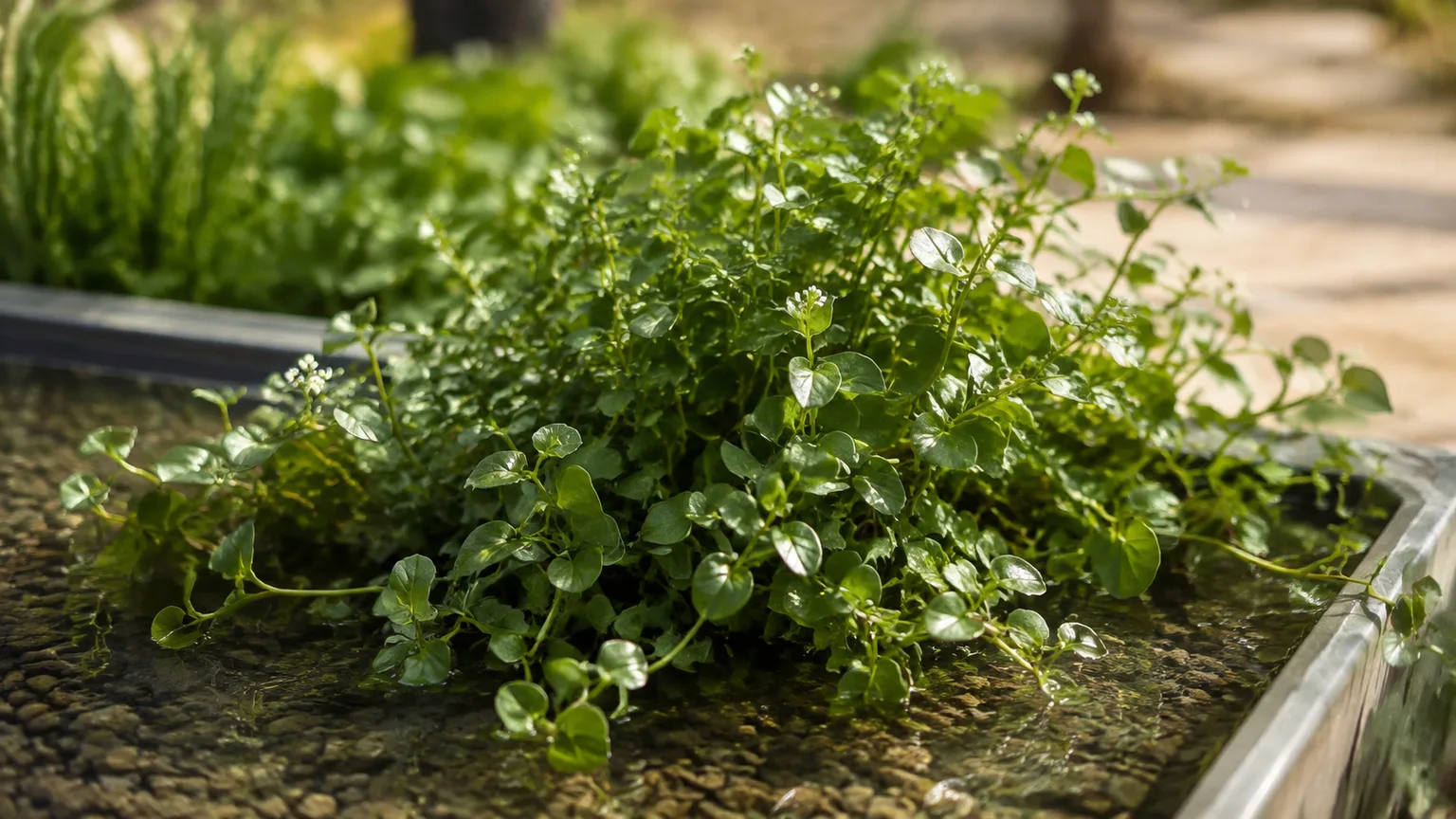
Watercress is easiest to grow when you stop thinking of it as a normal salad green and start thinking of it as a cool, wet-edge plant. It wants saturated roots, bright light, and a steady supply of clean, oxygenated water. That sounds like a streamside crop, but a broad pot sitting in a shallow water reservoir can recreate the essential conditions on a patio, balcony, or sunny windowsill.
The plant most people mean by watercress is Nasturtium officinale, a perennial member of the mustard family with peppery leaves and hollow stems that can root at their nodes. Utah State University Extension recommends wet, organically rich soil, a pH around 6.5 to 7.5, and a container set in 2 to 3 inches of water when a natural water feature is unavailable (Utah State University Extension). This guide shows how to grow it from seed or cuttings, keep container water usable, harvest without stalling regrowth, and avoid the safety mistakes that matter more for an edible plant.
The Short Answer: Watercress Needs Wet Roots and Clean, Moving Water
Watercress grows best in full sun to partial shade with constantly moist or shallowly submerged roots, but “wet” does not mean dirty, stagnant, or polluted. In a pot, use a soilless mix that holds moisture, place the pot in a wider saucer or bucket with a shallow reservoir, and refresh that water regularly. In a garden, a clean pond edge or lined bog bed can work; an unknown stream should not be treated as a food garden.
Watercress is a fast-growing, aquatic or semi-aquatic perennial herb. The U.S. Geological Survey describes its succulent, hollow, branching stems, node-rooting habit, divided leaves, and small white flowers, as well as its preference for slightly alkaline, non-stagnant water (U.S. Geological Survey species profile). That biology explains both the crop’s generosity and its risks: a tiny stem fragment can root quickly, while an uncontained patch can spread along water.
Watercress versus garden cress
Do not buy seed labeled only “cress” if you want watercress. Watercress is Nasturtium officinale, sometimes sold as big-leaf cress; garden or curled cress is usually Lepidium sativum, a land-grown annual harvested young. Wintercress is a different plant again. They share a peppery flavor, but garden cress does not need permanently wet roots and is the simpler choice for an ordinary dry herb bed.
The Royal Horticultural Society lists common watercress as a fast-growing aquatic perennial with floating, submerged, or trailing growth, edible dark green foliage, and small white flowers (RHS plant profile). Check the botanical name before planting, especially if you are shopping from a mixed herb display.
Choose the Right Growing Setup Before You Plant
Your setup determines how easy it will be to keep watercress vigorous and safe to eat. A controlled container is the best starting point for most home gardeners because it lets you manage water quality, move the plant away from heat, and prevent stems from escaping into a drain, creek, or pond.
Container culture without a pond
Choose a wide container with drainage holes, roughly 6 to 8 inches deep or deeper, and a saucer, tray, or bucket that is wider than the pot. Watercress is shallow-rooted and sprawling, so width gives you more harvestable stems and makes it easier to keep the root zone evenly wet. Plastic or glazed containers are practical because unglazed terracotta loses water through its sides just when the crop needs consistency.
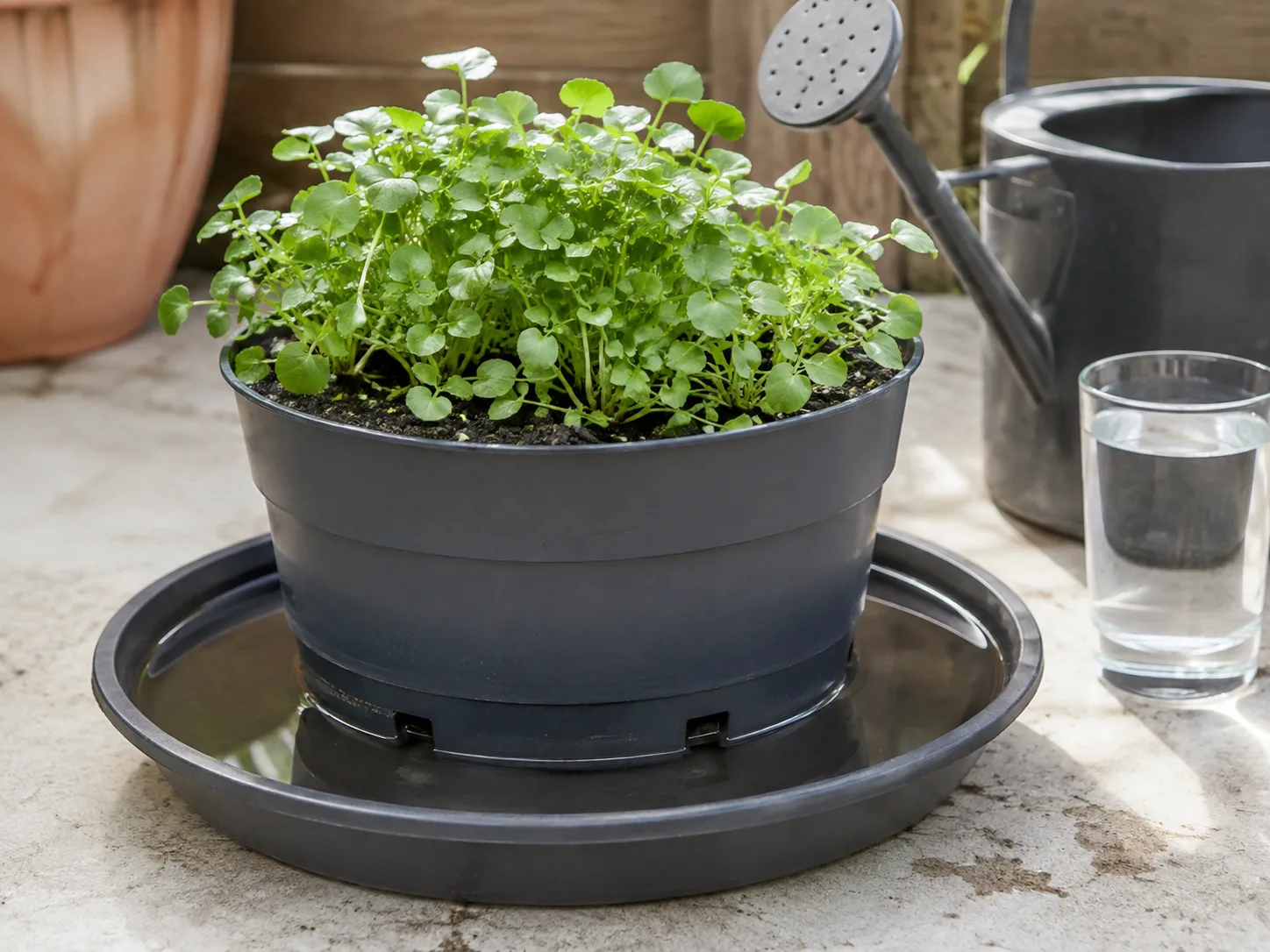
Fill the pot with a fresh soilless mix that contains moisture-holding organic material plus perlite or vermiculite. Avoid garden soil dug from an unknown bed; it compacts in containers, makes water changes messy, and can introduce weed seeds or pathogens. Saturate the mix from the top before sowing or transplanting so there are no dry pockets hiding beneath a wet saucer.
Set the pot in a reservoir containing about 2 to 3 inches of water. The drainage holes can draw water upward and keep the mix saturated, but the entire pot should not be submerged. Once or twice a week, lift the pot out, pour fresh water through the mix until it runs freely from the drainage holes, empty the old reservoir, and refill it. This flushes out stale water and brings oxygen through the root zone.
If you are growing on a windowsill, use a shallow tray that can be lifted safely and protect the sill from leaks. Place the crop where it gets bright light and good air movement rather than directly above a radiator or in a closed, humid corner. A windowsill crop is convenient for small harvests, but it can dry faster than an outdoor reservoir and may need more frequent checks.
Epic Gardening also recommends container culture for gardeners without a pond, with regular flushing to prevent stale water and bacterial problems (Epic Gardening watercress guide).
Pond edges and in-ground beds
A clean, gently moving water feature can suit watercress, but a pond is not automatically a food-safe growing system. Use an aquatic pot filled with suitable growing medium and topped with a thin layer of gravel to hold the mix in place. Position it at the shallow edge where roots stay wet without the whole plant being dragged under water.
For a garden bed, create a lined, shallow basin or choose a naturally wet site that does not receive lawn chemicals, road runoff, septic overflow, or pet waste. A continuously refreshed trickle is preferable to a stagnant puddle. The USGS notes that commercial watercress beds commonly use water about 3 to 6 inches deep and that the plant is usually absent from stagnant water; home gardeners should treat that as a clue about habitat, not permission to eat from any stream.
Keep pond-edge culture separate from natural waterways. Do not throw pulled stems or muddy rinse water into a creek, storm drain, or wetland. Watercress can root from fragments and has naturalized widely in North America; the USGS records it as potentially noxious or invasive in some regions because it can alter water flow and block streams.
When to Plant Watercress
Watercress is a cool-season crop even though it likes constant moisture. Sow outdoors in spring once severe frost has passed and temperatures are generally in the 50–60°F range, or start indoors about three weeks before your local frost-free date. A fall sowing can give you a second flush as summer heat fades. In mild climates, a protected container can produce leaves through much of winter, while severe frost can damage exposed growth.
Seeds usually germinate in 7 to 14 days when they stay wet and cool. The first harvest often arrives roughly four to seven weeks after sowing, depending on light, temperature, and whether you are cutting baby greens or waiting for longer stems. Do not use a calendar as the only test: harvest when the plant has enough leafy side shoots to recover after cutting.
If you are starting plants indoors, see the seed-starting guide for a clean-tray routine and light placement. Harden young plants gradually before moving them from a still indoor room to a windy outdoor position.
How to Grow Watercress From Seed or Starts
Starting from seed gives you a clean, uniform crop and makes succession sowing easy. A rooted division or nursery start is faster when you want leaves soon, while a supermarket stem can work as a low-cost experiment if it is fresh and has viable nodes.
Sow seeds in cool, wet conditions
- Fill a clean container with fresh, pre-moistened soilless mix.
- Scatter the tiny seeds thinly across the surface or press them into the top quarter inch of mix. Do not bury them deeply.
- Mist or water gently from above so the seeds stay in place.
- Put the pot in bright light at about 50–60°F, then maintain a shallow water reservoir once seedlings are established.
- Thin crowded seedlings so air can move between them and the foliage dries quickly after overhead rinsing.
Watercress seed is small enough that a dense carpet is easy to create by accident. Overcrowding looks lush for a week, then encourages weak stems, damping-off, and poor air movement. It is better to sow a thin band every couple of weeks than to fill one pot too heavily and lose the whole crop to a wet, collapsing center.
Transplant without burying the crown
Plant nursery starts or rooted cuttings into saturated mix with the crown at the same depth it was growing before. Firm the mix around the roots, but do not pack it hard; roots need water and air. Leave a little space between plants so trailing stems can spread without forming a permanently wet mat.
Acclimate transplants for several days if the new site is much brighter, windier, or cooler. Watercress tolerates a wet root zone but does not appreciate a sudden change from a protected shop bench to hot afternoon sun. If the container dries at the edges, move it to gentler light until the plant is established.
Watercress Light, Soil, and Temperature
Aim for full sun to partial shade. Outdoor plants in cool weather can take strong light, while container plants often appreciate morning sun and afternoon shade because a small pot heats and dries quickly. Indoors, place the container in the brightest available window or use a grow light close enough to prevent stretched, pale stems.
Watercress tolerates clay, loam, sand, and gravel in a suitable wet habitat, but a container needs a more controlled mix. A pH between 6.5 and 7.5 is a useful target; do not add lime or acidifier without a soil test. Organic matter supports growth, but rich compost should be well finished and used in moderation so the water reservoir does not become cloudy or foul.
Growth slows and flavor becomes less pleasant as temperatures rise above roughly 85°F. Heat also speeds flowering. In summer, shift a container to afternoon shade, increase air movement, and harvest more frequently. If the plant repeatedly bolts despite those changes, treat it as a seasonal crop and reseed when cool weather returns instead of forcing tender leaves through the hottest weeks.
Keep the reservoir fresh, not stagnant
The central care rule is simple: keep the growing medium saturated, then refresh the water before it becomes stale. Top up the reservoir when it drops, but do not let the same water sit indefinitely. Green algae, a sour smell, slime on the pot, or blackened lower stems signal that the system needs a full flush and inspection rather than another top-up.
Use clean water that has not contacted fertilizers, pesticides, animal waste, or dirty runoff. Rainwater can be useful when collected in a clean vessel, but do not use water from a roof with bird droppings or a barrel that smells sour. If you would not trust the water for washing a harvested salad, do not use it as the crop’s permanent root-zone supply.
Fertilizing, Weeding, and Routine Maintenance
Watercress has modest fertilizer needs. If growth is dense and green, additional feed may do more harm than good by encouraging soft, crowded growth and fouling the reservoir. If leaves are consistently pale, growth is stunted, or older leaves show marginal scorching, first check light, water freshness, and root condition before reaching for fertilizer.
When a nutrient supplement is justified, use a complete soluble fertilizer labeled for edible crops and follow its dilution and application directions. Apply it to the growing medium or fresh reservoir as the label allows; do not improvise a stronger mix because watercress grows quickly. Utah State University Extension notes that phosphorus, potassium, and iron deficiencies can occur in cultivated plants, with dark stunting, older-leaf scorching, or interveinal yellowing as possible clues (USU watercress guidance). Symptoms overlap with root and water problems, so fertilizer is not a universal yellow-leaf cure.
Remove weeds and dead leaves before they decompose in the wet crown. Snipping tender shoots doubles as pruning and encourages branching, but do not shear a weak seedling down to its base. Clean scissors before harvesting; the garden-tool cleaning guide explains a simple sanitation routine that is especially useful for a crop eaten fresh.
How to Propagate Watercress From Cuttings
Stem propagation is often faster than seed. Choose a fresh, healthy stem with several nodes, remove the lowest leaves, and place the lower nodes in a clean glass of water. Keep the top leaves above the waterline and replace the water every few days. Once you see new roots and the cutting stays firm, move it into saturated potting mix and set the pot in its shallow reservoir.
Established plants can also be divided or separated where a runner has already rooted. Cut a section with roots attached, replant it immediately in wet mix, and keep it in gentler light for a few days. Supermarket watercress may root when its stems are fresh, but bagged greens are inconsistent: some have been chilled, trimmed, or treated in ways that reduce their ability to establish. Use a nursery start or seed when reliable identification and clean propagation matter more than experimentation.
Gardening Know How describes the same small-container approach: rooted stems or seed can be grown in a saturated soilless mix, with the pot standing in a shallow water-filled saucer (Gardening Know How container guide).
Propagation is a reason to keep watercress contained. A stem that falls into a drain, ditch, or stream can establish somewhere you did not intend. Compost or bag trimmings securely, and never rinse fragments into outdoor drains.
How and When to Harvest Watercress
Harvest watercress as a cut-and-come-again green. Cut tender stems several inches long with clean scissors, leaving healthy side shoots and a leafy base. For a small plant, remove only a portion of the canopy at a time; for a mature, crowded clump, a cutback to about 4 inches can trigger a fresh flush if the roots and growing conditions are strong.
Pick what you can use promptly instead of stripping every stem at once. Regular light harvests keep the plant branching and let you notice problems early. If the lower stems are slimy, the leaves smell sour, or the water has been contaminated, do not “harvest around” the problem; discard the crop and clean the container.
Protect flavor by harvesting before heat and flowers
Cool spring and fall weather usually gives watercress its cleanest peppery flavor. Hot weather slows growth and can make the leaves harsher, while flowering is a clear sign that the plant is shifting out of its most tender leafy phase. The white flowers are edible, but leaves and young stems generally lose some intensity and tenderness after flowering.
When flower stalks appear, harvest usable leaves, cut back the oldest stems, and move container plants to afternoon shade. You can remove flower heads to extend the leafy harvest briefly, but pruning cannot undo sustained heat. Save seed only if you want to experiment with self-sowing; otherwise remove seed-bearing stems before they scatter.
Wash, chill, and store the leaves
Rinse harvested watercress thoroughly under cool running water, remove damaged leaves, and dry it gently. Refrigerated leaves can last about a week, but the texture and peppery flavor are best when used soon after cutting. Store it loosely in a clean bag or container rather than sealed while dripping wet, which speeds decay.
For food safety, keep raw watercress away from dirty tools, pet areas, and untreated water. Do not eat plants harvested from a wild stream or unknown pond. Pollutants, animal waste, and waterborne parasites can make wild watercress unsafe even when the leaves look fresh. A controlled container does not make contaminated water safe, so the quality of the water source is part of the crop, not an afterthought.
Troubleshoot Yellow Leaves, Pests, and Disease
Watercress often fails because the gardener supplies too much of the wrong kind of wetness. Start with the reservoir and roots, then check light and temperature, and only then investigate fertilizer or pests.
| What you see | Likely first check | First action |
|---|---|---|
| Seeds do not sprout | Dry surface, deep sowing, or excessive heat | Reseed shallowly in fresh, evenly wet mix at cool temperatures. |
| Long, pale stems | Insufficient light or crowded seedlings | Increase usable light and thin the stand; do not simply add fertilizer. |
| Yellow new leaves between green veins | Root stress or possible iron shortage | Flush stale water, inspect roots, then use only a label-directed edible-crop feed if needed. |
| Brown margins on older leaves | Heat, dry edges, or potassium stress | Move from harsh afternoon sun, restore consistent moisture, and assess the root zone. |
| Soft lower stems or sour-smelling water | Stagnation, poor oxygen, or rot | Remove affected growth, flush repeatedly with clean water, and discard the crop if rot continues. |
| Tiny holes and ragged edges | Slugs, snails, or caterpillars | Inspect at dusk, hand-pick, clear hiding places, and protect the container. |
Whiteflies and spider mites may gather under leaves, especially when a container is stressed or indoor air is dry. Start with a gentle water rinse and repeat inspections. Slugs and snails enjoy the same damp conditions as the plant, so check under the saucer and around the container at night.
RHS lists slugs, snails, aphids, caterpillars, leaf spot, and root rots among possible watercress problems (RHS cultivation profile). If treatment becomes necessary, use only a product whose label includes the crop and pest, follow harvest restrictions, and avoid homemade detergent sprays on edible leaves. When seedlings collapse at the soil line or established plants become swollen and badly malformed, discard affected material, sanitize the container, and restart rather than trying to rescue a crop that may contaminate the next one.
Containment and Food Safety for an Edible Water Plant
Watercress is both useful and vigorous. Its node-rooting stems, seed production, and ability to spread by fragments mean that an uncontrolled patch can move beyond your planting area. The peer-reviewed literature describes watercress as a widely cultivated aquatic vegetable with creeping vines and lateral branching, and the USGS records its established spread and potential impacts on streams (peer-reviewed watercress study).
For a home crop, the practical rules are straightforward: use a container or lined bed, keep overflow on your property, bag surplus stems, clean tools and trays away from storm drains, and check local rules before planting in a pond. Never introduce a supermarket stem or nursery plant to a natural waterway. If you want a pond plant but cannot verify water quality, grow it for observation and do not eat it.
There is also a household safety issue. The ASPCA lists watercress (Nasturtium officinale) as toxic to dogs, cats, and horses because gastrointestinal irritants can cause mild vomiting and diarrhea (ASPCA plant profile). Keep pots and harvest bowls away from pets, clean up fallen stems, and contact a veterinarian or animal poison-control service if an animal chews the plant and develops symptoms.
If you want a windowsill herb collection, watercress can sit alongside other compact crops in the best herbs to grow indoors guide, but give this one its own tray and water routine. It is not a normal dry-pot herb, and treating it like basil or thyme is the fastest route to wilted stems, stagnant roots, or a leaking sill.
Conclusion
The reliable way to grow watercress is to give it saturated, oxygenated roots; bright but not punishing light; cool temperatures; and clean water that is refreshed before it stagnates. A broad pot in a 2–3 inch reservoir is enough for most homes, and seed, rooted cuttings, or nursery starts can all work when the mix never dries during establishment.
Harvest lightly and often while the weather is cool, cut back before heat and flowering ruin tenderness, and treat every pond or stream as a water-quality decision rather than a free food source. Keep the crop contained, use edible-crop labels for any treatment, and protect pets from the plant. With those boundaries in place, watercress becomes an unusually productive small-space green instead of a messy experiment in standing water.