Nasturtium Care Guide: Sun, Water, Soil & Growing Tips
Tropaeolum majus
Grow garden nasturtium (Tropaeolum majus) in sunny, well-drained soil. Compare compact and trailing forms, learn when to water, and check pet-safety sources.
Nasturtium Care Guide
Start with wateringThe most common care mistake for NasturtiumWatering guide →Nasturtium care essentials
Light
Full sun for the strongest flowering
Water
Keep newly sown seeds and seedlings evenly moist while they establish. Once plants are growing well, water moderately when the root zone begins to dry; nasturtiums tolerate some dry soil and do not need frequent feeding or watering to flower. Containers dry faster than garden beds, so check them more often in warm weather and let excess water drain away.
Soil
Nasturtiums flower best in poor to average, well-drained soil. They tolerate a broad range of soil conditions; overly rich soil or heavy feeding can produce more foliage and fewer flowers.
Humidity
Temperature
Fertilizer
About Nasturtium
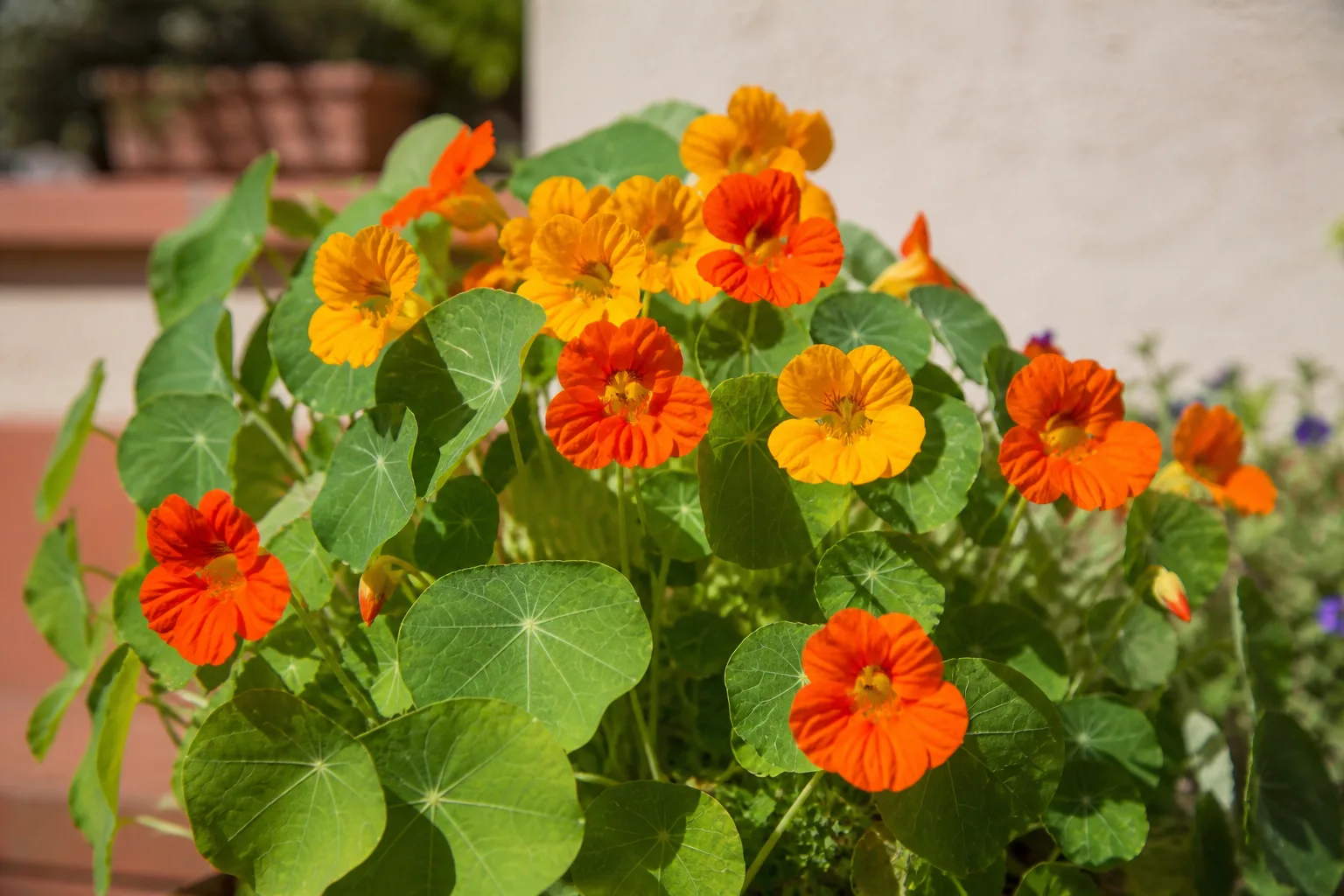
Nasturtium is native to Central and South America, typically reaches Compact forms are often about 8–12 in (20–30 cm) tall and roughly 2 ft (60 cm) wide; trailing or scrambling cultivars can extend several feet, with size depending on the variety. indoors, with fast-growing warm-season plant; it may self-seed where conditions suit it growth. Nasturtium has a mounding, trailing, or scrambling, depending on the cultivar growth habit and part of the Tropaeolaceae family. It is also known as Common nasturtium, Garden nasturtium, Indian cress, Nose-tweaker, and Nose-twister.
| Detail | Information |
|---|---|
| Also known as | Common nasturtium, Garden nasturtium, Indian cress, Nose-tweaker, Nose-twister |
| Native region | Central and South America |
| Mature size | Compact forms are often about 8–12 in (20–30 cm) tall and roughly 2 ft (60 cm) wide; trailing or scrambling cultivars can extend several feet, with size depending on the variety. |
| Growth rate | Fast-growing warm-season plant; it may self-seed where conditions suit it |
| Growth habit | Mounding, Trailing, Or Scrambling, Depending On The Cultivar |
| Scientific name | Tropaeolum majus |
| Family | Tropaeolaceae |
How to care for Nasturtium?
How much light does Nasturtium need?
Full sun for the strongest flowering. Partial shade, especially afternoon shade in hot weather. direct sun
- Full sun for the strongest flowering - Full sun for the strongest flowering.
- Partial shade, especially afternoon shade in hot weather - Partial shade, especially afternoon shade in hot weather.
- direct sun - direct sun.
When should you water Nasturtium?
Keep newly sown seeds and seedlings evenly moist while they establish. Once plants are growing well, water moderately when the root zone begins to dry; nasturtiums tolerate some dry soil and do not need frequent feeding or watering to flower. Containers dry faster than garden beds, so check them more often in warm weather and let excess water drain away.
- Feel the soil about 2–5 cm below the surface. If that layer is dry - Once plants are growing well, water moderately when the root zone begins to dry; nasturtiums tolerate some dry soil and do not need frequent feeding or watering to flower.
- water the root zone thoroughly and allow the pot or bed to drain before watering again - Once plants are growing well, water moderately when the root zone begins to dry; nasturtiums tolerate some dry soil and do not need frequent feeding or watering to flower.
- Drain excess water - Containers dry faster than garden beds, so check them more often in warm weather and let excess water drain away.
What soil works best for Nasturtium?
Nasturtiums flower best in poor to average, well-drained soil. They tolerate a broad range of soil conditions; overly rich soil or heavy feeding can produce more foliage and fewer flowers.
- Choose a free-draining container mix rather than a dense - Nasturtiums flower best in poor to average, well-drained soil.
- water-retentive one
- Avoid adding high-nitrogen fertilizer unless a soil test shows it is needed. - They tolerate a broad range of soil conditions; overly rich soil or heavy feeding can produce more foliage and fewer flowers.
Grower notes for Nasturtium
Check the botanical name on the label
This hub covers common garden nasturtium, Tropaeolum majus. The name “nasturtium” is also used for watercress (Nasturtium officinale), a different plant, and compact T. minus cultivars can differ in size and habit. Check the scientific name when choosing seeds or comparing advice.
Choose a compact or trailing form for the site
Compact cultivars can suit edging and pots, while trailing T. majus forms spill from baskets or spread across a bed. Some are sold as climbers, but trailing stems may need support to cover a trellis; match the variety to the space instead of assuming every packet produces the same growth.
Balance sun with summer heat
Full sun generally supports the best bloom. In very hot conditions, a little afternoon shade can help plants through heat stress, although too much shade often means fewer flowers.
Keep the soil lean and well drained
Nasturtiums are adapted to modest soil and usually need little or no fertilizer. University of Wisconsin–Madison Extension notes that heavy feeding encourages leaves at the expense of flowers. Improve drainage rather than adding rich compost when the bed stays wet.
Water by checking the root zone
Established plants tolerate some dry soil, but pots can dry faster than beds. Check beneath the surface, water when that layer begins to dry, and avoid leaving roots saturated. A fixed daily schedule can overwater a cool or rainy planting.
Harvest only correctly identified, untreated plants
Extension and horticulture sources describe the leaves and flowers of garden nasturtium as edible, with a peppery flavor. Use only plants you have positively identified and that have not been treated with products unsuitable for food crops; roots are not edible.
Is garden nasturtium safe for pets?
ASPCA lists Tropaeolum majus as non-toxic to cats, dogs, and horses. NC State Extension's Plant Toolbox also carries general “problem for pets” tags for the species but does not identify a toxic principle or clinical signs in its profile. Confirm the plant's identity, discourage chewing, and contact a veterinarian or animal poison-control service if an animal eats it and becomes unwell.
The ASPCA Animal Poison Control entry identifies Tropaeolum majus and lists it as non-toxic to cats, dogs, and horses. NC State Extension also places the species in “problem for pets” categories but does not describe a toxic principle or symptoms. Prevent routine chewing and seek veterinary advice if an animal shows symptoms after ingestion.
Watering Nasturtium
For Nasturtium, feel the soil about 2–5 cm below the surface. If that layer is dry, water the root zone thoroughly and allow the pot or bed to drain before watering again. and water check the top inch or two of soil and water when it has begun to dry. Use rainfall and container drying speed to guide the interval; do not leave the roots standing in water or keep the soil continuously saturated. Check pots more often through warm, dry spells. In very hot climates, afternoon shade can reduce heat stress; reduce supplemental water in cool or rainy weather when the soil is already moist.
| Detail | Information |
|---|---|
| How often | Check the top inch or two of soil and water when it has begun to dry. Use rainfall and container drying speed to guide the interval; do not leave the roots standing in water or keep the soil continuously saturated. |
| How to check | Feel the soil about 2–5 cm below the surface. If that layer is dry, water the root zone thoroughly and allow the pot or bed to drain before watering again. |
| Seasonal changes | Check pots more often through warm, dry spells. In very hot climates, afternoon shade can reduce heat stress; reduce supplemental water in cool or rainy weather when the soil is already moist. |
Signs of overwatering
- Soil remains wet or saturated between watering checks
- A container has no open drainage or stands in a full saucer
Signs of underwatering
- Leaves wilt while the root zone is dry during prolonged heat
- Container mix dries quickly between checks
Soil & potting for Nasturtium
Use a mix of Choose a free-draining container mix rather than a dense, water-retentive one., Avoid adding high-nitrogen fertilizer unless a soil test shows it is needed. for Nasturtium. Use freely draining soil and containers with open drainage holes. Avoid persistently wet beds or pots, particularly during cool or rainy weather. Target soil pH around The sources reviewed describe tolerance across a broad soil-pH range and do not identify a single preferred numeric target; drainage and modest fertility matter more. Repot nasturtiums are usually grown as annuals from seed and do not need routine repotting. Sow into the final container when practical because young plants can resent root disturbance., ideally in sow outdoors after frost danger has passed and the soil is warming. If starting seeds indoors in a cool climate, use a biodegradable pot and transplant while the seedling is small.
| Detail | Information |
|---|---|
| Recommended mix | Choose a free-draining container mix rather than a dense, water-retentive one., Avoid adding high-nitrogen fertilizer unless a soil test shows it is needed. |
| Drainage | Use freely draining soil and containers with open drainage holes. Avoid persistently wet beds or pots, particularly during cool or rainy weather. |
| Soil pH | The sources reviewed describe tolerance across a broad soil-pH range and do not identify a single preferred numeric target; drainage and modest fertility matter more. |
| Repotting frequency | Nasturtiums are usually grown as annuals from seed and do not need routine repotting. Sow into the final container when practical because young plants can resent root disturbance. |
| Best season to repot | Sow outdoors after frost danger has passed and the soil is warming. If starting seeds indoors in a cool climate, use a biodegradable pot and transplant while the seedling is small. |
Signs it needs repotting
- A seedling has outgrown its starter cell before outdoor planting
- A container-grown plant dries unusually fast because roots fill the pot