7 Best Companion Plants for Tomatillos
Learn how basil, carrots, cilantro, lettuce, marigolds, nasturtiums, and onions fit around tomatillos, when to plant them, and what companions cannot do.
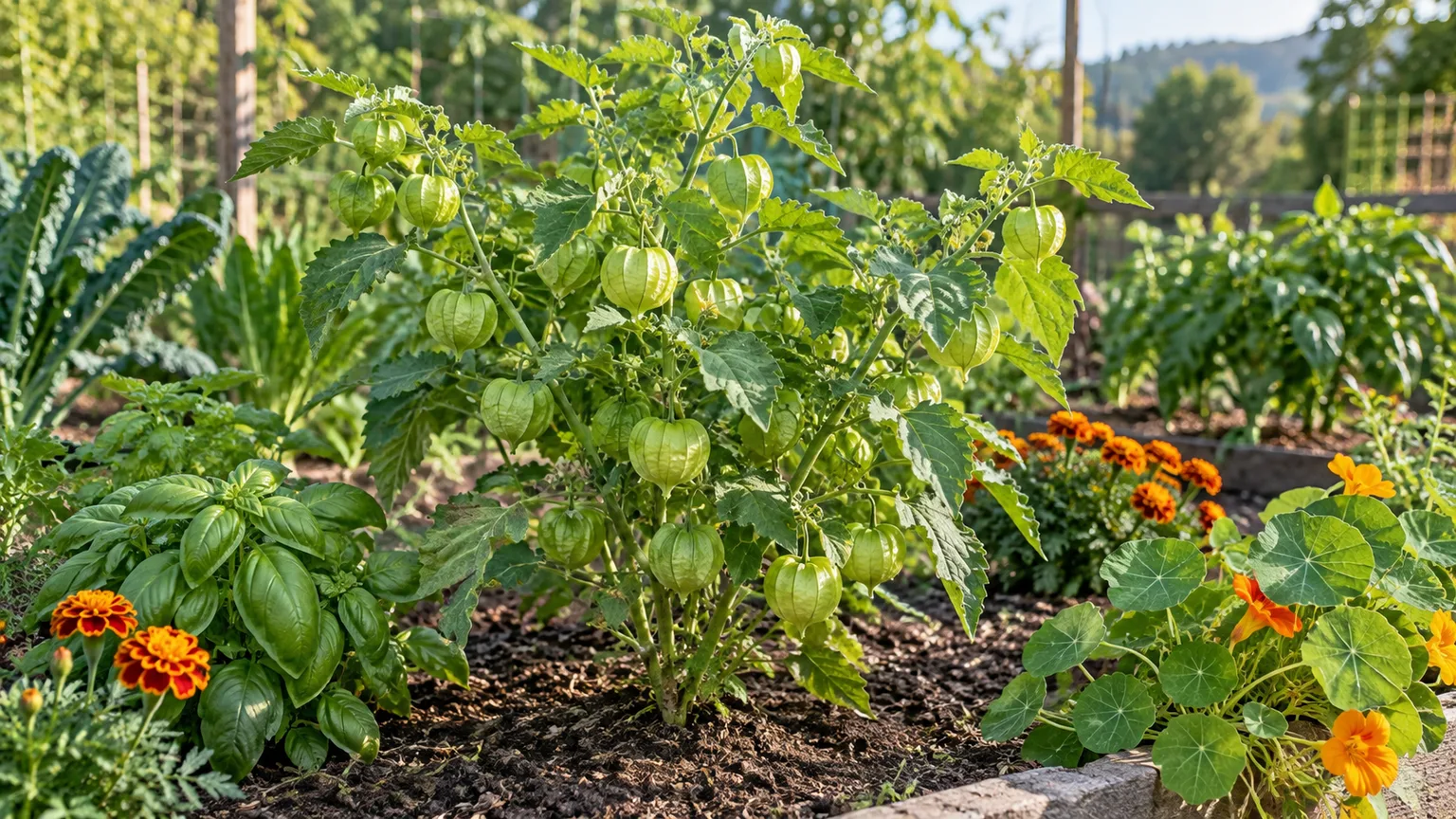
Tomatillos grow into broad, branching plants, so the best neighbor is not simply the one with the strongest pest-repelling reputation. Choose a plant that shares the season, uses a different layer of the bed, or brings flowers without blocking light, airflow, or access to the tomatillo’s base.
The seven useful options are basil, carrots, cilantro, leaf lettuce, French marigolds, nasturtiums, and onions. Each can earn space for a different reason; none is a substitute for good spacing, regular scouting, or the second tomatillo plant often needed for fruit set.
The short answer: choose companions by their job
For a warm-season herb beside a tomatillo, start with basil. For a quick crop that can use the open soil early in the season, try carrots or leaf lettuce. Cilantro can provide an early edible crop and, if some plants flower, a small source of nectar; French marigolds add a long-blooming edge; nasturtiums can spill along the bed border; and onions fit where you want a compact, upright crop.
You do not need all seven in one bed. Pick one or two that fit your goal and your space, then leave the tomatillo room to reach its mature size. A short mixed border is usually more manageable than packing a companion beside every stem.
Before planting flowers to attract insects, check the tomatillos themselves. University of Minnesota Extension’s tomatillo and ground-cherry growing guide explains that tomatillos generally need a second plant for cross-pollination. Pollinator-friendly flowers can support insect activity, but they do not supply pollen from another tomatillo.
What companion planting can—and cannot—do
Companion planting is a way to organize several species in one garden: a quick crop can finish before a larger plant spreads, a flower can provide insect habitat, or a low plant can occupy an otherwise bare edge. The Royal Horticultural Society’s companion-planting overview describes these kinds of associations while cautioning that a pairing does not produce the same result in every garden.
A companion plant is not a force field. Strong scent does not guarantee that insects will avoid tomatillos, and a flower beside a vegetable does not prevent fungal disease. West Virginia University Extension’s companion-planting guidance is useful as a planning reference, but the key test in a real bed is whether both plants still get enough light, water, and root room.
There is some crop-specific research on related vegetables, but it should not be stretched beyond what it studied. Penn State Extension’s herb-companion discussion includes basil with tomatoes and describes possible effects on insect host-finding and egg-laying. That makes basil a reasonable experiment near tomatillos, not proof that it repels tomatillo pests.
Use companions to improve the bed’s timing, diversity, or harvest—not to replace crop rotation, clean-up, airflow, or pest checks. If the bed is already crowded, removing a neighbor can help more than adding another one.
The seven best companion plants for tomatillos
These plants are selected for practical fit and distinct roles. The best choice depends on whether your priority is a second harvest, a flowering edge, or using space before the tomatillo canopy fills in.
Basil
Basil and tomatillos share a warm-season schedule and both do well in a sunny bed with regular moisture. Basil also gives you a useful harvest close to the kitchen, and its flowers can support insects if you let a few stems bloom rather than pinching every flower off.
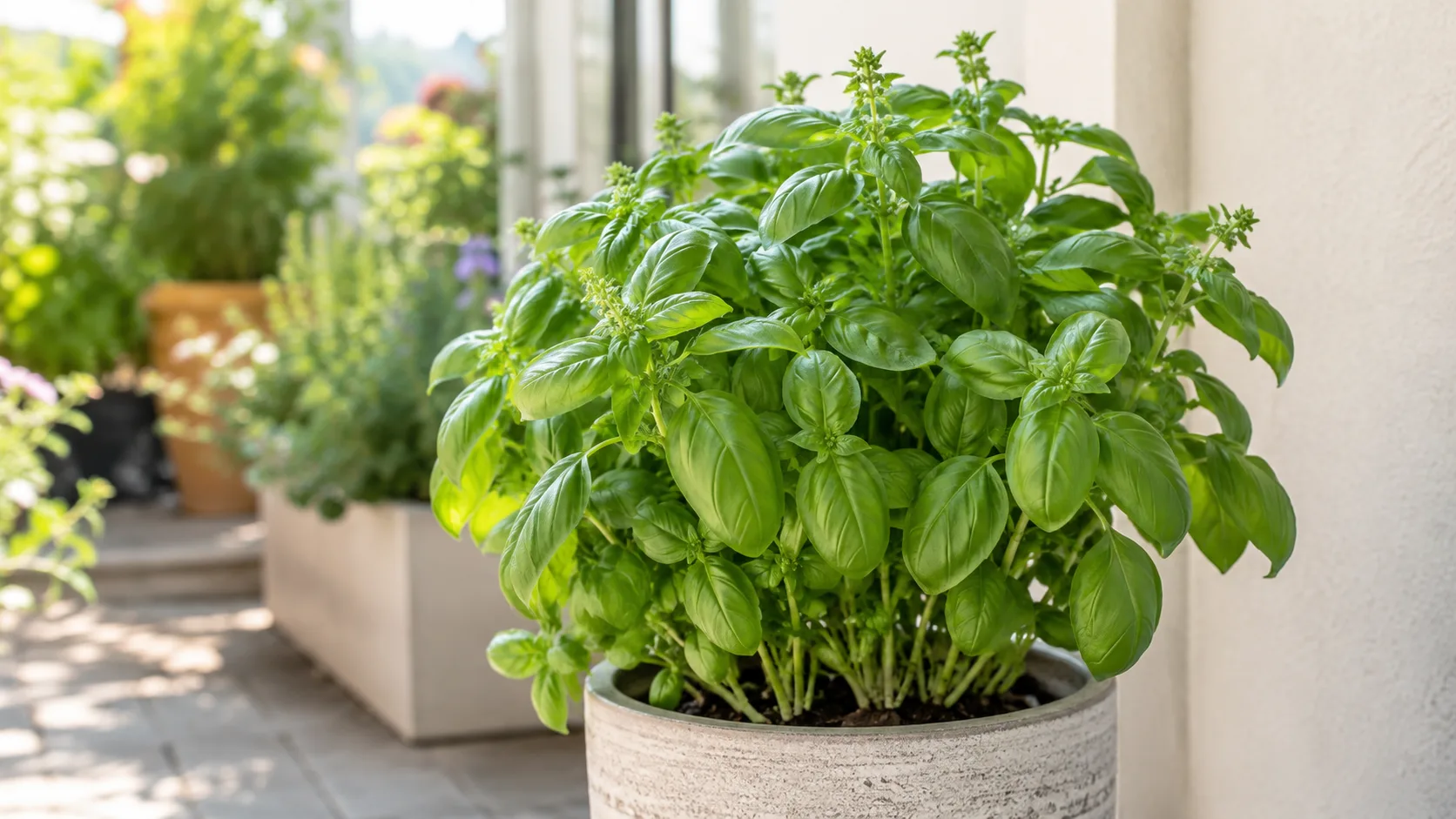
Set basil near the outside of the tomatillo’s eventual canopy, not tight against the main stem. A small transplant may look as if it has plenty of room in May, but the tomatillo can spread and shade it later. Keep enough space to reach the tomatillo for watering and inspection.
Treat pest-repellent claims cautiously. Research and extension material on basil often concerns tomatoes, and even a documented effect on one pest does not make basil a general insecticide. Plant it because the growing conditions and harvest are convenient; keep checking both crops for chewing, eggs, and sap-feeding insects.
Carrots
Carrots are a useful early-season understory crop because their tops stay low and the edible root develops below the soil surface. The practical benefit is space use, not a promise that carrot roots will loosen the soil around an established tomatillo.
Prepare a fine, stone-free seedbed before the tomatillo’s roots occupy the area. Sow carrots early enough that seedlings receive light and the roots can be harvested before the tomatillo canopy becomes dense. If the bed is shallow, choose a shorter carrot type; repeated digging around a large, established tomatillo can disturb its roots.
Do not plant carrots in the deepest shade and expect a full root crop. If the tomatillo already fills the bed, reserve a sunnier row for carrots or use them as a spring crop that finishes before the main plant expands.
Cilantro
Cilantro can share the bed during cooler parts of the growing season, especially while tomatillos are still small. It is an edible filler crop, and flowering cilantro can provide small open blooms that are accessible to some beneficial insects.
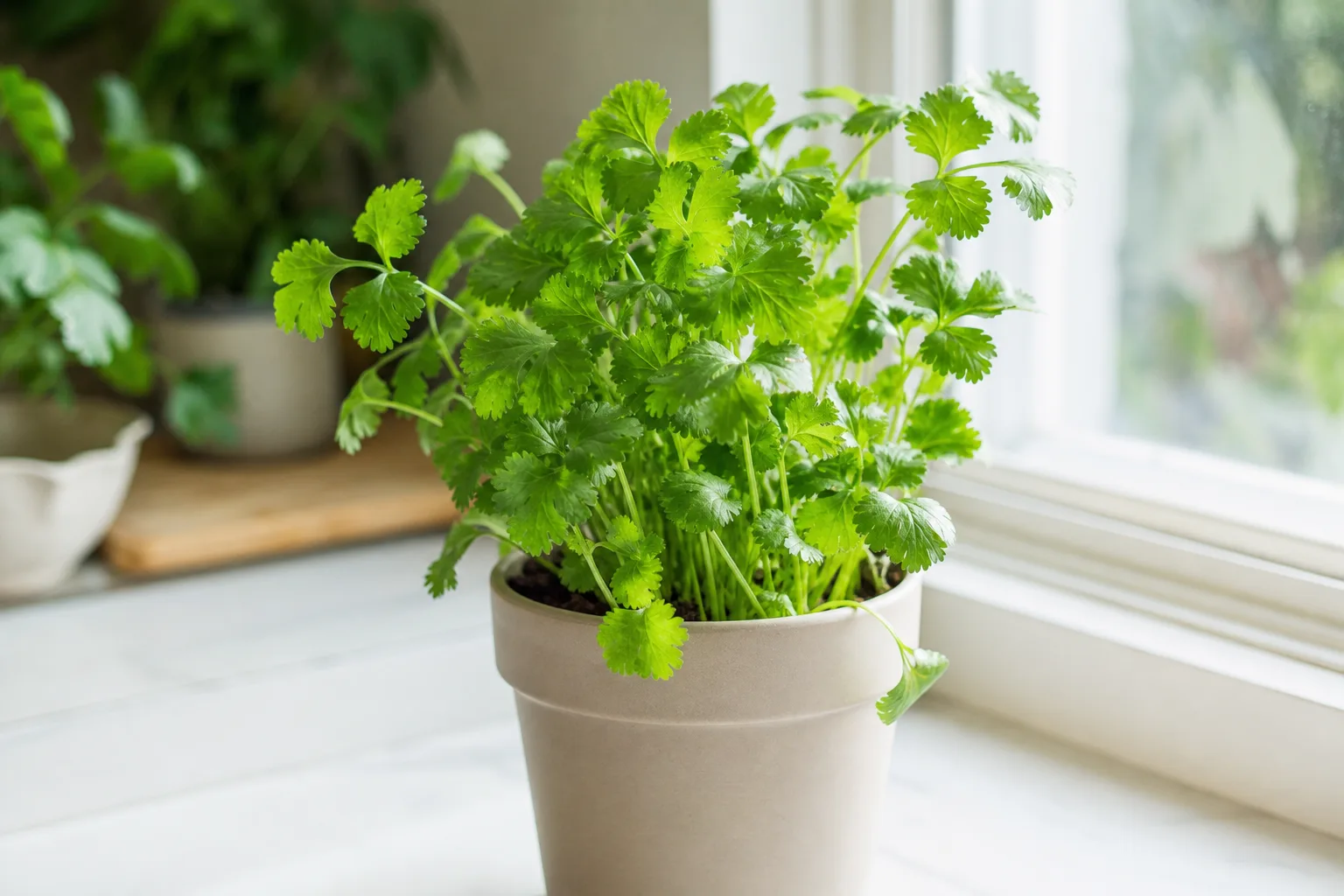
Heat changes the plan. Cilantro often bolts as temperatures rise, so sow a short row early, harvest the leaves while they are tender, and allow only a few plants to flower if you want to test their value as insect habitat. In hot climates, grow it in a cooler-season window rather than forcing it to compete through peak summer.
The aroma of cilantro is not a dependable shield against tomatillo pests. Keep plants spaced so air moves through the bed, and pull or harvest them when they become tall, dry, or crowded.
Leaf lettuce
Leaf lettuce is best treated as a timed companion, not a permanent understory. Sow it around the bed edge or before the tomatillo canopy closes, then harvest the leaves while they still receive adequate light.
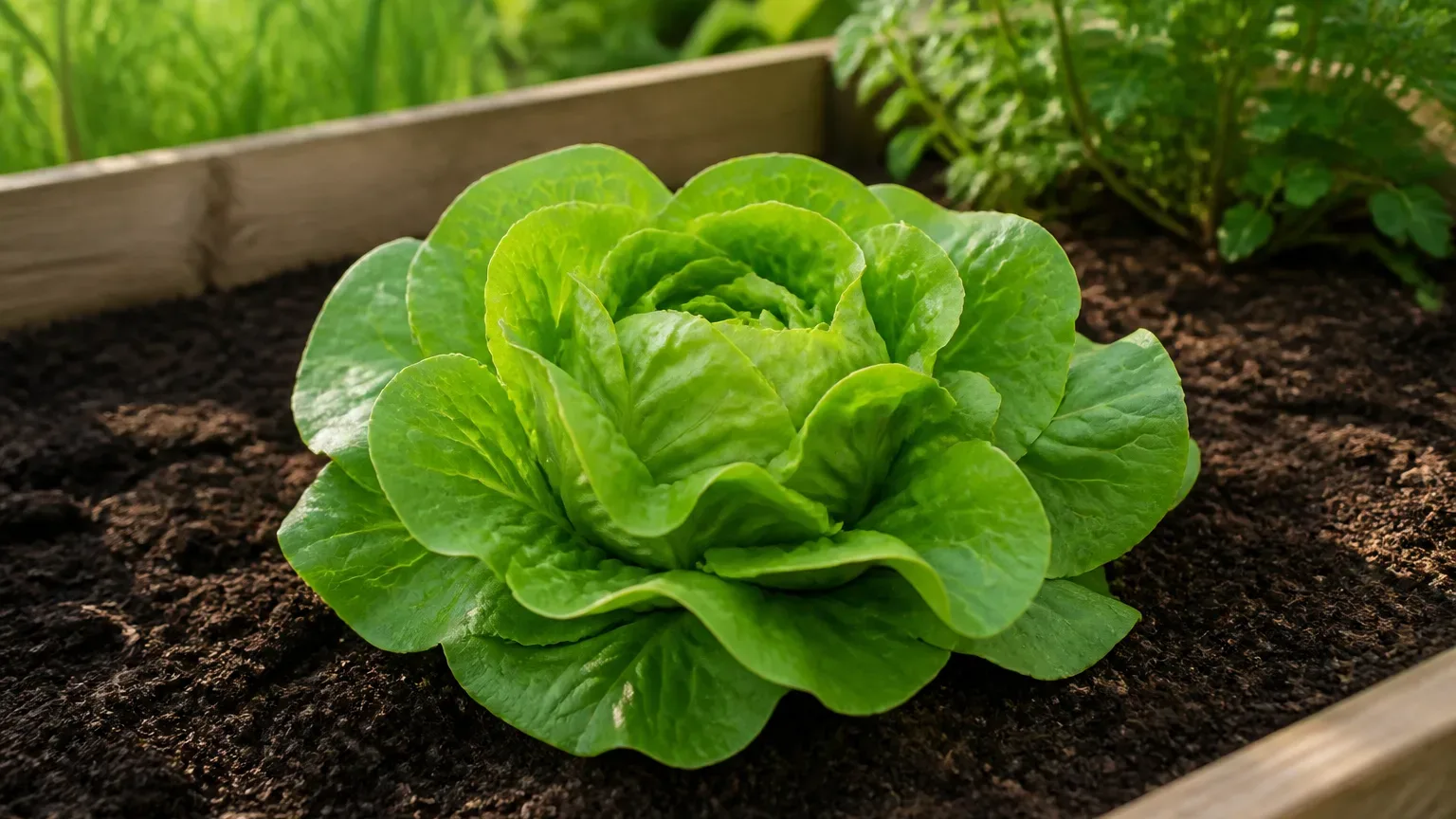
In a cool spring, lettuce can give you an early harvest from soil that would otherwise be open. In warm weather, light shade from a larger plant may slow heat stress, but dense shade can also reduce growth. Do not count on tomatillo foliage to create the right lettuce microclimate; choose a heat-tolerant variety and watch how quickly the bed warms.
Keep lettuce out of the tomatillo’s watering and access lane. If leaves are pressed together or stay wet after rain, thin the planting and harvest more often.
French marigolds
French marigolds bring bright flowers to the edge of a vegetable bed and can add diversity and bloom through the warm season. They are a reasonable choice when you want a compact ornamental near the tomatillos and have room to let it flower.
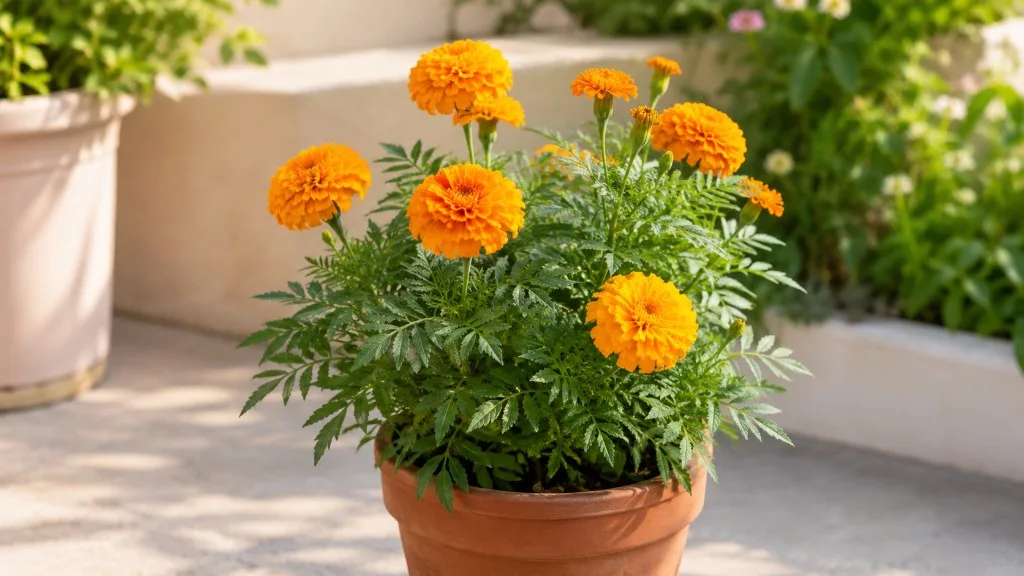
Do not expect a few marigolds to repel every whitefly, aphid, or caterpillar. Some marigold research and garden recommendations concern particular pests, planting densities, or soil conditions; a small border plant is not equivalent to a treatment. Use marigolds for flowers and habitat, then inspect the tomatillo leaves directly.
Place them at the outside of the bed where their mature width will not crowd the tomatillo stems. If they shade the crop or block airflow, move them farther away next season.
Nasturtiums
Nasturtiums add edible flowers and rounded foliage, and trailing varieties can occupy the edge of a bed without taking the central row. Some gardeners use them as trap crops because aphids may colonize nasturtiums; that role only helps if you inspect the plants and respond before the insects spread.
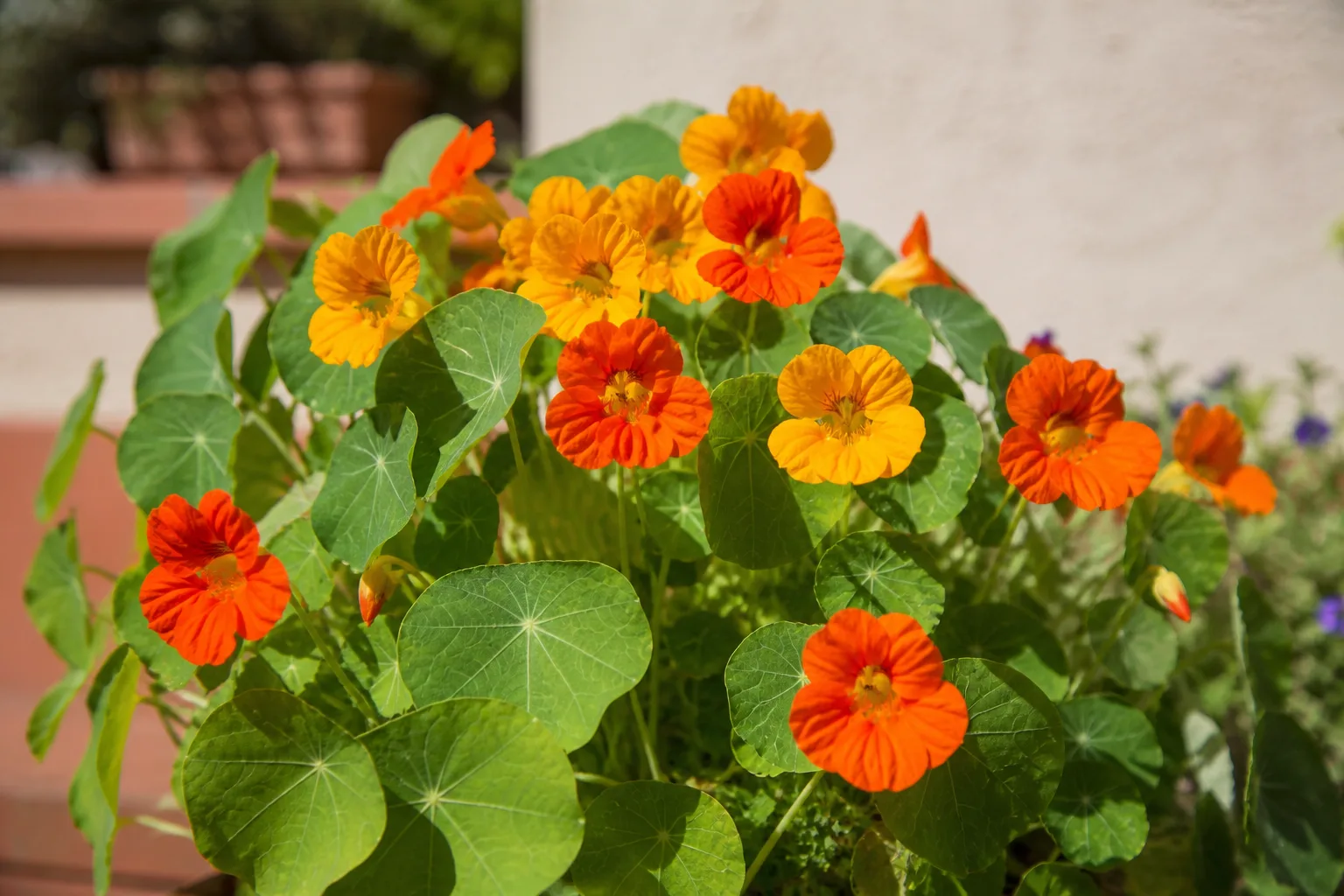
Keep nasturtiums on the perimeter, where their vines can spill outward instead of weaving through tomatillo branches. Check the undersides of leaves at least weekly during active growth. If aphids gather heavily, decide whether to remove infested stems or the plant; leaving a dense, unmanaged colony beside the crop can turn a supposed trap into a nearby pest source.
Nasturtiums are not a reliable disease barrier. Their best reasons for joining the bed are edible flowers, ground-level coverage, and a monitored experiment with insect habitat.
Onions
Onions are upright and relatively narrow, so they can fit along a sunny bed edge or in a short row that does not interfere with tomatillo support. Green onions can be harvested while young, making them easier to fit into a small garden than a full row of storage onions.
Do not rely on onion odor as guaranteed pest control. The dependable planning advantage is their compact form and separate harvest, provided the soil drains well and the onion tops do not crowd the tomatillo’s lower branches. Follow the spacing for the onion type you are growing rather than pushing many bulbs into the same narrow strip.
Keep onions out of the space where you need to stake, cage, or reach the tomatillo. A tidy row is useful only if harvesting it does not require bending or breaking the main crop.
A simple layout for a small tomatillo bed
Set the tomatillos first, because they determine the bed’s footprint. Give them the spacing recommended for the variety and support system, and leave a reachable path or clear side so you can water at the soil line, inspect leaves, and collect fallen fruit.
Then assign companions to the edge or to a short early-season window:
| Bed position or timing | Good first choice | Why it fits | Watch for |
|---|---|---|---|
| Sunny outer edge | Basil or French marigold | Warm-season growth and easy access | Shade and crowding as tomatillos expand |
| Before the canopy fills | Carrots or leaf lettuce | Uses early open soil for a second harvest | Shade, bolting, or root disturbance |
| Cooler-season strip | Cilantro | Quick edible crop; some plants can flower | Heat-driven bolting |
| Outer border | Nasturtium | Trailing growth and edible flowers | Aphids and vines entering the crop |
| Narrow, sunny row | Green onions | Upright growth and a separate harvest | Crowding at the stem base |
A practical first planting is two tomatillo plants with one companion type on the sunward or outer edge, not a ring of seven different species around each plant. Add a second companion only after you can still see the soil, reach the stems, and move through the bed without brushing foliage.
For a small container garden, prioritize the tomatillos and their pollination needs. A large container can hold a modest herb at the edge, but restricted root volume makes a crowded multi-species pot harder to water and feed evenly.
Plants to keep out of a crowded tomatillo block
Tomatillos belong to the nightshade family, along with tomatoes, potatoes, peppers, and eggplants. They can share some pests and diseases, so putting several of these crops in one tight, repeatedly planted block can make rotation and scouting harder. Penn State Extension’s plant-family rotation guidance explains why rotating related crops matters; use a separate bed or rotate the family over time when space allows.
This does not mean a tomato or pepper must never grow anywhere near a tomatillo. It means there is little reason to crowd several susceptible crops together just because they have similar sun and temperature needs. Give each plant enough room for airflow, and avoid following one nightshade with another in the same soil without a rotation plan.
Also be cautious with plants that become tall or sprawling. Corn can cast heavy shade; large vines can cover the tomatillo or obstruct harvest; and aggressive herbs can spread beyond the space you intended. Mature size and access are better guides than a universal “good neighbor” chart.
How to test a pairing without giving up the harvest
Try one new companion in a small section of the bed and leave a comparable tomatillo plant or row without it. Keep watering, support, and spacing as similar as possible. This will not prove a scientific effect in one season, but it can tell you whether the companion is practical in your own garden.
Record a few observable details: whether the companion stayed healthy, whether the tomatillo remained easy to inspect, how often you found the pest you hoped to manage, and whether the harvest was straightforward. Do not judge a pest claim by the companion’s presence alone; pest pressure can change with weather, nearby crops, and the season.
If the pairing crowds the canopy or complicates care, remove it. If it fits well but has no clear pest effect, it may still be worth keeping for flowers, food, or better use of a bed edge. Gardenary’s practical plant-combination guide also emphasizes matching timing and mature growth habits when planning mixed beds.
Common companion-planting mistakes
The first mistake is treating scent as pest control. Aromatic herbs can be part of a diverse garden, but a smell that humans notice does not guarantee that a pest will avoid a crop. Identify the insect, check the plant, and use a control suited to the problem if damage becomes significant.
The second is planting too closely because seedlings look small. Tomatillos can broaden quickly; a companion that fits at transplanting may later reduce airflow and make it difficult to find fruit inside the foliage. Plan from the mature plant, not the nursery pot.
The third is using companions to compensate for poor crop rotation or wet foliage. Flowers and herbs cannot prevent every disease, and dense mixed planting can hold humidity around leaves. Keep the canopy open, water the soil rather than repeatedly wetting foliage, remove diseased debris, and rotate nightshades when practical.
Finally, gardeners sometimes confuse pollinator support with pollination compatibility. Flowers may draw insects into a bed, but a tomatillo still needs pollen from another tomatillo plant to set fruit reliably. Solve that first, then choose companions around the available space.
Conclusion
The best companion plants for tomatillos are the ones that make the bed more useful without making the main crop harder to grow. Basil is an easy warm-season partner; carrots and lettuce can use early space; cilantro offers a short cool-season window; and marigolds, nasturtiums, and onions fit when their size and placement work for your garden.
Start with the tomatillos’ spacing and pollination needs, then add one or two companions at the edge or in a timed planting. Treat pest benefits as possibilities to monitor, not promises. If the bed stays open, reachable, and productive, the pairing is doing its job.