Creeping Jenny Plant Care and Growing Guide
Learn creeping Jenny care: light, watering, soil, pruning, propagation, containers, winter care, and how to prevent unwanted spread.
Creeping Jenny (Lysimachia nummularia), also called moneywort, is a low-growing perennial with round leaves and small yellow flowers. Its stems drape beautifully over a pot edge, but the same trait that makes it useful as a spiller makes it a plant to manage deliberately. Stems can root where they touch moist soil, and pieces can move out of a container through drainage holes, over a rim, or in discarded trimmings.
The safest way to grow it is to decide on containment before you buy it. Use a pot with drainage, keep it off soil that connects to planting beds, inspect the area around the container, and never toss live cuttings into a compost pile that will be spread through the garden. In places where Lysimachia nummularia is regulated or listed as invasive, choose another trailer instead.
Creeping Jenny at a Glance
| Trait | Practical expectation |
|---|---|
| Botanical name | Lysimachia nummularia |
| Common names | Creeping Jenny, moneywort, twopenny grass |
| Habit | Low, trailing, mat-forming perennial |
| Mature size | About 2–4 inches tall; trails or spreads 12–18 inches or more |
| Light | Full sun to partial shade |
| Soil | Moist but draining potting mix or soil |
| Flowers | Small yellow, cup-shaped flowers in summer |
| Hardiness | Commonly grown as a perennial in USDA Zones 4–9, with regional variation |
| Main caution | Vigorous spread; local invasive status must be checked |
Expect more growth in cool, damp conditions and slower, paler growth in deep shade or dry soil. A plant in a small hanging basket may need water much more often than the same species in a large patio pot.
What Creeping Jenny Looks Like
The species has opposite, coin-shaped leaves on slender, rooting stems. Leaves are usually green, while the popular ‘Aurea’ form is yellow to chartreuse, especially in brighter light. Yellow flowers appear in summer from the leaf axils, but the foliage is the main ornamental feature. The plant stays low and spreads horizontally instead of forming a tall clump.
Creeping Jenny vs. Creeping Charlie
These plants are easy to confuse because both creep through lawns and beds. Creeping Jenny has small rounded leaves and yellow flowers. Creeping Charlie (Glechoma hederacea) has scalloped, kidney-shaped leaves, a mint-family scent when crushed, and small blue-purple flowers. Confirm the identity before removing a plant or choosing a control method; different plants respond differently to management.
Is Creeping Jenny Invasive Where You Live?
“Invasive” is not a universal label that behaves the same way in every garden. Invasive-plant databases list creeping Jenny as invasive or potentially invasive in parts of the United States, while climate, soil, waterways, and local regulation determine the actual risk in your area. A plant that stays manageable in a dry raised bed may spread rapidly beside a pond or irrigation runoff.
Before planting, check your state or provincial invasive-plant list and your local extension service. Treat a warning on a regional list as a reason to choose a non-spreading substitute, not as a challenge to outsmart the plant. Even where it is legal, do not plant it near natural areas, drainage ditches, streams, wetlands, or a lawn you cannot monitor.
Choosing a Safe Container and Location
Choose a sturdy pot with several drainage holes and no cracks that can hold rooted pieces. A 10- to 14-inch container gives one plant enough room to trail without requiring constant repotting. A hanging basket can work, but place it where fallen stems cannot contact soil below. A saucer should catch water without creating a permanently wet reservoir; empty standing water after irrigation.
For mixed containers, place creeping Jenny at the rim with taller plants in the center. Leave enough space to see the pot edge and inspect the ground beneath it. Set the pot on a hard surface such as a patio, balcony, or paving rather than directly on a garden bed. Once a month during active growth, lift the pot and check for stems emerging from the drain holes.
Light, Color, and Heat
Creeping Jenny grows in full sun to partial shade. Bright light produces tighter growth and, in golden cultivars, richer yellow color. Morning sun with afternoon shade is useful in hot climates where intense afternoon exposure bleaches leaves or dries the container before evening. Deep shade usually produces longer gaps between leaves and less color.
Use the leaves as a light indicator. If green growth becomes loose and dark, increase morning light gradually. If golden leaves look washed out and the pot dries unusually quickly, move it away from reflected heat or give it afternoon protection. Change one condition at a time so you can tell whether the improvement came from light, moisture, or both.
Soil and Planting
Use a quality container mix rather than garden soil. A mix containing peat or coir, composted organic matter, and a drainage ingredient such as perlite gives roots access to moisture and air. The goal is not a gritty, fast-drying mix; it is a mix that holds some water but drains freely after a thorough watering.
Plant at the same depth as the nursery pot. Firm the mix around the root ball, water until excess drains from the bottom, and allow the surface to settle before topping up. Do not bury trailing stems under mulch or potting mix. A buried node can root, making future removal and containment harder.
Watering Without Root Rot
Creeping Jenny likes consistently moist soil, but “moist” does not mean saturated. Check the top inch of mix with a finger and lift the container when you are learning its drying rate. Water thoroughly when the surface is beginning to dry, then let excess drain. In a large pot during mild weather this may be every few days; in a small basket during hot, windy weather it may be daily or even twice daily.
Weather and container material matter more than a fixed schedule. Terracotta dries faster than glazed ceramic or plastic. A pot exposed to wind loses moisture faster than one grouped with other containers. Rain may wet the leaves while the root ball remains dry beneath a dense mat of stems, so check the mix after storms rather than assuming the plant is watered.
Yellowing leaves, sour-smelling mix, and soft black stems suggest excess moisture or poor drainage. Move the pot under cover, confirm that holes are open, and wait until the upper mix begins to dry. If roots are brown and mushy, remove damaged tissue and repot into fresh mix. Do not respond to every yellow leaf by adding more water.
Temperature and Seasonal Growth
This perennial tolerates cold in much of the temperate United States, but survival in a pot is less predictable than survival in the ground. Container roots experience colder temperatures because they are surrounded by air rather than insulating soil. In cold regions, move the pot to a sheltered location after growth slows, or sink the container into the ground if that is compatible with local containment rules.
In spring, remove dead or winter-damaged stems and resume watering as new growth appears. In summer, watch small containers closely during heat waves. In fall, inspect for rooted stems before moving the pot indoors or near a greenhouse. Never bring a pot inside without checking the foliage and undersides of leaves for insects.
Feeding for Foliage Without Excessive Spread
Creeping Jenny generally needs modest feeding in a container. Mix in a controlled-release fertilizer at the label rate when planting, or use a balanced liquid fertilizer at half strength during active growth if the plant is pale and growth is weak. Overfeeding creates soft, fast growth that requires more trimming and may increase the chance of stems reaching soil.
Stop routine feeding in late summer or when growth naturally slows. Water the plant before applying liquid fertilizer, and never exceed the product label. If foliage is green and vigorous, fertilizer is not the solution to sparse growth; check light, moisture, and root crowding first.
Best Creeping Jenny Varieties
The straight species has green foliage and a vigorous trailing habit. ‘Aurea’ is the familiar golden form, often used to brighten shaded or partly shaded containers. Its color ranges from chartreuse to yellow depending on light. ‘Goldilocks’ is another golden selection sold for its compact trailing habit. Cultivar descriptions and hardiness claims vary by nursery, so use the plant tag as a starting point rather than a guarantee.
Lysimachia confertiflora ‘Golden Globes’ is sometimes marketed alongside creeping Jenny but is a different species with a more upright, flowering habit. Check the botanical name when you need the exact trailing plant. If your priority is low spread risk, do not assume a golden cultivar is automatically sterile or non-invasive. Ask a local extension service or use a non-spreading alternative such as creeping thyme where conditions suit it.
Pruning and Containment
Trim creeping Jenny whenever stems approach the ground, neighboring pots, or a drain. Use clean scissors and cut just above a leaf pair. Remove no more than about one-third of the plant at one time if it is stressed. Regular tip pruning encourages branching and keeps the pot dense; a harder renewal cut is best timed for active growth when the plant can replace foliage.
Collect every cutting. Seal live trimmings in a bag for disposal rather than placing them in home compost. Sweep the area below the pot and check the saucer, bench, cracks in paving, and nearby soil for rooted pieces. If a stem has already rooted outside the pot, remove the rooted section with surrounding soil and monitor the site for regrowth. Do not pull a long runner and leave small nodes behind.
Propagating by Cuttings or Division
Propagation is easy because stems root at nodes. That is also why accidental spread is easy. Propagate only if you have a specific container or recipient ready, and label the plant so no one mistakes it for a harmless ground cover.
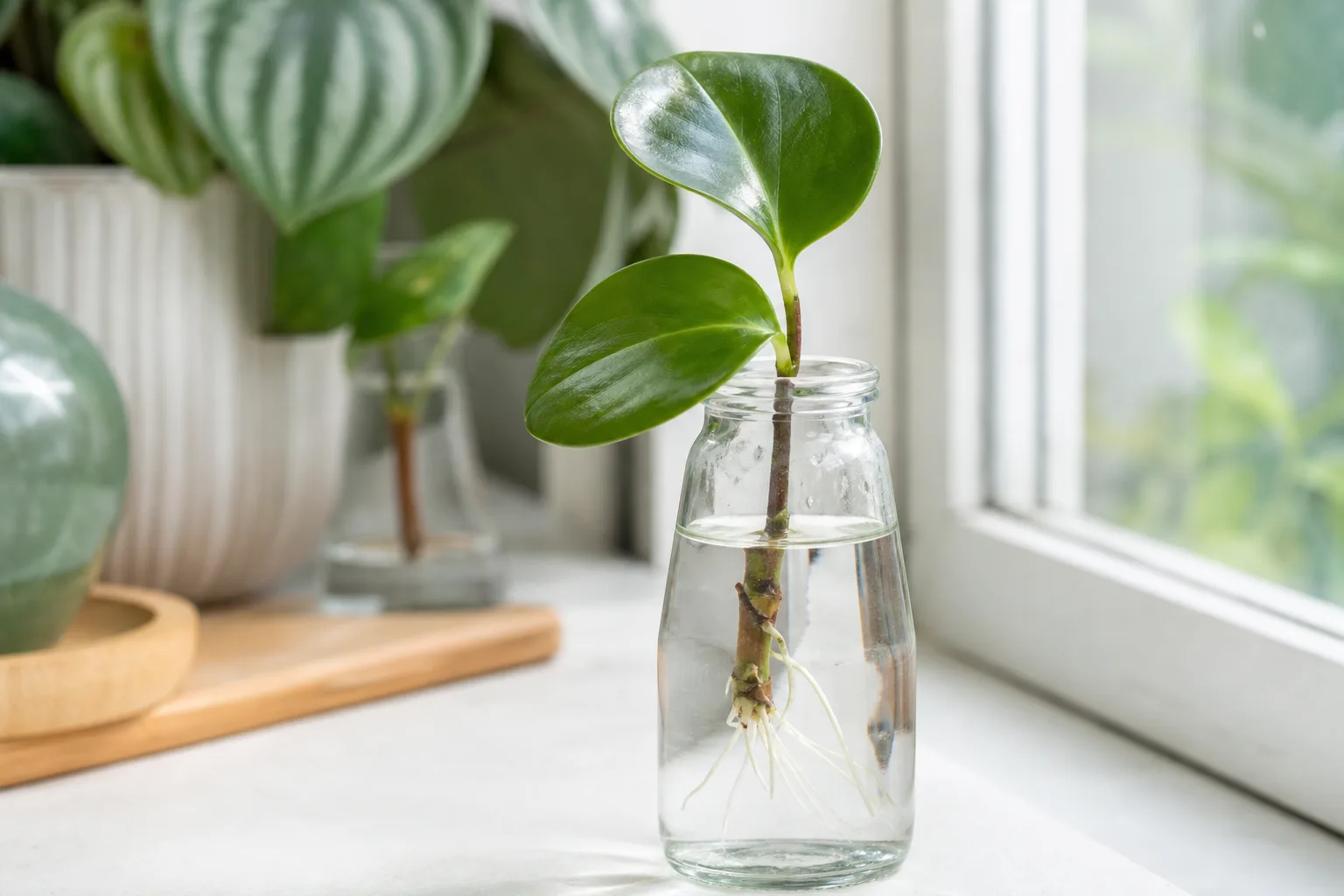
To root a stem cutting in water:
- Cut a healthy 2- to 4-inch stem just below a node with clean scissors.
- Remove leaves from the lower half and place the node in room-temperature water.
- Keep the cutting in bright, indirect light and change the water when it becomes cloudy.
- Pot it when roots are about an inch long, then keep the mix evenly moist while it adjusts.
To root it directly in mix, insert the node into damp potting mix, cover the pot loosely with a clear bag for humidity, and provide bright indirect light. Remove the cover when new growth appears. Division is best for a crowded container: slide out the root ball, separate a section with roots and stems, and replant immediately. Water both divisions, but do not create extra plants merely because you can.
Growing Creeping Jenny From Seed
Seed is less predictable than cuttings or division, and seedlings may not match a named golden cultivar. If you want to try it, sow on the surface of moist seed-starting mix in spring or fall. Do not bury the small seed deeply. Cover the tray with a clear lid or plastic, place it in bright light, and keep the surface evenly moist without leaving it waterlogged.
Germination may take several weeks. Vent the cover briefly once seedlings emerge, thin crowded plants, and transplant after they have several true leaves and begin to trail. Keep seed trays contained; a dropped plug or spilled mix can establish wherever conditions are damp.
Potting, Repotting, and Overwintering
Repot when roots circle densely, water runs straight through, or the plant dries immediately after watering. Move up only one pot size. A very large container stays wet around a small root ball and can cause decline. Before repotting, prune long runners and inspect for stems that have rooted through drainage holes.
In cold climates, treat a potted plant as a seasonal accent unless you have a bright, cool place to overwinter it. Bring it in before frost, rinse the foliage, inspect for pests, and place it near a bright window or under a grow light. Growth may slow and become less colorful indoors. In spring, acclimate it to outdoor light gradually. If the plant is invasive or restricted locally, do not overwinter it just to release more material later; replace it with a safer alternative.
Pests, Diseases, and Troubleshooting
Creeping Jenny is usually more troubled by placement and moisture than by insects. Aphids, spider mites, or whiteflies may gather on tender growth, especially indoors. Isolate an infested pot, rinse foliage with a gentle stream of water, and use only a product labeled for the plant and pest if further control is needed.
Rust and leaf spots are more likely when foliage stays wet, air movement is poor, or rain keeps the plant saturated. Remove affected leaves, improve spacing, water the soil rather than the foliage, and discard badly infected material. Copper or other fungicides should be used only according to the label and local rules; a spray cannot correct waterlogged soil.
Use this quick diagnosis:
- Few flowers but healthy leaves: check light; the plant may be in too much shade.
- Pale golden foliage: compare it with the cultivar’s normal color, then check for low light or nutrient depletion.
- Dry, crispy edges and sudden flower loss: check the root ball, pot size, wind, and heat before increasing fertilizer.
- Soft stems and sour soil: improve drainage and reduce watering frequency.
- Runners outside the pot: remove the rooted sections and inspect the whole container, bench, and ground.
Conclusion
Creeping Jenny is attractive because it grows with very little hesitation. Give it bright light, moist but draining soil, modest feeding, and regular trimming, and it will soften a container edge with chartreuse or green foliage. The responsible growing plan is just as important: verify local invasive status, keep the pot on a hard surface, inspect for escape, collect every cutting, and avoid planting it near natural areas or waterways. If those safeguards do not fit your space, choose a non-spreading trailer instead. A beautiful container is not worth creating a management problem beyond the pot.