How to Start a Cut Flower Garden Like a Pro
Learn how to plan a cut flower garden: choose a sunny, reachable bed, select long-stem blooms, time seedings by frost date, and cut flowers for longer vase life.
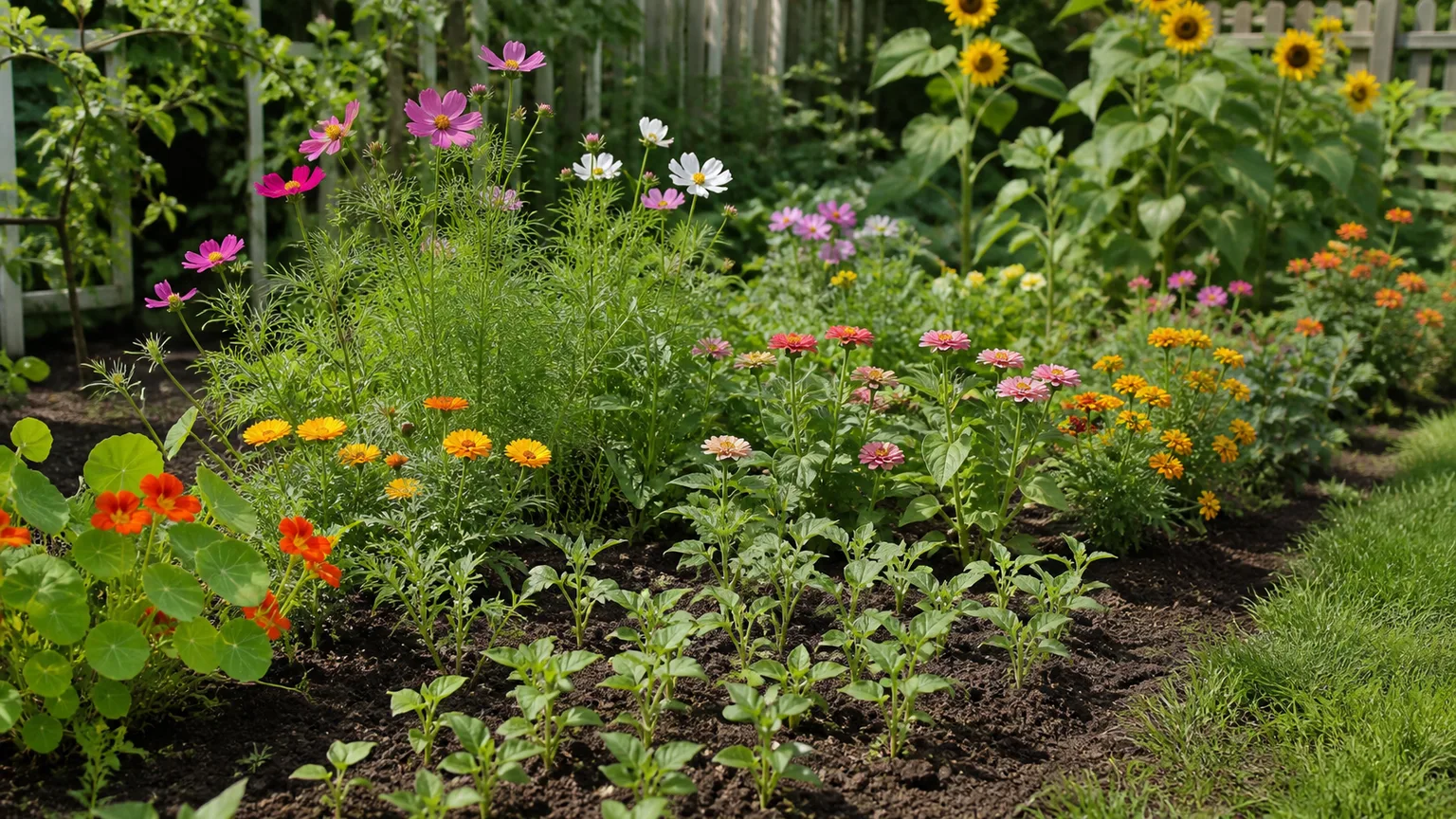
A cut flower garden is a small, planned growing area where you raise flowers and foliage specifically to bring indoors. Instead of taking every bloom from an ornamental border, you give cutting crops their own rows or bed, choose varieties for useful stems, and plant in waves so flowers do not all arrive at once.
The most satisfying first garden is usually smaller and more repetitive than a seed catalog makes you think it should be. Start with a sunny site, a few dependable crops, and flowers you genuinely want in a vase; add more varieties after you learn what thrives in your climate and what you actually enjoy arranging.
Plan the garden around the bouquets you want
Before choosing flowers, picture the vase you will fill. A short jar on a kitchen table needs fewer long stems than a tall arrangement, while a loose cottage-style bunch can use airy flowers and foliage that would not suit a compact, formal bouquet. Your container, preferred colors, and willingness to condition stems all influence which plants deserve bed space.
Most useful bouquets combine a few jobs: a focal flower that draws the eye, a line or spike that adds height, a smaller filler that closes gaps, and foliage or seed heads for texture. You do not need a different plant for every role; a handful of zinnias can be the focal point, cosmos can add movement, and basil or dill can supply scent and green texture.
Set a realistic first-season goal
For a first year, choose three to five dependable crops rather than twenty kinds of flowers. One workable mix is a repeat-blooming annual such as zinnia, a crop that gives a strong vertical stem such as snapdragon, a single-stem sunflower for a focal bloom, and one foliage or filler plant such as basil, dill, or ammi. If you love spring flowers, make room for a small bulb patch or cool-season annual instead of trying to force every crop into summer.
Decide how often you want to cut. If you want a weekly jar, plant more of the crops that branch or rebloom after harvest; if you only arrange flowers occasionally, favor varieties with a longer flush or stagger a few small sowings. A garden that produces more stems than you can cut, condition, or use can become a chore, so scale the planting to your routine.
Choose a sunny site and an easy-to-reach layout
Most dependable cut flowers need a sunny position, often around six or more hours of direct light, with soil that drains after rain. Observe the site for a day before committing: a spot that looks bright in the morning may sit in the shadow of a fence or house by afternoon. Avoid low ground that stays soggy and exposed corners where wind regularly bends tall stems.
Put the bed where you can water it and reach every row without stepping on the growing soil. Rows make weeding, staking, and picking easier, and access between mature plants matters because tall stems can tangle or break when you push through a crowded bed. If you have an established border you want to keep ornamental, a separate cutting patch also lets you harvest freely without leaving visible holes in the display.
A simple 3-by-8-foot starter bed
One 3-by-8-foot bed is enough to learn the rhythm of sowing, cutting, and replacing crops. Keep the bed narrow enough to reach from both long sides, leave a clear path on each side, and group each flower in a short row or block rather than scattering single plants everywhere. The exact dimensions can change; accessibility is more important than a standard bed size.
In the Northern Hemisphere, put the tallest flowers on the north side when possible so they are less likely to shade shorter crops. A beginner layout might place sunflowers or amaranth at the back, zinnias and snapdragons in the middle, and calendula or compact foliage near the front. Keep plants with similar water, sun, and spacing needs together, and leave enough room for the mature size on the seed packet rather than judging by the tiny seedling.
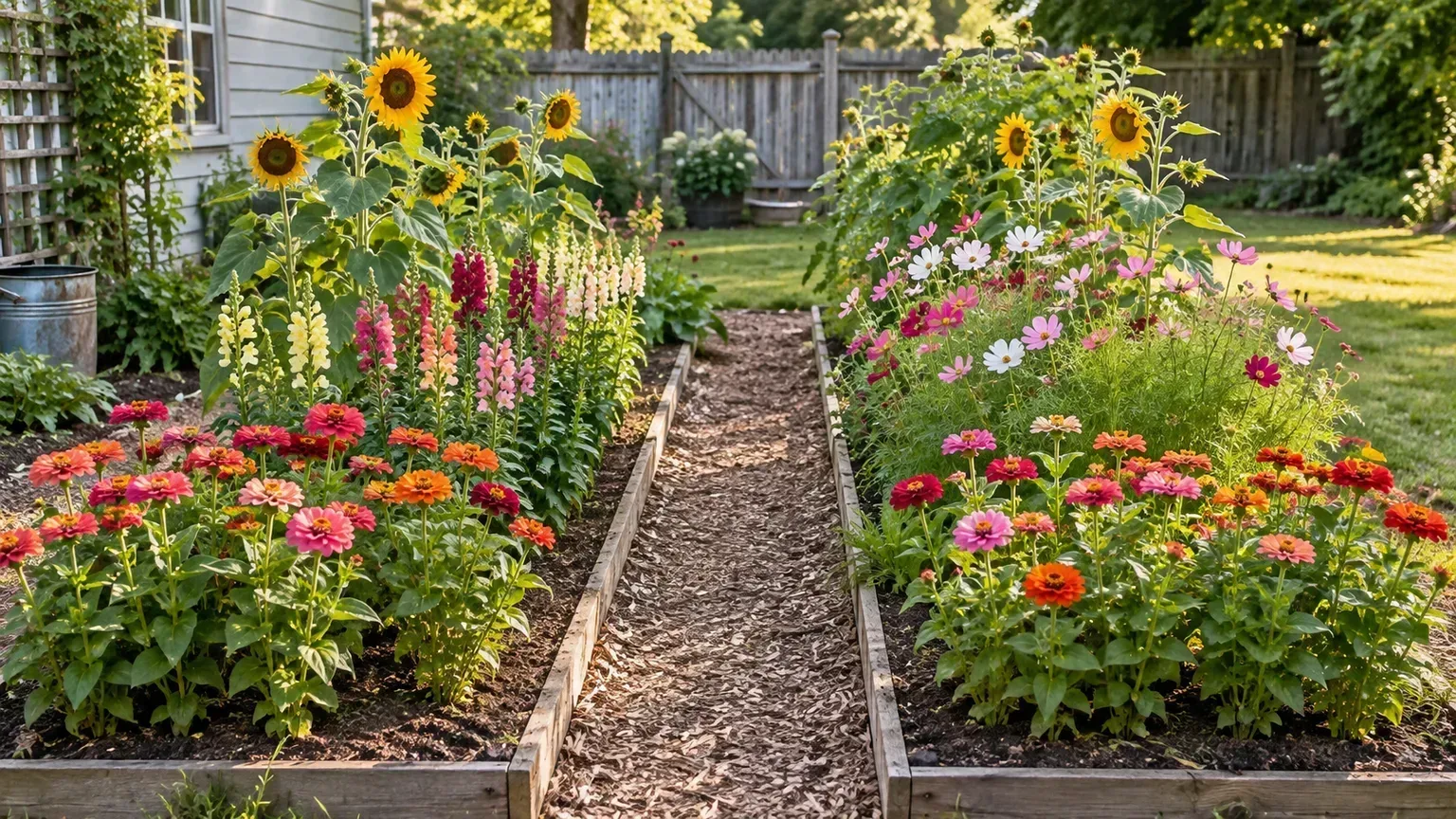
You can grow some cut flowers in containers, but treat pots as a small supplement rather than a direct substitute for a bed. Large sunflowers and tall, top-heavy crops need deep root room and support; smaller annuals can work in roomy containers if they get enough sun, water, and drainage. Containers also dry faster, so they suit gardeners who can check them regularly.
Prepare the soil before buying seeds
Healthy stems start below the soil line. If you do not know what your garden soil needs, use a local soil test before adding fertilizer or lime; then follow the lab’s recommendations instead of guessing. Penn State Extension advises beginning with good soil in a sunny site and testing fertility so amendments match the bed.
Remove perennial weeds before planting because they are harder to control once flowers fill the rows. Loosen compacted soil without working it when wet, and add mature compost where it will improve structure or organic matter; more compost or fertilizer is not automatically better. Excess nutrients, especially when applied without a test, can push leafy growth at the expense of sturdy flowering stems.
Plan how water will reach the bed before seedlings emerge. A soaker hose or drip line can make it easier to water at soil level, while a light mulch between established plants helps slow moisture loss and suppresses weeds. Keep the seed row itself clear until seedlings are large enough that mulch will not bury or smother them.
Choose flowers by the job each stem will do
A practical cut-flower patch needs a few reliable shapes, not every color of every species. Choose varieties for stem length, branching habit, flowering season, and how they hold after cutting; the same species can vary substantially by cultivar. When a packet or grower describes a variety as suitable for cutting, check whether it means long stems, repeat bloom, or a particular harvest stage.
Focal blooms, spikes, fillers, and foliage
Focal flowers provide the main color or scale. Zinnias, dahlias, sunflowers, and some tulips can fill this role, but they have different seasons and habits: many zinnias branch and produce repeated stems, a single-stem sunflower usually gives one main bloom, and dahlias need warm-season space and may require tuber storage in cold-winter climates.
Line flowers give an arrangement height and direction. Snapdragons, larkspur, stock, and gladiolus make vertical stems, while cosmos and amaranth add an airier shape. Check the plant’s mature height and support needs; a tall flower that flops or has short stems may be beautiful in the garden but frustrating to cut.
Fillers and foliage make a small number of focal flowers look like a complete bunch. Calendula, feverfew, ammi, basil, dill, and suitable ornamental grasses can contribute smaller flowers, umbels, scent, or greenery. Choose plants you can identify confidently, and check local guidance before adding any species that spreads aggressively or is toxic to household pets or children.
Add crops for cool weather and the end of the season
Annuals often give beginners the quickest path to abundant stems, but they need to be replanted and can stop flowering when heat, drought, or frost arrives. Penn State Extension recommends combining annuals with perennials and bulbs; it also cautions that few perennials provide flowers all season, so their foliage and non-blooming weeks still matter.
Use cool-season flowers and bulbs to extend the calendar at its edges. Depending on climate and cultivar, spring bulbs and hardy annuals can precede warm-season zinnias and celosia, while asters, mums, dahlias, seed heads, grasses, evergreen foliage, and berrying branches can contribute later. That is a longer harvest window, not a promise that an outdoor bed will produce fresh flowers every month; protected cultivation and local winter conditions change what is possible.
Shrubs and perennials are a longer-term investment. Give them time to establish, take only a modest number of stems, and leave enough healthy foliage for the plant to recover; cutting a perennial flower crop hard can reduce next season’s growth. The Royal Horticultural Society’s selection guide includes annuals, perennials, bulbs, shrubs, and foliage, but its specific planting examples reflect UK conditions, so use local extension advice for regional timing.
Read seed packets for cut-flower traits
Look beyond the flower photo. A packet may describe a compact bedding variety, a branching type, a single-stem type, or a series bred for long stems; those differences matter more in a cutting patch than whether the pictured bloom matches your favorite color. Penn State notes that some seed packets use a scissors symbol to flag varieties selected for cutting, but read the description rather than relying on one symbol.
Check days to maturity, mature height, spacing, heat tolerance, and whether the plant is annual, biennial, or perennial. “Days to maturity” is an estimate, not a guarantee: it can be measured from direct sowing or transplanting, and cool weather or low light may delay flowering. Save the packet or write the cultivar name in a garden notebook so you can compare the result with the description.
Buy fewer seeds than your enthusiasm suggests. One small packet often contains far more seed than a home gardener can use in a single sowing, and flowers such as zinnias or cosmos may branch and keep producing after the first cut. A compact plan with one or two varieties per role makes it easier to notice which stems last, which colors combine well, and which plants struggle in your actual bed.
Build a planting calendar from local frost dates
Start with your average last spring frost and first fall frost, then read the seed packet for each crop’s temperature needs and estimated time to flower. Hardiness zone describes average winter survival; it does not tell you exactly when soil is warm enough to sow a tender annual or how long your local growing season is. Local frost calendars and nearby extension guidance are more useful for scheduling.
Think in windows rather than one universal planting day. Hardy annuals and some cool-season flowers can go in when local conditions allow; tender heat-loving flowers wait until frost risk has passed and soil has warmed; fall sowing of bulbs or hardy annuals depends on whether your climate gives them the required season. For every sowing, estimate whether the crop has time to flower before your first fall frost, with a cushion for slower-than-expected growth.
Clemson Extension released a new Southeast outdoor cut-flower production manual in 2026, while NC State Extension maintains a cut-flower production and handling resource hub. Those are useful regional starting points, especially for growers in the South; gardeners elsewhere should pair them with their own extension service rather than copying a Southeast calendar. Clemson’s announcement describes that regional manual.
Use a notebook, spreadsheet, or wall calendar to record sowing date, variety, first bloom, first harvest, and whether stems were long enough. Flower growers interviewed by Johnny’s Selected Seeds describe planning by crop and season and recording sowing and harvest details; that habit helps a home gardener replace guesswork with local experience. After a season or two, your own bed’s dates will be more useful than a generic calendar.
Decide what to direct-sow and what to start indoors
Direct sowing is often the simplest choice for warm-season flowers that dislike root disturbance or grow quickly once the soil is warm. Sunflowers are an easy example: sowing them where they will grow avoids transplanting a tall, fast-growing seedling and makes it straightforward to plant a small new patch later.
Starting seeds indoors can buy time in a short season or help with crops that need a longer lead-in, but it adds lights, trays, space, and daily attention. Use a clean seed-starting mix and bright light, keep seedlings from becoming crowded or leggy, and harden them off gradually before moving them outdoors. If you do not have a suitable indoor setup, buying a few healthy starts or choosing direct-sown crops is usually better than raising weak seedlings in a dim window.
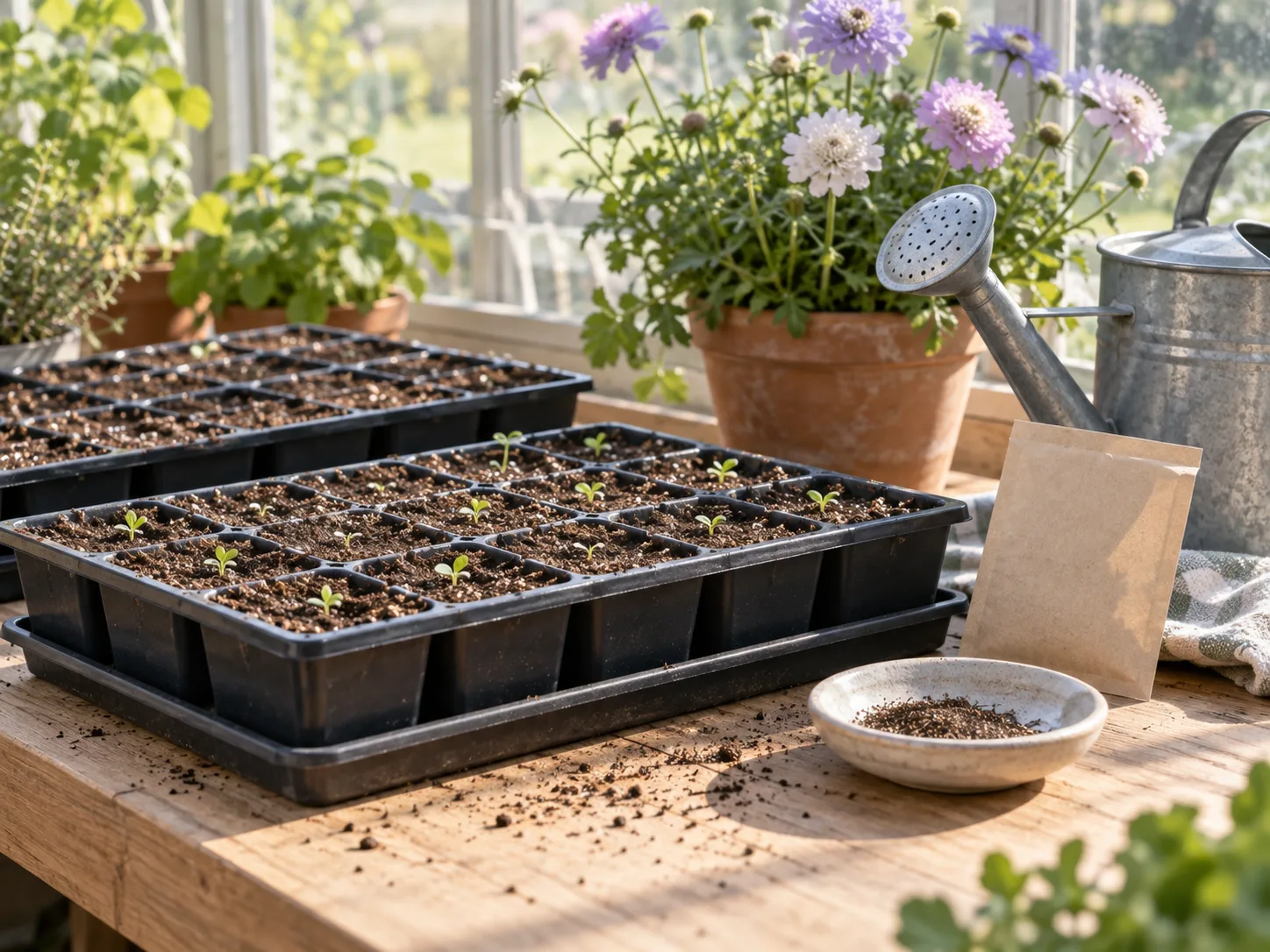
Follow the seed packet for sowing depth and whether the crop should be transplanted. Some flowers germinate best with light at the surface; others need covering, warmth, or a period of cool conditions. Do not assume that every seed should be planted at the same depth or started indoors on the same date.
Use succession planting without sowing every week
Succession planting means arranging sowings or plantings so new flowers mature as earlier ones slow down. It is not the same as sowing every crop at the same interval: a branching zinnia can keep producing after repeated cuts, while a single-stem sunflower usually needs another plant to make the next main bloom.
For a small garden, divide one row or bed into two or three short sections. Sow the first section, wait long enough to see how quickly that crop grows in your conditions, then plant the next section while there is still time for it to flower. Keep the rest of the bed for crops with different bloom windows or for replacing a row that has finished.
Grower schedules are useful examples, not fixed recipes. Two Sisters Flower Farm reports planting zinnias about four weeks apart and sunflowers nearly weekly during its frost-free growing season; those intervals reflect its varieties, workload, and climate. Start more modestly: try one follow-up sowing for a repeat-blooming crop and a few small waves for single-stem flowers, then adjust according to days to maturity, heat, and the remaining time before frost.
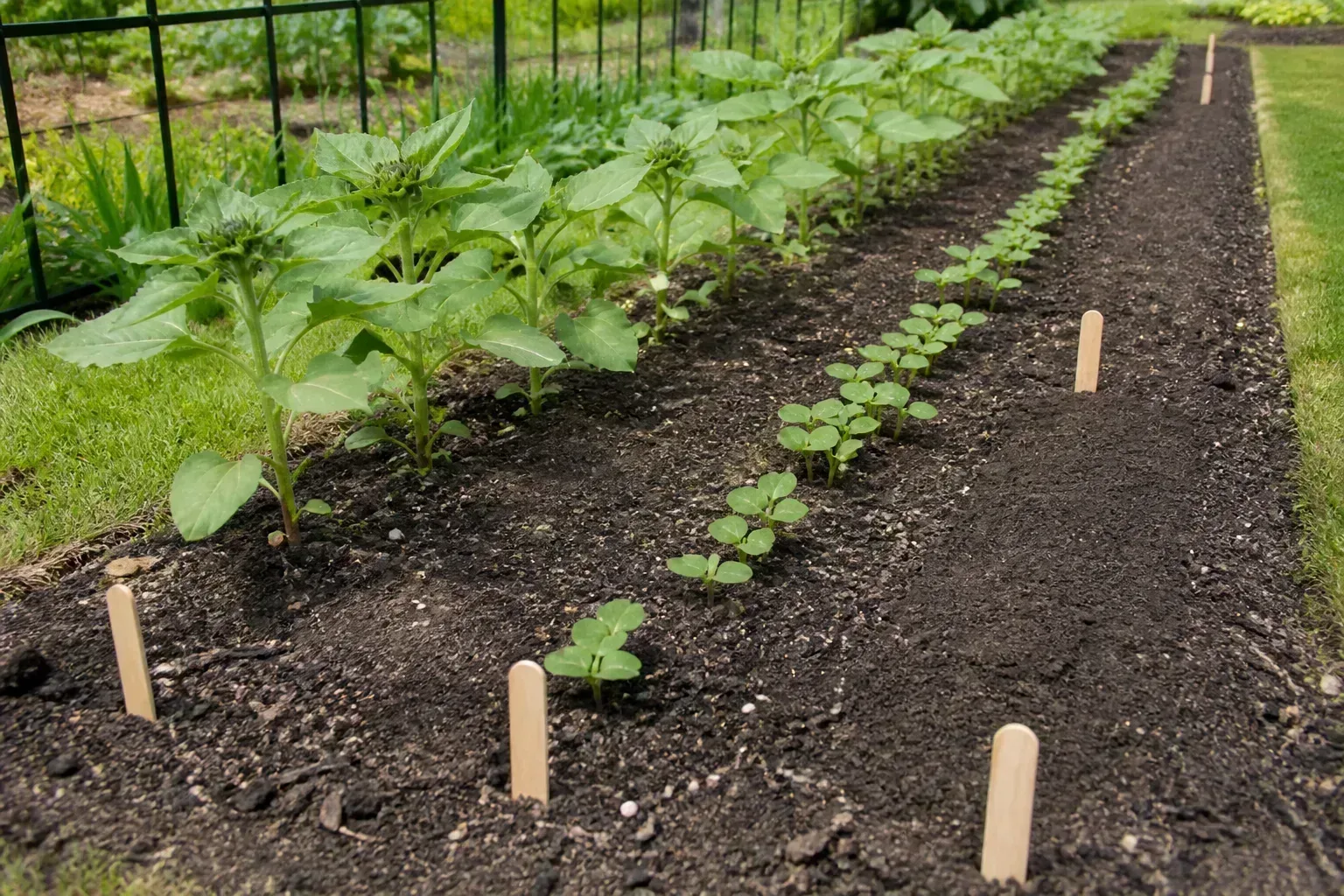
Avoid sowing a large patch just because a calendar says “every two weeks.” If the first planting is still producing more stems than you can use, delay the next sowing; if a single-stem crop is nearly finished, a small new cohort can prevent a gap. Write down what you actually cut, not just what you planted, so next year’s schedule reflects bouquet supply rather than seedling count.
Support and maintain stems for cutting
Tall flowers benefit from support before they lean. Install stakes or horizontal netting while plants are still manageable, and let stems grow through the grid as they rise; putting support in after a storm can mean breaking roots or trying to straighten stems that have already lodged. Wind exposure, bloom weight, and the variety all affect how much support you need.
Water deeply enough to wet the root zone, then adjust for rainfall, soil, and heat rather than watering by the calendar alone. Watering at soil level helps keep foliage dry, and good spacing allows air to move around plants. Zinnias can develop powdery mildew in crowded or damp conditions, so choose resistant varieties when available and do not pack seedlings together to squeeze in one more row.
Pinch only crops and cultivars that benefit from branching, and do it at the stage described by the grower or seed packet. A single-stem sunflower grown for one straight focal bloom is a different crop from a branching sunflower grown for several smaller stems. Likewise, deadhead plants when you want them to keep flowering, but leave a few blooms if you want seed, wildlife value, or a visual pause in the garden.
Keep weeds small, check plants as you harvest, and remove damaged or diseased material promptly. You do not need to spray on a fixed schedule; identify the problem first, use cultural controls where practical, and follow local extension and product-label guidance if treatment becomes necessary. The aim is a clean, productive bed, not a perfect one without a single insect or blemished leaf.
Harvest at the right stage and time of day
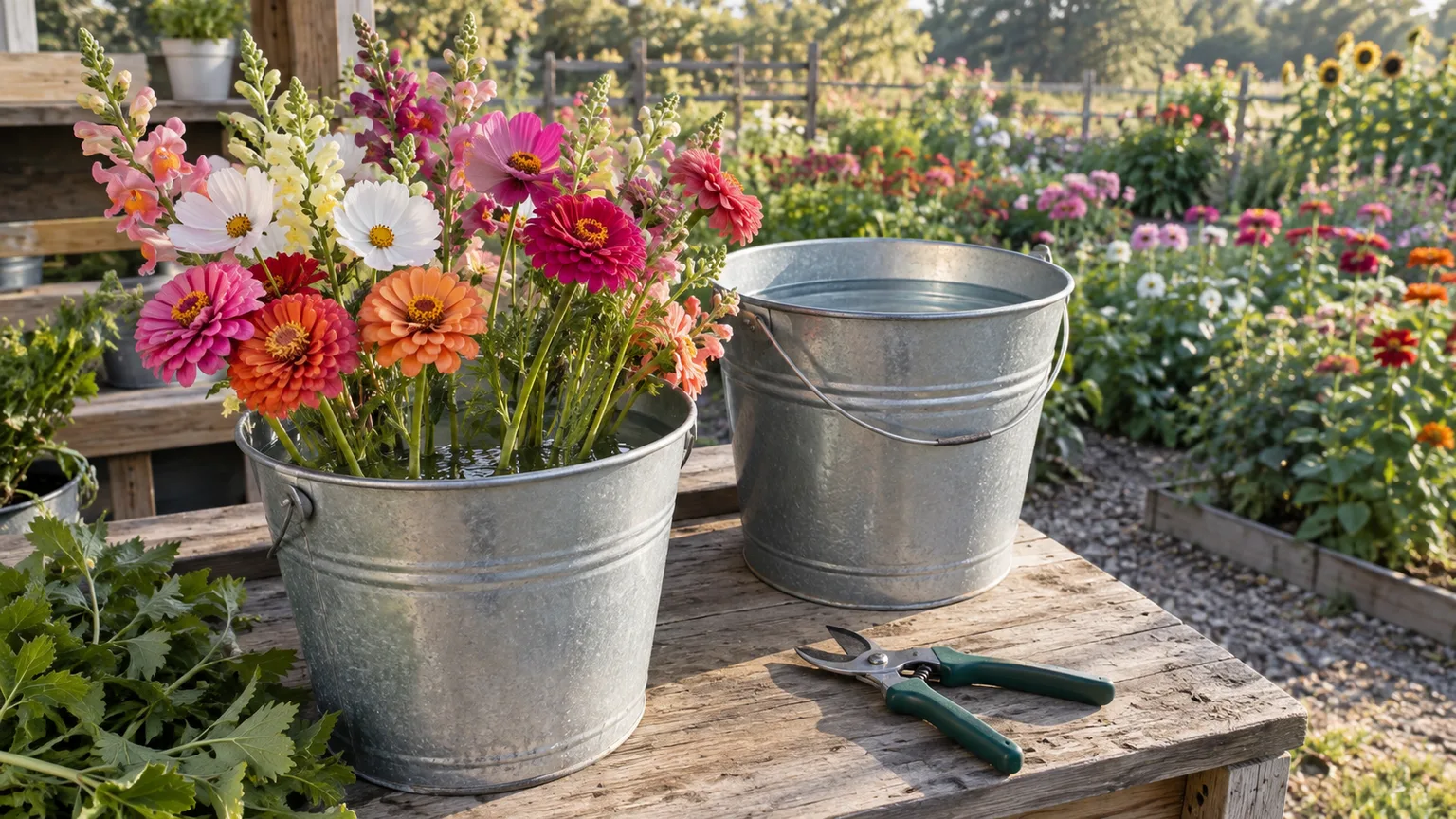
For most flowers, cut when stems are hydrated and temperatures are cool—often in the morning after dew has dried. Avoid harvesting in hot midday sun when plants are losing water quickly, and take a clean bucket of water with you so stems do not sit in the air while you finish the row. Penn State Extension and the RHS cutting guide both emphasize prompt hydration after cutting.
The best bloom stage depends on the flower. Many flowers last longer when cut as color begins to show, but roses and dahlias may fail to open if cut as tight buds; spike flowers can be cut when lower florets begin opening, while some other species should be more open. Learn the stage for each crop from a reliable variety guide, then test a few stems and note how they develop in your vase.
Use sharp, clean snips or a knife and cut the longest usable stem without stripping the plant of too much foliage. For branching annuals, a cut above a healthy leaf joint may encourage side shoots when the variety responds that way; for perennials and shrubs, harvest conservatively and leave enough leaves and growing points for recovery. Do not take every bloom from a plant you want to keep flowering or use as pollinator habitat.
Condition flowers for a longer vase life
Bring stems to a cool work area as soon as possible. Remove leaves that would sit below the waterline, wash the bucket or vase, and recut stem ends with a sharp tool before arranging; foliage left in water breaks down and can cloud it. The RHS conditioning guide recommends clean containers, fresh cuts, and a cool conditioning period for many garden flowers.
Use commercial flower food according to its label if you have it, or start with clean water and change it regularly. Do not assume a homemade sugar, vinegar, or aspirin mixture is equivalent to a tested flower preservative; the RHS conditioning guide notes that homemade solutions are less reliable than proprietary flower food. Keep the arrangement away from direct sun, heaters, and ripening fruit, and top up or replace water when it becomes cloudy.
Some flowers need special handling, so avoid applying one trick to every stem. Woody stems, hollow stems, and flowers that droop can have species-specific conditioning instructions; check a trusted guide before splitting, crushing, or dipping stems in hot water. A simple routine—clean bucket, clean cut, no submerged leaves, cool room—is enough for many everyday garden bouquets.
Troubleshoot short stems, gaps, and crowded plants
If stems are short, first check the variety and harvest timing. A compact bedding cultivar may never make the long stem you want, while cutting a flower before its stem has extended can leave you with a small bloom and little vase length. Compare the packet’s mature height and cut-flower description with the plant’s actual performance before changing fertilizer or adding more water.
If plants stretch, flop, or tangle, look at light, spacing, wind, and support together. Crowding does not create more usable stems when foliage shades lower growth or neighboring plants fall into one another; thin seedlings early, install netting before stems lean, and move the tallest crop to a less exposed side of the next bed. Avoid adding nitrogen as a reflex, because lush growth is not the same as strong stems.
If the garden has a long gap with no flowers, the crop mix may be too concentrated in one season or the seedings may have matured together. Add one early or late crop suited to your local climate, keep a short record of first bloom dates, and stagger only the plants that will benefit from another wave. If a new sowing would mature after frost, use that bed space for a suitable cool-season crop, a bulb for next spring, or a cover rather than expecting a tender annual to catch up.
If zinnias develop mildew or plants have few blooms, improve air movement, check whether the bed gets enough direct sun, and compare your feeding and watering with the seed packet and extension guidance. When a variety repeatedly disappoints, replace it next year; not every beautiful garden cultivar makes a good cutting crop. Keeping a simple “grow again / trial / skip” note helps you improve the garden without turning every problem into a major project.
Conclusion
Start with one reachable, sunny bed and a short crop list chosen for the bouquets you like. Improve the soil based on a test, plant by local conditions, and distinguish repeat-cut flowers from crops that need a fresh sowing for each new flush.
Then treat the first season as a useful trial: record what bloomed, how long the stems were, and what lasted in a vase. With that information, you can expand the crops that earn their space, phase out the ones that do not, and build a longer, more reliable run of homegrown flowers one small planting at a time.