15 Dahlia Companion Plants for Lasting Blooms
Find the best dahlia companion plants for cutting gardens, pollinator borders, containers, and mixed beds, plus spacing and pairings to avoid.
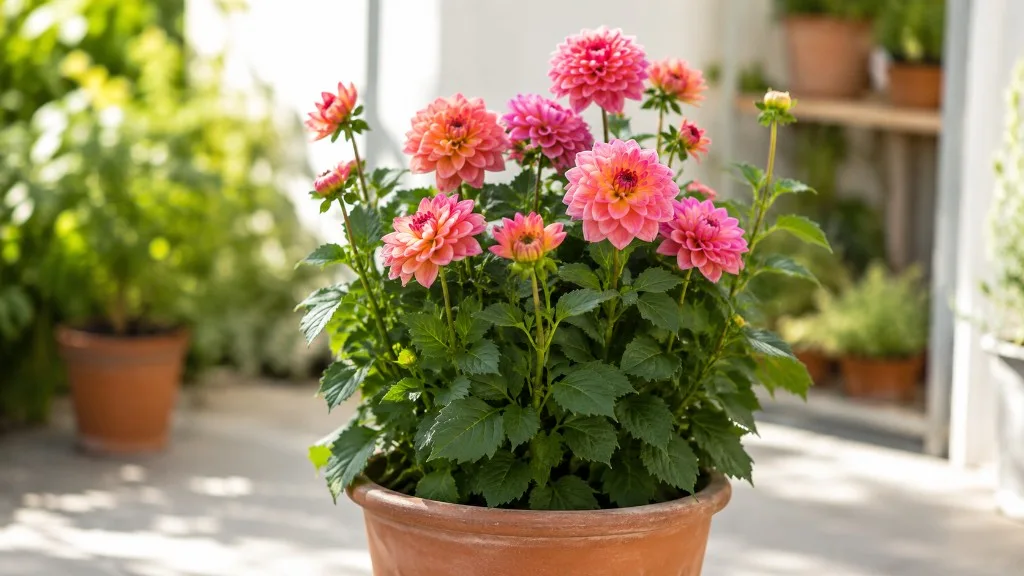
The best dahlia companion plants do more than fill an empty patch of soil. They share the dahlia’s preference for sun, fertile soil, regular moisture, and good drainage, while adding a different height, texture, bloom window, or wildlife benefit. That makes the bed easier to design and helps it stay interesting before dahlias peak in summer and after the first flush of flowers.
Treat “companion” as a design and management decision, not a promise of automatic pest control. A plant may attract pollinators, act as a temporary trap crop, or simply make the bed more productive, but it will not replace inspecting leaves, watering deeply, staking tall stems, or removing spent flowers. The recommendations below are built around that practical distinction.
How to Choose Dahlia Companion Plants That Actually Work
Start With Sun, Drainage, and Water
Dahlias grow best in a warm, sunny position with fertile soil that stays evenly moist without remaining waterlogged. NC State Extension describes dahlias as plants for fertile, moist but well-drained soil, with full sun to partial shade depending on conditions, and notes that they can bloom from late summer toward the first frost when watered and mulched well. The NC State Extension dahlia profile also lists dahlias as useful in cutting, container, cottage, and pollinator gardens.
Use those requirements as a screening test. A companion that wants a permanently wet bog will encourage poor conditions around dahlia tubers; one that prefers bone-dry, lean soil will make the bed difficult to water consistently. The most forgiving partners are plants that can handle full sun, average-to-rich soil, and an ordinary deep-watering routine.
Drainage matters as much as moisture. If water stands after rain, solve that bed problem before adding more plants. No flower pairing compensates for a compacted root zone, and dense groundcovers can hide the wet spots where tubers and crown tissue are most vulnerable to rot. This culture-first filter also matches the practical advice in Epic Gardening’s dahlia companion guide, which emphasizes matching exposure and watering while avoiding crowding.
Match Plant Height to the Dahlia’s Role
Start by deciding whether the dahlia is the bed’s focal point, middle layer, or container thriller. Dinner-plate and tall decorative types may need a stake and room to breathe, while compact bedding dahlias can sit in a pot or near the front of a border. The RHS guide to growing dahlias recommends at least 60 centimeters, or about 2 feet, between plants and more for larger cultivars.
Then assign companions around that mature footprint. Low plants can cover bare soil at the front, medium plants can soften the lower stems, and airy or tall plants can occupy the back without making a solid wall. Avoid judging the space by the tiny tubers or nursery pots you plant in spring; a crowded bed often looks fine until the dahlia canopy closes and rain keeps the foliage damp.
15 Best Dahlia Companion Plants
Snapdragons for Early-Season Color
1. Snapdragons (Antirrhinum majus) are one of the most useful calendar companions for dahlias. They provide upright flower spikes while dahlia shoots are still building size, so the bed does not have to wait for its main performers. Their vertical shape also echoes a dahlia stake without copying the rounded flower form.
Plant snapdragons toward the front or middle of a bed, depending on their variety, and leave enough space for the dahlia’s lower leaves to expand. In regions with mild winters, they may act as a cool-season bridge; elsewhere, treat them as annuals and replace them when summer heat reduces their display.
Cosmos, Bee Balm, and Black-Eyed Susans for Airy Texture
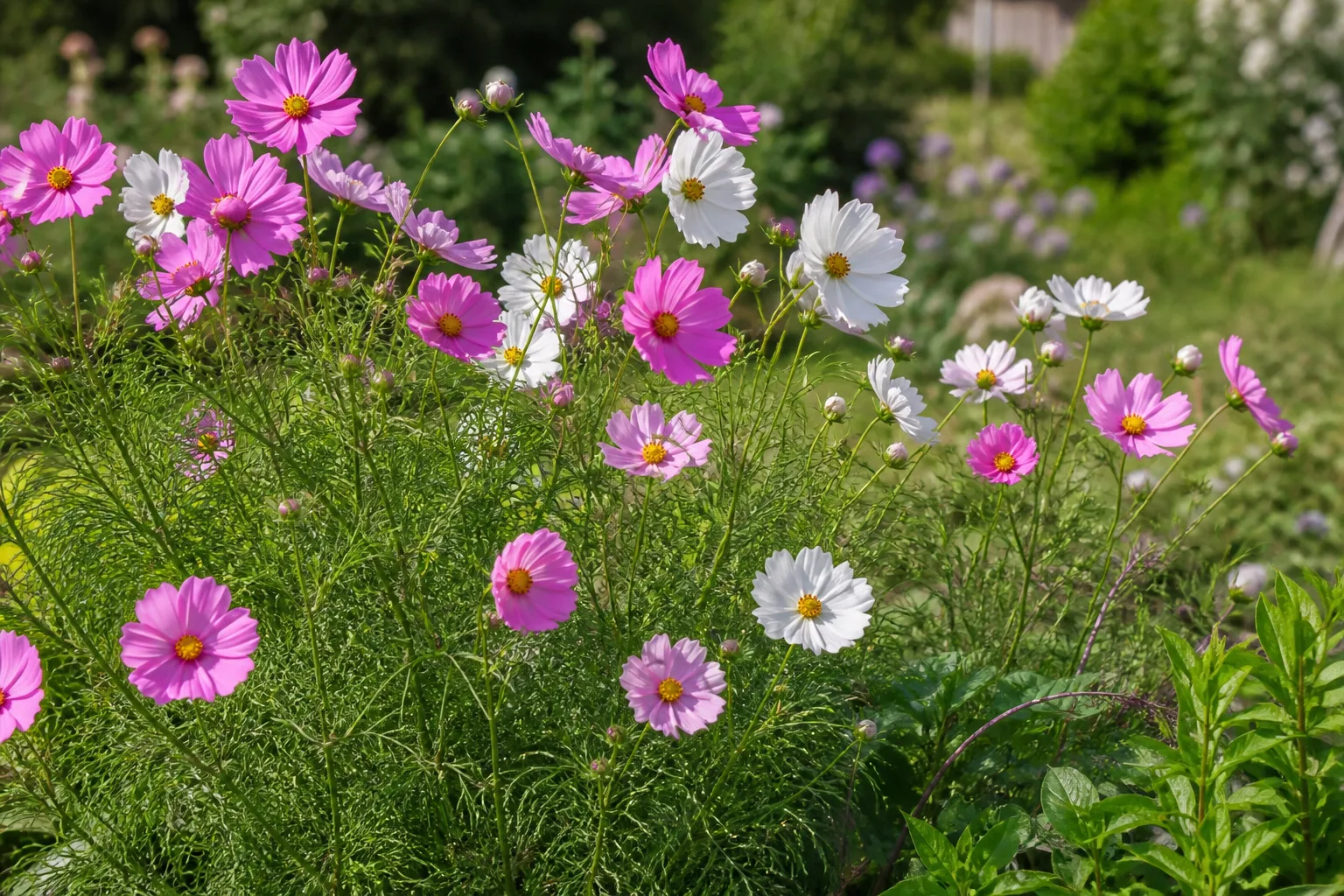
2. Cosmos (Cosmos bipinnatus and C. sulphureus) bring feathery foliage and simple, open flowers that keep a dahlia bed from becoming visually heavy. They are especially good in a cutting garden because their slender stems fill gaps without creating a dense hedge. Pinch young plants for branching, or let them form a looser middle layer behind compact varieties.
3. Bee balm (Monarda spp.) adds a strong vertical shape and flowers that are easier for many insects to access than heavily petaled dahlia forms. Choose a site with good air movement, because bee balm can become crowded and mildew-prone when packed into a humid border. Give it space beside, rather than directly on top of, the dahlia crown, and cut it back after flowering if the clump becomes too large.
4. Black-eyed Susans (Rudbeckia hirta) make a dependable front-to-middle layer with daisy-like flowers and a long, sunny-season presence. Their yellow petals create a clear contrast against dark red, wine, or purple dahlias, while their simpler flower centers add visual relief beside dense decorative blooms. Let a few seed heads remain if you want winter structure, but remove them when self-sowing would crowd the dahlia bed.
Asters, Heleniums, Coneflowers, and Joe-Pye Weed for Late Color
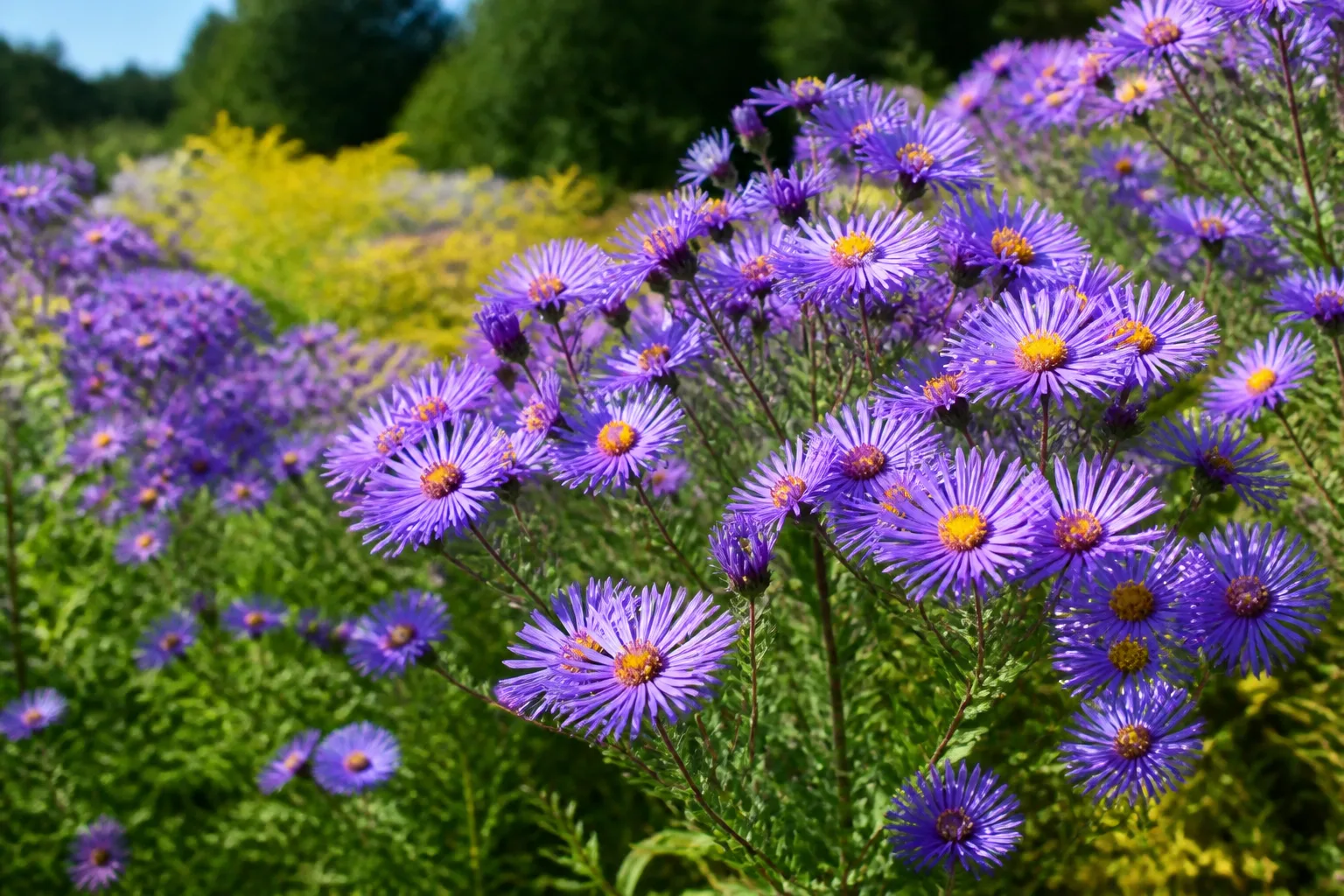
5. Asters (Symphyotrichum spp.) are valuable when the garden needs another wave of flowers late in the season. Their small, starry blooms contrast with large dahlias and can keep a border looking intentional as early annuals fade. Choose a mildew-resistant, appropriately sized cultivar and place it where its mature width will not close the air corridor around the dahlia.
6. Heleniums (Helenium autumnale) bring warm yellow, copper, and red tones that suit an autumn dahlia palette. They work well in the middle or back of a cutting bed, where their daisy form can share the stage without hiding shorter plants. Deadhead selectively for more flowers, but keep some stems if you want seed-head texture after the main display.
7. Purple coneflowers (Echinacea purpurea) provide a sturdy, long-lived perennial layer with a prominent central cone. They tolerate a range of ordinary garden conditions, but they still need drainage and will not thrive in a constantly saturated dahlia bed. Their strong stems are useful in a naturalistic border, especially when paired with single-flowered dahlias that leave more visible space for insects.
8. Joe-Pye weed (Eutrochium spp.) is a tall back-of-border choice for a large garden. Its height and domed flower clusters create a distant backdrop for dahlias, but it is too vigorous for a small bed where it would shade or overwhelm the focal plants. Use it only when you can give the clump an open position and enough moisture without turning the whole bed into a thicket.
Hyssop, Sweet Alyssum, and Verbena for Fillers and Spillers
9. Hyssop, especially anise hyssop (Agastache foeniculum), gives you a compact-to-medium mound and narrow flower spikes that soften a dahlia’s broad leaves. Its flowers are useful in a pollinator border, and its upright habit keeps the planting from looking flat. Place it in front of or beside dahlias rather than directly beneath a dense canopy.
10. Sweet alyssum (Lobularia maritima) is one of the best low fillers for a dahlia border or container. Its small white flowers make a clean edging, and its shallow, low habit leaves the dahlia’s crown accessible for watering and inspection. In a pot, it can spill over the rim; in the ground, keep the planting open enough that it does not become a damp blanket against the stems.
11. Verbena hybrids provide a trailing or mounding layer with small flowers that can soften the edge of a dahlia container. They are more useful as a spiller than as a plant pressed into the dahlia’s root zone. In hot weather, check containers frequently: a companion that dries first can make it harder to keep the dahlia evenly hydrated.
Fountain Grass, Artemisia, and Flowering Tobacco for Contrast
12. Clump-forming fountain grass (Pennisetum spp.) adds movement, narrow leaves, and soft flower plumes behind or beside dahlias. Choose a non-spreading, locally appropriate type and keep it from forming a dense wall. The goal is a transparent screen that catches light, not a grass clump that competes for every drop of water.
13. Artemisia (Artemisia spp.) contributes silvery foliage that makes saturated dahlia colors look sharper. It prefers sun and good drainage, so it is a better match for a raised or free-draining bed than for a low, wet site. Check the specific species before planting; some artemisias can spread aggressively or be unsuitable for local conditions.
14. Flowering tobacco (Nicotiana alata) supplies tall, airy stems and evening fragrance beside unscented dahlia varieties. Its loose form allows glimpses through the planting rather than blocking the flowers. Keep it toward the rear or in a separate pocket so it does not shade shorter dahlias or collapse into the center of the bed after rain.
Cherry Tomatoes for an Edible Border
15. Cherry tomatoes (Solanum lycopersicum var. cerasiforme) can share a sunny, fertile bed with dahlias when the layout is disciplined. Both appreciate consistent moisture, but tomatoes grow tall and can easily shade dahlias, so place the tomato on the north side in the Northern Hemisphere or at the back of a bed with a separate support system.
The American Dahlia Society compares basic dahlia culture with tomato culture and recommends good drainage, roughly 2 feet of separation, and support for most dahlia plants. Its fundamentals of growing dahlias also caution that young dahlias do not need excessive water because wet conditions can encourage rot. A tomato-and-dahlia pairing therefore works best when you can direct water to the root zones, prune or tie the tomato deliberately, and scout both crops for pests instead of assuming one protects the other.
Best Dahlia Pairings by Garden Goal
A Productive Cutting Garden
For a cutting garden, combine plants with different stem shapes and a succession of bloom times. A useful arrangement is snapdragons at the front, dahlias in the main row, cosmos and asters in the middle layer, and a restrained clump of fountain grass at the back. That gives you early spikes, bold focal flowers, airy fillers, and late-season texture without requiring every plant to peak on the same day. This kind of layered, cut-flower approach is also reflected in Longfield Gardens’ dahlia companion guidance.
Keep access paths or stepping spaces between rows. Dahlias are easier to harvest when you can reach the stems, and regular cutting often functions like deadheading by removing fading flowers before they set seed. Do not pack the bed so tightly that harvesting bends stems or forces you to brush wet leaves together.
A Pollinator-Friendly Border
For pollinators, give priority to open-centered flowers such as bee balm, cosmos, black-eyed Susans, asters, heleniums, and coneflowers. The RHS notes that single-flowered dahlias are better for pollinators than heavily doubled forms, so the dahlia selection itself matters as much as the neighbors. Plant for a sequence rather than a single color moment: snapdragons can start the season, dahlias take over in summer, and asters or heleniums carry the border toward frost.
Avoid turning the border into a wall of double flowers with no accessible centers. A few highly double dahlias can still be design anchors, but surrounding them with open flowers provides a more useful food supply and more varied structure. Keep pesticide decisions separate from the companion list: attracting beneficial insects is not a reason to spray a broad-spectrum product across the entire bed.
A Container or Small-Space Display
Choose one compact dahlia as the thriller, then add one filler and one spiller. A small dahlia with sweet alyssum at the rim is the simplest pairing; verbena can replace alyssum when you want a looser cascade, while compact snapdragons can add an upright shoulder in a long planter.
Use a large enough container for the dahlia’s mature size and give each plant its own root volume. Containers dry faster than beds, and companions do not make that problem disappear. Water when the upper layer begins to dry, keep the pot draining freely, and trim a trailing plant if it starts covering the dahlia’s crown or blocking airflow.
Plants to Avoid Planting Too Close to Dahlias
Avoid companions for their mismatch, not because they are universally “bad” plants. Bog plants and aquatic species want wetter soil than dahlia tubers tolerate, while desert plants such as cacti and yuccas want much leaner, drier conditions. A mixed bed that tries to satisfy both will usually overwater one group or stress the other.
Be cautious with spreading grasses, aggressive vines, and very large shrubs. A clump-forming grass can work as a transparent accent, but a runner that moves into the dahlia crown competes for water and makes lifting tubers harder. Vines can climb through hollow dahlia stems, and a shrub that seemed like a useful backdrop in spring may cast afternoon shade by midsummer.
Do not rely on strongly scented herbs, marigolds, or trap crops as guaranteed pest barriers. Nasturtiums, for example, are sometimes used to draw aphids away from prized plants, but they can also become an aphid source that needs monitoring. If you use a trap crop, plant it where you can inspect it and remove or manage it before the pest population spills back into the dahlias.
A Planting and Maintenance Sequence for More Blooms
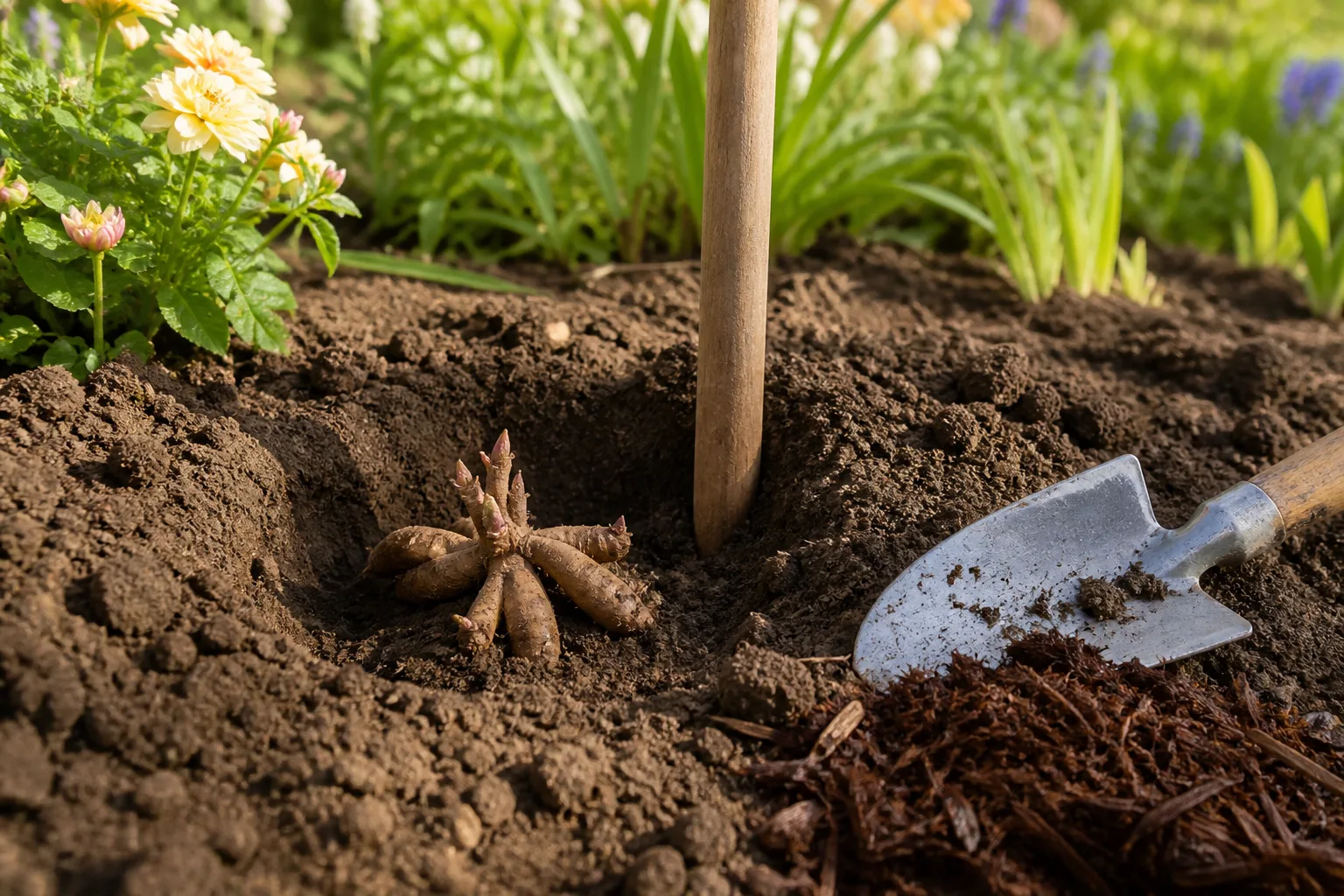
Lay out the bed before planting. Mark the dahlia centers first, leaving about 2 feet as a starting point and increasing that distance for tall or dinner-plate types. Put the stake or support in place while the tuber is still dormant, then add low companions at the edge and taller partners where their mature foliage will not shade the dahlia for most of the day.
Prepare the soil with organic matter while protecting drainage. Plant companions with similar moisture needs, water the bed thoroughly after planting, and apply mulch without piling it against the stems. The RHS guidance recommends fertile, free-draining soil, mulch to hold moisture, regular watering in dry weather, and weekly deadheading to encourage more flowers.
Once growth accelerates, check the bed in this order: soil moisture, stem support, airflow, then pests. Water deeply when the root zone is drying rather than giving frequent shallow sprinkles. Tie tall stems before they flop, remove spent dahlia flowers down to a leaf joint, and thin or cut back a companion that is closing the center of the plant.
When a Companion Starts Competing
The first sign of a poor pairing is usually not a dramatic disease outbreak. It is a dahlia that stays shaded, dries unpredictably, leans into another plant, or develops a damp, tangled center after rain. Correct the layout before reaching for fertilizer: lift or cut back the companion, open a path for air, move the container, or redirect irrigation.
If the dahlia still struggles, reassess the site rather than blaming companion planting. Tubers planted too deeply, compacted soil, insufficient sun, and irregular moisture are more fundamental problems than whether cosmos or alyssum is nearby. Companion plants should make a good dahlia site more useful; they cannot turn a poor site into one.
Conclusion
Choose dahlia companions by what they do for the bed: snapdragons bridge the early season, cosmos and bee balm add air and pollinator value, asters and heleniums extend late color, and alyssum or verbena finish the edge. Cherry tomatoes can share the space when height, support, and water are carefully managed, while spreading grasses, bog plants, and aggressive vines belong elsewhere.
The strongest combination is usually a short list, not all 15 plants at once. Pick one plant for the front, one for the middle, and one for the late-season or wildlife role, then leave enough open ground to water, stake, inspect, and deadhead the dahlias. That restraint is what turns a companion list into a bed that keeps blooming.