Dill Care Guide: Sun, Water, Soil and Harvest
Anethum graveolens
Grow dill in full sun and moist, well-drained soil. Learn when to sow, how to water containers, delay bolting, and harvest leaves and seeds.
Dill Care Guide: Sun, Water, Soil and Harvest
Start with wateringThe most common care mistake for DillWatering guide →Dill care essentials
Light
Water
Keep the soil lightly moist but well drained. Water during hot, dry spells to reduce premature flowering; potted dill needs closer checks because compost dries faster.
Soil
Fertile, slightly acidic soil that stays moist but drains freely; Penn State gives a pH near 6.5.
Humidity
Temperature
Fertilizer
About Dill
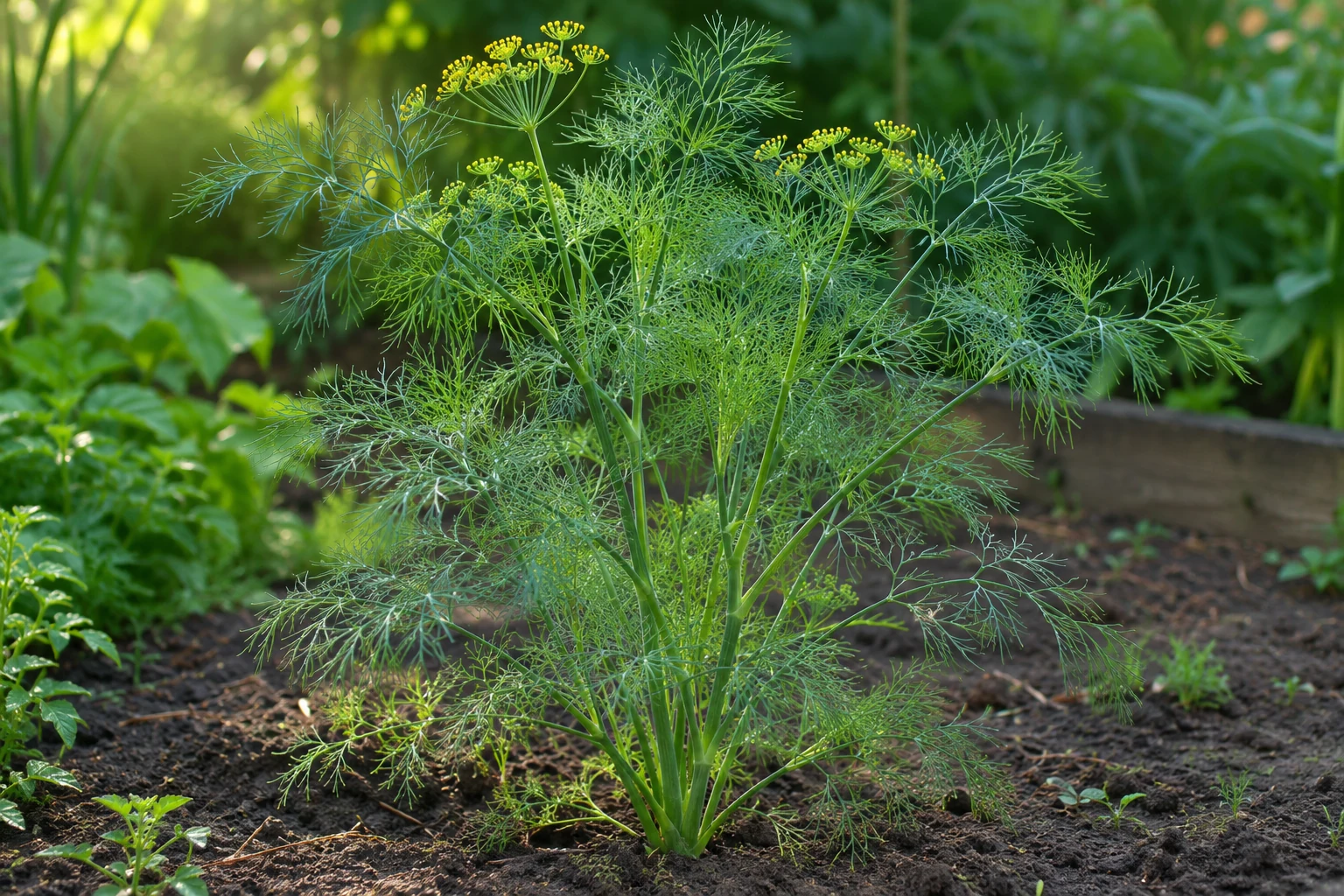
Dill is native to Mediterranean region, including southern Europe and southwestern Asia, typically reaches Usually 1–4 ft tall and 12–24 in wide; size varies by cultivar indoors, with fast; leafy harvest can begin about six weeks after sowing growth. Dill has a upright, cool season annual herb with a long taproot, hollow stems, feathery leaves, and yellow flower umbels growth habit and part of the Apiaceae family. It is also known as Anet, Dill weed, Dill-oil plant, East Indian dill, Indian dill, Meeting-seed, and Sabbath Day Posy.
| Detail | Information |
|---|---|
| Also known as | Anet, Dill weed, Dill-oil plant, East Indian dill, Indian dill, Meeting-seed, Sabbath Day Posy |
| Native region | Mediterranean region, including southern Europe and southwestern Asia |
| Mature size | Usually 1–4 ft tall and 12–24 in wide; size varies by cultivar |
| Growth rate | Fast; leafy harvest can begin about six weeks after sowing |
| Growth habit | Upright, Cool Season Annual Herb With A Long Taproot, Hollow Stems, Feathery Leaves, And Yellow Flower Umbels |
| Scientific name | Anethum graveolens |
| Family | Apiaceae |
Dill Care Guide: Sun, Water, Soil and Harvest
First, sow dill where you want it to grow for the season. This annual herb forms a long taproot and dislikes being moved once established, so a sunny garden bed or a deep final container is a better starting point than a small seed tray. After sowing, keep the soil lightly moist while seeds germinate, then maintain steady moisture without leaving the roots in cold, saturated soil.
Dill (Anethum graveolens) grows quickly and has a short useful cycle: foliage develops, the plant sends up yellow flower umbels, and seeds follow. Your goal changes the care. For leafy dill, keep plants growing through moderate weather and harvest before flowering dominates. For seed, allow some plants to bloom and mature. Penn State Extension describes dill as an annual herb with edible leaves, flowers, and seeds, while its cool-season habit and rapid growth help explain why sowing dates matter (Penn State Extension).
Dill care at a glance
Give dill full sun, free-draining soil, regular moisture during active growth, and room for its upright stems. Sow directly into the garden or into a deep pot with drainage holes. Avoid routine transplanting, heavy nitrogen feeding, and a fixed watering calendar. Check the soil and the plant instead: hot, dry weather speeds drying and flowering, while cool rainy weather can keep a pot wet too long.
A simple first-season plan is to sow a small batch, thin crowded seedlings, pick outer foliage as plants fill out, and make another sowing before the first batch flowers if you want a longer supply. Leave one or more plants to flower when you want umbels and seed. This gives you a usable harvest without asking a short-lived annual to behave like a perennial herb.
Identify the plant and its short life cycle
Dill is an upright member of the carrot family, Apiaceae, with finely divided leaves, hollow stems, a long spindle-shaped root, and flat clusters of small yellow flowers. The NC State Extension Plant Toolbox describes Anethum graveolens as an annual with a taproot and notes its tendency to flower early in hot conditions (NC State Extension). Those traits explain several care choices: direct sowing protects the root, a sheltered site reduces lodging, and succession sowing is more dependable than trying to keep an old plant leafy indefinitely.
Dill may be grown for tender foliage, flowering umbels, or seed. The mature plant can reach a few feet tall, though cultivar, light, soil, and season affect final size. Shorter cultivars such as ‘Fernleaf’ are more manageable in containers; larger types need more room and may need support in windy sites. Penn State Extension’s cultivar descriptions are useful when choosing seed for a small balcony versus an open bed.
Decide whether you want leaves, flowers, or seed
For leaves, harvest young outer fronds regularly and sow new plants every few weeks during the suitable growing season. Heat and long days can push dill toward flowering, after which the foliage changes and the plant’s energy shifts to reproduction. Do not treat flowering as a disease or failure: it is a normal stage in the life cycle. The Dill pruning guide explains which shoots to pinch or cut when you are maintaining a leafy crop.
For seed, let selected plants flower and form seed heads. The flower umbels also attract insects, so a mixed planting can serve both the kitchen and pollinator activity. If seed is your priority, avoid repeatedly cutting flowering stems; allow the seed heads to mature and dry before collecting. A small portion of the planting can be reserved for this while you continue harvesting leaves from younger plants.
Choose a sunny, sheltered growing place
Dill grows best with abundant direct sun. Choose an open bed or a balcony that receives several hours of sun, with protection from strong gusts. Tall dill has hollow stems and can lean or snap in exposed weather. Utah State University Extension recommends full sun for good growth and notes that hot temperatures can reduce seed production (USU Extension); Wisconsin Horticulture likewise lists a sunny position and well-drained soil for the species (Wisconsin Horticulture).
In very hot climates, morning sun with light afternoon relief can be a useful compromise, especially in a small pot that heats quickly. That adjustment is about reducing heat stress and rapid dry-down, not placing dill in deep shade. If stems stretch, foliage thins, or growth is weak, assess how many hours of direct light reach the plant before increasing fertilizer. Use the dedicated Dill light guide for window, balcony, and seasonal placement decisions.
Keep the root zone moist but airy
Water when the upper soil begins to dry, then wet the root zone thoroughly and let surplus drain. Seedlings need consistent moisture until established; mature plants need closer checks during hot, windy weather. Containers dry faster than beds and may need daily inspection in heat, but that does not mean every pot should be watered every day. Press a finger into the soil rather than relying on a schedule.
Dill’s foliage can become stressed by prolonged dry spells, and the plant may flower earlier when heat and water stress overlap. At the other extreme, cold saturated soil deprives roots of air and can weaken stems. The UMN Extension dill guide recommends direct sowing and well-drained, slightly acidic soil rich in organic matter; its local timing reflects a northern climate, so follow the moisture principles rather than copying its calendar in a warmer region. The dedicated Dill watering guide covers checks for beds and pots.
Use fertile, well-drained soil
Choose a garden bed that does not hold standing water after rain. Dill grows in moderately fertile soil; it does not need an excessively rich bed. Work in mature compost if the soil is poor or compacted, but avoid making the planting hole a pocket of loose, moisture-holding material inside heavy clay. For containers, use fresh potting compost that drains evenly and a pot with open drainage holes.
Soil pH matters less than drainage and steady growth for most home growers. Penn State Extension gives a slightly acidic range as suitable, and Utah State Extension advises moderate fertility rather than blanket feeding. If growth is poor, check compaction, drainage, light, and crowding before applying fertilizer. The Dill soil guide helps adjust a bed or container mix without turning it into a complicated recipe.
Sow in the final bed or deep pot
Dill is most reliably started from seed. Sow outdoors after severe frost risk has passed, or at a locally suitable cool-season time, and cover lightly. Keep the surface damp until seedlings emerge. Thin plants to leave airflow and space for mature stems; crowded seedlings compete for light and are harder to harvest cleanly.
If you must start indoors, use individual deep cells and move seedlings while they are small, before the taproot becomes difficult to handle. The Royal Horticultural Society recommends sowing directly where plants are to grow and moving young seedlings carefully because established dill resents root disturbance (RHS: How to grow dill). In a warm region, avoid forcing a sowing through peak heat if your aim is tender foliage; make smaller batches as the season turns more favorable instead.
Feed only when the soil calls for it
Dill in a reasonably fertile bed often needs little or no additional fertilizer. Excess nitrogen can produce soft, lush foliage and may not improve the harvest if light, drainage, or root space is limiting growth. In containers, nutrients are depleted more quickly, but use a modest balanced feed only if the compost is old or growth is consistently weak after you have ruled out other causes. Follow the product label and do not feed dry or heat-stressed plants.
Utah State University Extension advises testing soil before deciding whether fertilizer is needed and applying only what the result calls for (USU Extension). This is especially useful in garden beds that receive compost or regular vegetable-garden feeding. For product choice and timing, see the Dill fertilizer guide.
Harvest without stripping the plant
Begin picking once the plant has enough foliage to spare. Take a few outer fronds at a time and leave the central growing point and most of the plant intact. Scissors make clean cuts and reduce accidental pulling on the shallow upper roots. Savvy Gardening’s dill harvest guide recommends matching harvest timing to whether the grower wants leaves, flowers, or seed heads (Savvy Gardening).
For a continuous supply, sow succession batches instead of harvesting one plant down to bare stems. If your main crop is flowering, keep a separate younger batch for leaves. The Dill propagation guide explains seed starting and how to preserve the next generation without disturbing established plants.
Support tall stems and manage flowering
A sheltered location is the first support. If a tall plant begins leaning, use a small stake and a loose tie rather than pulling the stem upright by force. Remove broken or diseased stems with clean scissors. Pinching flower buds may delay flowering briefly on some plants, but it cannot reverse a mature annual’s life cycle or guarantee an extended harvest through heat.
Let at least one plant flower if you value seed or beneficial insects. For leafy production, harvest before the umbels fully develop and keep new sowings coming. Dill is a host plant for swallowtail caterpillars in some regions; inspect before removing caterpillars or spraying, and identify the insect first. A mixed plan avoids the false choice between a kitchen harvest and letting a few plants complete their natural cycle.
Adjust care for hot weather and monsoon rain
In hot weather, check containers more often, water the root zone in the cooler part of the day when it needs water, and harvest foliage before plants become stressed. Heat can accelerate flowering, so sowing timing and successive batches matter more than heavy feeding. Avoid setting dark pots against heat-reflecting walls if the root zone repeatedly dries in a few hours.
During monsoon periods, prioritize drainage and airflow. Empty saucers, clear blocked holes, and move a container under open shelter if rain keeps the compost saturated. Do not automatically reduce watering because it is rainy outside; inspect the actual root zone. In cooler weather, reduce irrigation to match slower drying and growth. These are climate adjustments, not a fixed India-wide calendar; local altitude, rainfall, and balcony exposure change the timing.
Grow dill in containers without crowding its taproot
Use the deepest practical pot with drainage holes, not a shallow decorative bowl. Dill’s long root needs downward room, and a narrow pot also dries and tips more easily as stems grow. A large container can support several plants if you thin them to avoid crowding. Compact ‘Fernleaf’ is a sensible choice where space is limited; standard varieties may become tall and top-heavy.
Sow directly in the final pot whenever possible. If seedlings are started separately, transplant them very young and with the root ball intact. Epic Gardening’s container guide discusses deep containers and the taproot as central considerations for potted dill (Epic Gardening: Dill in pots). The Dill repotting guide explains why moving a mature plant is usually a poor fix for an undersized pot.
Read the plant before changing care
Weak, stretched stems often point first to insufficient sun or crowding. Rapid flowering can reflect heat, dry soil, natural age, or a cultivar that bolts readily. Yellowing in persistently wet compost calls for a drainage check, while limp foliage during a hot afternoon should be reassessed after the plant cools and the root zone is checked. One symptom alone does not identify the cause.
Change one condition at a time when there is no emergency. Improve light gradually, correct blocked drainage, or adjust watering based on soil feel, then watch new growth. Existing leaves will not regain vigor if their stems have already flowered; sowing a new batch is often more productive than trying to rehabilitate an exhausted annual.
Common dill-care mistakes
- Starting in a small tray and transplanting late: direct-sow or move seedlings very young to protect the taproot.
- Watering by calendar: inspect soil, rainfall, pot size, and weather before watering.
- Using a shallow pot: choose a deep container that will not tip as stems mature.
- Feeding before diagnosing: check sun, drainage, crowding, and season first.
- Expecting one sowing to stay leafy all season: stagger sowings and reserve some plants for seed.
- Removing every flower: keep a few umbels if you want seed or insect activity.
When to use this page vs other Dill guides
This overview gives the whole growing plan. Go to Dill light for sun exposure and balcony placement, Dill watering for moisture checks, Dill soil for bed and pot drainage, and Dill fertilizer for feeding decisions. Use Dill repotting if a container is too small and Dill propagation to plan new sowings.
Related Dill guides
- Dill light covers exposure, acclimation, and heat trade-offs.
- Dill watering explains when to water beds and containers.
- Dill soil covers drainage, pH, and container compost.
- Dill fertilizer covers soil testing and restrained feeding.
- Dill repotting explains root disturbance and pot choice.
- Dill propagation covers seed starting and succession sowing.
- Dill pruning covers harvest cuts, pinching, and flower stems.
Conclusion
Dill succeeds when its short life cycle is part of the plan. Sow in the final sunny place, keep soil moist but draining, choose a deep container when growing in a pot, and stagger sowings if you want leaves over a longer period. Let a few plants flower if seed is the goal. When a plant declines after flowering, replace it with a young sowing instead of trying to turn an annual into a permanent herb.
How to care for Dill?
When should you water Dill?
Keep the soil lightly moist but well drained. Water during hot, dry spells to reduce premature flowering; potted dill needs closer checks because compost dries faster.
- Check the soil just below the surface - Keep the soil lightly moist but well drained.
- water when it is drying - Water during hot, dry spells to reduce premature flowering; potted dill needs closer checks because compost dries faster.
- then let excess drain away. Keep the root zone moist rather than waterlogged - Keep the soil lightly moist but well drained.
- Drain excess water - Keep the soil lightly moist but well drained.
What soil works best for Dill?
Fertile, slightly acidic soil that stays moist but drains freely; Penn State gives a pH near 6.5.
- Peat-free multi-purpose potting compost for containers - Fertile, slightly acidic soil that stays moist but drains freely; Penn State gives a pH near 6.5.
- Use a deep pot, at least 30 cm wide and deep, with drainage holes - Fertile, slightly acidic soil that stays moist but drains freely; Penn State gives a pH near 6.5.
Grower notes for Dill
Sow dill where it will grow
Dill develops a long taproot and does not transplant well once established. Sow directly outdoors or into the final deep pot. If you start seedlings indoors, move them outside while they are still young, before the taproot lengthens.
Give the stems sun and shelter
Choose a warm, sheltered position in full sun and free-draining soil. Dill can reach 1–4 ft tall and has hollow stems, so protect tall plants from strong winds or support them if they begin to lean.
Keep moisture steady in warm weather
Dill grows best in soil that stays moist but not waterlogged. Water during hot, dry spells because drought and heat can make it flower early. Check container compost more often; it dries quickly in warm weather.
Sow small batches for a longer leaf harvest
Dill leaves can be harvested from about six weeks after sowing. Make successive sowings through mid-summer so young plants replace older ones as they flower and decline.
Harvest leaves before the flowers open
Cut a few outer leaves at a time and leave at least one-third of the plant so it can keep growing. Regular picking and pinching flower stems can encourage leafy growth and delay flowering.
Let some umbels set seed
Dill’s yellow flower umbels attract pollinators and provide food for black swallowtail caterpillars. Leave a few plants to flower if you want seed; collect the seed heads once they turn brown, or allow them to self-sow.
Is Dill Safe for Pets?
ASPCA lists dill as non-toxic to cats, dogs, and horses. Its entry also notes essential oils and dermatitis with prolonged contact. This listing does not establish safety for rabbits, birds, or reptiles.
ASPCA classifies dill as non-toxic to cats, dogs, and horses, while noting essential oils and dermatitis with prolonged contact. Keep concentrated dill oil away from pets and contact a veterinarian if an animal develops a skin reaction. The ASPCA listing does not establish safety for rabbits, birds, or reptiles.
Watering Dill
For Dill, check the soil just below the surface; water when it is drying, then let excess drain away. Keep the root zone moist rather than waterlogged. and water water when the soil begins to dry, with more frequent checks during hot, dry weather and for container plants. Increase watering checks during hot, dry weather, when dill may bolt early. Water less during cool, rainy periods and avoid cold, soggy soil.
| Detail | Information |
|---|---|
| How often | Water when the soil begins to dry, with more frequent checks during hot, dry weather and for container plants. |
| How to check | Check the soil just below the surface; water when it is drying, then let excess drain away. Keep the root zone moist rather than waterlogged. |
| Seasonal changes | Increase watering checks during hot, dry weather, when dill may bolt early. Water less during cool, rainy periods and avoid cold, soggy soil. |
Signs of overwatering
- Soil or compost stays cold and soggy instead of draining
- Stems weaken or flop, especially where light is poor
Signs of underwatering
- Soil dries quickly during hot weather
- Dry spells can trigger premature flowering and shorten the leafy harvest
Soil & potting for Dill
Use a mix of Peat-free multi-purpose potting compost for containers, Use a deep pot, at least 30 cm wide and deep, with drainage holes for Dill. Good drainage is important. Dill dislikes cold, soggy conditions. Target soil pH around Slightly acidic; around pH 6.5 is a useful reference. Repot dill is usually grown from seed and is not routinely repotted; direct-sow into its final garden bed or deep container to avoid disturbing the taproot., ideally in spring, when starting a new direct-sown crop.
| Detail | Information |
|---|---|
| Recommended mix | Peat-free multi-purpose potting compost for containers, Use a deep pot, at least 30 cm wide and deep, with drainage holes |
| Drainage | Good drainage is important. Dill dislikes cold, soggy conditions. |
| Soil pH | Slightly acidic; around pH 6.5 is a useful reference. |
| Repotting frequency | Dill is usually grown from seed and is not routinely repotted; direct-sow into its final garden bed or deep container to avoid disturbing the taproot. |
| Best season to repot | Spring, when starting a new direct-sown crop. |
Signs it needs repotting
- Avoid repotting established dill because its long taproot is sensitive to disturbance
- If seedlings are started indoors, move them while young, before a long taproot forms