12 of the Best Companion Plants for Dill
Find 12 of the best companion plants for dill, with honest notes on pollinators, spacing, self-seeding, and what to do when pests still appear.
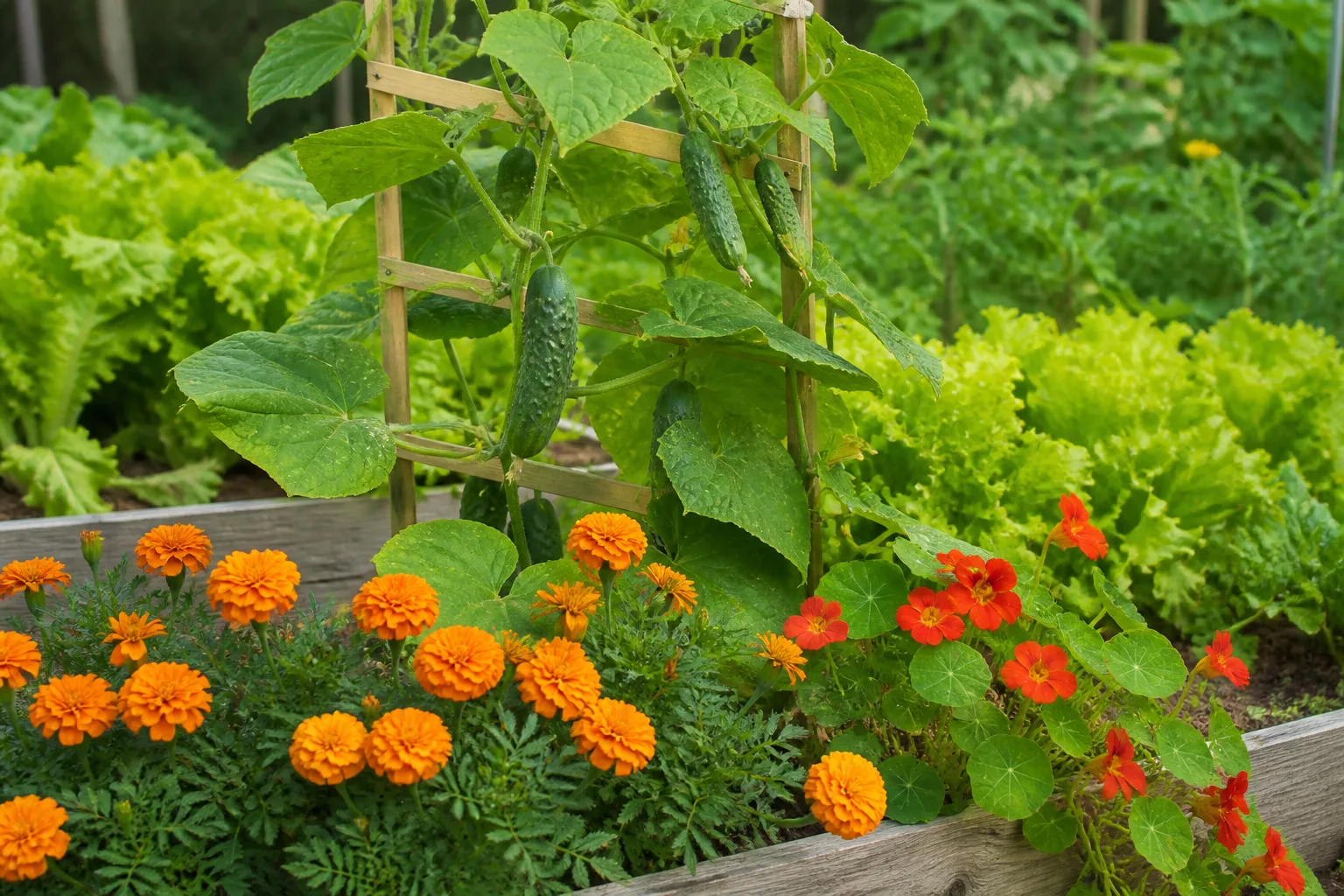
The best dill companion plants are the ones that share a sunny, reasonably moist bed without crowding the herb: broccoli, cucumber, zucchini, lettuce, corn, asparagus, basil, onions, chives, beans, marigolds, and nasturtiums. Their biggest advantage is not that dill forms an invisible insect shield. It is that flowering dill adds nectar and structure to a diverse garden while its annual, upright habit can fit between crops for part of the season.
That distinction matters. Dill (Anethum graveolens) attracts bees, butterflies, hoverflies, and wasps, and it is a host plant for black swallowtail caterpillars, according to NC State Extension Plant Toolbox and Penn State Extension. Those visitors may make a garden more biologically active, but a few dill plants will not reliably stop cabbage worms, aphids, cucumber beetles, or squash bugs. Choose companions for fit first, then let the insect benefit be an added reason to try the pairing.
Why Dill Is a Useful—but Limited—Companion
Dill earns its place in a mixed bed in three practical ways. It is a fast-growing annual that can be direct-sown where there is an opening, its flat yellow flower clusters offer accessible nectar when the plant bolts, and its fine foliage takes up less horizontal room than a squash, cabbage, or lettuce plant. It also has culinary value, so the plant is useful even if no beneficial insect visits it.
The trade-off is that dill changes character as it matures. Young plants are compact and easy to tuck beside vegetables; flowering plants become tall, top-heavy, and more likely to cast shade or self-sow. Penn State’s dill guide describes it as a cool-season annual that grows best in full sun and rich, moist but well-drained soil, while NC State’s profile notes that extra shade and excessive water can produce lanky stems that flop.
Flowering Dill Supports Insects, Not Guaranteed Pest Control
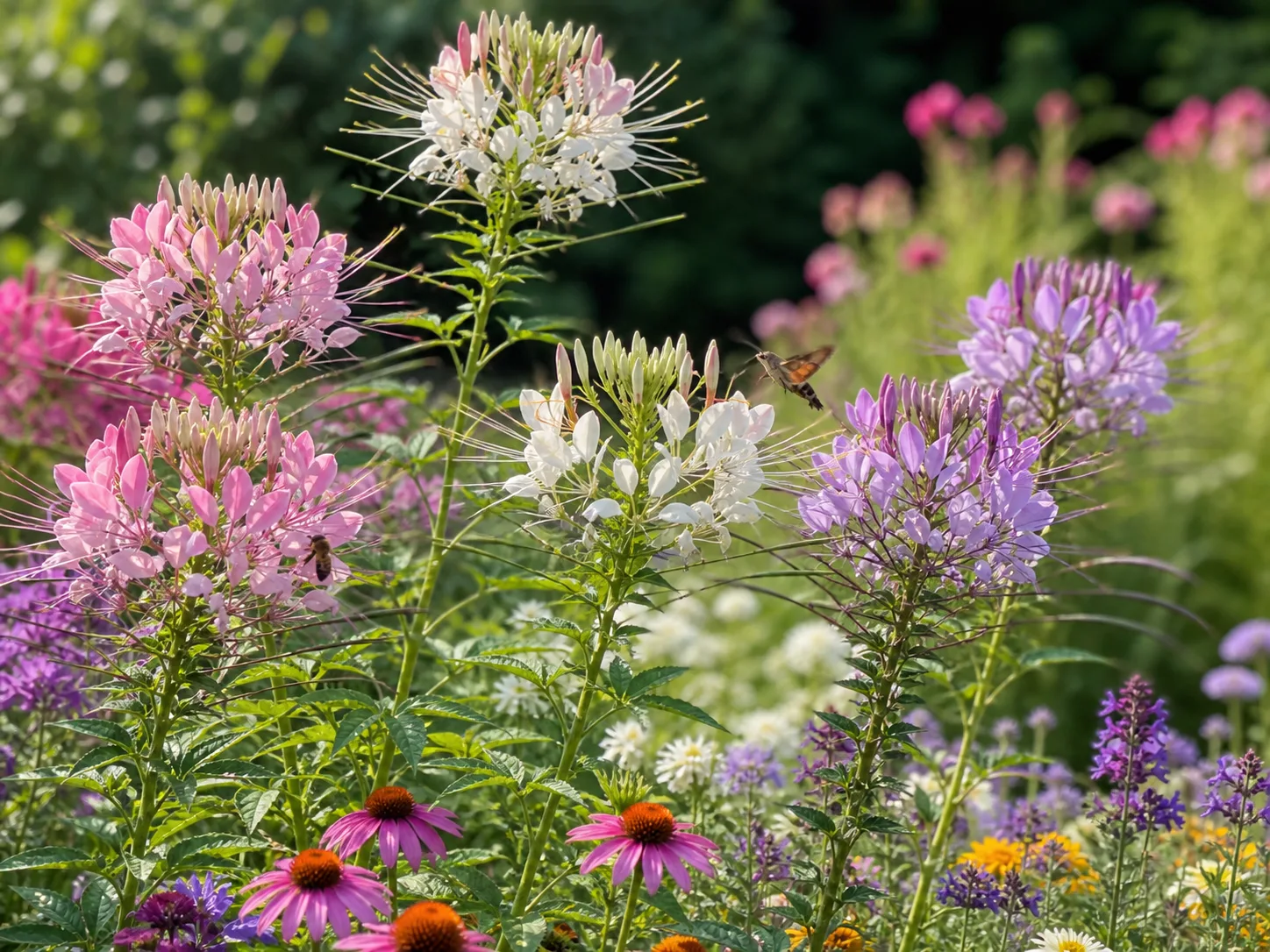
The most defensible companion benefit is habitat. Adult hoverflies, small parasitic wasps, bees, and other beneficial insects use pollen or nectar, and hoverfly larvae and many parasitoid larvae can prey on or develop inside pest insects. Penn State Extension’s beneficial-insect guidance recommends a varied planting with blooms available across the season, not one plant expected to solve one pest problem.
That is different from saying dill “repels” every insect that bothers a neighbor. The Washington State University Extension review of companion planting explains that aromatic compounds can look promising in laboratory tests but often dissipate outdoors, where field conditions, plant density, weather, and pest pressure change the result. Treat dill as an insectary plant and a useful experiment, not as a pesticide substitute.
You may also see black swallowtail caterpillars eating dill. They are not evidence that the companion planting failed; dill is one of their host plants. If you want both leaves for the kitchen and food for caterpillars, sow extra dill, keep one clump for the butterflies, and harvest the rest before flowering.
Layout Rules for Dill and Its Neighbors
Sun, Height, Spacing, and Moisture
Give dill the brightest position you can while keeping its mature height from shading a low crop. Compact cultivars can stay around 12 to 18 inches tall, but tall types commonly reach 2 to 4 feet and may need a stake in wind. Place tall dill on the north side of a bed in the Northern Hemisphere, at the back of a border, or along an outer edge where the flower heads can rise without leaning across lettuce or young seedlings.
Use at least 12 inches of breathing room around a compact plant, and widen that gap for a tall cultivar or a dense neighbor. This is a planning rule rather than a universal label requirement: the right distance depends on cultivar, airflow, fertility, and whether you harvest leaves constantly. A crowded stand is harder to scout, more likely to flop, and more likely to turn a self-seeding annual into a weed patch.
Dill and most of the plants below prefer soil that is moist enough to support active growth but never waterlogged. Keep plants with similar irrigation needs in the same zone, and avoid placing dill in the wettest pocket simply because a neighboring crop needs frequent watering. NC State Extension lists good drainage and moist soil as cultural conditions for dill; “moist” does not mean a bed that stays saturated after rain.
Succession Sowing, Harvest, and Self-Seeding
Direct-sow dill rather than planning to move a large nursery plant. Its taproot makes transplanting stressful, and disturbing it just as a cucumber or brassica is getting established creates a space and timing problem. Sow a shallow line, barely cover the seed because it needs light to germinate, and thin crowded seedlings once they are easy to handle.
For a steady supply of leaves, sow small amounts every two to four weeks while the weather is favorable. Harvest leafy stems before the flower buds open if your priority is dill weed; leave selected plants to bloom if you want seed or insect habitat. Hot weather, dry soil, and root disturbance speed bolting, so steady moisture and a succession of young plants are more dependable than trying to keep one old plant lush all summer.
Deadhead seed heads if you do not want volunteers in the following season. If you like self-sown dill, reserve a defined corner and pull seedlings that appear in the middle of a crop row. This small boundary keeps the companion relationship useful instead of letting the herb compete with the plants it was meant to support.
12 Dill Companion Plants Worth Trying
The list below includes the 12 plants most often paired with dill, but “best” depends on the job. The same broad group appears in practical companion-planting coverage from Gardener’s Path and Gardening Know How, while Gardening Know How also cautions that many pairings are based on gardener experience rather than controlled trials. Broccoli benefits from a flowering edge and careful scouting; lettuce benefits from dill’s timing and narrow footprint; cucumbers and zucchini benefit from a diverse flowering bed, not a promise of beetle control. The practical notes are more useful than a yes-or-no chart.
| Companion | Best reason to try it | Where to put dill | Main watch-out |
|---|---|---|---|
| Broccoli | Shared bed conditions and insectary value | At the row edge or between succession crops | Cabbage pests still need scouting |
| Cucumber | Similar warm-season site and flowering support | Beside, not under, the vine canopy | Beetles can ignore the dill |
| Zucchini | Upright herb fits near a broad plant early on | Outside the squash crown | Mature leaves can overwhelm it |
| Lettuce | Quick, cool-season crop uses space efficiently | North edge or open gap | Harvest before dill shades it |
| Corn | Vertical structure leaves ground-level room | Outside the corn block | Corn needs sun and wind movement |
| Asparagus | Annual dill can use an undisturbed perennial bed edge | Away from crowns and fern canopy | Do not dig into established roots |
| Basil | Similar sun and regular moisture | Separate plants with airflow | Both can become dense and flower |
| Onions | Upright leaves and compatible seasonal rhythm | Along an edge or row end | Aromatic pest claims are uncertain |
| Chives | Perennial clump continues after dill fades | Beside, not inside, the clump | Chives spread and need division |
| Beans | Different canopy and seasonal use | Between rows only if sun remains open | Beans do not instantly fertilize dill |
| Marigolds | Adds flower diversity and visible edge color | Bed edge with open blooms | Some varieties are poor insect habitat |
| Nasturtiums | Flowers and edible leaves add diversity | Outside the main crop row | They may attract aphids too |
Broccoli and Other Brassicas
Broccoli is a strong practical match because it and dill can share a sunny bed with consistent moisture and good drainage. Flowering dill may provide nectar to insects that also move through a brassica planting, and the fine herb can occupy an edge without competing with a mature broccoli head. Garden writers and extension guidance commonly include dill with cabbage-family crops, but the ecological benefit is better described as support for a diverse planting than as a guaranteed cabbage-worm repellent.
Place one or two dill plants at the end of a broccoli row or in a gap between an early crop and a later succession. Keep the herb out of the center of a tightly netted brassica bed if you need to cover the crop; row cover works only when it can sit over the plants without catching on tall flower stalks. Inspect leaf undersides weekly for eggs and caterpillars, and keep the row cover or hand-picking plan ready before damage becomes obvious.
Cucumber and Zucchini
Cucumber and zucchini make sense beside dill because all three are warm-season garden plants that appreciate sun, regular moisture, and fertile soil. Dill’s narrow form can fit at the outer edge of a cucumber trellis or beside a zucchini mound before the cucurbit leaves spread. The flowers also add another reason for insects to visit the bed, which is useful in a garden where pollinator activity is low.
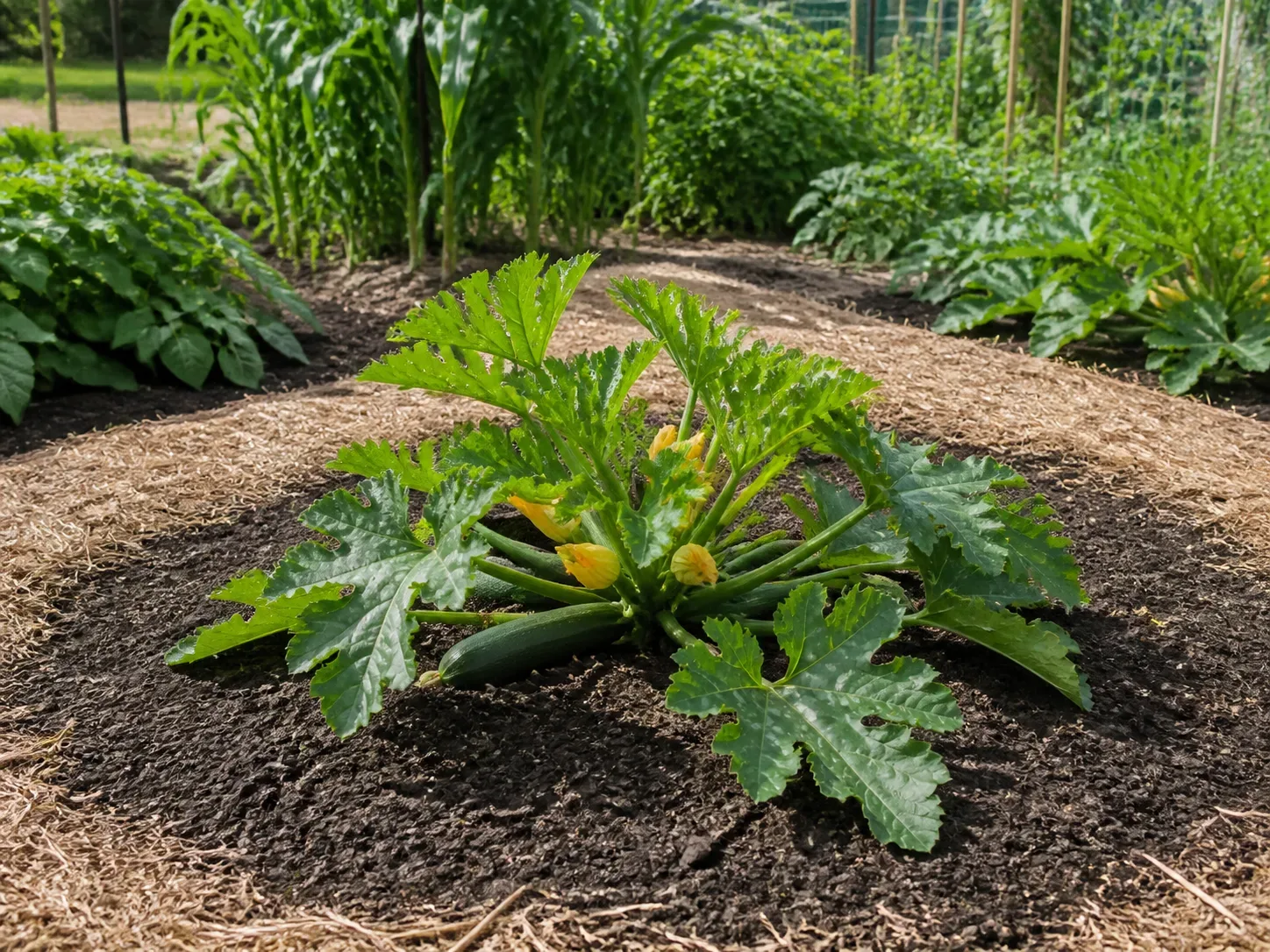
Do not confuse that benefit with cucumber-beetle or squash-bug control. A dill plant will not stop beetles from landing on cucumber leaves, and scent alone is not a dependable barrier under field conditions. Put dill where you can reach it without stepping into the vine, leave the cucurbit crown open for airflow, and inspect new growth, flowers, and leaf undersides. If pressure is high, use a physical barrier early in the season and remove it when the crop needs pollinators, following local extension advice for the crop.
Zucchini deserves the same spacing warning in a smaller bed. Set dill outside the plant’s eventual leaf circle, not in the middle of the crown, and expect the squash to win the light competition later. If you want flowers on the dill, start with enough space that the herb can be cut or staked without tearing zucchini leaves.
Lettuce and Corn
Lettuce is one of the most forgiving dill pairings because it is quick to harvest and tolerates a little less intense light than a fruiting crop. Sow lettuce where it receives morning or full sun, then place dill to the north or behind it so the herb does not shade tender leaves as it reaches flowering height. In a succession bed, harvest a lettuce row just as the dill is beginning to occupy the space.
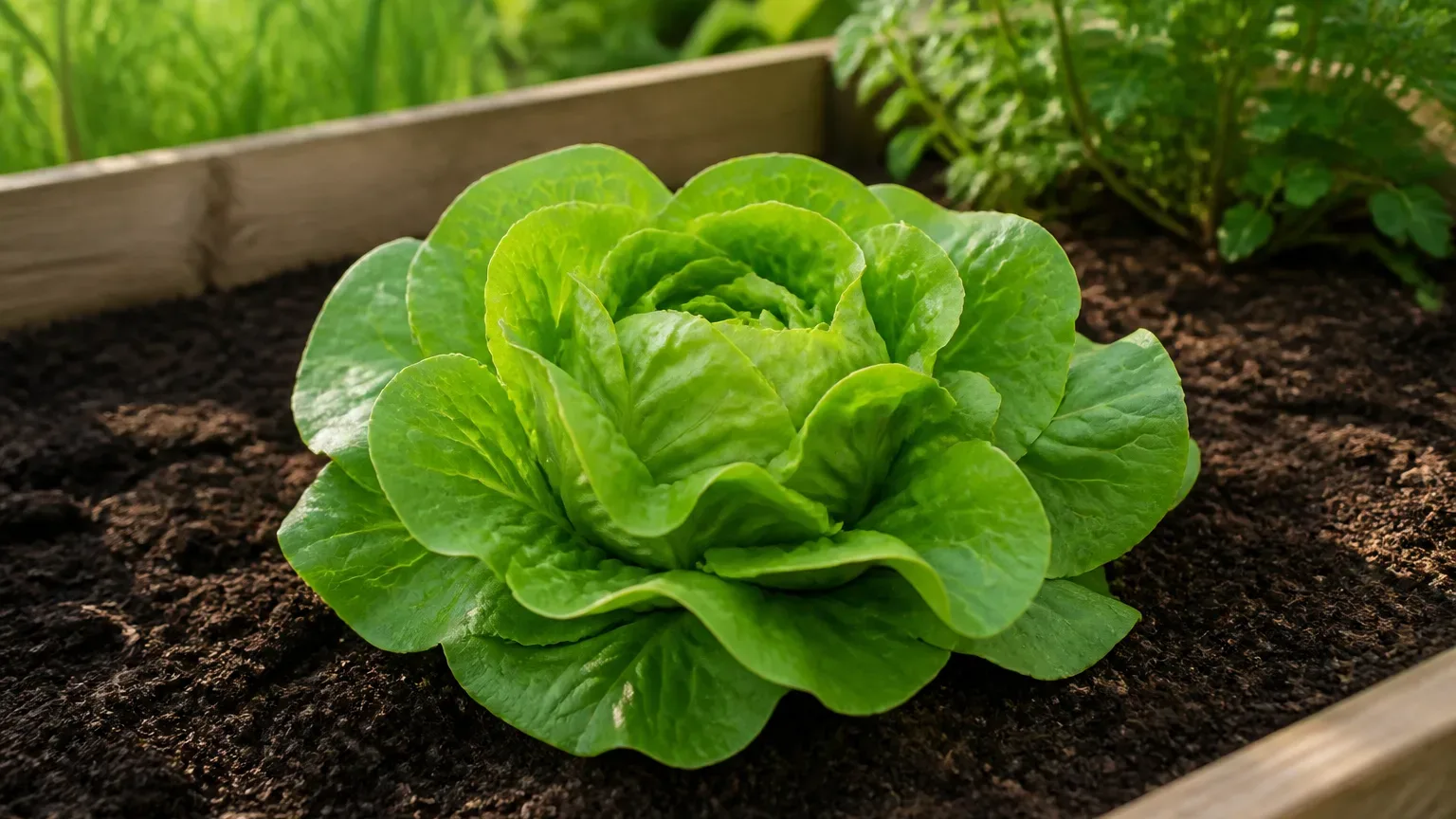
Keep the moisture even for both plants, especially while lettuce is forming heads and dill is establishing. Remove bolting lettuce promptly if it becomes crowded, and do not allow the dill to lean across the row; an airy stake is more useful than tying it tightly to another plant.
Corn can work for a different reason: its vertical canopy and dill’s slim profile may share a bed edge. Grow dill at the end of a row or on the sunnier side of the block rather than underneath dense leaves. Corn is wind pollinated, so dill is not needed to pollinate it, and there is no reason to promise that dill will protect ears from cutworms or earworms. The pairing succeeds when both crops still receive light and you can access the soil and stems for scouting.
Asparagus and Beans
Asparagus is a perennial crop, so the placement rule is about protecting the bed, not packing in as many plants as possible. A small annual dill planting can fit near the edge of an established asparagus bed where it receives sun and does not require digging through crowns. Let the asparagus fern remain undisturbed after harvest, and remove dill before it drops seed into the perennial row if you want a tidy bed.
Beans and dill have different architectures and can coexist when the bean row does not shade the herb. Bush beans leave a temporary opening for dill; pole beans create a trellis wall that can block light, so place dill on the sunny side or at the end of the row. Beans are legumes that partner with nitrogen-fixing bacteria, but that does not mean a bean plant immediately hands usable nitrogen to the dill beside it. The Washington State University Extension review specifically cautions against treating nitrogen-fixing plants as automatic fertilizer for neighboring crops.
Choose beans as a compatible crop and a useful harvest, not as a guaranteed nutrient service. Keep the soil fertile with a sensible soil test and compost plan, and watch that a heavy bean canopy does not turn a sun-loving dill plant thin and floppy.
Basil, Onions, and Chives
Basil and dill are both aromatic annual herbs that enjoy sun, fertile soil, and regular watering during active growth. Their shared care makes them convenient in an herb bed, but they still need room for airflow. Plant basil in a clump with enough distance for the leaves to dry after rain, and put dill at the outer edge or behind it so the taller plant does not collapse into the basil.
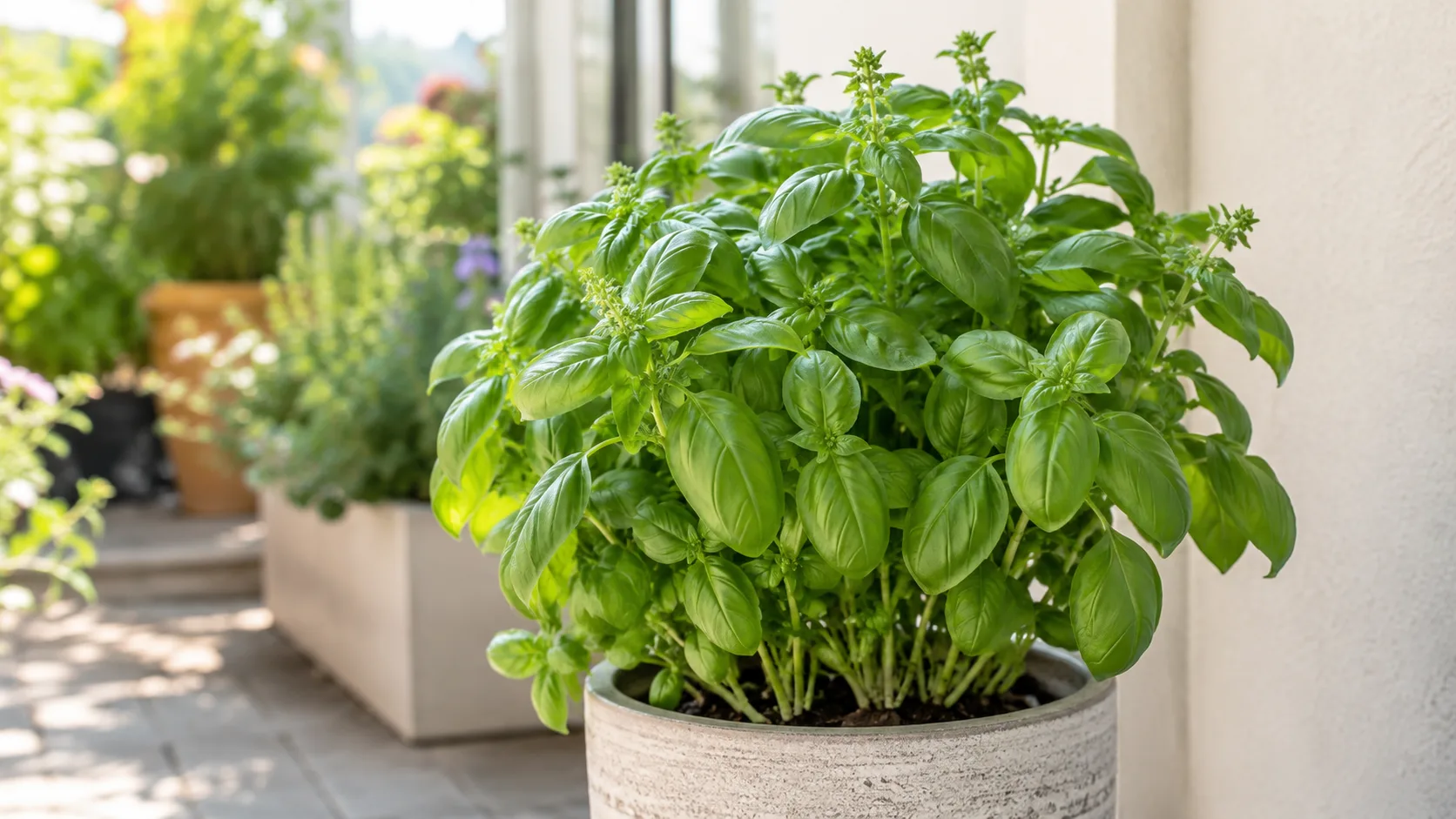
Onions have upright foliage and a different harvest rhythm, so they can be tucked along a dill row without taking the same horizontal space. Chives offer a longer-lived version of the idea: their perennial clumps can remain after a dill succession has finished. Divide chives when they become crowded, and do not let a chive clump become the permanent obstruction that makes the annual herb hard to harvest.
The strong smell of basil, onion, or chive may be appealing to gardeners who want an aromatic pest barrier, but the evidence for outdoor scent repellence is inconsistent. Use these herbs because they share a manageable bed and provide food or flowers, then inspect plants for aphids and mites instead of waiting for fragrance to do the work.
Marigolds and Nasturtiums
Marigolds and nasturtiums are useful flower companions when you treat them as part of a diverse garden design. Marigolds add a bright, accessible flower at the bed edge; nasturtiums add edible blooms and rounded leaves that can trail over a border. Both can make a dill-and-vegetable bed more attractive to people and more structurally varied for insects.
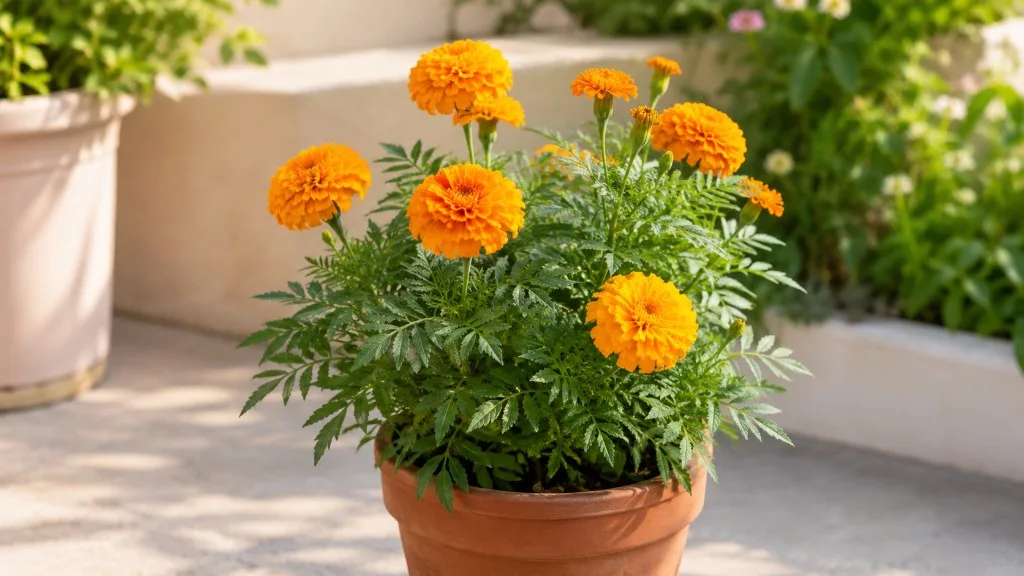
Flower variety matters more than a slogan about one marigold “repelling” one pest. The WSU review notes that even well-known aromatic or pest-disrupting plants can have mixed effects on beneficial insects, and that field performance does not always match a laboratory result. Choose open-flowered or single-flowered marigolds when insect access is a priority, and plant them where their roots and stems do not block the crop row.
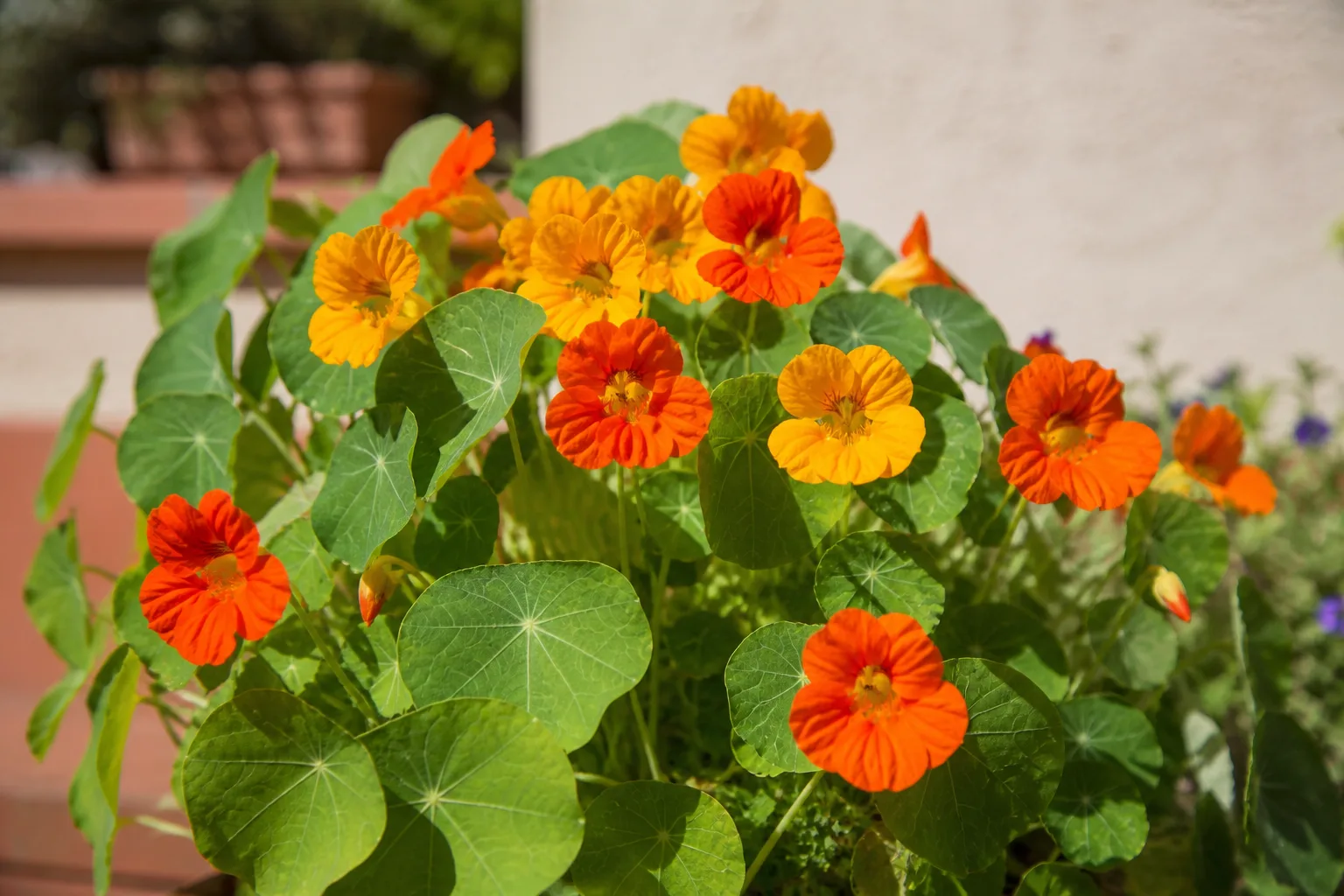
Nasturtiums deserve an extra caution: they can attract aphids. That is not automatically bad if you are deliberately monitoring them as a sacrificial edge plant, but it is a poor choice for a gardener who will not inspect the planting. Keep nasturtiums outside the main crop, remove heavily infested growth before aphids spread, and do not call them a trap crop unless you are prepared to manage what they attract.
Which Pairings Need Caution
Carrots, Fennel, and Other Apiaceae
“Do not plant dill near carrots because they are in the same family” is repeated often, but the reasoning is usually too simple. Dill, carrot, fennel, celery, cilantro, and parsley are all in the Apiaceae family, yet family membership alone does not make different plants cross-pollinate. Hybridization is a species-level question, not an automatic consequence of sharing a family label.
The practical cautions are more ordinary. Mature dill can shade a small carrot row, both dill and carrots can self-seed if you leave flowers in place, and a gardener saving seed should follow isolation guidance for each crop and cultivar rather than relying on a generic companion chart. If your carrot bed is narrow, keep tall dill outside the row and cut it back before it leans across the seedlings. If you want clean carrot seed, do not let multiple related Apiaceae crops flower in a crowded seed-saving area without checking reliable isolation recommendations.
Fennel is best treated as a separate design decision because it is large, perennial in mild climates, and can dominate a small bed. That is a size, persistence, and management issue—not proof that a casual dill planting creates a bitter hybrid. Keep large or self-seeding plants in a place where you can control their spread.
Tomatoes, Peppers, and Dense Crops
Tomatoes and peppers are not automatically forbidden neighbors for dill. A young dill plant can share space with them for a while, but a mature dill can add shade, compete for water, and become awkward to remove because its taproot dislikes transplanting. If you want both, sow dill at the outer edge and plan to harvest or cut it before the tomato or pepper canopy closes.
The same filter applies to any dense crop: ask whether the dill will still receive sun, whether you can reach the plant for harvest and scouting, and whether its water needs match the bed. A pairing that looks compatible on a seed packet can fail simply because one plant grows faster and takes the light.
What to Do When Pests Still Appear
Use IPM, Not Wishful Thinking
When a crop near dill is damaged, start with identification. Look at the newest leaves, leaf undersides, stems, flowers, and soil line; note whether the injury is holes, stippling, sticky honeydew, wilt, or missing seedlings. “There are bugs” is not enough information to choose a treatment, and spraying a beneficial insect because it resembles a pest can make the problem worse.
Next, monitor the scale of the problem. A few aphids on an established plant may be tolerated or washed off with a focused stream of water, while a rapidly expanding colony on tender growth deserves faster action. Hand-pick caterpillars when practical, remove badly infested leaves, and use insect netting or floating row cover early when the crop and pollination stage allow it.
Protect the insects dill is meant to support. Penn State Extension notes that many beneficial insects are more sensitive to insecticides than the pests gardeners are trying to control, and recommends attracting existing populations rather than assuming purchased insects will solve a home-garden outbreak. Avoid broad-spectrum products when a targeted, label-compliant option or physical control can work, and never spray edible crops with an unlabelled mixture.
Finally, judge the pairing by the harvest, not by whether every insect disappeared. A successful companion planting may improve flower resources, use space well, and keep the bed productive while you still manage pests directly. If a specific pairing repeatedly creates shade, crowding, or a shared pest hotspot in your garden, move the dill to a border or container next season; compatibility is a local observation, not a permanent rule.
Conclusion
The best dill companion plants are broccoli, cucumber, zucchini, lettuce, corn, asparagus, basil, onions, chives, beans, marigolds, and nasturtiums—but the best choice depends on your bed’s light, moisture, height, and timing. Put dill where it can flower without shading a low crop, direct-sow it because of its taproot, succession-sow for leaves, and control self-seeding before it takes over.
Let flowering dill add nectar, habitat, and visual diversity, but do not expect its scent to replace crop-specific pest management. A sunny, well-spaced planting paired with regular scouting, barriers when needed, and protection for beneficial insects will give you the real advantage companion planting can offer: a garden that is easier to manage because every plant has a job and a place.