How to Prune Dill: When, Where and What to Cut
How to Prune Dill: When, Where and What to Cut
How to Prune Dill: When, Where and What to Cut
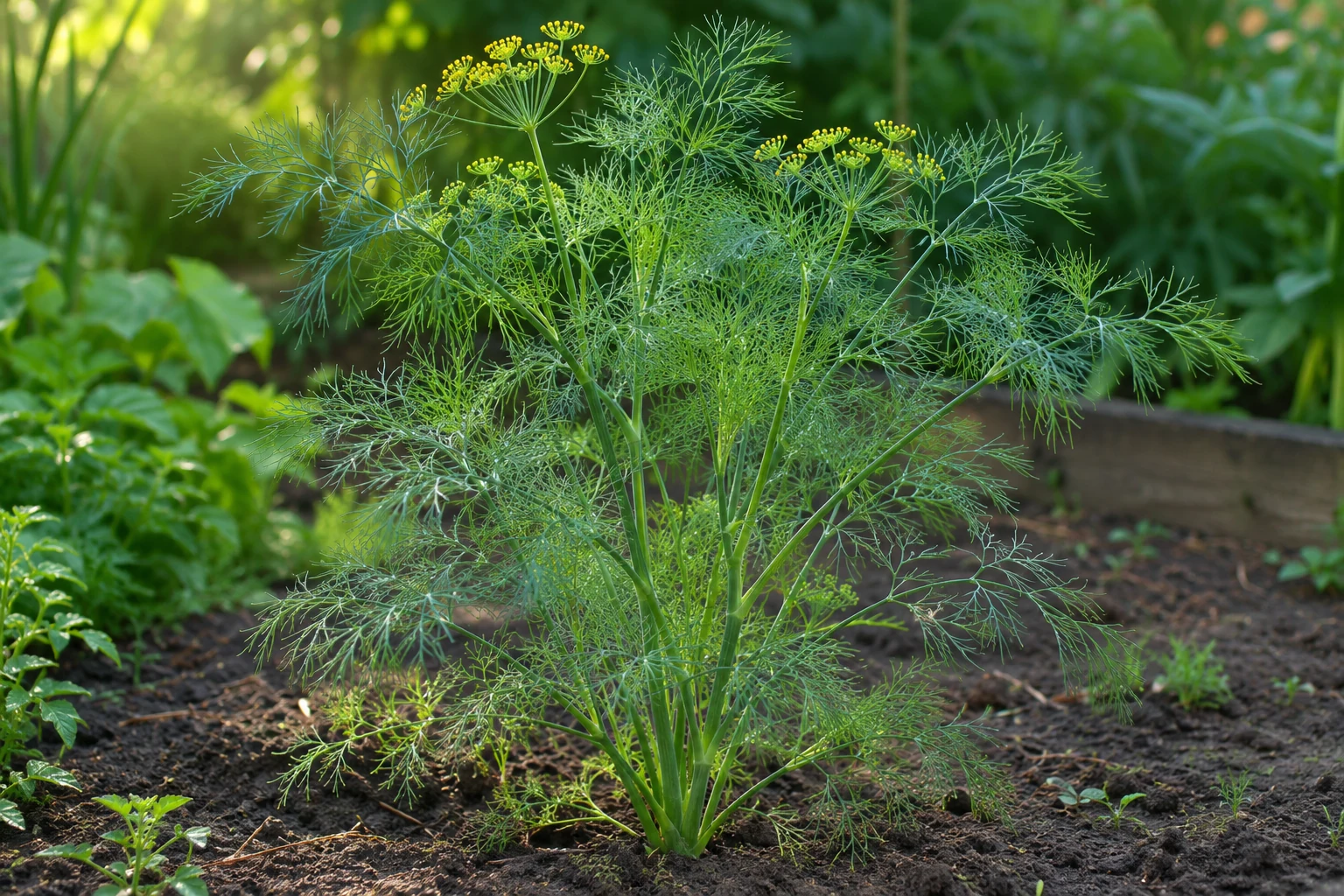
First, inspect the central growing point and choose one healthy outer frond. If the plant is still leafy and has no flower stalk, cut that frond cleanly where it joins the stem, leaving the centre and most of the canopy intact. This is a safe first harvest cut for dill; it lets you use foliage without removing the plant’s main growing structure.
Dill (Anethum graveolens) is a short-lived annual herb with a taproot, hollow upright stems, and finely divided leaves (NC State Extension). Pruning is mainly harvest and light maintenance, not a way to shape a woody perennial. Utah State University Extension recommends pruning dill to encourage lush, bushy growth, while Penn State Extension notes that regular foliage cutting can help delay bloom (USU Extension; Penn State Extension). Neither practice stops the plant’s normal transition to flowers and seed.
Assess dill before cutting
Look at the whole plant before making a second cut. Is it producing usable leafy growth, already sending up a central flower stalk, or declining after flowering? Check for broken stems, dry soil, persistent wetness, and inadequate sun. A limp or stretched plant may need a change in water or light; cutting it harder can remove leaves it needs to recover.
Dill has a taproot and is usually grown from seed in its final place, so avoid digging around the base to inspect roots or reposition a plant. If it has become old and is flowering, decide whether you want seed before cutting the umbels. The Dill overview explains the plant’s short cycle and how to plan leaf and seed harvests together.
When and why to prune dill
Start light harvesting once the plant has enough foliage to spare, commonly around the time it is several weeks old and actively growing. Pick leaves before the main flower stalk dominates if your priority is dill weed. The Royal Horticultural Society notes that regular picking encourages bushier growth and can delay flowering, while Penn State Extension says plants decline soon after they flower (RHS: How to grow dill; Penn State Extension).
Pruning has three realistic uses: harvesting leaves, removing damaged material, and briefly delaying flowering by cutting young flower stalks. If you want seed, leave selected umbels in place. If you want a longer supply of leaves, sow new batches rather than relying on heavy cuts to keep one mature plant leafy.
The first cut to make
For a healthy leafy plant, take one outer frond first. Use clean, sharp scissors and cut near the point where that frond joins its stem, without nicking the central stem or pulling the plant from the soil. Get Busy Gardening recommends cutting dill stems just above a leaf joint when pruning for growth (Get Busy Gardening).
Pause after the first cut and look at the remaining plant. If it still has a full centre and plenty of green foliage, you can harvest another outer frond. Do not begin by removing the tallest central stem unless your goal is specifically to pinch a young growing tip or remove a developing flower stalk.
Harvest fronds without stripping the plant
Choose healthy outer leaves and take only what you can use. Leave the central growing point and a generous share of leafy growth so the plant can continue photosynthesis and produce new fronds. The RHS recommends keeping at least one-third of the plant in place when harvesting leaves (RHS: How to grow dill); for a small or recently stressed plant, keep more than that.
Cut cleanly rather than tearing leaves from the stem. Savvy Gardening’s harvest guide also recommends timing dill harvest to the part you want—leaves, flowers, or seeds—and warns that taking too much at once can set back continued harvest (Savvy Gardening). Avoid harvesting a wilted plant in peak heat; wait until it has recovered and check soil moisture first.
Pinch or remove flower stalks
If dill is producing leaves and a small flower stalk is just emerging, you can cut that stalk back to a leafy junction to delay flowering briefly. This may give the plant a little more time for foliage, but it cannot reverse maturity or keep the crop vegetative through hot weather. Penn State Extension links hot weather and dry spells with bolting, and the Wisconsin Horticulture profile notes that hot or dry conditions produce a flower stalk (Penn State Extension; Wisconsin Horticulture).
If you want dill seed, pick a few plants to leave alone. Their yellow umbels mature into seed heads; cutting those off removes the seed crop and reduces the flowers available to visiting insects. Epic Gardening similarly distinguishes cutting flower stalks for leaf production from allowing plants to flower and set seed (Epic Gardening).
Remove dead or damaged growth
Remove a stem that is broken, completely dry, or clearly damaged. Cut it back to the point where it joins a healthy stem, or at soil level if the entire stem is dead. Use a clean blade and avoid cutting into a healthy central stem just to make the plant look symmetrical. If several leaves are yellow, diagnose water, light, and age before stripping them all.
Use sharp household scissors or small pruning snips that make a clean cut. Wipe off debris after use, and clean the blade between plants if you suspect disease. Use a clean tool for an edible herb and wash it after pruning.
Shape a tall plant without cutting it back hard
Dill naturally grows upright and can become tall, especially in fertile soil and strong sun. If the plant leans, check whether it is reaching toward light, growing in an exposed windy place, or top-heavy with flower heads. Add a loose stake for support rather than cutting healthy stems down to the base. The Dill light guide covers sun and sheltered placement, and the Dill soil guide covers excess fertility and root-zone conditions.
Light pinching of a young growing tip may encourage side growth, but do not expect every cultivar to branch heavily after a cut. Older stems may not produce a compact shape when shortened. If the plant is tall and flowering, harvest a few leaves or allow the seed heads to mature instead of repeatedly topping it.
Prune dill in containers
Container-grown dill can become top-heavy, especially when it carries flower heads. Keep harvest cuts small and use a stable, deep pot rather than removing much of the foliage to reduce weight. Wisconsin Horticulture notes that tall dill in containers may need staking, while Epic Gardening recommends enough container depth for the taproot (Wisconsin Horticulture; Epic Gardening: Dill in pots). A loose stake is often a better support than cutting sound stems short.
How much dill to remove at once
For a leafy harvest, take a few outer fronds at a time and leave the central stem and at least one-third of the foliage; a young plant should retain more. Avoid removing the full top or more than about one-third of the leafy canopy in a single session unless dead or diseased material must be removed. This conservative limit reduces the risk of weakening a small annual that has little time to replace lost growth.
If you need a large amount for cooking, harvest from several plants or wait for the next batch rather than stripping one dill plant bare. Utah State University Extension describes harvesting leaves throughout growth, and its guidance supports repeated, moderate cuts rather than uprooting the plant (USU Extension).
Aftercare and recovery
After pruning, check the soil and water only if the root zone is drying. Do not automatically fertilize; first let the plant settle and observe new growth. Keep it in bright light and protect tall stems from strong wind. The Dill watering guide explains how heat and container size change moisture checks.
A healthy young dill plant can continue making foliage after light harvest cuts, but recovery slows as it approaches flowering. Over the next week or two, look for firm new leaves and stable stems rather than expecting a sudden burst. If the plant keeps declining after flowering, start a new sowing using the Dill propagation guide instead of cutting it back severely.
Signs the pruning worked
The plant should remain upright, retain a green centre, and keep making usable new leaves. A cleanly removed damaged stem should not leave a ragged split, and the remaining foliage should not wilt for days. If a small flower stalk was removed, watch for new side shoots, but remember that the plant may still flower soon.
Pruning has not solved the problem if new growth remains thin, the soil stays soggy, or the plant continues to wilt in full sun. Check the Dill light and Dill watering guides before making more cuts. A symptom that persists after a correct harvest cut usually needs a care adjustment or a fresh sowing, not harder pruning.
When not to prune dill
Do not cut back a wilted plant during the hottest part of the day; check the root zone first and let it recover. Avoid heavy pruning on a small seedling, a plant that has recently been transplanted, or one already weakened by waterlogging. Do not remove every flower if you want seed, and do not expect pruning to reverse a mature plant’s life cycle.
If the plant is mostly flowering and its leaves are declining, harvest what remains and decide whether to save seed. If you do not need seed, remove the spent plant and sow another batch when conditions are suitable. Cutting an exhausted plant to a short stump rarely gives a reliable second leafy crop.
Maintain a leafy crop or save seed
For leafy dill, make small harvest cuts regularly and sow successive batches every few weeks during favorable weather. The RHS recommends repeat sowings for a continuous supply and reports that regular picking can encourage bushier growth and delay flowering (RHS: How to grow dill). Remove young flower stalks only if you want to prolong the leaf crop briefly.
For seed, stop cutting the chosen stems once their umbels form. Let seed heads dry, then harvest them before they shatter. Epic Gardening’s dill harvest guide explains how to collect leaves, flowers, and seeds at different stages (Epic Gardening: Harvesting Dill). This lets one sowing serve both kitchen and seed-saving goals without stripping every plant.
Remove spent umbels after harvest
If you are not saving seed, cut a spent flower head once the blooms are finished and before mature seed drops. Cut the flower stalk cleanly where it joins the main stem, and leave nearby green foliage that is still useful. Penn State Extension recommends deadheading dill to prevent profuse self-sowing (Penn State Extension).
If you are saving seed, wait until the heads mature and dry, then cut them into a paper bag before they shatter. The Dill propagation guide explains seed collection and storage.
Related Dill guides
- Dill overview covers the annual life cycle and harvest plan.
- Dill light helps diagnose stretched or leaning growth.
- Dill watering covers recovery moisture and heat stress.
- Dill propagation explains successive sowings and seed saving.
- Dill fertilizer helps rule out feeding issues before pruning.