Does Dill Need Fertilizer? Feeding Tips for Beds and Pots
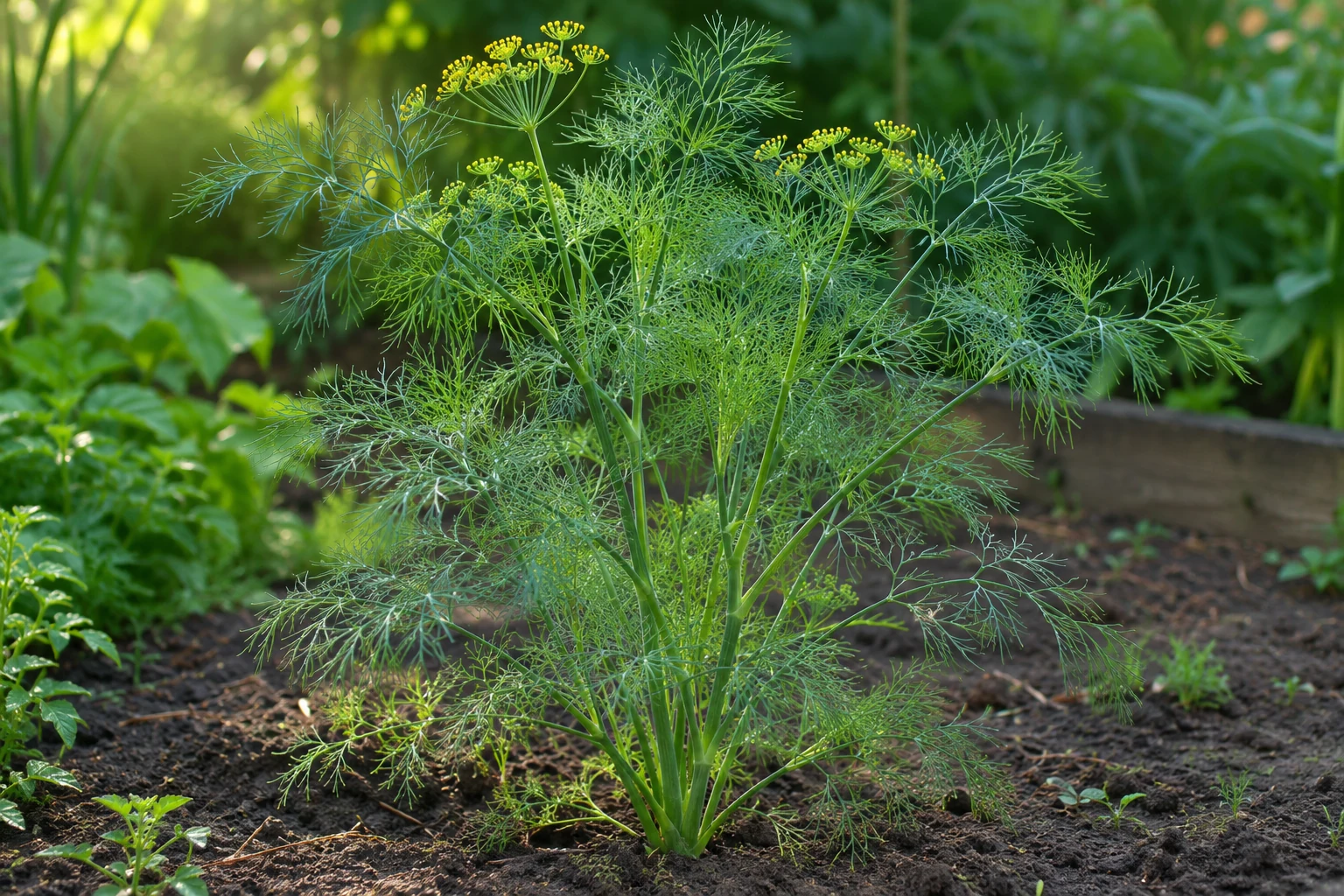
Does Dill Need Fertilizer? Feeding Tips for Beds and Pots
Does Dill Need Fertilizer? Feeding Tips for Beds and Pots
First, check the soil and the plant before reaching for fertilizer. If dill is growing in a reasonably fertile bed amended with compost, it may need no extra nutrients. If it looks weak, rule out poor light, waterlogging, crowding, and normal flowering first. Utah State University Extension recommends testing soil and following the result, and notes that dill does not require an overly rich soil (USU Extension).
Dill (Anethum graveolens) is a fast-growing annual herb, not a heavy-feeding fruiting crop. Its needs are modest, and too much fertilizer cannot compensate for a poor growing site. For most garden beds, the right question is not “Which fertilizer should I add?” but “Does the soil show a nutrient need?”
The first step before feeding dill
Inspect new growth and the root zone. Is the plant getting several hours of sun? Does water drain after irrigation? Are seedlings crowded, or is the central flowering stem already forming? If any of those is the limiting factor, fertilizer is unlikely to solve the problem. In a garden bed, use a soil test before applying a nutrient product; in a container, check whether the compost is old, depleted, or compacted.
Do not feed a plant while its soil is dry, saturated, or unusually hot. Correct moisture and drainage first, then wait for new growth before making a feeding decision. The Dill overview gives the full set of conditions to check before you change fertilizer.
Why dill usually needs modest fertility
Dill grows in moderately fertile soil and does not need a high-nitrogen feeding schedule. Utah State University Extension says no additional nutrients are needed when soil was amended at planting (USU Extension). Epic Gardening gives similar practical guidance: skip fertilizer when soil was properly amended, and use a low dose only if needed (Epic Gardening). These recommendations favor observation over routine feeding.
The plant’s short life cycle is another reason to avoid pushing it. Dill grows foliage, flowers, and sets seed; once it flowers, the plant naturally declines as a leafy crop. Extra fertilizer will not turn an aging plant back into a young one. If a leaf harvest is the goal, stagger new sowings instead of trying to extend one plant indefinitely.
Start with soil condition and a test
Garden soil can contain more nutrients than the plant needs, especially where compost, manure, or vegetable-garden fertilizer is added regularly. A soil test can identify pH and nutrient status and prevent repeated applications based on leaf color alone. Follow the test recommendation for your bed and local conditions; do not extrapolate one region’s fertilizer rate to another.
Dill tolerates moderately fertile soil. Wisconsin Horticulture describes average to fertile, well-drained soil as suitable (Wisconsin Horticulture). Penn State Extension describes a rich, moist, well-drained soil profile but does not suggest that every gardener should add fertilizer on a schedule (Penn State Extension). UMN Extension also describes slightly acidic soil rich in organic matter as suitable for dill (UMN Extension). The Dill soil guide covers amendments and drainage; fertilizer is only one part of that root-zone decision.
Feeding dill in garden beds
If a soil test shows a nutrient deficiency, use the recommended product and rate, applying it where the roots can access it without concentrating fertilizer against stems. If the soil is already fertile, skip the application. A modest amount of mature compost can improve poor soil structure and supply some nutrients, but repeated annual amendments are not automatically beneficial.
Utah State University Extension advises incorporating fertilizer only when a soil test indicates it is warranted and limiting compost to well-composted organic matter (USU Extension). That conservative approach is practical for a herb that grows well without a rich, heavily fed bed. If you have no test and the plant grows normally, leave it alone for this crop.
Feeding dill in containers
Container compost has a limited nutrient reserve, so a potted plant may need feeding if it has been growing for a long time in the same medium. First confirm that roots are not sitting in wet, compacted compost and that the pot receives enough light. If the compost was fresh and labeled for herbs or vegetables, it may already contain nutrients; check the label before adding a second product.
If growth remains weak after light and watering are corrected, use a balanced liquid fertilizer at the package’s conservative rate during active growth. Never exceed the label, and avoid feeding in heat stress or when the plant has begun to decline after flowering. GrowVeg’s dill guide describes a light liquid organic feed when young plants reach about 4 inches, but this is one practical method, not a universal requirement (GrowVeg).
Choose a fertilizer without guessing
For dill, there is no need to seek a special “herb booster.” If feeding is justified, use a balanced, general-purpose product suitable for edible garden plants and follow its label. A liquid product is easier to apply lightly to a container; a soil-test recommendation should guide a bed application. Do not apply concentrated granules in contact with seedlings or mix a high-strength feed into the sowing row.
Epic Gardening recommends choosing a balanced fertilizer only when dill needs it and warns against overfertilization (Epic Gardening). That is sensible for both beds and pots: the goal is to correct a shortage, not maximize leaf softness or force an accelerated flush of growth. For product-specific rates, follow the exact label and local edible-crop directions.
When to feed and when to stop
If feeding is required, do it while dill is actively growing, not during a heat wave, drought, or prolonged rain. Container plants may need light feeding more often than garden plants because nutrients leave with drainage, but do not use a fixed monthly schedule without checking the potting mix and label. Stop once the plant begins its natural flowering decline or when growth is no longer active.
New seed does not need fertilizer placed directly on it. Seedlings should establish roots before any supplemental feeding, especially when started in a seed compost that already contains nutrients. The Royal Horticultural Society notes that high nutrient levels in seed compost can damage seedlings, which is one reason to avoid strong feeds early (RHS: How to grow dill).
Read weak growth before adding nutrients
Pale leaves and slow growth can have many causes. Insufficient light often produces stretched stems; cold wet soil can weaken roots; crowded seedlings compete with one another; and older dill naturally declines after flowering. Check one condition at a time. If the plant is limp and the mix is dry, water; if the mix is saturated, improve drainage; if stems are thin and leaning, improve light and spacing.
The NC State Extension profile describes dill as a taprooted annual, so root disturbance can also contribute to a weak plant (NC State Extension). Do not feed heavily after a transplant shock or root disturbance. Give the root system stable moisture and light, and assess only new growth after it has had time to respond.
Recognize overfeeding and salt buildup
Dill does not need heavily enriched soil. If the pot has a white crust around the rim or surface, if leaf edges brown after repeated feeding, or if the soil has been watered with concentrated fertilizer, stop feeding and flush the pot with plain water if drainage is good. Do not flush a container that already stays saturated; correct the drainage first.
Overfertilization can damage plant quality, and excess nutrients can accumulate in a container as water evaporates. Epic Gardening specifically cautions against overfertilizing dill (Epic Gardening). If symptoms continue after feeding stops, consider replacing exhausted or saline compost at the next crop rather than adding another product.
Why fertilizer will not stop flowering
Dill’s flower stalk is a normal developmental stage. Heat and dry spells can bring flowering forward, while cultivar and sowing date affect timing. Fertilizer does not reverse that transition. Penn State Extension notes that plants decline soon after flowering and that hot weather and dry spells can cause bolting (Penn State Extension).
For more foliage, keep the soil evenly moist, harvest leaves before the flower stalk dominates, and sow another batch during the suitable season. If you want seeds, let selected plants flower and mature. The Dill pruning guide covers flower-stalk decisions, and the Dill propagation guide explains succession sowing.
Adjust feeding for weather and growth stage
In hot weather, avoid fertilizer while the plant is stressed or the pot dries out rapidly; solve placement and moisture first. During heavy rain, nutrients may leach from a container, but do not immediately replace them unless new growth later indicates a need. For an established garden bed, a soil test is more useful than guessing whether rain washed away nutrients.
Young plants, leafy plants, and seed-bearing plants have different priorities, but all need light, appropriate moisture, and good drainage. If the plant is flowering and setting seed, do not continue feeding to prolong foliage. Let it finish or remove it after seed collection and start another sowing.
Avoid common dill-fertilizer mistakes
- Feeding on a calendar: test or inspect the soil before applying nutrients.
- Using fertilizer to fix low light: move the plant to brighter conditions first; see Dill light.
- Feeding waterlogged roots: restore drainage before considering fertilizer.
- Applying strong feed to seedlings: wait until plants are established and follow the label.
- Adding more compost to already fertile beds: a soil test can prevent excess nutrients.
- Trying to stop flowering with fertilizer: use succession sowing for a longer leafy crop.
When to use this page vs other Dill guides
Use this page when deciding whether dill needs nutrients. Read Dill soil to check fertility and drainage, Dill watering to address moisture stress, or Dill light for stretched growth. The Dill overview explains when to sow a replacement crop.
Related Dill guides
- Dill overview explains the full growing cycle.
- Dill soil covers pH, compost, and drainage.
- Dill watering helps separate drought from nutrient stress.
- Dill light covers placement and weak growth.
- Dill pruning explains leafy harvest and flowering.
- Dill propagation covers new sowings.
Conclusion
Dill usually needs modest fertility, not a routine fertilizer schedule. Test garden soil, account for compost already added, and feed a container only when its mix is depleted and the plant is actively growing. Correct light, water, and drainage before treating weak growth as a nutrient shortage. If flowering has started, accept the annual cycle and sow new dill for the next leafy harvest.