18 Insect-Repellent Plants—and What They Really Do
Explore 18 insect-repellent plants, including basil, dill, and thyme, with placement tips and a clear look at what the evidence can and cannot promise.
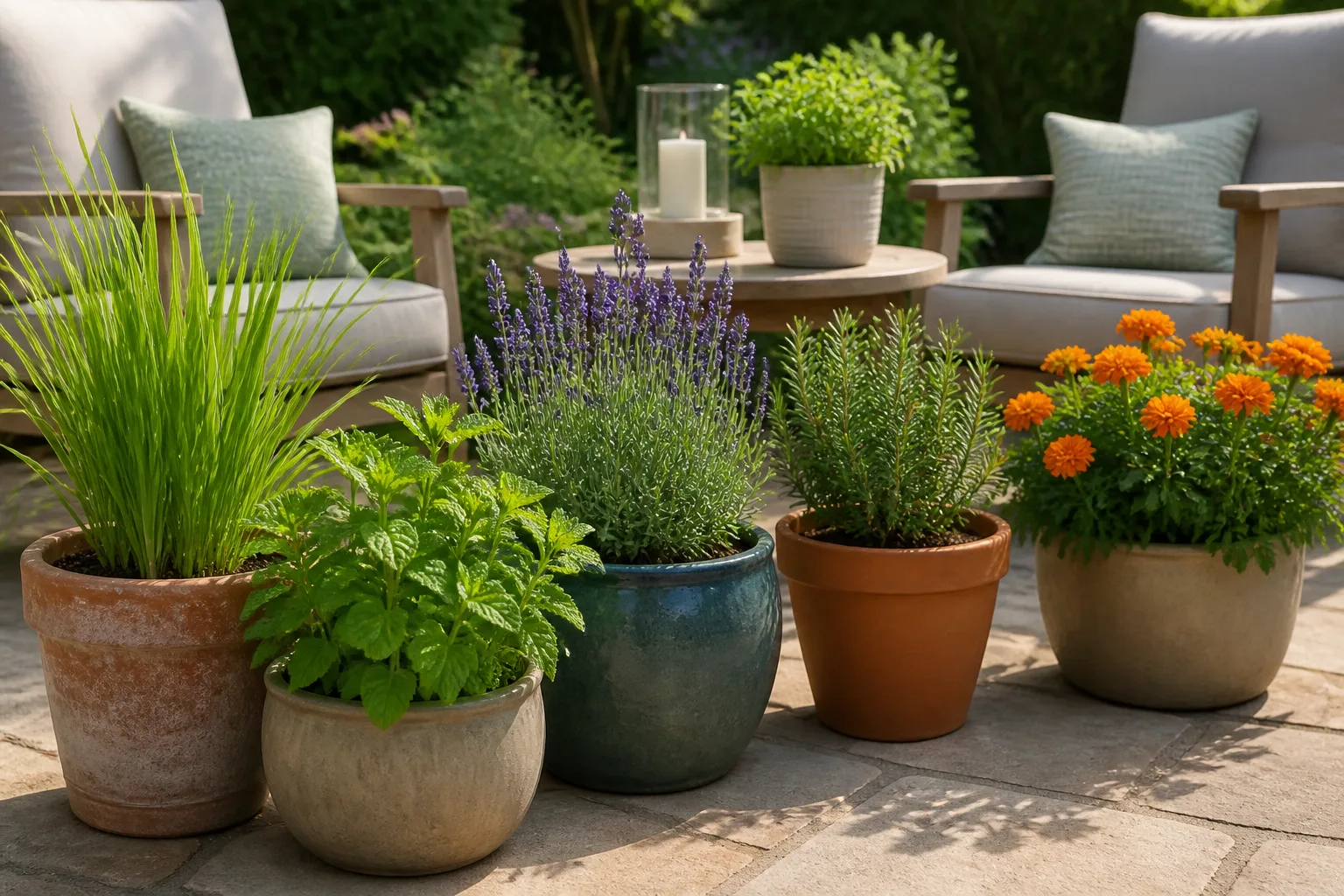
If you are choosing plants to keep insects off vegetables, start with the crop and the pest—not the strongest-smelling herb. A pot of rosemary beside the patio or a row of mint around a bed does not create a reliable force field. Some companion plants can help with specific pest problems, but their effect is usually more targeted than the phrase “insect-repellent plant” suggests.
The most useful evidence points to three different jobs: making a crop harder for a specialist pest to find, discouraging a pest from laying eggs on a particular crop, and feeding beneficial insects that prey on or parasitize garden pests. Those effects are not interchangeable. A plant that attracts a wasp that attacks caterpillars is not repelling the caterpillars, and a herb that helps one tomato pairing is not a general-purpose insecticide.
The 18 plants below are organized by those real jobs. Use the specific pairings as a starting point, then watch the crop for a few weeks; garden conditions, pest species, and timing all affect the result.
What “insect-repellent” means in a garden
Companion planting is often explained as scent masking: a strong-smelling herb confuses insects so they cannot find a vegetable. That can happen in some specific cases, but it is not a dependable rule for every aromatic plant. A 2026 Penn State Extension guide to herbs as plant partners describes researched examples in which herbs can disrupt host-finding or egg-laying and can attract pest-eating beneficial insects. A 2023 Washington State University Extension companion-planting guide is more cautious about scent: it notes that essential-oil effects seen in laboratory tests often have not translated into field repellence, because volatile compounds dissipate outdoors and insects also use visual cues.
Those sources do not give gardeners a simple “plant X repels bug Y” guarantee. They do support a more practical approach: choose a crop-specific pairing, use more than one kind of plant, and place companions among or close to the crop rather than expecting a distant border to protect it. A useful plant may still earn its space by feeding pollinators or beneficial insects, even if it does not repel a pest by scent.
18 plants to use by their real job
The list separates plants with specific pairing evidence from herbs that support beneficial insects and flowers that add habitat. A species can do more than one job, but keep the distinction clear when you decide what to plant.
Specific pairings with documented effects
These seven plants have the clearest crop-specific roles in extension guidance. Think of them as options to test beside the named crop, not as a treatment for every insect in the garden.
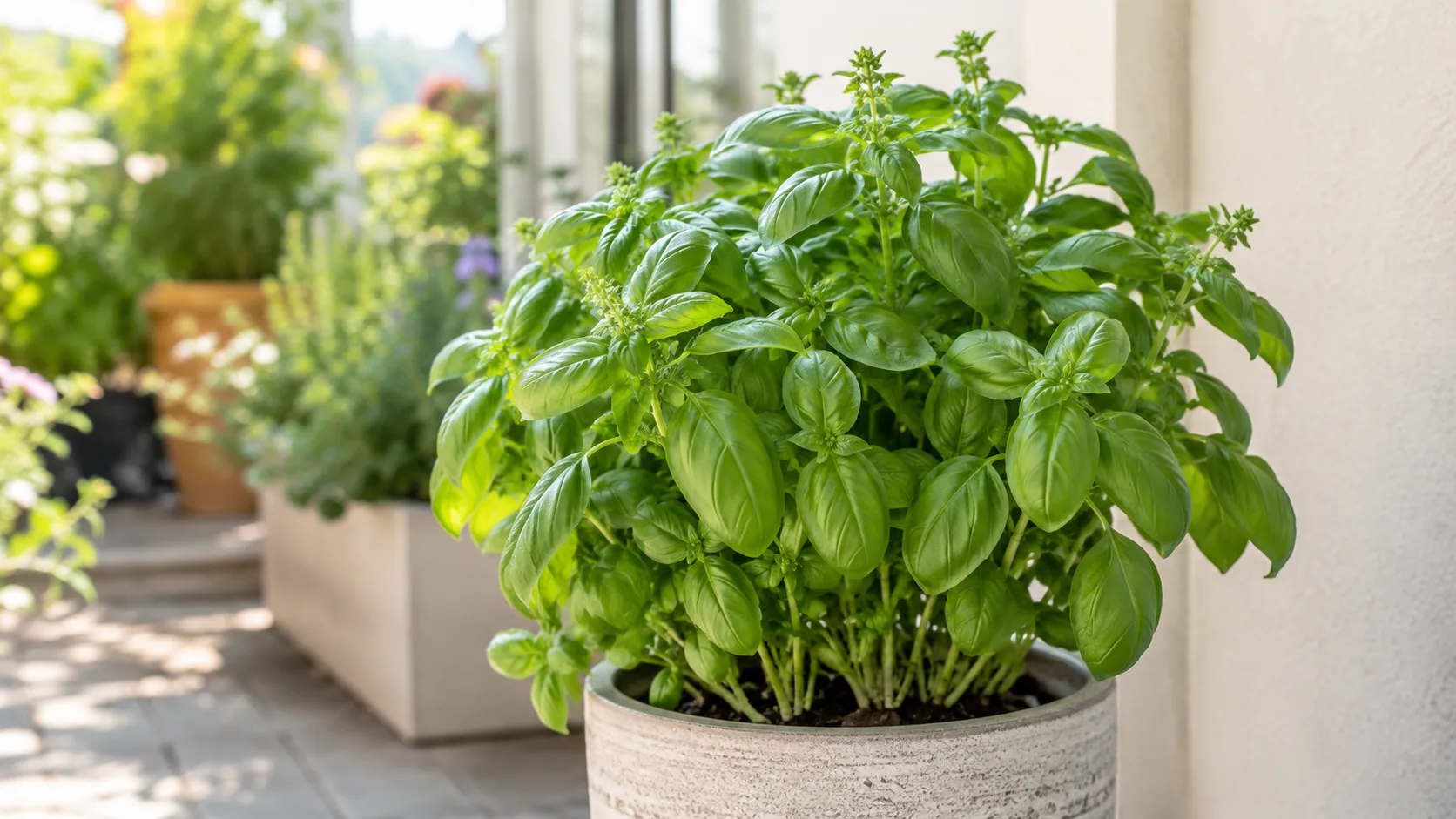
1. Basil (Ocimum basilicum). Basil is most useful as a tomato companion, not as a mosquito barrier. Penn State Extension describes research in which basil around tomatoes masks the crop from thrips and reduces egg-laying by tomato hornworm moths; basil and thyme also appear in a pairing that can reduce egg-laying by yellow-striped armyworms. Keep the plant close to the tomatoes you want to test, and judge it by the crop’s pest activity rather than by how strongly the leaves smell.
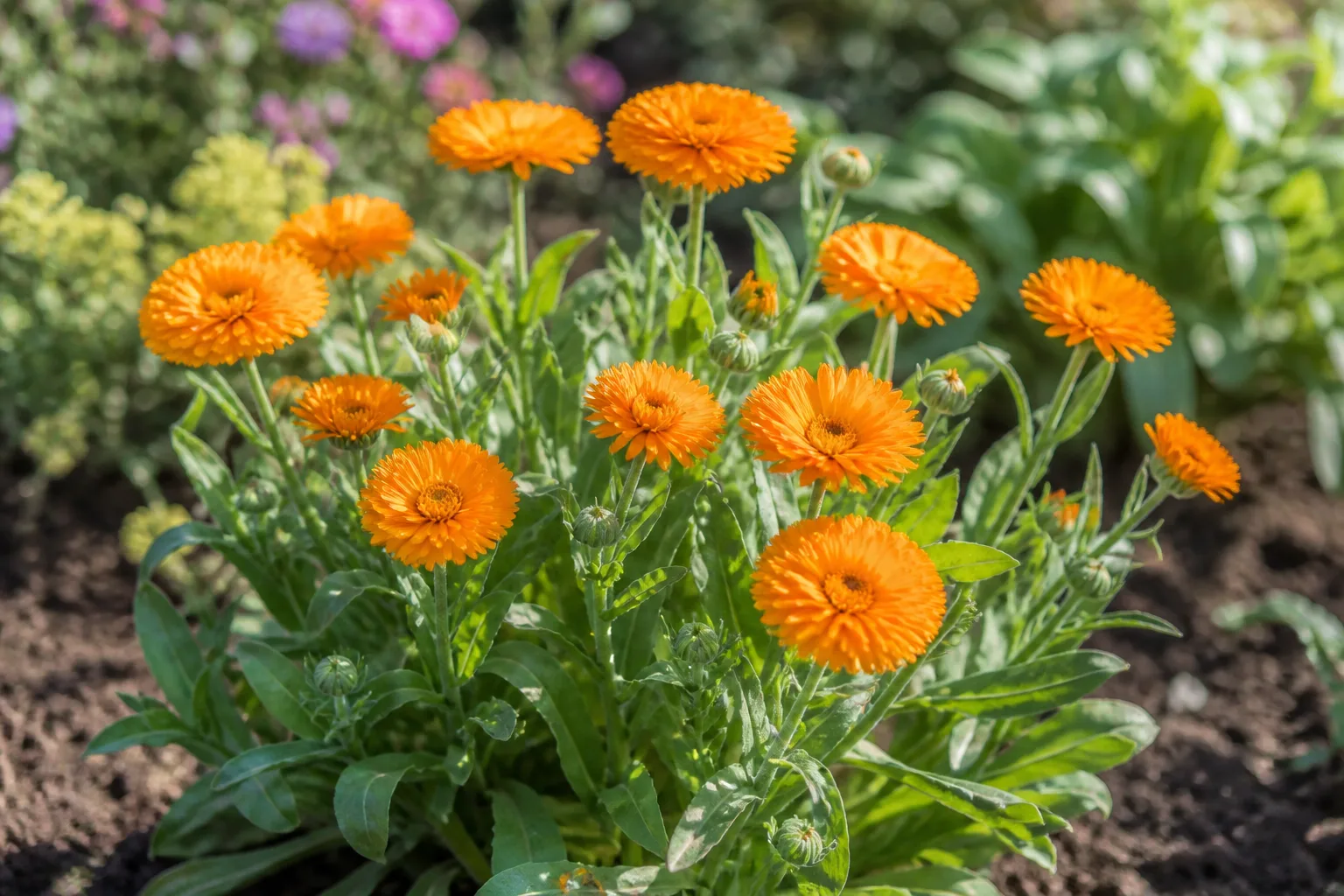
2. Calendula (Calendula officinalis). Calendula, or pot marigold, has a more specific role than “marigolds repel bugs.” Penn State reports that calendula near collards attracted beneficial predator insects and deterred aphids. Grow the true calendula species and let some flowers stay open; ornamental French marigolds are a different plant and should not be treated as interchangeable evidence.
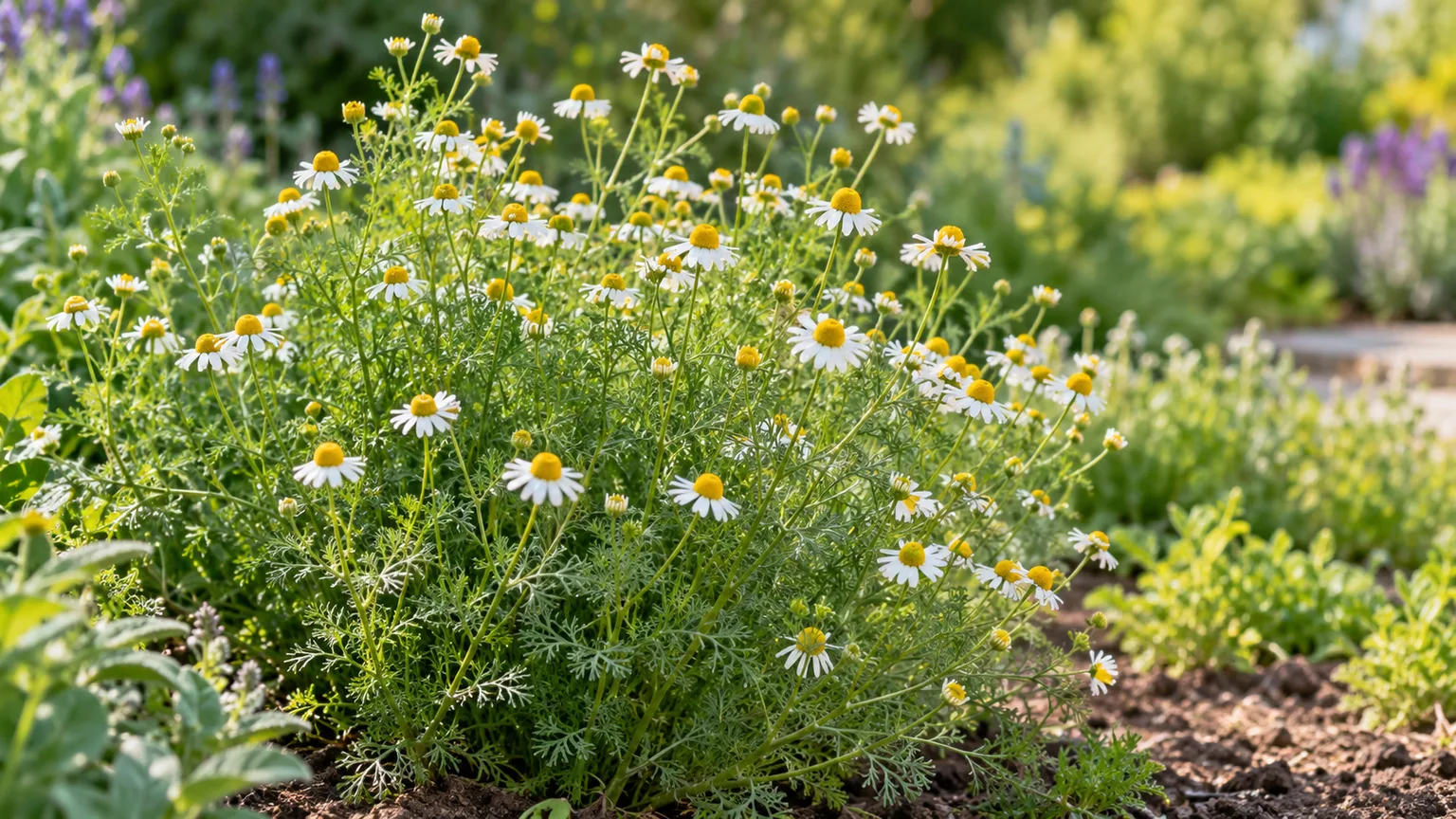
3. Chamomile (Matricaria chamomilla). Chamomile is listed with dill, hyssop, and sage as a partner for cole crops, where the plants can deter egg-laying by adult imported cabbageworms. It is a small, flowering annual that can fit at the edge of a bed, but one plant is not a physical barrier and may not be enough to change pest pressure in a large planting. Leave the flowers long enough to serve the companion-plant role.
4. Dill (Anethum graveolens). Dill earns its place in a vegetable garden in two ways: its flowers can support beneficial insects, and Penn State lists it with several cole crops as a partner that deters cabbageworm egg-laying. The flowering umbels are the useful part for many tiny beneficial insects, so allow a few plants to bloom instead of harvesting every stem. Dill can also host swallowtail caterpillars; decide whether you can share a few stems before planting it beside a crop you want to keep pristine.
5. Hyssop (Hyssopus officinalis). Hyssop is another listed partner for cole crops and imported cabbageworms. It is a perennial herb, so choose its bed position with its mature size in mind and avoid tucking it where it will shade a small vegetable row. The practical advantage is continuity: once established, a flowering perennial can remain part of a diverse garden rather than needing to be resown every season.
6. Sage (Salvia officinalis). Sage appears with dill, chamomile, and hyssop in the cole-crop pairing, and Penn State also lists it among herbs that can support parasitic wasps. Treat those as two possible benefits, not proof that a sage border will keep all cabbage moths away. Common sage prefers a sunny, well-drained spot, so place it at the edge of a bed if your vegetables need more consistent moisture.
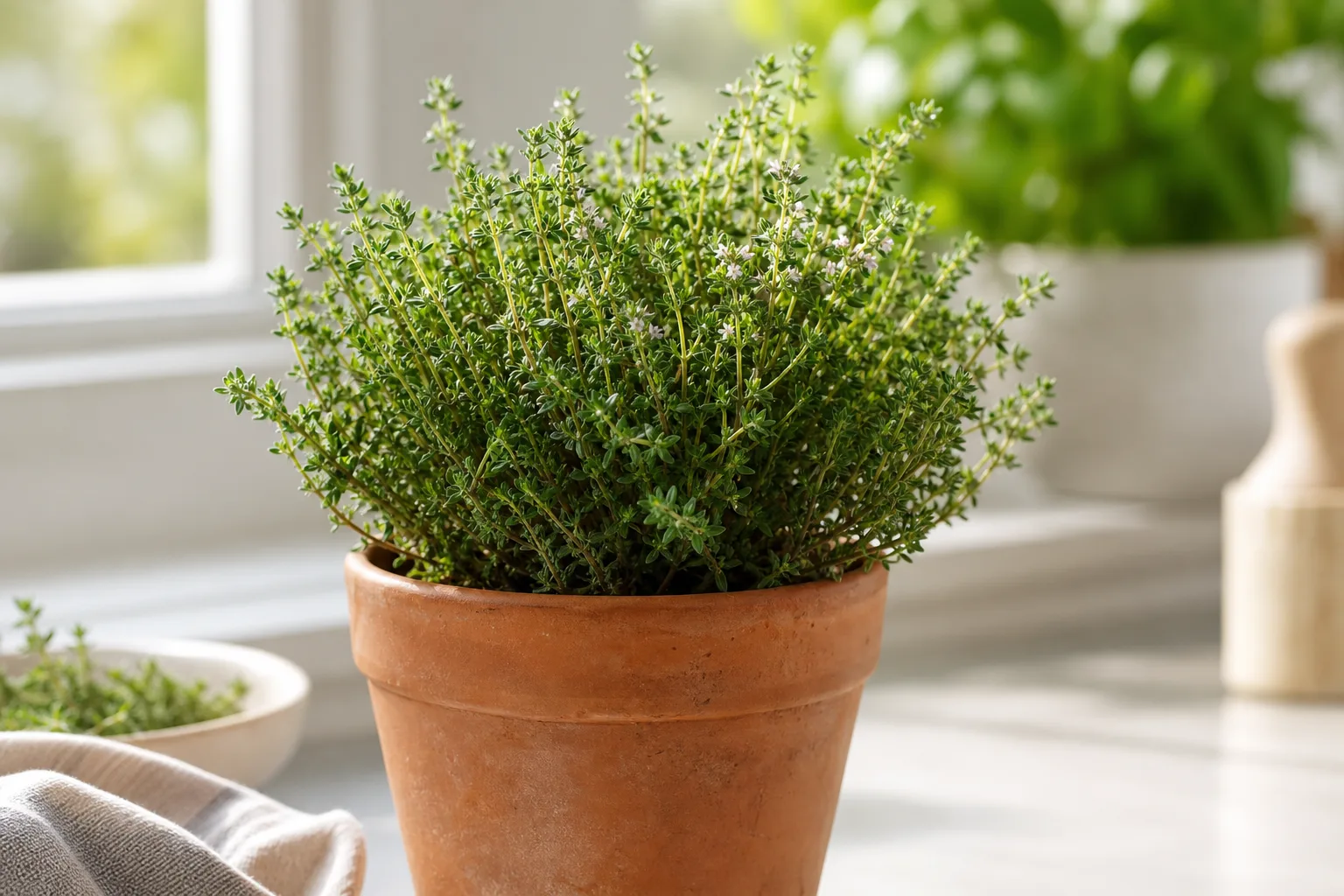
7. Thyme (Thymus vulgaris). Thyme has a specific tomato use: when it forms a low carpet beneath tomato plants, it can deter egg-laying by yellow-striped armyworm moths. A low-growing thyme variety is better suited to this job than a tall, woody type, and it should not crowd the tomato stems or make watering difficult. Penn State also lists thyme with cole crops, which makes it a flexible herb to try in a mixed vegetable garden.
Herbs that bring in beneficial insects
These eight herbs are useful partly because their flowers can provide food to insects that help manage pests. They are most valuable when you let some plants flower and place them close enough to the crops that need support.
8. Anise (Pimpinella anisum). Anise is one of the herbs Penn State lists for attracting parasitic wasps that attack caterpillar pests. Its small flowers are more important for this role than its aroma. Grow it where it will not be shaded out, and consider a short row or pocket near vegetables rather than a single plant at the far end of the yard.
9. Caraway (Carum carvi). Caraway also appears in Penn State’s list of herbs that support parasitic wasps around vegetables. Like other plants with small flower clusters, it has more value once it flowers than while it is being harvested for leaves. If you try it, leave some plants to bloom and compare caterpillar damage with a nearby crop area that does not have the same companion.
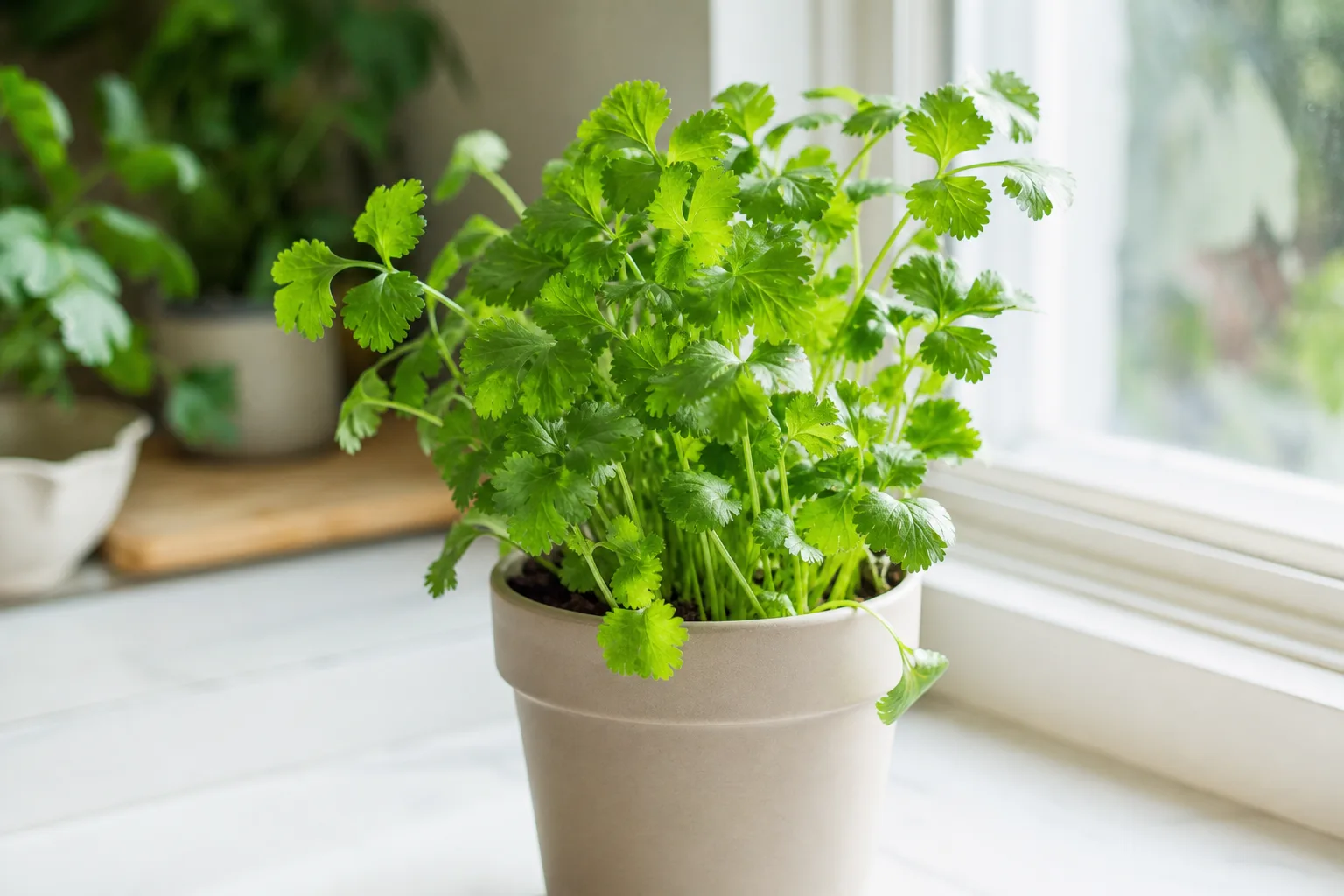
10. Cilantro (Coriandrum sativum). Cilantro is a strong choice for gardeners who want to encourage aphid-eating insects. Penn State lists it near eggplant and leafy greens, where it can support lacewings, lady beetles, parasitic wasps, spiders, and hoverflies. Cilantro bolts quickly in warm weather, so sow small batches over time: harvest some leaves, then allow a few plants to flower for beneficials.
11. Fennel (Foeniculum vulgare). Fennel is also listed for supporting beneficial insects near lettuce and other greens, as well as for attracting parasitic wasps around vegetables. It can grow tall and broad, so give it a dedicated edge or open spot where it will not shade short crops. Do not plant it only because of a claim that its scent repels everything; its flower resources and placement are the more defensible reasons to grow it.
12. Lemon balm (Melissa officinalis). Lemon balm is among Penn State’s herbs that can attract parasitic wasps that attack caterpillars. Its lemony scent may be why it appears in many repellent lists, but the useful garden role here is the beneficial-insect connection, not a guarantee that caterpillars will avoid your crops. Lemon balm can spread and self-sow, so keep it in a pot or a contained bed if you do not want it to fill nearby space.
13. Marjoram (Origanum majorana). Marjoram is included in the same extension list of plants that can support parasitic wasps around vegetables. Letting a small patch flower is more useful for this role than repeatedly cutting every stem before bloom. It is also a compact kitchen herb, which makes it a reasonable choice for a sunny bed edge where it can serve both harvest and habitat needs.
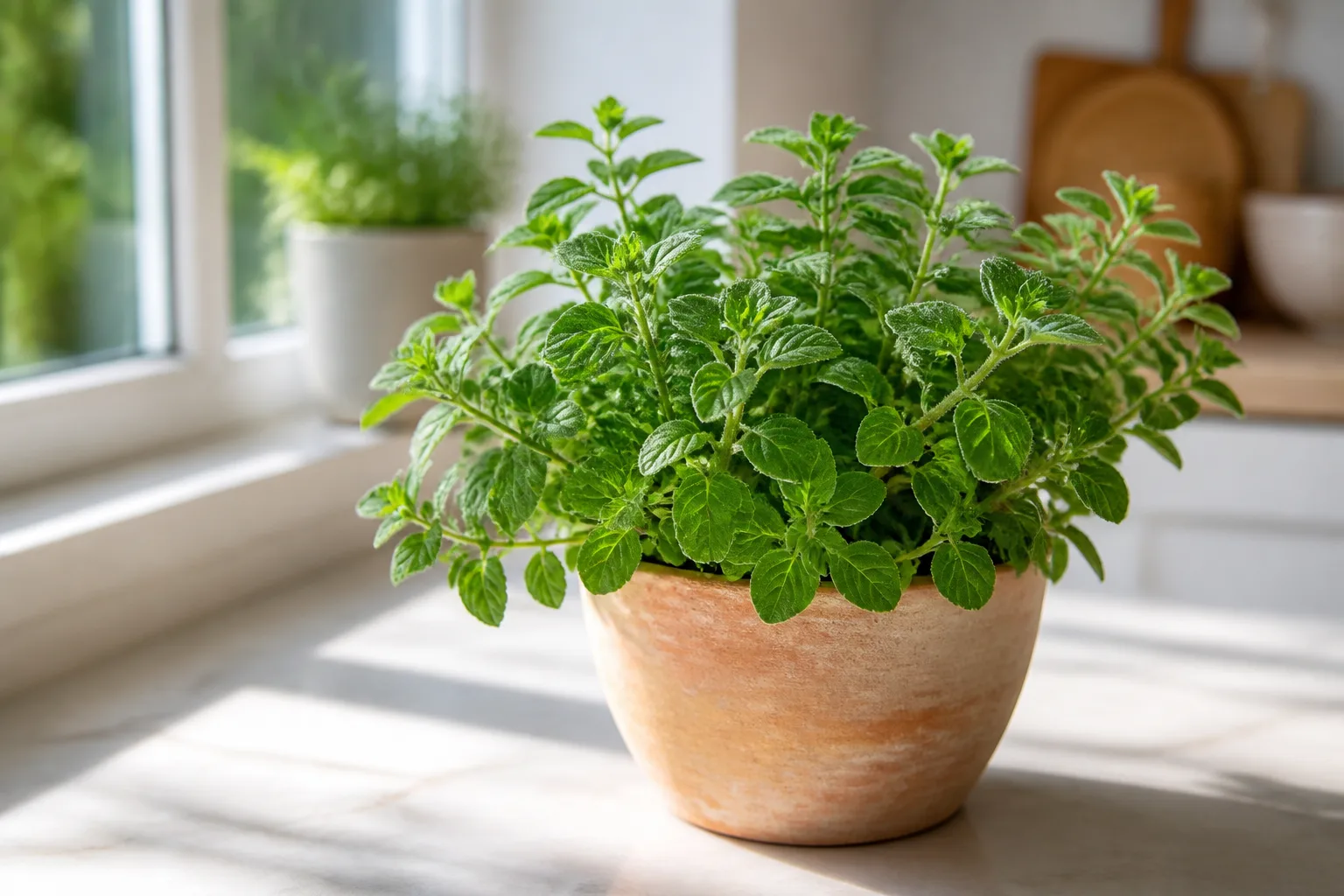
14. Oregano (Origanum vulgare). Oregano can provide pollen and nectar for sweat bees when it flowers, and Penn State lists it among herbs associated with parasitic wasps that attack caterpillars. It spreads, so a pot sunk into the soil or a defined edge can make it easier to manage. If you harvest heavily, reserve a few stems for flowers; a clipped plant cannot provide the same bloom resources as one allowed to open.
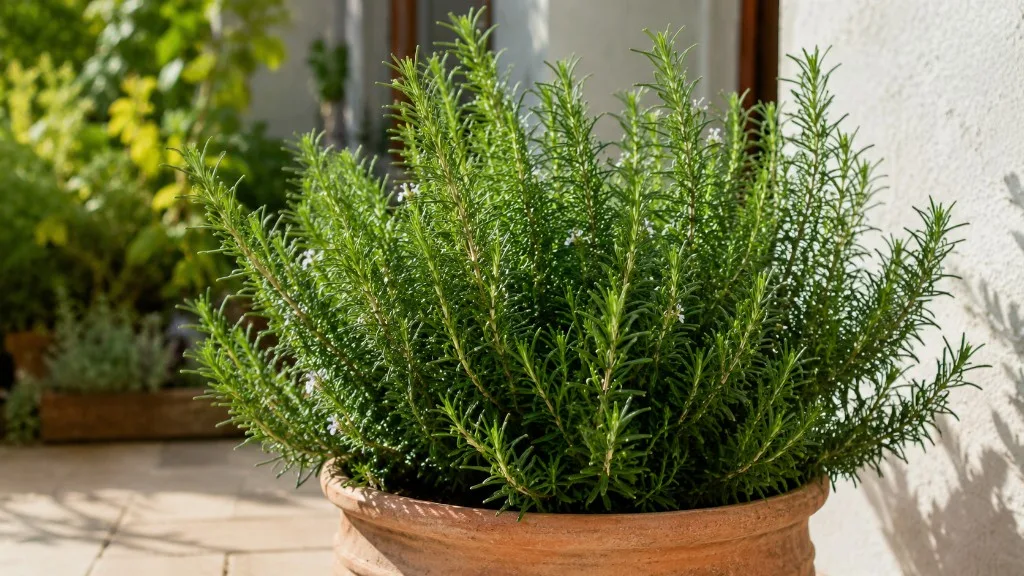
15. Rosemary (Salvia rosmarinus). Rosemary is worth growing for its kitchen use and flowers, not because a shrub near the patio should be expected to repel mosquitoes. Penn State notes that rosemary flowers can attract sweat bees and includes rosemary among herbs that support parasitoids of caterpillar pests. It needs a sunny, well-drained location and may need winter protection or container growing in colder climates, so match it to your conditions before making it part of a pest plan.
Flowering herbs that add diversity
These three plants are useful additions to a mixed garden, but do not count them as proven insect repellents. Their value is flowers, habitat, or edible harvest—and that is still a good reason to include them.
16. Borage (Borago officinalis). Borage is a flowering annual with blue, star-shaped blossoms that draw pollinators. It is often described as a cabbageworm repellent, but the extension pairing evidence above is more specific for dill, chamomile, hyssop, sage, and thyme; treat borage as a pollinator plant unless local evidence supports a stronger claim. It can self-sow, so remove spent flowers if you do not want seedlings across the bed next year.
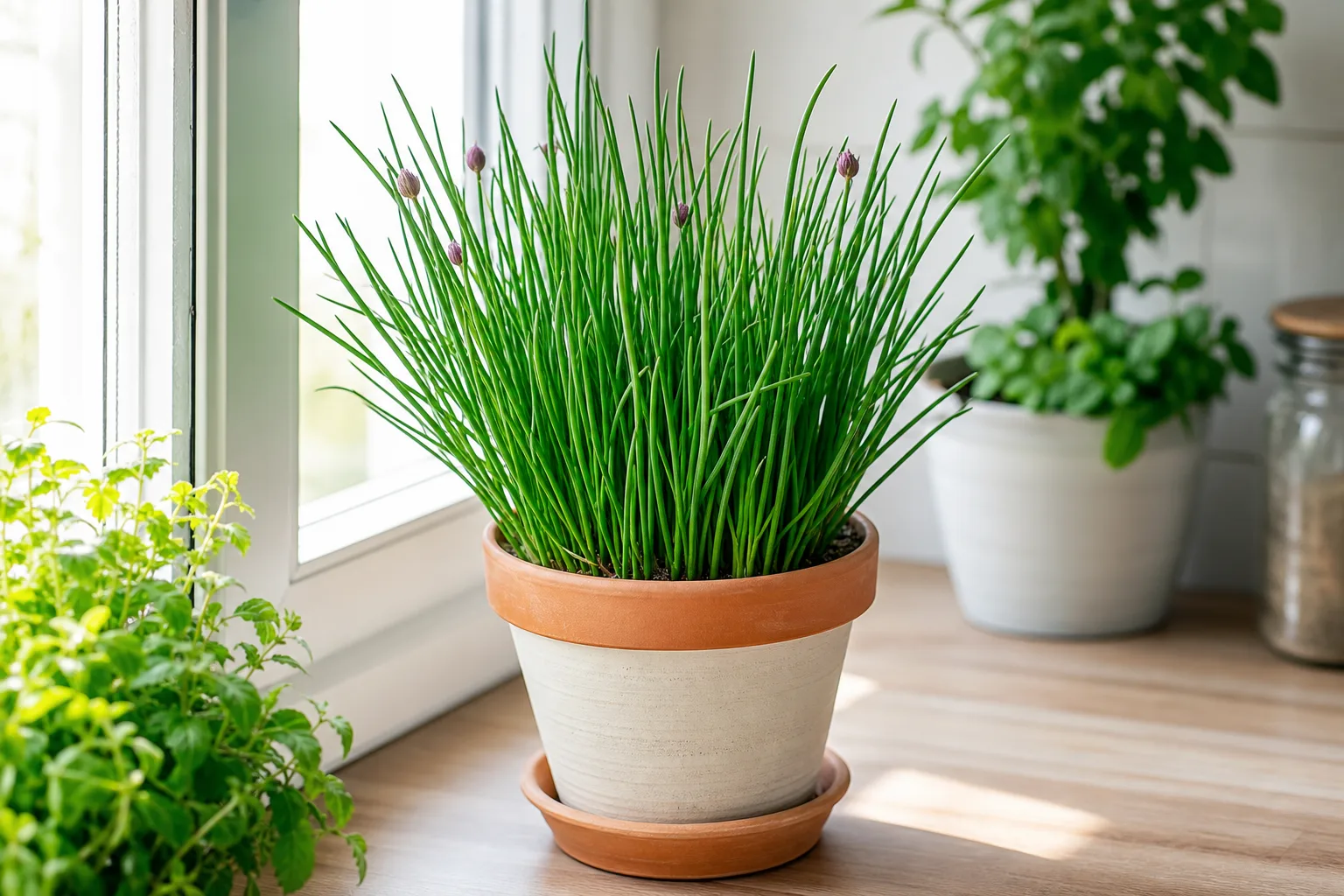
17. Chives (Allium schoenoprasum). Chives are a compact kitchen herb, but their clearest benefit in a pest-aware garden is their flowers, not a proven repellent effect. Let a few purple flower heads open to add another nectar and pollen source; cut them before seed if you do not want the plant to self-sow.
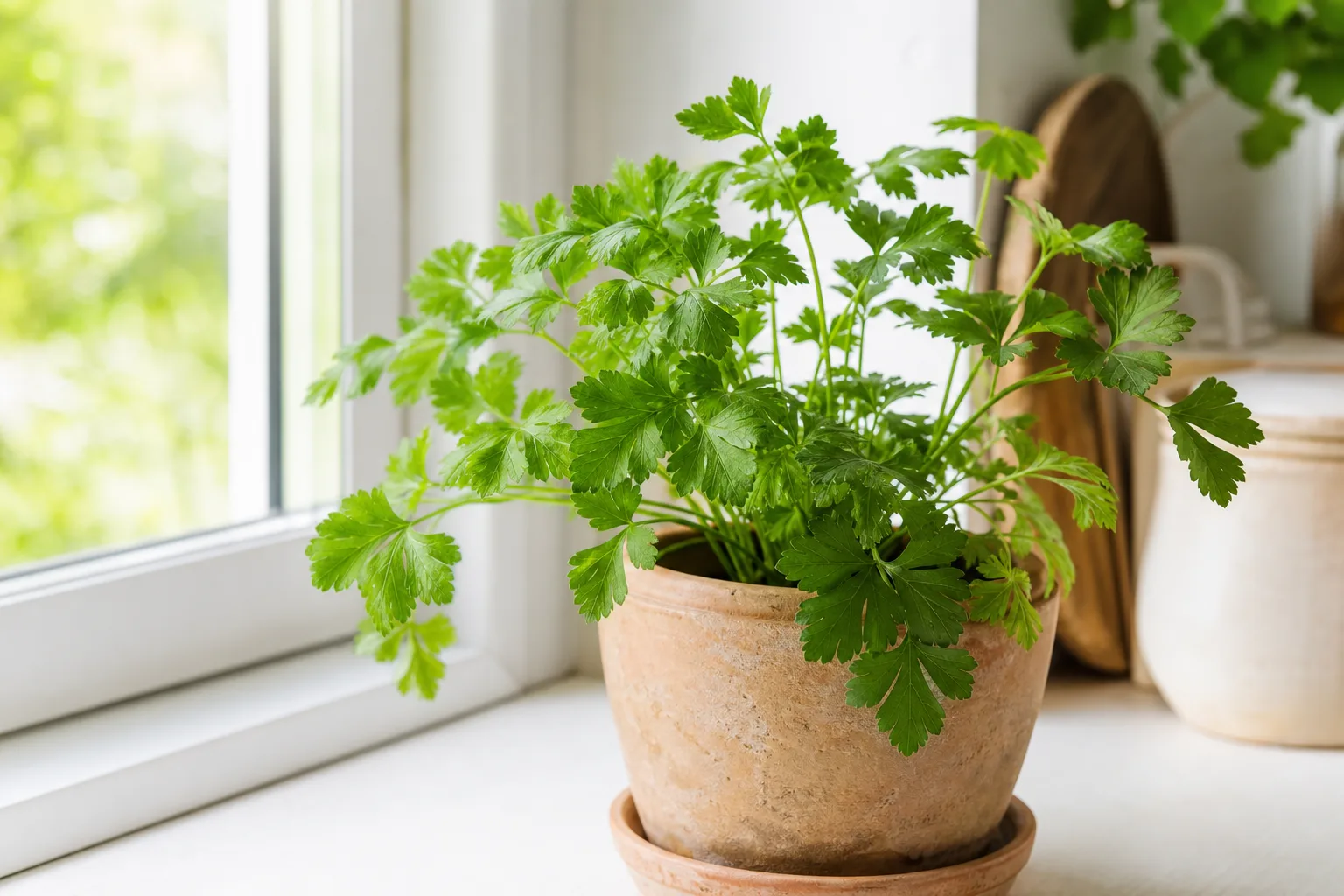
18. Parsley (Petroselinum crispum). Parsley’s small flower umbels can be left for beneficial insects in the second year of its biennial life cycle. Keep some plants for leaves and let another plant flower; it is a simple way to balance harvest with habitat. If swallowtail caterpillars appear on parsley, decide whether you can share a plant rather than assuming every insect in the garden is a pest.
A note on common “repellent” herbs
Mint, garlic, onion, catmint, and wormwood often appear in lists of plants that repel insects. You can grow them for their culinary, ornamental, or ecological value, but do not count on a living plant’s scent to push pests out of a vegetable bed. Washington State University Extension’s field-research review is a useful check on broad aroma claims: volatile compounds can repel insects in controlled tests yet dissipate quickly in an open garden. Mint also spreads aggressively, so grow it in a container if you want to keep it.
Match plants to the pests you have
Before buying starts or seed, identify the crop that is being damaged and, if possible, the insect or its eggs. “Cabbage pest” could mean imported cabbageworm, cabbage looper, flea beetle, or another insect; one companion plant is unlikely to affect all of them in the same way.
Cole crops and cabbageworms
For cabbage, collards, broccoli, kale, and related cole crops, try dill, chamomile, hyssop, sage, or thyme in and around the planting. Penn State’s table associates the first four with discouraging imported cabbageworm egg-laying and thyme with a similar effect on cabbageworms and cabbage loopers. Start with one or two plants near a short row, then compare egg clusters and leaf damage with a section of the same crop that has no companion.
Do not wait for a companion herb to solve an outbreak. Check the undersides of leaves for eggs and young caterpillars, and use a row cover before moths reach the crop if exclusion is appropriate for your pollination needs. A flower border outside the bed may add habitat, but it does not put the companion effect close to the host plant.
Aphids and other soft-bodied pests
Calendula is the most specific choice in this list for collards with aphids. For lettuce and other greens, cilantro or dill can attract a wider range of aphid-eating insects; fennel is another option if you have room for a larger plant. Savvy Gardening’s guide to plants for beneficial insects explains why nectar matters: many predatory and parasitic species need flower resources as well as prey, and small, accessible flowers can help them feed.
Leave the beneficial insects time to find the bed. A few aphids on a plant do not automatically call for spraying; inspect the new growth, watch for predators and parasitized aphids, and remove a heavily infested stem if the plant is struggling. Avoid treating a companion planting as pest control if the crop is losing new growth or the pest is spreading quickly.
Tomatoes
Basil and thyme are the most practical pairings to test around tomatoes. Penn State describes basil as masking tomato plants from thrips and reducing egg-laying by tomato hornworm moths, while thyme under tomatoes can deter yellow-striped armyworm egg-laying. Those are specific interactions, not a promise that a pot of basil will keep every tomato pest away.
Keep tomato plants easy to inspect and water. Do not crowd stems with a dense ring of herbs, and continue checking leaves and fruit for chewing, eggs, or sticky residue. If the companion plant makes the tomato canopy harder to manage, move it to the bed edge; access and airflow matter more than a tightly packed planting diagram.
Put plants where they can make a difference
Interplant rather than relying on a border
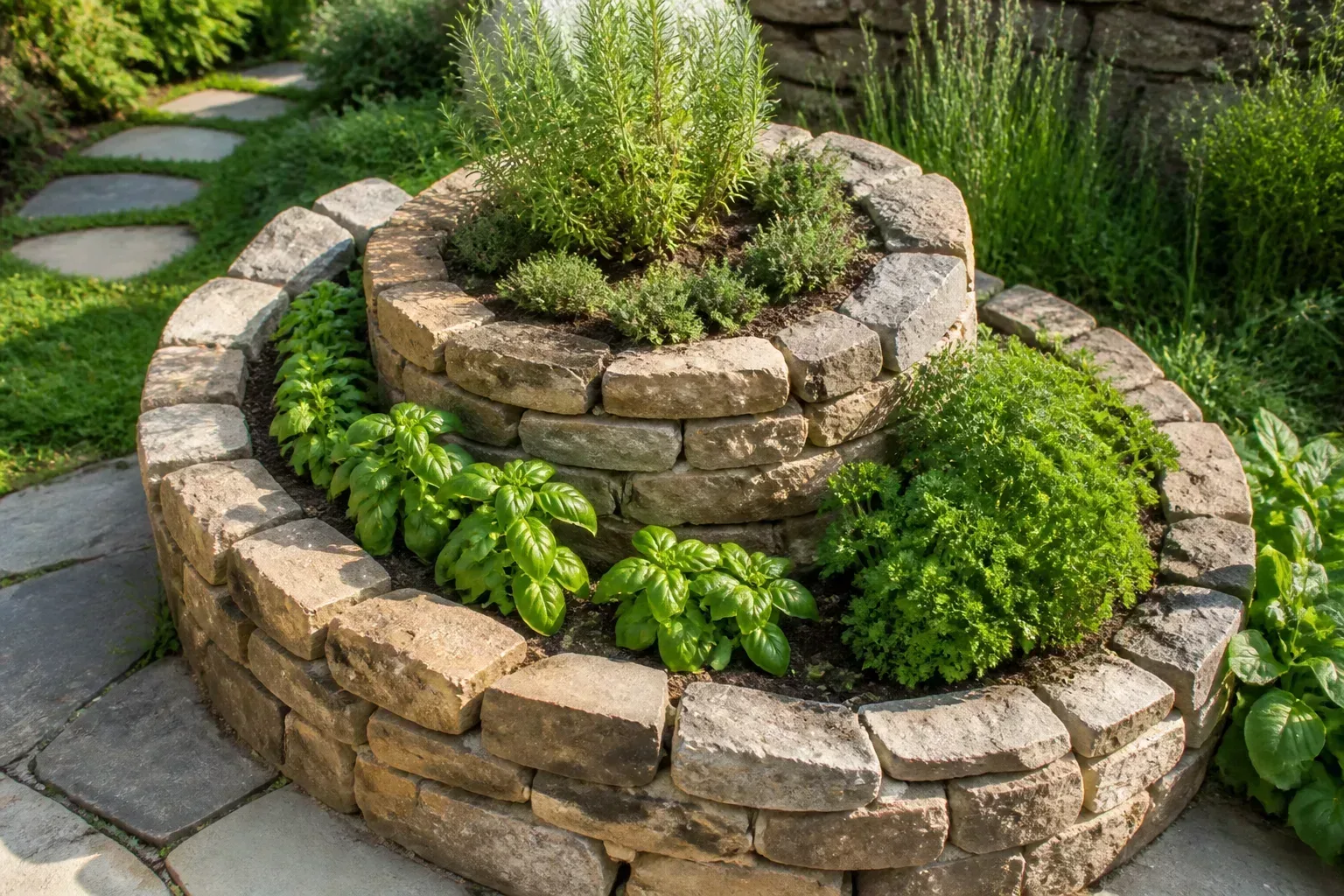
A narrow row of one herb around the outside of a vegetable bed may look tidy, but it leaves the crop interior unchanged. Interplant a few different species among the vegetables or in small pockets near the crop that has the pest problem. Washington State University Extension’s synthesis emphasizes plant diversity and notes that intercropping can be more useful than relying on perimeter plantings alone.
You do not need to mix every herb into every row. A practical first trial is one basil plant beside a few tomatoes, or a flowering dill plant near a short line of greens, with the rest of the crop planted as usual. Record where you planted it and check the same leaves on a regular schedule so you can tell whether the change made a difference.
Let a few herbs flower
Gardeners often pinch herbs to keep them leafy, but repeated cutting removes the flowers that feed small beneficial insects. Leave a few plants of dill, cilantro, oregano, thyme, or rosemary to bloom while harvesting the rest. Flowering does not guarantee a pest decline, but it can make the garden more useful to insects that help manage aphids and caterpillars.
Think about timing as well as plant choice. Cilantro may bolt in heat; dill and parsley can flower at a different point in the season; perennial herbs may not bloom until they are established. A mix of annual and perennial plants can provide more continuous flowers than relying on a single short-lived herb.
Contain plants that spread or outgrow a bed
Mint and lemon balm can spread beyond the space you planned for them. Keep them in a container or a bed with a clear boundary, and do not let a large herb shade the crop it is supposed to support. Fennel also needs enough room to avoid shading low greens; site it where the mature plant will not block light or access.
Make space for the vegetable first. A companion plant should not compete for the crop’s water, light, or room to grow, and it should not make weeding or pest scouting harder. If it creates more work than it saves, move it to a nearby border or use a pot.
What these plants cannot do
Companion plants cannot guarantee a pest-free harvest, substitute for identifying the pest, or control a major infestation by themselves. A plant may help in a small research trial or a particular crop pairing and still make no visible difference in a different garden. Results depend on how close the plants are, whether the companion has flowered, what insect is present, weather, and how the crop is arranged.
They also are not reliable personal repellents. A pot of basil or rosemary on a deck is not a dependable way to prevent mosquito bites, and crushing a leaf does not make the surrounding patio air repel insects. If biting mosquitoes are the problem, do not count on garden plants as your only protection.
An Epic Gardening guide to pest-repelling plants makes a similar point: even a generous planting is unlikely to eliminate every garden pest. Use the plants as one part of a broader plan, not as the only response when a crop is being damaged.
Common mistakes to avoid
- Treating every aromatic herb as a repellent. Strong smell is not proof that a living plant protects nearby crops in an open garden.
- Planting a companion far from the crop. If the proposed effect is on host-finding or egg-laying, distance and layout matter.
- Expecting one plant to address every pest. Choose the pairing for the insect you actually see, and keep scouting.
- Cutting all the flowers before they open. If beneficial insects are part of the plan, leave some herbs to bloom.
- Letting herbs crowd vegetables. Shade, competition, and inaccessible leaves can outweigh any pest-management benefit.
- Assuming a plant is harmless because it is natural. Some plants spread quickly, attract insects you may not want near a crop, or may not suit local conditions; check your local extension guidance for invasive plants.
Conclusion
The most dependable way to use insect-repellent plants is to think in terms of specific crop partnerships and garden diversity, not a scented shield. Try basil or thyme near tomatoes, a flowering herb near greens, or calendula beside collards, and place those plants close enough to the crop to observe a plausible effect.
Start with one small, trackable change and keep checking the leaves. If it helps, expand the pairing; if not, keep the plant for its flowers or harvest and use another pest-management step that matches the insect you have.