Citronella Plant Care: Grow, Prune, and Overwinter
Learn citronella plant care from planting and watering to pruning, propagation, winter protection, pet safety, and the truth about mosquito claims.
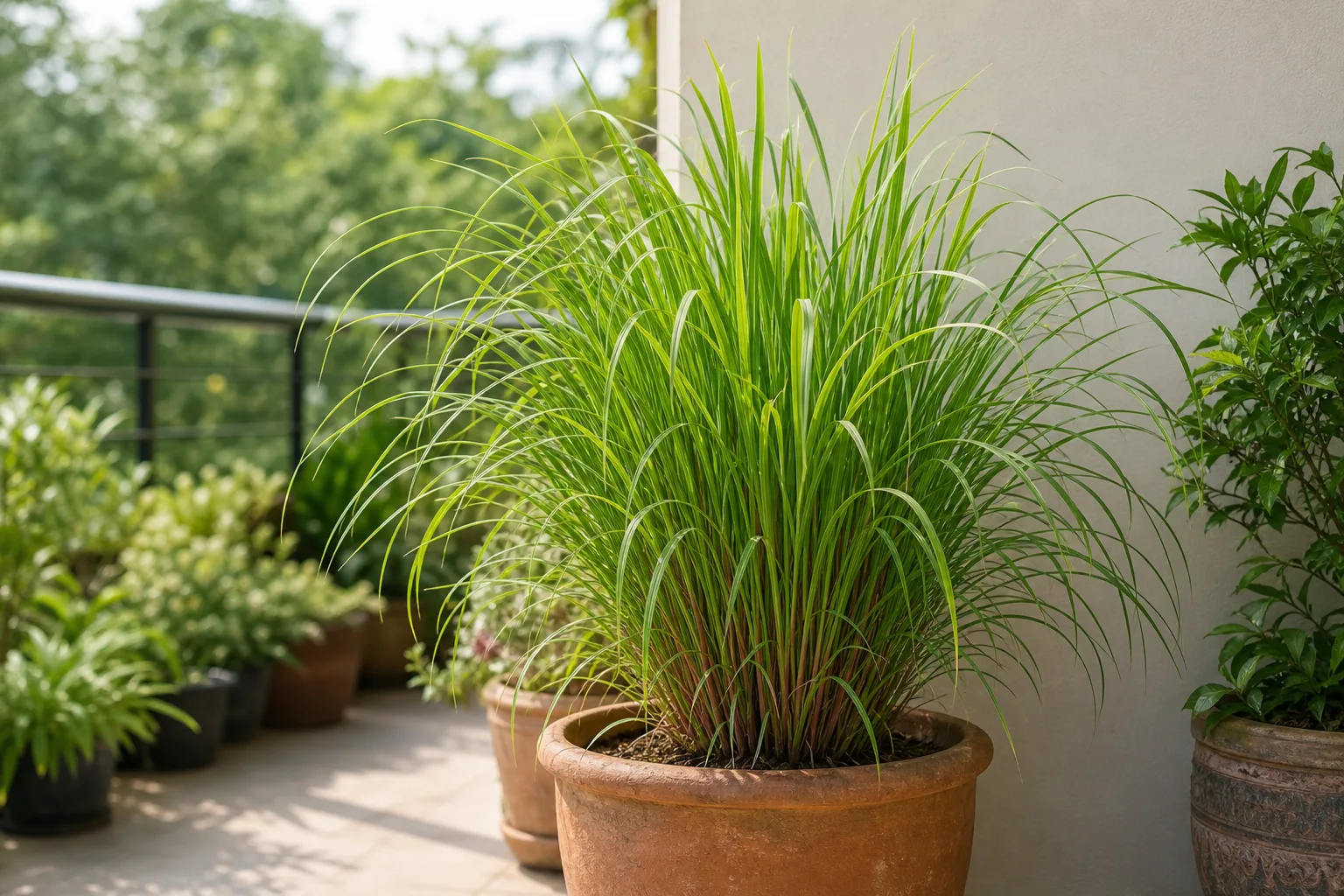
Citronella plant care is fairly simple when you treat the plant as a scented geranium, not as a mosquito-control device. Give it bright light, fast drainage, moderate water, and regular pinching, and it can become a compact, lemon-scented patio or windowsill plant. Let it sit in cold, saturated soil, and even a healthy nursery plant can decline quickly.
There is one important naming trap. The plant sold as a “citronella plant” or “mosquito plant” is usually a citronella-scented geranium in the genus Pelargonium. It is not the same thing as citronella grass, the tropical grass used to produce commercial citronella oil. NC State Extension places scented geraniums within Pelargonium, a group valued for aromatic foliage and flowers [1].
This guide covers the decisions that matter in a real garden: where to place it, how to water without causing rot, when to prune, how to root a cutting, how to bring a container plant through winter, and what the mosquito claim can—and cannot—mean.
Know which plant you bought
Read the nursery tag before you choose a care routine. A plant with deeply lobed, textured leaves and a strong lemon scent when rubbed is likely a scented geranium. It may produce small pink, lavender, or purple flowers, but the foliage—not the flowers—is the fragrant part.
The label may say citronella geranium, mosquito plant, scented geranium, Pelargonium citrosum, or simply citronella. Those names are not always used consistently in commerce, so the botanical name on the tag is more useful than the marketing name. A plant sold as citronella may also be a hybrid or selected scented geranium rather than a direct source of the grass-derived commercial oil.
Do not use the care for lemongrass as a substitute. Lemongrass has long, strap-like leaves and a grass habit. Citronella-scented geranium has broad, scalloped or lacy leaves on branching stems. The two plants can share warmth and sun, but they are not interchangeable for cooking, oil production, or pest control.
Choose the growing setup
For most gardeners, a container is the safest setup. A pot lets you move the plant away from scorching afternoon heat, inspect drainage, and bring it inside before frost. In a warm, frost-free climate, it can also grow in a bed and behave as a short-lived evergreen perennial.
Container or garden bed?
Choose a container if winter nights fall below about 45°F, if your soil stays wet after rain, or if you want to keep the plant near a seating area where its foliage can be enjoyed. Use a pot with a drainage hole and enough room for the root ball plus several months of growth. A container roughly 12 inches deep and at least twice as wide as the root ball is a useful starting point, but do not jump to a huge pot around a small plant; excess wet soil dries slowly.
Choose a garden bed only where the soil drains freely and the plant can be lifted or replaced before freezing weather. Leave about 18 inches between plants so the foliage dries after rain and the center of the plant receives light. Plant at the same depth as the nursery container. Burying the stem invites rot rather than creating a stronger plant.
The care routine that works
The simplest routine is to check the plant rather than follow a fixed weekly schedule:
- Give it several hours of bright sun, preferably gentler morning light and some afternoon protection in hot climates.
- Water when the top inch of mix is dry, then let excess water drain completely.
- Feed lightly only when the plant is actively growing or is clearly using nutrients in a container.
- Pinch growing tips to keep the stems branching.
- Inspect leaf undersides and the soil surface whenever you water.
Light and temperature
Aim for about six hours of direct light, with morning sun being especially useful. In mild northern summers, the plant may tolerate more all-day sun. In hot southern or arid conditions, intense afternoon sun can overheat the pot and scorch the foliage, so a bright location with afternoon shade is often better.
Light controls shape as much as it controls growth. A plant that receives too little light stretches between leaves and leans toward a window. Do not solve that problem by adding fertilizer first. Move it closer to a bright window or into a brighter outdoor spot, then pinch the longest stems after new growth resumes.
Citronella-scented geraniums prefer warm conditions and do not tolerate freezing. A short cool spell may slow growth, but frost can damage leaves and stems. Treat the plant as a warm-season annual outdoors unless you can overwinter it in a warm, bright place.
Soil and pot drainage
Use a porous potting mix that holds some moisture but does not remain muddy. A quality all-purpose potting mix amended with perlite and a modest amount of compost is usually more reliable than dense garden soil in a container. Sand alone is not a complete fix: it can make a mix heavy when combined with fine soil and does not guarantee good drainage.
The drainage hole matters more than a layer of gravel at the bottom of the pot. A saucer can catch water, but empty it after watering so the pot is not standing in a reservoir. If the mix has collapsed into a sour, airless mass or water runs straight down the sides, repot into fresh mix and check the roots for dark, soft tissue.
Watering by moisture, not the calendar
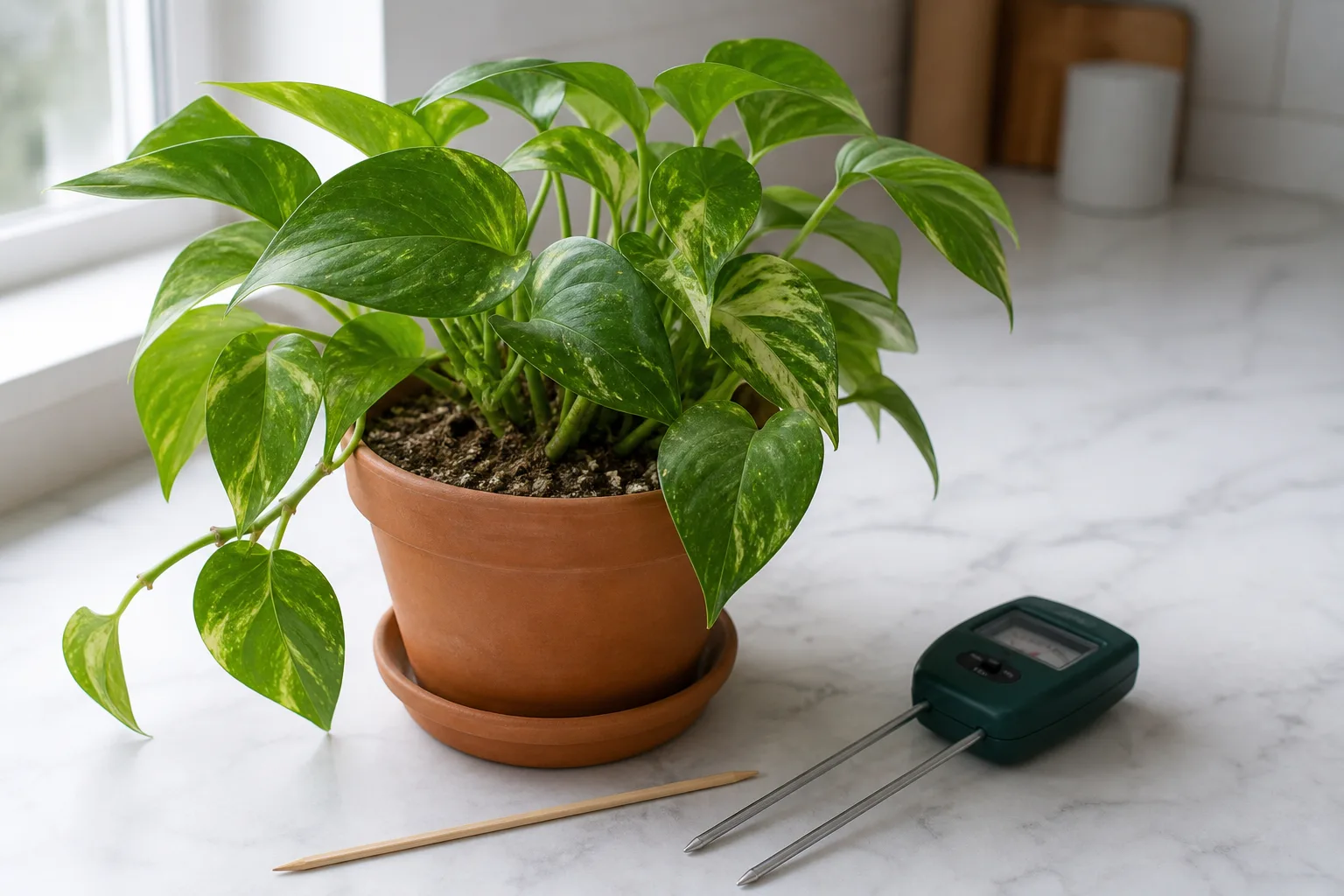
Push a finger about an inch into the soil. If that layer feels dry and the pot feels lighter, water slowly until a little drains from the bottom. If the surface is still cool and damp, wait and check again in a day or two. A sunny patio plant may need water every few days in summer; an indoor plant in winter may need it much less often.
In-ground plants need more frequent attention while establishing. Once rooted into a bed with good drainage, they can tolerate a short dry interval, but drought tolerance is not permission to let a container go bone dry repeatedly. Brown, crisp margins and wilting that improves soon after watering point toward thirst or heat stress. Yellow lower leaves combined with wet soil point more strongly toward overwatering or poor roots.
Water the soil, not the foliage, when possible. Wet leaves in a crowded, poorly ventilated plant stay wet longer and create a better environment for disease. If you move a plant outdoors after winter, increase watering gradually as light and airflow increase.
Feeding and flowering
A mature plant in fertile soil may need little fertilizer. A container plant can benefit from a balanced liquid fertilizer diluted to half strength during active growth, especially if new leaves are small, pale, or slow to appear. Feed after the soil is already moist rather than pouring concentrated fertilizer onto dry roots.
Stop feeding or reduce it when growth slows in autumn and winter. More fertilizer will not compensate for low light, cold roots, or waterlogged soil. To support flowers, keep the plant bright, avoid major drought swings, and remove faded flower clusters. The flowers are ornamental; the lemon fragrance comes from the leaves.
Prune for a dense, useful plant
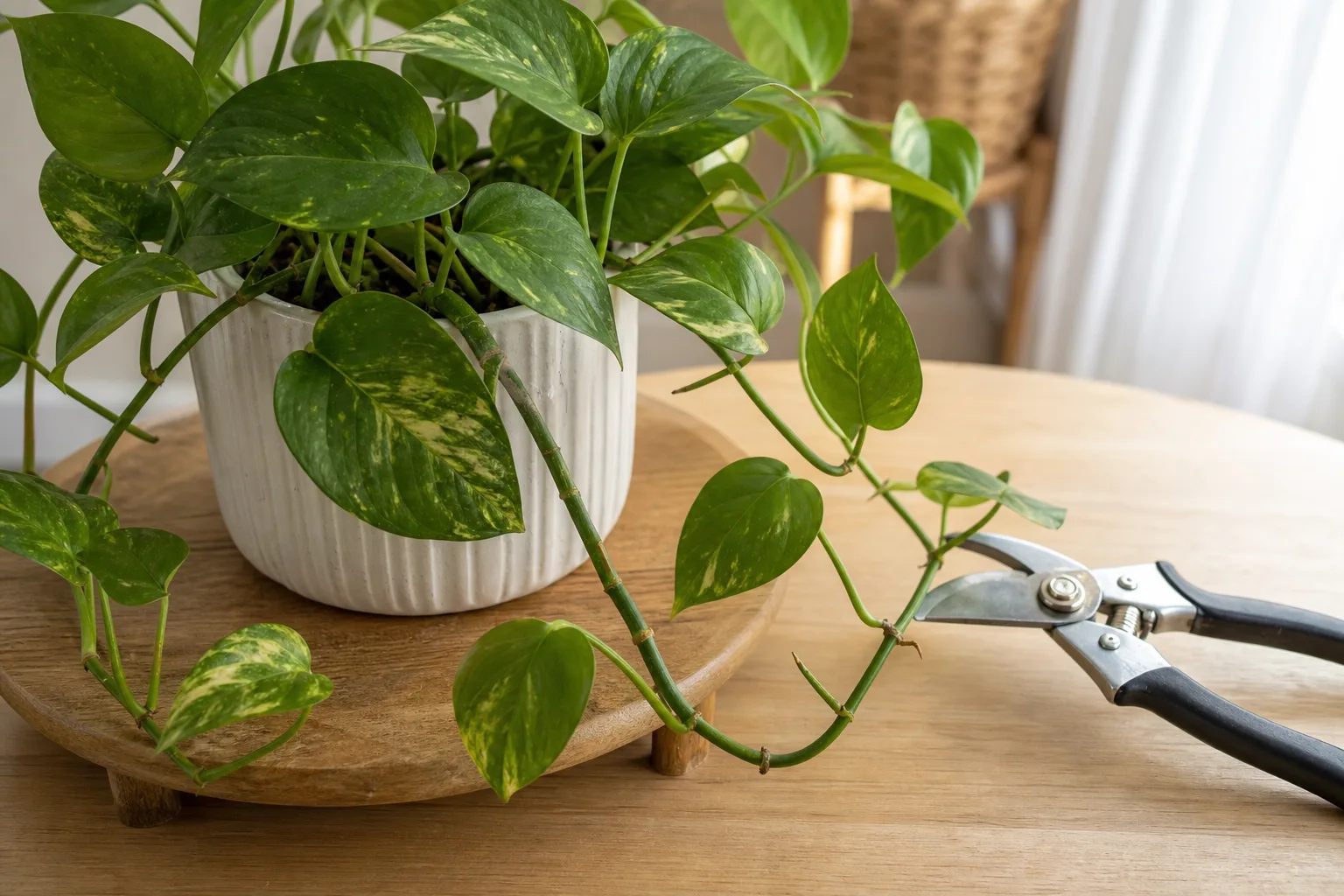
Pinch the growing tip just above a leaf pair when a stem becomes long. The nodes below the cut can produce side shoots, which turns a single upright stem into a fuller plant. Begin with small cuts rather than removing half the canopy at once. A plant needs leaves to capture light and rebuild growth.
Use clean snips for thicker stems. Remove dead leaves, damaged stems, and flower clusters that have finished. If the plant has become leggy indoors, improve light first, then prune in stages over several weeks. Hard pruning in a dim room often produces another flush of weak, stretched growth.
The pieces you remove can become cuttings if they are healthy and free from pests. Do not propagate a plant that is collapsing from root rot or carrying an active infestation; you may simply reproduce the problem.
Propagate by stem cuttings
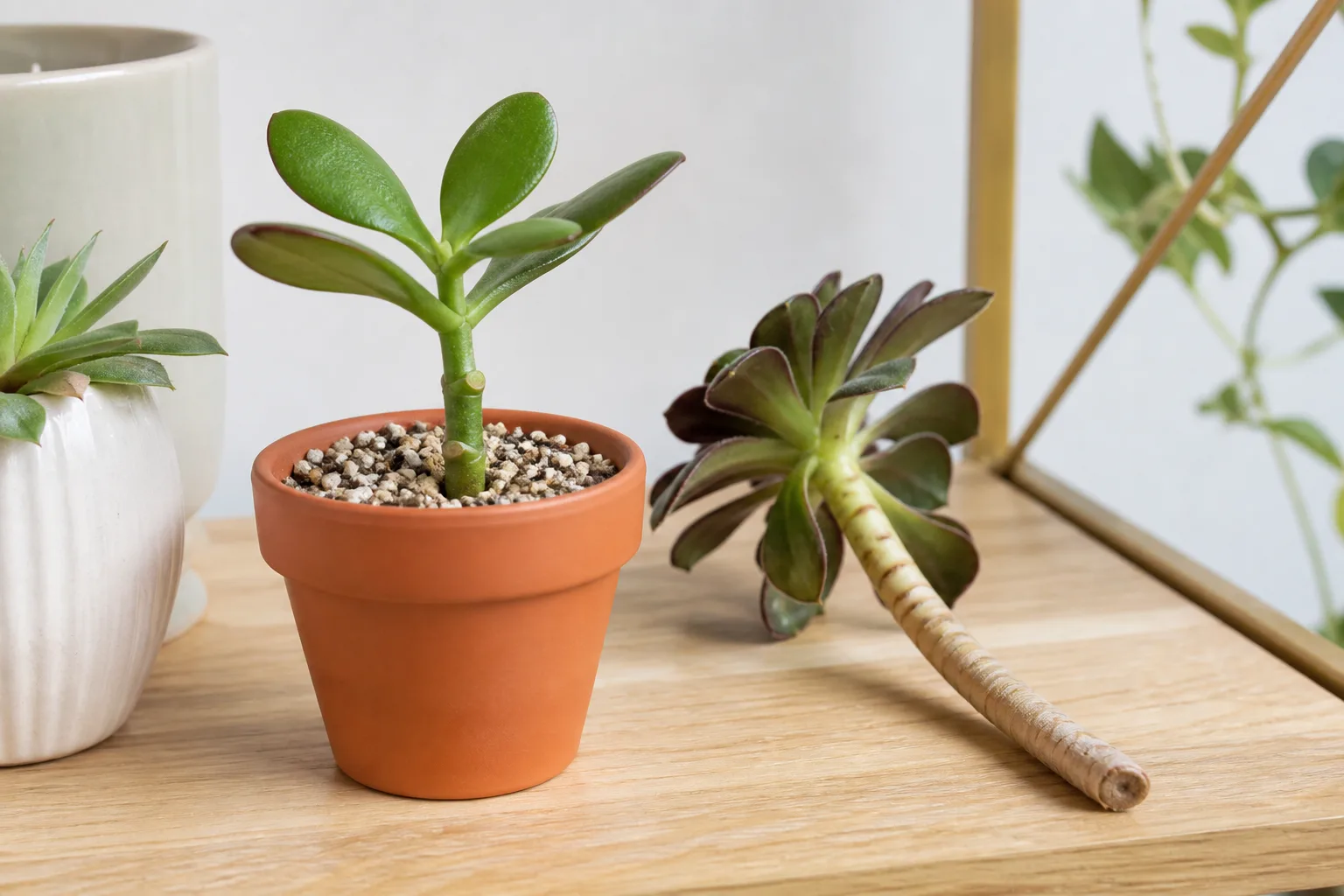
Stem cuttings are the quickest way to make a second plant that resembles the parent. Take them during active growth, when stems are firm but not old and woody.
- Choose a healthy non-flowering shoot with several leaf nodes.
- Cut just below a node with clean snips.
- Remove the lower leaves, leaving two or three leaves at the top.
- Place the cutting in a small pot of lightly moist, airy mix, with at least one node below the surface.
- Set it in bright, indirect light and keep the mix barely moist—not saturated.
- Cover loosely with a clear bag or dome if the air is very dry, but open it daily and remove it if condensation stays heavy.
- Test for resistance after several weeks. New growth and gentle resistance suggest roots are forming.
Rooting hormone is optional. It can be useful when conditions are marginal, but it cannot rescue a cutting kept in cold, soggy mix. Water propagation is also possible: place the lower node in clean water, keep all leaves above the waterline, and change the water regularly. Move the cutting to potting mix once roots are established rather than leaving it in water indefinitely.
After potting a rooted cutting, protect it from sudden full sun. Transition it over several days so the new roots and leaves can adjust without wilting.
Starting citronella from seed
Seed is possible but usually less predictable than a nursery plant or cutting. A seed-grown plant may not duplicate the parent’s scent, growth habit, or flower color, particularly if the source was a hybrid.
Start seeds indoors in a clean, fine-textured seed mix several weeks before the last frost date. Press them onto the surface and cover them only lightly. Keep the mix evenly moist and warm, then remove the cover as soon as seedlings emerge. Give seedlings strong light so they do not become thin and floppy.
Direct sow outdoors only after frost danger has passed and the soil has warmed. Thin seedlings so each has room for air movement. The most common seed-starting error is persistent saturation: wet, cool mix can cause damping off before the seedlings have established.
Move it indoors before frost
Bring a container-grown plant inside before the first frost, not after a freezing night. A bright window, sunroom, or grow-light setup is better than a dark corner. Inspect the foliage and soil surface for aphids, whiteflies, mealybugs, and hitchhiking insects before the plant joins other houseplants.
Prune away damaged growth and reduce the canopy by about one-third if the plant is too large to fit comfortably indoors. Do not move it from dim indoor light straight into intense outdoor sun in spring. Reverse the process gradually: increase outdoor exposure over about a week while nighttime temperatures stay safely warm.
Winter care is a balancing act. The plant uses less water in low light and cool conditions, so let the upper layer of soil dry more between waterings. Keep it away from cold glass, forced-air heat, and a constantly wet saucer. A small amount of leaf drop after the move can be normal; widespread yellowing, soft stems, or a sour smell from the soil is not.
Diagnose pests and common problems
Leggy growth and brown edges
Leggy stems usually mean insufficient light, excessive nitrogen, or a combination of both. Move the plant to brighter light and pinch the tips after it resumes growth. Brown edges can come from dry soil, hot reflected heat, salt buildup, or roots that have been damaged by repeated overwatering. Check soil moisture and roots before increasing water automatically.
Root rot, damping off, and sap-sucking pests
Root rot is more likely when the pot lacks drainage, the mix stays wet, or the plant is watered on a schedule despite low light. Remove the plant from its pot, trim only roots that are clearly dark and mushy, and repot into fresh porous mix. A badly rotted plant may not recover; a healthy cutting can be the better insurance.
Damping off affects young seedlings in cold, wet, poorly ventilated conditions. Start with clean containers, avoid flooding the mix, and provide airflow after emergence.
Aphids, whiteflies, mealybugs, and some leaf-chewing pests can appear even on a strongly scented plant. Begin with a firm water spray directed at leaf undersides, isolate the plant, and repeat inspections. If you use insecticidal soap, follow the product label and test a small area first; scented geranium foliage can react to sprays in hot sun.
What the mosquito claim gets right—and wrong
The smell is real, and aromatic foliage can contain compounds that are unpleasant to some insects. The practical claim is narrower than the marketing claim, however. A potted plant sitting on a patio does not create a reliable mosquito-free zone. You may notice more scent when leaves are bruised, but that is not the same as sustained protection for people across a yard.
Research on “citrosa” plants has not shown that simply growing the plant provides dependable mosquito control. A peer-reviewed field evaluation found that the plant did not perform as a stand-alone repellent in the way its marketing suggested [3]. Commercial repellents are formulated and tested differently from an intact potted plant.
Do not rub crushed leaves on your skin, burn the plant, ingest it, or use homemade extracts as if they were registered repellents. For biting-insect protection, use measures with known directions: remove standing water, use screens and clothing, and follow the label for any registered repellent. Treat the citronella plant as an aromatic ornamental, not your primary defense.
Pet safety and handling
ASPCA lists scented geranium as toxic to dogs and cats [2]. Keep the plant where pets cannot chew leaves or dig in the pot. The risk is not a reason to panic over a plant on a high shelf, but it is a reason to avoid placing it beside a pet’s favorite window perch or on a floor-level patio.
The plant’s fragrance also does not make its concentrated oils safe. Do not substitute homemade citronella oil for a labeled product, and wash your hands after pruning if the sap or crushed foliage irritates your skin. If a pet chews the plant and develops vomiting, drooling, lethargy, or other concerning signs, contact a veterinarian or an animal poison-control service promptly.
Conclusion
Grow citronella plant as a warm-season scented geranium: bright morning-to-midday light, fast drainage, water when the upper soil dries, and regular pinching for branching. Use a container when frost, wet soil, or extreme heat makes the garden bed unreliable. Take cuttings from healthy new growth, bring the plant indoors before cold nights, and inspect it for pests during the move. Most importantly, enjoy the lemony foliage without expecting a single pot to repel mosquitoes. Good plant care makes it healthier and more fragrant; it does not turn it into a tested insect-control system.