Can Citronella Plants Actually Repel Mosquitoes?
Do citronella plants repel mosquitoes? Learn which plant is sold under that name, what field trials show, and which steps offer more reliable bite protection.
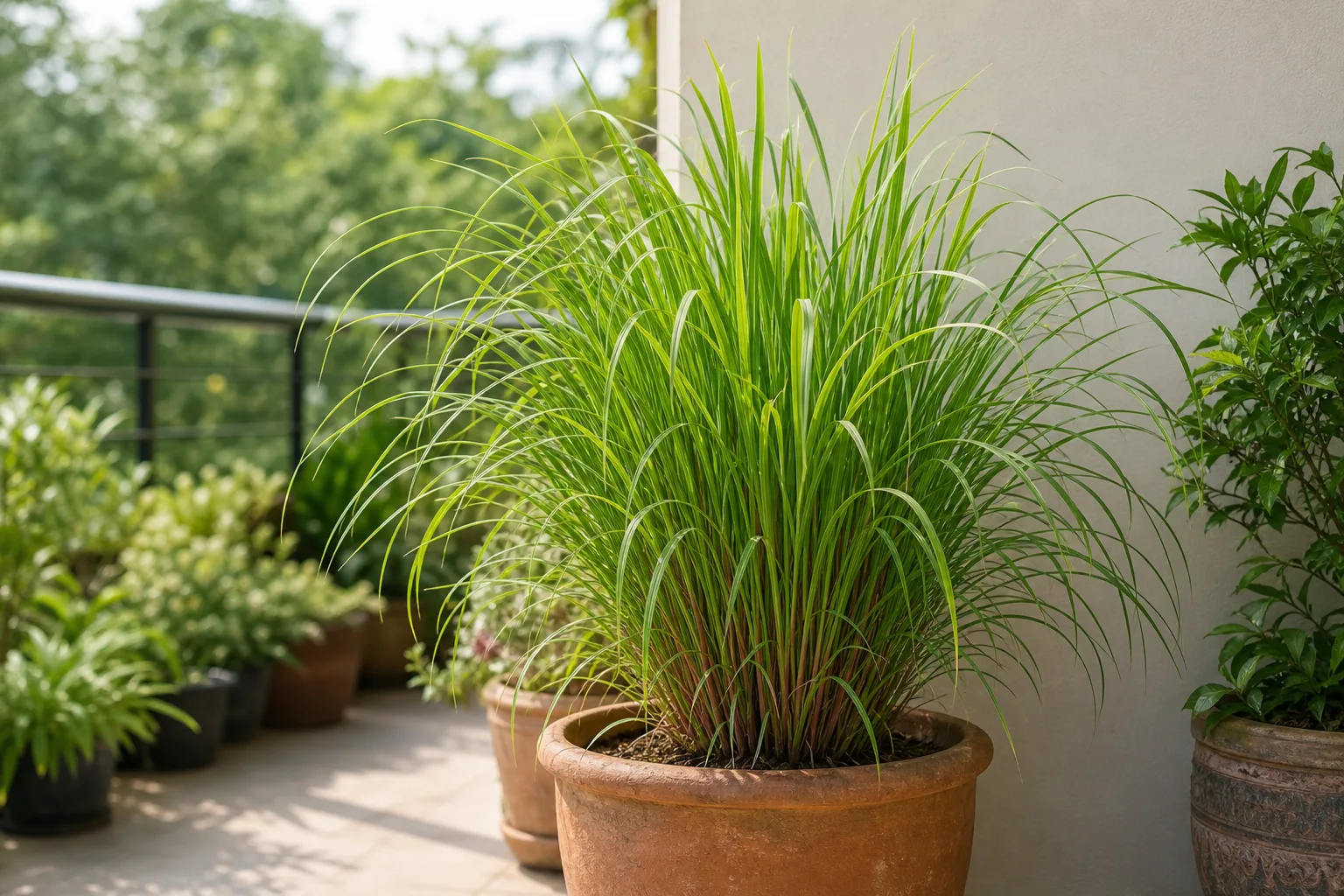
A citronella plant can smell strongly of lemon and still fail to keep mosquitoes off your skin. If you are choosing a plant because you want fewer bites, the practical answer is no: a living citronella plant is not a dependable mosquito repellent, whether you place one pot beside a chair or group several around a patio.
The confusion starts with the name. Garden centers often sell a scented geranium as a “citronella” or “mosquito” plant, while citronella oil comes from grasses in the genus Cymbopogon. These are different plants, and neither a fragrant geranium nor an intact clump of grass creates the same exposure as a tested repellent product. You can grow either for its scent, foliage, or form; for bite protection, use a plan built around the people and the places mosquitoes reach.
The honest answer: plants alone are not dependable
A pot may contribute aroma to a small, still corner, but there is no reliable distance or number of plants that turns it into a mosquito-free zone. Outdoor wind dilutes airborne scent, plant emissions change with temperature and handling, and the mosquito still responds to the cues coming from a nearby person. Being able to smell foliage is not a measurement of protection.
That does not mean citronella-derived compounds have never affected mosquitoes in laboratory tests or formulated products. It means the question most gardeners mean—“Will this living plant keep mosquitoes away while I sit here?”—needs evidence about whole plants outdoors. Two field evaluations now provide a more useful answer than a nursery label: one tested bites on people beside a marketed geranium, and a more recent study tested catches around living ornamental plants over a full season.
Identify what the nursery calls citronella
“Citronella,” “citrosa,” “mosquito plant,” and “lemongrass” are sometimes used loosely on tags and in conversation. Before comparing care or making sense of a repellent claim, look for the botanical name. The shape of the plant helps, but the name is a better clue because multiple aromatic plants can have a citrus-like smell.
| Name on a reliable label | What it is | A realistic reason to grow it |
|---|---|---|
| Pelargonium citrosum or citronella-scented geranium | A bushy, tender geranium with rounded, textured, aromatic leaves | Fragrant foliage, flowers, and a patio or windowsill container |
| Cymbopogon nardus or citronella grass | A tall, clumping grass with long, narrow blades | A warm-season ornamental clump or large container plant |
| Cymbopogon citratus or lemongrass | A related culinary grass, often used in cooking | Edible stems, fragrance, and an ornamental grass habit |
A citronella-scented geranium
The plant marketed as a mosquito plant is commonly a Pelargonium with rounded, scalloped, or textured leaves. It branches like a small shrub rather than growing as a fountain of blades, and it may produce small pink flowers. Brushing or crushing a leaf releases a distinct lemony scent, which can make the repellent claim seem self-evident even when it is not.
The useful distinction is between what your nose detects and what a mosquito experiences. Garden Betty’s plant profile explains the common-name confusion and treats the geranium as a fragrant ornamental. The name on the tag does not establish that the leaves create a protective zone, and the field studies below did not find such a benefit under their test conditions.
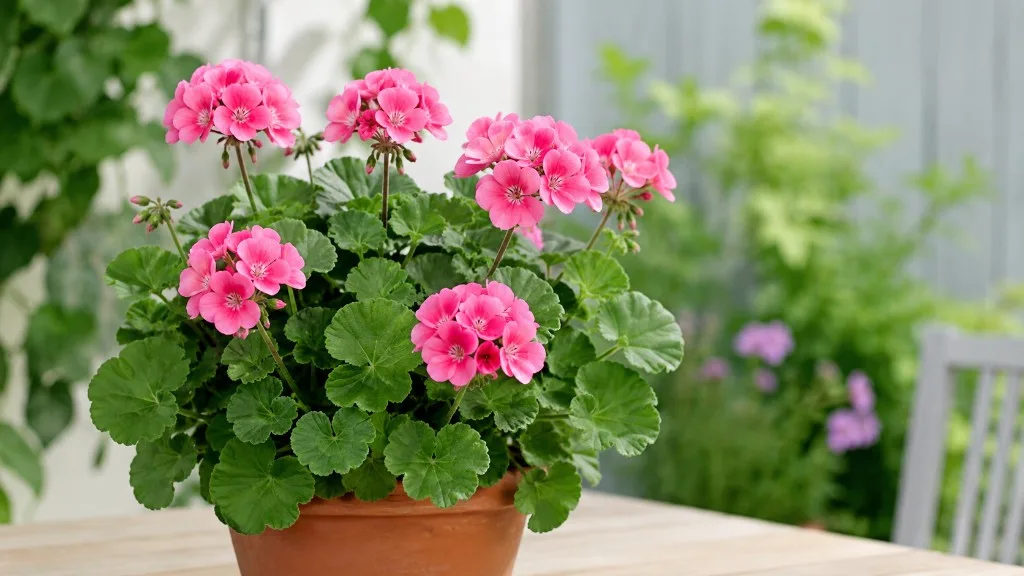
True citronella grass and lemongrass
Citronella grass is not a geranium. Cymbopogon nardus grows as a dense clump of long, narrow blades; the Royal Horticultural Society’s plant profile identifies it as citronella grass. Lemongrass, C. citratus, is a close relative with a culinary role. A seller may use “citronella” broadly, so ask for the botanical name if the exact species matters to you.
Commercial citronella oil is obtained by processing plant material; it is not simply a cloud that a potted plant continuously emits at a useful dose. That difference matters even if the leaves are strongly scented. A well-grown grass may make an attractive focal point, but buying the correct species does not turn it into a patio repellent.
What field tests say about a living plant
A good evidence check asks what was measured, where the test happened, and what comparison was used. A laboratory test of an extracted oil answers a different question from a field test of a potted plant. The latter is closer to the experience a gardener is trying to predict, although any single study still has limits in location, species, setup, and season.
The 1996 biting study
A field evaluation indexed by PubMed examined Pelargonium citrosum, the geranium promoted as a biological repellent, against field populations of Aedes mosquitoes. The investigators compared people beside the plant with untreated people and with participants treated with a 75 percent DEET formulation. The plant group did not have a significant reduction in bites compared with the untreated group; the DEET treatment reduced bites by more than 90 percent for up to eight hours under that study’s conditions.
The researchers also analyzed fresh plant material. It yielded a small amount of essential oil, and the chemical profile did not match the Cymbopogon grass oils associated with commercial citronella. This is a concrete reason to be skeptical when a scented geranium’s common name is treated as proof: the plant tested was not a portable citronella-oil dispenser, and the human-biting comparison did not support its marketed use.
That study is not a universal verdict on every plant-derived ingredient or every product. It does directly challenge the specific promise that sitting beside the marketed geranium is enough to protect a person from bites. It also should not be stretched into a claim about a different species, an extracted oil, or a product applied according to a tested label.
The 2026 whole-plant trial
A 2026 Journal of Medical Entomology field evaluation tested citronella-scented geranium and prostrate rosemary at urban and rural California locations over 16 weeks. The research team compared plants in ordinary condition and mechanically damaged condition with surveillance controls and a formulated metofluthrin spatial repellent. Neither ornamental plant lowered mosquito trap catches relative to controls in either setting; the metofluthrin treatment produced consistently lower catches.
This is especially useful because the study tested the plant itself in outdoor conditions rather than assuming that a concentrated oil behaves like a living ornament. It also checked the idea that damaging leaves might make plants more effective. The damaged-plant treatment did not change the practical result in that trial.
The study measured mosquito captures, not the number of bites received by each person in every yard. Its locations and test design cannot represent every climate, mosquito community, or arrangement of containers. Still, it is relevant real-world evidence: even with plants selected for attractive scent and with tissue damage added, the whole plants did not act as effective spatial repellents under those conditions.
Why citronella oil and a live pot are not equivalent
A plant can make volatile compounds as part of its normal biology, but outdoors those molecules disperse and change with air movement, heat, moisture, plant size, and damage. Repellency is about an exposure that reaches a mosquito in the right place and remains present long enough to alter behavior. A human noticing scent only confirms that some aromatic molecules reached a human nose; it does not reveal their concentration near a mosquito or their effect on landing and biting.
Concentrated oil, a formulated lotion, a candle, and an intact plant are not interchangeable just because they share the word “citronella.” They differ in concentration, delivery, evaporation rate, placement, and instructions. Research on an oil or a product cannot be used as proof that a living plant sitting nearby works the same way.
What crushing leaves changes
Crushing or brushing leaves releases more scent at the damaged spot. The effect is temporary and highly variable: the plant’s identity, leaf age, how much tissue is broken, weather, and airflow all change the amount that escapes. In the 2026 field trial, mechanically damaged citronella-scented geranium still did not reduce mosquito catches, so bruising leaves is not a sound way to convert an ornamental pot into a reliable barrier.
Do not rub crushed leaves or homemade essential-oil mixtures onto your skin as a replacement for a tested product. A plant’s fragrance does not tell you a safe skin concentration, how long it will last, or whether it is appropriate for a child. If you need direct personal protection, select a product with clear instructions and use it exactly as labeled.
How to judge candles, sprays, and other products
A candle, spray, lotion, incense, or spatial device has its own formulation and exposure pattern. A product may use citronella oil, another plant-derived ingredient, or a different active ingredient entirely. Its effectiveness cannot be inferred from a pot of grass, and a plant’s weak field result does not by itself establish how a specific formulated product performs.
Read the product’s active ingredient, use directions, and any EPA registration number instead of shopping by words such as “natural” or “citronella.” The CDC’s mosquito-bite prevention guidance recommends EPA-registered repellents and explains that the registration number indicates the manufacturer provided EPA with technical information about product effectiveness. Follow the label’s application and reapplication schedule; do not assume a candle or diffuser protects every seat or an entire yard simply because the package shows a citronella plant.
Which citronella plant should you grow?
Choose the plant for the garden job you want, not for a pest-control promise. Pick a scented geranium if you like the textured leaves, compact habit, occasional blooms, and lemon fragrance released when you brush past it. It is a good fit for a small patio pot or a bright indoor spot where you can enjoy its scent up close.
Choose citronella grass if you want a larger, upright, warm-season grass and have room for a substantial clump. Its long blades add movement and height to a container grouping, but a mature plant can outgrow a small porch pot. Choose lemongrass when you want the culinary plant and will actually use the stems; do not buy it as a mosquito shield either.
If the tag says only “mosquito plant” and omits a botanical name, ask the nursery to identify it before you pay. A missing plant name is not evidence of fraud, but it is a reason not to rely on a pest claim. When protection is the priority, put that budget toward screening, a suitable repellent, or solving the water sources that support local mosquitoes.

Growing citronella grass in a container
The growing advice below is for true citronella grass, not the scented geranium. Cymbopogon nardus is a tropical grass that needs warmth and a long season to look its best. A pot is practical for gardeners who need to move the plant before cold weather or want to keep its eventual size manageable; it is not a way to make the plant release more repellent.
Sun, soil, water, and feeding
Give the grass a bright position with roughly six hours of sun, adjusting for local heat. In a very hot, dry patio, light afternoon shade can help prevent scorched leaf edges. Use a substantial pot with drainage holes and a loose, fertile mix that drains freely but does not dry instantly; the Epic Gardening growing guide describes citronella grass as a moisture-loving plant that does best in warm, bright conditions and can be container-grown.
Water deeply when the upper mix begins to dry, then let the excess drain. A pot that stays bone-dry through hot weather stresses the grass, while a saucer full of water can leave roots short of oxygen and create a mosquito breeding opportunity. Empty the saucer after watering and check moisture more often during heat, wind, and active summer growth than in cool weather.
Feed modestly during active growth if the plant is pale or growth is weak, following the fertilizer label for container plants. Extra fertilizer does not improve mosquito protection; it can instead produce excessive, soft growth or salt buildup. Remove dead or badly damaged blades so the clump stays tidy and air can circulate through its base.
Winter care and dividing
Do not wait for a forecast hard freeze to decide whether to save the plant. In a climate with frost, grow it in a movable pot and bring it into bright shelter before temperatures drop to freezing. Inspect the leaves and soil surface for pests before moving the container indoors, then reduce watering while growth slows so that the roots do not sit in cold, wet mix.
A container-grown clump may become crowded over time. When active growth resumes, divide a healthy, established grass if the center is congested or roots fill the pot; make sure each division has roots and several growing points, then replant in fresh, free-draining mix. Keep new divisions evenly moist as they establish, and do the work early enough in the warm season for them to root before cold weather returns.
If the pot is simply too large to move, a sheltered garage or bright, frost-free space can be more useful than an unheated porch. The right winter plan depends on local lows and available light, not on a mosquito-control benefit. In frost-free climates, a well-drained garden position may be simpler than moving a heavy container.
Caring for citronella-scented geranium
The scented geranium needs a different watering rhythm from citronella grass. Use a pot with drainage and a well-drained mix, place it in bright light, and water thoroughly only after the upper portion of the mix has dried. If the leaves turn limp while the soil remains wet, check drainage and roots before adding more water; if stems stretch toward the window, move the plant to stronger light rather than feeding it to force compact growth.
Pinch or prune long stems to keep the plant bushy, remove dead leaves, and rotate the pot when growth leans toward the light. Before bringing it inside for winter, inspect under leaves for common container pests and remove dead material. Garden Betty’s plant-care guidance is useful for the geranium’s ornamental habits, while the evidence boundary remains clear: pruning and better light improve the plant, not its ability to repel mosquitoes.
A scented geranium can be a satisfying plant to keep near a doorway or potting area if you enjoy brushing its foliage. Keep that use separate from applying its leaves to people. A plant label and a pleasant smell do not provide the directions, tested duration, or age-specific safety information that a labeled repellent product should provide.
A bite-prevention plan that protects the people
When mosquitoes are the problem, work outward from the places where people sit and the water mosquitoes use to reproduce. The CDC notes that mosquitoes can bite during the day or night and recommends several layers of protection rather than relying on a scent. A citronella plant can stay in the container grouping if you like it; the rest of the plan should still work if the pot is moved.
Remove small standing-water sources
Once a week, inspect the yard and patio for water-holding items. Empty and scrub flowerpot saucers, buckets, toys, birdbaths, clogged gutters, tarps, and other containers; turn over or cover objects that can collect rain. The CDC gives this weekly check as a practical household step because even small containers can hold water where mosquitoes lay eggs.
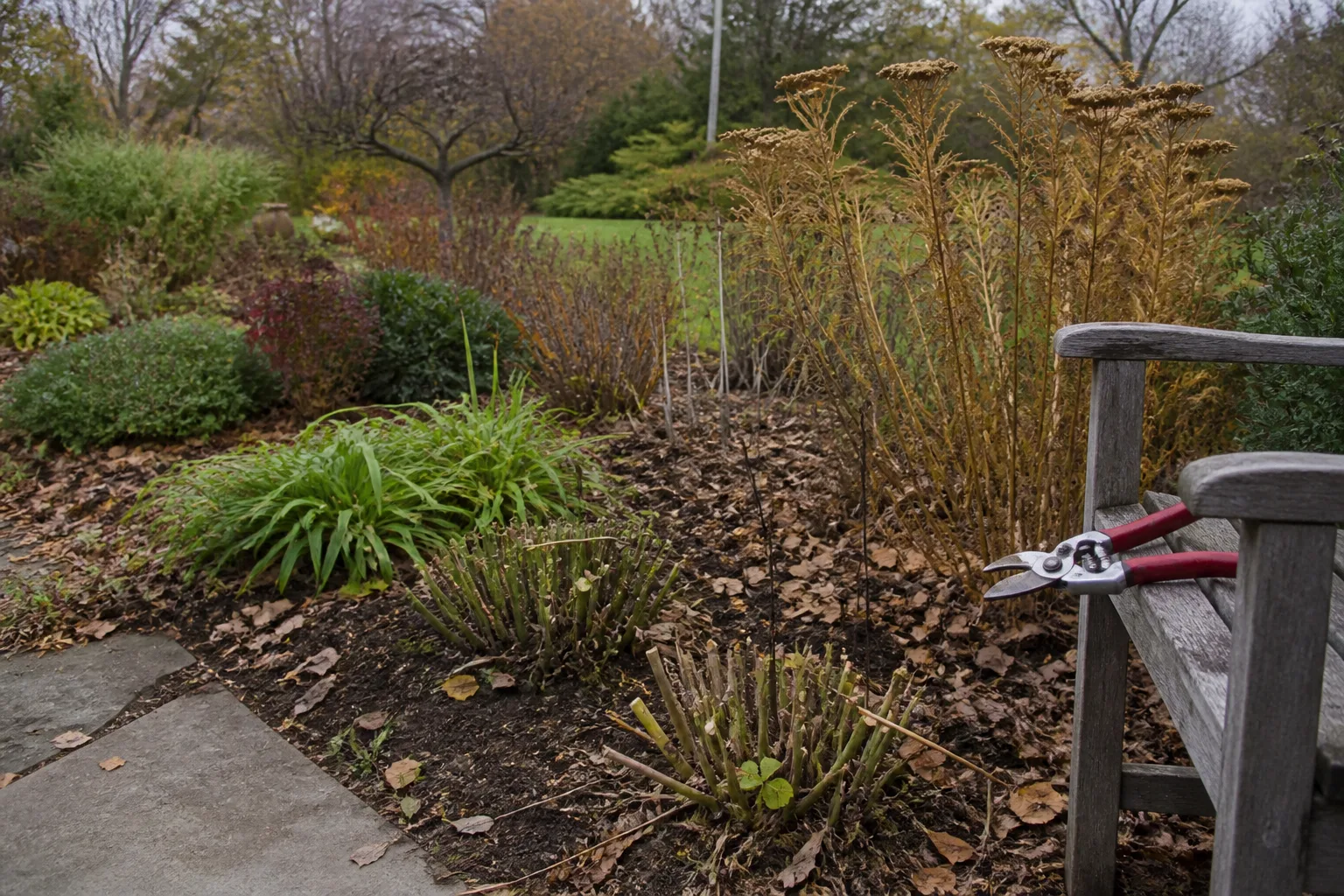
A container plant can accidentally undermine the routine if its cachepot or tray holds water for days. Water the grass or geranium for plant health, then empty the runoff rather than keeping the root ball submerged. For a water feature that cannot be emptied, use local public-health recommendations and any mosquito-control product only according to its label.
Protect skin and control mosquitoes indoors
Repair holes in door and window screens, use air conditioning when available, and wear loose-fitting long sleeves and pants when practical. If you need exposed-skin protection, choose an EPA-registered repellent with an active ingredient and use it as the label directs. The CDC lists DEET, picaridin, IR3535, oil of lemon eucalyptus, para-menthane-diol, and 2-undecanone among the active ingredients used in registered products.
For children, use the same discipline with the product label. The CDC advises not to use products containing oil of lemon eucalyptus or para-menthane-diol on children younger than three, and not to put repellent on a child’s hands, eyes, mouth, cuts, or irritated skin. An adult should apply it to their own hands first and then spread it over a child’s face, following label directions. These specifics are a reason to avoid improvising with crushed leaves or a homemade oil blend.
If mosquitoes are still severe after you remove water and protect entry points, ask your local mosquito-control district or public-health department which species are active and what source-control measures are appropriate in your area. A nearby drainage problem or breeding site may need an approach beyond container gardening. Do not use a scented pot as a substitute for that diagnosis or for direct bite protection.
Conclusion
A living citronella plant is not a reliable way to repel mosquitoes. The plant sold as a mosquito geranium is a Pelargonium, not citronella grass, and a human-biting study found no meaningful difference between sitting beside the marketed geranium and remaining untreated. A 2026 outdoor evaluation also found that whole citronella-scented geraniums did not reduce mosquito catches, even when leaves were mechanically damaged.
Grow citronella grass, lemongrass, or a scented geranium when you value its texture, fragrance, or culinary use, and match the care to the species. For fewer bites, empty small water sources weekly, maintain screens, cover exposed skin, and use a labeled, EPA-registered repellent when needed. That lets the plant be an enjoyable garden feature without asking it to perform a job the evidence does not support.



