Citronella Care Guide: Light, Water & Growing Tips
Cymbopogon nardus
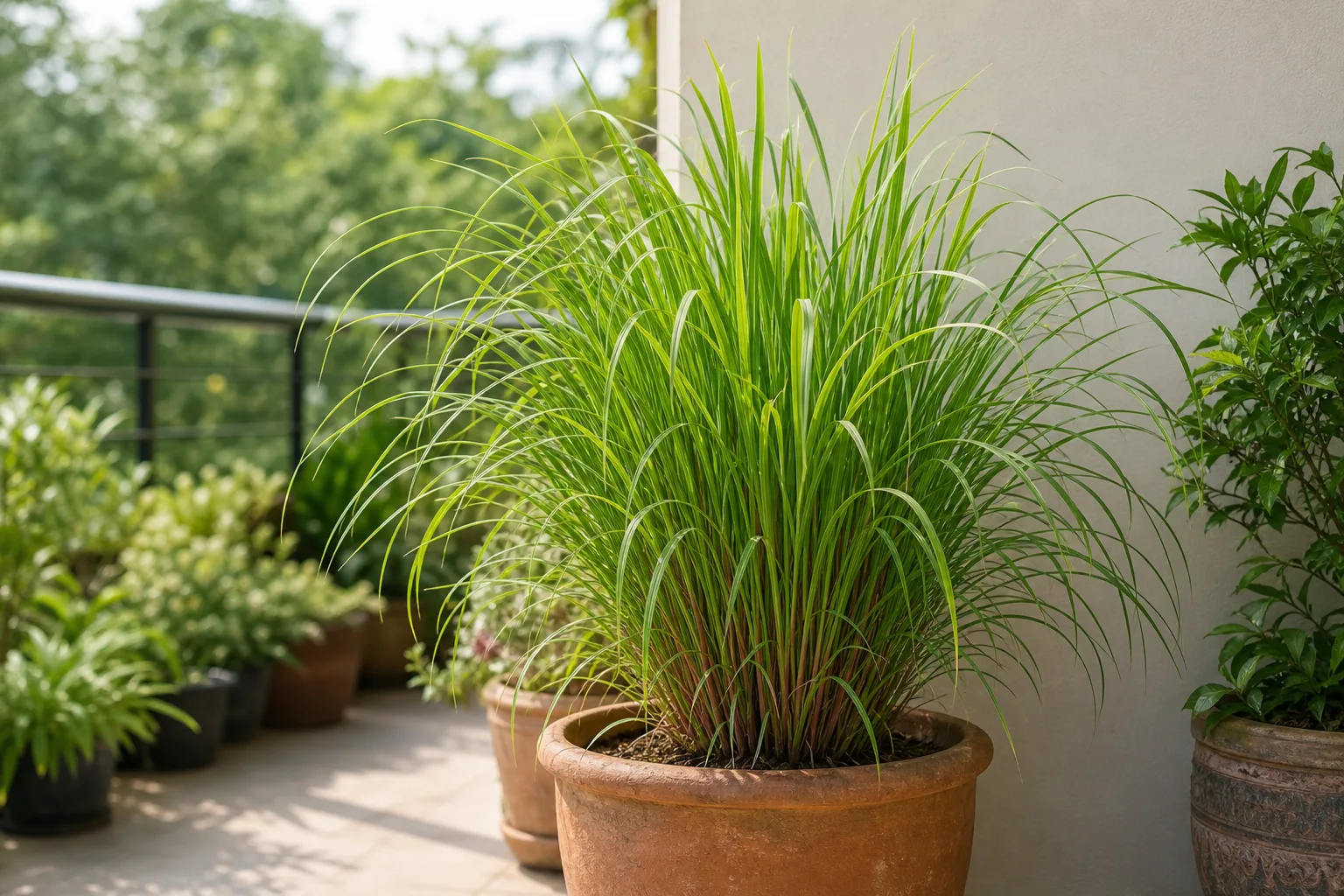
Citronella grass (Cymbopogon nardus) needs full sun, fast-draining sandy-loamy soil, and warm temperatures. Grow Ceylon citronella for fragrance and oil — not culinary lemongrass myths.
Citronella Care Guide: Light, Water & Growing Tips
Start with wateringThe most common care mistake for CitronellaWatering guide →Citronella care essentials
Light
full sun - 6+ hours of direct sunlight daily
Water
Water thoroughly, then let the top 2–3 cm of mix dry before watering again. Citronella grass prefers steady moisture in heat without sitting soggy. Reduce sharply in cool weather when growth slows.
Soil
Sandy-loamy potting mix that drains fast. Add 20–30 % coarse sand or perlite and a modest compost portion. Avoid heavy, water-retentive mixes. pH 5.5–7.0.
Humidity
Moderate to high (50–80%); suited to tropical Indian climate
Temperature
21°C to 35°C (70–95°F); growth stalls in cool weather
Fertilizer
Use a balanced NPK fertiliser or compost tea; a modest nitrogen feed supports leafy clumps, but stop if the plant is stressed, newly divided, or not actively growing.
About Citronella
Citronella is native to Tropical Asia (Sri Lanka, southern India, Southeast Asia), typically reaches 150–180 cm tall; 90–150 cm clump diameter indoors, with fast in sustained heat and full sun growth. Citronella has a upright growth habit and part of the Poaceae family. It is also known as Citronella Grass, Ceylon Citronella, Mana Grass, Serai Wangi, and Nard Grass.
| Detail | Information |
|---|---|
| Also known as | Citronella Grass, Ceylon Citronella, Mana Grass, Serai Wangi, Nard Grass |
| Native region | Tropical Asia (Sri Lanka, southern India, Southeast Asia) |
| Mature size | 150–180 cm tall; 90–150 cm clump diameter |
| Growth rate | Fast in sustained heat and full sun |
| Growth habit | Upright |
| Scientific name | Cymbopogon nardus |
| Family | Poaceae |
Citronella Care Guide: Light, Water & Growing Tips
Citronella care starts with honest framing: Cymbopogon nardus is a heat-loving, clumping tropical grass grown for fragrant foliage and distilled oil—not a dim-room houseplant and not a kitchen lemongrass substitute. Get full sun, fast drainage, and a watering rhythm that never leaves the crown soggy, and the clump builds dense tillers with a sharp citrus-camphor scent when you crush a blade. Treat it like a shade-tolerant tropical herb that wants constant wet feet, and you will see yellow bases, soft crowns, and stalled growth long before fertilizer helps.
This overview covers identity, mature size, light, water, soil, temperature, feeding, division, mosquito myths, common mistakes, and pet safety. Use it as the hub, then open sibling guides when one topic needs depth.
What Is Citronella Grass?
Citronella grass is a fountain-like perennial in the grass family (Poaceae), raised for aromatic blades and commercial citronella oil. Gardenia describes Cymbopogon nardus as a tropical, clump-forming evergreen grass with long, thin, bright green leaves that release a citronella-like fragrance when crushed. If you are deciding whether the Citronella plant hub fits your home, match it to a sunny balcony, terrace, or patio first. It is a poor fit for low-light rooms, frost-exposed winters, pet-reachable floor pots, and anyone expecting the living plant alone to clear mosquitoes.
Botanical Identity and Common Names
The plant in this guide is Cymbopogon nardus, also called citronella grass, Ceylon citronella, mana grass, serai wangi, and nard grass. Related commercial oil types include Java citronella (Cymbopogon winterianus), which needs similar warm, bright grass care. For home growing, confirm the botanical tag—Cymbopogon—and expect a clumping habit with narrow arching blades, often reddish at the base on new growth.
Judge success by dense new tillers, a firm crown, and strong scent on crushed leaves—not by edible stalk quality. This is an oil and fragrance plant, not a soup herb.
Citronella vs Lemongrass and “Mosquito Plants”
Do not confuse citronella grass with culinary lemongrass (Cymbopogon citratus). Lemongrass is grown for edible stalks; citronella grass is grown for aroma and oil. The blades of C. nardus are the wrong texture and flavor for kitchen use, even though both genera share a lemony scent when crushed.
Also watch nursery labels that only say “mosquito plant.” Many of those are scented geraniums (Pelargonium cultivars), a different genus with different care. A label without Cymbopogon nardus (or at least Cymbopogon) is a red flag. Crush a blade: true citronella grass smells sharp, lemony, and slightly medicinal—not soft rose-citrus like many geraniums.
Mature Size in the Ground vs in Containers
Gardenia lists mature clumps at roughly 5–8 ft tall (150–240 cm) and 3–5 ft wide (90–150 cm). LeafyPixels care data for home growers commonly targets about 150–180 cm height with a 90–150 cm footprint in warm, sunny conditions—still a large ornamental grass, not a windowsill plant.
In containers, expect a sizable fountain that needs a wide, deep pot and room to expand. Young plants fill pots quickly in Indian summer heat. Plan on Citronella repotting every one to two years when the clump presses the pot rim, the mix dries within a day in heat, or the crown rises above the soil line.
Best Growing Conditions for Citronella
Four variables decide almost every outcome: light, temperature, soil drainage, and watering rhythm. Align those four and feeding, division, and repotting become routine. Misalign any one—especially shade or wet crowns in cool weather—and the plant yellows, softens, or stalls no matter how often you fertilize.
Light and Placement
Citronella needs full sun for best performance—aim for 6+ hours of direct light daily on a south-facing balcony, terrace, or open patio. Gardenia lists culture as full sun to partial shade, noting afternoon shade can help in extreme heat to limit leaf scorch. In practice for dense tillers and strong scent, prioritize the brightest warm outdoor spot you have.
Indoors, only a very bright sunroom or greenhouse-level exposure works long term. A dim living-room corner stretches growth, slows drying, and invites crown rot from overwatering. For window choice, seasonal intensity, and warning signs of too little or too much sun, use the dedicated Citronella light guide.
Temperature, Humidity, and Cold Limits
This is a tropical grass. Gardenia places it in USDA hardiness zones 10–12 and states it will not tolerate temperatures below 32°F (0°C). Comfortable day-to-day growth for Indian home growers sits roughly in the 21–35°C (70–95°F) band with moderate to high humidity (50–80%), which matches most tropical and coastal Indian climates.
Protect containers before cool snaps. Move pots under cover or indoors to the brightest available spot when overnight lows approach about 10°C. Cool, wet soil is a double risk: growth slows and crowns rot. In frost-prone North India winters, treat citronella as a movable patio plant, not a permanent ground planting.
Soil, Drainage, and pH
Use a sandy-loamy mix that drains fast. A practical container recipe is about 50% potting mix, 30% coarse sand or perlite, and 20% compost, targeting roughly pH 5.5–7.0. Gardenia recommends moist, well-drained soils—steady moisture without waterlogging.
Avoid heavy, peat-only, or clay-heavy mixes that stay soggy around the crown. Fast drainage is essential; soggy crowns collapse quickly. If a pot stays wet longer than expected after watering, open the mix with more sand or perlite before the next drink. Full mix recipes and failure signs live in the Citronella soil guide.
Watering Rhythm
Water thoroughly, then let the top 2–3 cm of mix dry before watering again. Citronella prefers steady moisture in heat without sitting soggy. As a practical reference in full sun: every 3–5 days in hot summer; every 7–10 days in cooler months. Always empty saucers—never leave the crown in standing water.
Underwatering shows as crispy brown tips, thin pale new blades, and stalled clump expansion in heat. Overwatering shows as yellowing from the base, a soft sour-smelling crown, and mushy roots. When unsure, finger-check depth and correct light or drainage before stacking fertilizer. Depth on seasonal cadence and rescue steps is in the Citronella watering guide.
Feeding, Division, and Repotting Basics
Feed only after light and drainage are right. During the warm growing season (roughly March through October in most of India), a monthly balanced NPK feed or compost tea supports leafy clumps. Stop feeding if the plant is stressed, newly divided, or not actively growing. Over-fertilizing in containers pushes soft mass that cracks pots without improving fragrance or oil quality. Details on dilution and burn signs belong in the Citronella fertilizer guide.
Propagation for home growers is easiest by spring or early-summer clump division: split sections with healthy roots and active green shoots at the base. Seed is slow and often unreliable for cultivated oil strains. After division, keep bright light and even moisture without flooding the new crowns. Step-by-step methods are in the Citronella propagation guide.
Repot every 1–2 years, or sooner when the clump crowds the rim, aiming for spring to early summer once nights stay warm. Do not repot on day one after purchase unless the mix is failing or pests are obvious—quarantine, learn how fast the pot dries in your sun, and keep care boring while it adjusts.
Mosquito Expectations and Essential-Oil Reality
If you bought citronella hoping a pot would silently clear a patio of mosquitoes, set realistic expectations. Distilled citronella oil from Cymbopogon species is used in topical repellents and candles because the concentrated oil can deter biting insects when properly formulated and applied—not because an uncrushed potted grass creates a protective force field. Crushing leaves releases a noticeable citrus-camphor scent, but that alone is not reliable personal protection.
For proven bite prevention outdoors, follow public-health guidance on EPA-registered insect repellents and other mosquito-prevention steps rather than relying on foliage alone. Grow citronella for ornamental screening, fragrance on contact, and warm-climate presence; use proven repellent products when mosquitoes are the actual goal.
Common Mistakes That Stress Citronella
The most expensive mistakes are placement and moisture, not missing a fertilizer week.
Keeping citronella in weak indoor light slows drying and produces pale, floppy, sparse tillers. Move to the sunniest warm outdoor spot before diagnosing nutrient deficiency.
Watering on a fixed calendar while the mix is still wet—especially in cool weather—invites crown rot. Finger-check the top 2–3 cm; do not obey a reminder app blindly.
Using dense, water-retentive mix holds moisture against a species that needs sandy drainage. Rebuild the mix when pots stay heavy for days.
Exposing containers to frost or sustained temperatures near freezing. Cover or move pots before cold snaps.
Buying “mosquito plant” geraniums or culinary lemongrass when you wanted Cymbopogon nardus. Verify the scientific name and crush-test the scent.
Expecting the living plant alone to repel mosquitoes at patio scale. Use fragrance and ornamental value as the win; use registered repellents for bite protection.
Pet Safety Notes
Citronella needs stricter placement because it is not pet-safe. ASPCA lists Cymbopogon species, including lemongrass, as toxic to cats and dogs. Gardenia also notes Cymbopogon nardus as toxic to dogs, cats, and horses. Citronella grass shares aromatic oils that can cause gastrointestinal upset and more serious effects with significant consumption; distilled citronella oil is especially concentrated.
Keep plants and oils out of reach of pets and children. Use gloves if leaf edges irritate your skin. This is plant-safety guidance, not veterinary advice—contact a veterinarian or poison-control resource if ingestion is suspected. Choose a safer species for floor pots, low shelves, or rooms where animals chew plants.
When to Use This Page vs Other Citronella Guides
Use this overview to confirm you bought true citronella grass, choose a sunny placement, set a drainage-smart watering rhythm, and decide whether a container or ground planting fits your space.
Open sibling guides when you need depth:
- Citronella light — terrace/window choice, low-light limits, sun-stress signs
- Citronella watering — dryness checks, seasonal cadence, over- and underwatering
- Citronella soil — mix recipes, drainage failures, pH notes
- Citronella fertilizer — when to feed, dilution, lean feeding
- Citronella repotting — timing, pot size, post-repot care
- Citronella propagation — clump division, aftercare
- Citronella pruning — cleanup cuts and size control
Related Citronella Guides
Build out the full cluster as you grow:
- Hub: Citronella
- Care: light, watering, soil, fertilizer, repotting, propagation, pruning
Start with light and watering if the plant is new; add soil and repotting when the pot stays wet or the clump presses the rim.
Conclusion
Citronella rewards growers who respect its tropical-grass origins: bright sun, sandy-loamy drainage, and water only after the upper mix dries. Keep containers above frost risk, divide in warm weather, verify you own Cymbopogon nardus rather than lemongrass or a scented geranium, and never rely on a pot alone for mosquito control. Master those basics on this page, then use the sibling guides when one variable—light, water, soil, feed, pot size, or division—needs a deeper fix.
How to care for Citronella?
How much light does Citronella need?
full sun - 6+ hours of direct sunlight daily
- full sun - 6+ hours of direct sunlight daily - full sun - 6+ hours of direct sunlight daily.
When should you water Citronella?
Water thoroughly, then let the top 2–3 cm of mix dry before watering again. Citronella grass prefers steady moisture in heat without sitting soggy. Reduce sharply in cool weather when growth slows.
- Water when the top 2–3 cm is dry - Water thoroughly, then let the top 2–3 cm of mix dry before watering again.
- never leave the crown in standing water - Water thoroughly, then let the top 2–3 cm of mix dry before watering again.
- Drain excess water - Water thoroughly, then let the top 2–3 cm of mix dry before watering again.
What soil works best for Citronella?
Sandy-loamy potting mix that drains fast. Add 20–30 % coarse sand or perlite and a modest compost portion. Avoid heavy, water-retentive mixes. pH 5.5–7.0.
- 50% potting mix - Sandy-loamy potting mix that drains fast.
- 30% coarse sand or perlite - Add 20–30 % coarse sand or perlite and a modest compost portion.
- 20% compost - Add 20–30 % coarse sand or perlite and a modest compost portion.
Grower notes for Citronella
What matters most with Citronella
Citronella grass is an oil and fragrance plant, not a kitchen herb. Judge success by dense new tillers, firm crowns, and a sharp citrus scent when you crush a blade — not by edible stalk quality. In practice, the care checkpoint is simple: full sun - 6+ hours of direct sunlight daily. Pair that with sandy-loamy mix that drains fast (pH 5.5–7.0), and avoid changing water, pot size, and placement all at once.
Best placement in a real home
Citronella belongs on a sunny balcony, terrace, or south-facing patio where full sun - 6+ hours of direct sunlight daily is realistic. Water thoroughly, then let the top 2–3 cm of mix dry before watering again. If the pot stays wet longer than expected, move it into stronger light or open the mix with more sand or perlite before watering again. Humidity target: Moderate to high (50–80%); suited to tropical Indian climate. Temperature comfort zone: 21°C to 35°C (70–95°F); growth stalls in cool weather.
Before you buy this plant
Confirm you are buying citronella grass (Cymbopogon nardus), not culinary lemongrass (Cymbopogon citratus) and not a scented geranium sold as a mosquito plant. Look for a fountain-like clump with narrow blades, often reddish at the base, and a strong lemon-camphor scent when crushed. Be cautious of root-rot, collapsed crowns, or a pot that stays wet in shade. A label that only says mosquito plant without a scientific name is a red flag.
First month after bringing it home
Do not repot Citronella on day one unless the mix is failing or pests are obvious. Quarantine it, learn how fast the pot dries in your sun, and keep care boring while it adjusts. Watch especially for crown rot from overwatering, yellow-leaves, and brown-tips. If problems appear, correct light and drainage first rather than stacking fertilizer, repotting, and hard cutbacks together.
Safety note for Citronella
Citronella grass is not a plant to keep within reach of pets or children. ASPCA lists Cymbopogon species (including lemongrass) as toxic to cats and dogs. Concentrated citronella essential oil is especially hazardous. Use gloves if leaf edges irritate skin, and pick a pet-safe alternative for floor pots or low shelves.
How to tell Citronella is settling in
Also sold as Citronella Grass, Ceylon Citronella, Mana Grass, and Serai Wangi, this plant should be judged by stable new tillers and a strong scent when leaves are crushed — not by marketing claims that a potted clump alone clears mosquitoes. If you plan to multiply it later, spring clump division is the reliable method; seed is slow and often unreliable in cultivated strains. Repot only when you see the clump pressing hard against pot walls or the mix drying within a day in summer heat.
Is citronella safe for pets?
Citronella grass is treated as toxic to cats and dogs under ASPCA Cymbopogon listings. Essential-oil compounds can cause digestive upset and CNS effects. Keep plants and concentrated oils out of reach of pets.
ASPCA lists lemongrass and related Cymbopogon species as toxic to cats and dogs. Citronella grass (Cymbopogon nardus) shares the same aromatic oils that cause gastroenteritis, CNS depression, and liver damage with significant consumption. Distilled citronella oil is particularly concentrated. Keep plants and oils away from pets.
Watering Citronella
For Citronella, water when the top 2–3 cm is dry; never leave the crown in standing water and water every 3–5 days in hot summer sun; every 7–10 days in cooler months. Keep pots evenly moist in India's hot season; cut back hard in winter or cool spells.
| Detail | Information |
|---|---|
| How often | Every 3–5 days in hot summer sun; every 7–10 days in cooler months |
| How to check | Water when the top 2–3 cm is dry; never leave the crown in standing water |
| Seasonal changes | Keep pots evenly moist in India's hot season; cut back hard in winter or cool spells |
Signs of overwatering
- yellowing blades from the base
- soft, sour-smelling crown
- mushy roots
Signs of underwatering
- crispy brown leaf tips
- thin, pale new blades
- stalled clump expansion in heat
Soil & potting for Citronella
Use a mix of 50% potting mix, 30% coarse sand or perlite, 20% compost for Citronella. Fast drainage is essential; soggy crowns rot quickly. Target soil pH around 5.5–7.0. Repot every 1–2 years, or when the clump crowds the pot rim, ideally in spring to early summer once nights stay warm.
| Detail | Information |
|---|---|
| Recommended mix | 50% potting mix, 30% coarse sand or perlite, 20% compost |
| Drainage | Fast drainage is essential; soggy crowns rot quickly |
| Soil pH | 5.5–7.0 |
| Repotting frequency | Every 1–2 years, or when the clump crowds the pot rim |
| Best season to repot | Spring to early summer once nights stay warm |
Signs it needs repotting
- clump pressing hard against pot walls
- mix drying within a day in summer heat
- crown rising above the soil line
Humidity & temperature for Citronella
Citronella prefers moderate to high (50–80%); suited to tropical Indian climate, though normal home humidity is usually fine. Keep temperatures around 21°C to 35°C (70–95°F); growth stalls in cool weather.
| Detail | Information |
|---|---|
| Humidity | Moderate to high (50–80%); suited to tropical Indian climate - normal home humidity is fine. |
| Ideal temperature | 21°C to 35°C (70–95°F); growth stalls in cool weather |
Fertilizer & pruning for Citronella
Use use a balanced NPK fertiliser or compost tea; a modest nitrogen feed supports leafy clumps, but stop if the plant is stressed, newly divided, or not actively growing. for Citronella.
| Detail | Information |
|---|---|
| Fertilizer type | Use a balanced NPK fertiliser or compost tea; a modest nitrogen feed supports leafy clumps, but stop if the plant is stressed, newly divided, or not actively growing. |
Common problems on Citronella
Yellow Leaves
MediumLikely cause: Common on this plant type; confirm with recent watering, light, and root checks.
Quick fix: Inspect the plant and correct the most likely care stressor before stacking treatments.
Full fix guide →Brown Tips
MediumLikely cause: Common on this plant type; confirm with recent watering, light, and root checks.
Quick fix: Inspect the plant and correct the most likely care stressor before stacking treatments.
Full fix guide →Root Rot
MediumLikely cause: Common on this plant type; confirm with recent watering, light, and root checks.
Quick fix: Inspect the plant and correct the most likely care stressor before stacking treatments.
Full fix guide →Overwatering
MediumLikely cause: Common on this plant type; confirm with recent watering, light, and root checks.
Quick fix: Inspect the plant and correct the most likely care stressor before stacking treatments.
Full fix guide →Underwatering
MediumLikely cause: Common on this plant type; confirm with recent watering, light, and root checks.
Quick fix: Inspect the plant and correct the most likely care stressor before stacking treatments.
Full fix guide →Spider Mites
MediumLikely cause: Common on this plant type; confirm with recent watering, light, and root checks.
Quick fix: Inspect the plant and correct the most likely care stressor before stacking treatments.
Full fix guide →Mealybugs
MediumLikely cause: Common on this plant type; confirm with recent watering, light, and root checks.
Quick fix: Inspect the plant and correct the most likely care stressor before stacking treatments.
Full fix guide →Aphids
MediumLikely cause: Common on this plant type; confirm with recent watering, light, and root checks.
Quick fix: Inspect the plant and correct the most likely care stressor before stacking treatments.
Full fix guide →Leggy Growth
MediumLikely cause: Common on this plant type; confirm with recent watering, light, and root checks.
Quick fix: Inspect the plant and correct the most likely care stressor before stacking treatments.
Full fix guide →Slow Growth
MediumLikely cause: Common on this plant type; confirm with recent watering, light, and root checks.
Quick fix: Inspect the plant and correct the most likely care stressor before stacking treatments.
Full fix guide →Wilting
MediumLikely cause: Common on this plant type; confirm with recent watering, light, and root checks.
Quick fix: Inspect the plant and correct the most likely care stressor before stacking treatments.
Full fix guide →Drooping Leaves
MediumLikely cause: Common on this plant type; confirm with recent watering, light, and root checks.
Quick fix: Inspect the plant and correct the most likely care stressor before stacking treatments.
Full fix guide →Low Humidity
MediumLikely cause: Common on this plant type; confirm with recent watering, light, and root checks.
Quick fix: Inspect the plant and correct the most likely care stressor before stacking treatments.
Full fix guide →Not Enough Light
MediumLikely cause: Common on this plant type; confirm with recent watering, light, and root checks.
Quick fix: Inspect the plant and correct the most likely care stressor before stacking treatments.
Full fix guide →Fungus Gnats
MediumLikely cause: Common on this plant type; confirm with recent watering, light, and root checks.
Quick fix: Inspect the plant and correct the most likely care stressor before stacking treatments.
Full fix guide →Mold on Soil
MediumLikely cause: Common on this plant type; confirm with recent watering, light, and root checks.
Quick fix: Inspect the plant and correct the most likely care stressor before stacking treatments.
Full fix guide →