Citronella Watering: How Often & Soil Checks
Citronella Watering: How Often & Soil Checks
Citronella Watering: How Often & Soil Checks
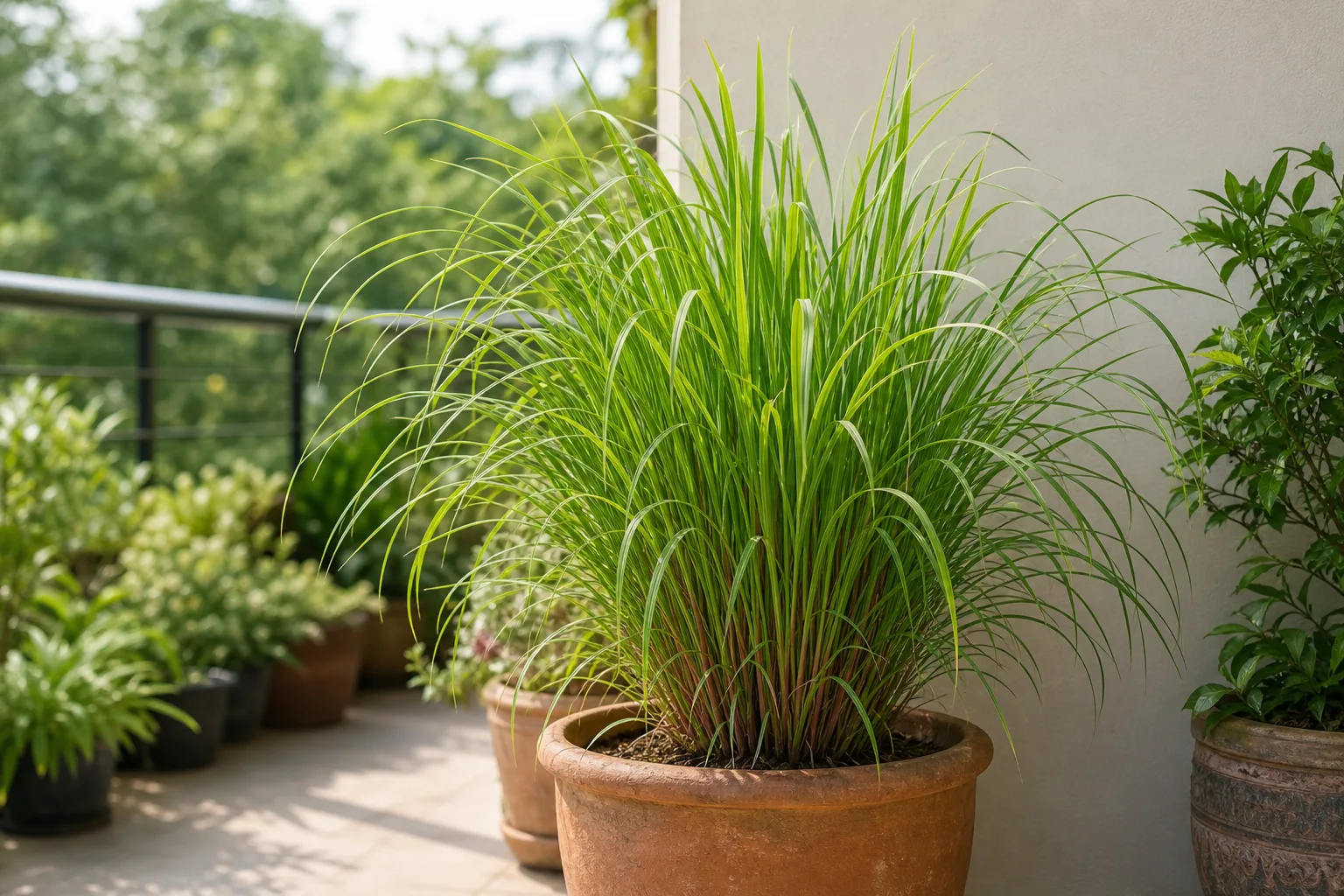
Citronella watering is a moisture balance problem, not a calendar habit. Cymbopogon nardus — Ceylon citronella grass, also sold as mana grass or serai wangi — is a fast clumping tropical grass grown for fragrant blades and oil, not for thick culinary stalks. In heat and full sun it drinks hard and wants the root zone evenly moist. In cool weather or a shaded, peat-heavy pot, the same “every three days” routine keeps the crown wet long enough for soft yellow bases and sour mix. The job is simple: soak thoroughly when the top 2–3 cm of mix are dry, then let the pot drain completely — never leave the crown in standing water.
This page is for growers watering Citronella on sunny balconies, terraces, and warm-climate borders in India and similar climates. It covers how often to water, how to test dryness, how overwatering and underwatering look on this species, and what to change first when the clump stalls. Confirm you have citronella grass, not culinary lemongrass (Cymbopogon citratus) and not a scented geranium labeled “mosquito plant,” before you chase watering myths.
What Citronella Grass Actually Needs From Water
Citronella is a tropical Poaceae clump. Its tillers and fibrous roots expect warmth, light, and a mix that holds moisture without trapping a swamp around the crown. Species profiles for Cymbopogon nardus list average water needs in moist but well-drained soil and call for regular watering in dry spells, with drought stress showing as yellowing and temporary dormancy (Gardenia — Cymbopogon nardus). That phrasing matches what balcony growers see: the plant is not a cactus, and it is not a bog plant.
Related culinary lemongrass (C. citratus) is cultured the same way horticulturally — medium water in average, well-drained soil in full sun (Missouri Botanical Garden — Cymbopogon citratus). University extension guidance on lemongrass is even more blunt in heat: the plant requires a great deal of water and should be watered regularly when rainfall is sparse (UW Extension — Lemongrass). NC State notes moist conditions with good drainage for container Cymbopogon and warns not to let overwintered pots dry out completely (NC State Extension — Cymbopogon citratus). Use those sister-species notes as water-rhythm context, then keep identity clear: you are watering fragrance oil grass, not soup stock.
Practical nursery culture for C. nardus itself is regular watering with the topsoil allowed to dry slightly between drinks so roots do not rot (Top Tropicals — Cymbopogon nardus). That is the LeafyPixels rule in one line: steady moisture with a brief dry surface check — never a permanently soggy crown.
How Often to Water Citronella (Starting Intervals)
There is no honest universal day count for how often to water citronella. Pot diameter, mix texture, sun hours, wind, and monsoon humidity rewrite the interval every week. Use calendar numbers only as a starting framework after you confirm dryness.
Hot-season balcony and terrace pots
In India’s hot season on a sunny balcony or terrace, many citronella containers need a thorough soak about every 3–5 days once the top 2–3 cm feel dry. Full sun — six or more hours of direct light — drives that pace because leaf area is large and the clump expands fast when nights stay warm. If the mix still feels cool and clingy at knuckle depth on day three, wait. If the pot is bone-dry by day two and blades look thin or tip-burned, water sooner and check whether the mix is too coarse or the pot is root-bound.
Water in the morning when you can. Evening soaks that leave the crown wet overnight in still air invite fungal trouble. Always empty saucers within 20–30 minutes so the base of the clump is not sitting in runoff.
Cool weather, monsoon pauses, and winter cutbacks
When nights cool and growth slows, stretch to roughly every 7–10 days — and only after the same dryness check. Cool, wet pots are a double risk for tropical Cymbopogon: growth stalls and crowns stay oxygen-starved. During monsoon weeks with daily rain on outdoor pots, you may skip irrigation entirely; move containers under eaves if the mix stays black and heavy for days. In winter or air-conditioned rooms, err dry rather than wet. Resume the hotter rhythm only when new tillers push hard again and the pot lightens on a familiar schedule.
The Soak-and-Drain Method for Citronella Crowns
Partial top-sips keep the upper centimetres damp while the crown and lower roots never get a full flush. For citronella, one deep watering per dry cycle works better: wet the whole root ball, flush salts and stale air pockets, then stop until the surface layer dries again.
Apply water slowly across the surface until it runs freely from the drainage holes. That runoff confirms the centre of the clump got wet, not just the rim. Do not leave the pot standing in the drained water. Crowns that sit wet rot from the centre outward — soft tissue, yellow blades from the base, and a sour smell long before the whole fountain collapses.
How to check the top 2–3 cm before you water
Surface colour lies, especially in peat-heavy mixes that crust pale while staying wet underneath. Use at least one of these checks every time:
Finger or knuckle test. Push into the mix 2–3 cm. If it feels cool or sticks to your skin, wait. Dry and crumbly at that depth means you can soak.
Skewer test. A clean wooden skewer pushed toward the pot centre should come out mostly dry and free of mud. Dark, damp wood means moisture remains.
Pot weight. Learn the light vs heavy feel of your container after a full soak and after a safe dry-down. A still-heavy pot on “watering day” is not thirsty.
Missouri Botanical Garden’s overwatering guidance is useful here for any container plant: a dry surface is not always a sign of need, and soil held too long without oxygen often smells sour or rotten when you check the root zone (Missouri Botanical Garden — Overwatering). Dig or tip the root ball if you are unsure — do not add another soak based on leaf wilt alone.
Overwatering vs Underwatering Signs on Citronella
Overwatering usually shows as yellowing blades starting from the base, a soft or collapsing crown, mushy roots, and mix that stays dark and heavy for many days. Wilting while the soil is wet is a classic oxygen-starvation pattern: roots cannot function in waterlogged soil, so the plant looks thirsty and growers water again (Missouri Botanical Garden — Overwatering). First action: stop watering, empty the saucer, move the pot into stronger light and airflow if it was shaded, and open the mix with more sand or perlite before the next careful soak. If the crown is already soft and foul, remove mushy tissue and consider dividing any firm outer tillers into fresh draining mix — see Citronella repotting and Citronella soil when drainage is the real failure.
Underwatering looks different: crispy brown leaf tips, thin pale new blades, and stalled clump expansion in heat even when nights are warm. Gardenia notes that drought can yellow leaves and push temporary dormancy on C. nardus (Gardenia — Cymbopogon nardus). First action: give one thorough soak until water exits the holes, then return to the 2–3 cm dryness check. Do not compensate with daily misting of foliage — citronella wants root-zone moisture and sun, not a constantly wet leaf surface.
First action when you are unsure
If you are unsure which pattern you have, trust the pot, not the leaves. Wet mix plus wilt equals too much water. Dry mix plus crisp tips equals too little. Fix light and drainage before stacking fertilizer on a stressed clump — feeding belongs on healthy growth; see Citronella fertilizer only after watering is stable.
Pot Size, Drainage, and Mix Speed Change Everything
Mature citronella can reach roughly 150–180 cm tall[Flagged: no authoritative consensus for 150–180 cm; nursery/DB ranges vary ~2–8 ft / ~0.6–2.4 m] with a wide clump footprint, so undersized pots dry in a day in May heat and stay wet for a week in monsoon shade. Use a pot with real drainage holes — not a cachepot without an exit. A sandy-loamy mix with about 20–30% coarse sand or perlite drains fast enough that you can water generously without drowning the crown. Heavy garden soil or water-retentive peat blends turn every soak into a risk.
If the pot stays wet longer than expected after you corrected the calendar, move it into stronger sun or open the mix before watering again. Light and soil decide how forgiving watering feels; the dedicated Citronella light and Citronella soil guides cover those levers when water alone stops working.
Common Watering Mistakes on Citronella Grass
The mistakes that kill citronella crowns are predictable. Watering on a fixed weekday without a dryness check leaves monsoon and cool-spell pots wet for days. Using a decorative cachepot with no drainage traps runoff under the crown. Keeping the plant in weak light while watering on a “full sun” schedule recreates chronic waterlogging even when volumes look modest. Daily light misting of blades does not replace a deep root-zone soak and can keep foliage wet without helping tillers.
Another common error is treating citronella like a drought succulent because someone marketed it as a mosquito plant. C. nardus wants average, regular moisture in heat — not weeks of bone-dry mix. The opposite error is treating it like an aquatic because “grasses like water.” Medium water in well-drained soil is the middle path botanical references describe for related Cymbopogon culture (Missouri Botanical Garden — Cymbopogon citratus). Correct the mistake that matches your pot, then rebuild a soak-and-drain habit.
Watering After Division, Repotting, or a Move Into Stronger Sun
Newly divided or newly repotted clumps need a careful first soak to settle the mix, then a slightly longer dry-down while roots re-establish. Do not keep the crown swampy “to help it recover.” Water when the top 2–3 cm dry, keep the plant in bright light, and delay hard feeding until new tillers show. After a move from shade into full sun, expect the pot to dry faster within a week — check daily at first so you do not swing from chronic wet to sudden drought.
Propagation aftercare follows the same crown rule: moist, never stagnant. Details live on Citronella propagation. For the wider care picture — identity, size, and when watering is not the main issue — start from the Citronella overview.
When to Use This Page vs Other Citronella Guides
Use this watering page when you need soak timing, dryness checks, seasonal cutbacks, or over- vs underwatering triage on Cymbopogon nardus. Switch to Citronella light if the clump is pale, floppy, or “thirsty” in wet soil under weak sun. Use Citronella soil when mix stays heavy for days or the crown sits below a waterlogged peat layer. Use Citronella fertilizer only after light and water are stable. Use Citronella repotting when the clump is jammed against the pot rim or the mix dries within a day in summer heat. Use Citronella propagation when you are dividing tillers and need aftercare moisture, not calendar myths.
Related Citronella Guides
- Citronella overview — species identity, growth habit, and when watering is a secondary issue
- Citronella light — full-sun placement that makes watering intervals predictable
- Citronella soil — sandy-loamy mixes that drain so crowns stay firm
- Citronella fertilizer — feeding only on actively growing, well-watered clumps
- Citronella repotting — when pot size and root crowding rewrite your water rhythm
- Citronella propagation — division aftercare without soggy crowns
Conclusion
Water citronella grass like a heat-loving tropical clump that hates wet feet at the crown: check the top 2–3 cm, soak until water exits the holes, drain the saucer, and stretch the interval hard when weather cools. In hot Indian sun that often means every 3–5 days; in cooler months, closer to every 7–10 days — always confirmed by the pot, not the calendar. Yellow bases and sour mix mean you watered too soon or the mix will not drain. Crispy tips and stalled tillers in heat mean you waited too long. Get that rhythm right, and the rest of citronella care — light, soil, and division — becomes much easier to judge.