Citronella Repotting: When, Pot Size & Soil
Citronella Repotting: When, Pot Size & Soil
Citronella Repotting: When, Pot Size & Soil
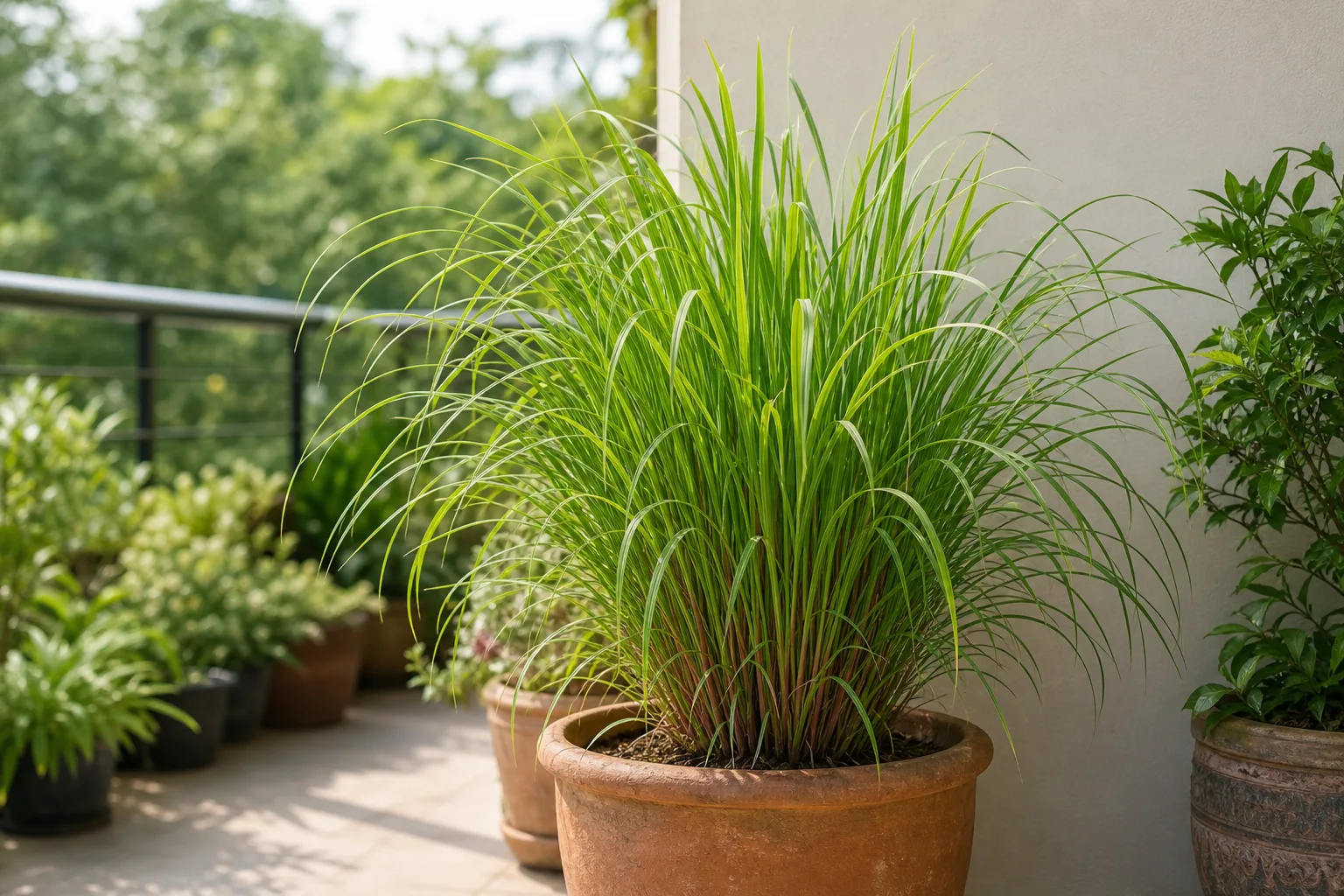
Citronella repotting is about giving a fast-spreading tropical grass room and oxygen—not jumping into a giant decorative pot of wet mix. Cymbopogon nardus (Ceylon citronella, mana grass, serai wangi) forms a fountain of tillers from a crowded crown. Species profiles put mature height near 150–240 cm with a 90–150 cm spread, and list it for patio containers as well as borders (Gardenia — Cymbopogon nardus). In a balcony tub, that growth habit fills pots quickly once nights stay warm and the plant gets full sun.
This guide covers when to move citronella, how to read root-bound signs, pot size, the sandy-loamy mix that protects the crown, step-by-step technique, first-month aftercare, and the mistakes that turn a spring refresh into soft yellow bases. Confirm you have citronella grass—not culinary lemongrass (Cymbopogon citratus) and not a scented geranium sold as a “mosquito plant”—before you upsize for the wrong species. For identity, sun, and size context, start from the Citronella overview.
Why Citronella Repotting Is Different
Most foliage houseplants forgive a slightly oversized cachepot. Citronella does not. It is a clumping aromatic grass grown for fragrant blades and oil, not thick edible stalks. University extension notes on related Cymbopogon treat citronella grass (C. nardus) as the commercial oil source beside culinary lemongrass, with the same warm-season, moisture-loving grass culture (UW Extension — Lemongrass). The root system is fibrous and aggressive under heat; the failure mode after a bad move is almost always crown and root rot from soggy, unused mix, not “needing more fertilizer.”
Gardenia lists C. nardus for moist but well-drained loam, average water, and hardiness roughly zones 10–12—frost-tender tropical culture (Gardenia — Cymbopogon nardus). Sister-species notes for C. citratus emphasize organically rich, well-drained soils in full sun (Missouri Botanical Garden — Cymbopogon citratus). That shared drainage rule drives every pot choice: modest upsizing, real drainage holes, and a mix that lets the top 2–3 cm dry between soaks as described in Citronella watering.
Clump grass, not a soft-stem houseplant
When you tip a citronella pot, you should see a tight mat of pale fibrous roots and tiller bases pressed toward the wall—not a single central stem with sparse feeder roots. Success after repotting looks like new tillers at the rim and a sharp citrus-camphor scent when you crush a blade. Soft, sour-smelling crowns and mushy roots mean the new pot held water too long. Nursery culture for C. nardus itself is regular watering with the topsoil allowed to dry slightly between drinks specifically to avoid root rot (Top Tropicals — Cymbopogon nardus).
Signs Your Citronella Needs a New Pot
Repot when the plant is telling you the pot is the bottleneck—not on a fixed calendar alone. Clear signs include the clump pressing hard against pot walls, mix that dries within a day in summer heat despite thorough watering, and a crown that has risen above the soil line. Roots circling the bottom or poking from drainage holes are the classic container cue Penn State extension describes for houseplants that need room (Penn State Extension — Repotting Houseplants).
Also watch growth quality. If tillers stall despite strong sun and warm nights, or the pot tips because the foliage fountain outweighs the root ball, plan a move. A sour smell, mix that stays dark and sticky for days, or yellowing from the base points to failed substrate—refresh the soil even if you keep a similar pot diameter. As a rule of thumb for healthy container plants, expect a refresh about every 1–2 years, or sooner when the clump crowds the rim.
Best Season to Repot Citronella
Move citronella in spring to early summer once nights stay warm, when the plant can push new tillers into fresh mix. In most of India that window often falls roughly February–June, depending on latitude and elevation—after cool weather eases and before peak monsoon saturates every saucer. Warm roots and active growth shorten transplant shock; cool, wet pots lengthen it.
Avoid routine winter moves. Growth slows when temperatures drop, and water use falls, so disturbed roots sit longer in damp media. Extension culture for Cymbopogon notes clumps expand dramatically once heat arrives after a slower cool period (UW Extension — Lemongrass). Emergency repots for broken pots or obvious rot are still fine any month—then use a modest pot, free-draining mix, bright placement, and careful watering.
India heat, monsoon, and cool snaps
In hot, dry terrace summers, citronella may need a wider pot simply because the mix becomes hydrophobic and root-bound at once. During monsoon, do not upsize into a deep unused volume that stays flooded under daily rain. Prefer a covered balcony edge, empty saucers, and—if you must move—a pot only one step larger with excellent drainage. Protect containers before nights approach about 10°C; Gardenia’s zone 10–12 listing means frost is not part of this plant’s plan (Gardenia — Cymbopogon nardus). Pair seasonal timing with Citronella light so the new pot returns to full sun immediately.
Choosing Pot Size and Material
Choose a container only about 2–5 cm wider than the current pot (roughly one standard nursery size), with real drainage holes and enough width for the clump’s footprint. Jumping two or three sizes leaves a ring of unused wet mix around the root ball—the same oversizing risk Penn State flags when growers move plants into pots that are too large (Penn State Extension — Repotting Houseplants). Citronella wants room for tillers, not a swamp moat.
Prefer a wide, deep pot over a tall, narrow vase. Mature clumps can approach 150–180 cm tall with a 90–150 cm footprint in good culture, so stability matters on windy balconies. Terracotta and fabric pots forgive overwatering; plastic works if the mix is gritty and you check dryness. Elevate the pot on feet so holes stay open. Never rely on a thick gravel layer under dense soil—that can create a perched water table. Fix the mix itself, following Citronella soil.
Soil Mix for a Fresh Citronella Pot
Use a sandy-loamy, fast-draining blend: about 50% potting mix, 30% coarse sand or perlite, and 20% compost, aiming near pH 5.5–7.0. Gardenia’s culture for C. nardus calls for loam that stays moist but well-drained across a wide pH range (Gardenia — Cymbopogon nardus). NC State’s notes for container Cymbopogon likewise stress good drainage with moist conditions (NC State Extension — Cymbopogon citratus).
Do not reuse sour, anaerobic old mix on a stressed plant. Discard it, wash the pot, and start fresh. Avoid peat-heavy moisture-control blends that stay black and cold for a week around the crown. Waterlogging starves roots of oxygen and invites decay—the pathway Missouri Botanical Garden describes for overwatered containers (Missouri Botanical Garden — Overwatering). Keep the crown at the same soil line you see now; burying tiller bases under wet compost is a fast route to soft tissue.
How to Repot Citronella Step by Step
Water the plant lightly the day before so the root ball slides out without shattering into dust. Wear gloves if leaf edges irritate your skin, and keep pets away—Cymbopogon species are listed toxic to cats and dogs (ASPCA — Lemongrass / Cymbopogon). Tip the pot, support the clump at the base, and ease it free. Tease circling roots gently; trim only clearly black, mushy, or sour-smelling sections with clean shears.
Set drainage mesh or a shard over the holes without blocking flow. Add a base layer of fresh mix, center the clump so the crown sits at the old soil line, and backfill while firming lightly—do not pack into concrete. Water thoroughly until runoff starts, then empty the saucer. Return the pot to full sun (6+ hours direct light) promptly; shade after a grass transplant invites cool, wet mix. If you are also multiplying plants, the division method belongs with Citronella propagation; a simple upsizing can stay one intact clump.
When to divide during the same move
If the pot is a solid mass of tillers with little soil left, split the clump into sections that each have healthy roots and active green shoots, then pot each piece into its own modest container. Spring or early summer division matches the same warm window as repotting. Do not shred the crown into tiny, rootless slips and expect quick recovery. After dividing, treat each pot as newly transplanted: bright light, careful moisture, and no fertilizer until new tillers appear.
Aftercare for the First Month
Expect a short pause. Mild tip browning or slower expansion for one to two weeks is normal while fibrous roots recolonize fresh mix. Keep the top 2–3 cm as your watering cue—soak thoroughly, then wait for that surface dryness (Top Tropicals — Cymbopogon nardus). Skip fertilizer for at least three to four weeks; feeding a stressed clump pushes soft mass into a root zone that is still rebuilding. Resume modest feeding only after new tillers show, using guidance in Citronella fertilizer.
Do not stack hard pruning, fertilizer, and a giant pot upgrade in the same week. If blades yellow from the base or the crown smells sour, tip the pot, inspect roots, and improve drainage before watering again. Recovery is new firm tillers and a returning scent on crushed leaves—not marketing claims that the plant alone clears mosquitoes.
When Not to Repot
Skip routine repotting when the plant arrived last week and is still adjusting, when nights are cold, when the mix is already soggy from monsoon, or when the only complaint is pale growth in shade. Fix Citronella light and watering first; a bigger wet pot will not cure low light. Same-size soil refresh is enough when the clump is healthy but the mix has collapsed—new room is optional, oxygen is not.
Also wait if the plant is flowering stress-wise from recent division or pest treatment. One stressor at a time beats a full reset. The exception is emergency work: cracked pots, standing water for days, or a collapsing crown still warrant an immediate move into fresh, free-draining mix.
Common Citronella Repotting Mistakes
The frequent failure is oversizing. A pot two sizes too large plus peat-heavy mix equals a wet collar around the roots. Another is burying the crown under fresh compost “for moisture.” A third is repotting into deep shade “to rest” the plant—grasses need sun to use water. Leaving saucers full after the soak creates the same oxygen loss overwatering literature describes for container plants (Missouri Botanical Garden — Overwatering).
Do not confuse citronella grass with culinary lemongrass culture tips that focus on harvestable stalks, and do not treat a scented geranium “mosquito plant” like a Cymbopogon clump. Wrong identity leads to wrong pot expectations. Keep the move boring: modest pot, sandy-loam, warm season, full sun, and a dryness check—not a product stack.
When to use this page vs other Citronella guides
Use this page when you are deciding whether, when, and how to change pots—size, timing, technique, and first-month recovery. Switch to Citronella soil for mix recipes and drainage diagnosis without a full transplant. Use Citronella watering for the soak-and-dry rhythm after the move. Use Citronella light when pale or floppy growth tracks shade. Use Citronella fertilizer only after roots are active again. Use Citronella propagation when the goal is new plants from division, and Citronella pruning when blade cleanup—not pot volume—is the constraint.
Related Citronella guides
- Citronella overview — identity, mature size, sun, and care priorities
- Citronella soil — sandy-loam ratios, pH, and drainage checks
- Citronella watering — dryness cues and seasonal intervals
- Citronella light — full-sun placement after a move
- Citronella fertilizer — when to resume feeding
- Citronella propagation — dividing clumps into new pots
- Citronella pruning — blade cleanup without stressing new roots
Conclusion
Repot citronella when the clump crowds the pot, the mix fails, or roots demand air—ideally in warm spring or early summer. Give only a modest pot upgrade, sandy-loamy free-draining mix, and a crown that sits at the old soil line. Aftercare is full sun, the 2–3 cm dryness check, and no fertilizer until new tillers appear. Done that way, Cymbopogon nardus rewards you with a denser fountain and stronger scent—not a soft, waterlogged setback.