Citronella Light Needs: Full Sun, Windows & Signs
Citronella Light Needs: Full Sun, Windows & Signs
Citronella Light Needs: Full Sun, Windows & Signs
Citronella grass (Cymbopogon nardus) is a tropical clumping grass grown for aromatic foliage and essential-oil chemistry — not for surviving in a dim corner. If your plant looks pale, sparse, or oddly “thirsty” while the mix stays wet, light is usually the first variable to fix. Full sun drives tiller density, blade color, and the citrus-camphor scent you notice when you crush a leaf.
This guide covers how much direct sun Citronella needs, where to place pots on Indian balconies and terraces, when afternoon shade is useful, what indoor and grow-light setups can (and cannot) deliver, and the warning signs that tell you to move the plant before crown rot or fertilizer mistakes get blamed for a shade problem.
How Much Light Citronella Actually Needs
Treat Citronella as a full-sun ornamental grass. In practical terms, that means at least six hours of direct sunlight daily, with eight hours better when temperatures stay warm and the mix drains fast. Horticultural profiles for Cymbopogon nardus list exposure as full sun to partial sun, with performance best when the clump sees strong daytime light rather than bright shade alone.
Related culinary lemongrass (Cymbopogon citratus) is listed by NC State Extension under full sun — six or more hours of direct sunlight a day, which matches how Ceylon citronella behaves in containers and borders. Use that six-hour floor as your non-negotiable checkpoint for C. nardus too.
Full Sun Means Real Hours, Not a Bright Room
A room that looks bright to your eyes can still be low light for a tropical grass. Stand where the pot sits at midday and ask whether unfiltered sun hits the blades for hours, not whether the floor looks illuminated. Soft ambient light through a north window or deep balcony overhang will not build the fountain-like clump Citronella is capable of.
In measurable terms — useful if you own a meter, not required — outdoor full sun often exceeds several thousand foot-candles at leaf level. Indoor bright windows rarely match that for six continuous hours unless the pot sits hard against unobstructed south glass in winter or you add a strong grow light. If you only get three hours of true sun, expect thinner tillers, weaker scent, and slower expansion even when watering and fertilizer look correct.
Why Shade Weakens Scent and Clump Density
Citronella’s value for home growers is dense new tillers, firm crowns, and a sharp scent when blades are crushed. Those traits track with photosynthesis under high light. In partial shade, clumps often stretch, lean toward the brightest edge, and produce softer, greener mass with less aromatic punch. That is not a fertilizer failure first — it is an energy budget problem.
Shade also changes water behavior. Pots dry slower, crowns stay wet longer, and yellowing from the base can look like overwatering even when you followed a calendar. Fix light and drainage together; do not stack a heavy feed on a shaded, wet pot. Pair this page with the Citronella watering guide once placement is right.
Best Placement for Balconies, Terraces, and Patios in India
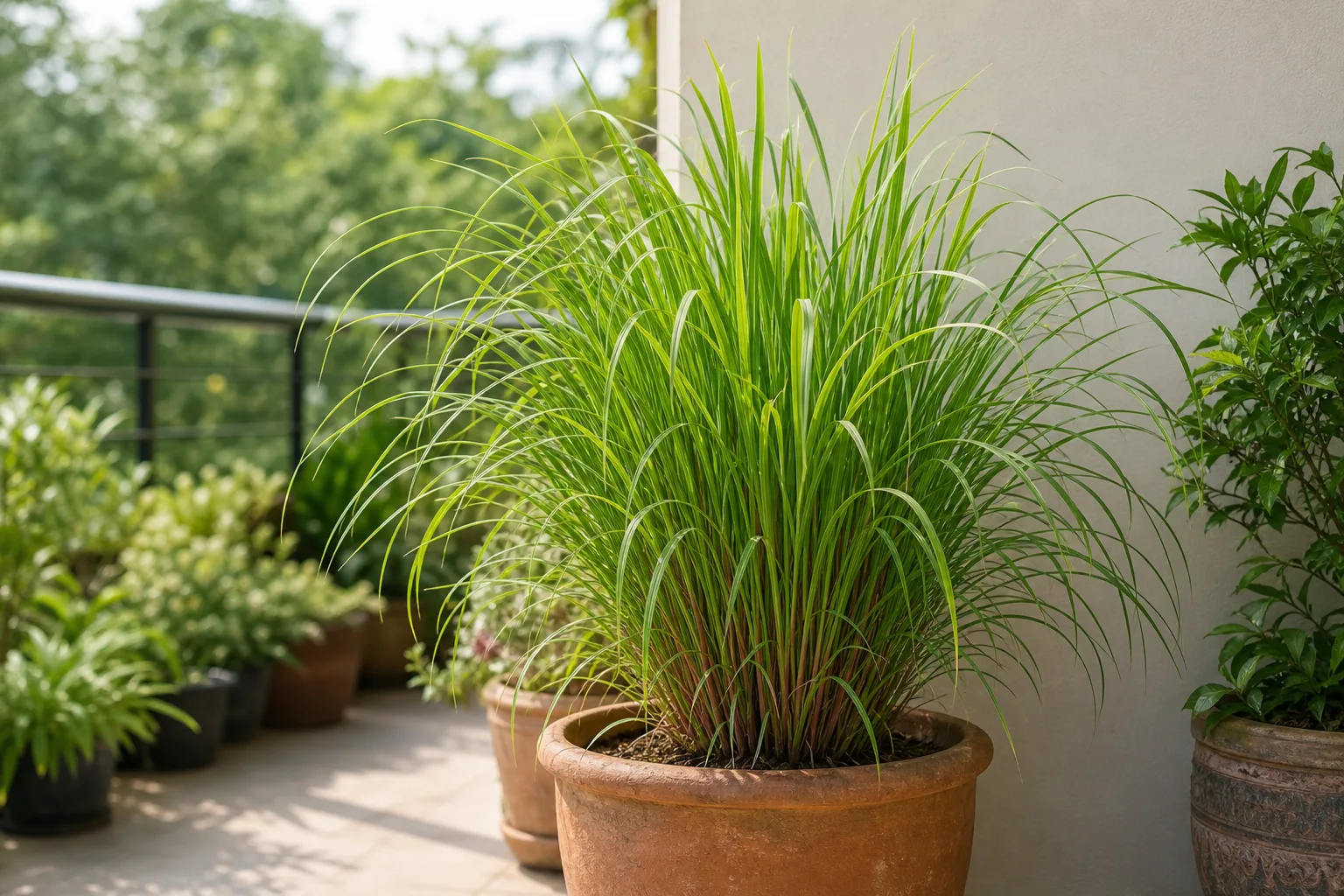
In tropical and subtropical India, Citronella belongs outdoors on a sunny balcony, terrace, or patio where six-plus hours of direct sun is realistic most of the year. Aim for the open edge of a south- or west-facing terrace rather than a covered corridor. Mature clumps can reach roughly 150–180 cm tall with a wide footprint, so leave space for airflow and do not tuck the pot behind taller plants that steal midday light.
USDA Plants lists Cymbopogon nardus in the national plant database as a recognized taxon used in horticulture and related industries — useful confirmation you are dealing with true citronella grass, not a marketing name. Keep identity straight before you redesign a balcony: reddish bases and a lemon-camphor crush scent help separate Ceylon citronella from all-green culinary lemongrass.
Humidity in the 50–80% range and daytime comfort roughly 21–35°C suit active growth. [Flagged: no authoritative source found for this claim] Growth stalls when nights stay cool; a shaded, cool, wet pot is the worst combination for crowns. If monsoon cloud cover cuts daily sun for weeks, accept slower growth and water less rather than chasing “indoor jungle” light levels.
South and West Exposures in Tropical Heat
South-facing open terraces usually deliver the most reliable all-day sun for Citronella in the northern hemisphere. Place the pot where walls or laundry lines do not cast midday shade. West-facing balconies can work well too, but late-day heat through glass or against reflective railings can scorch thin new blades if the plant arrived from a shaded nursery.
Acclimate store plants over one to two weeks: start with morning sun plus dappled afternoon light, then extend direct exposure. Rotate the container a quarter turn every week or two so the fountain stays even. If the mix dries within a day in peak summer, that usually means light and heat are adequate — check the Citronella soil guide before blaming thirst alone.
When Afternoon Shade Helps Without Starving the Plant
In extreme heat spells, brief afternoon shade can reduce leaf scorch without turning the plant into a shade grass. Profiles note that some afternoon shade in hot summers helps prevent burned blades while still targeting full-sun total hours. The goal is still six-plus hours of direct sun; shade should be a hot-hour filter, not all-day cover under a roof.
If only one side of your balcony gets sun, put Citronella on that edge and keep moisture steady without sogginess. Do not compensate for a dark corner with more fertilizer — soft, shade-grown tissue cracks pots and invites crown problems without improving oil-related scent strength.
Can You Grow Citronella Indoors?
Citronella is a poor long-term houseplant unless you can recreate outdoor-intensity light. A living room that supports a snake plant will not support a vigorous C. nardus clump. Use indoor placement mainly for frost protection or cool-season holding, not as the primary growing site.
When nights approach about 10°C, move containers to the brightest frost-free spot you have. Expect semi-dormant, slower growth. Cut watering hard so the crown never sits wet in low light. Resume full outdoor sun once nights stay warm.
Sunny Window Holding vs True Indoor Growth
A south-facing window with the pot nearly touching the glass is the only indoor position worth trying for maintenance. East windows give gentler morning sun but often fall short of six hours of direct rays. West windows add heat risk against glass. North windows are survival-only and usually produce pale, floppy blades.
Judge success by new tillers, not by whether old leaves stay green. If no new basal shoots appear for a month in warm weather, the window is too weak. Review the Citronella overview for size and climate fit before committing to an indoor-only plan.
Grow Lights When Winter Forces You Inside
If you must overwinter indoors, use a full-spectrum LED grow light 20–40 cm above the clump for roughly 12–14 hours daily, then raise the fixture as tillers elongate. Ceiling room lights do not count. Keep temperatures in the comfort zone and water only when the top few centimetres of mix dry.
Grow lights buy time; they rarely match outdoor terrace performance for oil-rich, dense clumps. Move the pot back outside as soon as frost risk passes and acclimate again to prevent sun scorch on shade-softened leaves. After division in spring, give new sections the same bright placement — see Citronella propagation and Citronella repotting.
Warning Signs of Too Little or Too Much Light
Too little light shows as sparse tillers, leaning toward the window or balcony edge, pale or washed-out blades, weaker crush scent, and soil that stays wet for days. Growth stalls even when temperatures are warm. First action: move into stronger direct sun and pause fertilizer until new shoots appear.
Too much sudden sun or heat load shows as bleached or crispy patches on sun-facing blades, especially after a jump from nursery shade to open terrace. Scorched tissue does not green again; trim only fully dead tips after the plant stabilizes, and shade the hottest afternoon hour for a week while roots catch up. Pair severe yellowing from the base with a drainage check via the Citronella watering and soil guides rather than assuming light alone.
Do not confuse marketing claims with light success. A potted citronella grass does not clear a patio of mosquitoes by sitting in sun; EPA-registered insect repellents are a different use case from foliage alone. Light still matters for plant health and scent even when insect control expectations stay realistic.
Citronella vs Lemongrass and “Mosquito Plant” Lookalikes
Confirm you are lighting citronella grass (Cymbopogon nardus), not culinary lemongrass (C. citratus), Java citronella (C. winterianus), or a scented geranium sold as a “mosquito plant.” Lemongrass shares the full-sun habit, but kitchen stems and flavor goals differ. Scented geraniums are a different genus with different light ceilings.
ASPCA lists Cymbopogon species (including lemongrass entries) as toxic to cats and dogs, so keep fragrant pots out of pet reach regardless of how sunny the shelf is. Light placement on a high terrace rail can also be a pet-safety decision, not only a horticultural one.
When to Use This Page vs Other Citronella Guides
Use this light page to choose balcony orientation, indoor holding strategy, grow-light duration, and to diagnose pale, floppy, or scorched blades. Switch to watering when the crown smells sour or the mix stays soggy after you already fixed sun. Use soil when pots never dry despite full sun. Use fertilizer only after light and drainage are stable. Use repotting and propagation when the clump crowds the rim and you are ready to divide in warm, bright conditions. Start from the Citronella hub if you still need species identity and climate fit.
Related Citronella Guides
- Citronella overview — habit, size, and what success looks like
- Citronella watering — moisture rhythm once sun dries the pot predictably
- Citronella soil — sandy-loamy, fast-draining mixes for sunny containers
- Citronella fertilizer — modest warm-season feeding after light is right
- Citronella repotting — when crowded clumps need a wider pot
- Citronella propagation — spring division under strong light
Conclusion
Citronella thrives when you treat it like a sun-driven tropical grass: six or more hours of direct light daily, open balcony or terrace placement, and only brief afternoon shade during extreme heat. Indoors, limit expectations to bright south glass or a real grow light while cool weather lasts. Move the pot for pale, sparse growth; acclimate gradually for scorch; and fix water and soil only after the sun exposure matches the species. Get light right first, and the clump’s density and scent usually follow.