Citronella Fertilizer Guide: When & How Much
Citronella Fertilizer Guide: When & How Much
Citronella Fertilizer Guide: When & How Much
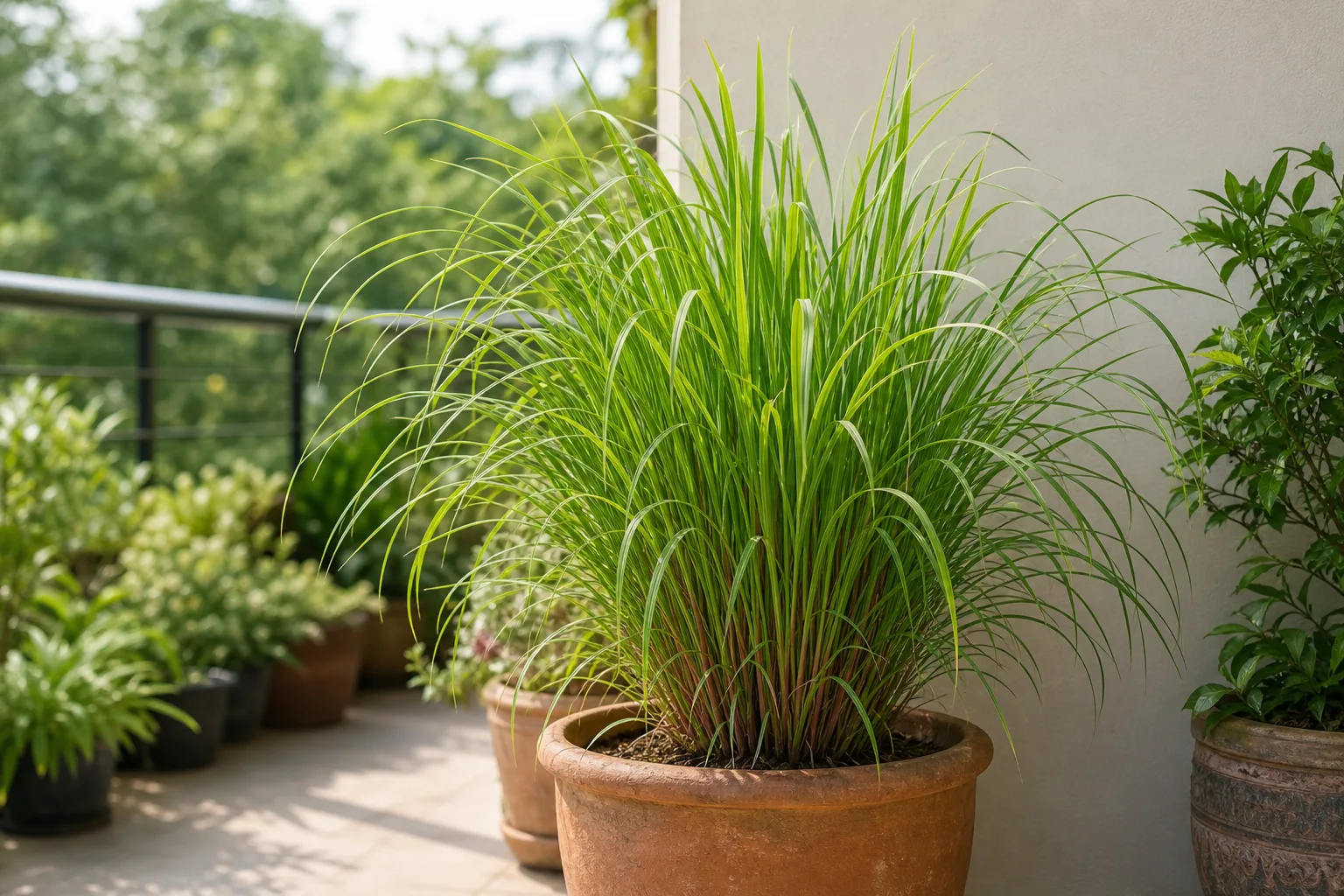
Citronella fertilizer only helps after sun, drainage, and watering already work. Cymbopogon nardus — Ceylon citronella grass, also sold as mana grass or serai wangi — is a fast tropical clump grown for fragrant blades and oil chemistry, not for thick culinary stalks. In warm, bright months a modest feed supports dense new tillers. In cool weather, shade, or a soggy crown, the same dose builds soluble salts and soft, floppy mass that cracks pots without improving scent.
This page is the feeding reference for Citronella on sunny balconies, terraces, and warm-climate borders in India and similar climates. Confirm you have citronella grass, not culinary lemongrass (Cymbopogon citratus) and not a scented geranium labeled “mosquito plant,” before you chase nutrient myths. For the light that drives nutrient use, see citronella light needs. For dry-down timing that must align with feeding, see citronella watering. For the sandy-loamy mix that keeps salts from trapping roots, see citronella soil.
What Citronella Grass Actually Needs From Fertilizer
Citronella is a Poaceae clump with fibrous roots and a fountain of tillers. It wants warmth, full sun, and a mix that holds moisture without trapping a swamp around the crown. Species profiles for Cymbopogon nardus note that the grass may benefit from a balanced fertilizer once a year in landscape settings (Gardenia — Cymbopogon nardus). Nursery culture for potted plants is a little hungrier because frequent watering leaches nutrients: fertilize every few months in the warmer months so the clump stays supplied without staying salty (Top Tropicals — Cymbopogon nardus).
Related culinary lemongrass (C. citratus) is cultured similarly as a heat-loving Cymbopogon in moist, well-drained soil and full sun (Missouri Botanical Garden — Cymbopogon citratus). University extension notes also place citronella grass (C. nardus) beside lemongrass as the commercial oil source in the same genus (UW Extension — Lemongrass). Use those sister-species notes for climate and moisture context, then keep the goal clear: you are feeding fragrance oil grass for firm tillers, not forcing soup-stock stalks.
Fragrance tillers vs soft, salt-stressed mass
Judge success by stable new tillers at the base, firm crowns, and a sharp citrus-camphor scent when you crush a blade. Heavy nitrogen schedules can push lush, weak blades that lodge in wind and look “fed” while the crown softens. Clemson Extension warns that applying too much fertilizer can injure plants through fertilizer burn, and that excess nitrogen stimulates leafy shoot growth that is more susceptible to drought and pests (Clemson HGIC — Fertilizing Trees & Shrubs). On citronella, that shows up as floppy outer blades, crusty white salt on the pot rim, and tip scorch after a full-strength feed.
When to Fertilize Citronella in Indian Climates
Feed when citronella is actively pushing new tillers and extending blades — typically the warm, bright months across most of India. Hold feed when nights turn cool, when growth stalls, or when the plant is wilting from drought or drowning rather than from nutrient lack. Clemson’s environmental fertilizer guidance is blunt on timing: apply nutrients at the right time when plants can absorb them, not before heavy rain that will leach or wash them away (Clemson HGIC — Fertilizers and the Environment). The same 4R logic applies on a balcony: right product, right amount, right place (root zone), right season.
Warm-season monthly window (March–October)
For terrace and garden citronella in India, the reliable window is roughly March through October, with peak response from late spring through monsoon and early post-monsoon flush. Start only after you see fresh green tillers — not on a calendar day alone. During that window, a practical container schedule is one diluted liquid feed about once a month, or a light compost top-dress every six to eight weeks if you prefer organics. RHS advice for ornamental plants in containers is similar in spirit: feed through the growing months and keep amounts modest rather than chasing maximum size (RHS — How to feed plants).
In-ground clumps in amended beds often need less frequent soluble fertilizer than pots. A balanced feed once or twice in the warm season, plus compost worked into the surface, is enough when the plant already sits in full sun and drains well. Gardenia’s “once a year” note fits established landscape plantings better than a small plastic pot that is watered every few days (Gardenia — Cymbopogon nardus).
Cool-season pause and stress holds
From November through February in most Indian regions, taper to a stop. Give a final light feed in early autumn only if soft new tillers are still forming, then pause. Resume in late winter or early spring when consistent new growth returns under strong light.
Also pause during acute stress: wilted blades on bone-dry mix, yellow bases from a soggy crown, recent hard pruning, or a fresh division and repot. Clemson notes that drought-stressed plants should not be fertilized because adequate moisture is required for uptake (Clemson HGIC — Fertilizing Trees & Shrubs). Water first, restore turgor, fix drainage if the crown smells sour, then feed days later on moist — not soggy — mix.
Best Fertilizer Types and NPK for Citronella
You do not need a specialty “citronella mosquito” bottle. You need a complete, balanced fertilizer used with restraint, optionally paired with slow organic matter.
Balanced liquid at half strength
For most balcony growers, the best default is a balanced water-soluble fertilizer such as 10-10-10 or 20-20-20 at half the label strength, applied about once a month while the plant is actively growing. Half strength matters in containers because salts concentrate as water evaporates between soaks. UF/IFAS Gardening Solutions warns that too much fertilizer on container plants can create a build-up of salts in the media, causing stunted growth, leaf browning, or plant death (UF/IFAS — The Basics of Fertilizer).
A modest nitrogen contribution supports leafy tillers, but stacking high-N “lawn green-up” products week after week is a poor match for oil-grass goals. Soft, forced growth does not equal stronger fragrance on contact, and it does not turn a potted clump into a patio mosquito barrier.
Compost, compost tea, and slow organic top-dress
Compost and vermicompost are excellent companions for citronella’s sandy-loamy mix. A thin surface top-dress in spring, watered in, refreshes organic matter without a salt spike. Diluted compost tea once a month in the warm season is a gentle alternative to synthetic liquid if growth is already steady. Avoid piling fresh manure against the crown — citronella crowns rot when the base stays wet and anaerobic.
Slow-release granules can work for in-ground borders if you follow the label rate and water them in. In small pots, prefer liquids you can pause instantly if tip burn appears. NC State’s Cymbopogon citratus profile emphasizes moist conditions with good drainage for container culture — the same drainage that keeps fertilizer from becoming a chemical swamp around the crown (NC State Extension — Cymbopogon citratus).
How to Fertilize Citronella in Pots Step by Step
- Confirm the plant is in strong sun and the top 2–3 cm of mix are only lightly dry — not bone-dry and not waterlogged.
- Water thoroughly first if the mix is dry, then wait until excess has drained. Never fertilize a wilted, crispy clump on dry media.
- Mix balanced liquid fertilizer at half label strength in a watering can.
- Apply enough solution to wet the root ball and exit the drainage holes. Empty the saucer after 15–20 minutes.
- Resume normal watering. Do not add a second fertilizer product the same week.
- Watch the next two weeks of tiller growth. If tips brown or white crust forms on the soil surface, flush the pot with plain water several times and hold feed for four to six weeks.
After a successful repotting into fresh mix that already includes compost, wait three to four weeks before the first liquid feed so roots can settle. Fresh mix often carries enough nutrients for that settling window.
Ground Plantings vs Balcony Containers
In-ground citronella in amended, well-drained soil has a larger nutrient bank and slower leaching. One or two balanced applications across the warm season, plus compost, usually outperform monthly full-strength liquid. Container plants on a hot Indian balcony are the opposite: frequent watering empties the nutrient bank, so a monthly half-strength liquid or alternating liquid and compost tea keeps tillers moving without salt shock (Top Tropicals — Cymbopogon nardus; RHS — How to feed plants).
If monsoon rains keep outdoor pots wet for days, skip the scheduled feed. Nutrients applied into already-saturated media are more likely to leach uselessly or sit against a soft crown. Resume after the mix returns to its normal dry-down rhythm described in the watering guide.
Signs of Underfeeding vs Overfertilizing
Underfeeding in an otherwise healthy, sunny pot usually looks like slow tiller production, pale new blades, and a clump that never thickens through peak heat despite correct water. Rule out shade and root binding first — a pot-bound clump can look “hungry” when it mainly needs division.
Overfertilizing looks sharper: brown leaf tips and margins within days of a feed, white crust on the soil surface or pot rim, soft floppy mass, and sometimes a stall right after a heavy dose. UF/IFAS links container salt buildup to browning and stunting (UF/IFAS — The Basics of Fertilizer). Clemson links excess product to fertilizer burn and weak, pest-prone growth (Clemson HGIC — Fertilizing Trees & Shrubs). First action: stop feeding, flush the pot, improve light and drainage if needed, and restart later at half strength only after new healthy tillers appear.
What Not to Do When Feeding Citronella
Do not fertilize a newly divided clump for several weeks. Do not feed a plant sitting in standing water. Do not use full-strength outdoor lawn fertilizer in a small balcony pot. Do not stack slow-release granules, liquid feed, and compost tea in the same fortnight. Do not expect fertilizer to fix shade, cold nights, or a peat-heavy mix that never dries. And do not treat feeding as mosquito control — distilled citronella oil products deter insects when formulated and applied; a fertilized pot of grass does not clear a patio by scent alone.
When to Use This Page vs Other Citronella Guides
Use this fertilizer page when you need timing, product type, dilution, and burn recovery for Cymbopogon nardus. Switch to citronella watering if yellow bases and sour mix point to crown wetness rather than nutrient lack. Use citronella light if blades are pale and floppy in shade before you increase NPK. Use citronella soil when the mix stays heavy for days after every soak. Use citronella repotting when the clump presses the pot walls and dries in a day. Use citronella propagation when you are dividing tillers rather than feeding the parent harder. The overview ties the full care cluster together.
Related Citronella Guides
- Citronella care hub — identity, placement, and toxicity context
- Citronella overview — full-care summary before deep dives
- Citronella light — sun hours that drive nutrient demand
- Citronella watering — dry-down checks before any feed
- Citronella soil — fast-draining mix that prevents salt traps
- Citronella repotting — when to refresh mix instead of dosing harder
- Citronella propagation — division timing and aftercare holds on fertilizer
Conclusion
Feed citronella grass lightly while it is actively tillering in warm weather: a balanced fertilizer at half strength about once a month from roughly March through October in most of India, or compost tea on the same rhythm, with a full cool-season pause. Landscape clumps need even less soluble feed than balcony pots. Match every dose to moist, well-drained mix and strong sun, and stop immediately if tips burn or salt crust appears. Fertilizer supports an already working system — it cannot replace light, drainage, or a sensible watering rhythm.