Citronella Pruning Guide: When, Where, and How Much to Cut
Citronella Pruning Guide: When, Where, and How Much to Cut
Citronella Pruning Guide: When, Where, and How Much to Cut
First action: Walk the clump and remove only dead, brown, yellow, or broken outer tillers—cut each one close to the crown with clean shears before you shear the whole fountain for height. Citronella grass grows from basal shoots, so cleanup at the base tells you which crowns are still firm before any hard cutback.
For whole-plant context—sun needs, watering rhythm, and container limits—see the Citronella overview.
Reviewed by LeafyPixels Review Board · Author: sai-ananth
Quick answer
Prune citronella (Cymbopogon nardus) as a warm-season clumping grass: clean out spent outer blades anytime, then cut the fountain back hard only when you need size control, winter cleanup, or a fresh flush of tillers. Clemson Extension advises cutting ornamental grasses back before new growth starts—usually late winter or early spring—leaving stems a few inches above ground. (Clemson HGIC)
Related Cymbopogon care pages treat these grasses as full-sun clumpers that expand from the base and respond to ground-level stalk removal. (NC State Extension) (UF/IFAS) Pruning refreshes the silhouette and scent-bearing foliage; it cannot replace full sun or fix a soggy crown—correct watering and drainage first if blades yellow from the base.
What pruning does for citronella
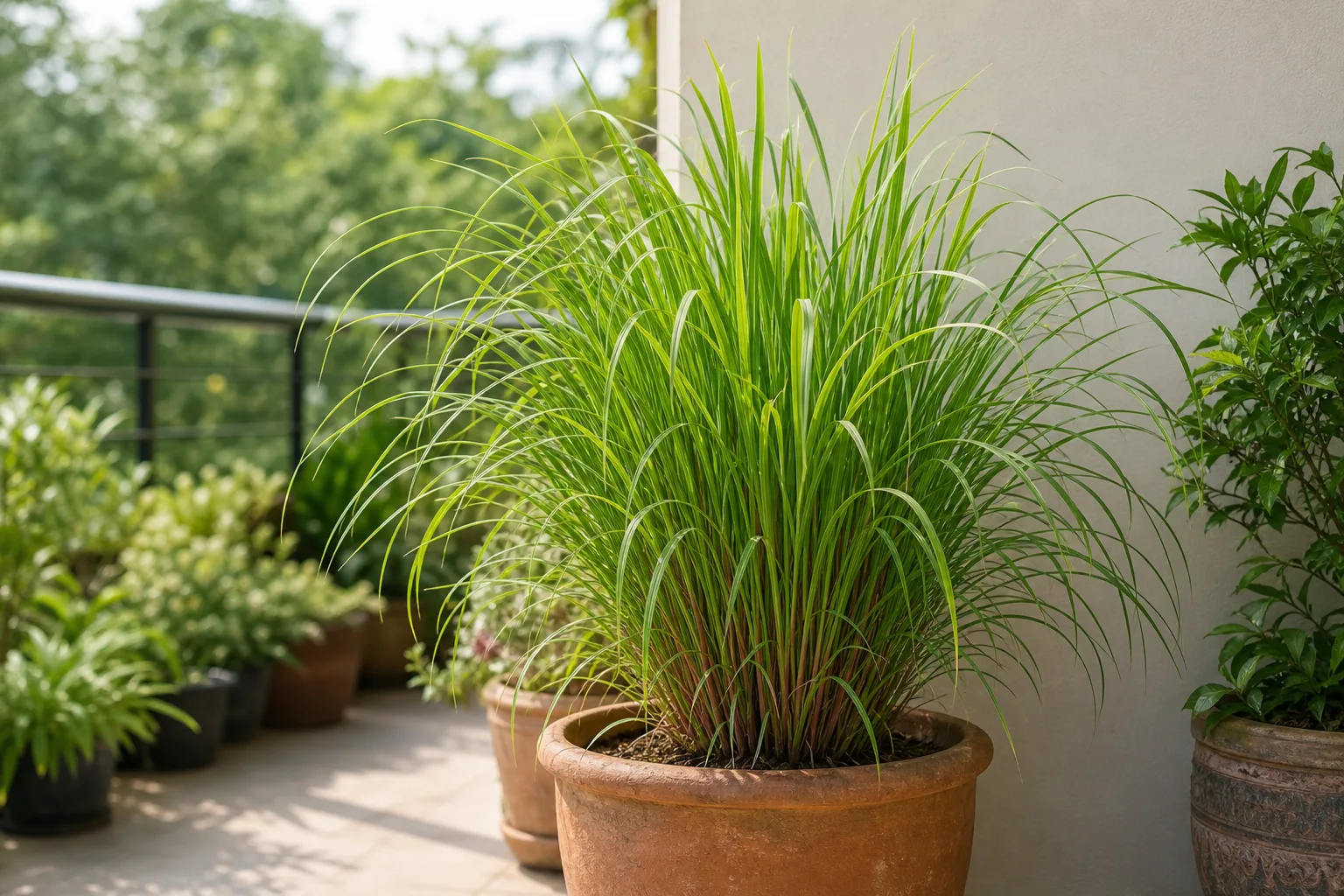
Citronella grass is a fountain of narrow aromatic blades rising from a crowded basal crown. New growth is basal tillers, not side buds on mid-leaf tissue. Owners prune when outer blades brown, the clump lodges over a balcony rail, winter cold leaves a tan shell, or the pot needs a neat reset before spring division.
Four jobs show up repeatedly:
- Cleanup removes dead, yellow, or broken outer tillers whenever you see them.
- Height control shears the tall fountain so patio pots stay upright and usable.
- Seasonal cutback removes a cool-season or frost-damaged canopy so new tillers can push cleanly.
- Pre-division tidy clears dead sheaths so you can see live crowns when you split the clump—see citronella propagation.
Pruning will not make a potted plant repel mosquitoes on its own, and it will not turn citronella into culinary lemongrass (Cymbopogon citratus). Use cuts for plant health and shape, not for kitchen harvest expectations.
Cleanup vs hard cutback
| Situation | Action | Timing | Expected outcome |
|---|---|---|---|
| Brown, dry, or yellow outer tillers only | Cleanup at crown | Anytime | Tidier clump; low stress |
| Tall blades lodging over the rim | Height shear to a few inches–30 cm | Active warm growth, or late winter reset | Upright new tillers |
| Cool-season tan canopy or frost damage | Hard cutback a few inches above crown | Late winter / early spring before flush | Clean restart |
| Crowded pot ready to split | Cleanup, then divide | Spring–early summer once nights stay warm | Smaller, denser clumps |
When to prune citronella
Best season for hard cutbacks
Time major cutbacks for late winter or early spring, before the next strong tiller flush—the same window Clemson recommends for warm-season ornamental grasses. (Clemson HGIC) In warm Indian climates where the plant barely browns, you can also shear for size during the main growing season as long as the crown is firm and the pot is in strong sun.
Avoid stacking a hard scalp with repotting and a fertilizer jump on the same day unless the mix has failed. Give the crown one recovery job at a time.
What you can remove anytime
Dead blades, fully yellow outer tillers, and snapped tips can come off year-round. That maintenance cleanup is different from shearing every green leaf for height. If the plant is newly moved indoors for cold protection, limit work to damaged tissue until it settles under bright light.
What to check before cutting
Before any structural session, inspect in good light:
- Crown firmness: Squeeze the base. Soft, sour, or mushy crowns need drainage and watering fixes—not a deeper scalp.
- Live tiller color: Keep firm green basal shoots; remove only dry or collapsing outer rings first.
- Light: Sparse, floppy blades in shade will return soft after pruning unless you restore full sun.
- Moisture: A chronically wet mix invites crown rot after you open the canopy—review soil drainage and watering before hard cuts.
Tools, handling, and pet precautions
Use sharp bypass shears or hedge shears for dense clumps. Dull blades shred sheaths and leave ragged stubs that brown. Wipe blades with 70% isopropyl alcohol before you start and after finishing if you move between plants. (Iowa State Extension)
Wear gloves if leaf edges irritate your skin. ASPCA lists Cymbopogon species (including lemongrass) as toxic to cats and dogs—bag trimmings and keep cut material out of pet reach. (ASPCA)
How to prune citronella step by step
- Sanitize tools and clear space around the pot so cut blades do not jam the crown.
- Cleanup first: Grasp each dead or yellow outer tiller near the soil line and cut at the crown. Pull free any loose dry sheaths without tearing live green bases.
- Decide on height: If the fountain is still dense and upright after cleanup, stop. If blades are lodged, tan from cold, or simply too tall for the spot, continue.
- Hard cutback: Shear the remaining canopy to roughly 5–15 cm (a few inches) above the crown, matching Clemson’s “few inches above ground” guidance for grass cutbacks. (Clemson HGIC) Keep cuts level so new tillers emerge evenly.
- Clear debris: Lift cut blades out of the pot so wet thatch does not sit on the crown.
- Water lightly if the mix is dry, then return the plant to full sun. Do not flood a freshly opened crown.
Related Cymbopogon harvest practice also removes stalks near ground level rather than mid-blade nipping, which matches basal regrowth on citronella. (UF/IFAS)
How much you can safely remove
- Dead tissue: Remove all of it.
- Vigorous hard cutback: Cutting green foliage back to a few inches above the crown is acceptable on a firm, sunny, warm-season clump.
- Weak or recently divided plants: Leave more live green tillers; take a second light pass after new shoots appear.
- Never dig out the entire crown unless you are discarding a rotten plant. New growth comes from that basal plate.
What not to cut
- Do not peel every green tiller looking for a “culinary bulb”—citronella is an oil and fragrance grass, not kitchen lemongrass.
- Do not leave long mid-leaf stubs as the main strategy; basal cuts look cleaner and push growth from the crown.
- Do not scalp a soft, yellowing clump that is sitting in shade or soggy mix—fix care first.
- Do not combine a hard cutback with aggressive root tearing unless you are intentionally dividing.
Aftercare and recovery timeline
After pruning, keep the pot in full sun and resume the usual dry-down watering rhythm: water thoroughly, then let the top 2–3 cm dry. New blades should appear from the crown within 1–3 weeks in sustained heat. Cool spells slow that flush.
Skip heavy fertilizer until you see active new tillers. A hard cut removes leaf area; the plant needs light and warmth more than salt. If you plan to multiply the plant, wait until the crown is pushing green again, then follow the propagation guide for spring division.
Signs pruning worked
- Firm new tillers rising from the base
- Upright, denser fountain instead of a lodged skirt
- Strong citrus-camphor scent when you crush a new blade
- No sour smell or mush at the crown
Signs you cut too hard or timed it poorly
- No new tillers after two to three warm weeks
- Remaining bases turning soft or brown
- Persistent flopping because light is still too weak
- Yellowing that spreads inward after a wet post-cut watering
Mistakes to avoid
- Shearing only the tips and leaving a hollow, brown center that thatches the crown
- Hard-cutting in cold, dim conditions with no plan for brighter placement
- Flooding the pot right after opening the canopy
- Assuming pruning will fix shade stretch without moving the plant into stronger light
- Leaving aromatic trimmings where pets can chew them
When not to prune
Delay hard cutbacks when nights are cold and the plant is barely growing, when the crown already feels soft, or when you just moved the pot and the plant is still adjusting. Cleanup of dead blades is still fine. Wait for warmth and stable watering before a full scalp.
Related Citronella guides
- Citronella overview — species identity, placement, and what success looks like
- Citronella light — full-sun needs that keep post-prune tillers sturdy
- Citronella watering — dry-down rhythm that protects the crown after cuts
- Citronella soil — fast drainage that prevents post-prune crown rot
- Citronella propagation — spring division after a tidy cutback
- Citronella fertilizer — when to resume feeding after new tillers appear
- Citronella repotting — when a crowded clump needs a bigger pot instead of more shearing