8 Plants That Can Help Keep Mosquitoes Away
Learn which 8 plants may help around a patio, how to place them, and why standing-water control and proven repellents still matter.
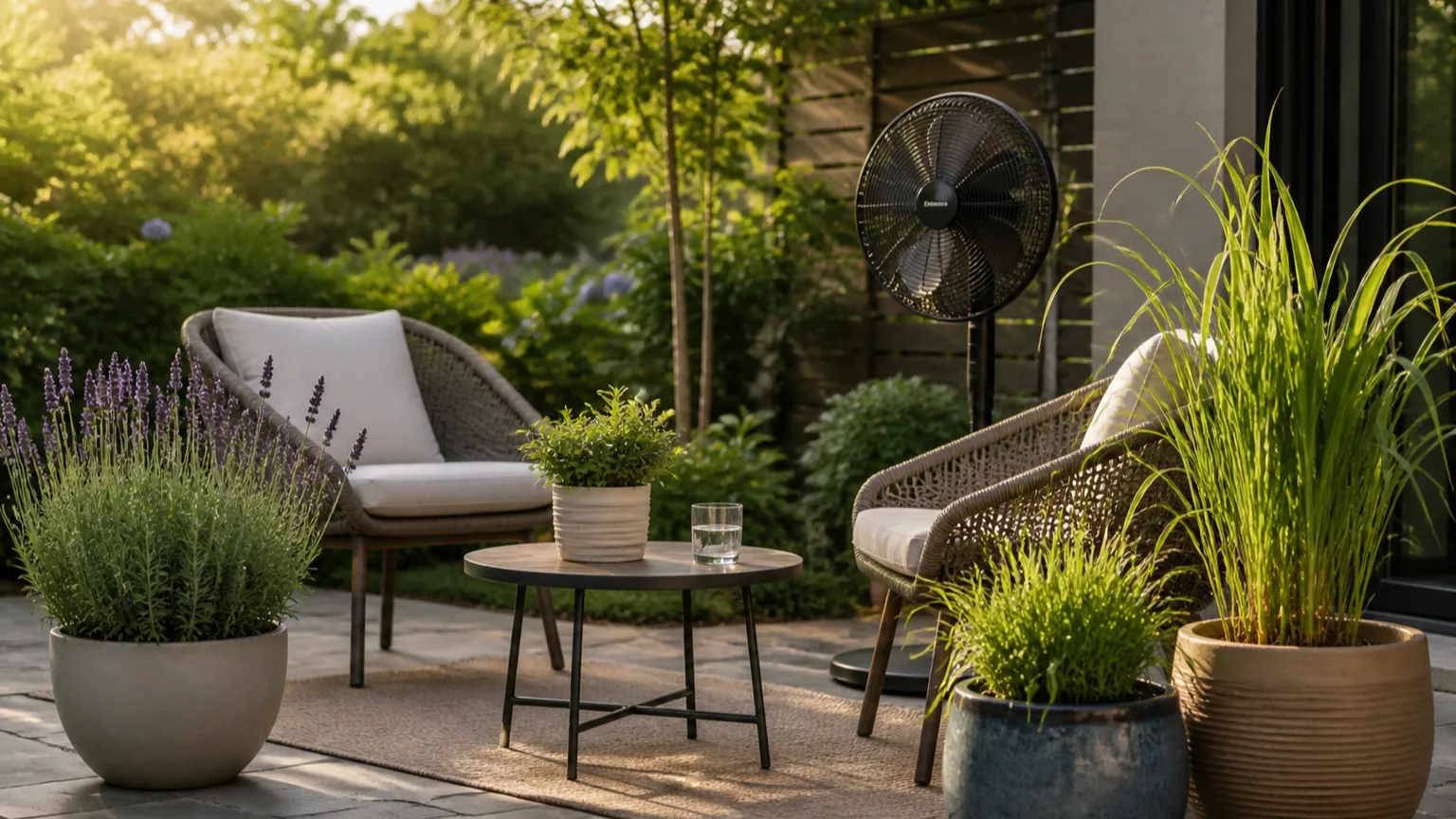
If mosquitoes and flies turn your patio into a no-go zone, fragrant plants are a sensible place to start—but they are not a force field. The leaves of citronella grass, lemongrass, lavender, mint, basil, garlic, catnip, and lemon balm contain aromatic compounds that may make a small area less appealing to some insects, especially when foliage is close, healthy, and brushed by people moving through the space.
The important distinction is that a living plant is not the same thing as a tested repellent made from its extracted oil. Wind, plant size, temperature, mosquito species, distance from your chair, and nearby breeding water all matter. Use these eight plants to improve a seating area and make your garden more useful, then pair them with source control, airflow, screens, and a labeled repellent when bites or mosquito-borne disease are a serious concern.
The honest answer: plants can help, but they are not a bite-proof barrier
Live plants, crushed leaves, and formulated repellents are different
Mosquitoes respond to volatile chemicals in the air. That is why a mint leaf smells strong when you rub it between your fingers, while a plant sitting quietly in a back border may have little effect on the person seated several feet away. A concentrated essential oil can contain far more of the relevant compounds than intact foliage, and a formulated repellent is tested for how well it works, how long it lasts, and how it should be applied.
The difference matters most for skin protection. Penn State Extension lists plant oils such as basil, citronella, garlic, lavender, lemongrass, thyme, and verbena among oils with repellent activity, but notes that most plant-derived oils provide short-lived protection, generally less than two hours. Read the Penn State guidance on plant-derived repellents and safe use before treating an oil claim as personal protection.
The practical promise of a live plant is smaller and more useful: it can add scent close to a patio, give you a reason to keep the area tidy, provide flowers or edible leaves, and sometimes reduce insect activity right around the foliage. It should not be your only protection for children, pregnant people, sensitive skin, or anyone in an area where mosquitoes transmit disease.
What plants can do for flies—and what they cannot
Some aromatic plants may make a doorway or dining area less attractive to certain flies, but “flies” is a broad category. A fly landing on uncovered food, compost, pet waste, or a full trash bin is responding to a food source; a lavender pot cannot outcompete that odor from across the yard. The same plant can also be irrelevant to fungus gnats emerging from wet potting mix or drain flies breeding in organic residue.
That is why the plant list works best as a local comfort strategy, not a general fly-control program. Put fragrant foliage beside the place you want to use, remove the source that attracts flies, and use a trap or targeted control only after identifying the insect. For broader mosquito prevention, the CDC mosquito-bite guidance is the right baseline: plants are optional landscaping, while source control and proven repellents are the dependable layers.
Choose plants by the space you actually need to protect
Start with the place where you feel the problem, not the plant name. A patio needs compact, movable containers and a scent source close to chairs. A vegetable bed can accommodate garlic or basil for their garden value. A damp, partly shaded corner may suit lemon balm or mint better than lavender, which dislikes wet roots.
The University of Georgia Cooperative Extension makes the same practical point from a different angle: it is unclear how many plants would be needed, or how close together they would have to be, to repel insects effectively. That uncertainty is a reason to choose plants that earn their space through food, flowers, pollinator value, or easy care even when the mosquito effect is modest. (UGA Cooperative Extension on insect-repelling plants)
Best choices for a sunny patio
For a hot, bright patio, start with citronella grass, lemongrass, lavender, basil, or mint in separate pots. Citronella grass and lemongrass make substantial clumps; lavender prefers sharp drainage; basil enjoys warmth and regular water; mint tolerates a wider range of conditions but should stay contained. Group two or three compatible pots beside the seating edge rather than scattering eight lonely specimens around the yard.
Put the plants where people walk past and brush the foliage, but leave enough room for air to move and for you to water without soaking the chair cushions. A healthy, actively growing plant is a better garden feature than a stressed one kept in a spot that does not suit it. Gardening Know How’s practical mosquito-plant guidance similarly emphasizes large clumps or containers near seating and paths rather than distant, decorative planting.
Best choices for small or cold-climate gardens
Containers are the most flexible choice when winters freeze, your patio is rented, or you want to test whether fragrance changes the experience. Move citronella grass and lemongrass to shelter before frost, bring basil in only if you can provide strong light and warmth, and keep lavender in a pot with fast drainage rather than a water-holding cachepot.
Mint and lemon balm also belong in containers when you want control. Both can spread beyond the space you planned, while catnip can reseed and may attract cats. Choose one or two plants that fit your light and watering habits, then use the saved space for a fan, screens, or a clear walking route—changes that often have a more predictable effect than adding more pots.
1. Citronella grass: verify the plant name
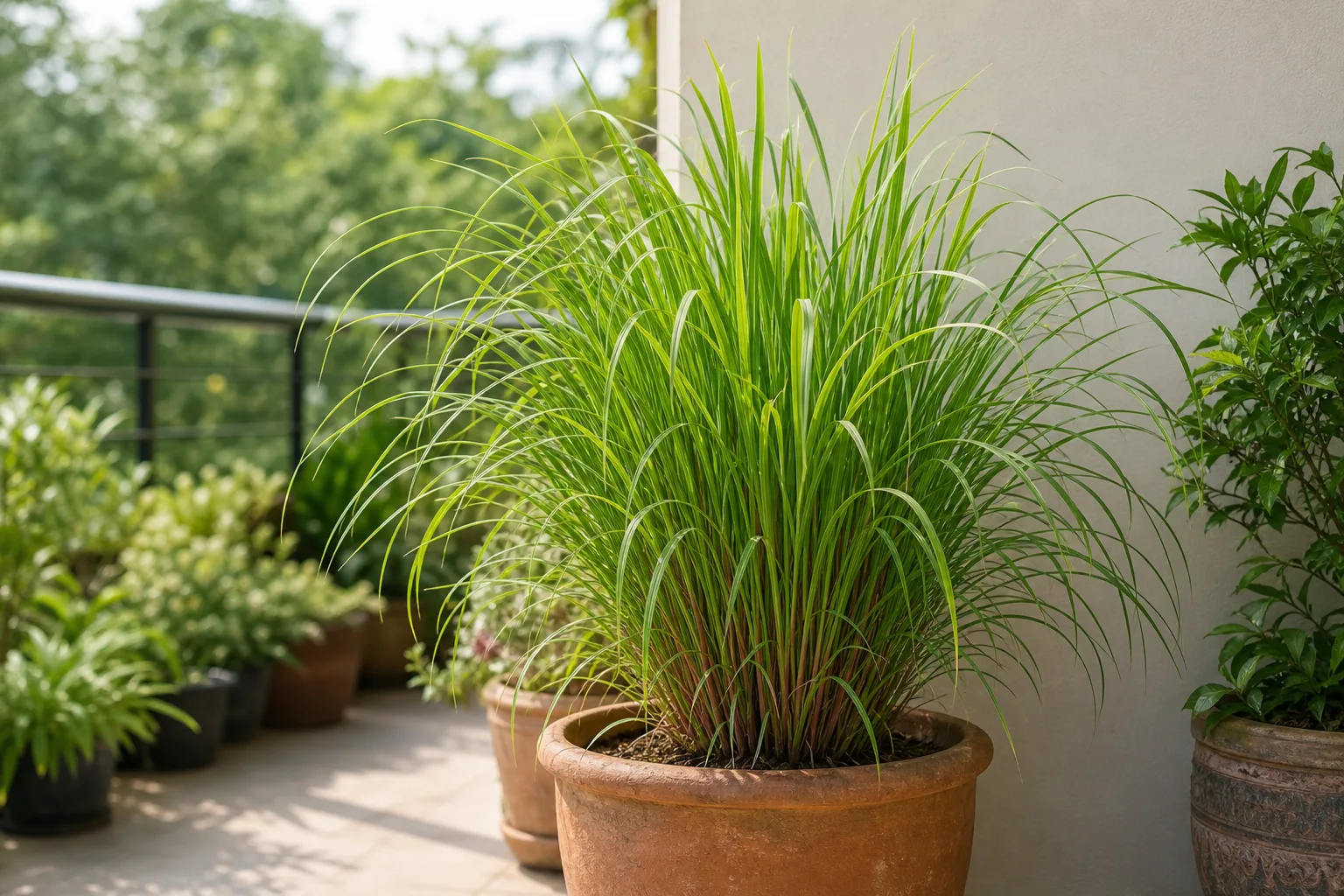
True citronella grass is a tall, clumping Cymbopogon grown for fragrant oil. It is not the small lemon-scented geranium that garden centers sometimes label a “citronella plant.” The two are easy to confuse, but a lemony smell alone does not prove that a plant contains the same oil profile used in a commercial citronella product.
Citronella grass makes the most sense as a warm-season patio container or a substantial border planting in a frost-free climate. Give it strong light, warmth, regular moisture, and soil that drains after watering. It can become a large clump, so do not wedge it into a narrow doorway where blades will constantly hit passersby.
Its value is both sensory and practical: the foliage smells aromatic when brushed, and the plant gives a patio a tall, grassy screen. Do not assume the intact plant protects every chair or doorway. If you like the fragrance, place it beside the seating area and keep a labeled repellent available for exposed skin.
2. Lemongrass: useful, fragrant, and easy to confuse with citronella
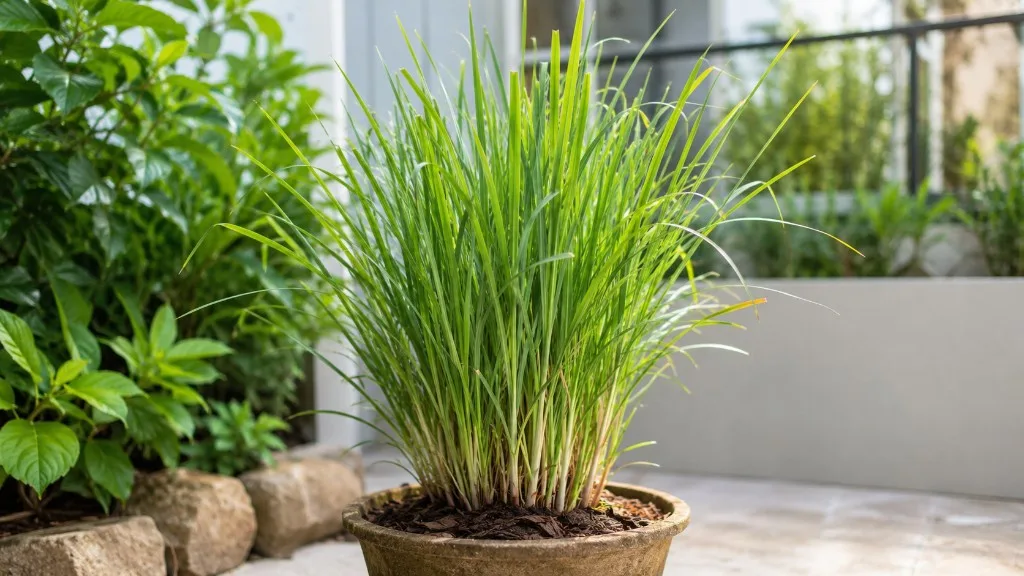
Lemongrass is the culinary relative most people recognize from its lemony stems. It is closely related to citronella grass, but it is a distinct plant with a different purpose in the kitchen. That makes it a good choice when you want a fragrant patio plant you can also harvest for cooking, tea, or infused dishes.
Grow lemongrass in full sun with regular water and enough room for a clump to widen. A large container is useful because it keeps the plant portable and makes it easier to protect from cold. Let the surface of the mix begin to dry between waterings, but do not let a mature clump sit in a saucer of stagnant water; that saucer can become a mosquito nursery even while the plant is advertised as mosquito-repellent.
Place it close to a walkway or outdoor table, where the leaves are part of the space rather than a distant hedge. Lemongrass can contribute scent, texture, and food value, but the same live-plant limitation applies: it is not a substitute for an EPA-registered skin repellent.
3. Lavender: a dry-site patio plant
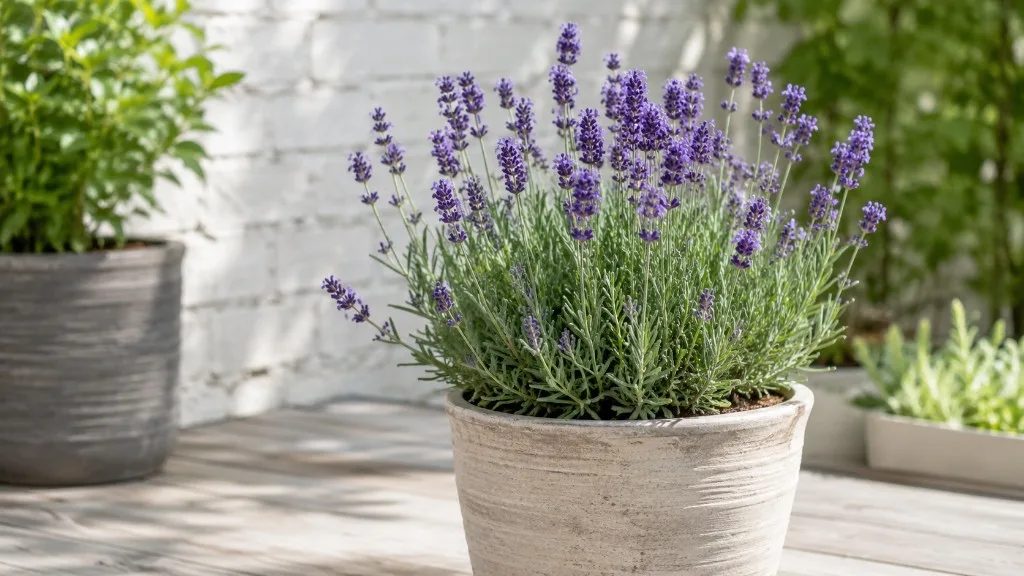
Lavender is one of the easiest choices to justify even if its mosquito effect is small. It brings flowers, fragrance, and pollinator interest to a sunny patio, and its gray-green foliage suits containers, gravel gardens, and dry borders. The plant does best when its roots receive bright light and fast drainage rather than frequent shallow watering.
Use lavender beside a sunny chair, along a path, or near an entrance where its foliage and flower spikes are close enough to notice. Give it space around the crown so humid air does not stay trapped. If your climate is hot and wet, select a variety suited to local conditions and be cautious about heavy soil; a soggy lavender plant will not produce a useful scent or a long-lived planting.
Lavender oil has been studied as an insect repellent, but that research does not turn a blooming pot into a measured barrier. Let lavender do several jobs—beauty, fragrance, flowers, and a small close-range deterrent—while source control and personal protection handle the jobs a plant cannot.
4. Mint: strong scent, strong containment requirement
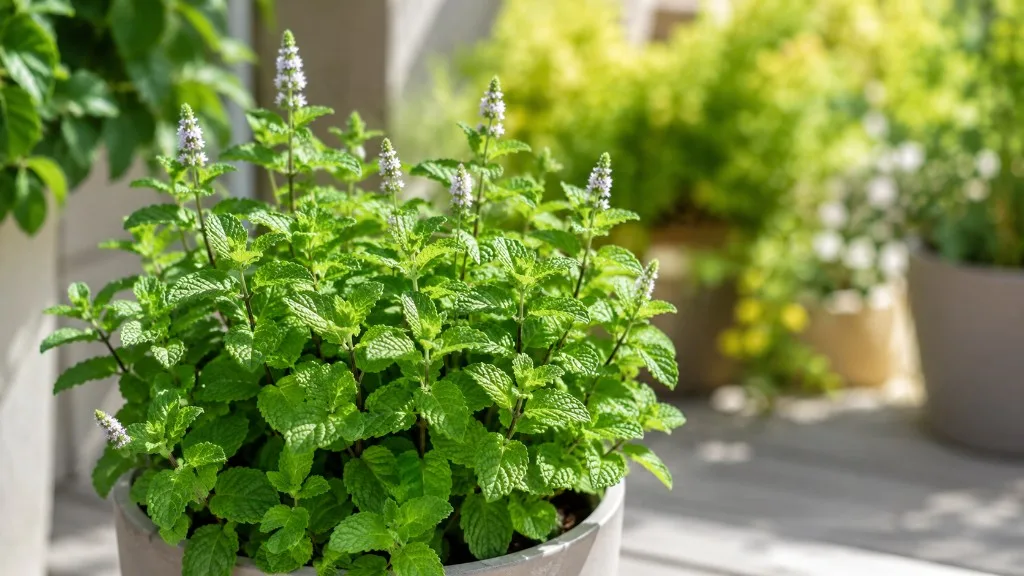
Mint is a practical choice for a small patio because its scent is obvious, it tolerates regular harvesting, and a pot can move beside the grill or table. The same vigor that makes mint easy to grow makes it a poor casual addition to a mixed border. Runners and stems can spread into nearby beds, where they become difficult to remove.
Keep mint in a dedicated container with a drainage hole. If you set that container on a saucer, empty the saucer after watering and after rain. A pot with no drainage may stay wet enough to stress the plant and create a mosquito habitat, while a pot that dries rapidly in wind may need a more consistent watering rhythm.
Mint is best treated as a portable scent plant, not an insect-control pesticide. Use it near the space where you sit, harvest it for the kitchen, and do not rub fresh leaves on skin as though they were a tested repellent. If the patio is still full of mosquitoes, inspect water sources before buying more mint.
5. Basil: an edible warm-season companion
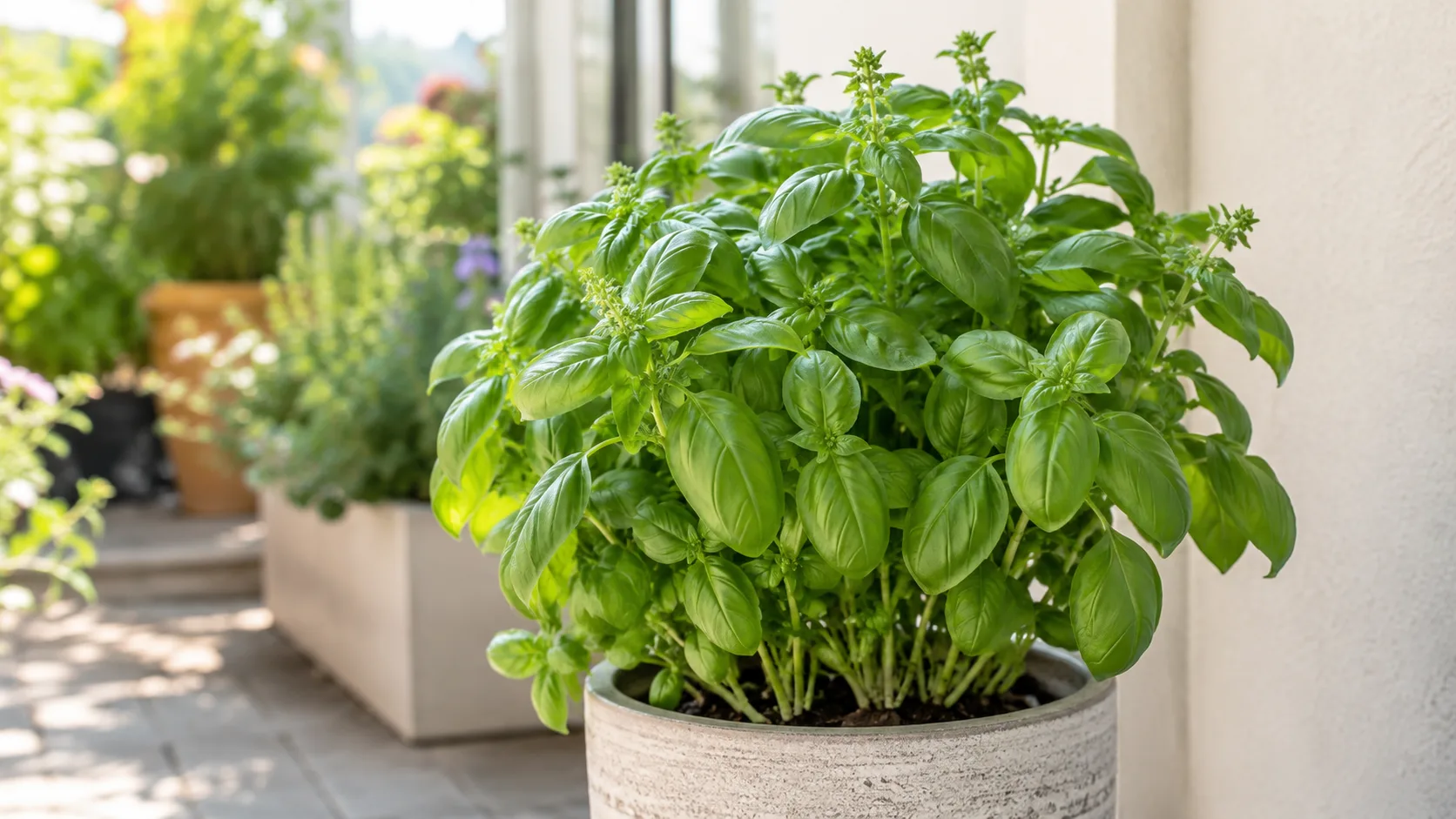
Basil earns its place through food first. Its aromatic leaves fit a kitchen garden, tomato bed, balcony, or outdoor dining area, and the plant is easy to replace when cold weather ends the season. It prefers warmth, bright light, regular moisture, and harvesting that encourages bushy growth.
Place basil near the door, grill, or dining table if you want its foliage close to people. Several plants in a broad container will provide more scent and harvest than one weak seedling in a tiny pot. Keep the soil evenly supplied with water without leaving a saucer full, and remove diseased or heavily infested leaves so the plant remains vigorous.
Basil is often called a mosquito and fly repellent because its essential oils are aromatic. A more careful claim is that basil can contribute to a mixed, fragrant planting and may make a small area less attractive to some insects. It cannot stop flies drawn to food scraps or mosquitoes emerging from a bucket several yards away.
6. Garlic: a garden crop with a pungent signal
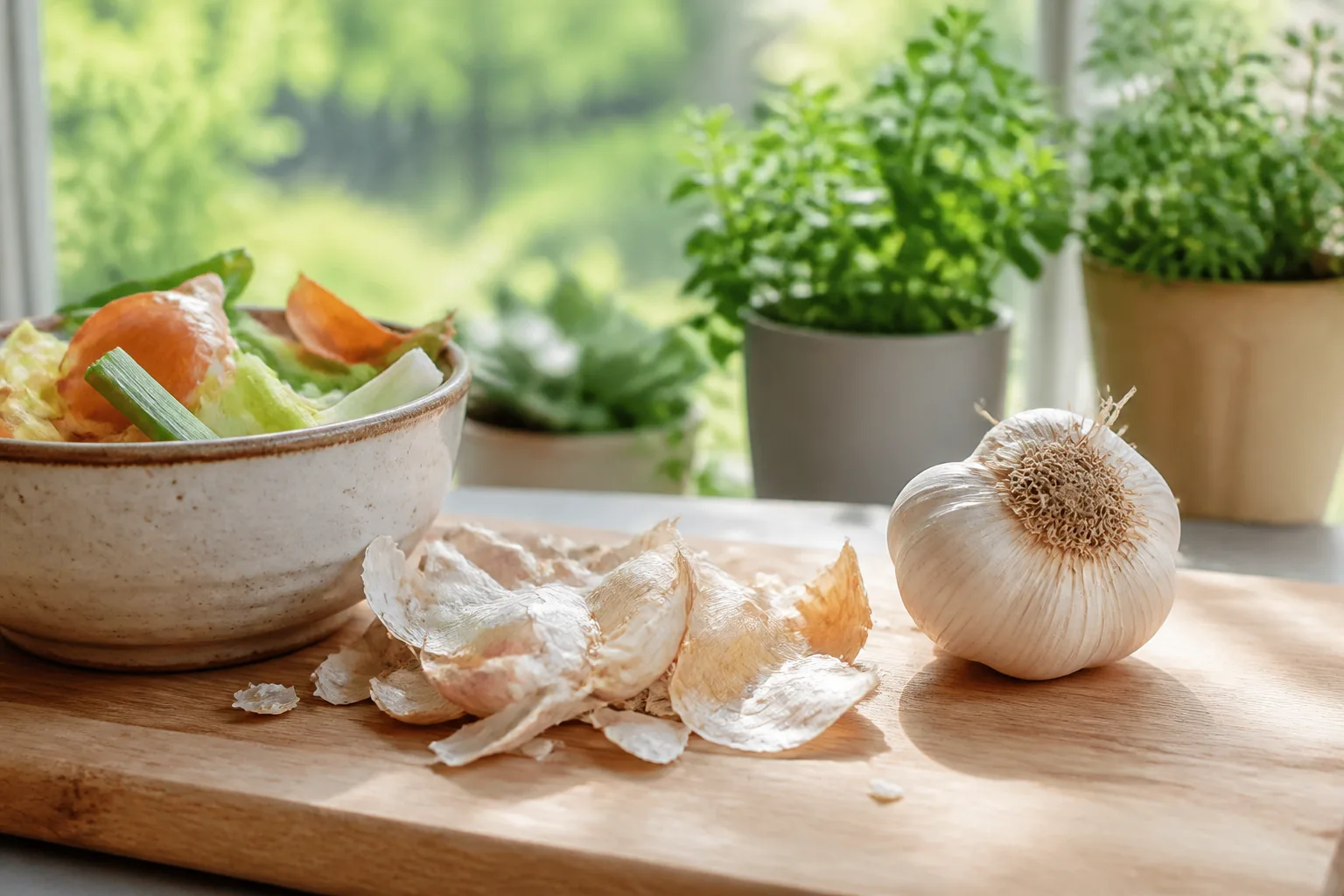
Garlic is a useful inclusion when you already want a cool-season crop, edible bulbs, or an allium companion in the garden. Its sulfur-rich aroma is strongest when cloves are cut, bruised, or processed, which is also why claims about garlic sprays can sound more powerful than the experience of standing beside an intact row of plants.
Grow garlic in a sunny bed or container with loose, well-drained soil. Give bulbs enough room to size up, avoid leaving the planting waterlogged, and harvest according to the type and season you grow. It is more likely to earn its place through food and garden diversity than by creating a mosquito-free seating area.
Do not turn garlic leaves, cloves, or homemade garlic infusions into a skin treatment without a product label and safety information. If flies are the larger problem, remove food and waste sources first; the odor of garlic will not compete reliably with exposed compost, pet waste, or an overflowing bin.
7. Catnip: promising oil evidence, with a cat trade-off
Catnip deserves a more precise explanation than either “it works” or “it does nothing.” The aromatic compound nepetalactone in catnip oil has been studied against mosquitoes, and a 2024 Scientific Reports study found that a 2% catnip essential-oil preparation repelled more than 70% of tested Aedes aegypti mosquitoes for one to four hours under laboratory olfactometer conditions. (Read the catnip-oil study in Scientific Reports)
That is evidence about a measured oil preparation and one mosquito species—not proof that a catnip plant creates the same concentration beside a patio chair. Grow catnip in full sun and well-drained soil, ideally in a pot or a location where volunteer seedlings will not be a problem. Expect neighborhood cats to notice it, roll on it, or knock it over, especially when the plant is young.
Catnip is a good experimental choice for a gardener who wants an aromatic herb and accepts the cat trade-off. It is not a reason to skip screens, water control, clothing, or a labeled repellent when the stakes are high.
8. Lemon balm: lemon-scented but fast-spreading
Lemon balm gives a patio a bright citrus scent and provides edible leaves for tea, drinks, and cooking. It is generally easier to grow than lavender in a partly shaded or moderately moist spot, which makes it useful when a sunny, dry herb garden is not realistic.
The trade-off is spread. Lemon balm can seed readily and fill a bed faster than expected, so a container is the safer default if you want a defined planting. Trim flower heads before they set seed if you are growing it in the ground, and do not bury the pot’s drainage holes in soil or mulch; roots still need oxygen and excess water needs a way out.
Place lemon balm beside a path or seating area where its foliage can be brushed, but do not confuse a noticeable lemon scent with dependable mosquito protection. If you want the plant primarily for tea or pollinator value, it is a good choice. If you need protection from bites, use the plant as a supporting layer and choose a proven repellent for skin.
Place the plants where scent and foot traffic overlap
Distance is the most common reason a fragrant-plant experiment disappoints. A lavender border at the far edge of the lawn does not meaningfully change the air around a chair, and a basil pot behind the grill may be too far away to matter where people sit. Put the plants on the edge of the actual use zone: beside the steps, near the dining table, along the route to the door, or at the corners of a small balcony.
Use containers to make the test reversible. Group two or three plants near one seating area for a week, notice when mosquitoes and flies are most active, and move the pots if the wind carries the scent away. Keep foliage healthy, avoid crowding, and leave a clear path so you do not have to brush against leaves you plan to eat after handling soil or pests.
The best arrangement is one you will maintain. If a pot blocks the door, leaks onto the patio, or needs more water than you can provide, it will soon become a stressed decoration. A smaller group of thriving plants close to people is more useful than a large, neglected border.
Pair aromatic plants with mosquito-source control
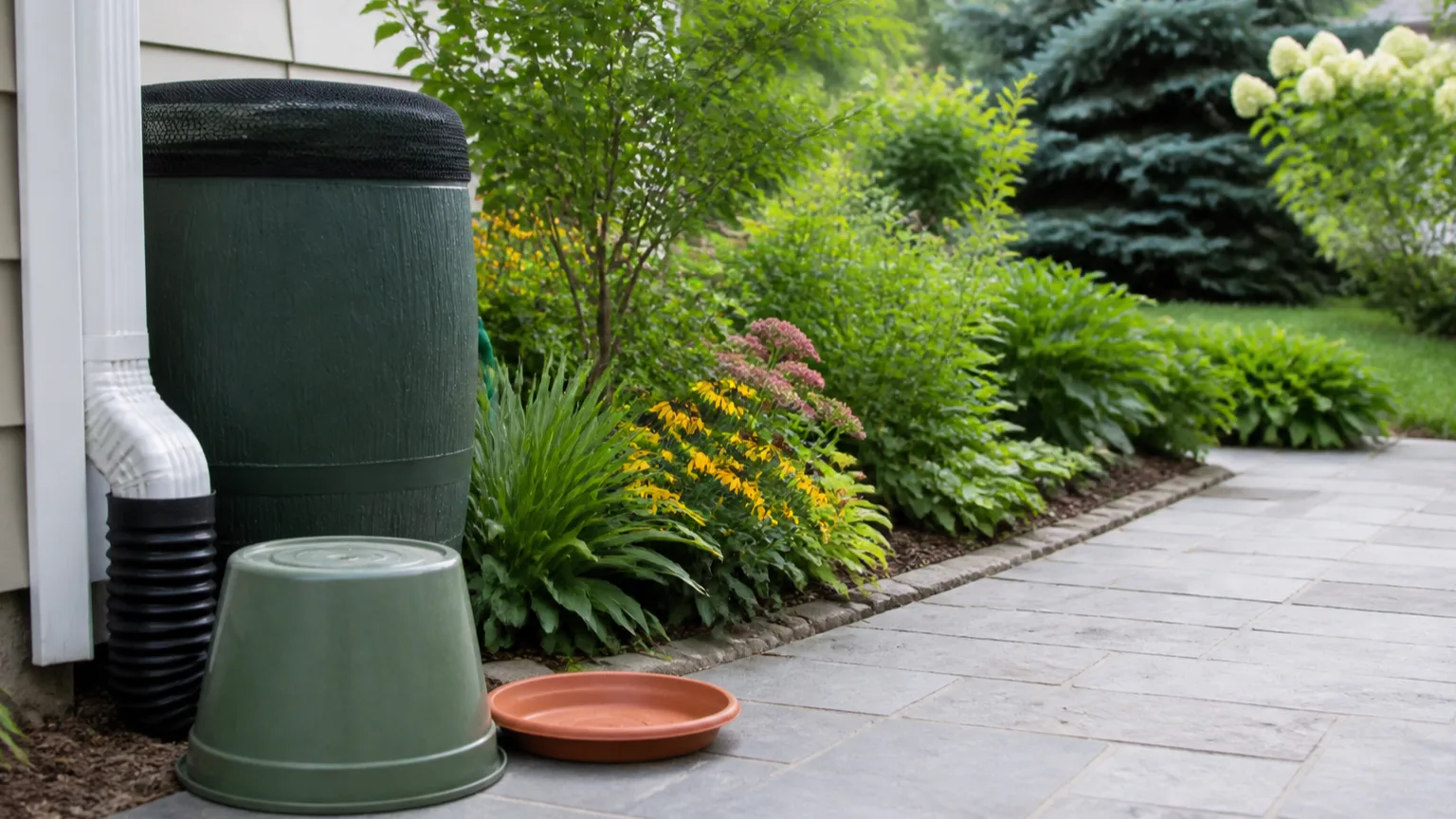
The fastest way to make a plant strategy fail is to leave a breeding site beside it. UF/IFAS calls eliminating standing water the best way to keep mosquito populations low and recommends emptying containers, clearing gutters, refreshing birdbaths every two or three days, and covering rain barrels or screening them. (See the UF/IFAS mosquito-management guidance)
This includes the saucers underneath your new plants. Dump and scrub them after rain, turn over unused pots and buckets, and check toys, tarps, wheelbarrows, clogged gutters, and water-holding garden décor. When water cannot be drained, follow local public-health or product-label guidance for an appropriate larval-control product rather than improvising with plant oils.
The weekly water-and-fly check
Once a week, walk the patio and complete the same short sequence: empty and scrub water-holding items, check the underside of saucers, clear organic debris from drains and gutters, close or clean compost and garbage, and look for flies clustering at one specific food or waste source. The CDC recommends emptying and scrubbing, turning over, covering, or discarding water-holding items weekly. (Review the CDC prevention checklist)
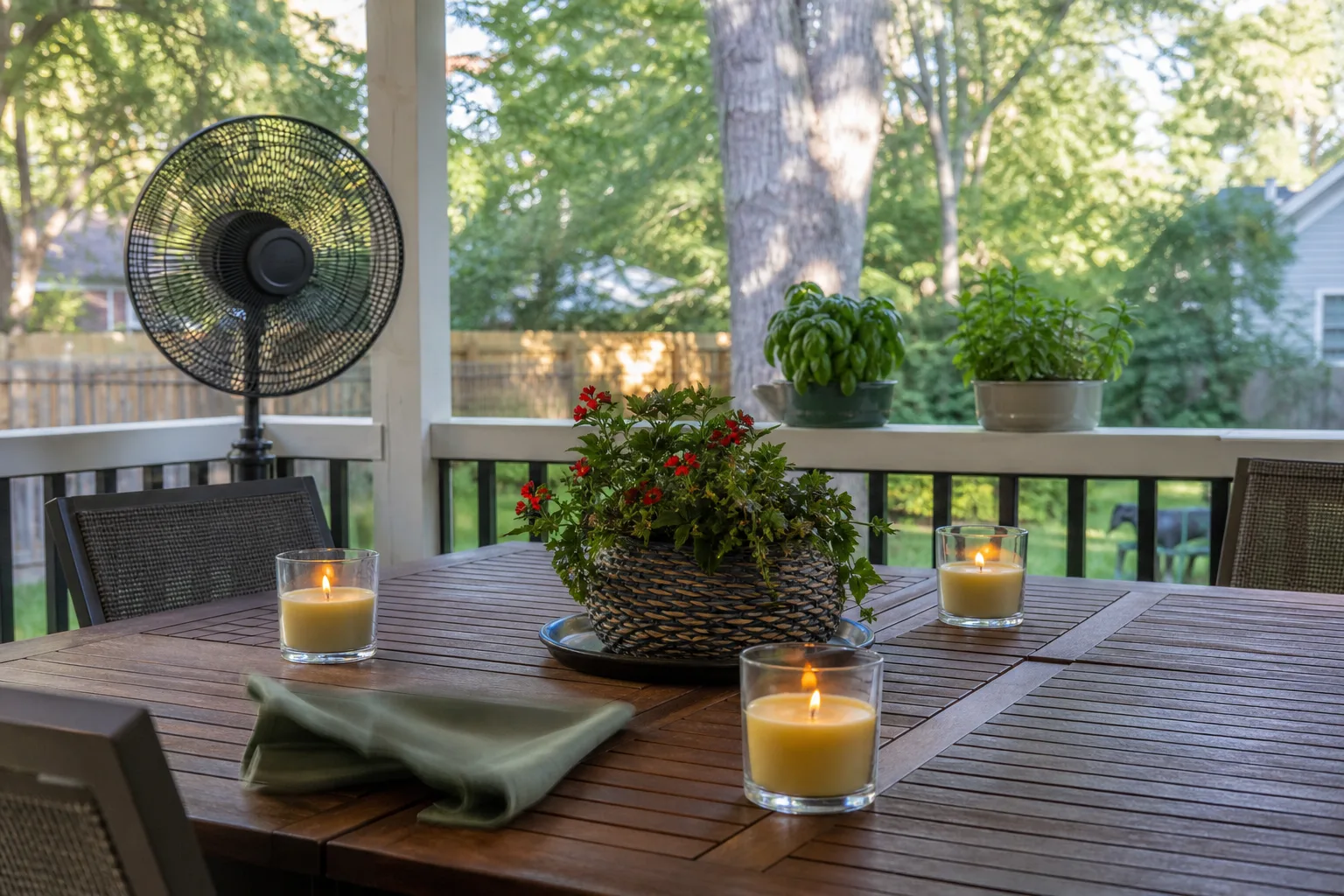
For flies, source removal usually beats adding another plant. Refrigerate or discard overripe produce, rinse sticky recycling, remove pet waste, keep compost covered, and move outdoor dining away from bins or animal areas. A fan across the seating zone can also make it harder for flying insects to land, which is why a layered plan often feels more effective than a larger collection of pots.
Safety and when plants are not enough
Do not rub crushed leaves, homemade plant infusions, or undiluted essential oils on your skin just because the plant smells pleasant. Plant identity and concentration vary, oils can irritate skin or eyes, and an untested mixture does not provide the documented protection of a labeled product. The CDC says the effectiveness of many non-EPA-registered natural repellents is unknown and recommends EPA-registered repellents when bite protection matters. It also says not to use oil of lemon eucalyptus or PMD products on children under 3. (Read the CDC’s current repellent guidance)
Escalate from plants to stronger layers when mosquitoes are numerous, people are being bitten despite source control, screens are damaged, or local health authorities report mosquito-borne disease. Choose a product with an EPA registration number, follow its label, wear loose long sleeves and pants, and use airflow or a screened area for outdoor meals. The plants can remain; they simply return to their honest role as attractive, useful garden companions.
Conclusion
Citronella grass, lemongrass, lavender, mint, basil, garlic, catnip, and lemon balm can make a patio more fragrant and may reduce insect pressure close to healthy foliage. The most useful choices are the ones that suit your sun, climate, space, and watering habits—and that you will actually keep near the place where people sit.
Treat live plants as one local layer, not personal protection. Start with a contained container group, remove standing water every week, eliminate fly food sources, add a fan or screens, and use a labeled repellent when mosquitoes remain a health or comfort problem. That plan gives the garden room to help without asking it to do a job it cannot reliably do.