8 Plants That May Help Repel Aphids This Summer
Discover 8 plants that may reduce aphid pressure, where to place them, and the scouting steps that make companion planting work better all summer.
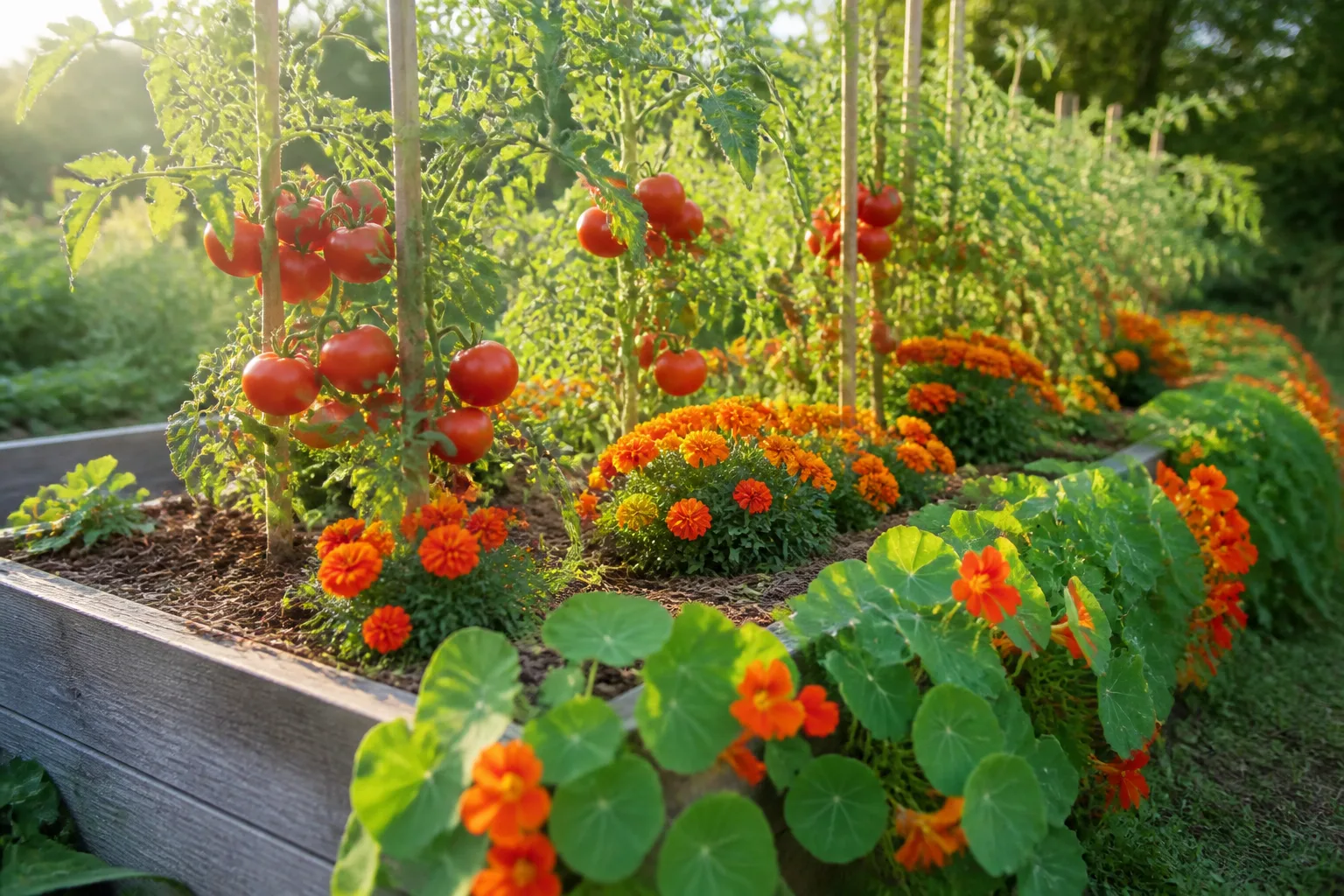
Plants can be part of a strong aphid plan, but no living plant creates an invisible wall around a vegetable bed. The useful question is not whether one pot of mint or a ring of marigolds will make aphids disappear; it is which companion gives your garden another line of defense while still earning its space through flowers, food, fragrance, or habitat for beneficial insects.
Aphids are tiny, sap-sucking insects that gather on soft new growth, leaf undersides, stems, and flower buds. They can curl leaves, weaken young plants, leave sticky honeydew behind, and spread plant viruses. The University of Utah Extension guide to aphids on vegetables notes that some species can reproduce extremely quickly in favorable conditions, so a prevention plan works best when it is paired with frequent scouting.
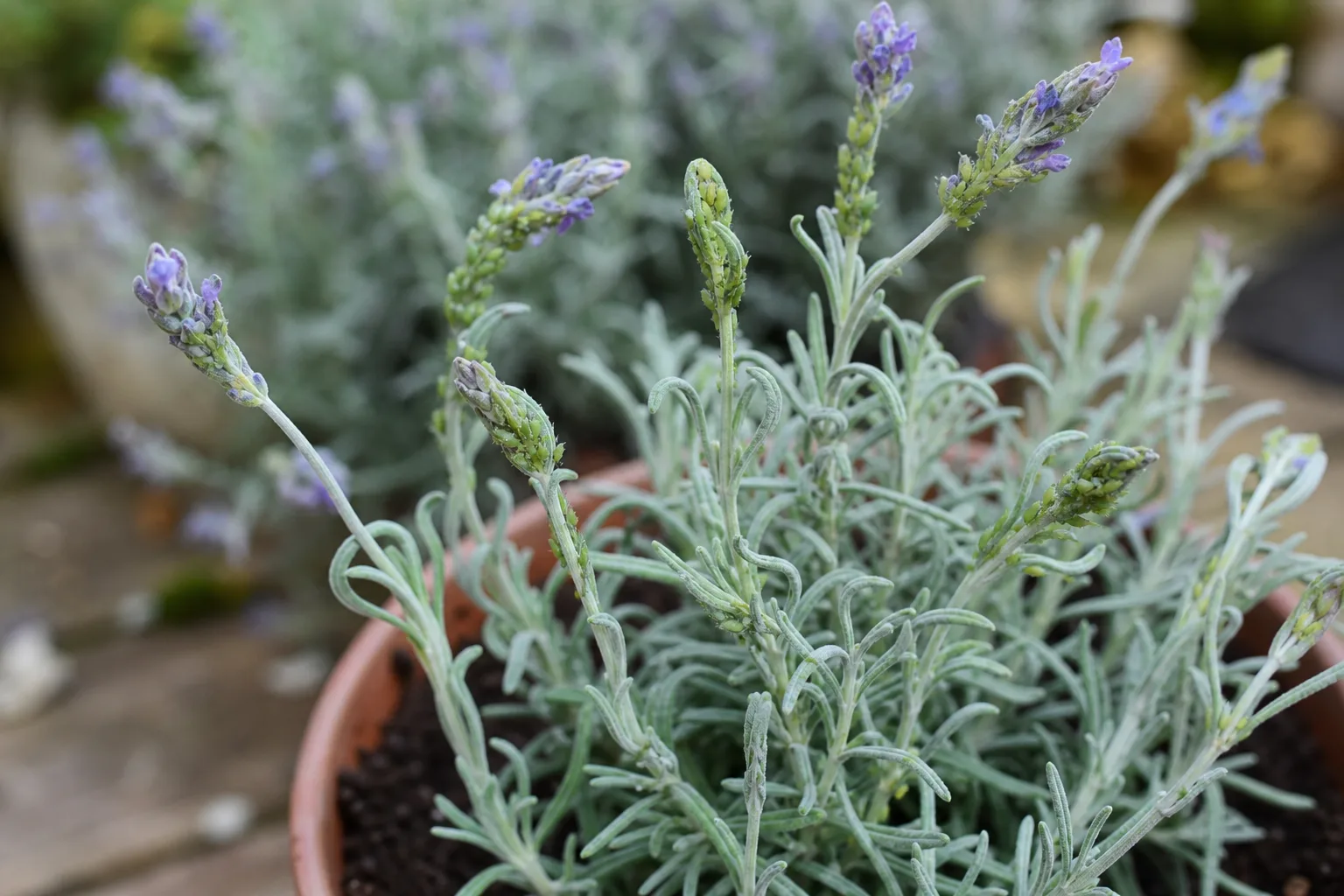
Aphids often hide on tender tips and flower stems, where an early inspection is easier than a late rescue.
Do plants that repel aphids really work?
Yes, sometimes—but “repel” covers several different effects, and they do not all have the same strength. Strong-smelling plants may interfere with the odor cues aphids use while locating a host, flowering plants may feed adult hoverflies and other natural enemies, and a sacrificial plant may draw aphids away from a crop. Those are useful mechanisms, but they depend on the aphid species, the companion’s size and placement, weather, wind, and what else is growing nearby.
The most important distinction is between a live plant and a concentrated extract. A basil or garlic plant releases volatile compounds into the air, but not at the same concentration or consistency as a laboratory treatment made from an extracted oil. A plant several feet away from a crop may have almost no measurable effect at the crop’s leaves, especially in a windy garden.
What the evidence can and cannot support
A peer-reviewed review of companion plants for aphid management describes four possible routes: drawing aphids to a trap plant, masking or altering host-plant odors, making the main crop less recognizable, and providing food or shelter for predators and parasitoids. The review also concludes that companion planting is most realistic as one part of integrated management, not as a stand-alone replacement for monitoring and timely action. Read the companion-plant research review for the mechanism and its limitations.
That caution matters because the popular version of companion planting often turns a plausible idea into a guarantee. BBC Gardeners’ World’s companion-planting guidance makes the useful point that evidence for many combinations is largely anecdotal, even though scent confusion, sacrificial plants, flowers for predators, and better use of space can all make gardening sense.
The best expectation is modest and practical: these eight plants may reduce the chance that aphids quickly find or overwhelm a favored plant, especially when they are positioned close to the crop and kept healthy. If a colony is already curling leaves on a young pepper, broccoli, rose, or bean, the colony still needs to be inspected and managed directly.
How to choose and place companion plants
Choose the plant that fits your garden before choosing the plant with the strongest reputation. A dry, sunny patio favors lavender and marigolds; a kitchen garden with regular irrigation can support basil, chives, dill, or garlic; a partly shaded container can suit mint or catnip better than a struggling lavender plant.
Put companions at the edge of the actual crop zone rather than scattering them at the far end of the yard. A few healthy plants close to the stems you want to protect are more useful for testing a theory than a decorative border that the wind separates from the crop.
Match the plant to its strongest mechanism
There are three practical roles to look for. Aromatic companions such as chives, garlic, mint, basil, and lavender are worth trying where scent and foliage overlap with the host plant. Predator-support plants such as dill and flowering marigolds can provide nectar, pollen, or shelter for insects that eat aphids or parasitize them.
The third role is a trap or sacrificial plant. This is different from a repellent: it is deliberately more attractive to an aphid species than the crop. Nasturtiums are often used this way around brassicas, but a trap crop only helps if you inspect it and decide what to do with the aphids it attracts. Leaving a heavily colonized decoy beside a vulnerable crop can turn the “trap” into a launch point.
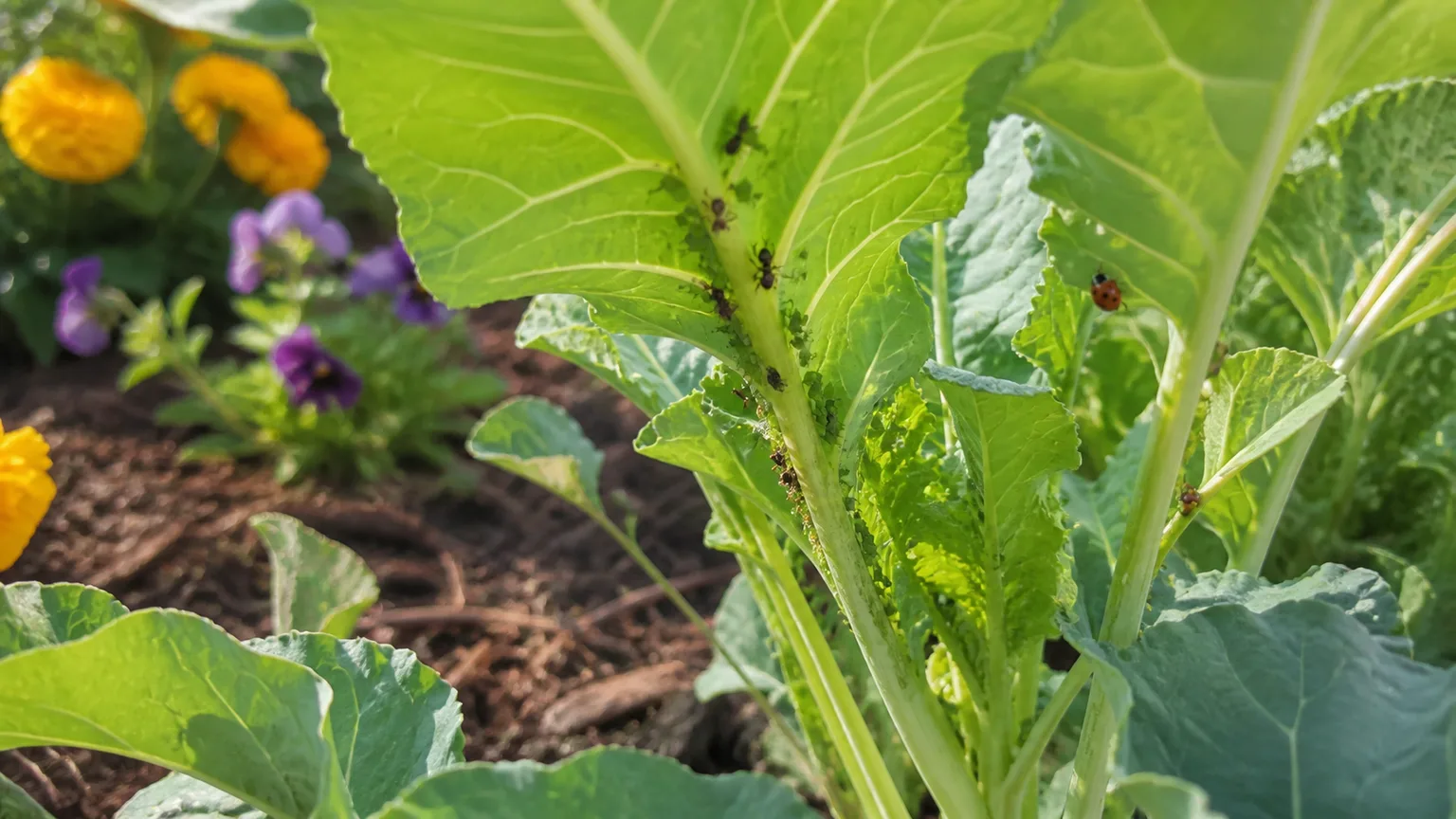
Companion planting works best when flowers support natural enemies and the gardener keeps checking both the crop and the companion.
Plant before aphids reach peak pressure
Companion plants need time to root, leaf out, and flower before they can influence the garden. Plant them at the same time as the crop where possible, or put established containers beside the bed before aphids begin colonizing tender growth.
This is not a reason to rush plants into cold soil or a bad light level. A stressed herb produces less useful growth and may attract its own pests. Give each companion the light, drainage, and water it needs, and use a row cover on young, vulnerable vegetables when exclusion is more dependable than scent.
The 8 plants worth trying in a summer garden
The list below includes both scent-based companions and plants whose larger contribution is biological control. Start with two or three that fit your conditions instead of planting all eight without a placement plan.
| Plant | Strongest garden role | Good placement | Main trade-off |
|---|---|---|---|
| Marigold | Flowers and scent near crops | Bed edges and containers | Needs sun; not a guarantee |
| Chives | Allium scent and edible foliage | Beside roses, lettuce, and carrots | Clumps expand over time |
| Lavender | Dry-site fragrance and flowers | Sunny borders and pots | Dislikes wet roots |
| Dill | Nectar and habitat for beneficial insects | Near vegetables, allowed to flower | Short-lived and can self-seed |
| Mint | Strong aroma in a movable pot | Containers near crop edges | Spreads aggressively in beds |
| Catnip | Aromatic foliage and pollinator flowers | Contained sunny spots | Can attract cats and reseed |
| Garlic | Allium scent and edible bulbs | Around roses and vegetables | Timing follows a bulb crop, not a quick fix |
| Basil | Warm-season herb and aromatic foliage | Near peppers, beans, and tomatoes | Frost-sensitive and thirsty |
Marigolds and chives
Marigolds are the easiest starting point for a sunny bed or container because they provide a visible flower display while you test whether aphid activity changes around a crop. French marigolds and other Tagetes have aromatic foliage, and their flowers can provide some support for beneficial insects, but the plant should not be described as a universal insect shield.
Use compact marigolds along the sunny edge of a bed, near roses, or in containers beside peppers and leafy greens. Keep enough space between plants for airflow and inspection; a solid wall of foliage can hide aphids instead of preventing them. Deadhead spent blooms if you want more flowers, and water the root zone when the surface begins to dry rather than keeping the pot constantly wet.
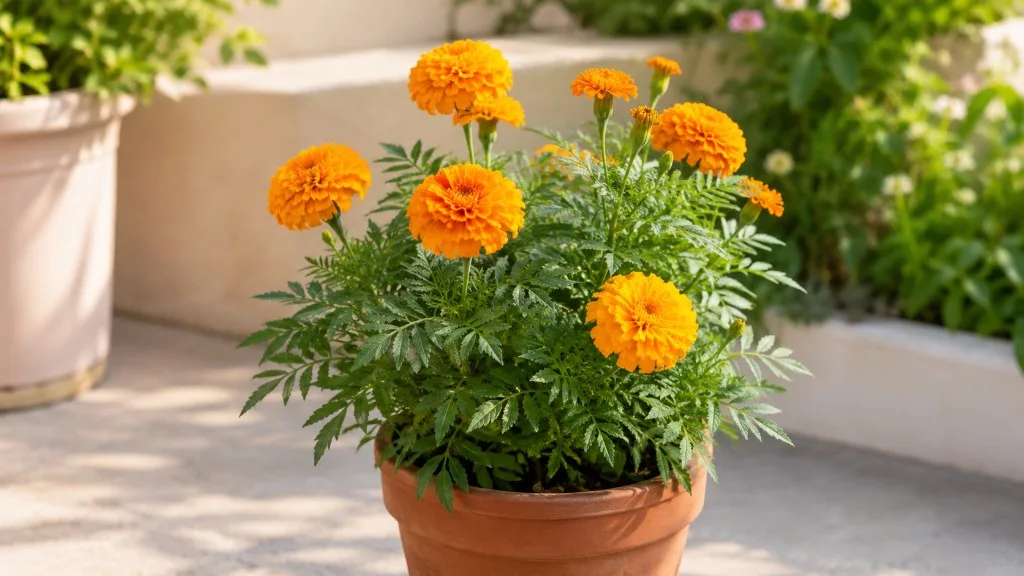
Marigolds are a useful low-commitment trial: they add flowers and can sit close to the crop without taking over the bed.
Chives bring a different kind of value. Their onion-like scent makes them a sensible companion near roses, lettuce, and carrots, and their purple flowers can add nectar for small beneficial insects when allowed to bloom. The allium scent is a plausible host-finding interference, not proof that every aphid species will avoid the bed.
Plant chives in well-drained soil with regular moisture and several hours of sun. Harvest outer leaves without shaving the whole clump to the ground, and divide crowded clumps when the center becomes congested. Chives are especially good for a small garden because they are edible, perennial in many climates, and easy to grow in a pot beside a crop rather than in the crop’s root zone.
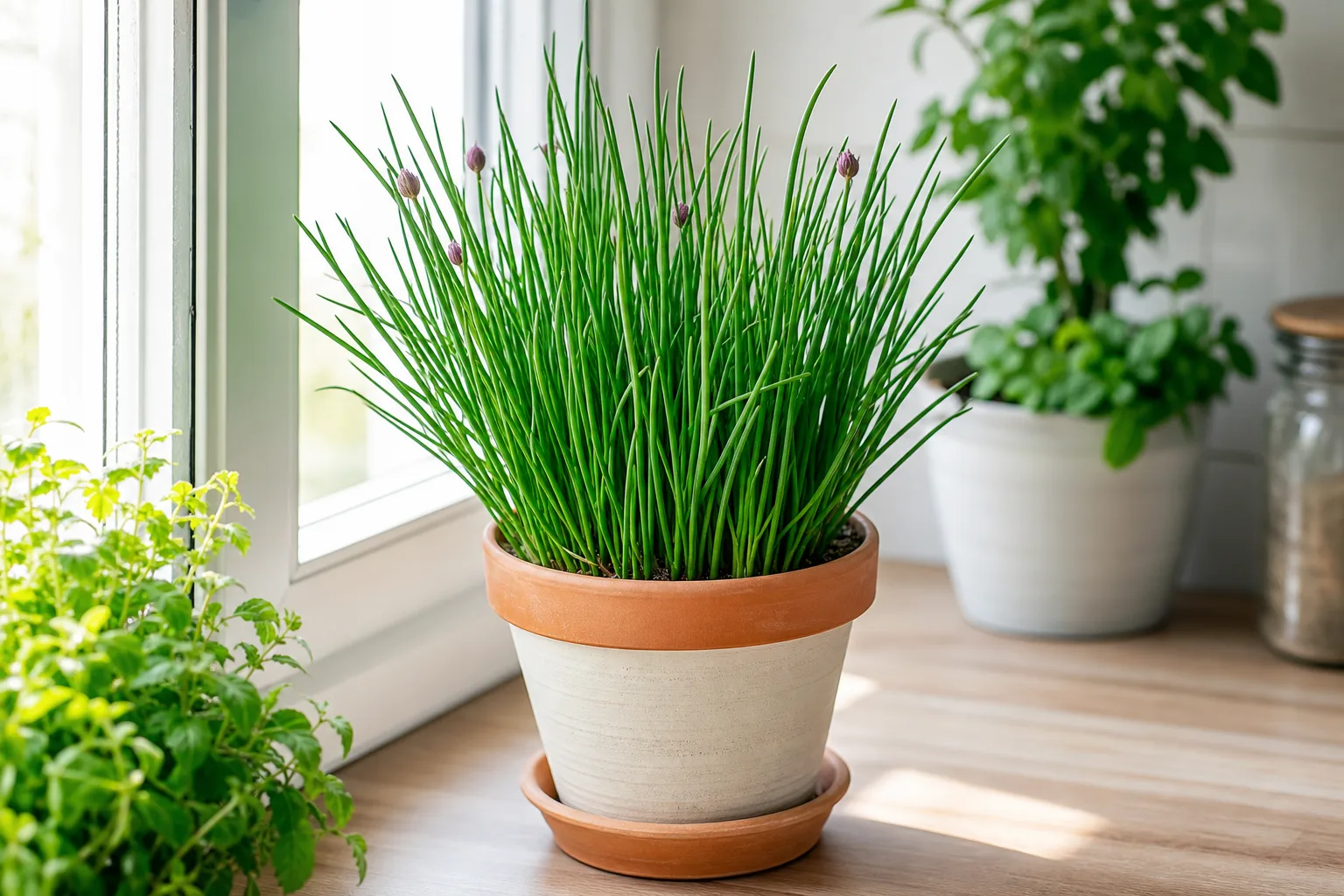
Letting chives flower adds a second job: the clump supplies edible leaves and small blooms for the garden food web.
Lavender and dill
Lavender is a strong choice for a sunny, dry edge where you want fragrance and flowers more than a fast-growing edible companion. Its volatile compounds are among the aromatic mechanisms discussed in companion-plant research, but the scientific evidence does not justify treating a lavender plant as a measured aphid barrier.
Place lavender near roses or a patio vegetable container where its foliage is close enough to notice. Use porous soil and a pot with a drainage hole, and allow the root zone to dry somewhat between thorough waterings. Overwatering, poor airflow, and heavy nitrogen can make the plant weak and reduce the value of the planting long before aphids become the main problem.
Dill may be the better choice when your goal is to recruit helpers. Its small flowers can feed hoverflies and other beneficial insects, and hoverfly larvae are important aphid predators. Let a few plants flower near vegetables instead of harvesting every stem, and make succession sowings if you want dill foliage over a longer season.
Keep dill close enough to the crop for visiting insects to move through the bed, but not so close that its tall stems shade seedlings or make the crop hard to inspect. The University of Utah Extension guidance specifically recommends attractive flowers, including herbs and small-flowered plants, to provide nectar and pollen for natural enemies.
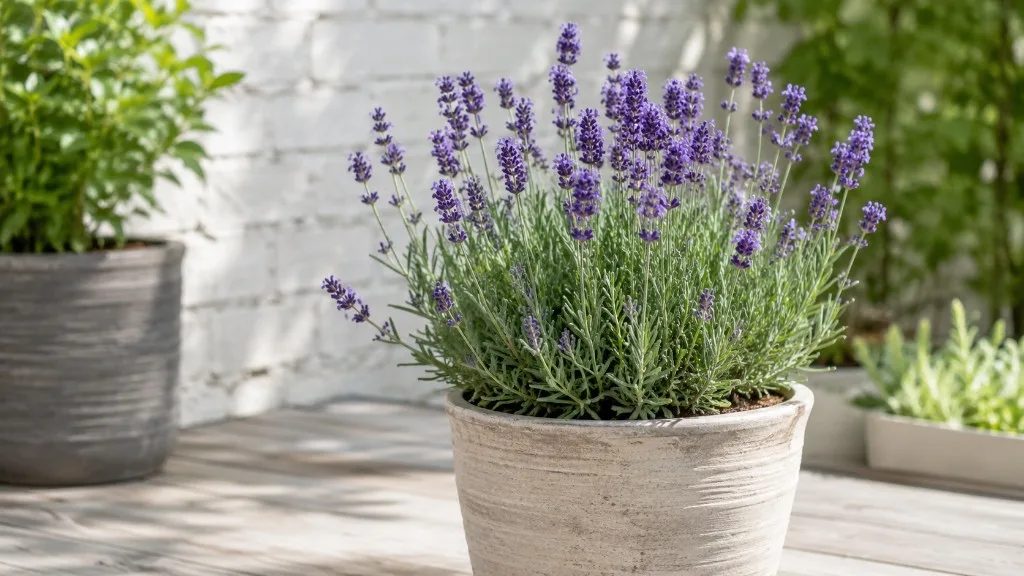
Lavender earns its place through fragrance, flowers, and dry-garden performance even when the aphid effect is modest.
Mint and catnip
Mint has a powerful aroma and is easy to grow, which makes it an appealing companion for a balcony, patio, or small vegetable garden. Keep it in its own pot, however. Mint spreads by vigorous underground stems, and planting it directly in a bed can create a new maintenance problem that lasts longer than the aphid season.
Set the container near the crop edge, not inside the crop’s crown, and pinch the stems to keep fresh foliage coming. Mint likes regular moisture and can tolerate some afternoon shade, but a pot that dries to a hard, shrinking root ball will not give you a healthy source of foliage. Check the underside of the mint leaves too; a plant chosen to deter pests can still host pests.
Catnip offers a similar aromatic role with a different set of trade-offs. It can be paired with crops such as squash or collards, but the most dependable reasons to grow it are its easy care, flowers, and value to pollinators—not a promise that aphids will stay away.
Grow catnip in a sunny, well-drained spot or a heavy container that cats cannot easily knock over. Trim flower heads before seed matures if you do not want volunteers, and keep the plant away from a walkway if neighborhood cats will flatten it. Its presence makes sense where it provides several benefits; it is a poor choice if you dislike reseeding or cannot protect it from traffic.
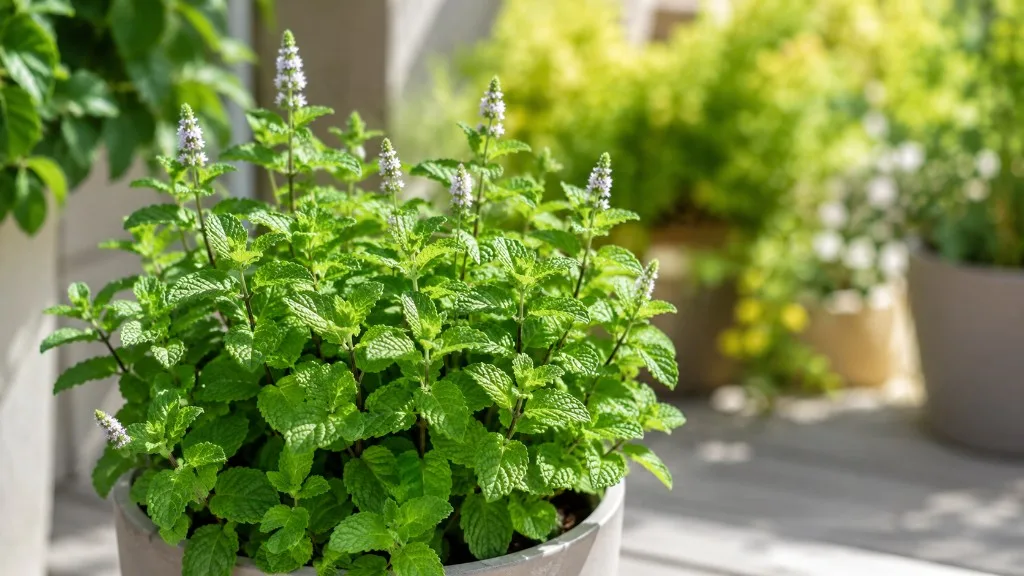
Mint is easy to move close to a crop, but a container is essential if you want to prevent it from escaping into the bed.
Garlic and basil
Garlic is the most straightforward allium companion on this list. Its foliage and bulbs release a pungent odor, and research summarized in the companion-plant review includes garlic among plants tested for effects such as repellency or deterrence against some aphid species.
Think of garlic as a seasonal crop, not a quick spray in plant form. Plant it at the time recommended for your climate and cultivar, give it sun and well-drained soil, and avoid keeping the bed soggy. Garlic can share space with roses and vegetables, but do not crowd the crop so tightly that air circulation and leaf inspection suffer.
Basil is a useful warm-season partner for peppers, beans, and tomatoes because it produces aromatic foliage and gives you a harvest while you observe the garden. Several basil volatiles have been studied in relation to insect behavior, but the strength of a live plant’s effect depends on temperature, plant size, wind, and aphid species.
Give basil warmth, sun, consistent water, and regular pinching. Remove diseased or collapsing foliage instead of leaving a stressed plant beside a valuable crop, and avoid pushing lush growth with repeated high-nitrogen fertilizer. A healthy basil container close to a pepper or bean row is a reasonable trial; a basil pot across the yard is mostly a culinary plant.
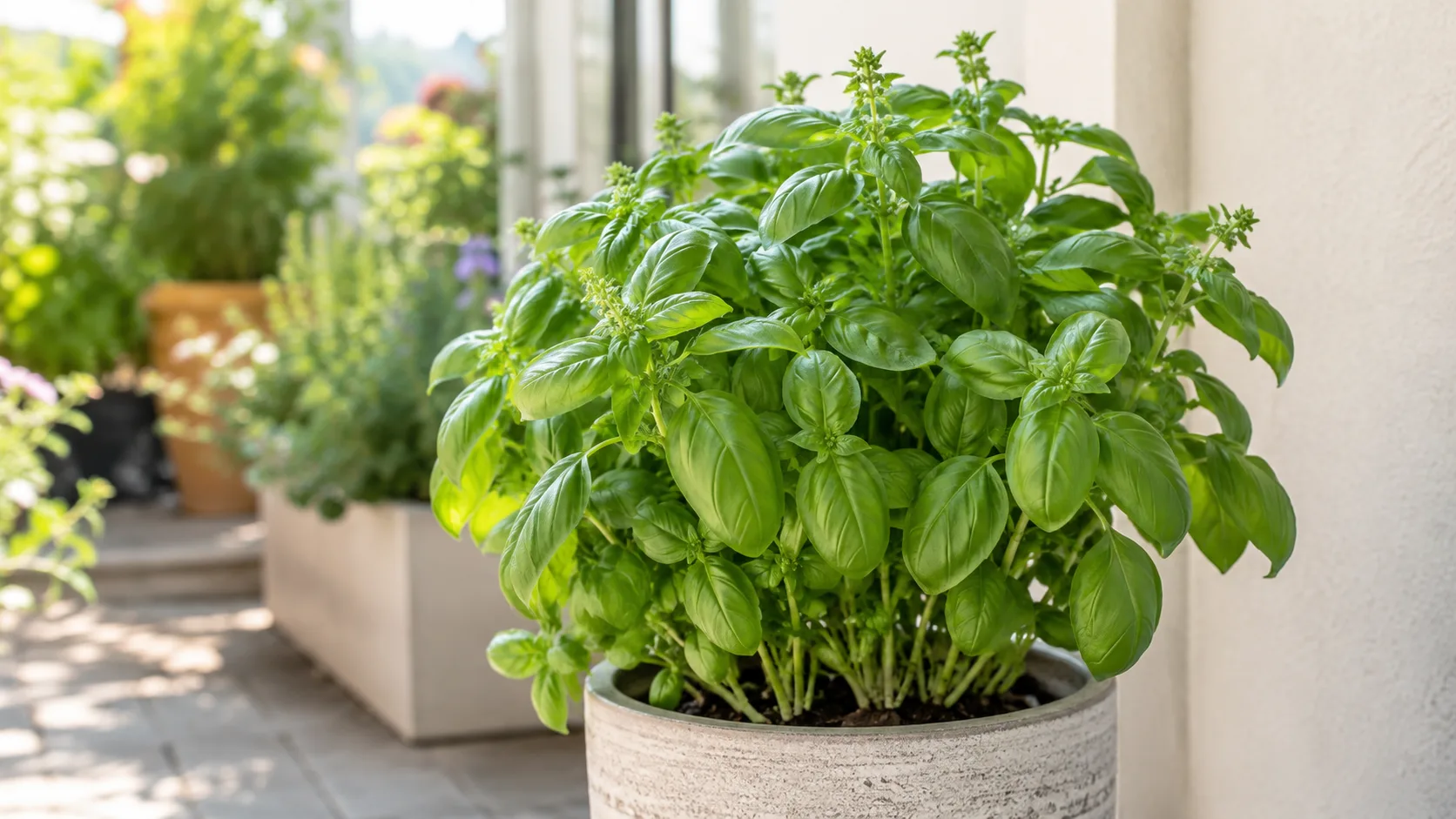
Basil is a practical warm-season companion because it combines aromatic foliage with a harvest you will actually use.
Scout the garden so a small colony stays small
Companion planting is not a substitute for looking closely. Check young plants at least twice a week during rapid growth, especially after a flush of soft new leaves, a warm spell, or the arrival of winged aphids. The University of Idaho’s aphid guidance recommends frequent scouting and notes that mature plants can often tolerate mild to moderate numbers, while seedlings and stressed plants are more vulnerable.
Inspect the undersides of young leaves, growing tips, flower buds, and stems. Look for live aphids, white cast skins, curled leaves, sticky honeydew, black sooty mold, and ants moving up and down the plant. Also look for lady beetle larvae, lacewing larvae, hoverfly larvae, and swollen aphid “mummies”; those signs can mean the garden is already suppressing the colony.
The signs that aphid pressure is rising
A few aphids on an established plant do not automatically require treatment. The decision changes when the colony is expanding from one shoot to several, new leaves are curling, the plant is a seedling, honeydew is coating usable produce, or the crop is known to be vulnerable to an aphid-transmitted virus.
Ants are another useful clue. Ants collect honeydew and may protect aphids from predators, so a steady ant trail can explain why a colony keeps rebuilding after beneficial insects arrive. The RHS explains that aphids are also important food for garden wildlife and recommends tolerance where possible; its aphid advice is a good reminder to manage the damage and not every insect you see.
Choose the least-disruptive next action
Use this response ladder after scouting:
- Observe if the colony is small, the plant is growing normally, and predators are present. Recheck in two or three days.
- Rinse sturdy plants with a firm water spray aimed at leaf undersides and stems. The goal is to dislodge aphids without tearing leaves or splashing them onto a nearby host.
- Prune a heavily infested shoot or leaf when the colony is localized. Seal the material in the trash rather than placing a live aphid colony in the compost pile.
- Use a labeled targeted product only when the first steps are not enough. Insecticidal soap and horticultural oil can reduce aphids, but they work by contact and must reach the insects; they can also injure stressed plants and kill helpful insects that are sprayed.
Do not apply soap or oil during heat stress, drought stress, or weather that conflicts with the product label. Avoid broad-spectrum insecticides whenever possible because removing natural enemies can produce a second aphid problem later. Always follow the product label for the specific crop, concentration, temperature limits, harvest interval, and protective equipment.
Common companion-planting mistakes
The first mistake is treating a plant list like a guarantee. If aphids are already inside curled leaves or on a young crop, adding a pot of lavender does not remove them. Inspect first, then decide whether the colony is small enough to tolerate or needs a direct response.
The second is planting by reputation instead of conditions. Lavender in wet clay, basil in cold shade, dill crowded against seedlings, or mint loose in a raised bed will all disappoint for reasons that have little to do with aphid behavior. A thriving companion is more valuable than a stressed plant with a stronger online claim.
The third is overfertilizing the crop. High nitrogen can produce a flush of soft, succulent growth that is attractive to aphids. The Utah Extension guidance recommends managing nitrogen with lower, staggered applications rather than one heavy dose; match fertilizer to the crop’s needs instead of chasing fast green growth.
The fourth is forgetting that flowers are a food system, not a decoration. If you want predators and parasitoids, let some small flowers bloom, avoid spraying them indiscriminately, and provide a range of bloom shapes and times. A single marigold with no nectar available for the rest of the season is less useful than a modest succession of herbs and flowers.
A simple summer setup for vegetables, roses, and containers
Start with one target plant and one companion rather than redesigning the whole garden. For a sunny vegetable bed, try marigolds at the edge plus chives or basil near the crop; for a rose, use chives or garlic nearby and let dill or another small-flowered plant bloom in the surrounding bed; for a balcony, use a mint or catnip container where you can inspect it easily.
Plant or move the companion into place before the crop is covered in tender growth. Give it the right light and water, leave a clear path for inspection, and keep aggressive spreaders contained. The goal is a planting you can maintain weekly, not a dense tangle that hides both pests and predators.
During the season, check the crop and companions twice a week. Note where aphids appear, whether the colony is growing, whether ants are present, and whether beneficial insects are arriving. If the same crop develops repeated infestations, consider a row cover for young plants, reflective mulch where appropriate, removal of nearby weed hosts, or a different planting date instead of simply adding more aromatic herbs.
At the end of the season, remove badly infested annuals and clear crop debris where local guidance recommends it. Keep the plants that earned their place through flowers, food, or habitat, and change the combination next year based on what you actually observed.
Conclusion
The most useful plants that may repel aphids are not magic barriers. Marigolds, chives, lavender, dill, mint, catnip, garlic, and basil can add scent, flowers, habitat, or edible harvests close to the plants you care about, and some have plausible or documented effects on aphid behavior. Their value is greatest when you choose the right plant for the site and combine it with predator-friendly gardening.
Plant before aphid pressure peaks, keep mint and catnip contained, avoid excess nitrogen, and inspect young growth twice a week. When a colony starts curling leaves or spreading quickly, rinse, prune, or use a carefully labeled targeted treatment instead of waiting for companion plants to solve a problem they were never designed to handle alone.



