5 Low-Maintenance Yard Plants for an Easier Garden
Find low-maintenance yard plants for sun, shade, dry beds, and groundcover, with first-year watering rules and an important lantana safety check.
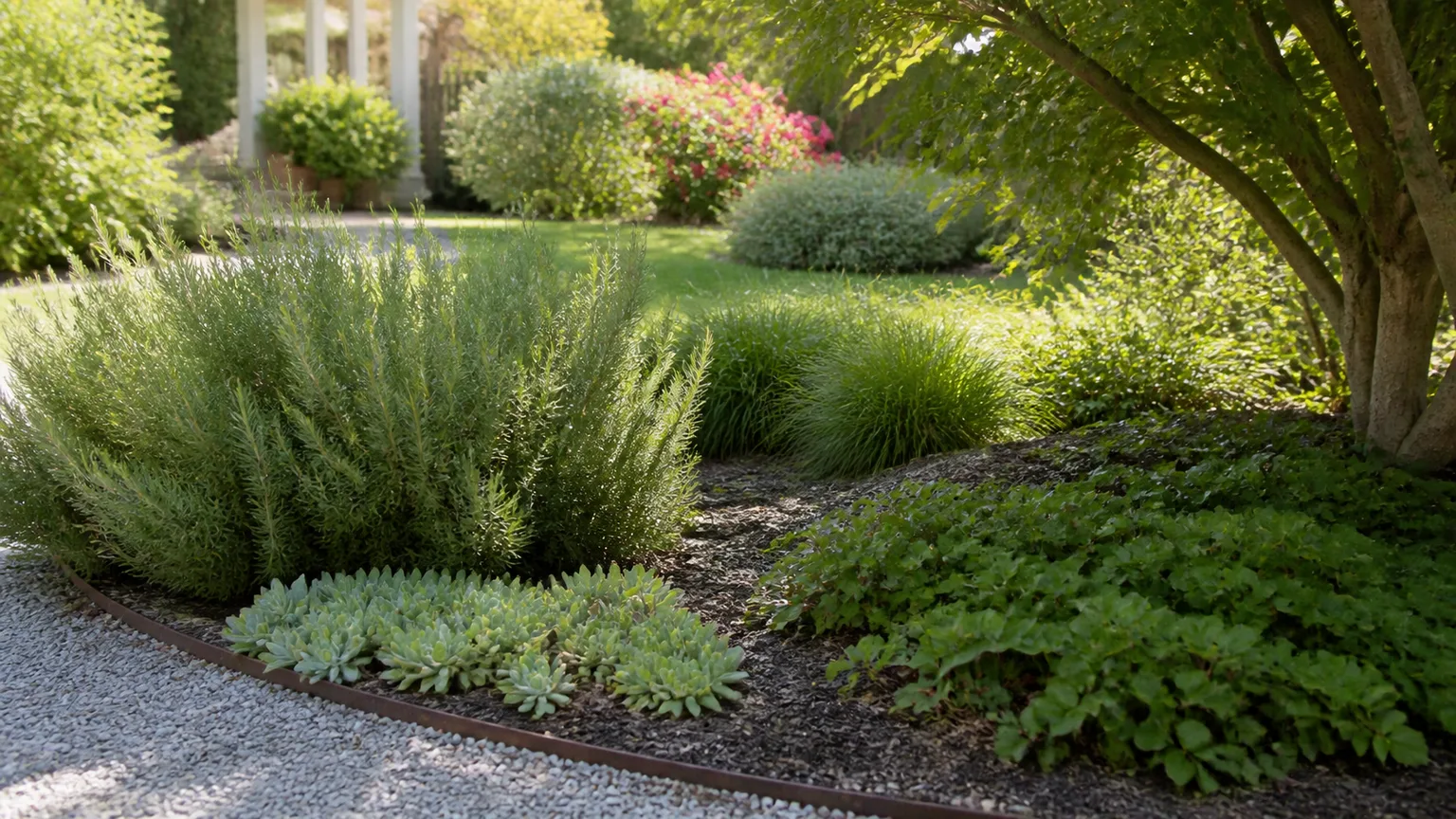
The best low-maintenance yard plants are not the ones with the shortest care label. They are the plants that fit the light, drainage, climate, and amount of space you already have. A rosemary plant in a sunny, gritty bed can be easier than a supposedly tough shrub planted in wet clay; a sedge in dry, hot soil can be more work than a lawn.
That is why this list includes five very different choices: rosemary for sunny edible borders, sedges for shade, sedum for hot dry ground, wild strawberries for a living groundcover, and lantana for long-lasting color where it is locally appropriate. The Royal Horticultural Society’s low-maintenance gardening guidance makes the essential point: no garden is maintenance-free. The goal is to lower the number of tasks by choosing plants that naturally suit the site.
What “low maintenance” really means in a yard
“Low maintenance” should mean fewer recurring inputs once a plant is established: less supplemental watering, little routine feeding, limited pruning, and fewer replacements. It does not mean you can plant a dry-climate species in a boggy corner and never touch the bed again. Every new plant needs an establishment period, and every garden needs some seasonal weeding, mulching, and cleanup.
The biggest distinction is between drought tolerance and drought tolerance after establishment. A nursery transplant arrives with a small root system. Even a mature sedum or rosemary needs deep watering while roots move into the surrounding soil. Skipping that phase is one of the fastest ways to turn a good plant into an expensive annual.
Maintenance also includes containment. A plant that survives neglect but sends runners into a path, seeds into a natural area, or grows too large for its bed is not low maintenance for that location. Before planting, ask what the plant will do at maturity and whether you can live with its spread, winter behavior, and cleanup needs.
Choose by site before you choose by plant name
Start with four observations: how many hours of direct sun the spot receives, whether water drains within a day or two after rain, how hot and windy it becomes in summer, and how much room the mature plant will have. Those answers narrow the list more reliably than a hardiness-zone number alone.
Use this quick match:
| Your yard condition | Best starting point | Watch out for |
|---|---|---|
| Hot, sunny, free-draining soil | Rosemary or sedum | Rosemary hates wet roots; sedum hates soggy shade |
| Part shade with average or moist soil | A locally suitable sedge | Many sedges dislike drought and baking afternoon sun |
| Open space where a groundcover can run | Wild strawberry | Runners spread and fruit production can slow in heat |
| Hot sun and a long flowering season | Lantana, only after a local check | Some lantanas are invasive or poisonous to animals |
Improving the site often saves more work than buying a “tougher” plant. Use a thick organic mulch in beds where it is appropriate, keep mulch away from crowns and stems, and avoid turning a naturally dry bed into a water-holding bowl. The RHS recommends planning around mature size and using mulch to reduce water loss and weed pressure; those two changes prevent a great deal of avoidable maintenance.
Rosemary for sunny beds, scent, and edible harvests
Rosemary, now commonly listed as Salvia rosmarinus, earns its place because it combines evergreen structure, fragrant foliage, small flowers, and a useful harvest. It works as a low hedge, a border anchor, a container plant, or a focal point beside a path where brushing the foliage releases its scent. The RHS rosemary growing guide describes it as a sun-loving, drought-tolerant Mediterranean shrub that needs little maintenance when planted in warm, free-draining soil.
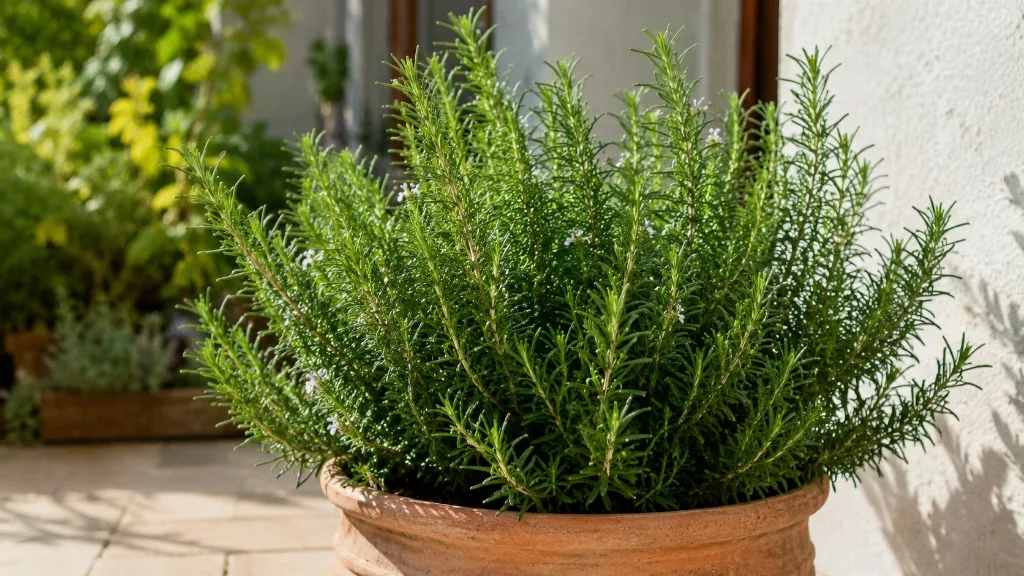
It is a particularly good choice for gardeners who want an ornamental plant that contributes to the kitchen. Its small flowers are also used by bees and other pollinating insects, so the plant is doing more than filling a sunny gap. Choose an upright form when you want structure or a trailing type for the edge of a raised bed or container.
Give rosemary sun and drainage, not constant attention
Plant rosemary in full sun with at least six hours of direct light and soil that drains freely. Water new plants deeply during dry spells in their first year, then taper once roots have moved beyond the original root ball. Established in-ground plants usually need little additional water except through unusually long, hot droughts; container plants dry faster and will need more attention.
The Missouri Botanical Garden’s plant profile for rosemary lists full sun, dry to medium moisture, well-drained soil, and good drought tolerance after establishment. It also warns that heavy, wet winter soil can be fatal. That is the practical rule: if water sits around rosemary’s roots, more watering is not the solution. Move it to a raised bed, improve the drainage, or choose another plant.
Give rosemary a light trim after flowering to keep it compact. Do not cut deeply into old, leafless wood; rosemary may not resprout there. An annual shaping trim is easier than trying to rescue a woody, bare plant after years of neglect, and a mature plant can be replaced from cuttings when it eventually declines.
When rosemary is the wrong choice: Skip it for a low, wet bed, a shady north-facing foundation strip, or a yard where winter freezes regularly exceed the plant’s tolerance. In colder regions, grow it in a container that can move to shelter, but remember that containers are not automatically low maintenance: they dry, freeze, and need seasonal handling.
Rosemary is also a poor choice if your only available site is compacted clay that stays wet. A “drought-tolerant” label describes what the plant does when it can access air in the root zone; it does not make roots immune to waterlogging.
Sedges for shade and moisture where turf struggles
Sedges are grass-like plants in the genus Carex, but they are not true grasses. They are valuable in yards because many species bring fine texture and a soft, meadow-like look to places where turf becomes thin, especially under trees or along a partly shaded path. Some are evergreen or semi-evergreen, some form low mats, and others make tidy clumps.
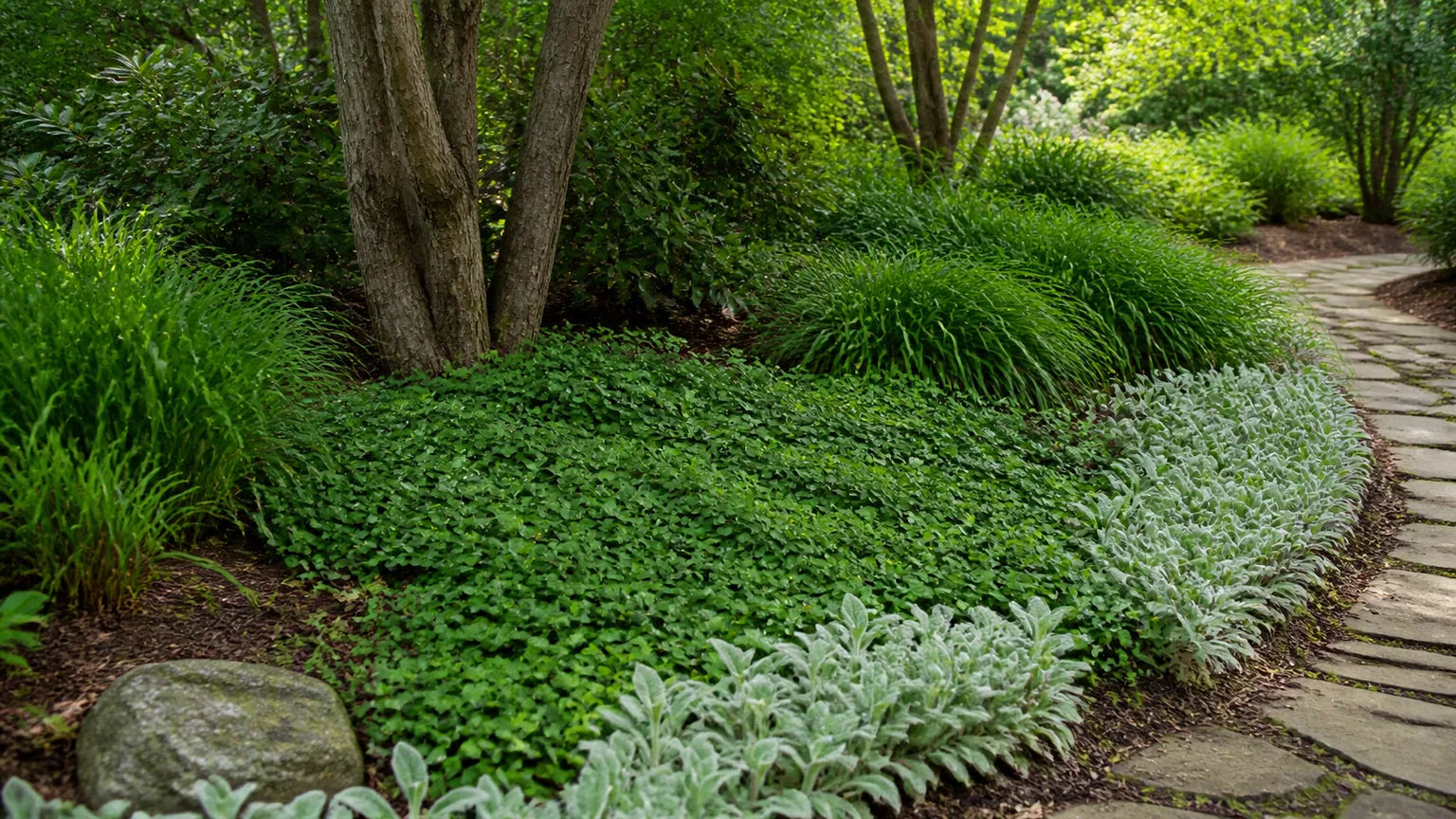
The important word is many. “Sedge” is a large group, not a single care profile. A sedge adapted to moist woodland soil is not the same choice as a sedge for a dry, sunny slope. The NC State Extension profile for Cherokee sedge describes a native clumping sedge that prefers partial sun to shade and moist to wet soil, while also tolerating full sun if it receives irrigation during dry spells. It can be used as a groundcover, erosion-control planting, or small lawn alternative in suitable conditions.
Choose a sedge species that fits your moisture level
For a shady bed that dries moderately between rains, look for a sedge recommended by your local extension service or native plant nursery. Ask for the botanical name, mature height, spread, and moisture preference rather than buying a pot labeled only “sedge.” Native choices are often especially useful because they are adapted to regional rainfall patterns and support local food webs, but “native” still has to match the microclimate.
Sedges are a smart tool for the edge of a woodland garden, a rain-garden shoulder, a slope with partial shade, or under a high tree canopy. They are not a universal lawn replacement. Deep, dry shade under dense tree roots can be difficult for almost any groundcover because the tree is competing for water, and hot afternoon sun can scorch a shade-adapted species.
Keep sedge maintenance light without letting the bed look tired
Give new sedges consistent moisture while they root, then reduce irrigation according to rainfall and the species’ needs. Once established, many clumping types need little feeding or pruning. Cherokee sedge should not be cut to the ground; the NC State profile recommends removing dead leaves in spring by combing through the foliage with your fingers.
That approach is more useful than automatically shearing every grass-like plant. Leave healthy foliage in place through winter if it still looks good, remove only damaged material, and divide or thin a clump only when it is crowding a path or losing vigor. Sedges increase slowly or moderately depending on species, so they can be easier to contain than fast-spreading groundcovers.
For additional practical context, Preen’s sedge guide notes that sedges commonly prefer shade and damp soil, and highlights native sedges for shady or wooded settings. Treat that as a starting point, then confirm the exact species with a regional plant database.
Sedum for hot, dry, lean soil
Sedum, also called stonecrop, is the strongest fit here for a sunny bed that dries quickly. The fleshy leaves store water, and low-growing types can knit together a rocky edge, gravel garden, shallow slope, or container where ordinary perennials would wilt. Sedum also brings texture even when it is not flowering, and many types change color as temperatures fall.
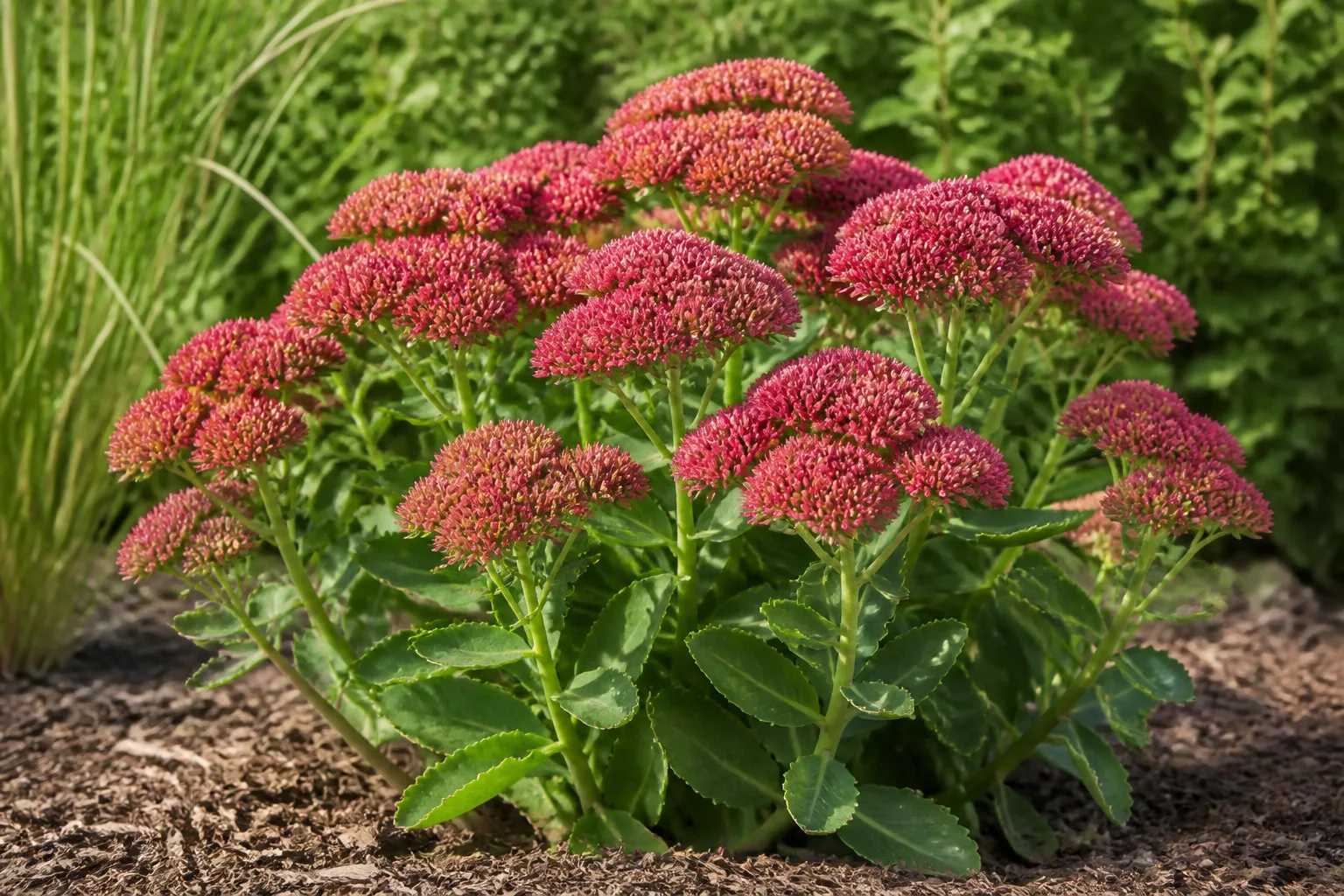
Do not treat every sedum as interchangeable. Low creeping stonecrops and tall border sedums have different jobs. The groundcover types stay close to the soil; upright types provide flowers and structure but may need more room. For a truly low-input groundcover, choose a species or cultivar whose mature spread suits the space rather than assuming any sedum will stay politely within a narrow strip.
Use stonecrop as a groundcover, not a wet-bed plant
Plant sedum in full sun and well-drained soil. The NC State Extension profile for Chinese sedum describes a mat-forming plant that reaches only a few inches tall, spreads about a foot, needs little watering, and tolerates drought, heat, poor soil, and rocky conditions. It can handle some partial shade better than many sedums, but that does not make it suitable for a waterlogged bed.
Water new plants when the soil dries, especially during the first hot season. After the roots have spread, let the soil dry between deep waterings. The low-maintenance mistake to avoid is frequent shallow irrigation: it keeps succulent foliage in a damp environment without solving drainage and can encourage rot.
Sedum is useful between stepping stones, along a sunny retaining edge, in a rock garden, or as a small-area lawn alternative where foot traffic is light. It is not a substitute for a walkable turf lawn, and it will not thrive where a downspout keeps the soil saturated.
The spread and winter-wet trade-off
Some sedums root where creeping stems touch the soil, which is helpful when you want coverage but inconvenient when stems spill across a path. Pull or trim stray pieces while the patch is young. It is far easier to edit a groundcover at the edge than to remove a mature mat from a bed full of other plants.
Winter wet is the other major limitation. A plant that tolerates summer drought can still fail in cold, saturated soil because low temperatures slow evaporation and root activity. If your site is heavy clay or collects runoff, build a raised, sharply drained planting pocket or choose a moisture-tolerant perennial instead.
Wild strawberries for living, edible groundcover
Wild strawberry, Fragaria virginiana, is a useful choice when you want a low carpet, small white spring flowers, and edible fruit rather than a plain mulch-colored bed. It is a North American native across a broad range, but native status is always regional; confirm that the species belongs in your local planting palette. It is not the same as expecting a commercial strawberry patch to behave like a lawn.
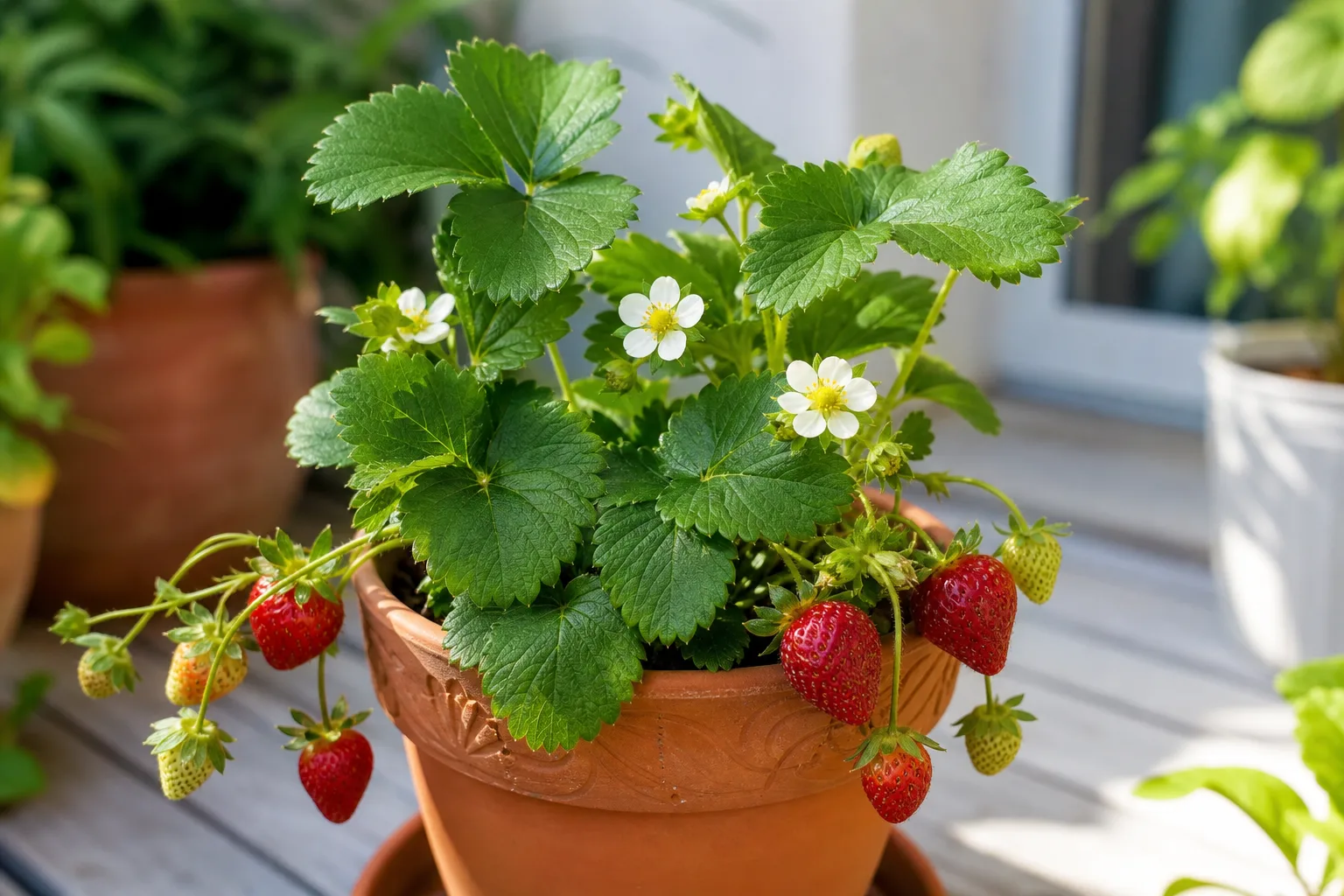
The NC State Extension profile for Fragaria virginiana describes a plant about five inches tall that can spread roughly two feet wide by runners. Those runners make it useful for groundcover and erosion control, and the plant can work in full sun to part shade where soil is fertile, well drained, and moist to dry.
Let runners knit the soil together
Plant wild strawberries where a loose, naturalistic carpet is welcome: the front of a border, a slope, a woodland edge with enough light, or a native planting where runners can wander. Give new plants regular deep watering while they establish, then water during extended dry weather rather than following a rigid weekly schedule.
Expect a softer, less formal look than a clipped hedge or a perfectly weed-free lawn. The runners root as they sprawl, gradually forming colonies that hold soil in place. That is an advantage on an erosion-prone edge and a maintenance issue in a tiny bed where every plant needs to stay within a strict outline.
Why native does not mean maintenance-free
Wild strawberries can slow down or go dormant during hot, humid summers, and fruit production depends on prevailing temperatures. They may also develop leaf spots, scorch, rot, or fruit diseases, especially where air movement and drainage are poor. The NC State profile lists multiple possible pests and diseases, so it would be misleading to promise a problem-free carpet.
Think of the fruit as a bonus, not the main harvest. Birds and other wildlife may find it first, and plants used as groundcover are not managed like a commercial strawberry bed. If you want large, dependable berries, reserve a separate sunny patch where you can weed, water, and protect fruit; use wild strawberry for texture, habitat value, and modest snacks.
Lantana for heat and long bloom—but check first
Lantana is the most conditional recommendation on this list. In a hot, sunny landscape, it can produce colorful flower clusters for a long season, tolerate heat and drought after establishment, and attract butterflies and other pollinators. It is also salt tolerant and useful in containers, borders, and pollinator gardens.
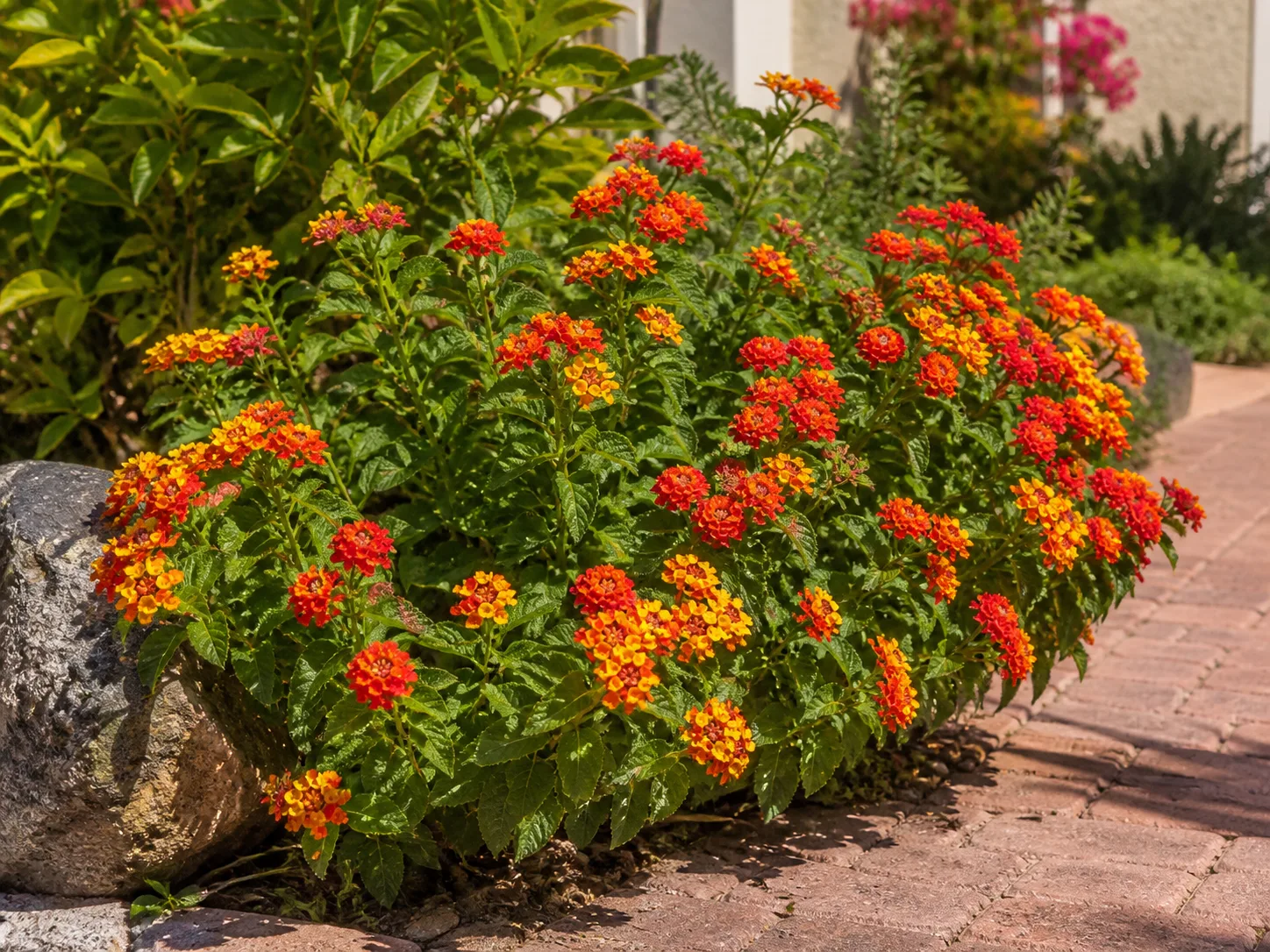
The problem is that lantana is not equally appropriate everywhere. Common garden lantana may be listed under Lantana camara or Lantana strigocamara, and invasive status varies by species, cultivar, and region. The UF/IFAS lantana guide says the common non-native type is invasive in Florida and recommends checking the choice carefully; the N.C. Cooperative Extension discussion of sterile lantana cultivars explains that risk is regional and can change as climates change.
Choose a sterile cultivar or a local alternative
Before buying lantana, check your state invasive-plant list, county extension office, and the exact cultivar label. Do not assume that “butterfly-friendly” means “ecologically harmless.” UF/IFAS describes sterile cultivars such as ‘Bloomify Red’, ‘Bloomify Rose’, and ‘Luscious Royale Red Zone’ as options that do not produce viable seed or pollen, but availability and local recommendations still matter.
If your region flags common lantana or you garden near natural areas, choose a native plant that fills the same job. A local extension office can suggest heat-tolerant, long-blooming native alternatives suited to your soil and wildlife community. A plant that is slightly less flashy but legal, non-invasive, and adapted to the site is the better low-maintenance decision.
Lantana care, toxicity, and containment
Give lantana full sun and well-drained soil. Water new plants deeply, then let the soil dry somewhat between irrigation once roots are established. UF/IFAS notes that lantana flowers more with regular water, but drought tolerance is part of its appeal; choose whether your priority is maximum bloom or minimum supplemental irrigation.
Lantana grows quickly and may become leggy. Cut it back moderately during the growing season or more substantially at the end of the season, depending on climate and cultivar. Use gloves if the foliage irritates your skin, and keep lantana away from grazing animals and pets that chew plants. NC State Extension lists lantana as poisonous to humans and a problem for dogs, cats, horses, and other livestock; UF/IFAS specifically warns about toxic leaves and unripe berries. Removing spent or fallen fruit is sensible where curious children or animals can reach the plant.
Build a low-maintenance planting plan that actually works
The easiest garden is usually designed around maintenance zones, not a random collection of “easy” plants. Put rosemary and sedum in the driest, sunniest bed. Put a suitable sedge where shade and moisture are more reliable. Give wild strawberries room to run along a slope or naturalistic edge. Reserve lantana for a location where its invasive status, toxicity, and winter behavior are acceptable.
Use these steps before planting:
- Watch the site through a full day and record direct sun, reflected heat, and wind.
- Dig a test hole and observe whether water drains or remains pooled after rain.
- Check the plant’s mature width, not just its nursery-pot size.
- Confirm local invasive and toxicity guidance, especially for lantana and spreading groundcovers.
- Plant in groups with a clear edge so runners and clumps are easy to inspect.
- Mulch the open soil to slow evaporation and weed growth, keeping the mulch off crowns.
A simple first-year care schedule
For the first few weeks, check new plants more often than established ones. Water slowly at the root zone when the top layer begins to dry, allowing moisture to move through the full root ball. During hot weather, a deeply watered plant may need another check in two or three days, while a new sedge in moist shade may go longer; soil and weather are better guides than a fixed calendar.
Through the first growing season, keep an eye on three signals: persistent wilt, soil that stays wet for days, and new growth that is weak or distorted. Persistent wilt with dry soil means the plant needs water or a less exposed site. Persistent wilt with wet soil points to root stress or poor drainage. Weak, floppy growth often means too much shade, too much fertilizer, or a plant that has outgrown its intended space.
Once plants are established, shift from rescue care to light seasonal maintenance. Pull weeds while they are small, refresh mulch when it has thinned, trim rosemary lightly after flowering, remove damaged sedge foliage in spring, edit sedum and strawberry runners at the edge, and prune lantana according to its growth habit and local frost pattern. That rhythm is what “low maintenance” looks like in a real yard: a few deliberate jobs, not no jobs.
Conclusion
Rosemary, sedges, sedum, wild strawberries, and lantana can all reduce garden work, but none is a universal winner. Rosemary wants sun and sharp drainage; sedges want the right shade-and-moisture combination; sedum wants heat and soil that dries; wild strawberries need room to run and may slow in summer; lantana deserves a local invasive and toxicity check before it ever reaches the shopping cart.
Choose the plant that matches the site you have, water it well while roots establish, and leave enough room for mature growth. That is the reliable path to a yard that looks generous and alive without asking you to spend every weekend managing it.



