Burning Bush Care: Growing, Pruning, Spread, and Safer Alternatives
Learn practical burning bush care for light, soil, water, pruning, pests, and winter—plus how to manage berries and suckers and choose safer fall-color shrubs.
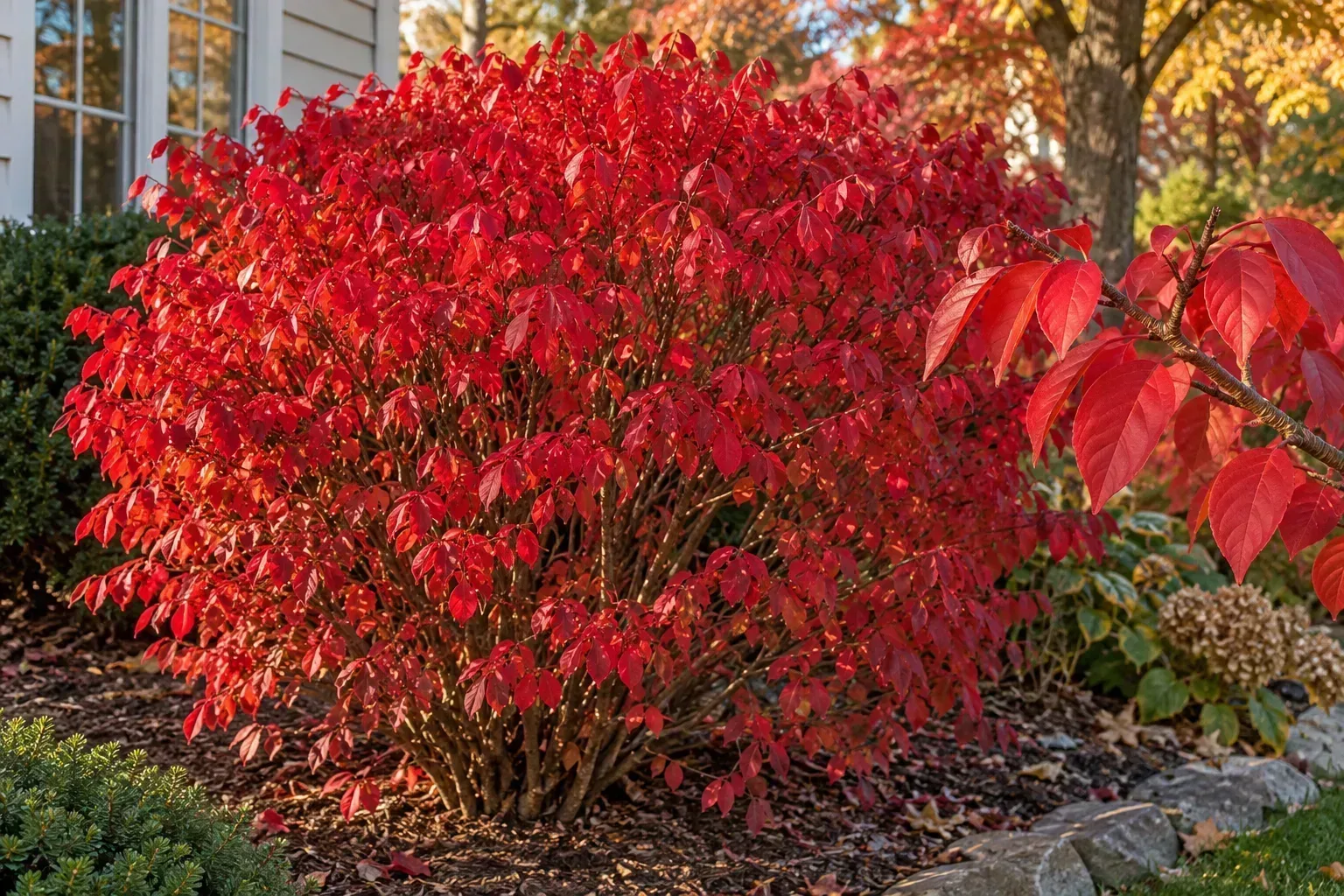
Burning bush (Euonymus alatus) is easy to grow, which is exactly why it deserves a careful decision before you plant one. Its green summer leaves turn an intense red in autumn, the shrub tolerates a wide range of soils, and an established plant can manage short dry spells. It also produces fruit that birds can spread and can expand through suckers. In much of the eastern and central United States, that combination makes winged euonymus an invasive landscape plant rather than a responsible default choice.
If a burning bush is already in your yard, this guide will help you keep it healthy while reducing its chance of spreading—or decide when removal is the better form of care. If you are shopping for one, check your state and local invasive-plant list before paying for a plant. A compact label, a hedge plan, or a claim that a cultivar is sterile does not remove the need for that check.
Burning bush at a glance
The common name usually refers to Euonymus alatus, a deciduous, multi-stemmed shrub native to parts of East Asia. NC State’s Plant Toolbox profile describes a medium-growing shrub that can reach roughly 15 to 20 feet in favorable conditions, with a dense, rounded to spreading habit. Nursery cultivars may be shorter, but the species’ ability to sucker and fruit is the more important long-term measurement.
The easiest identification clue is the corky ridge, or “wing,” that runs along young green to brown stems. Leaves are opposite, oval, and medium green during the growing season. Small greenish-yellow flowers appear in spring; pink-to-red capsules and orange-red seeds develop later. The flowers are not the show, but the fruit matters because wildlife can move it beyond your property.
The plant is generally hardy in USDA zones 4 through 8 and performs best with full sun, though it tolerates partial shade. Full sun usually gives the strongest autumn color and a denser, more balanced shape.
Decide whether burning bush belongs in your yard
The first care question is not “How often should I water it?” It is “Can I grow it here without helping it escape?” A shrub beside a woodland edge, stream, drainage ditch, bird-feeding area, or unmanaged lot has more opportunities to spread than one surrounded by pavement. Even then, fruit can be carried by birds and roots can send up shoots outside the original planting hole.
Check the scientific name, not only “burning bush.” Some nurseries use common names loosely, and a small cultivar can still share the species’ fruiting or suckering traits. Ask your local extension service or state invasive-plant program whether E. alatus is restricted, discouraged, or listed in your area. Rules can change, and a plant legal in one state may be prohibited in another.
Why “sterile” is not a complete safety guarantee
Some cultivars have been marketed as seedless or sterile. That may reduce one spread route, but it does not automatically prevent vegetative growth, hybridization, mislabeled stock, or movement of an ordinary seed-producing plant into the same landscape. Treat the exact cultivar name as information to verify, not as permission to skip local guidance.
If you want the red autumn effect but the plant is restricted where you live, choose a different shrub. A native or locally appropriate alternative is a better investment than years of cutting fruiting branches and chasing seedlings.
Choose the best planting site
Light and fall color
Give burning bush at least six hours of direct sun when possible. It will survive in partial shade, especially in hot climates, but deep shade tends to produce a looser shape and less dramatic red foliage. Afternoon shade can be useful in a very hot, dry site if the plant still receives enough direct light to color well.
Before digging, watch the spot through a full day. A site that looks sunny at noon may be shaded by a house or mature tree by midafternoon. Avoid planting where a fast-growing shrub will soon shade itself or crowd a walkway.
Soil and drainage
Burning bush adapts to clay, loam, and sandy soil, and it tolerates acidic, neutral, or alkaline conditions. Good drainage matters more than chasing a particular pH. Waterlogged soil deprives roots of oxygen and increases the chance of root decline, especially during a wet winter.
Test drainage by filling the future planting hole with water and watching how quickly it empties. If water remains for many hours, correct the site with a better-drained location or a raised planting area rather than burying the root ball in a permanently wet pocket. Do not create a rich, sharply different soil pocket that encourages roots to circle inside it; use the native soil to backfill unless a soil test points to a specific correction.
Mature size and clearance
Plan for the plant you will have, not the two-foot shrub in the nursery pot. Allow room for the mature width, air movement, mowing, and access for inspection. Keep it away from property lines and natural areas if local guidance permits existing plants to remain. A hedge that needs constant shearing is more likely to flower and fruit inside its outer canopy, and it is harder to inspect for suckers.
Plant burning bush correctly
Plant a container-grown shrub in spring or early fall while the soil is workable. Dig a hole two to three times wider than the root ball and no deeper than its height. Set the crown at the same level it occupied in the container; burying the stem base encourages stress and poor drainage.
If roots are circling tightly, loosen them gently around the outside of the root ball. Backfill with the excavated soil, water slowly to settle air pockets, and add a two- to three-inch layer of mulch over the root zone. Keep mulch several inches away from the stems. A mulch donut retains moisture without creating a wet collar against the bark.
Do not fertilize heavily at planting. Roots need contact and consistent moisture more than a flush of soft shoots. Remove damaged branches, but postpone major shaping until the shrub is established.
Watering for establishment and drought
For the first growing season, water deeply when the upper few inches of soil begin to dry. Frequency depends on rain, soil, temperature, and root-ball size; a calendar-only schedule is less reliable than checking the soil. Water at the base so the root zone is wet without repeatedly coating the foliage.
After establishment, burning bush is moderately drought tolerant, but “drought tolerant” does not mean “never water.” Give it a slow, deep drink during prolonged hot, dry weather, especially if it is planted in sandy soil or beneath roof overhangs. Avoid repeated shallow sprinkling, which encourages surface roots and leaves the deeper root zone dry.
Reduce winter watering when rainfall is adequate. Cold, saturated soil is more damaging than a modestly dry dormant root zone, but do not let a newly planted shrub dry completely before the ground freezes.
Fertilizing without pushing excess growth
Established burning bush generally does not need routine fertilizer. If a young plant is growing poorly, identify the cause before feeding: compacted soil, root damage, insufficient light, drought, and poor drainage are more common explanations than a missing bag of fertilizer. A soil test is more useful than guessing from leaf color.
Avoid high-nitrogen feeding, especially if the plant is already vigorous. Extra shoots can mean more pruning, more suckers, and a larger fruiting canopy. If a soil test or local expert recommends fertilizer, apply the specified product and timing exactly as directed, keeping granules away from the stems and watering afterward.
Pruning, suckers, and berry management
Pruning can keep an existing shrub orderly, but it cannot make an invasive plant ecologically neutral. The goal is to maintain health and reduce spread while deciding whether the plant should stay.
Routine pruning
Late winter, before new growth begins, is the best time for structural pruning. Remove dead, broken, crossing, or rubbing branches first. Then thin selected older stems at ground level to open the center and improve air movement. Avoid shearing the outer surface repeatedly; that creates a dense shell of shoots and hides the interior.
For a modest size correction, remove no more than about one-third of the longest stems in a season. Step back often and preserve the shrub’s natural outline. Clean pruners between plants, especially if you are moving from a diseased shrub to a healthy one.
Remove suckers as soon as they appear. Trace each shoot to its point of origin and cut or pull it cleanly rather than leaving a short stub that can resprout. Inspect beyond the drip line because roots can send shoots outside the apparent canopy.
If fruit is forming and local guidance allows the plant to remain, remove the developing clusters before they ripen and bag them for disposal. Do not place fruiting branches or viable seeds in home compost. Follow your municipality’s yard-waste rules.
Rejuvenation pruning
An old, oversized shrub can sometimes be renewed by removing about one-third of its oldest stems to the ground each year for three years. This is less shocking than cutting everything at once and lets you evaluate regrowth. A severely neglected plant may tolerate a hard reduction, but a drastic cut can produce a season of weak-looking growth and does not solve the invasive-plant problem.
If the shrub is in a prohibited location, near a woodland, or producing many offshoots, do not treat hard pruning as a substitute for removal. Cutting the top can stimulate a flush of suckers from the roots.
Propagate only when you have a responsible plan
Burning bush can be propagated from softwood cuttings, but easy propagation is not automatically a benefit. Do not share cuttings or seedlings where the species is restricted or invasive. Never scatter berries or plant volunteers as a low-effort way to fill a hedge.
If local rules allow propagation and you have a legitimate reason to duplicate a plant, a cutting produces a clone of the parent more predictably than seed. Take a four- to six-inch cutting from healthy current-season growth, remove the lower leaves, and place it in a sterile, moist rooting medium. Keep it in bright indirect light with steady moisture until roots form, then pot it on gradually. Label the scientific name and cultivar, and keep the plant contained while you confirm its long-term destination.
Seed-grown plants may vary from the parent and can grow much larger than a dwarf cultivar. That is one reason a “compact” shrub should never be allowed to seed freely.
Seasonal care calendar
Late winter: Inspect the structure, remove dead wood, thin crowded stems, and remove suckers. This is the main window for shaping before leaf-out.
Spring: Watch new growth and water newly planted shrubs as the soil dries. Check flowers and developing fruit; if the plant is staying, plan to remove fruit clusters before they ripen. Look for shoots emerging from the base or surrounding soil.
Summer: Maintain deep watering during drought, keep mulch off the stems, and inspect the undersides of leaves for stippling or fine webbing. Limit pruning to dead or damaged wood unless there is a safety issue.
Autumn: Enjoy the foliage, but do not let the color display distract you from fruit. Remove or bag ripe-looking capsules according to local rules, clean up fallen fruit, and note seedlings for removal before winter.
Winter: Recheck the shrub’s size, spread, and legal status. If maintenance is becoming a repeated battle, schedule removal and replacement while the plant is dormant.
Pests and diseases: diagnose before treating
Spider mites are more likely during hot, dry conditions. Symptoms can include fine stippling, bronzing, premature leaf drop, and delicate webbing around branch joints. Confirm the pest before treating: tap a branch over white paper and look for tiny moving specks. A strong but gentle water spray directed at leaf undersides can reduce a light infestation. Avoid broad insecticide use that can kill predatory mites and worsen the imbalance.
Powdery mildew appears as a pale, dusty coating on leaves, often when foliage is crowded and air is still. Improve spacing and airflow, water the soil rather than the canopy, and remove badly affected material when practical. Fungicides are not a cure for poor site conditions; use only a product labeled for the plant and disease, following the label and local rules.
Root problems are more serious than a few damaged leaves. Persistent wilting in wet soil, yellowing with poor growth, and dark or declining roots point toward drainage or root disease. Correct the site if possible and avoid adding water to a plant that is already saturated.
Toxicity and household safety
Treat all parts of burning bush as unsafe to eat. The ASPCA lists burning bush among plants that can be toxic to pets; keep children, dogs, and cats from chewing leaves, fruit, or pruned pieces. Wear gloves when pruning, wash hands afterward, and secure bagged fruit and clippings.
If a person or pet has eaten part of the plant, do not guess from the amount or try a home remedy. Contact your veterinarian, a poison-control service, or the appropriate emergency resource and provide the plant’s scientific name and the part consumed. The ASPCA’s plant-safety listing is a useful starting point for pet owners, but urgent cases belong with a veterinarian or poison-control service. Toxicity advice is a safety issue, not a gardening experiment.
When removal is the responsible choice
Removal is worth considering when the plant is listed as invasive locally, sits near natural habitat, produces frequent seedlings, sends suckers into lawn or beds, or requires more containment than you can maintain. It is also sensible if pets or young children regularly access the fruit.
For a small shrub, cut stems close to the ground, then dig around the root crown and remove as much of the root system as practical. Search the surrounding soil for large roots and monitor the site throughout the next growing season. New shoots can appear after the top is gone.
For a large shrub or dense thicket, work in stages. Cut and dispose of fruiting material first, protect yourself from sharp stems, and do not drag seed-bearing branches through the yard. Mechanical removal may be enough for small plants, but persistent regrowth can require a locally legal, label-directed treatment. Never increase a herbicide’s concentration, apply it near water, or use it without checking the current label. Hire a qualified professional for large stands, steep ground, utility conflicts, or sensitive habitat.
Replace the cleared plant with a shrub suited to your region and site. Keep watching for seedlings and suckers for at least a full growing season; removal is a process, not a single cut.
Fall-color alternatives with lower spread risk
There is no universal substitute, because the right choice depends on your state, soil, moisture, mature size, and wildlife goals. Ask a local extension service or native-plant nursery for a shortlist, then verify each scientific name.
Sumac can provide red autumn foliage and persistent fruit, with species and cultivars suited to different regions. It may spread by suckers, so choose a form and location you can manage rather than assuming every sumac is tidy.
Ninebark offers peeling bark, white flowers, and cultivars with burgundy foliage. It is often a useful shrub for a sunny border, but still check mature size and local recommendations.
Serviceberry brings white spring flowers, edible fruit for wildlife, and warm autumn color. It is a better habitat-minded choice in regions where a local species is appropriate, though it needs more room than a small foundation shrub.
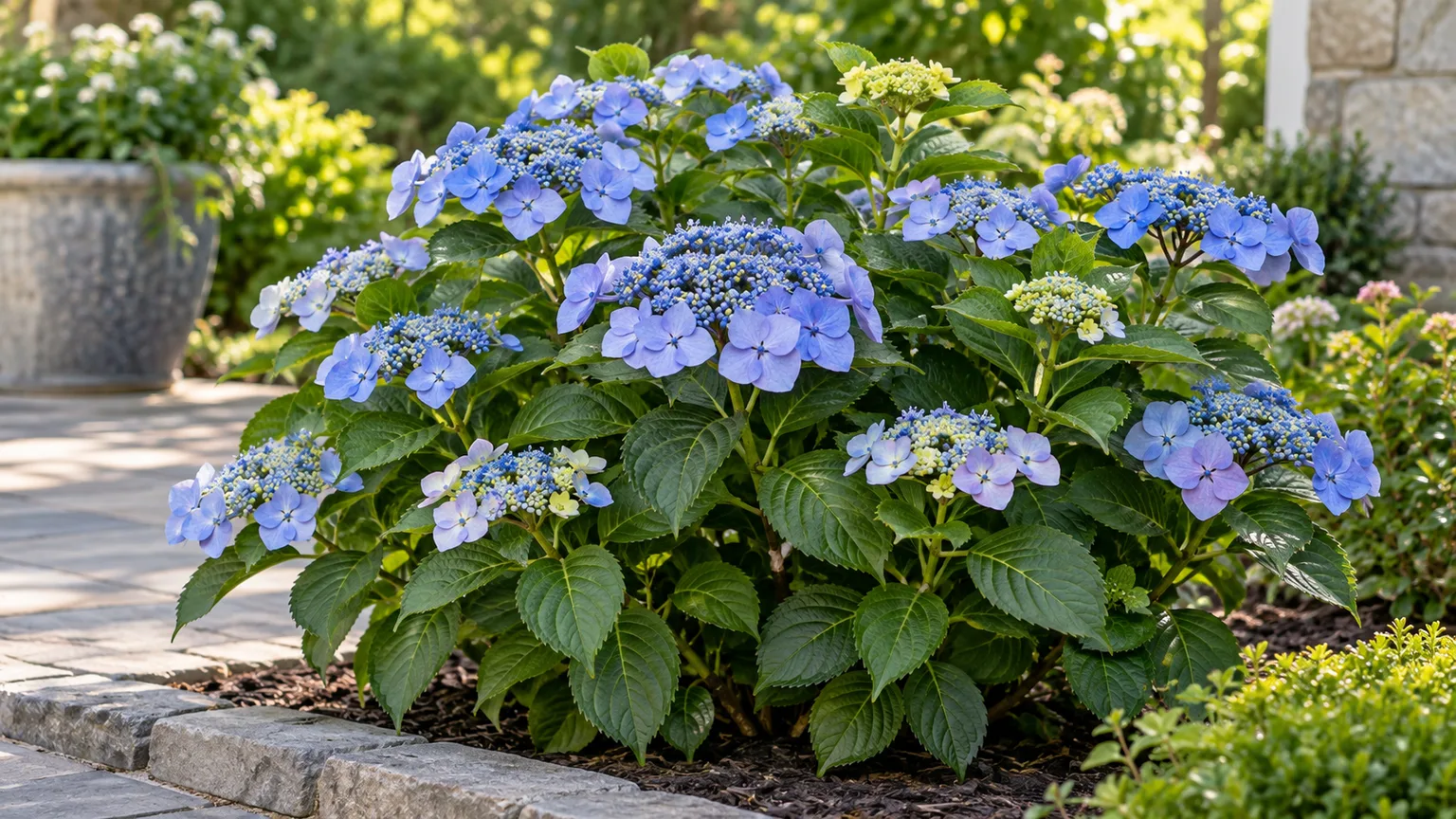
Oakleaf hydrangea supplies large summer flower heads and strong fall foliage in a shrub with substantial architectural presence. Give it afternoon protection in hot climates and enough room for its mature spread.
Native viburnums, chokeberries, and dogwoods can provide flowers, fruit, fall color, or winter stems. Select species native to your area and confirm whether a particular cultivar is prone to suckering or spreading.
The strongest replacement is not the one that looks most like burning bush in a catalog. It is the one that performs the job you need without creating a spread route your property and local ecosystem cannot absorb.
Conclusion
Burning bush is a durable shrub with dependable red fall foliage, but durability is not the same as suitability. Give an existing plant full to partial sun, well-drained soil, measured water, little or no fertilizer, and late-winter structural pruning. Remove suckers promptly and prevent fruit from ripening and leaving the property.
Before planting or propagating, check local invasive-plant rules and confirm the exact species or cultivar. If the shrub is spreading, restricted, or difficult to contain, removal followed by a regionally appropriate fall-color replacement is the more responsible care plan. The best landscape is not simply one that survives; it is one that stays where you put it and supports the place around it.