Canna Lily Care Guide: Sun, Water, Soil, and Winter Care
Canna spp. (including Canna × generalis garden hybrids)
Learn how to grow garden Canna for bold foliage and summer flowers, with practical guidance on light, moisture, rhizomes, containers, and overwintering.
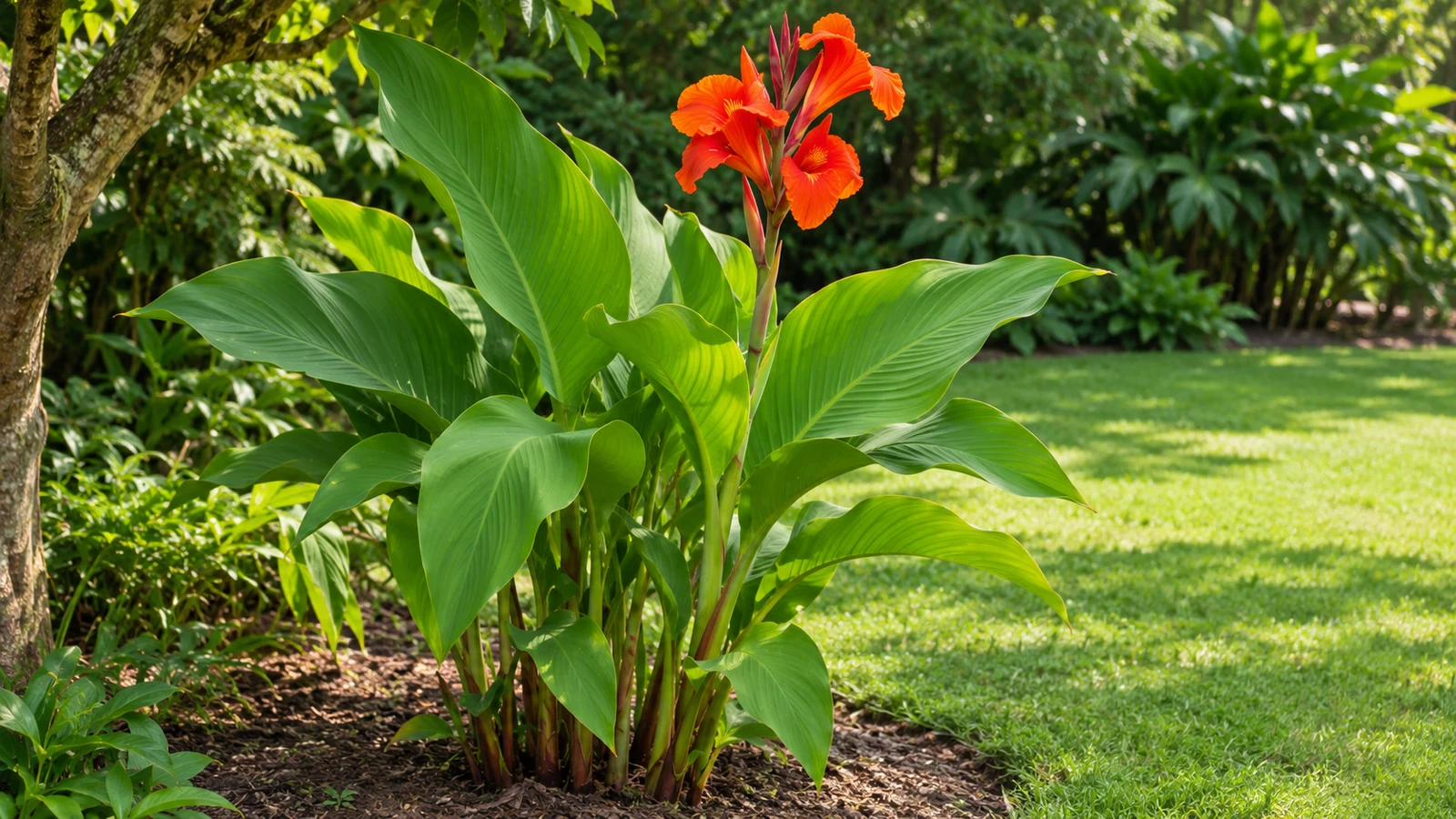
Canna Lily Care Guide
Start with wateringThe most common care mistake for Canna LilyWatering guide →Canna Lily care essentials
Light
Water
Keep the soil evenly moist while the plant is actively growing, and water freely during hot, dry spells. Cannas tolerate moist ground and some selections suit water gardens, but ordinary beds and pots still need conditions that keep rhizomes healthy. In containers, water thoroughly and let excess drain rather than leaving the pot standing in a full saucer.
Soil
Use fertile soil enriched with organic matter that holds moisture but drains reliably. Cannas tolerate several soil textures and a range of pH, so improve structure and drainage rather than trying to force a narrow pH target.
Humidity
Temperature
Fertilizer
About Canna Lily
Canna Lily is native to Tropical and subtropical regions of the Americas; the native range varies by species, typically reaches Varies by cultivar: dwarf forms may stay near 0.5 m, while many garden cannas reach about 1.5–2.5 m tall; spread can approach 1.8 m indoors, with fast during the warm growing season growth. Canna Lily has a upright, clump forming rhizomatous perennial; grown as a seasonal annual where rhizomes cannot overwinter growth habit and part of the Cannaceae family. It is also known as Garden Canna, Common Garden Canna, and Canna.
| Detail | Information |
|---|---|
| Also known as | Garden Canna, Common Garden Canna, Canna |
| Native region | Tropical and subtropical regions of the Americas; the native range varies by species |
| Mature size | Varies by cultivar: dwarf forms may stay near 0.5 m, while many garden cannas reach about 1.5–2.5 m tall; spread can approach 1.8 m |
| Growth rate | Fast during the warm growing season |
| Growth habit | Upright, Clump Forming Rhizomatous Perennial; Grown As A Seasonal Annual Where Rhizomes Cannot Overwinter |
| Scientific name | Canna spp. (including Canna × generalis garden hybrids) |
| Family | Cannaceae |
How to care for Canna Lily?
When should you water Canna Lily?
Keep the soil evenly moist while the plant is actively growing, and water freely during hot, dry spells. Cannas tolerate moist ground and some selections suit water gardens, but ordinary beds and pots still need conditions that keep rhizomes healthy. In containers, water thoroughly and let excess drain rather than leaving the pot standing in a full saucer.
- Feel the top 2–3 cm of soil in a bed or pot. If it is beginning to dry while the plant is in active growth - Keep the soil evenly moist while the plant is actively growing, and water freely during hot, dry spells.
- water the root zone thoroughly and allow excess water to drain from containers - In containers, water thoroughly and let excess drain rather than leaving the pot standing in a full saucer.
- Drain excess water - In containers, water thoroughly and let excess drain rather than leaving the pot standing in a full saucer.
What soil works best for Canna Lily?
Use fertile soil enriched with organic matter that holds moisture but drains reliably. Cannas tolerate several soil textures and a range of pH, so improve structure and drainage rather than trying to force a narrow pH target.
- For containers - Cannas tolerate several soil textures and a range of pH, so improve structure and drainage rather than trying to force a narrow pH target.
- use a fertile - Use fertile soil enriched with organic matter that holds moisture but drains reliably.
- moisture-retentive potting mix with open drainage holes - Use fertile soil enriched with organic matter that holds moisture but drains reliably.
- Blend compost into poor garden soil - Use fertile soil enriched with organic matter that holds moisture but drains reliably.
- but do not bury rhizomes in a compacted spot that stays cold and saturated - Use fertile soil enriched with organic matter that holds moisture but drains reliably.
Grower notes for Canna Lily
Canna lilies are not true lilies
The common name refers to plants in the genus Canna, family Cannaceae. They grow from thick rhizomes, not from true lily bulbs, and are unrelated to Lilium. Nursery labels may use Canna, Canna lily, or Canna × generalis for garden hybrids, so check the botanical name before applying advice for a different plant sold as a lily.
Choose the cultivar before choosing the spot
Canna sizes range from compact patio selections to tall border plants, with some reaching roughly 2.5 m. Full sun generally gives the strongest flowering and foliage color; partial shade is tolerated, while a little afternoon shade can help in very hot climates. Leave enough room for the chosen cultivar and support unusually tall stems if they lean.
Keep growing plants evenly moist
Cannas perform best with steady moisture during warm active growth, so check pots more often than open beds during summer heat. The RHS advises watering freely as plants grow. At the same time, ordinary containers should drain freely; do not confuse moisture-loving roots with a pot that stays cold and waterlogged.
Treat the rhizome as the plant's winter plan
Cannas are tender in cold climates. Frost may blacken the foliage, and temperatures below about 25°F (−4°C) can injure plants left in the ground. Where winters are cold, lift the rhizomes after frost, let them dry, and store them in a cool, frost-free place; replant after the last frost. Storage needs depend on local winter conditions and the cultivar.
Divide only when the clump needs it
Rhizome division is the practical way to refresh a crowded clump and make more plants. Divide in spring, keeping a visible growing eye on each section, and plant the pieces in warm soil. Cannas started too late or kept in poor growing conditions may flower later than expected.
Enjoy the leaves as well as the flowers
Broad, tropical-looking leaves are a major part of the display, and cultivars vary in leaf color, height, and flower shades. Remove faded flower stems to keep the planting tidy and encourage continued display; use the cultivar label to set realistic expectations for final size and color.
Is Canna Lily safe for pets?
ASPCA lists Common Garden Canna (Canna generalis) as non-toxic to cats, dogs, and horses. That entry does not cover every animal or every Canna species, so keep the exact plant label and ask a veterinarian about other pets or any suspected ingestion.
ASPCA's Common Garden Canna (Canna generalis) entry lists the plant as non-toxic to cats, dogs, and horses. Do not extend that classification to rabbits, birds, turtles, tortoises, or an unidentified plant sold under a similar common name; seek species-specific veterinary advice if another pet chews it.
Watering Canna Lily
For Canna Lily, feel the top 2–3 cm of soil in a bed or pot. If it is beginning to dry while the plant is in active growth, water the root zone thoroughly and allow excess water to drain from containers. and water check containers every few days in warm weather and more often during heat; garden beds usually need less frequent attention. Water when the surface layer is starting to dry, then adjust for rainfall, temperature, and the way the soil drains instead of following a fixed calendar. Water consistently through warm active growth. As foliage dies back after frost, reduce watering; dormant rhizomes lifted for storage should be kept barely moist or dry according to the storage method, not treated like growing potted plants.
| Detail | Information |
|---|---|
| How often | Check containers every few days in warm weather and more often during heat; garden beds usually need less frequent attention. Water when the surface layer is starting to dry, then adjust for rainfall, temperature, and the way the soil drains instead of following a fixed calendar. |
| How to check | Feel the top 2–3 cm of soil in a bed or pot. If it is beginning to dry while the plant is in active growth, water the root zone thoroughly and allow excess water to drain from containers. |
| Seasonal changes | Water consistently through warm active growth. As foliage dies back after frost, reduce watering; dormant rhizomes lifted for storage should be kept barely moist or dry according to the storage method, not treated like growing potted plants. |
Soil & potting for Canna Lily
Use a mix of For containers, use a fertile, moisture-retentive potting mix with open drainage holes., Blend compost into poor garden soil, but do not bury rhizomes in a compacted spot that stays cold and saturated. for Canna Lily. Aim for moist but well-drained soil in borders and containers. Some cannas tolerate occasional wetness and are used around ponds, but cold, persistently saturated soil can damage rhizomes in ordinary garden beds. Target soil pH around Tolerates acidic, neutral, or alkaline soil; fertility and moisture balance matter more than a precise pH target. Repot divide crowded clumps every few years or when rhizomes have filled their container. Cannas do not need annual repotting if the clump still has room and is flowering well., ideally in early spring, as rhizomes start into growth and before outdoor planting after frost risk has passed.
| Detail | Information |
|---|---|
| Recommended mix | For containers, use a fertile, moisture-retentive potting mix with open drainage holes., Blend compost into poor garden soil, but do not bury rhizomes in a compacted spot that stays cold and saturated. |
| Drainage | Aim for moist but well-drained soil in borders and containers. Some cannas tolerate occasional wetness and are used around ponds, but cold, persistently saturated soil can damage rhizomes in ordinary garden beds. |
| Soil pH | Tolerates acidic, neutral, or alkaline soil; fertility and moisture balance matter more than a precise pH target |
| Repotting frequency | Divide crowded clumps every few years or when rhizomes have filled their container. Cannas do not need annual repotting if the clump still has room and is flowering well. |
| Best season to repot | Early spring, as rhizomes start into growth and before outdoor planting after frost risk has passed |
Signs it needs repotting
- Rhizomes crowd the container or push up at the soil surface.
- A clump becomes too dense for the space or produces fewer flowers.
- The container dries unusually quickly because the rhizomes have filled it.