How to Grow and Care for Canna Lily
Grow dramatic canna lilies with the right sun, soil, and fertilizer. Step-by-step rhizome planting, division, overwintering, and troubleshooting for zones 6–10.
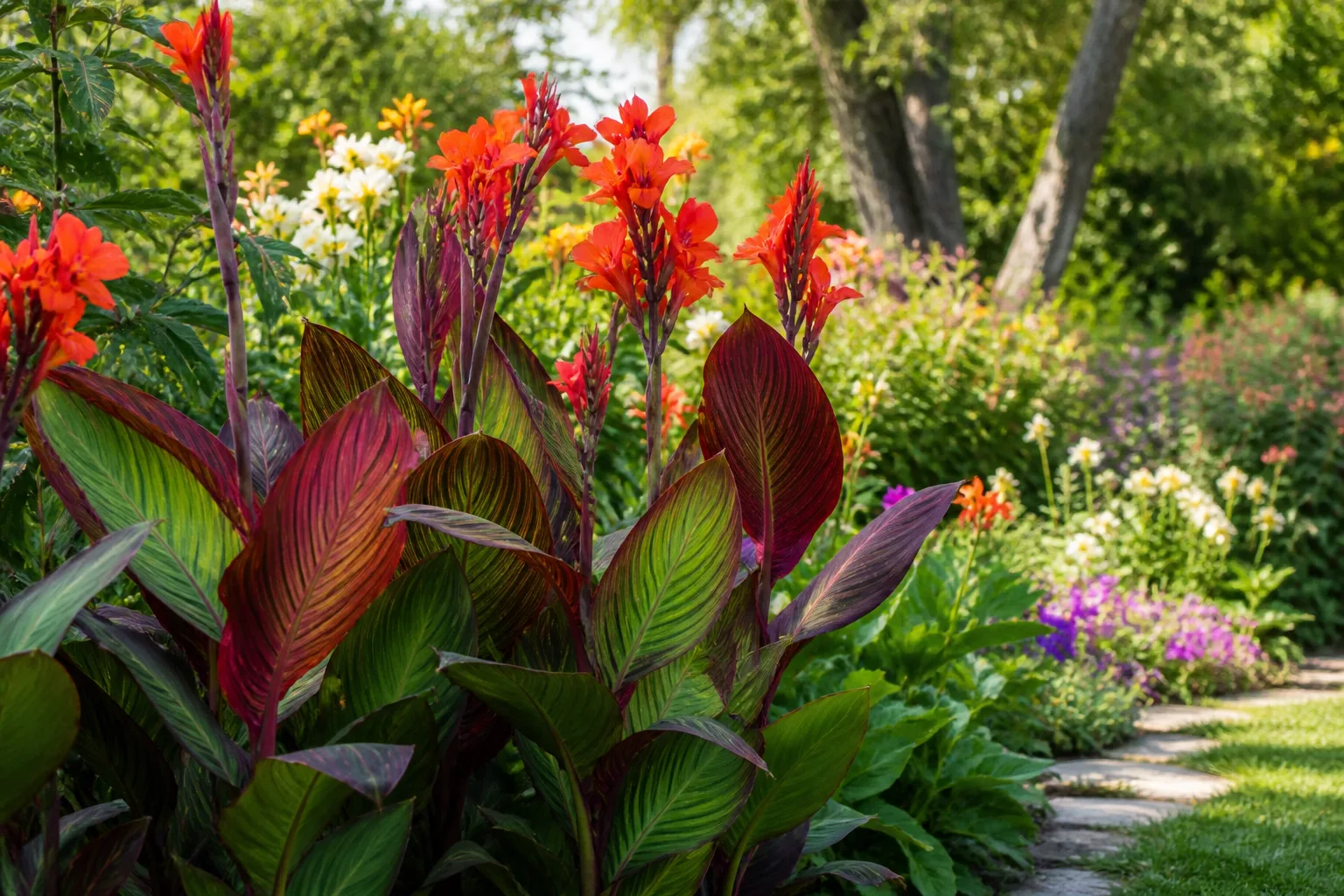
Canna lilies deliver tropical drama faster than almost any summer perennial: paddle-shaped leaves up to two feet long, flower spikes in orange, red, yellow, and pink, and heights from two-foot dwarfs to eight-foot giants. Gardeners call them lilies, but Canna species and hybrids belong to the family Cannaceae — closer to gingers and bananas than to true lilies in Liliaceae. That distinction matters because cannas grow from rhizomes (horizontal underground stems), not layered bulbs, and they want heat, moisture, and generous feeding to look their best.
The real decision with cannas is not whether you can grow them — most gardeners in USDA zones 6 through 10 can — but what you do with the rhizomes when frost arrives. Get that wrong and you rebuy every spring. Get it right and one clump becomes a hedge, a poolside screen, or a container thriller that returns for years.
Why Canna Lilies Earn Their Garden Space
Cannas solve a specific design problem: you need vertical mass and bold foliage in a sunny bed without waiting years for a shrub to mature. A single Canna × generalis hybrid can anchor the back of a mixed border, soften a fence line, or echo the scale of large-leaved companions like elephant ears and ornamental grasses. Red-flowered cultivars attract hummingbirds, and the waxy leaf coating sheds light rain — useful beside walkways and pool decks where splash matters.
Unlike many summer bulbs that flower once and fade, cannas produce blooms from July through October in most climates, with repeat flushes in zones 8 and warmer. Foliage alone justifies the space: green, bronze, burgundy, or striped leaves (‘Pretoria’ / Bengal Tiger is the classic yellow-green stripe) stay showy weeks before the first flower opens. For a wider palette of heat-loving options, see our guide to tropical flowers you can grow anywhere — cannas are often the tallest plant in that lineup.
Canna Lily at a Glance
| Feature | Details |
|---|---|
| Common names | Canna lily, canna, Indian shot, arrowroot |
| Botanical name | Canna × generalis (hybrid); related species C. indica, C. glauca |
| Family | Cannaceae |
| Plant type | Rhizomatous perennial (tender in cold zones) |
| Mature size | 1.5–10 ft tall, 1.5–6 ft wide depending on cultivar |
| Sun | Full sun; light afternoon shade in hottest climates |
| Soil | Rich, moist, well-drained; tolerates wet soils and pond margins |
| Soil pH | Slightly acidic to neutral (roughly 6.0–7.0) |
| Bloom time | June–October (July–October in cooler springs) |
| Flower colors | Yellow, orange, red, pink, bicolors |
| Hardiness | Rhizomes injured below 25°F (−4°C); reliable in ground in zones 9–10 |
| Native range | Caribbean, Central and South America, parts of Africa and Asia |
One upfront honesty: canna flowers are not fragrant, and they are not related to calla lilies (Zantedeschia). The tubular blooms look lily-like, but the growth habit, storage organ, and winter needs are entirely different.
Rhizomes, Not Bulbs: What You Are Actually Planting
When catalogs sell “canna bulbs,” they mean rhizomes — thickened stems that store starch and sprout from eyes (growth buds) along the surface. Each eye can become a shoot; more eyes generally mean a taller plant and heavier bloom (NC State Extension). A healthy division for planting should carry three to five eyes; two eyes work for propagation but may produce a smaller first-year display.
Rhizomes spread horizontally, which is why cannas form expanding clumps and need division every two to three years in rich soil. Plant with eyes facing up, 4 to 6 inches deep, and never bury deeper than 3 inches above the rhizome crown — excessive depth is one of the most common reasons cannas grow leaves but few flowers.
Zone-by-Zone Winter Strategy
Cannas are tropical at heart. NC State Extension notes injury when soil temperatures stay below 25°F for extended periods. Your USDA hardiness zone determines whether rhizomes stay in the ground, get mulched, or move to dry storage.
| Zone range | Typical approach | Notes |
|---|---|---|
| 9–10 | Leave rhizomes in ground year-round | Cut back frost-blackened foliage; light mulch optional |
| 8 | Mulch heavily after frost OR lift for safety | Wet winter soil causes rot — drainage matters more than the number on the map |
| 6–7 | Lift, dry, and store rhizomes indoors | Cut to 6 in. after first frost; store at 41–50°F in peat or vermiculite |
| 5 and colder | Treat as annual OR pot and store indoors | Pre-sprout indoors in late winter for earlier outdoor bloom |
In the warmest zones, cannas behave as true perennials and may bloom almost year-round where frost is rare. In zone 7 and colder, most gardeners treat them as lift-and-store tender perennials — the same workflow as gladiolus corms but with fleshy rhizomes instead of dry corms.
When to Lift Rhizomes in Cold Climates
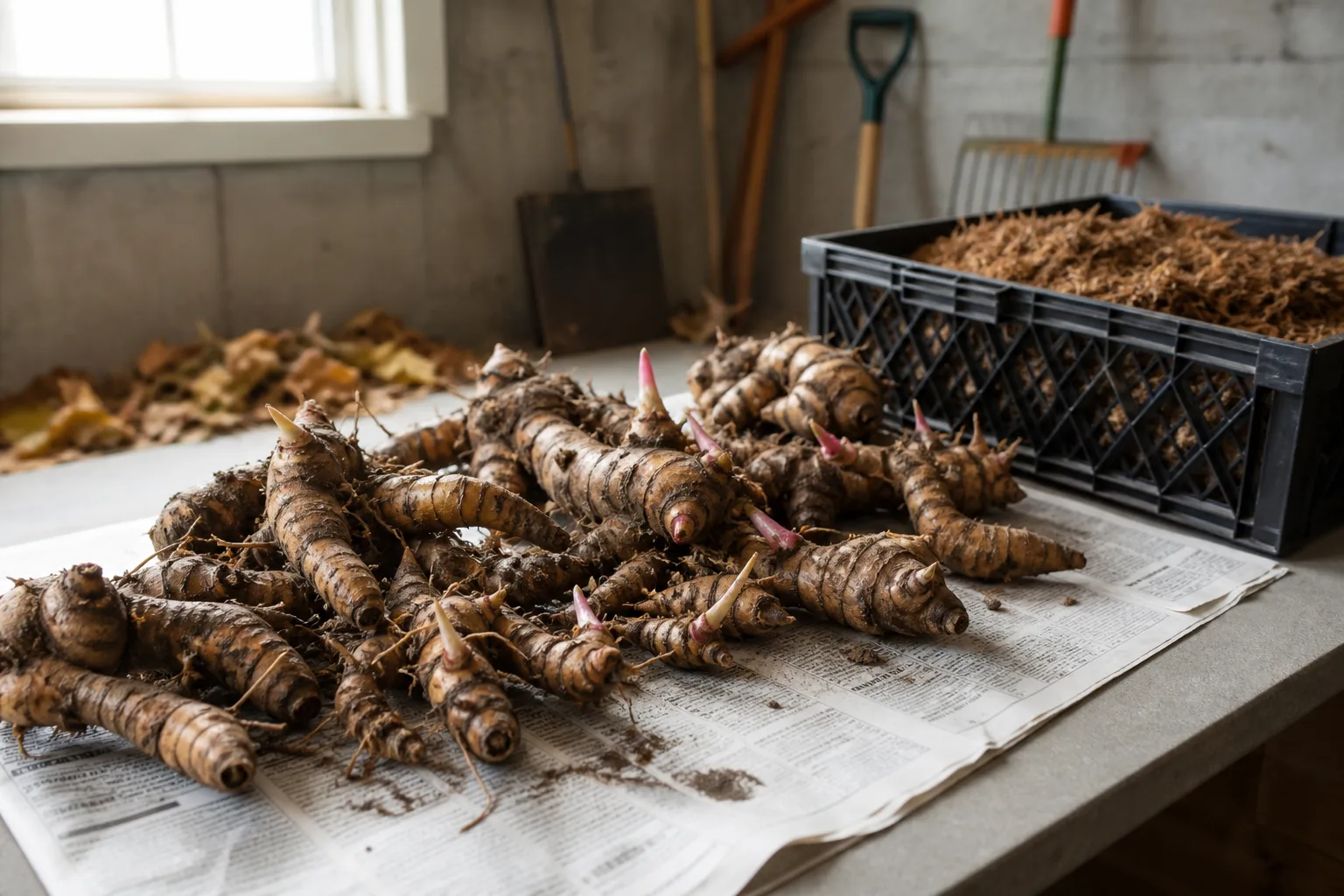
Wait until after the first killing frost blackens the foliage. That dieback signals the plant to harden off underground tissue. Cutting green leaves early steals energy the rhizome needs for winter survival. Once blackened, trim stems to 6 inches above the crown, dig the clump with a fork (wider than you think — rhizomes spread), shake off excess soil, and let rhizomes air-dry in shade for one to three days before packing for storage (Get Busy Gardening).
Check stored rhizomes monthly through winter. Discard any that turn mushy or smell sour. Lightly shriveled rhizomes can be rehydrated by misting packing medium; rotting ones will infect neighbors if left in the same bag.
Light, Soil, and Water Requirements
Cannas want full sun — at least six hours of direct light daily — for the strongest stems and brightest bloom color. In desert Southwest gardens or south-facing walls where afternoon temperatures exceed 95°F, light afternoon shade helps flowers last longer without bleaching foliage. Too much shade produces leggy plants and sparse flowering.
Soil should be organically rich and consistently moist. Cannas tolerate clay if drainage is decent, and they excel in rain gardens, pond margins, and water gardens where roots stay damp but not submerged year-round (NC State Extension). Soggy anaerobic soil in winter storage kills rhizomes; soggy summer soil invites root rot.
Water deeply one to three times per week during active growth, more in heat waves and containers. Insufficient water shows up as torn or cracked leaves — the large paddles lose turgor and split along veins. Mulch 2 to 3 inches to hold moisture, but pull mulch back from the crown in early spring so soil warms faster.
How to Plant Canna Rhizomes
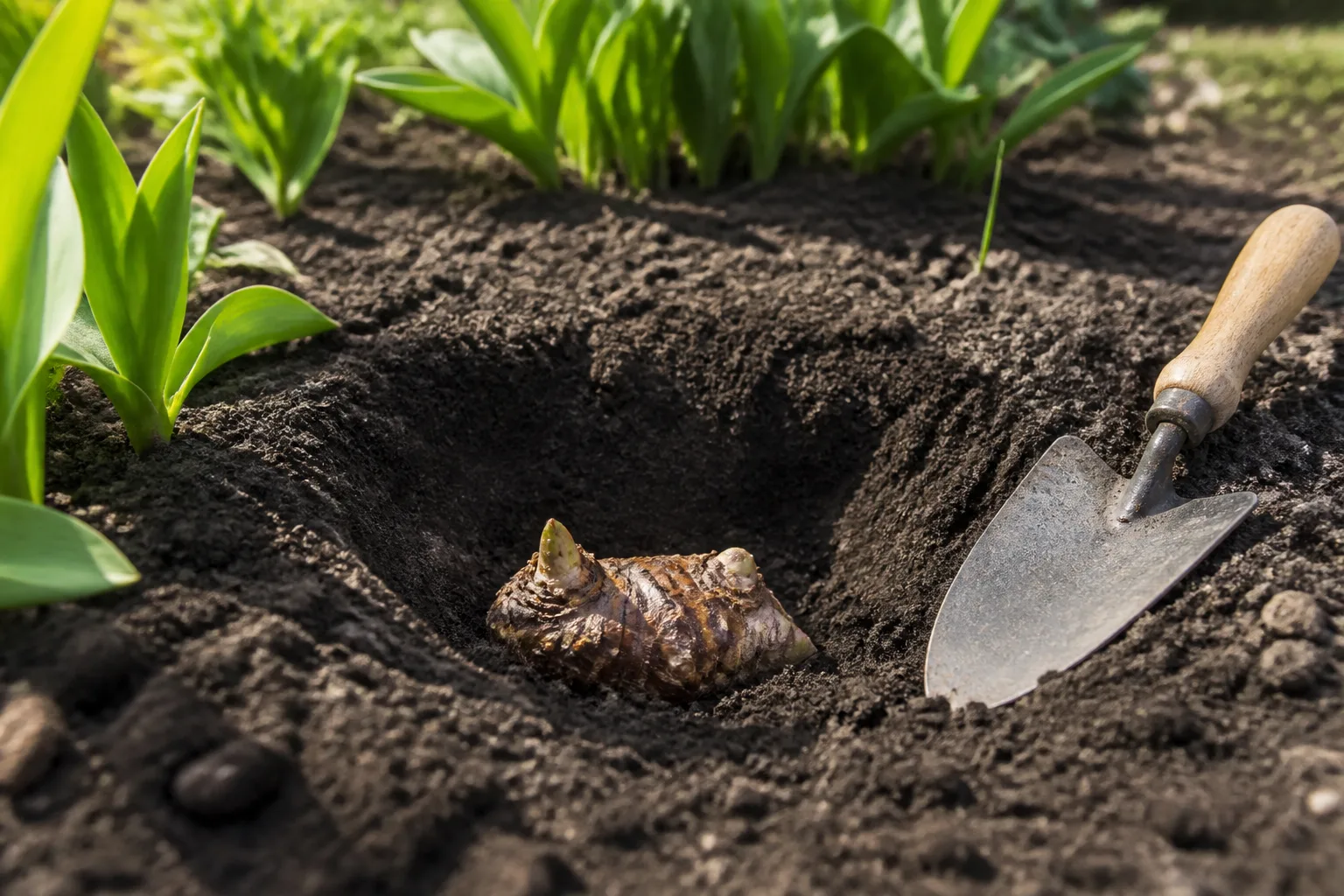
Timing: Plant outdoors after your last frost date when soil has warmed to roughly 60°F. In zones 6–7, start rhizomes in 12-inch pots indoors four to six weeks earlier so plants are actively growing when moved outside — cool springs delay outdoor-planted rhizomes by weeks (BBC Gardeners’ World).
Spacing: Set rhizomes 12 inches to 3 feet apart depending on mature size. Dwarf types like ‘Lucifer’ (about 2 ft) need less room than six-foot ‘Tropicanna’ selections. Crowded clumps compete for nutrients and bloom less.
Depth and orientation: Dig a hole 4 to 6 inches deep, lay the rhizome horizontally with eyes up, backfill, and water thoroughly. In heavy clay, plant slightly shallower and mound soil for drainage.
Buying tip: Purchase rhizomes with plump, firm tissue and visible eyes. Soft, moldy, or eyeless pieces rarely recover. In recent years canna virus has spread through infected stock — buy from reputable growers and destroy (do not compost) any plant showing mosaic-streaked leaves or stunted distorted growth (BBC Gardeners’ World).
Fertilizing Canna Lilies
Cannas are heavy feeders. Rhizomes store some reserves, but active summer growth drains them quickly. Apply a balanced slow-release fertilizer (such as 10-10-10) at planting, then feed again at midsummer. For bloom emphasis, a phosphorus-forward formula like 5-10-5 in early spring supports flower production without excessive leafy growth.
In containers, mix slow-release granules into potting soil at planting and supplement with liquid feed every two to three weeks during peak summer. Organic gardeners can top-dress with compost monthly. Over-fertilizing with high nitrogen alone produces huge leaves and fewer flowers — balance matters more than volume.
Standout Canna Cultivars to Try
Hundreds of hybrids exist. These five cover the main foliage and height niches:
- ‘Lucifer’ — Compact 2 ft plants; red flowers with yellow edges; green leaves. Good for front-of-border or pots.
- ‘The President’ — Scarlet blooms on 3–3.5 ft stems; reliable mid-height workhorse.
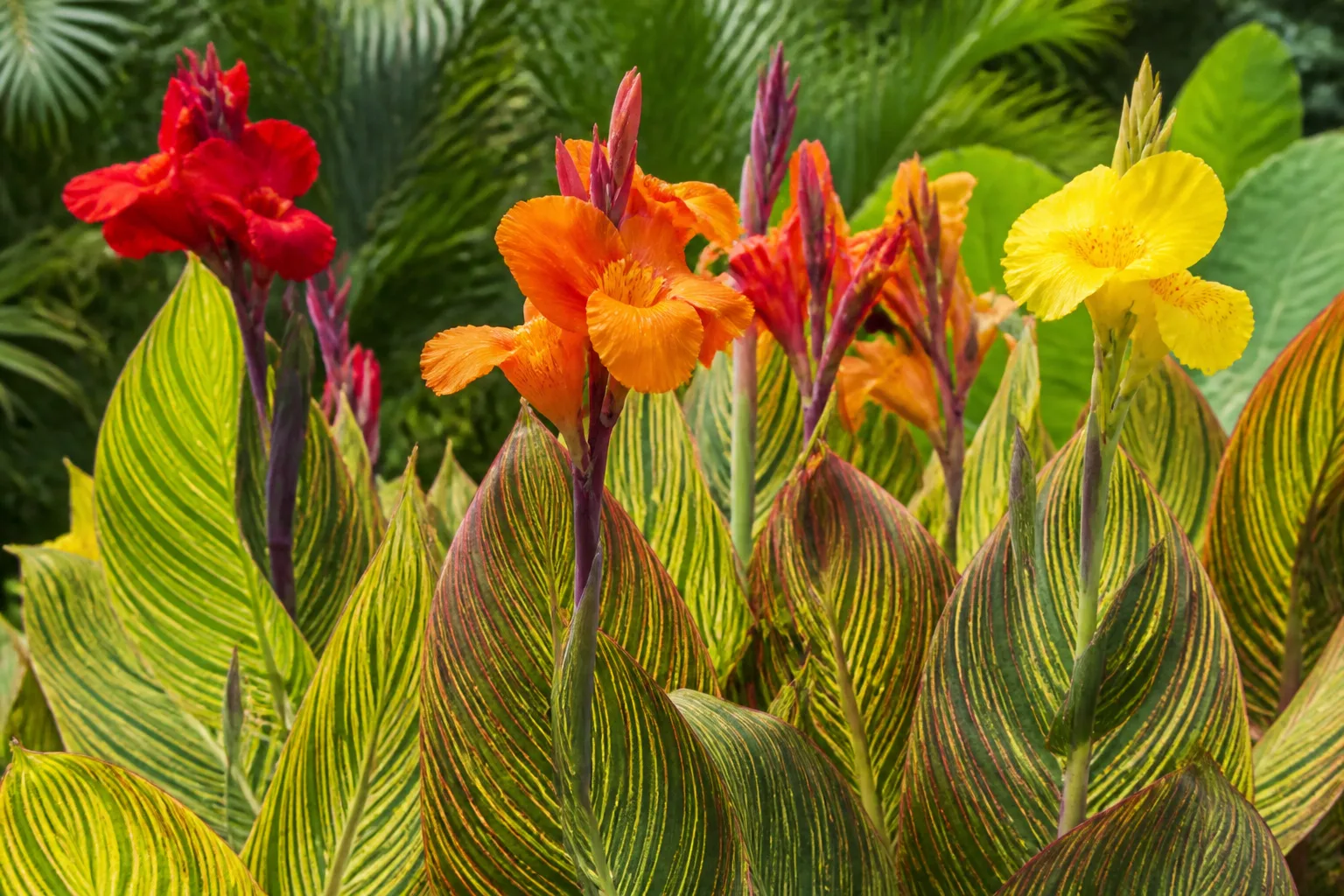
- ‘Pretoria’ (Bengal Tiger) — Iconic yellow-and-green striped foliage with orange flowers; reaches 4–6 ft. Needs space.
- ‘Stuttgart’ — Green-and-white variegated leaves with orange blooms; 3–4 ft; brightens partial-shade edges.
- ‘Tropicanna’ — Dark burgundy-striped foliage with orange or gold flowers; up to 6 ft; the boldest tropical look.
Dwarf series and virus-tested stock from specialty growers are worth the premium if you have had streaked, weak plants before. Height on the label is a guide — rich soil and long season can push cannas taller than catalog claims.
Growing Cannas in Containers and Water Gardens
Containers solve two problems: frost protection (roll pots into a garage) and scale control on patios. Choose a pot at least 16 inches in diameter — 18 to 24 inches is better for tall cultivars — with multiple drainage holes. Heavy ceramic or fiberglass resists tipping when six-foot stems catch wind.
Use quality potting mix amended with compost and slow-release fertilizer. Plant rhizomes at the same 4- to 6-inch depth as in ground. Water when the top inch dries; container cannas may need daily watering in July heat.
Beside ponds, plant cannas so the crown sits at or slightly above the normal water line — roots in moist soil, not permanently submerged crowns. Canna glauca handles wetter conditions than most × generalis hybrids if you want a true marginal pond plant.
Repot when roots circle the pot or poke through drainage holes, typically every two years. Upsize one container size in early spring before outdoor placement.
Pruning, Deadheading, and Division
Deadheading spent flowers just above the second node on the stalk encourages additional bloom shoots. Snip the entire stalk when florets finish rather than leaving dried spikes — they attract botrytis in humid weather.
If you grow cannas for foliage only, remove flower buds as they form so energy stays in leaves. This is common with heavily variegated types where blooms are secondary.
Division keeps clumps vigorous. Every two to three years — in spring before planting out, or in fall when lifting for storage — cut rhizomes apart with a clean knife. Each piece needs at least two or three eyes. Let cut surfaces dry a few hours before replanting or storing to reduce rot entry.
Prune frost-killed foliage to 6 inches in fall (cold zones) or remove tattered leaves anytime for aesthetics. Cannas do not need staking unless grown in very windy, shaded sites where stems stretch thin.
Overwintering Rhizomes Step by Step
For gardeners in zones 6–7 (and zone 8 where winters are wet), indoor storage is the reliable path:
- After first frost, cut stems to 6 inches and dig the clump carefully.
- Shake off soil and dry rhizomes in a shaded, airy spot for 1–3 days.
- Trim roots and break apart oversized clumps if desired.
- Pack loosely in peat moss, vermiculite, or slightly damp sawdust inside perforated bags or crates.
- Store at 41–50°F (5–10°C) in a dark, dry basement, crawl space, or unheated garage that does not freeze (NC State Extension).
- Inspect monthly; remove rotting pieces and mist packing material if everything shrivels.
In zone 8, a 6-inch mulch layer over the crown after cutting back may suffice on well-drained sites. In zones 9–10, simply remove dead leaves and allow new shoots to emerge in spring. Potted plants can move to a cool indoor room (50–60°F) with minimal watering — they will go dormant without bright grow lights.
Common Pests and Diseases
Cannas are generally tough when sited correctly. Problems cluster around wet crowns, crowded airspace, and virus-infected planting stock.
Insects That Attack Canna Foliage
- Lesser canna leafroller (Geshna cannalis) — Caterpillars stitch leaves together with silk and feed inside rolled tubes. Unroll affected leaves and crush larvae, or use Bt (Bacillus thuringiensis) on young caterpillars. Severe infestations may need targeted insecticide per label directions.
- Slugs and snails — Ragged holes and slime trails on lower leaves, especially in wet springs. Hand-pick at dusk, use iron phosphate baits, or improve air circulation.
- Japanese beetles — Skeletonize foliage in midsummer in eastern gardens. Knock into soapy water mornings; avoid broad sprays that harm pollinators on neighboring plants.
- Aphids — Curling leaves and sticky honeydew; blast with water or apply insecticidal soap on serious colonies.
Fungal and Bacterial Issues
- Botrytis blight — Gray fuzzy mold on spent flowers and injured tissue in humid weather. Remove infected parts; improve spacing; avoid overhead evening watering.
- Rust — Orange pustules on leaf undersides. Remove affected leaves; do not overhead water; fungicide only if recurring on valuable specimens.
- Bacterial blight — Water-soaked lesions in extended wet periods. Often fatal; destroy infected plants and rotate planting sites.
- Aster yellows and mosaic virus — Stunted growth, yellow streaking, distorted flowers. No cure — dig and destroy; buy clean stock next season.
Encouraging Reliable Summer Blooms
Bloom timing depends on heat and day length. Cool springs delay emergence; pre-sprouting indoors closes that gap. Once growing, cannas need full sun, steady moisture, and midsummer feeding to keep spikes coming through September.
A single floret lasts up to a week; deadheading the spike after the top flowers fade triggers side shoots lower on the stem. If plants bloom poorly despite good care, check planting depth (too deep), crowding (divide clumps), and shade creep from neighboring trees that grew since you first planted.
Rhizomes with fewer than three eyes often produce foliage-first plants the first year — normal, not failure. Second-year clumps from the same rhizome are dramatically fuller.
Conclusion
Canna lilies reward gardeners who treat them as rhizome-grown tropicals, not hardy true lilies. Match sun and moisture, feed twice a season, and choose a winter strategy honest to your zone — mulch in mild, dry zone 8; lift and store at 41–50°F in zones 6–7. Plant firm rhizomes with three to five eyes, deadhead through summer, and divide before clumps choke themselves out. Do that and cannas become one of the most cost-effective drama plants in the garden: one rhizome, many years of paddle leaves and hummingbird-bright flowers from midsummer until frost.



