How to Grow and Care for Gladiolus
Gladiolus corms need warm soil, deep planting, and a clear lift-or-leave plan by zone. Learn spacing, succession planting, staking, storage, and pest fixes.
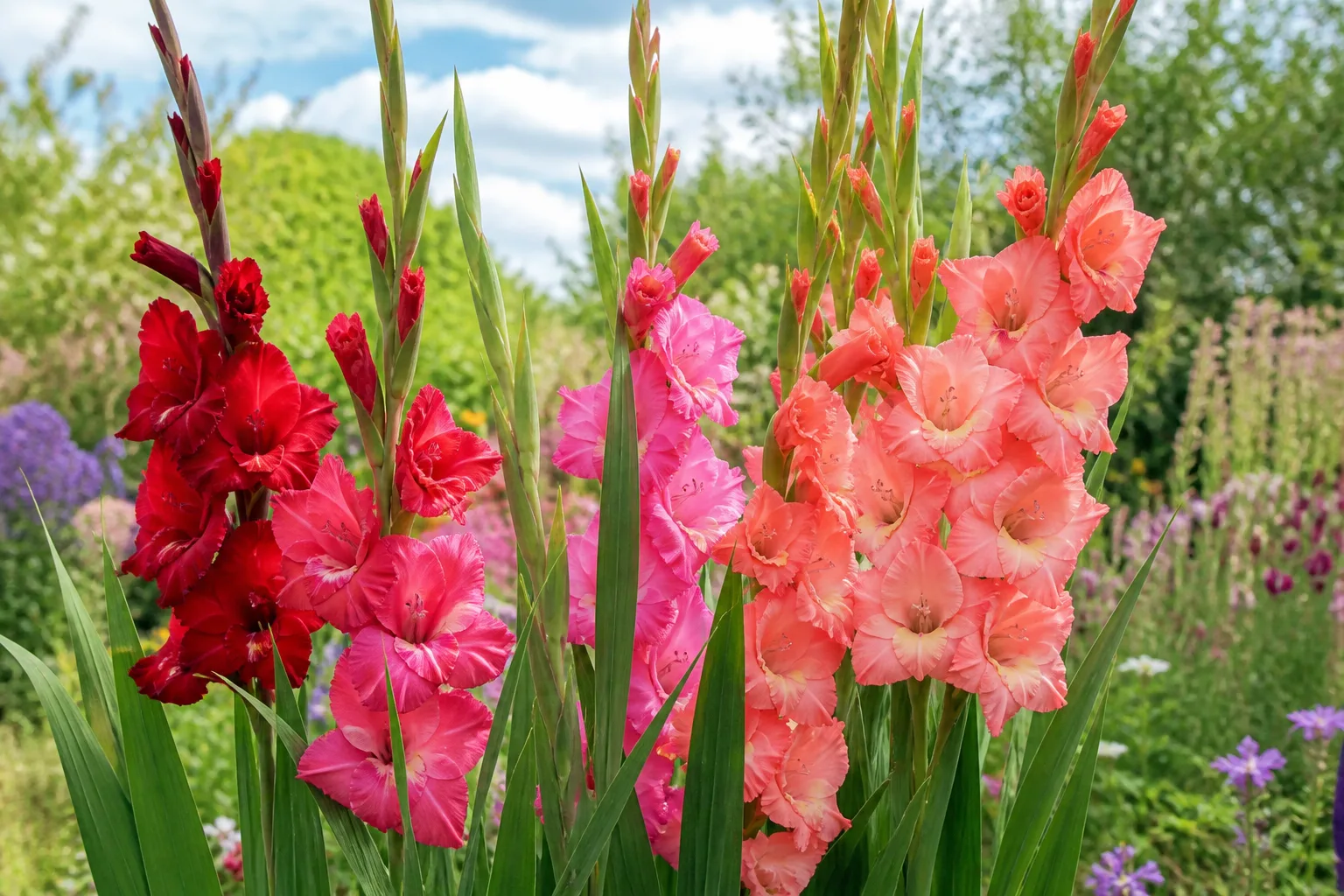
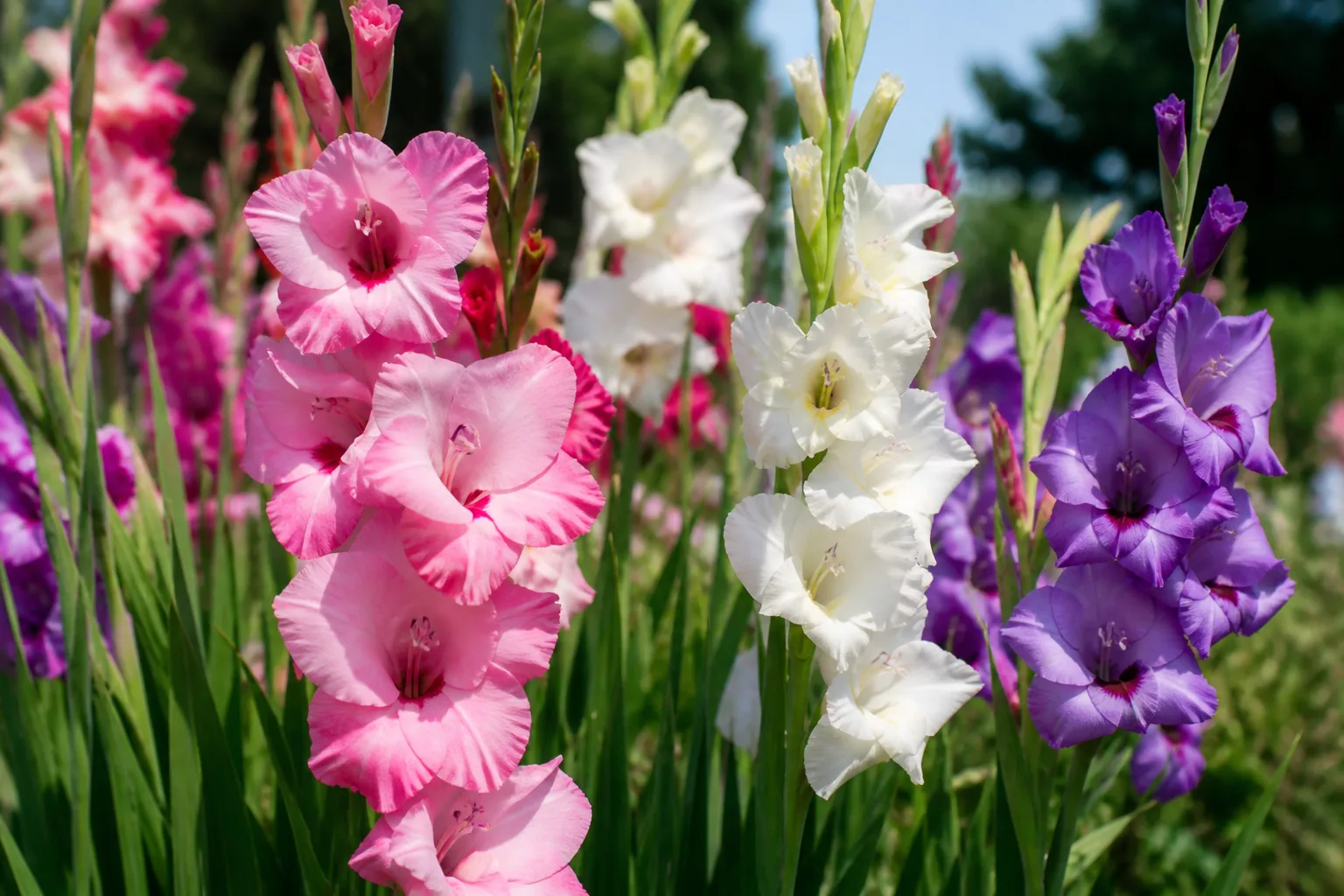
Gladiolus — also called sword lily or flag flower — is the summer bulb (technically a corm) that delivers vertical drama faster than almost anything else in a sunny border. Spikes open from bottom to top in red, pink, coral, yellow, purple, white, and green shades, and a single row can supply weeks of cut flowers for the house. The catch is that gladiolus rewards precise timing and punishes guesswork: plant too early in cold soil and corms rot; plant too shallow and stems flop; skip winter storage in the wrong zone and you start over next spring.
This guide covers the decisions that actually determine success — corm size and depth, succession planting for staggered bloom, when to lift versus leave in the ground, and how to tell fusarium yellows from a simple watering mistake.
Why Gladiolus Belongs in a Summer Garden
Gladiolus is a genus of roughly 300 species in the iris family (Iridaceae). Garden hybrids produce flower spikes from 2 to 5 feet tall on sword-shaped leaves, making them ideal for the back of a border, a cutting row, or a narrow strip where height matters more than width. Each spike carries a dozen or more trumpet-shaped florets that open in sequence, so one stem gives you a vase that evolves over a week instead of collapsing after two days.
Unlike taprooted perennials that sulk after transplant, gladiolus is built for seasonal planting. You buy dry corms in spring, set them out after the soil warms, and harvest color by mid- to late summer. In USDA zones 7 through 11, corms can overwinter in well-drained soil and return for several years. In colder zones, most gardeners treat grandiflorus hybrids as annuals or lift corms each fall — a little extra work, but the flower show is worth it.
Gladiolus also earns its place in mixed plantings because pollinators visit the open florets, and the rigid vertical line contrasts beautifully with mounding plants like zinnias or rounded dahlia forms planted in front.
Gladiolus at a Glance
| Feature | Details |
|---|---|
| Common names | Gladiolus, sword lily, flag flower |
| Type | Corm (bulb-like underground stem) |
| Family | Iridaceae (iris family) |
| Mature height | 2–5 ft (dwarf types 12–24 in.) |
| Sun | Full sun; tolerates light afternoon shade |
| Soil | Well-drained, fertile; sandy loam ideal |
| Soil pH | 6.0–6.5 preferred; 6.6–7.0 helps limit fusarium |
| Bloom time | Summer through first frost (staggered by planting date) |
| Hardiness | Most hybrids perennial in zones 7–11; lift in colder zones |
| Toxicity | Toxic to dogs, cats, and horses (ASPCA) |
| Native range | Africa, Mediterranean, parts of Europe and Asia |
One honest limitation up front: hybridizers have expanded the palette enormously, but true blue gladiolus does not exist. If a catalog shows sky-blue spikes, read the fine print — it is usually lavender or violet marketed as blue.
Corms Versus Bulbs: What You Are Actually Planting
Gardeners call them gladiolus bulbs, but the storage organ is a corm — a compressed stem base, not a layered bulb like an onion. Each season one corm produces roots, leaves, and a flower spike, then dies after flowering. A new corm forms on top of the old shriveled one, and tiny cormlets (offsets) develop around the base.
That lifecycle matters for three practical reasons. First, corm size predicts bloom: premium corms 1¼ inches (3 cm) or larger produce heavier spikes; dime-sized cormlets may not flower until their second year. Second, planting depth anchors the spike: shallow corms heave out of soil during freeze-thaw cycles and produce weak stems. Third, storage focuses on the new corm, not the spent basal plate — you twist off and discard the old shriveled corm after drying.
Many mail-order corms arrive pre-treated with hot water and fungicide. That is worth paying for if you have had fusarium or botrytis problems before, because infected stock is the fastest way to lose an entire row.
Zone-by-Zone Decision: Lift, Mulch, or Leave in the Ground
The single most searched gladiolus question is whether corms can stay in the ground over winter. The answer depends on your USDA zone, soil drainage, and which type you grow — not a one-size-fits-all rule.
Zones 8–10 (mild winters): Grandiflorus garden hybrids often survive in the ground if drainage is excellent. A south-facing border with a wall behind it and a dry winter mulch of bark or straw gives the best odds. Even here, a wet winter can rot corms — lifting is safer if your soil holds moisture.
Zone 7 (borderline): Some gardeners leave corms in place on sandy, raised beds and see return blooms; others lift every fall. Treat zone 7 as a test year: mark where you planted, note winter rainfall, and adjust.
Zones 3–6 (cold winters): Plan to lift corms before the ground freezes unless you are growing exceptionally hardy types like Gladiolus nanus hybrids rated to zone 4. Ground that freezes solid will kill most grandiflorus corms.
Hardy species option: Gladiolus communis subsp. byzantinus (Byzantine gladiolus) is a shorter, orchid-like magenta species that naturalizes in well-drained sunny sites and tolerates colder winters than tall hybrids. It is a different look — looser, smaller flowers — but it solves the lifting chore in zones 5–6 on the right site.
If you are unsure, lift. A dried corm in a labeled paper bag beats a blank spot in next June’s border.
When and How to Plant Gladiolus Corms
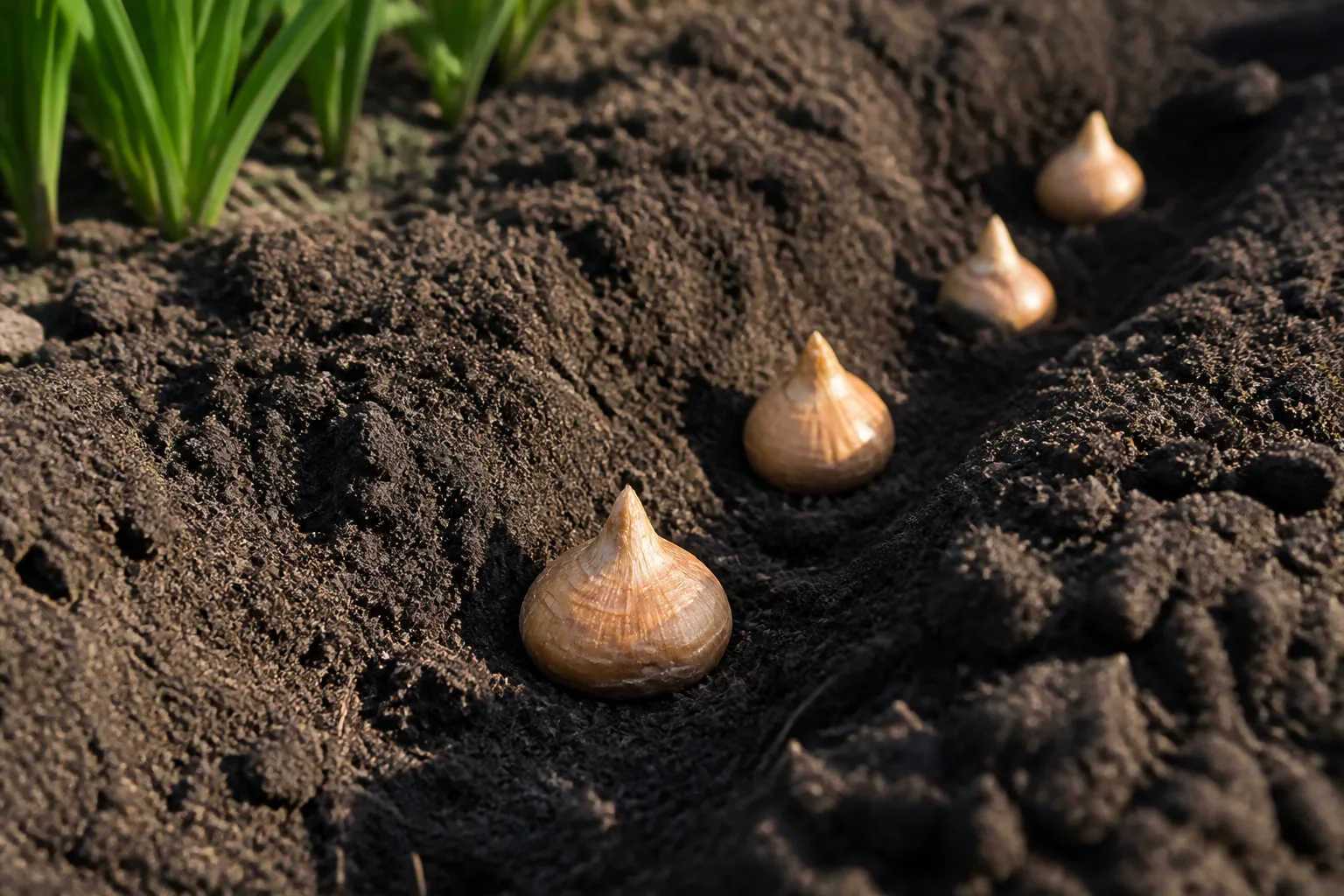
Timing is everything. Gladiolus planted in cold, wet soil sits idle and rots. Wait until all danger of frost has passed and night temperatures stay above about 50–55°F (10–13°C). A useful phenological cue: plant when deciduous trees leaf out in your area. Soil temperature around 55–60°F (13–16°C) at planting depth is the target.
Planting depth and spacing follow corm size. The RHS recommends planting large-flowered hybrids at a depth of three corms stacked — roughly 4 to 6 inches (10–15 cm) — with the pointed side up. Space corms at a distance equal to their depth (about 4–6 inches apart). On sandy soil, go slightly deeper for wind stability; on heavy clay, improve drainage first rather than planting shallow.
Work the bed to 12 inches deep and mix in compost. A light dusting of bone meal or a balanced slow-release fertilizer at planting supports root development without pushing excess nitrogen. Set stakes at planting time if your site is windy — driving a cane in later risks spearing the corm.
For a cutting garden, dig a 6-inch-wide trench and stagger corms in a zigzag every 6 inches. For border drifts, a 3×3 grid in an 18-inch square gives nine spikes with enough room for foliage.
Succession Planting for Weeks of Bloom
A single planting blooms for roughly two to three weeks, then that group is done. To stretch color from July through frost, plant a fresh batch every 10 to 14 days from spring until midsummer (about 10 weeks before your average first frost). Keep a simple log: “Batch 1 — April 20, Batch 2 — May 1,” and so on. The last plantings will be shorter but still worth it for September vases.
Light, Soil, Water, and Fertilizer
Light: Full sun — at least six hours of direct sun daily — produces the straightest stems and fullest spikes. Gladiolus tolerates light afternoon shade but blooms less heavily and may lean toward brighter light.
Soil: Any well-drained soil works if you never let corms sit in standing water. Sandy loam is ideal. Heavy clay benefits from compost, raised beds, or a berm. Aim for pH 6.0–6.5; Penn State Extension notes that maintaining pH 6.6–7.0 and using nitrate nitrogen rather than ammonium can help suppress fusarium yellows in infested soils (Penn State Extension: Gladiolus Diseases).
Water: Water thoroughly at planting, then keep soil evenly moist until shoots emerge. Once foliage is 6–8 inches tall, provide about 1 inch of water per week from rain and irrigation combined. Overhead watering that soaks flowers and leaves overnight encourages botrytis — water at the base in the morning.
Fertilizer: When the leaf sheath thickens and the flower spike is about to emerge, switch to a potassium-rich liquid feed (tomato fertilizer diluted per label). Avoid high-nitrogen formulas after early growth; excess nitrogen produces lush leaves and few flowers. One application at spike emergence is usually enough for the season.
Staking Tall Spikes Without Damaging Roots
Grandiflorus hybrids on open, windy sites need support or they snap just as buds color. Install stakes when you plant — bamboo canes around a cluster, or a horizontal mesh (pig wire or garden netting) for long rows. Tie stems loosely with soft twine at half to two-thirds of mature height.
Drive stakes at least 4 inches outside the corm so you do not puncture the storage organ. Dwarf nanus types and Byzantine gladiolus rarely need staking at 18–24 inches, which is one reason they work well in exposed cottage gardens.
Growing Gladiolus in Containers
Gladiolus grows well in pots at least 12 inches deep with drainage holes. Use quality potting mix amended with compost. Plant corms 3–4 inches deep, 3–4 inches apart — closer than in-ground spacing because you will not leave them in the pot year after year in most climates.
Containers dry faster than garden soil, so check moisture daily once growth starts. Move pots to a frost-free garage or shed in zones 6 and colder, or lift corms in fall because pot soil freezes harder than in-ground soil. Expect to repot or refresh mix when corms crowd the surface — usually every two to three years if you overwinter in place in mild zones.
Best Gladiolus Varieties for Borders and Bouquets
Most catalogs sell grandiflorus hybrids in named colors and mixes. A few types solve specific garden problems:
- ‘Atom’ — cherry-red with a white picotee edge; classic show-bench look.
- ‘Green Lace’ — ruffled chartreuse blooms for designers who want something beyond primary colors.
- ‘Lucky Star’ — one of the few fragrant modern hybrids; white with red throats.
- Nanus hybrids — dwarf, 12–18 inches, hardier (to zone 4 in well-drained sites), excellent for front-of-border color.
- Gladiolus communis subsp. byzantinus — magenta orchid-like flowers, 18–24 inches, can naturalize without annual lifting in warmer pockets of zone 6.
- Acidanthera (Gladiolus murielae) — late-summer white stars with dark purple throats; plant in late spring for September fragrance.
Buy the largest corms your budget allows for cutting rows; save smaller cormlets for propagation beds where you are willing to wait a year for bloom.
Deadheading, Cutting, and Post-Bloom Care
For garden display, snip spent florets individually as they fade — the spike keeps opening upward. Once the top floret is done, cut the entire spike unless you want seed (seed takes years; most gardeners skip it).
For cut flowers, harvest when the lowest one or two florets open and the next three to four buds show color. Cut early morning with sharp pruners, leaving as much foliage on the plant as possible. Those leaves photosynthesize and rebuild the corm for next year. Strip the bottom third of the stem for vase water, use clean water with flower food, and keep vases out of direct sun.
After bloom, let foliage continue photosynthesizing until it yellows naturally — usually six to eight weeks after flowering for summer hybrids. Do not braid or rubber-band leaves; that reduces energy storage in the corm.
Lifting, Drying, and Storing Corms for Winter
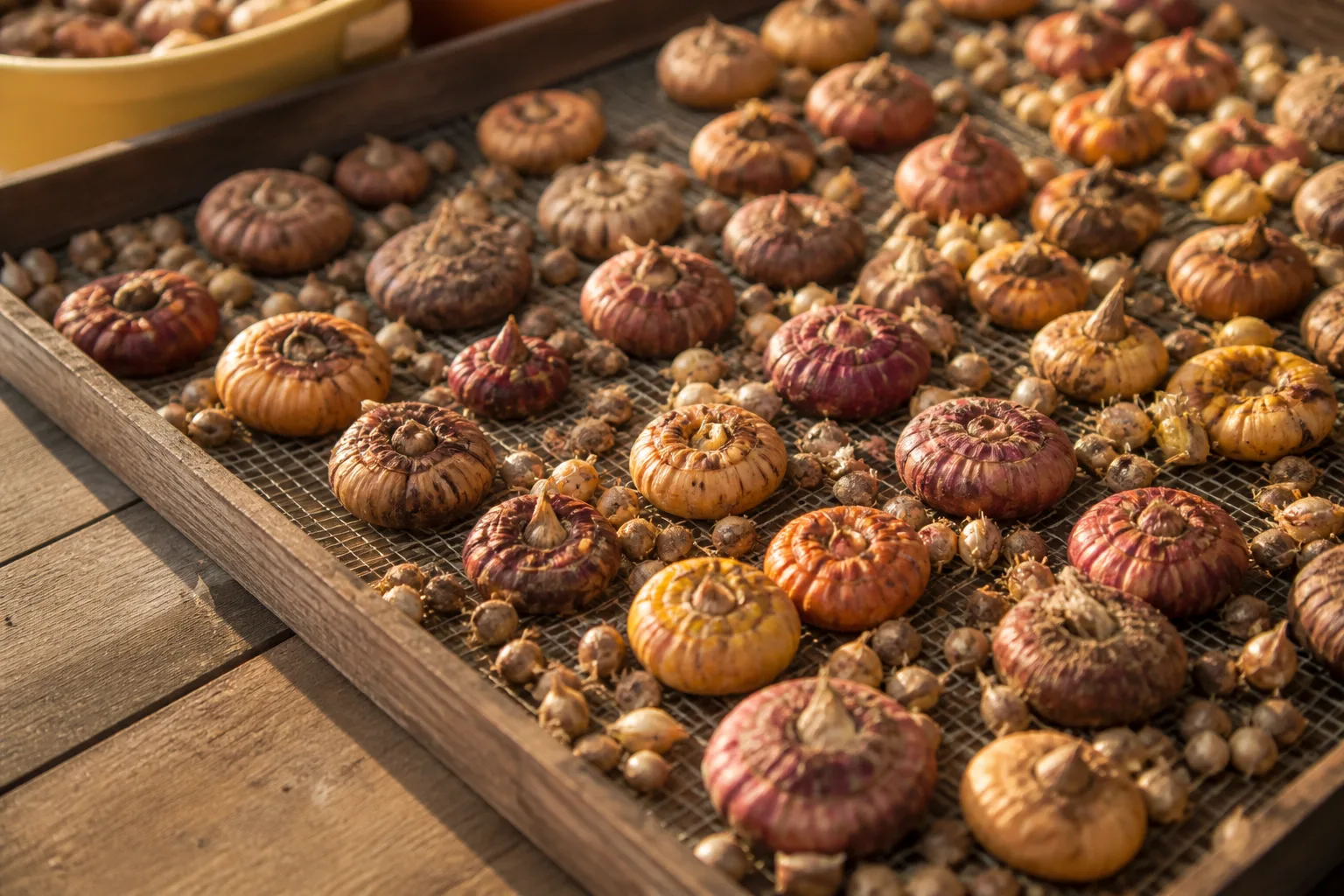
In lift zones, dig corms after foliage begins to yellow but before a hard freeze — typically six weeks after the last spike finishes. Use a fork, not a shovel, and lift gently to avoid slicing corms.
- Cut stems 1–2 inches above the corm.
- Brush off soil and separate cormlets.
- Cure in a warm, airy place (70–80°F / 21–27°C) for two to three weeks on a wire rack or tray. The Connecticut Agricultural Experiment Station recommends curing at 80°F for three weeks to reduce storage rots (CT Plant Pest Handbook: Gladiolus).
- Twist off the old dried corm from the bottom of the new plump one.
- Store in mesh bags, paper bags, or shallow trays in a cool, dry, frost-free place (40–50°F / 4–10°C is ideal). Check monthly and discard any soft or moldy corms.
Label bags by variety and planting date. Thrips overwinter in corms — storing at 40–45°F breaks their cycle, and a pre-plant soak in dilute disinfectant (per label rates) adds another layer of protection before spring planting.
Propagating Gladiolus from Cormlets
Every season a healthy corm produces multiple cormlets around its base. After lifting, save pea-sized offsets in labeled bags with the parent variety. Plant cormlets in a nursery row 2 inches deep the following spring. Most flower in year two; jumbo cormlets may bloom late in year one.
To speed up increase, give cormlet rows extra water and light feeding, then lift and sort again in fall. Discard any corms showing fusarium streaks or sunken scab lesions — one infected corm can contaminate a tray.
Growing from seed is possible but slow: allow seed pods to mature on the stalk for six weeks after bloom, sow indoors in spring, and expect three to five years before flowering-size plants. Seed is for breeders and patient collectors, not quick garden color.
Common Pests and Diseases
Gladiolus problems usually trace to one of three causes: infected stock, wet soil, or insects that overwinter in corms. Catching the right one saves you from treating the wrong problem.
Cutworms chew stems at soil level at night. Look for wilted shoots and check under mulch. Hand-pick at dusk or use Bt on young larvae.
Aphids (including tulip aphid) cluster on new growth and stored corms. A 110°F water soak for 30 minutes on infested corms before planting kills aphids without cooking the corm — test with a thermometer and timer.
Spider mites cause stippled yellow leaves in hot dry weather. Insecticidal soap or horticultural oil on a calm morning provides contact control; avoid broad-spectrum pyrethroids that kill predatory mites.
Thrips, Fusarium, and Botrytis
Gladiolus thrips (Thrips simplex) are the most serious insect pest. Adults and nymphs scar leaves and buds, leaving silvery streaks and brown flecks. Flower buds may fail to open. Thrips hide in corm sheaths, so sprays after damage appear often miss them. Prevention: buy clean stock, store corms cool (40–45°F), and consider a pre-plant soak. The CT Agricultural Experiment Station notes that thrips overwinter in corms and that cool storage breaks the life cycle (CT Plant Pest Handbook: Gladiolus).
Fusarium yellows (Fusarium oxysporum f. sp. gladioli) causes yellowing leaves, stunted growth, and S-curved flower stalks. Cut a suspect corm in half and look for brown streaks radiating from the core. There is no cure — remove infected plants, do not compost corms, and rotate out of that bed for at least four years. Penn State Extension recommends avoiding infected corms, maintaining pH 6.6–7.0, and using nitrate nitrogen (Penn State Extension: Gladiolus Diseases).
Botrytis thrives in humid, crowded plantings. Gray fuzzy mold on spent flowers spreads to leaves and corms. Remove spent blooms promptly, space plants for airflow, and avoid wetting foliage at night. Cure corms thoroughly after lifting; botrytis progresses even at cool storage temperatures if corms go into storage damp.
Scab (bacterial) shows as raised reddish-brown spots on corms and stems at the soil line. Plant only firm, lesion-free corms in well-drained soil and disinfect tools between cuts.
If leaves turn yellow but corms are firm and streak-free, check watering first — soggy soil causes root decline that mimics disease.
Pet Safety and Toxicity
Gladiolus is toxic to dogs, cats, and horses, according to the ASPCA. The toxic principle is not fully identified, but the highest concentration is in the corms. Ingestion can cause salivation, vomiting, drooling, lethargy, and diarrhea. Store lifted corms where pets cannot reach them, and supervise dogs that dig in bulb beds.
If you need pet-safe vertical summer color, grow zinnias or snapdragons instead — or plant gladiolus in a fenced cutting garden away from curious animals.
Companion Planting to Hide Bare Stems
Gladiolus foliage is upright but uninspiring before and after bloom — the “awkward phase” every glad grower knows. The fix is foreground planting: set corms behind medium-height partners that peak when glads finish.
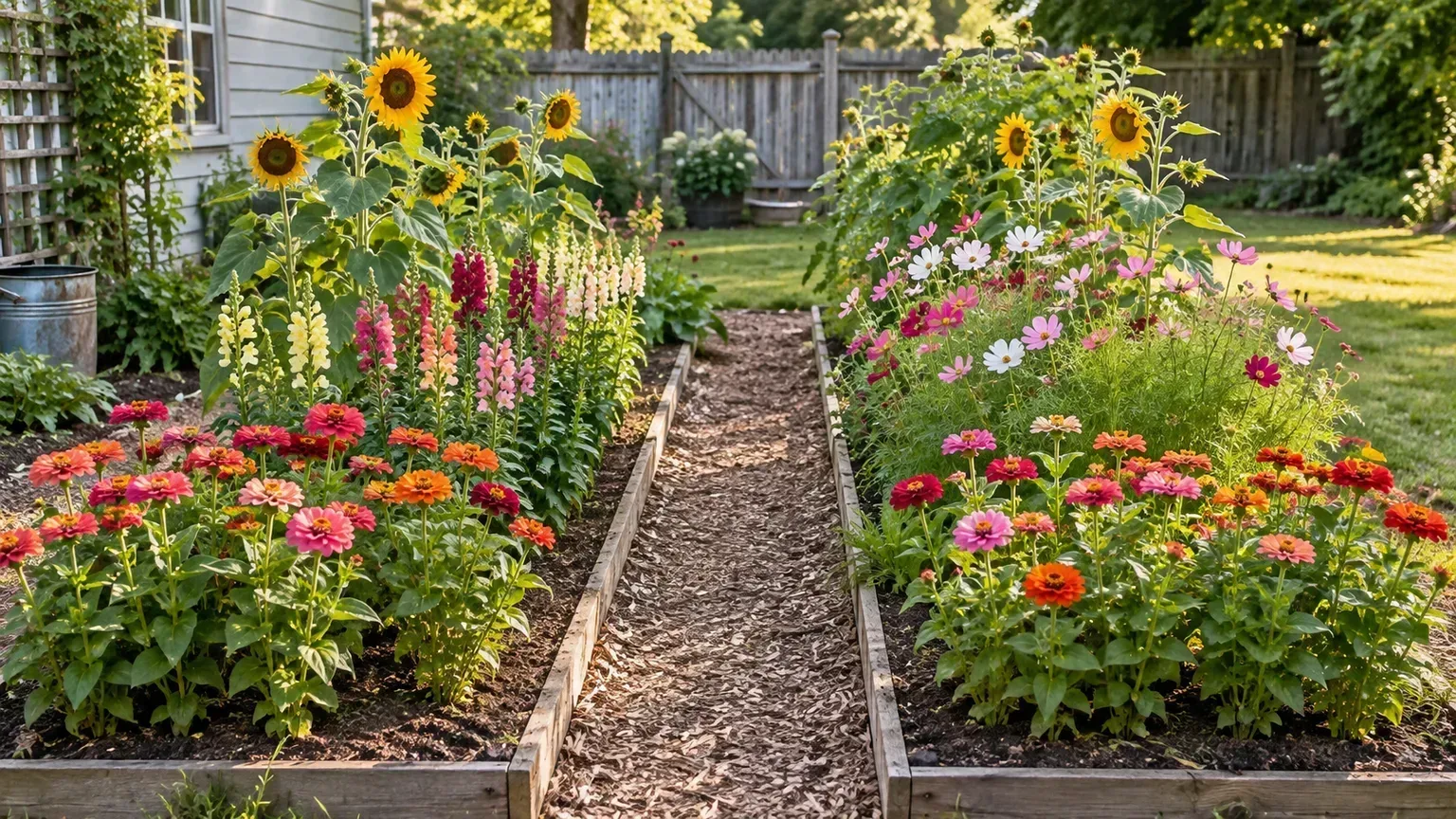
Zinnias and dahlias are classic companions because they fill the color gap in late summer. Low mounding annuals like marigolds or verbena in front hide bare glad stems without competing for the same root zone. For a cohesive look, match warm or cool color families — coral glads behind peach zinnias, or purple glads in front of silver artemisia.
In vegetable gardens, a row of glads along the north side of a tomato bed adds cut flowers without shading crops. See companion plants for zinnias for more pairing ideas that use the same succession logic.
Conclusion
Gladiolus is not a plant-it-and-forget bulb. It is a seasonal corm crop that pays back when you respect warmth, depth, and storage. Plant after the soil warms, go deep on large corms, stagger batches for continuous bloom, stake before stems lean, and lift in cold zones with a proper cure before winter. Watch for thrips and fusarium early — both are easier to prevent than to fix mid-season.
Get those five decisions right and gladiolus becomes one of the cheapest ways to fill a house with professional-looking spikes from July until frost. Skimp on depth or storage, and you will wonder why the catalogs oversell a plant that is actually straightforward once you treat it like the corm it is, not the set-and-forget tulip it is not.