Gladiolus Care Guide: Growing Corms and Flower Spikes
Gladiolus spp. (garden hybrids)
Learn how to grow gladiolus in full sun with steady moisture and free-draining soil. Find out when to plant corms, support tall spikes, and store tender varieties through winter.
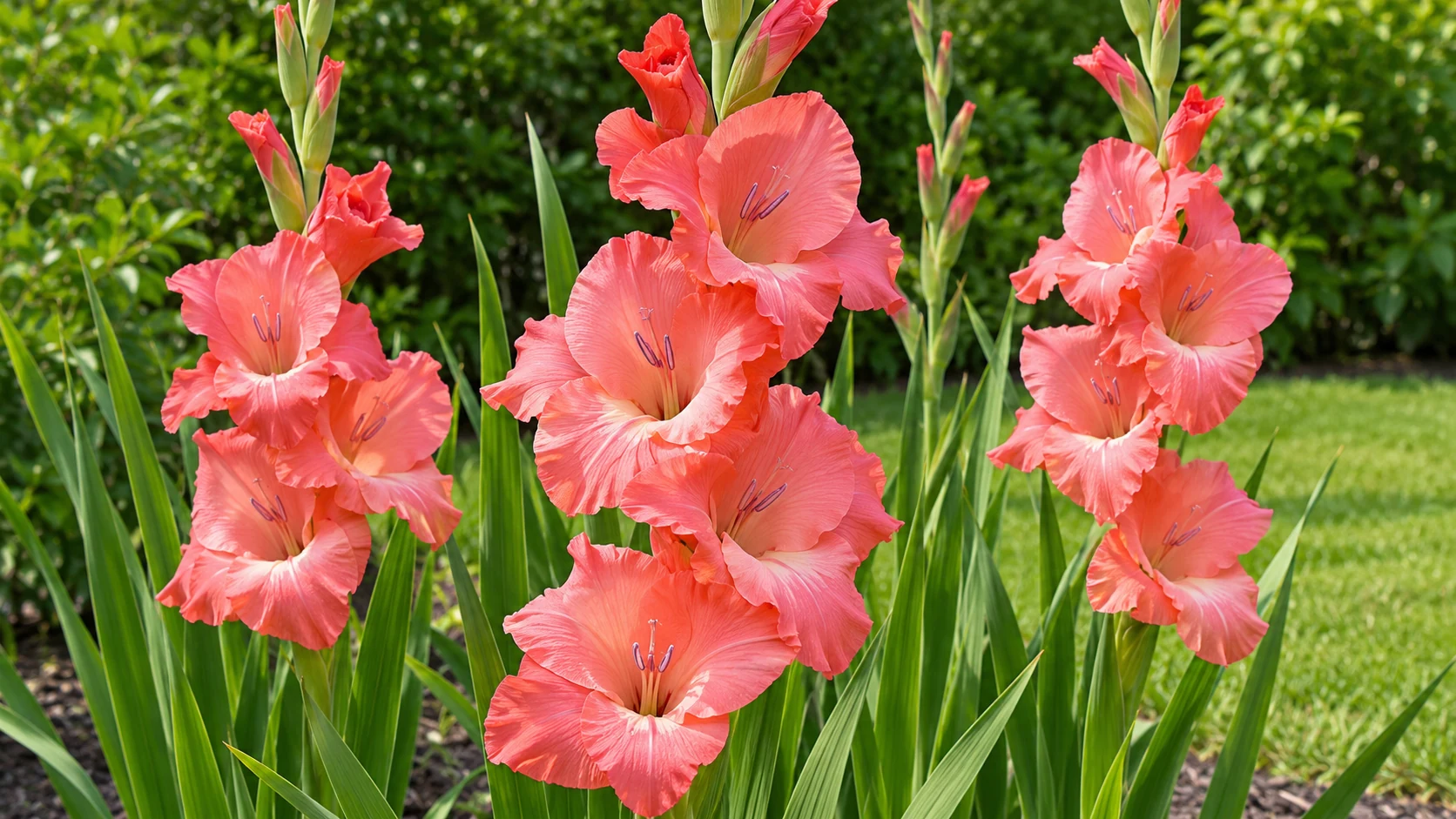
Gladiolus Care Guide: Planting and Growing Sword Lilies
Start with wateringThe most common care mistake for GladiolusWatering guide →Gladiolus care essentials
Light
Water
Keep the root zone evenly moist while leaves and flower spikes are growing, especially in dry weather. Water deeply when the soil begins to dry, then let excess drain away. Gladiolus needs moisture during active growth but corms can rot in waterlogged ground, so avoid standing water and persistently soggy pots.
Soil
Choose fertile, moisture-retentive but free-draining soil or potting compost. Gladiolus adapts to many soils, but heavy clay and waterlogged beds raise the risk of corm and crown problems. Add organic matter to improve structure, and protect tall flower spikes from strong winds.
Humidity
Temperature
Fertilizer
About Gladiolus
Gladiolus is native to Africa, Madagascar, and Eurasia; range varies by species, typically reaches Size varies by species and cultivar. Many large-flowered garden hybrids reach about 3–6 ft (0.9–1.8 m) tall and 1–2 ft (0.3–0.6 m) wide. indoors, with moderate to fast during the warm growing season growth. Gladiolus has a corm forming herbaceous perennial; many popular garden hybrids are tender and grown as summer annuals where winters freeze. growth habit and part of the Iridaceae family. It is also known as Gladiola, Glad, and Sword lily.
| Detail | Information |
|---|---|
| Also known as | Gladiola, Glad, Sword lily |
| Native region | Africa, Madagascar, and Eurasia; range varies by species |
| Mature size | Size varies by species and cultivar. Many large-flowered garden hybrids reach about 3–6 ft (0.9–1.8 m) tall and 1–2 ft (0.3–0.6 m) wide. |
| Growth rate | Moderate to fast during the warm growing season |
| Growth habit | Corm Forming Herbaceous Perennial; Many Popular Garden Hybrids Are Tender And Grown As Summer Annuals Where Winters Freeze. |
| Scientific name | Gladiolus spp. (garden hybrids) |
| Family | Iridaceae |
How to care for Gladiolus?
When should you water Gladiolus?
Keep the root zone evenly moist while leaves and flower spikes are growing, especially in dry weather. Water deeply when the soil begins to dry, then let excess drain away. Gladiolus needs moisture during active growth but corms can rot in waterlogged ground, so avoid standing water and persistently soggy pots.
- Check the soil a few centimeters below the surface. During active growth - Gladiolus needs moisture during active growth but corms can rot in waterlogged ground, so avoid standing water and persistently soggy pots.
- water thoroughly when that layer is starting to dry - Water deeply when the soil begins to dry, then let excess drain away.
- make sure excess water can drain freely from the bed or pot - Water deeply when the soil begins to dry, then let excess drain away.
- Drain excess water - Water deeply when the soil begins to dry, then let excess drain away.
What soil works best for Gladiolus?
Choose fertile, moisture-retentive but free-draining soil or potting compost. Gladiolus adapts to many soils, but heavy clay and waterlogged beds raise the risk of corm and crown problems. Add organic matter to improve structure, and protect tall flower spikes from strong winds.
- For containers
- use fertile - Choose fertile, moisture-retentive but free-draining soil or potting compost.
- free-draining potting compost in a pot with drainage holes - Choose fertile, moisture-retentive but free-draining soil or potting compost.
- In heavy garden soil - Gladiolus adapts to many soils, but heavy clay and waterlogged beds raise the risk of corm and crown problems.
- improve drainage or use a raised bed rather than leaving corms in wet clay - Gladiolus adapts to many soils, but heavy clay and waterlogged beds raise the risk of corm and crown problems.
Grower notes for Gladiolus
A gladiolus grows from a corm
Gladiolus is a genus in the iris family, not a true bulb. Its rounded corm stores energy and sends up sword-shaped leaves and upright flower spikes. Garden gladioli include many species and hybrids with different sizes and winter needs, so check the cultivar label before deciding to leave corms in the ground.
Give tall flower spikes sun and shelter
Full sun supports the strongest flowering. Pick an open spot protected from strong winds, especially for tall-flowered hybrids; use a stake or simple support if spikes start to lean. Deep shade can reduce flowering and make stems less sturdy.
Balance steady moisture with drainage
Water during dry weather while the plant is actively growing, but do not keep the corm in saturated soil. A fertile bed with reliable drainage or a container with open drainage holes is safer than frequent shallow watering in a boggy spot.
Stagger spring planting for more flowers
For common summer-flowering garden hybrids, plant corms in spring once frost risk has passed. Planting small groups a couple of weeks apart can spread the flower display and cut-flower harvest instead of bringing every spike into bloom at once.
Keep foliage while the corm recharges
After cutting or fading flowers, remove the spent spike but leave green leaves in place. They continue to feed the corm for its next growing season; wait until foliage yellows before trimming it back.
Check winter hardiness before lifting corms
Some gladioli are hardy, while many popular garden hybrids need frost-free winter storage. For tender types, lift corms at the locally appropriate time, dry them in an airy place, and store them cool and dry. Do not assume every species needs the same winter routine.
Is Gladiolus safe for pets?
ASPCA lists Gladiolus species as toxic to cats, dogs, and horses. It reports salivation, vomiting, lethargy, and diarrhea, and notes that the highest concentration is in the corms. Keep corms and plant material away from pets; contact a veterinarian or animal poison service if ingestion occurs.
ASPCA classifies Gladiolus species as toxic to cats, dogs, and horses; it lists an unknown toxic principle and says the corms contain the highest concentration. The listed clinical signs include salivation, vomiting, lethargy, and diarrhea. Do not extend those animal classifications to other species without a species-specific veterinary source.
Watering Gladiolus
For Gladiolus, check the soil a few centimeters below the surface. During active growth, water thoroughly when that layer is starting to dry; make sure excess water can drain freely from the bed or pot. and water water according to rainfall, soil, and container size rather than a fixed calendar. Check more often in hot, dry weather and in pots; garden plants on free-draining soil need extra water during dry spells. Maintain moisture as foliage and flower spikes develop. After flowering, reduce watering as foliage yellows and the corm enters dormancy. Keep lifted corms dry while they are stored for winter.
| Detail | Information |
|---|---|
| How often | Water according to rainfall, soil, and container size rather than a fixed calendar. Check more often in hot, dry weather and in pots; garden plants on free-draining soil need extra water during dry spells. |
| How to check | Check the soil a few centimeters below the surface. During active growth, water thoroughly when that layer is starting to dry; make sure excess water can drain freely from the bed or pot. |
| Seasonal changes | Maintain moisture as foliage and flower spikes develop. After flowering, reduce watering as foliage yellows and the corm enters dormancy. Keep lifted corms dry while they are stored for winter. |
Signs of overwatering
- Soil or potting compost remains saturated after watering.
- The corm or stem base softens or shows rot in persistently wet conditions.
Signs of underwatering
- The root zone is dry during active growth and leaves begin to droop.
- Flower spikes grow weakly after a prolonged dry spell.
Soil & potting for Gladiolus
Use a mix of For containers, use fertile, free-draining potting compost in a pot with drainage holes., In heavy garden soil, improve drainage or use a raised bed rather than leaving corms in wet clay. for Gladiolus. Free drainage is important. Avoid sites that stay waterlogged and use pots with open drainage holes so the corms do not sit in wet compost. Target soil pH around The sources do not give one pH target for this diverse genus; prioritize fertile, well-drained soil rather than adjusting pH without a soil test. Repot routine repotting is not needed. Lift and divide crowded container-grown corms every few years or when the clump becomes congested; many garden hybrids are lifted seasonally where they are not winter hardy., ideally in lift tender hybrids in autumn as the season ends, following local frost timing. Replant most garden corms in spring after the danger of frost has passed.
| Detail | Information |
|---|---|
| Recommended mix | For containers, use fertile, free-draining potting compost in a pot with drainage holes., In heavy garden soil, improve drainage or use a raised bed rather than leaving corms in wet clay. |
| Drainage | Free drainage is important. Avoid sites that stay waterlogged and use pots with open drainage holes so the corms do not sit in wet compost. |
| Soil pH | The sources do not give one pH target for this diverse genus; prioritize fertile, well-drained soil rather than adjusting pH without a soil test. |
| Repotting frequency | Routine repotting is not needed. Lift and divide crowded container-grown corms every few years or when the clump becomes congested; many garden hybrids are lifted seasonally where they are not winter hardy. |
| Best season to repot | Lift tender hybrids in autumn as the season ends, following local frost timing. Replant most garden corms in spring after the danger of frost has passed. |
Signs it needs repotting
- Corms and cormlets have crowded a container or bed.
- The pot stays wet for too long or has poor drainage.
- A tender hybrid needs lifting before winter in a frost-prone climate.