7 Easy Spring-Planted Bulbs for Summer Flowers
Plant seven easy spring-planted bulbs for summer color. Get frost timing, light, watering, spacing, container tips, and winter storage for each choice.
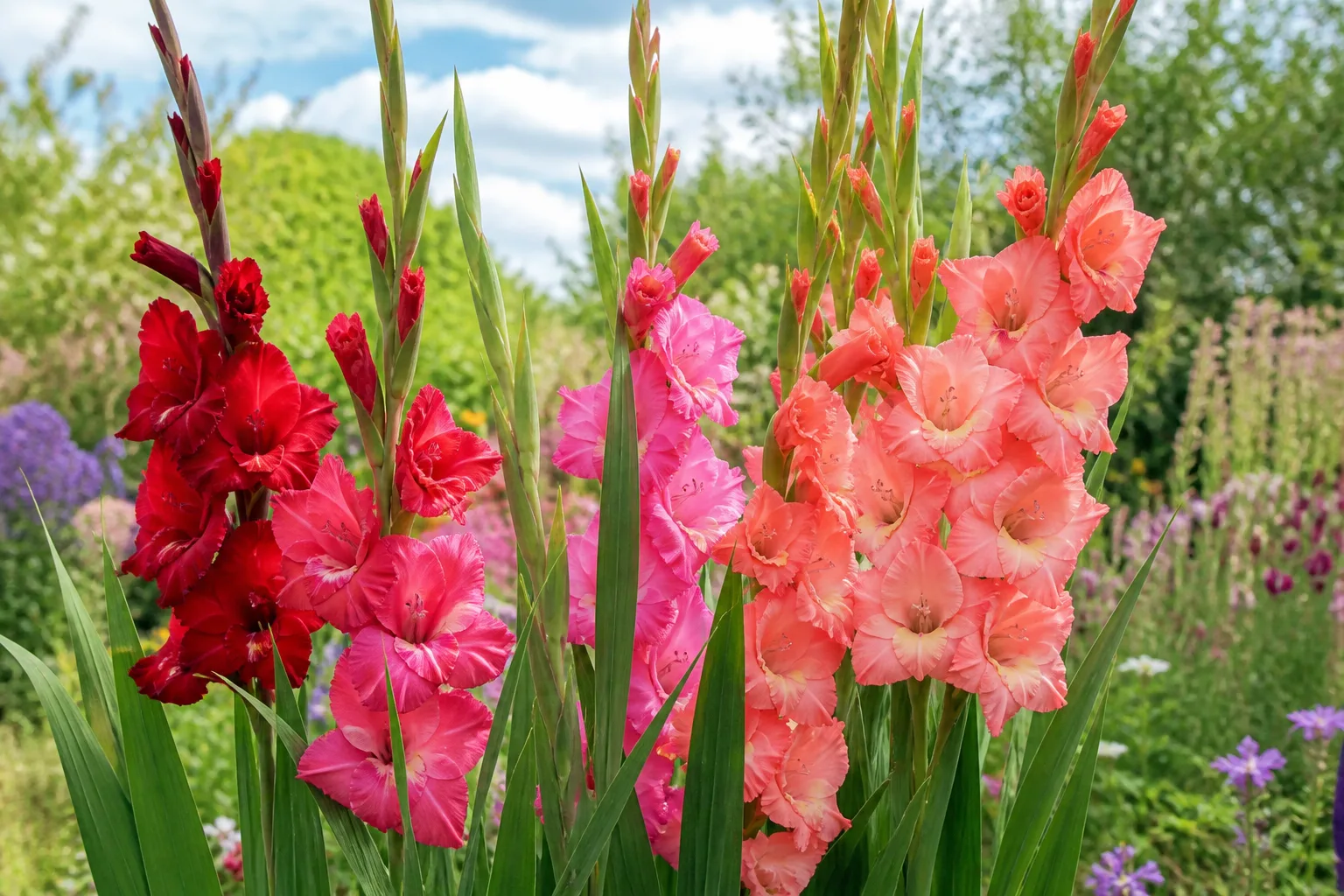
Spring is the easiest time to buy plants that will carry a garden from the first warm weeks into summer. The trick is to choose a flower whose light, water, height, and winter behavior match your space. A sunny border with dry soil wants a different choice from a shady patio pot, and a gardener in a freezing climate needs a different plan from someone whose ground never freezes.
This list includes seven reliable choices: gladiolus, dahlia, crocosmia, Asiatic lily, canna, caladium, and colocasia. They are often sold as “bulbs,” although some are corms, tubers, or rhizomes with different planting and winter routines.
Spring-planted bulbs: the one timing rule that matters
“Spring bulb” can mean two different things. Some bulbs flower in spring and are planted the previous fall, while the plants in this guide are mainly summer-flowering storage organs planted in spring. They need enough warmth to root and grow, and several cannot tolerate a late freeze after shoots emerge.
Use your local last frost date as a starting point, not a command. Frost-sensitive dahlias, cannas, caladiums, and colocasias should wait until the danger of freezing weather has passed and the soil is warming. Longfield Gardens separates frost-free regions from colder zones and recommends planting heat-loving elephant ears and caladiums later in cold areas, or starting them in pots first. (Longfield Gardens)
The exception is a hardy summer bulb such as an Asiatic lily. A dormant lily bulb can go into the ground in early spring because the bulb itself tolerates cold, but it should not sit forgotten in a dry box. Plant dormant material promptly, and always follow the packet or nursery label when it gives a cultivar-specific date.
Plant when the bed is workable, drains after rain, and tender shoots will not meet a freeze. For warm-season tubers, later planting in warming soil is usually safer than an early start in cold, saturated ground.
True bulbs, corms, tubers, and rhizomes
The word bulb is commonly used for several underground storage organs. The RHS growing guide groups them into four useful categories:
- A true bulb has fleshy layers or scales around a central growing point. Asiatic lilies are true bulbs.
- A corm is a swollen stem base, usually with a papery tunic. Gladiolus and crocosmia grow from corms.
- A tuber is a swollen root or stem used for stored energy. Dahlias and caladiums are commonly sold as tubers.
- A rhizome is a horizontal swollen stem that sends out roots and shoots. Cannas grow from rhizomes; colocasia grows from a corm.
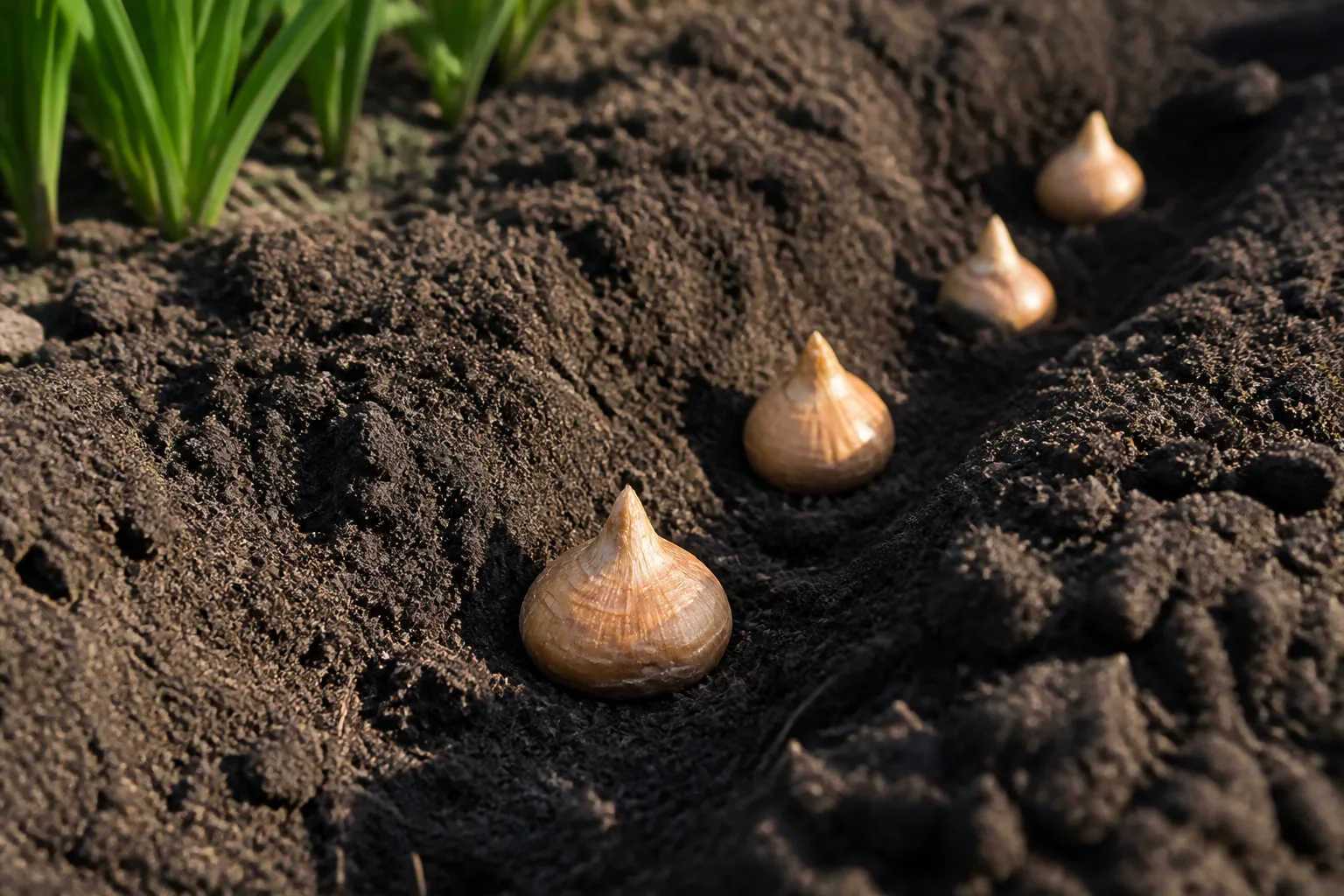
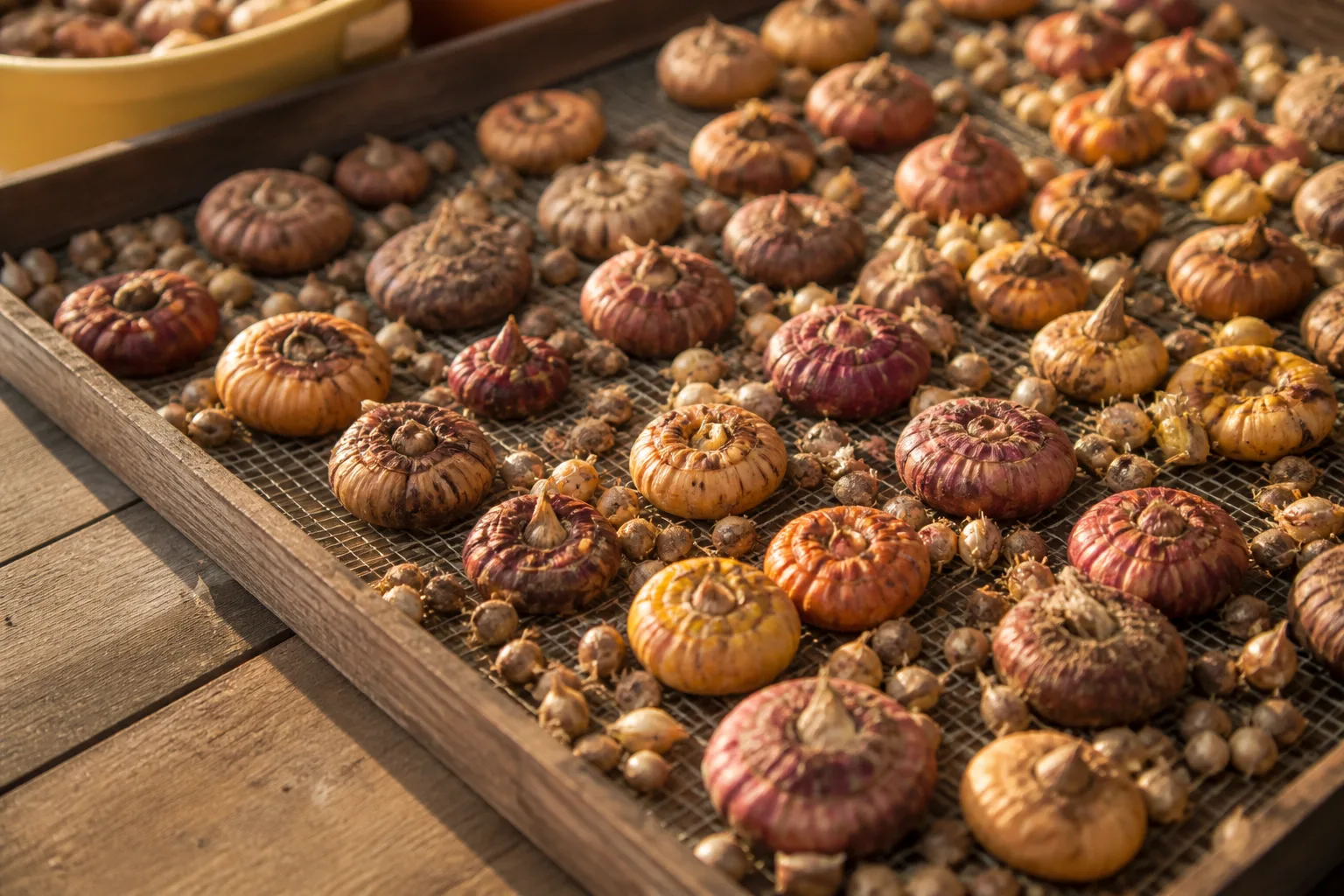
You do not need a botany lesson to plant these successfully, but you do need to look for the growing point. A lily has a pointed nose, a gladiolus corm has a top and a basal plate, a dahlia clump has eyes near the old stem, and a canna rhizome has buds along its length. If orientation is unclear, plant dormant material on its side rather than forcing a guess; the shoot can often turn upward, but the label remains the authority.
Quick picker: choose by sun, water, and winter work
| Plant | Best beginner use | Light | Water preference | Winter reality |
|---|---|---|---|---|
| Gladiolus | Tall spikes and cut flowers | Full sun | Regular while growing, never soggy | Lift most hybrids where ground freezes |
| Dahlia | Long, repeat flowering | Full sun | Moist, well-drained soil | Lift in cold or wet climates |
| Crocosmia | Colorful clumps and late-season flowers | Full sun to light shade | Moist but well-drained | Often perennial; mulch or divide as needed |
| Asiatic lily | Sturdy flowers that return | Sun on leaves, cool roots | Even moisture, not waterlogged | Usually leave in the ground |
| Canna | Tropical foliage and flowers | Sun to partial shade | Consistently moist in growth | Lift rhizomes in cold areas |
| Caladium | Patterned leaves for shade | Partial or deep shade | Consistently moist | Lift tubers before cold weather |
| Colocasia | Giant elephant-ear foliage | Part shade or filtered sun | Moist to wet but not drying out | Lift corms where winters freeze |
For the least autumn work, start with Asiatic lily or a locally hardy crocosmia. For the longest show from one plant, choose dahlia if you can store dormant tubers. In shade, caladium is the clearest fit; gladiolus there will produce weaker stems and fewer flowers.
How to plant spring bulbs successfully
Planting is simple when you treat the bed as a drainage and temperature problem first. Work compost into compacted soil, but do not turn a heavy clay bed into a bathtub by adding a thin layer of organic matter and assuming water will disappear. A raised bed, berm, or large container is often the more reliable fix for a spot that stays wet.
Pick healthy planting stock
Choose dormant bulbs, corms, tubers, and rhizomes that are firm for their type and free from soft, collapsing, foul-smelling, or visibly moldy patches. A little papery skin, surface dirt, or minor scuffing is not the same as rot. Avoid pieces that feel hollow or leak when pressed.
If a package arrives before the weather is suitable, open it and keep the material in the cool, dry conditions recommended by the supplier. Do not seal damp storage organs in plastic and leave them in a warm garage. If a tuber has already sprouted, handle the shoot gently and plant it as soon as conditions allow; breaking a new shoot can set the plant back.
Buy quantities based on mature size: six gladiolus corms read as a group, while one large canna or colocasia may fill a container. Two tall spikes can look accidental, and a dozen large storage organs can compete in a pot.
Prep the soil and plant at the right depth
Choose the sunniest practical spot for gladiolus, dahlia, and most crocosmia. For caladium and colocasia, choose filtered light or partial shade and protect broad leaves from strong wind. Dig a hole or trench that matches the plant rather than using one universal “bulb depth.”
For true bulbs and corms, the general starting point is two to three times the height of the bulb or corm, with the nose or growing point up. The RHS planting guide uses this rule for many bulbs and advises spacing them at least twice their own width. (RHS planting advice) Plant-specific instructions override the rule: Asiatic lily bulbs are commonly planted about 8 inches deep, while canna rhizomes sit much shallower than a lily bulb.
Set dahlia tubers so the crown and eyes are at or just below the soil surface, then cover lightly until shoots are established. Place canna rhizomes horizontally with buds facing up and cover them according to the label, usually around 4 inches in a border. Caladium and colocasia are warm-soil plants; plant their tubers or corms only after the bed has warmed, using the depth printed on the package.
Firm soil gently so there are no large air pockets, but do not compact the bed by walking over it. Add a thin mulch once the soil is warm, keeping it away from emerging stems.
Water once, then build a routine
If the soil is already moist, newly planted dormant material may need only a light settling-in drink. If it is dry, water the planting area thoroughly so moisture reaches the depth of the corm or tuber. After that, the right schedule depends on whether roots and shoots are active.
Dormant dahlia tubers are especially easy to rot when overwatered before they sprout. Keep them only slightly moist until shoots appear, then shift to deep watering as the plant builds leaves. Once growing strongly, dahlias, cannas, caladiums, and colocasias use water quickly; containers dry faster than beds and need more frequent checks.
The target is moist but not airless soil. Water at the root zone, let excess drain, and check the bed before watering again. Drooping in wet soil points to drainage trouble; dry, curling leaves and a light container call for a deep soak.
1. Gladiolus for tall cut flowers
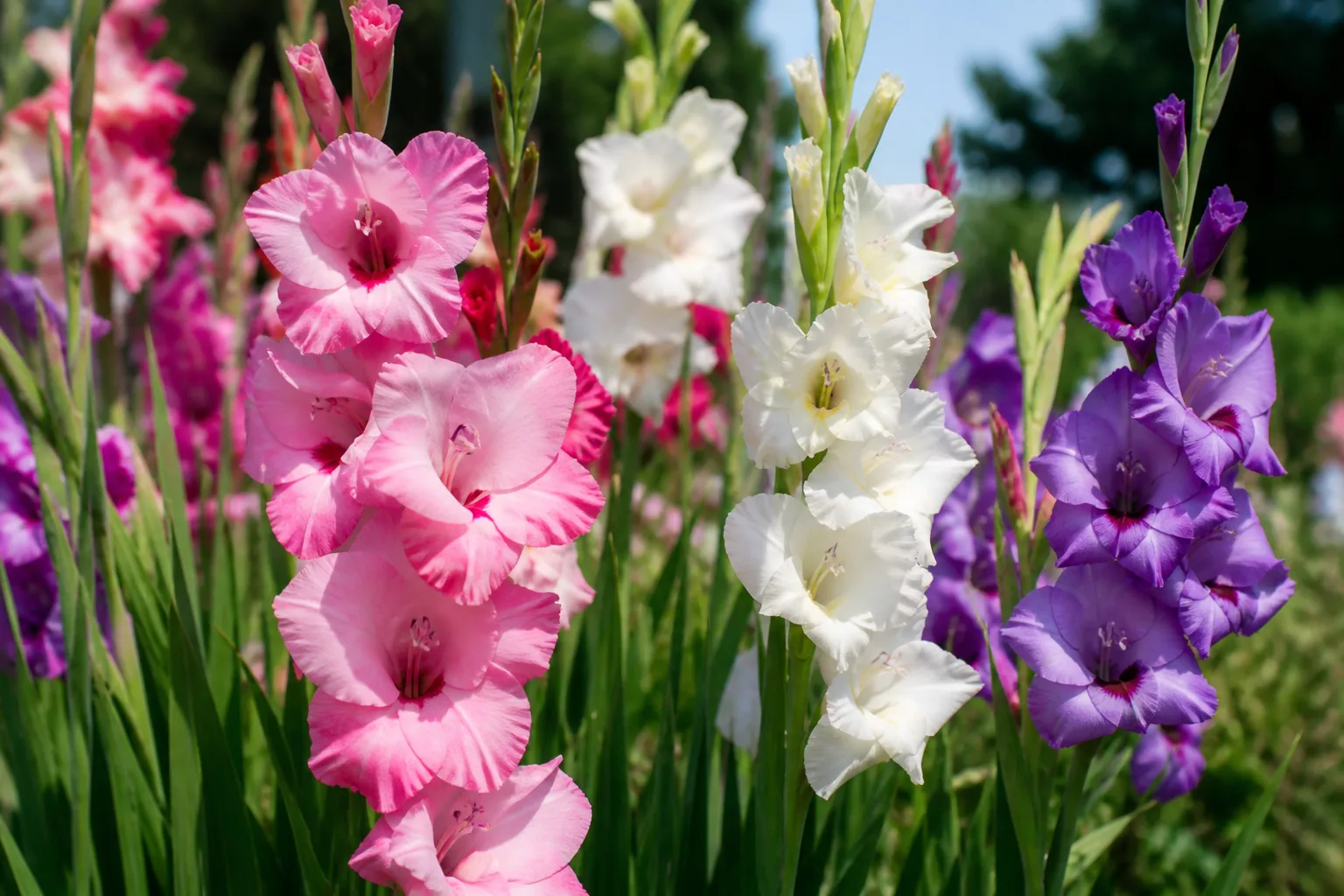
Gladiolus is the best choice here when you want vertical color quickly. Its sword-like leaves and tall flower spikes bring structure to a border, and several corms planted in a group can supply cut flowers without sacrificing the whole display. The RHS gladiolus guide classifies gladiolus as a corm and notes that many garden hybrids are easy in the first summer but are not fully hardy.
Plant gladiolus corms in a sunny, open bed with fertile, well-drained soil. For large-flowered hybrids, start around 4 to 6 inches deep; a little deeper in light soil can help tall plants stand securely. Space them roughly as far apart as their planting depth, or closer in a supported container. A sheltered position still helps in windy gardens.
For a longer display, plant small batches every couple of weeks while the weather remains suitable rather than planting the entire packet on one day. Water during dry spells as leaves and spikes develop. If you are cutting flowers, harvest when the lowest one or two florets show color and leave as much foliage as possible so the corm can recharge.
Treat ordinary hybrid gladiolus as a lift-and-store plant wherever winter freezes the soil deeply or stays cold and wet. Hardy species and cultivars can behave differently, so check the label instead of assuming every “glad” has the same winter tolerance.
2. Dahlia for a long flower season
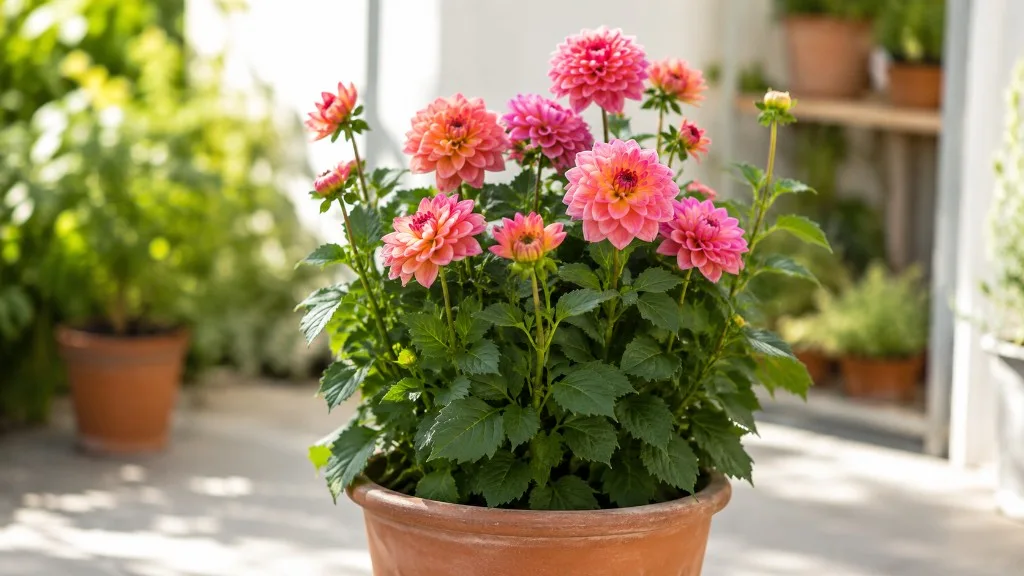
Dahlia is the strongest pick for flowers from summer into the first frost, especially if you enjoy deadheading. It forgives ordinary mistakes once growing, but cold, wet soil can rot a dormant tuber before it makes a shoot.
The RHS dahlia guide describes dahlias as tender perennials grown from tubers. Give them a warm, sheltered, sunny spot and fertile soil that drains freely. If you are starting dormant tubers in pots, keep them frost-free, in good light, and only slightly moist until growth is visible. Plant outside after frost danger has passed, with the top of the tuber clump at soil level or just below it.
Leave at least 2 feet between standard plants, and more for large cultivars. Water deeply in hot, dry weather; container dahlias may need daily checks during a heat wave. Pinch the main shoot at about 16 inches for a bushier plant, and stake tall varieties early.
Deadhead weekly by cutting a spent flower back to a leaf joint. Look closely before cutting: a fresh dahlia bud is usually rounded, while a spent head becomes pointed. In cold areas, lift and dry the tubers after frost damages the foliage, then store the intact clump in a dark, cool, frost-free place. Dividing is usually safer in spring when eyes are visible.
3. Crocosmia for reliable color and expanding clumps
Crocosmia offers perennial ease with the warm colors of a summer annual. Arching stems carry red, orange, or yellow tubular flowers above iris-like foliage, useful in borders and cutting patches.
Crocosmia grows from corms and prefers full sun, fertile soil, and steady moisture without waterlogging. The RHS crocosmia guide recommends planting corms at about three times their depth and 4 to 8 inches apart, with the pointed end up. Plant several together rather than spacing them like solitary specimens; a group makes the flower stems look intentional and gives the clump room to expand.
Water newly planted corms until they are established, then irrigate only when the soil dries during summer. Most cultivars are hardy in suitable sites, but a thick layer of organic mulch is sensible in cold areas. Do not cut the strappy leaves while they are green; they are feeding the underground corms. Remove dead foliage after it has faded naturally.
Crocosmia is forgiving because it can be corrected. If a clump becomes crowded and flowering drops, divide it every three to five years. If it spreads too far, remove the shallow corms rather than merely pulling leaves. Some cultivars, particularly Crocosmia × crocosmiiflora, spread assertively, so use a container for a hard boundary.
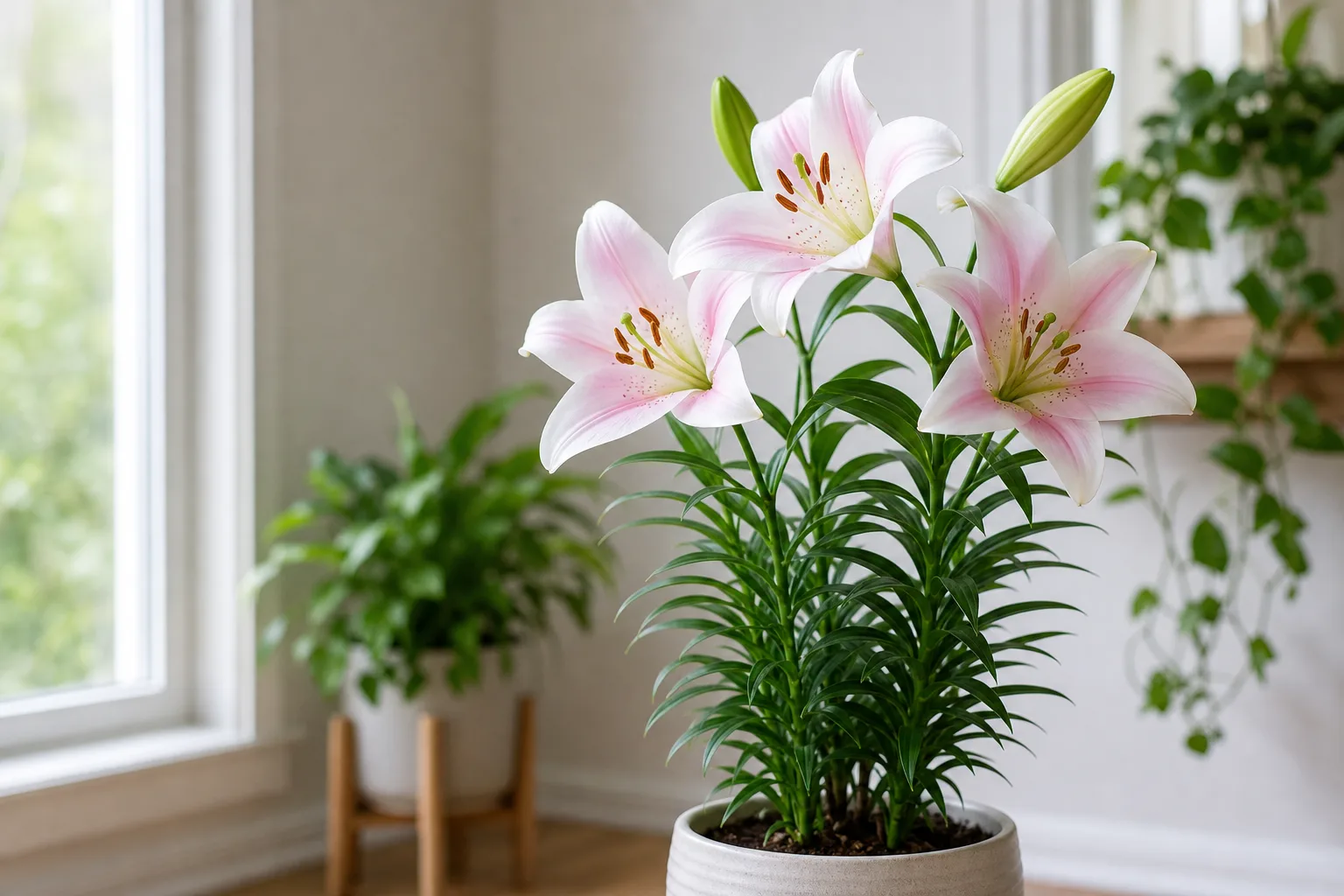
4. Asiatic lily for sturdy perennial blooms
Asiatic lilies are true bulbs that can return for years without annual lifting. They are shorter and generally less fragrant than Oriental lilies, with sturdy stems and star-shaped flowers. A sunny border, cutting garden, or large container can work.
Plant dormant Asiatic lily bulbs promptly in fertile, well-drained soil, usually about 8 inches deep. Give the leaves sun or afternoon sun, then use mulch or nearby low plants to keep the soil around the roots cooler. The North Carolina State Extension profile for Lilium emphasizes well-drained fertile soil, mulch around the root zone, and moisture that does not become stagnant. Letting the soil dry completely can stress the plant, while wet soil invites bulb rot.
Asiatic lilies do not need their bulbs dug up for winter in most suitable climates. Water during active growth and remove faded blooms if you want to prevent seed production, but leave the green stem and leaves in place until they yellow naturally. That foliage is the plant’s solar panel for next year’s flower.
There is an important household exception: this section means true Lilium, not peace lily or daylily. The ASPCA lily profile lists Lilium species as toxic to cats and notes kidney failure as a clinical concern. If cats can reach your garden or bouquets, choose a different plant or create a genuinely inaccessible planting area, and contact a veterinarian or poison-control service immediately if exposure is suspected.
5. Canna for tropical leaves and flowers
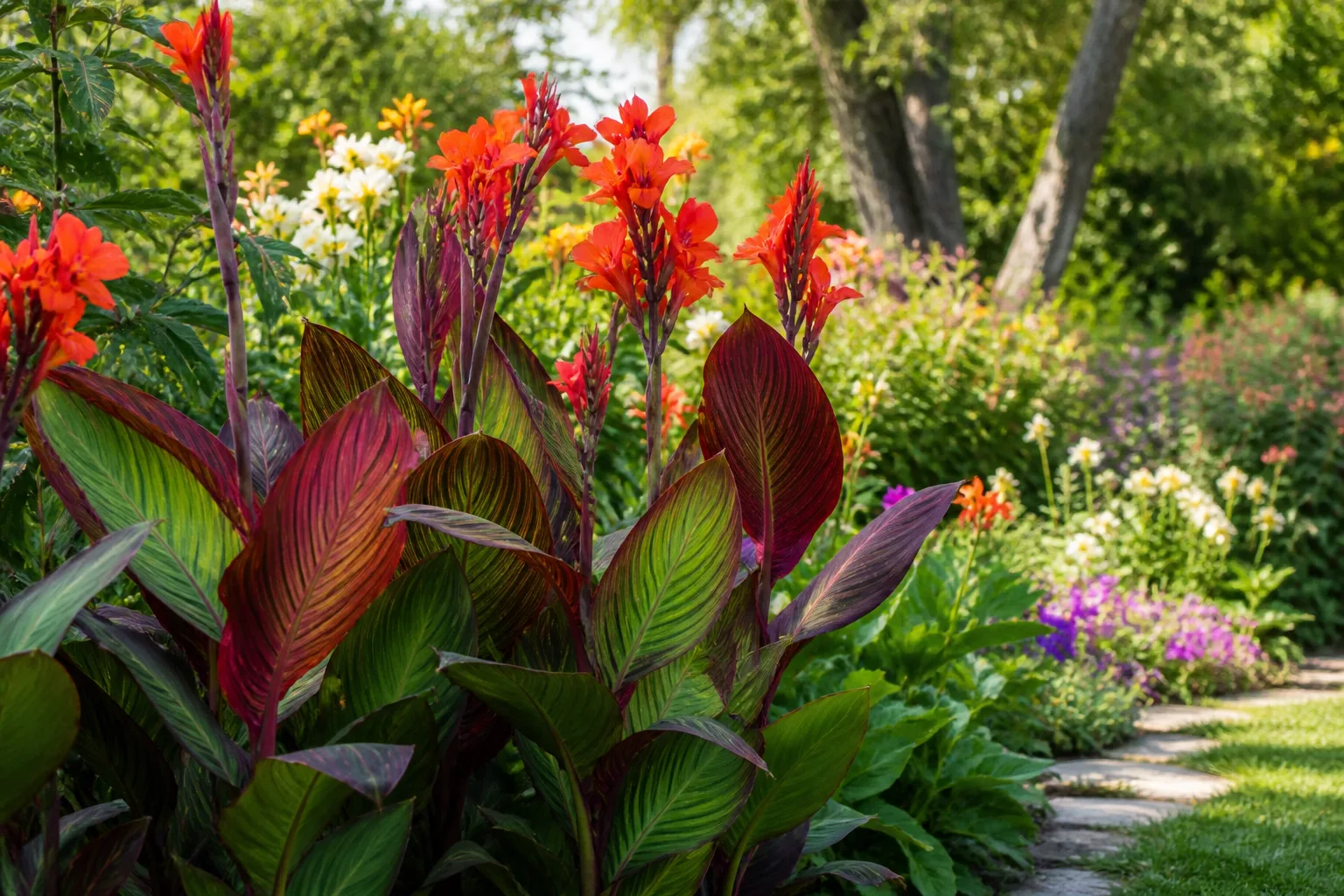
Canna earns its place for foliage as much as flowers. Green, bronze, striped, or burgundy leaves create a tropical effect before the first flower spike opens. One canna can anchor a large container, while a row makes a dramatic back-of-border screen.
Cannas grow from rhizomes. The RHS canna guide recommends starting rhizomes in pots in early spring if you want an earlier display, then hardening plants off before planting outdoors after the last frost. In a border, plant in a sheltered, sunny spot, generally around 4 inches deep and about 30 inches apart for full-sized plants. Compact cultivars can be closer, but use the mature height and spread on the label.
Cannas like rich soil and regular moisture while growing, though drainage still matters because a permanently saturated rhizome can rot. Water during dry spells, feed container plants according to the product label, and remove spent flower spikes when they have finished. If leaves shred in a windy spot, move the container or give the plant a more sheltered position rather than trying to repair damaged foliage.
The winter decision is simple in freezing climates: lift the rhizomes after the foliage begins to wither, cut stems back, dry the clumps, and store them frost-free in barely damp packing material. In a mild climate with a sheltered, well-drained bed, you may leave them under a deep mulch, but wet winter soil is as dangerous as cold.
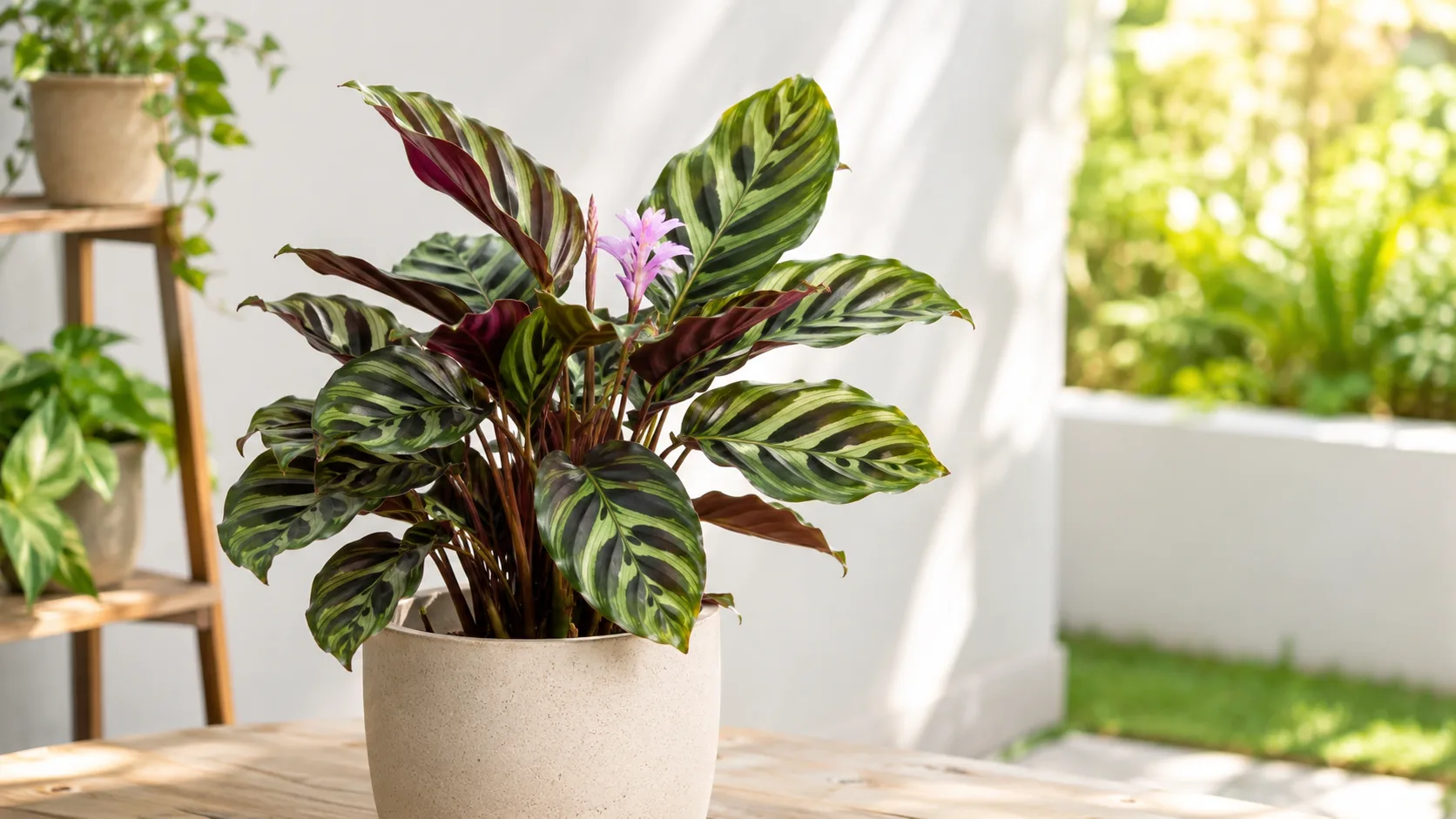
6. Caladium for shade and patterned foliage
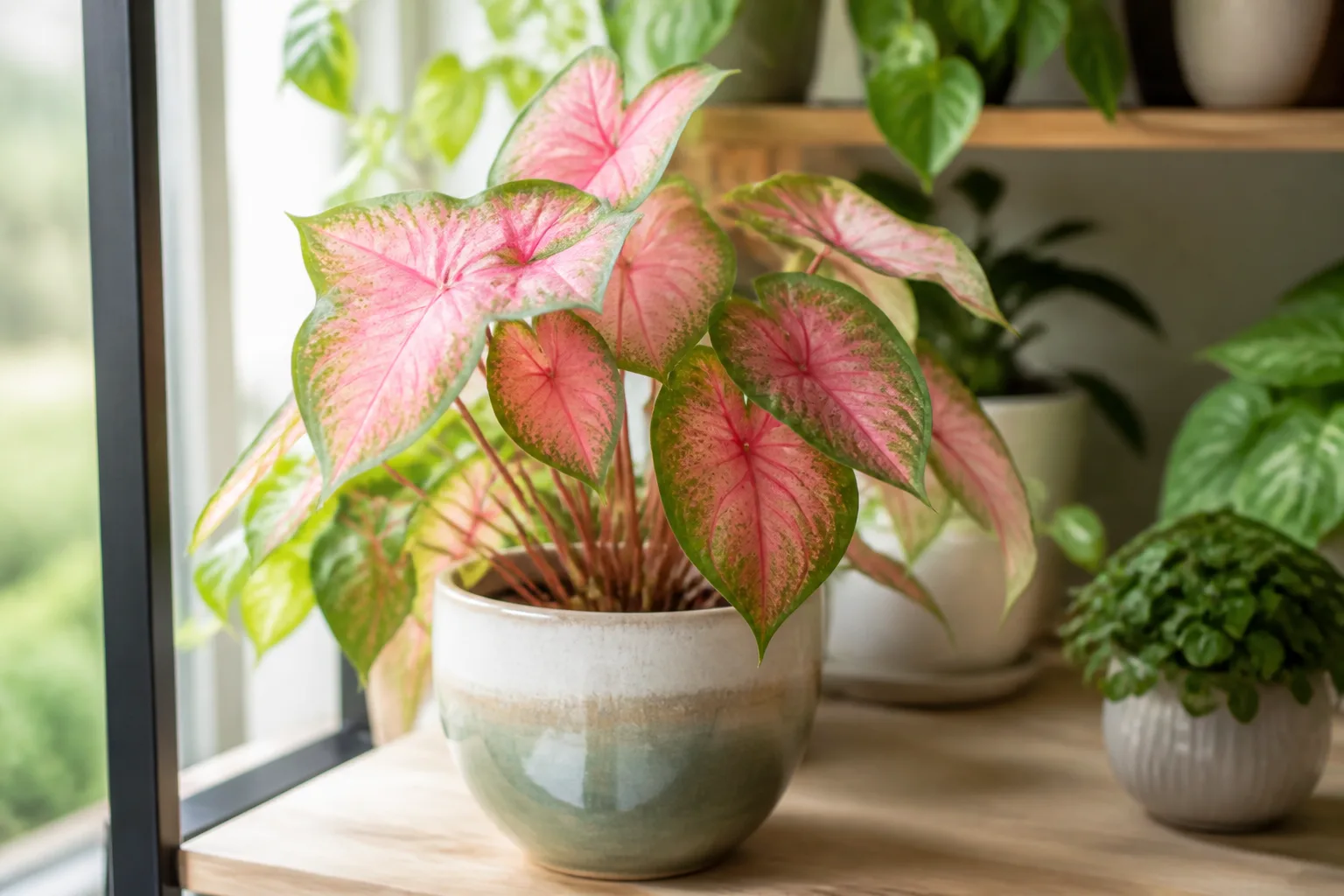
Caladium adds color to shade without another green fern. Its arrow-shaped leaves can be pink, red, white, green, or patterned, and often look best in a nearby pot or window box. The flowers are incidental.
Caladiums are warm-season tubers. Wait until frost has passed and the soil has warmed; planting into cold spring mud is a reliable way to get a slow start or a rotted tuber. The North Carolina State Extension profile for Caladium bicolor describes it as a tender summer bulb that prefers partial shade, fertile organic soil, consistent moisture, and good drainage. The practical balance is moist, never stagnant.
Give caladiums partial to deep shade, with gentle morning light if the cultivar tolerates it. Keep the soil evenly moist while leaves are growing, especially in containers, but do not compensate for poor drainage by watering more carefully. A wind-sheltered spot matters because the leaves are thin and can tear in gusts or hail. Feed during active growth only as directed by the label; more fertilizer cannot fix cold soil or a scorched leaf.
Below the plant’s hardy range, treat caladium as an annual or lift the tubers after the foliage dies back. Store only firm, dry, healthy tubers. If you want the least complicated first season, buy a potted plant after the weather settles; if you want the widest cultivar choice, buy dormant tubers and start them warm indoors.
7. Colocasia for bold elephant-ear leaves
Colocasia, commonly called elephant ear or taro, is the foliage specialist here. Broad, heart-shaped leaves can turn a patio corner or moist border tropical. It is not for a dry bed or narrow walkway: mature plants need room, moisture, and wind protection.
The North Carolina State Extension profile for Colocasia esculenta describes it as a tender perennial grown from a corm. It performs best in part shade or filtered sun and rich, moist soil, and it should not be allowed to dry out completely. That is a different watering profile from dahlia or gladiolus. A colocasia that repeatedly wilts in a small black pot on hot concrete is being asked to do a job the container cannot support.
Plant after frost when the soil is warm. Choose a sheltered spot and allow roughly 3 feet or more for a full-sized clump, adjusting for the cultivar and the effect you want. Large containers work well because they let you control soil moisture and move the plant before cold weather. Make sure the pot drains unless you are growing a water-loving selection specifically suited to very wet conditions.
In freezing areas, lift the corm after the foliage declines and store it in a cool, dry, frost-free place. In mild regions, it may remain outside, but a wet winter can still cause losses. Common names overlap, so check the scientific name and label: caladium and colocasia are both sometimes sold as elephant ears, but their leaf size, light, and water needs are not identical.
The aftercare that makes a first-year planting succeed
The first month is about establishment; the rest of summer is about keeping leaves productive. Check soil at root depth, not just the surface: corms can sit below a dry crust, while containers can be wet in the center and dry at the edge.
Mulch reduces evaporation and moderates soil temperature, but it should not touch stems or cover emerging shoots. Tall gladiolus and dahlias benefit from support installed early. It is much easier to guide a stem through a support while it is short than to rescue a flowering stem after wind or rain bends it.
Fertilizer is not a substitute for sun and drainage. Crocosmia in fertile ground often needs no extra feeding, while container cannas, dahlias, and crocosmia may benefit from a flowering feed during active growth. Follow the label and do not feed dormant or stressed plants.
Deadheading and foliage: what to cut and what to leave
Deadhead dahlias regularly to keep new flowers coming. Remove spent canna flowers when the spike has finished, and trim faded lily flowers if you do not want seed pods. Gladiolus can be cut for the vase, but preserve as much foliage as possible. With crocosmia, caladium, and colocasia, remove damaged or dead leaves, not healthy green ones.
The general rule is simple: remove a finished flower, but keep a green leaf that is still doing useful work. Cutting every stem to the soil as soon as the first flowers fade may make the bed look tidy, but it can reduce the stored energy available for next year’s display.
Which spring-planted bulbs need lifting before winter?
Hardiness belongs to a plant and a site, not just a shopping category. A dahlia in sandy soil beside a warm wall has a better chance than the same cultivar in cold, waterlogged clay, but neither result is guaranteed. Use local winter temperatures, drainage, and cultivar information together.
| Usually leave in the ground | Lift or protect where winters freeze |
|---|---|
| Asiatic lily | Dahlia |
| Many crocosmia cultivars | Canna |
| Hardy gladiolus types | Caladium |
| Plants proven hardy in your exact microclimate | Colocasia |
| Most large-flowered gladiolus hybrids |
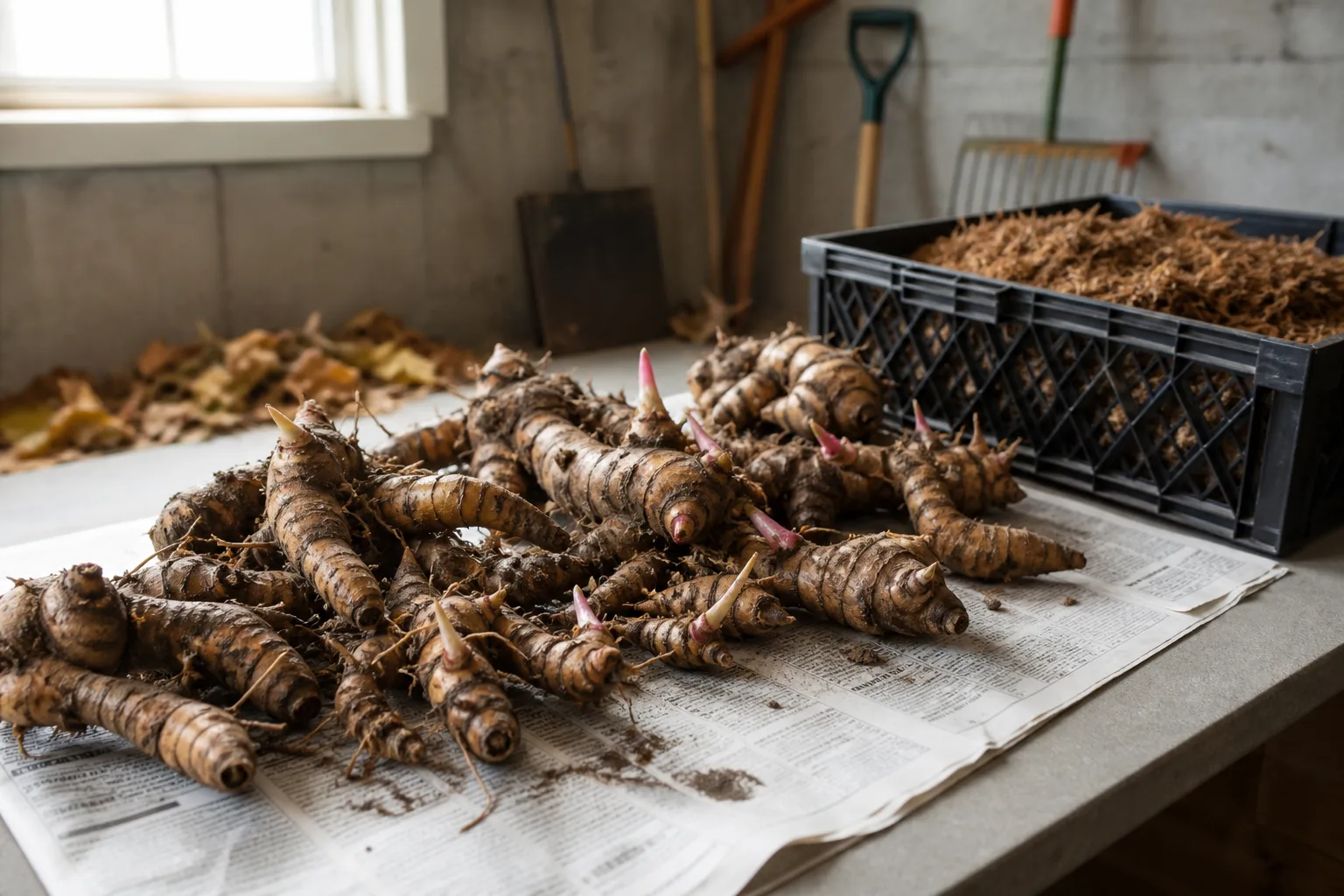
For a tender plant, wait until it is dormant or frost has damaged the foliage, depending on the species. Cut back top growth, dig carefully, brush off loose soil, and let the material dry. Store firm pieces in a dark, cool, frost-free place with enough ventilation to prevent condensation; packing material should prevent shriveling without keeping the organ wet.
Check stored material every few weeks. Remove anything soft, leaking, or moldy before the problem spreads. Do not divide every clump in autumn just because it is large; wounds can invite rot during storage. Spring is usually the better time to divide dahlias when the eyes are visible. Cannas can be divided when rhizomes are active and each piece has viable growing points.
If you dislike lifting, choose Asiatic lily or locally hardy crocosmia. If you love dahlias, make storage part of the plant’s value. One labeled crate, a calendar reminder, and a cool frost-free corner turn the job into a repeatable routine.
Beginner mistakes that cost you flowers
- Planting by month instead of conditions. “It is spring” does not mean the soil is warm enough for caladium, colocasia, or dahlia. Use frost risk and soil temperature as the gate.
- Using one depth for every bulb. A lily bulb, dahlia crown, and canna rhizome do not belong at the same depth. Read the label, then use the two-to-three-times rule only where it applies.
- Putting a sun plant in shade. Gladiolus and dahlias may survive in weak light, but weak stems and fewer flowers are not a care mystery; they are a placement mismatch.
- Watering dormant tubers on autopilot. Before shoots emerge, excess moisture can rot dahlia and caladium storage organs. After active growth begins, the same plants need much more water.
- Crowding large plants. A colocasia or canna that outgrows its pot is not automatically thirsty. It may be root-bound, top-heavy, or starved of airflow.
- Cutting green foliage too early. Leaves recharge the underground organ. Remove only what is dead, diseased, or genuinely finished.
- Assuming “hardy” is universal. Cultivar, soil, winter wetness, exposure, and container temperature all change the outcome. Test one plant before committing an entire collection to the ground.
Conclusion
For the easiest first win, match the plant to the place you already have. Choose Asiatic lily or crocosmia for a return-on-effort perennial, gladiolus for height and cut flowers, dahlia for a long bloom season, canna for tropical structure, caladium for shade, and colocasia for large leaves and dependable moisture.
Plant after the right frost and soil window, keep drainage ahead of fertilizer, and watch the leaves instead of watering by habit. The moment you decide whether a plant will stay outdoors or move into storage, these “bulbs” stop being mysterious and become a manageable seasonal rhythm.