Asiatic Lily Care: Sun, Soil, Water & Bulb Tips
Lilium Asiatic hybrids
Grow Asiatic lilies in sun and well-drained soil. Learn how to water, plant bulbs, divide crowded clumps, and keep these toxic lilies away from cats.
Asiatic Lily Care: Sun, Soil, Water & Bulb Tips
Start with wateringThe most common care mistake for Asiatic LilyWatering guide →Asiatic Lily care essentials
Light
Full sun, with at least six hours of direct light for strong flowering
Water
Keep the soil evenly moist while stems and flowers are growing, but never leave the bulb in saturated ground or standing water. Water at the soil line when the surface begins to dry; reduce supplemental watering when rain keeps the bed moist and as the foliage naturally dies back after flowering.
Soil
Grow Asiatic lilies in loose, fertile, well-drained loam that stays lightly moist during active growth. Slightly acidic soil is suitable. Avoid heavy, waterlogged beds, because lily bulbs can rot where drainage is poor.
Humidity
Temperature
Fertilizer
About Asiatic Lily
Asiatic Lily is native to Hybrid group derived from several Lilium species; no single native range, typically reaches Usually 2–5 ft (0.6–1.5 m) tall; cultivar size varies indoors, with medium growth. Asiatic Lily has a bulbous herbaceous perennial growth habit and part of the Liliaceae family. It is also known as Asiatic lily, Asian lily, and Asiatic hybrid lily.
| Detail | Information |
|---|---|
| Also known as | Asiatic lily, Asian lily, Asiatic hybrid lily |
| Native region | Hybrid group derived from several Lilium species; no single native range |
| Mature size | Usually 2–5 ft (0.6–1.5 m) tall; cultivar size varies |
| Growth rate | Medium |
| Growth habit | Bulbous Herbaceous Perennial |
| Scientific name | Lilium Asiatic hybrids |
| Family | Liliaceae |
Asiatic Lily Care: Sun, Soil, Water & Bulb Tips
What an Asiatic Lily is
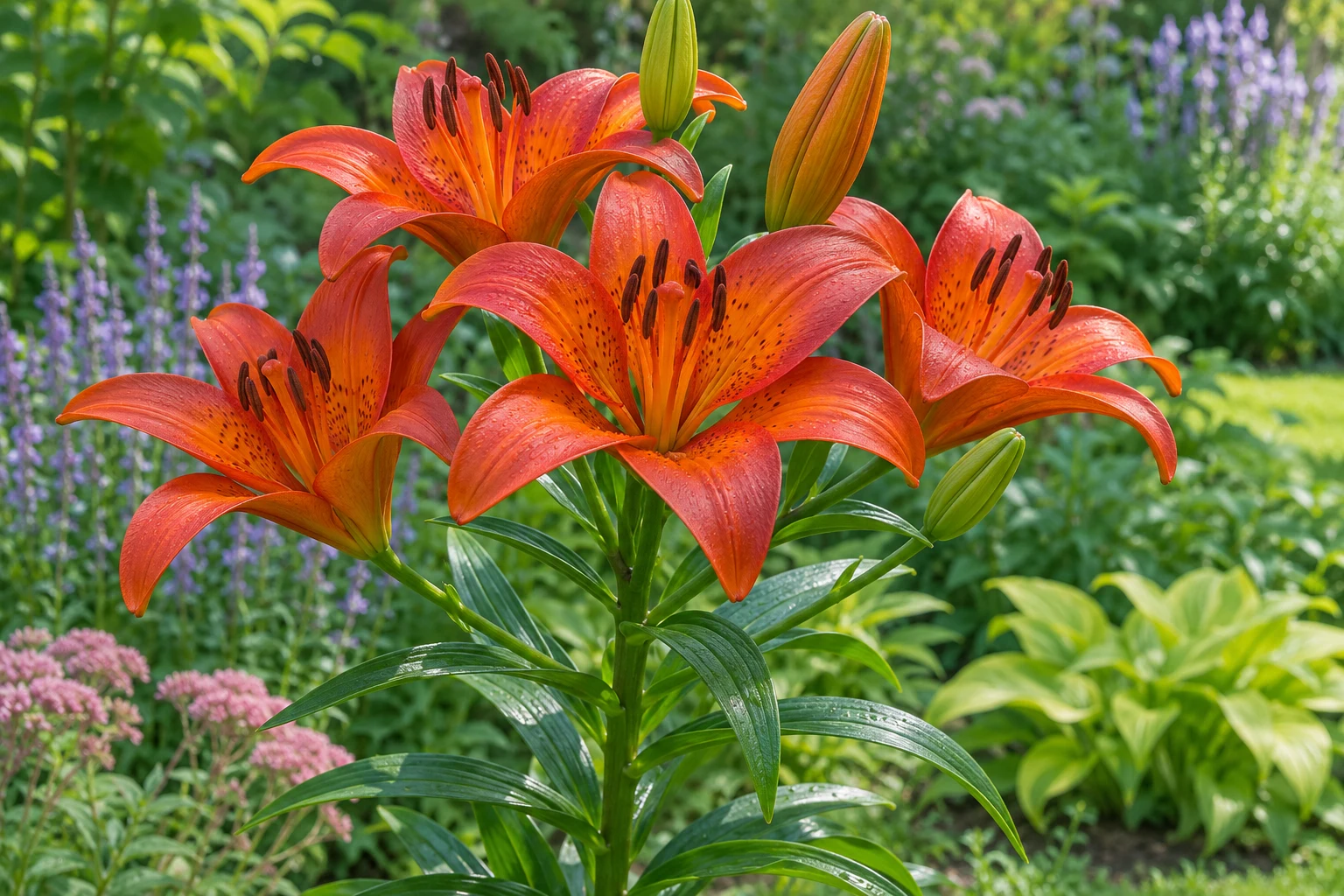
Asiatic lilies are early-flowering hybrids in the genus Lilium, grown from perennial scaly bulbs. They are garden flowers rather than foliage houseplants: their upright stems, narrow leaves, and open blooms are built for a sunny outdoor bed or a bright patio container. The hybrid group includes many cultivars, so height, flower shape, color, and exact bloom time vary. The NC State Asiatic-hybrid profile describes a deciduous bulbous perennial that commonly flowers from spring into summer, with timing that varies by cultivar.
True lilies, not daylilies
“Lily” appears in the common names of unrelated plants. Asiatic lilies are true lilies in Lilium, not daylilies (Hemerocallis), peace lilies (Spathiphyllum), or lily-of-the-valley (Convallaria). That distinction matters for growing and for pet safety. The hybrid group includes many cultivars, so do not transfer care or toxicity advice from a plant that only shares the word “lily.”
A seasonal care map
Think of the plant in four stages rather than as a year-round houseplant:
- Dormant bulb: keep it cool and dry enough to avoid rot while it waits to grow; plant according to the supplier’s timing and cultivar directions.
- Emerging shoots: give the stem strong light, keep the root zone lightly moist, and make sure excess water can escape.
- Bud and bloom: maintain steady moisture, support tall stems if wind threatens them, and remove only the spent flowers if you want a tidier display.
- After flowering: leave green leaves in place so the bulb can finish its season. Reduce extra water as the leaves yellow and die back.
A healthy cycle depends on good drainage and a complete leafy growing period. If blooms are weak, check the site and bulb condition before adding more fertilizer.
Choose a site with bright light and cooler roots
Give an Asiatic lily full sun where summers are moderate. NC State defines full sun as six or more hours of direct light and lists partial shade as tolerated; the same profile recommends well-drained loamy soil. The NC State growing profile is a useful starting point for selecting a bed or patio position.
Light shade can be a reasonable compromise in a hot garden, especially if the bulb base stays cool while the stem and leaves receive brighter light. The RHS hybrid profile describes the same arrangement: shade at the plant base, with the rest of the plant in full sun (Asiatic-hybrid growing details). Use low groundcover or a light mulch around the soil surface, but do not bury the stem or keep the bulb in wet organic debris.
Heat in India and warm climates
The source guidance available for this hybrid group is mostly written for temperate gardens. It does not establish a reliable nationwide planting month for India, where cool hill gardens, dry inland terraces, and humid coastal lowlands behave very differently. In a hot location, choose a cooler seasonal growing window only if your bulb supplier confirms that the cultivar is suitable; avoid treating a UK or North American calendar as an Indian schedule.
A shaded root zone can help buffer heat, but the flowering stems still need strong light. If afternoon heat is extreme, morning sun with some light afternoon shade is a cautious trial, not a guarantee of good flowering. Where hot nights persist, a container may be easier to move and monitor than a permanent bed.
Plant bulbs at the right depth and season
Plant bulbs while dormant and handle them gently; the fleshy scales can dry out if left exposed. The RHS Asiatic-hybrid profile recommends planting bulbs about 15 cm deep in autumn in moist, free-draining soil. In contrast, NC State advises planting in spring or fall according to the package instructions. These are temperate-climate recommendations, so use the depth and season printed for your actual cultivar if the supplier gives different directions.
If you are unsure which end is up, look for the basal plate and roots at the flatter end; shoots emerge from the pointed end. Set the bulb into prepared soil without pressing hard on the scales, backfill, and water once to settle the surrounding mix. Avoid planting into a depression that collects rain. For heavy or frequently wet ground, a raised bed or outdoor pot is safer than trying to compensate with a deep planting hole.
Use fertile soil that drains freely
Asiatic lilies need moisture during growth, but their bulbs can rot when drainage is poor. Loosen compacted beds and incorporate mature organic matter only when it improves structure; do not add a rich amendment to a site that stays saturated.
Advice on exact pH is less consistent than advice on drainage. The RHS general lily-growing guide says Asiatic hybrids do best in slightly alkaline soil, while Gardening Know How recommends slightly acidic soil (Asiatic lily planting guide). For an ordinary garden bed, prioritize a loose, fertile, well-drained root zone. Do not lime or acidify soil without a test and a clear reason.
Water by soil condition, not a fixed calendar
Water thoroughly when the root zone begins to dry during active shoot and bud growth, then let excess drain away. Check the soil a few centimeters below the surface rather than judging by the top alone. Beds may need little extra water in rainy weather, while pots and exposed terraces dry faster. A weekly rainfall estimate is only a starting point: adjust it for heat, wind, soil texture, and container size.
Avoid leaving water pooled around the bulb or in a saucer beneath a pot. Persistent wetness is more concerning than a briefly dry surface because the bulb needs air as well as moisture. The RHS container-lily guide recommends a suitable free-draining compost and a pot with enough room for lily roots, which makes drainage part of the watering plan rather than an afterthought.
Adjust after flowering and during dormancy
Do not stop caring for the bulb as soon as flowers fade. Keep the root zone lightly moist if rainfall is not enough while the leaves remain green. Once the leaves have yellowed naturally, reduce supplemental watering; a dormant bulb in wet ground does not need routine irrigation.
Feed modestly during active growth
Start with the soil and the bulb label. If a garden bed is fertile or the potting mix already contains feed, additional fertilizer may not be needed. For a plant growing in a poor bed or a container after shoots emerge, use a balanced fertilizer at the label rate rather than concentrating feed around the bulb. The Spruce’s Asiatic lily care guide recommends a balanced spring fertilizer; treat that as a practical general-care suggestion, not a cultivar-specific dose.
Do not try to rescue a shaded or waterlogged plant by feeding more. First confirm that the plant gets enough light, that new roots are not sitting in soggy soil, and that the bulb is still firm. Fertilizer cannot replace a healthy growing season.
Grow Asiatic lilies in containers
Choose a deep, stable outdoor pot with open drainage holes. A pot that is too small dries quickly and leaves tall flowering stems easier to tip in wind. Use a free-draining, fertile potting medium; the RHS container-lily guide recommends peat-free compost options for container lilies and notes that a looser mix can improve drainage where compost is dense. Leave enough space above the bulb for the recommended planting depth and future stem growth.
Container soil warms and dries faster than a garden bed, especially on a sunlit terrace. Check moisture more often during hot, windy weather, but do not keep the pot standing in runoff. A sheltered position reduces stem damage, and a saucer should be emptied after watering. Containers also make it easier to move the plant to a cooler position during a heat spell while preserving strong light.
Some lilies sold for forcing are kept cool before sale so they can bloom without natural winter chill; the RHS describes this as a specific production practice, not a rule for every Asiatic lily. Ask the supplier whether a bulb is intended for outdoor planting, container display, or forcing indoors. Treat an indoor flowering pot as a temporary display rather than assuming it will thrive as a permanent houseplant.
After bloom: deadhead, but keep green leaves
Remove a fading flower head if you want to prevent seed formation and keep the plant tidy, but leave the stem and leaves intact while they remain green. The RHS bulb-growing guide describes bulbs as storage organs and recommends continuing care after flowering until leaves die down. The RHS Asiatic-hybrid profile notes that no pruning is required and that deadheading is mainly for appearance. Do not cut the whole plant to the ground immediately after flowers fade.
When the foliage turns yellow and dries naturally, cut it back near the soil line with clean shears. If the leaves turn yellow unusually early, check moisture, drainage, and light before assuming that the bulb is simply finished for the season.
Divide crowded clumps after foliage dies
Asiatic lilies form offsets over time, and a crowded clump can be divided when its foliage has died down. The RHS Asiatic-hybrid profile recommends separating offsets after the leaves die back; the timing can vary by climate and cultivar, so use the plant’s natural seasonal transition rather than a fixed date. Lift carefully with a fork set away from the stems, loosen soil by hand, and replant firm, healthy bulbs promptly at the recommended depth.
Do not divide a bulb that is soft, foul-smelling, or visibly rotted and then replant it beside healthy bulbs. Discard compromised material and correct the drainage problem first. If a clump flowers well and has room, there is no need to divide it on a schedule.
Diagnose common warning signs
Use the pattern across the whole plant, not one leaf, to choose the first check:
- Yellowing while the soil stays wet: inspect drainage and the bulb base before watering again. Poor drainage is a known bulb-rot risk for Asiatic hybrids.
- Wilting during a dry spell: feel below the surface and water thoroughly if the root zone is dry; do not leave the pot in a water-filled saucer afterward.
- Healthy foliage but few flowers: review direct-light hours, bulb maturity, crowding, and the cultivar’s expected bloom period before increasing feed.
- Leaves yellowing after bloom: if the change is gradual and follows flowering, it may be normal seasonal dieback; leave the leaves until they dry naturally.
- Stems leaning or damaged: check whether the cultivar is tall for its site and shelter it from strong wind.
If leaves are yellowing across several plants or the cause is unclear, compare the pattern with the wider yellow-leaves symptom guide and the plant symptom library. The Asiatic Lily problems hub is the plant-specific starting point for problem guidance.
Protect cats from lily exposure
Keep Asiatic lilies, cut stems, pollen, and vase water completely away from cats. All plant parts of Asiatic Lilium are toxic to cats, small amounts can cause severe kidney injury, and pollen or vase water can also expose them; dogs may be affected too, though effects are much more severe in cats, according to the ASPCA lily-safety guide. Treat suspected contact or ingestion as urgent: contact a veterinarian or animal poison-control service immediately rather than waiting for symptoms. Because common names can be confusing, check the botanical name before relying on a toxicity label.
When to use this page vs other Asiatic Lily guides
Use this overview when planning the whole growing cycle: site, bulb planting, moisture, flowering, and dormancy. It brings the light, water, soil, feeding, and bulb-care decisions together so you can see which factor to check first. For a single symptom, start at the Asiatic Lily problems hub; for a broader comparison across houseplants, use the plant symptom library or the Plant Problem Diagnosis Tool.
If you are looking for one narrow care question, use the matching care section above as the baseline and follow the instructions supplied with your cultivar. The Asiatic Lily plant hub provides identity, growing notes, and safety context for the hybrid group.
Related Asiatic Lily guides
Start with the Asiatic Lily plant hub for the plant’s baseline profile. If you are troubleshooting yellow leaves, compare the yellow-leaves guide with actual soil moisture and the stage of the flowering cycle. For uncertain symptoms, the plant diagnosis tool offers another route to narrow the possibilities. The plant-specific problems hub is the next stop for Asiatic Lily issue guidance.
Conclusion
Successful Asiatic Lily care starts with the right bulb, strong light, and soil that drains freely. Keep moisture steady while shoots and buds grow, water less as the foliage dies back, and preserve green leaves after flowering. In containers, use a deep pot with open drainage and check it more often in hot or windy weather.
Cultivar and climate change the calendar, so use the bulb label and your supplier’s regional advice rather than copying a temperate-region schedule into every part of India. If flowering is weak, check light, drainage, bulb condition, and crowding before adding fertilizer. Keep all lily parts away from cats.
How to care for Asiatic Lily?
How much light does Asiatic Lily need?
Full sun, with at least six hours of direct light for strong flowering. Partial shade. direct sun
- Full sun, with at least six hours of direct light for strong flowering - Full sun, with at least six hours of direct light for strong flowering.
- Partial shade - Partial shade.
- direct sun - direct sun.
When should you water Asiatic Lily?
Keep the soil evenly moist while stems and flowers are growing, but never leave the bulb in saturated ground or standing water. Water at the soil line when the surface begins to dry; reduce supplemental watering when rain keeps the bed moist and as the foliage naturally dies back after flowering.
- Feel the soil a couple of centimeters below the surface. If it is beginning to dry during active growth - Water at the soil line when the surface begins to dry; reduce supplemental watering when rain keeps the bed moist and as the foliage naturally dies back after flowering.
- water the root zone thoroughly and let the excess drain - Water at the soil line when the surface begins to dry; reduce supplemental watering when rain keeps the bed moist and as the foliage naturally dies back after flowering.
- do not keep the bulb sitting in water - Keep the soil evenly moist while stems and flowers are growing, but never leave the bulb in saturated ground or standing water.
- Drain excess water - Keep the soil evenly moist while stems and flowers are growing, but never leave the bulb in saturated ground or standing water.
What soil works best for Asiatic Lily?
Grow Asiatic lilies in loose, fertile, well-drained loam that stays lightly moist during active growth. Slightly acidic soil is suitable. Avoid heavy, waterlogged beds, because lily bulbs can rot where drainage is poor.
- For containers
- use a deep outdoor pot with drainage holes and a fertile - Avoid heavy, waterlogged beds, because lily bulbs can rot where drainage is poor.
- free-draining potting mix - Grow Asiatic lilies in loose, fertile, well-drained loam that stays lightly moist during active growth.
- Add compost to improve garden soil structure - Slightly acidic soil is suitable.
- but do not amend a wet site without fixing its drainage - Avoid heavy, waterlogged beds, because lily bulbs can rot where drainage is poor.
Grower notes for Asiatic Lily
Check that the label says Lilium
Asiatic lilies are true lilies in the genus Lilium, grown from scaly perennial bulbs. They are not daylilies (Hemerocallis), peace lilies (Spathiphyllum), or lily-of-the-valley (Convallaria). Confirm the botanical name before choosing a site or assessing pet risk.
Give the stems sun and the bulbs good drainage
Full sun to light shade suits this hybrid group, but deep shade can leave flowering sparse. Choose loose soil that drains freely: a bright bed that stays waterlogged is still a poor place for lily bulbs.
Match watering to active growth
Keep moisture steady while shoots and buds are developing, then adjust for rainfall rather than following a fixed calendar. Asiatic lilies dislike both prolonged drought during growth and bulbs left in saturated soil. Containers need closer checks because they dry faster than garden beds.
Leave green foliage after flowering
Remove fading flowers if you want to tidy the plant, but keep the green stems and leaves in place until they yellow naturally. The foliage helps replenish the bulb for the next season. Do not expect a second flush from the same stem immediately after its main bloom.
Expect cultivar differences
Asiatic hybrids vary in height, flower color, and bloom timing. Many flower in late spring or early summer, but a compact cultivar may suit a pot while a taller one needs a sheltered place in a border. Check the bulb label for mature height and planting depth.
Keep every plant part away from cats
Lilium species can cause severe kidney injury in cats, and the hazard includes pollen and water from a vase. Do not bring Asiatic lilies into a cat's reach; contact a veterinarian immediately if a cat may have chewed, licked, or drunk from one.
Are Asiatic lilies safe for pets?
No for cats: ASPCA identifies Lilium species as toxic to cats, and its lily guidance includes Asiatic lilies; even pollen or vase water can be dangerous. NC State also flags the group for rabbits. Sources differ on dogs, so keep lilies out of reach and ask a veterinarian about any exposure.
Asiatic lilies are Lilium hybrids. ASPCA's Lilium species profile lists cats as at risk of kidney failure and dogs and horses as non-toxic; its separate lily article warns that Asiatic lilies may also affect dogs. NC State flags the group as toxic to cats and rabbits. Because dog guidance conflicts, this profile marks dogs for review rather than claiming they are safe. Keep all parts, pollen, and vase water away from cats, and seek veterinary advice immediately after suspected ingestion.
Watering Asiatic Lily
For Asiatic Lily, feel the soil a couple of centimeters below the surface. If it is beginning to dry during active growth, water the root zone thoroughly and let the excess drain; do not keep the bulb sitting in water. and water check garden beds about weekly during active growth and water during dry spells. A useful outdoor starting point is roughly 1–2 inches of water per week from rain and irrigation combined, adjusted for heat, soil, and rainfall. Containers dry sooner, so check them more often. Water consistently while shoots are growing and buds are developing. After flowering, allow the leaves to finish their season and taper extra watering as they yellow. Dormant bulbs in a wet bed need no routine irrigation.
| Detail | Information |
|---|---|
| How often | Check garden beds about weekly during active growth and water during dry spells. A useful outdoor starting point is roughly 1–2 inches of water per week from rain and irrigation combined, adjusted for heat, soil, and rainfall. Containers dry sooner, so check them more often. |
| How to check | Feel the soil a couple of centimeters below the surface. If it is beginning to dry during active growth, water the root zone thoroughly and let the excess drain; do not keep the bulb sitting in water. |
| Seasonal changes | Water consistently while shoots are growing and buds are developing. After flowering, allow the leaves to finish their season and taper extra watering as they yellow. Dormant bulbs in a wet bed need no routine irrigation. |
Signs of overwatering
- Soil remains soggy or water pools around the bulb after irrigation.
- Leaves yellow while the soil is still wet.
- The bulb or stem base softens in poorly drained ground.
Signs of underwatering
- Soil is dry through the root zone during active growth.
- Leaves or buds wilt during a prolonged hot, dry spell.
Soil & potting for Asiatic Lily
Use a mix of For containers, use a deep outdoor pot with drainage holes and a fertile, free-draining potting mix., Add compost to improve garden soil structure, but do not amend a wet site without fixing its drainage. for Asiatic Lily. Free drainage is essential. Choose a raised or naturally draining bed if water lingers after rain; use a deep container with open drainage holes for pot culture. Target soil pH around Slightly acidic soil is preferred. Repot divide outdoor clumps when they become crowded, often every two or three years. In containers, repot or divide when the bulbs fill the pot or growth becomes crowded., ideally in early autumn after flowering and as foliage begins to die back.
| Detail | Information |
|---|---|
| Recommended mix | For containers, use a deep outdoor pot with drainage holes and a fertile, free-draining potting mix., Add compost to improve garden soil structure, but do not amend a wet site without fixing its drainage. |
| Drainage | Free drainage is essential. Choose a raised or naturally draining bed if water lingers after rain; use a deep container with open drainage holes for pot culture. |
| Soil pH | Slightly acidic soil is preferred |
| Repotting frequency | Divide outdoor clumps when they become crowded, often every two or three years. In containers, repot or divide when the bulbs fill the pot or growth becomes crowded. |
| Best season to repot | Early autumn after flowering and as foliage begins to die back |
Signs it needs repotting
- Bulbs are crowded together and flowering has declined.
- A container dries unusually quickly or has little room for new growth.
- Bulbs or roots are pressed against the pot wall or drainage holes.