23 Yellow Perennial Flowers for Sun and Shade
Compare 23 yellow perennial flowers by sun, shade, bloom season, drainage, spread, and pollinator value to choose plants that fit your garden bed.
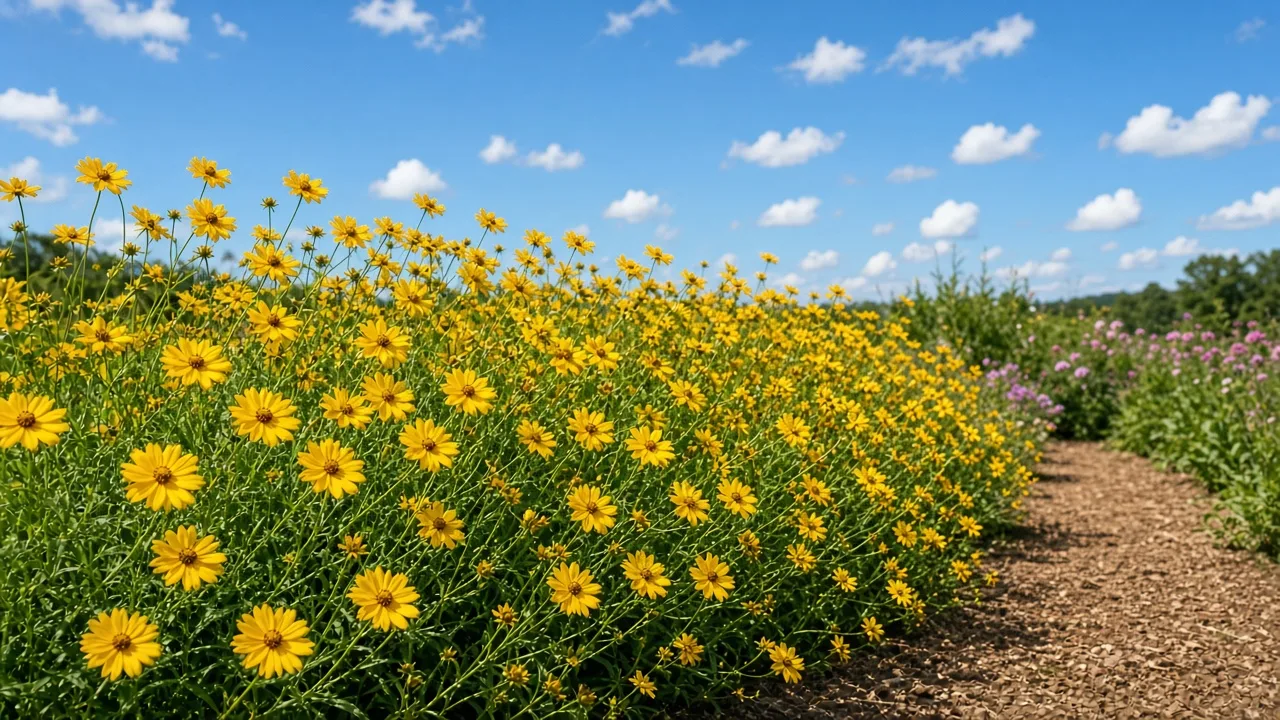
Yellow is easiest to use when you choose it by season and site, not by color alone. A tiny spring flower for a woodland edge, a drought-tolerant groundcover for a rock wall, and a waist-high border plant may all be yellow, but they need different soil, light, and spacing.
The 23 choices below include short-lived bloomers and plants that flower for weeks, native wildflowers and garden hybrids, and one woody shrub often grouped with perennials. Start with the conditions you have, then combine early, midsummer, and fall bloomers so the color moves through the garden instead of arriving all at once.
| If your garden needs… | Start with… | Check before planting |
|---|---|---|
| A yellow spring carpet in woodland shade | Trout lily, primrose | Both need suitable moisture; trout lily disappears after its short spring show. |
| A low plant for a hot, dry wall | Golden alyssum, creeping sedum | Give both sharp drainage; sedum can spread beyond a small edging. |
| Repeated yellow summer flowers | Coreopsis, ‘Stella de Oro’ daylily, false sunflower | Flowering depends on cultivar and deadheading; site them in adequate sun. |
| A native pollinator bed | Butterfly weed, Rudbeckia, Heliopsis | Match water needs and choose regionally appropriate native species or cultivars. |
| A bold vertical accent | Foxtail lily, hollyhock, Kniphofia | Allow room, shelter tall stems from wind, and check winter hardiness. |
| Yellow blooms around cats | Coreopsis, roses, columbine | Avoid true lilies and daylilies; keep toxic plants out of reach. |
Build a yellow-flower palette around your site
Before choosing cultivars, note how many hours of direct sun the bed receives in summer, how quickly water drains after rain, and whether neighboring plants compete for moisture. A south-facing border with gravelly soil is a different planting problem from a cool woodland edge, even if both need yellow flowers.
A second filter is timing. Most of these plants will not flower continuously from spring to frost. Pair short spring displays with summer bloomers and late-season plants; the Royal Horticultural Society’s perennial-border guidance recommends combining flowering times and flower forms to keep borders interesting and useful to wildlife over a longer season.
Match light, drainage, and bloom timing
“Full sun” usually means around six hours of direct light, but hot afternoon sun can be harder on a plant than bright morning light. Cool-summer regions can often grow a wider range in sun; in hot climates, afternoon shade may preserve primrose foliage, columbine, and some peonies. Conversely, most of the groundcovers and long-blooming daisy forms listed below flower best with strong light.
Drainage is just as decisive. Butterfly weed, basket of gold, and creeping sedum can fail in soil that stays waterlogged, while Helenium and primrose are better choices where the root zone remains evenly moist. A “drought-tolerant” label is not a promise for the first month after planting: water a new perennial when its root ball begins to dry, then taper as it establishes. Penn State Extension’s perennial-care guidance emphasizes checking the actual site and watering new plants rather than assuming a mature plant’s drought tolerance applies immediately.
A plant tag’s USDA zone range is a winter-survival guide, not a guarantee of good flowering in every climate. Summer heat, winter wet, cultivar, exposure, and local growing season can all change performance, so use the botanical name on the label and compare it with a regional extension profile when the choice is borderline.
Yellow flowers for spring and light shade
These are the choices for a woodland edge, east-facing border, or the period before deciduous trees leaf out. Their yellow can brighten a shaded bed, but none should be treated as a substitute for a plant that tolerates dense dry shade under mature trees.
Trout lily and primrose
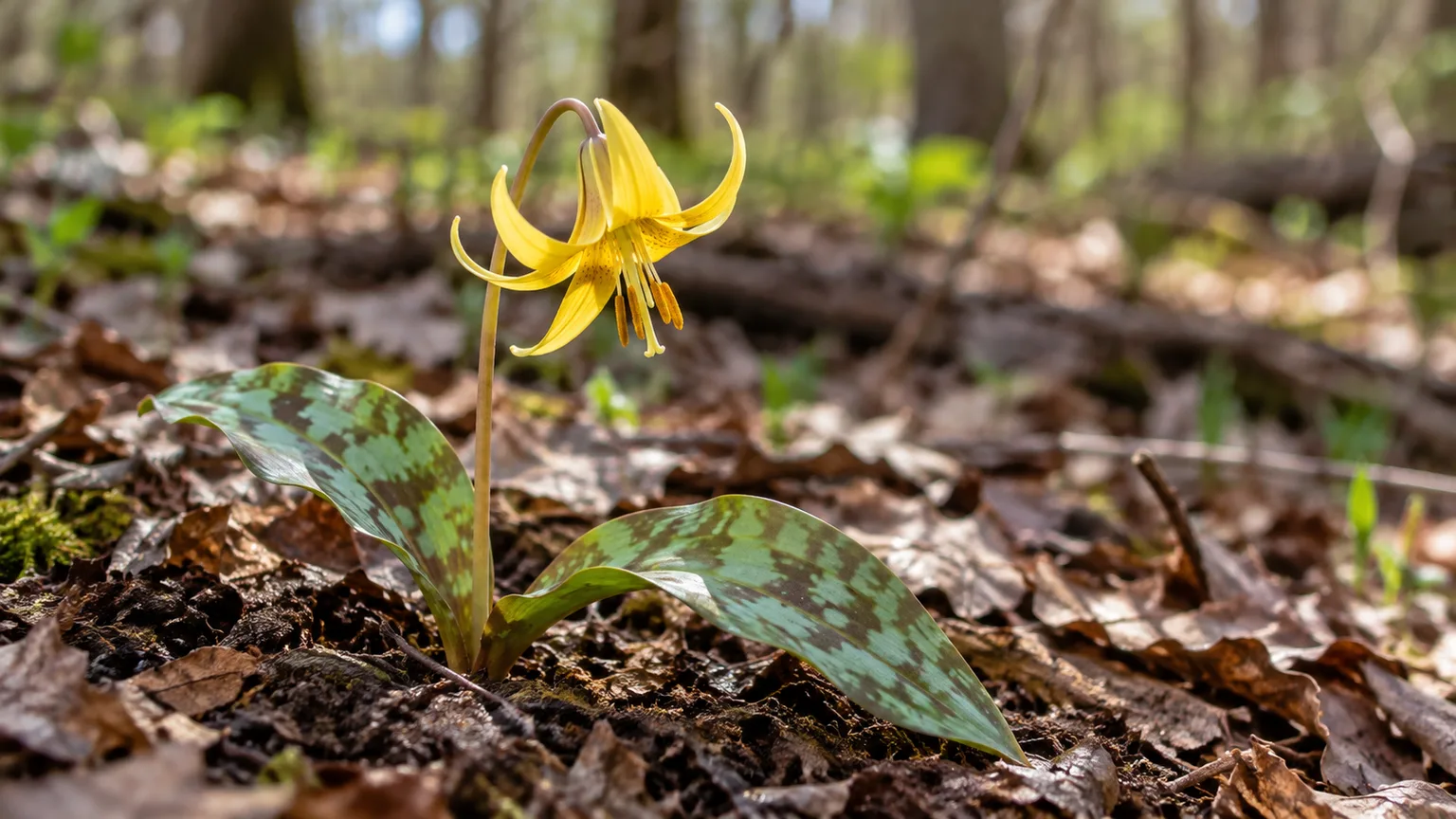
1. Trout lily (Erythronium americanum) is a small native woodland flower whose mottled leaves and nodding yellow bloom appear in early spring, often before the tree canopy closes. It is a spring ephemeral: after flowering, the foliage yellows and disappears as the corm rests underground, so do not fill its planting spot with a later-developing plant that will disturb it. Give it humus-rich, moist but draining soil in partial shade and leave the leaves intact until they fade naturally. NC State Extension describes its short bloom, dormant summer phase, and sensitivity to being moved once established.
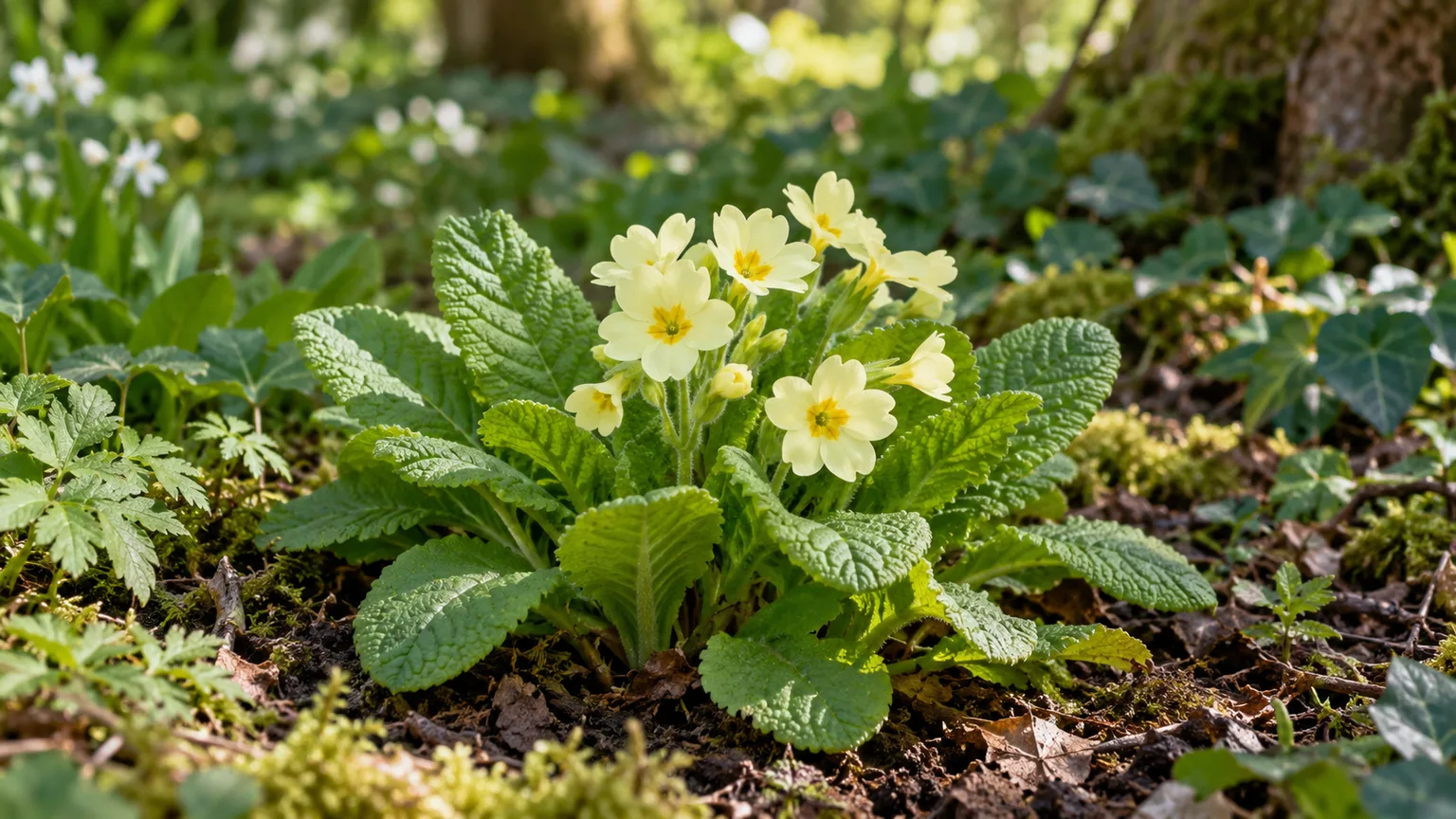
2. Primrose (Primula spp.) is a useful name for several spring-flowering perennials, not one uniform plant. Common primroses and polyanthus primroses offer yellow among many colors and prefer cool conditions, moisture-retentive organic soil, and partial shade; heat and summer dryness can shorten their life in warm regions. Check which species is sold locally, because some primroses tolerate more heat than others, and do not confuse them with the unrelated evening primrose (Oenothera), which generally wants more sun and can spread freely. NC State’s Primula profile covers the genus’s range of habits and cool, moist preferences.
Columbine and yellow foxglove
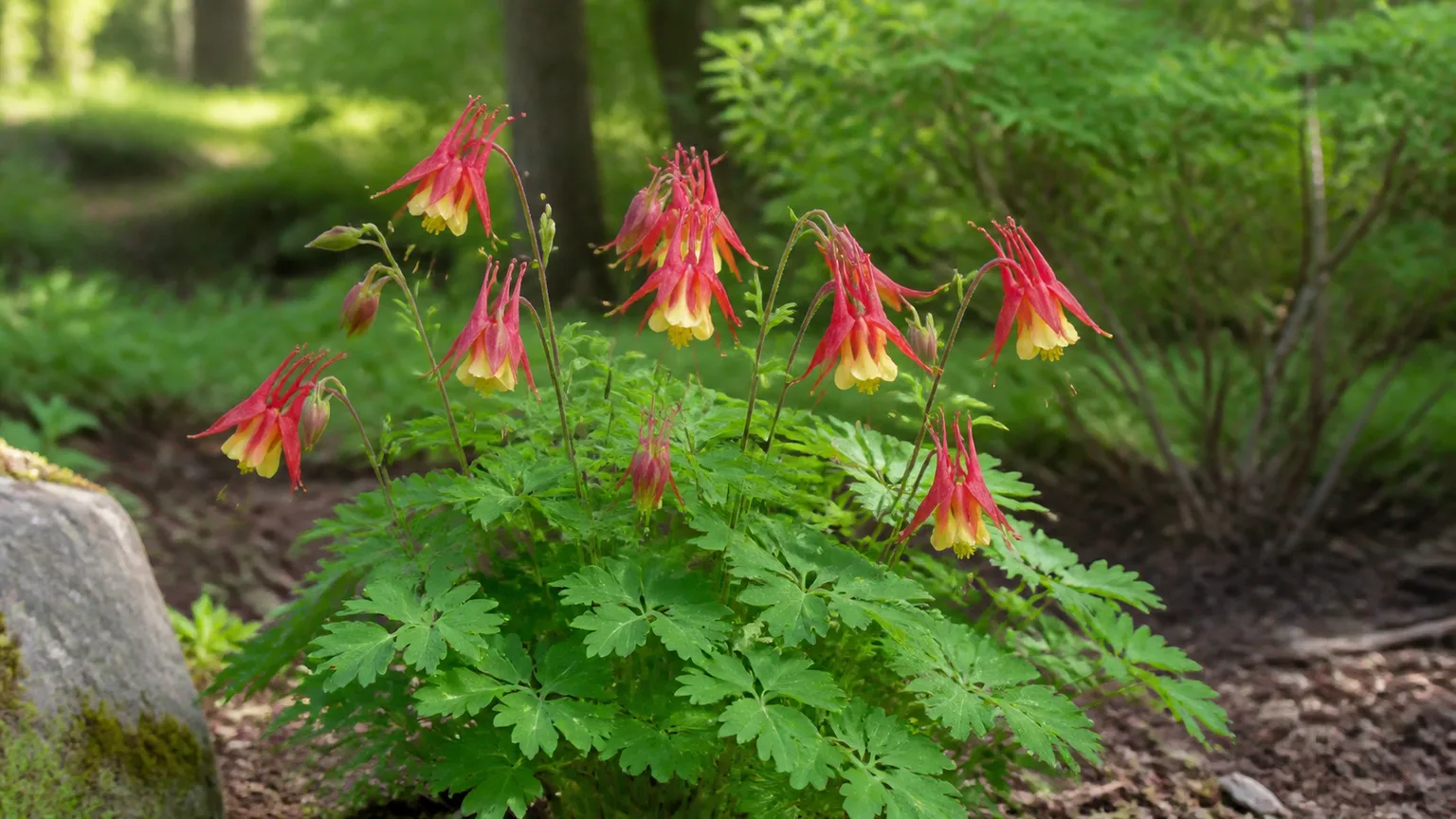
3. Columbine (Aquilegia spp.) brings spurred flowers to spring and early-summer shade. For a mostly yellow display, look for golden columbine (A. chrysantha) or a cultivar sold specifically as yellow; native eastern columbine has red outer petals and yellow centers, a useful two-color option for a woodland or hummingbird garden. Keep the soil draining, water during dry spells, and expect foliage to decline in hot summer weather. In warm, humid climates, select a regional species rather than assuming every columbine is heat tolerant. NC State Extension notes that golden columbine can lose foliage under hot conditions and that eastern columbine does well in partial shade.
4. Yellow foxglove (Digitalis grandiflora) is a better choice for a recurring perennial than the familiar purple foxglove, which is usually biennial or short-lived. Its soft yellow tubular bells rise above a clump of foliage in late spring or summer, and it suits humus-rich soil with partial shade or gentle sun. All foxgloves are toxic if eaten, so place them where children and pets will not chew the leaves or flowers; the RHS profile identifies D. grandiflora as a clump-forming perennial, and ASPCA Poison Control lists foxglove as toxic to dogs and cats.
Low yellow flowers for sunny edges and rock gardens
Low plants can make a bright ribbon along a path or soften the top of a wall, but “groundcover” does not mean “safe between stepping stones.” Both plants below need drainage; let the sedum’s spreading habit determine how close it sits to slower neighbors.
Golden alyssum and creeping sedum
5. Golden alyssum, or basket of gold (Aurinia saxatilis), makes a compact mound with a dense spring cap of small, bright yellow flowers. Use it at the front of a sunny border, in a gravel garden, or spilling over a wall where excess water can escape. It is a perennial distinct from annual sweet alyssum, and after flowering a light trim can keep the mound from looking ragged. It performs poorly where summer soil stays wet. The RHS plant profile recommends an open, sunny position and well-drained soil.
6. Creeping sedum (Sedum and related stonecrop species) is for a hot, dry edge, not a damp flower bed. Yellow-flowered groundcover forms such as moss stonecrop (S. acre) make tiny star-shaped blooms over succulent foliage and can trail over stone; many upright sedums have pink or red flower clusters instead, so check the plant’s identity rather than buying any plant labeled “sedum.” Some mats spread fast enough to smother small alpine plants, and wet winter soil is a common cause of failure. NC State’s moss stonecrop profile describes its sunny, well-drained site and mat-forming habit.
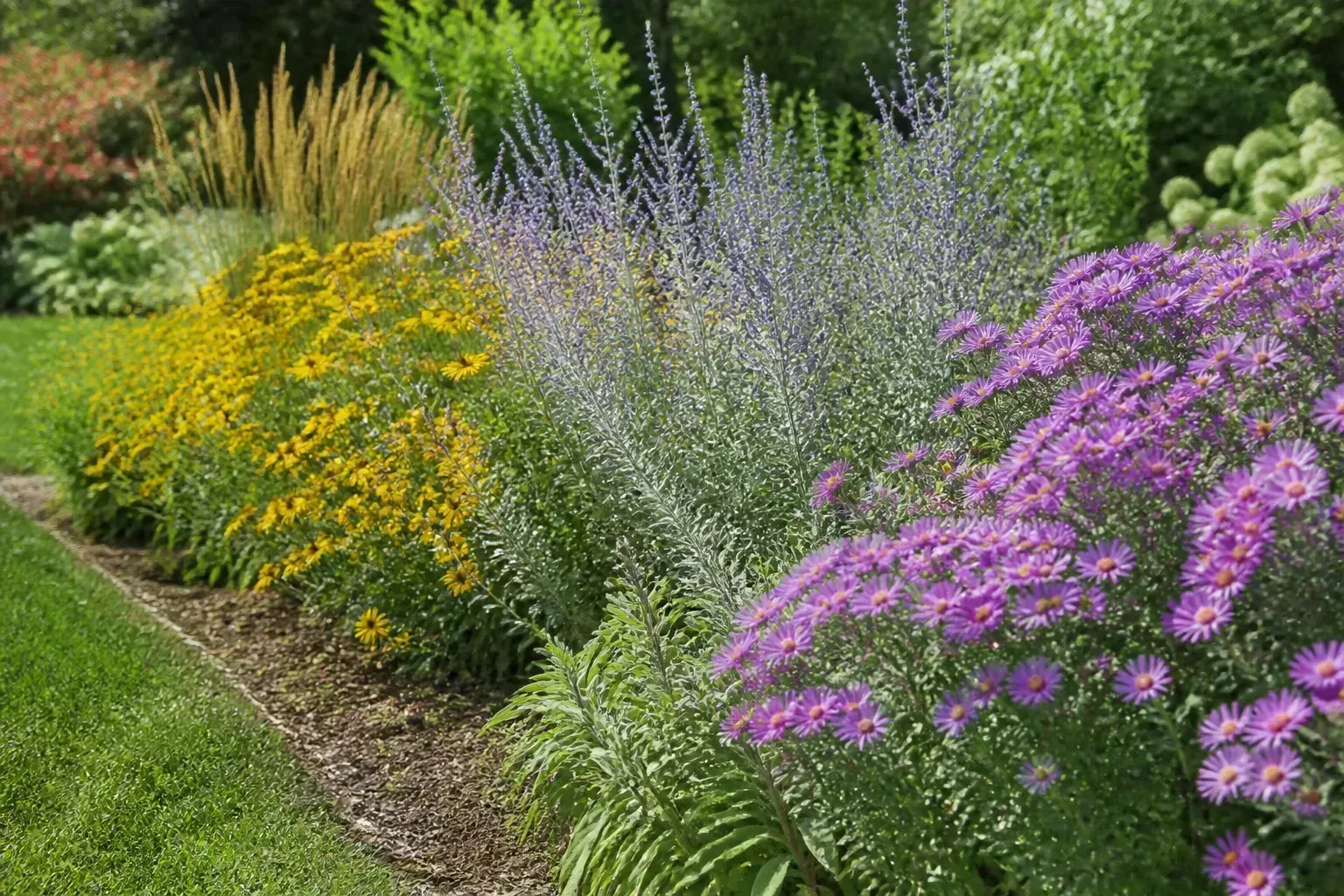
Yellow perennials for a sunny summer border
A sunny border gives you the widest range of yellow flowers, from compact daisies to tall pollinator plants. Keep height and spread on the plant label in view: a vigorous clump can be a strong mass planting but a poor fit beside a narrow walk.
Coreopsis and Rudbeckia
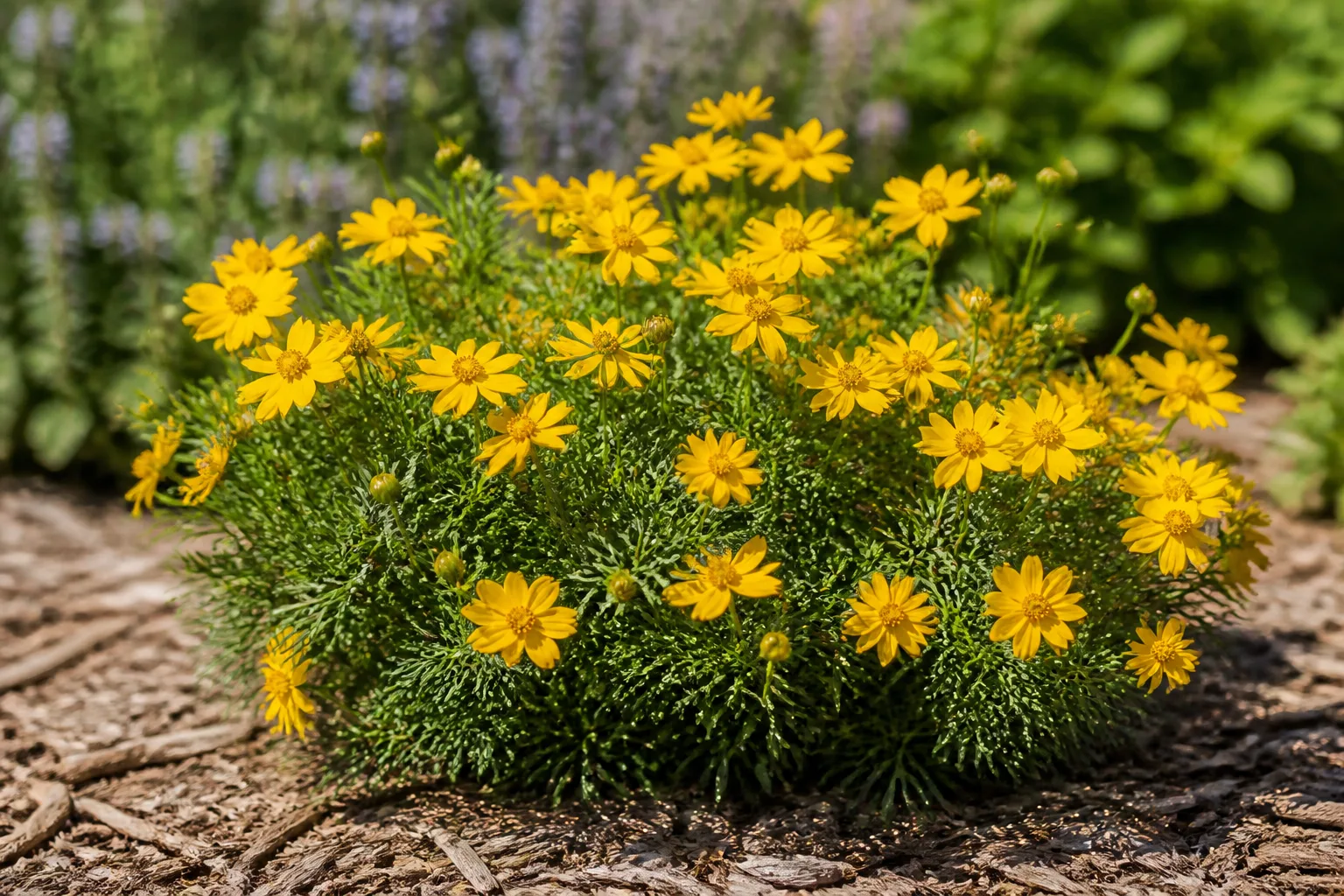
7. Coreopsis or tickseed (Coreopsis spp.) is one of the most flexible choices for clear yellow daisy flowers. Threadleaf cultivars such as ‘Moonbeam’ and ‘Zagreb’ stay relatively fine-textured; larger-flowered types such as ‘Jethro Tull’ have a bolder look. Most want sun and draining soil, and some cultivars repeat bloom after a midsummer shear. Their lifespan and winter hardiness vary among species, so treat “coreopsis” as a genus and choose a named selection for your region. The Old Farmer’s Almanac coreopsis guide and NC State’s plant profiles describe the range of forms and site needs.
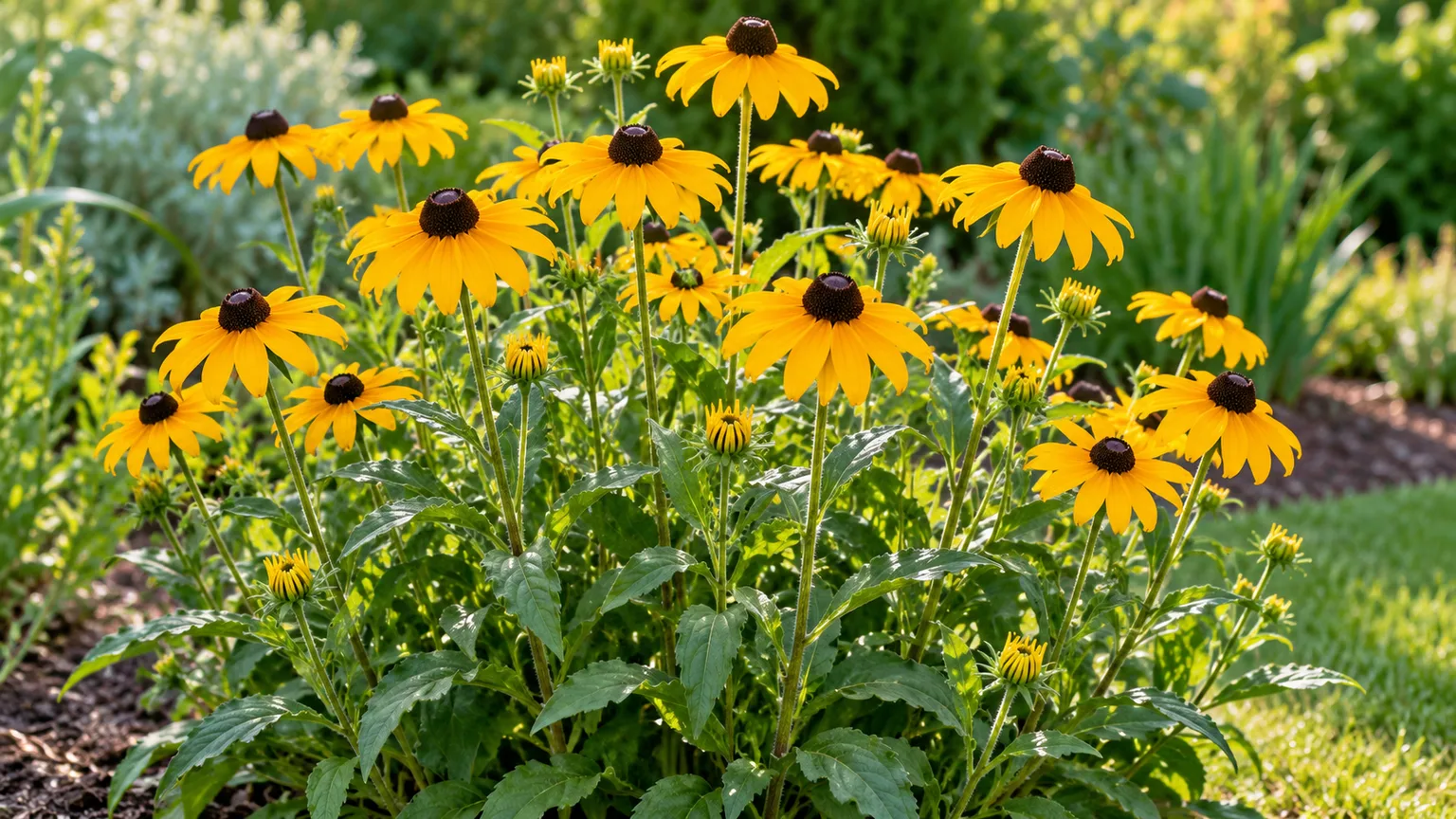
8. Rudbeckia (Rudbeckia spp.) includes black-eyed Susans and several useful yellow cultivars. ‘Goldsturm’ (R. fulgida) has golden petals and a dark center over a long summer-to-fall window; ‘Prairie Sun’ offers a lighter yellow with a greenish center. Give it sun, reasonable airflow, and soil that drains, then decide whether to deadhead: removing spent flowers can prolong bloom, while leaving some seedheads feeds birds and allows self-sowing. Clumping types spread, so allow room or divide them when the patch outgrows its space. NC State Extension’s ‘Goldsturm’ profile explains its long bloom and rhizomatous growth.
Butterfly weed, Baptisia, and coneflower
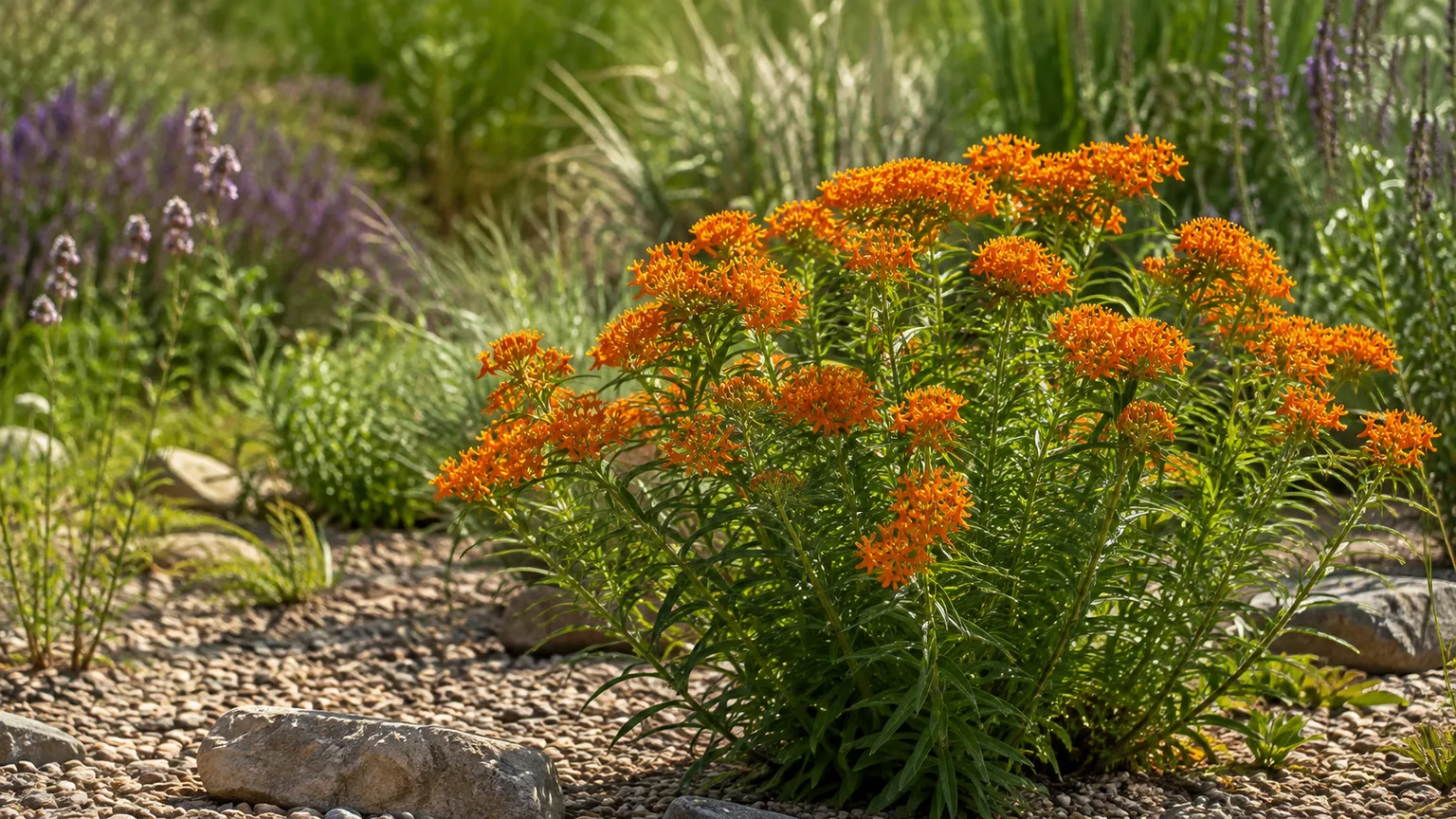
9. Butterfly weed (Asclepias tuberosa) is a North American native with flat flower clusters, usually orange but also available in yellow cultivars such as ‘Hello Yellow.’ Its deep taproot prefers full sun and dry-to-average, well-drained soil; that root makes established plants drought tolerant but also makes relocation difficult. It is a host plant for monarch caterpillars as well as a nectar source, so do not remove every leaf with caterpillar feeding. It emerges late in spring, so mark the spot rather than assuming the plant died. Wisconsin Horticulture Extension confirms its color range, host role, and preference for open, well-drained sites.
10. Baptisia, or false indigo (Baptisia spp.), has yellow-flowered choices such as ‘Lemon Meringue’ and ‘American Goldfinch’ alongside the more familiar blue species. It forms a substantial, long-lived clump with attractive foliage and seed pods, so give it a permanent position instead of planning to divide or move it later. The deep taproot helps established plants handle dry spells, but it makes transplanting a mature clump difficult. Keep the crown out of standing water and allow the shrub-like outline to remain after bloom. NC State Extension explains Baptisia’s deep root, drought tolerance, and transplant sensitivity.
11. Yellow coneflower (Echinacea hybrids) offers a familiar raised cone with petals in lemon, gold, or pale yellow. Cultivars such as ‘Daydream,’ ‘Leilani,’ and ‘Sunrise’ give a different look from purple coneflower, but hybrid vigor, flower form, and hardiness differ by cultivar. Choose single or open flowers if pollinator access is a priority; heavily doubled petals may make nectar and pollen less accessible. Plant in sun and well-drained soil, and leave some mature cones standing if you want seed for finches and other birds.
Itoh peony, roses, and daylilies
12. Itoh peony (Paeonia intersectional hybrids) is the choice for a large, short-lived spring focal bloom rather than a long season of color. Yellow cultivars such as ‘Bartzella’ and ‘Garden Treasure’ carry oversized flowers on a clumping perennial that returns from the crown each year. Give it sun, air circulation, and room to mature; peonies resent frequent moves, and planting too deeply can reduce bloom. If a heavy flower opens in rain, a light support ring can keep stems from leaning across neighboring plants. The American Peony Society registry describes ‘Bartzella’ as a yellow Itoh hybrid.
13. Yellow roses (Rosa cultivars) can repeat flower over a longer period than peonies, but “yellow rose” spans miniatures, shrubs, floribundas, and climbers with very different sizes and pruning needs. ‘Julia Child’ is a compact floribunda with buttery yellow flowers; climbing yellow roses such as Lady Banks need a structure and room, and are not a substitute for a small border shrub. Give roses sun and airflow, and select a disease-resistant cultivar suited to your climate before buying. NC State’s Julia Child rose profile documents the yellow flowers and disease resistance of that selection.
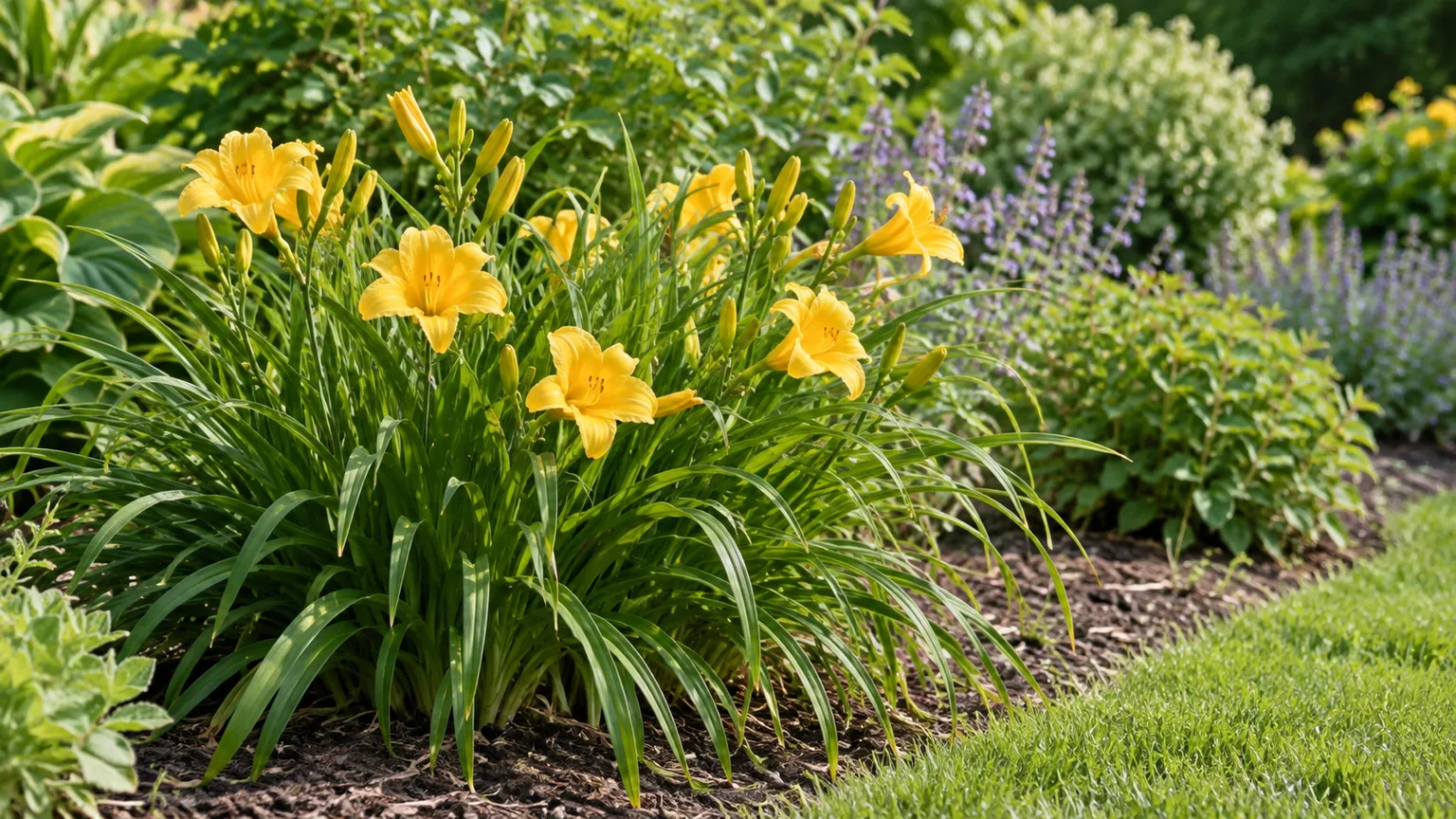
14. Daylily (Hemerocallis hybrids) is an adaptable clump-former whose individual flowers last one day, with new buds extending the show over time. Yellow ‘Stella de Oro’ and ‘Happy Returns’ are popular compact choices; rebloom is strongest where the cultivar gets adequate sun and steady water during establishment. Daylilies are not true lilies botanically, but they are still toxic to cats. Keep the plant away from cats that chew outdoors, and consult a veterinarian immediately if ingestion is suspected. NC State Extension describes daylily bloom habits and notes the serious cat hazard.
Asiatic lilies and foxtail lilies
15. Asiatic lily (Lilium Asiatic hybrids) produces upright or outward-facing flowers in early summer, including solid yellow and speckled selections. ‘Yellow Power,’ ‘Golden Matrix,’ and the double-flowered ‘Fata Morgana’ are examples to look for, though current nursery stock changes. Plant bulbs in fertile soil that drains freely; the stems and leaves want sun while a layer of mulch can keep the roots cooler. These are true lilies, and all parts are dangerous to cats, including pollen and vase water. NC State Extension’s Asiatic lily profile covers site needs, pests, and cat toxicity; ASPCA guidance warns that lilies can cause fatal kidney injury in cats.
16. Foxtail lily, or desert candle (Eremurus spp.), makes a tall spire of many small blooms for a sunny back border. Yellow and cream selections such as E. stenophyllus and ‘Bungei Yellow’ need a warm, well-drained planting spot and protection from strong wind. Their star-shaped, fleshy roots are fragile, so set them carefully and avoid routine digging around the crown. The foliage often dies back after flowering; keep the area marked, and give the plant drier conditions while dormant rather than watering it like a summer annual. NC State Extension’s Eremurus profile gives planting depth and cautions against root disturbance.
Tall accents and late-season yellow blooms
Use taller plants toward the back of a bed or in broad drifts where their stems can rise above lower flowers. A few give a strong late-summer display, while others are better for flower shape, seedheads, or a burst of color in the fall border.
Yarrow, Helenium, and false sunflower
17. Yarrow (Achillea spp.) brings flat flower plates and finely divided foliage to a dry, sunny bed. ‘Moonshine’ is a widely grown soft-yellow form; taller yellow yarrows such as ‘Coronation Gold’ can lean in rich soil or after rain. Avoid overwatering or overfeeding, both of which can cause weak stems or short-lived roots, and divide spreading clumps when they crowd neighbors. Deadheading often prompts another flush, but some seedheads can stay for winter structure. NC State’s yarrow profile notes its preference for sun and drainage and its potential to spread by seed or rhizomes.
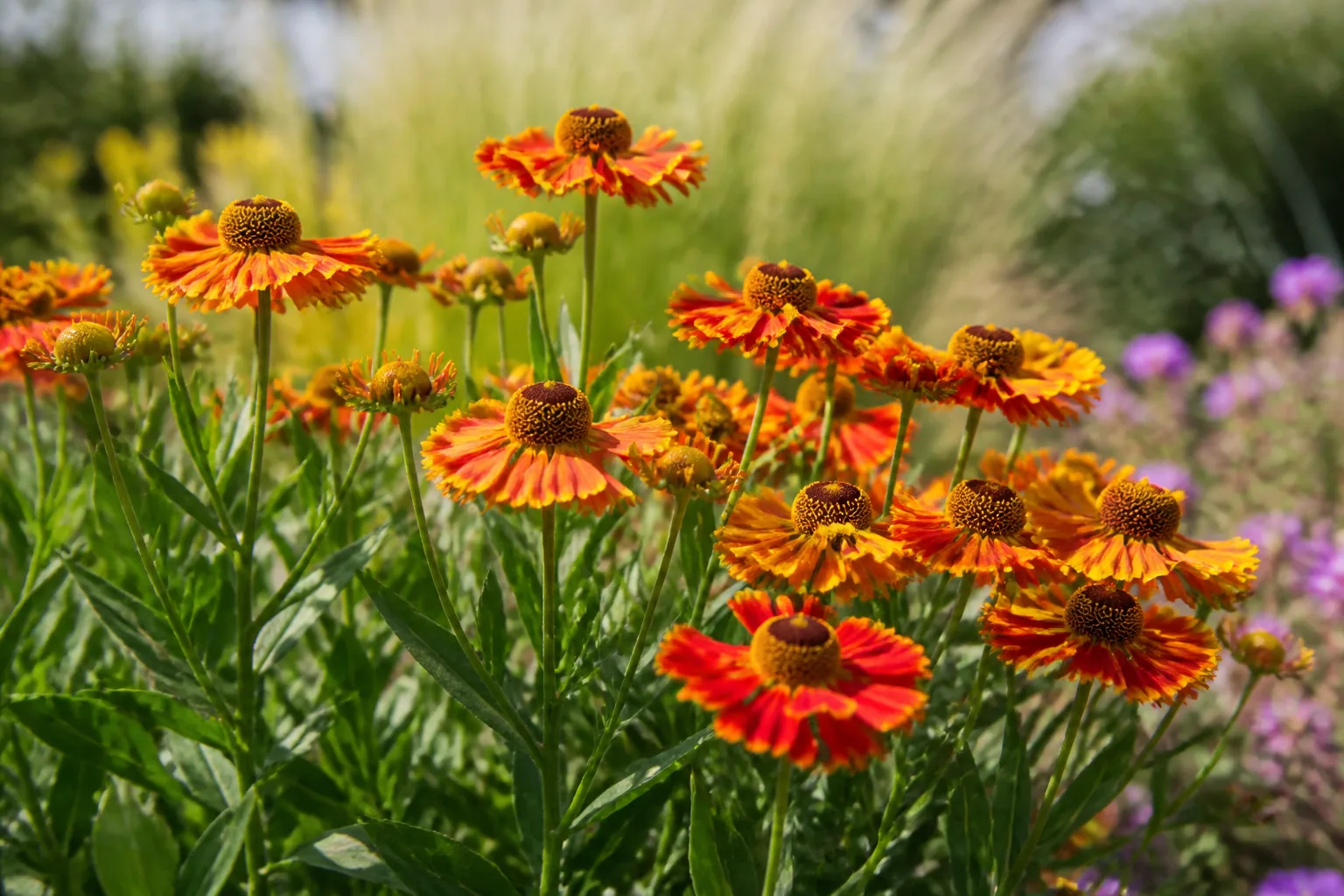
18. Helenium, or sneezeweed (Helenium autumnale and hybrids), carries yellow, orange, or red daisy-like flowers above upright stems in late summer or fall. It is a better pick for a bed that stays evenly moist than for a dry gravel border; full sun and regular moisture help keep it sturdy and floriferous. Taller forms can be pinched in early summer to branch and shorten, but do not cut them once buds are forming. Common name notwithstanding, the dried flower heads—not garden contact—are the origin of “sneezeweed.” NC State Extension identifies Helenium as a moisture-loving native perennial with late-season yellow blooms.
19. False sunflower (Heliopsis helianthoides) looks like a perennial sunflower but is a separate, clumping native plant. It flowers through summer and into fall, with compact yellow choices such as ‘Tuscan Sun’ or taller cultivars such as ‘Summer Nights.’ It handles a range of soils and can suit a sunny cottage or pollinator border, but tall stems may need support and volunteers can appear if seedheads are left. The NC State Plant Toolbox profile lists yellow cultivars, pollinator value, and its tendency to self-sow.
Torch flowers, mums, hollyhocks, and butterfly bush
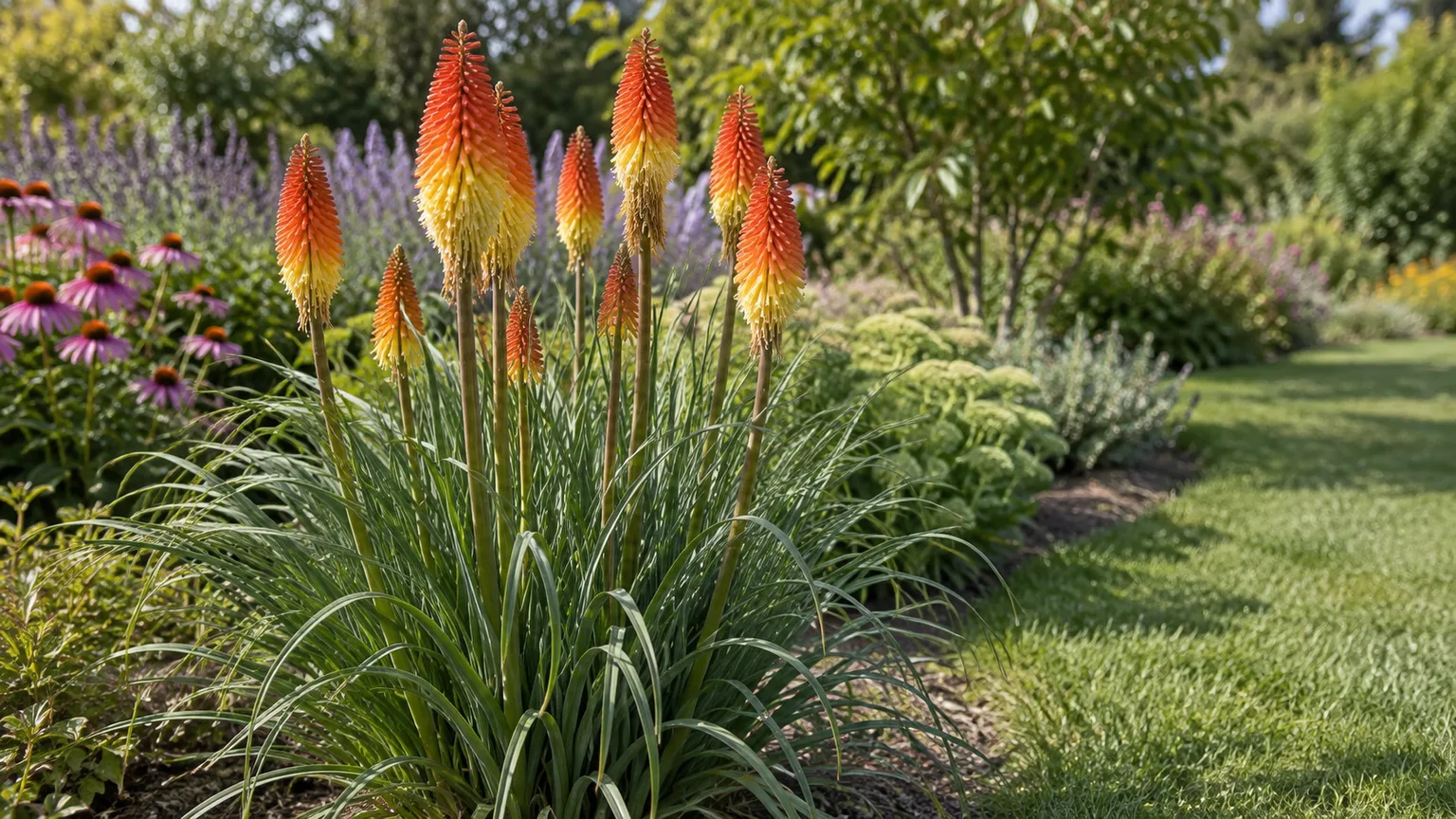
20. Torch flower, or red hot poker (Kniphofia spp.), adds upright bottlebrush spikes above strap-shaped leaves. Look for yellow selections such as ‘Ice Queen,’ ‘Glowstick,’ or ‘Pineapple Popsicle’; some cultivars shift between yellow, cream, and orange as the florets open. It wants sun and drainage but more even moisture than sedum or basket of gold. In cold or wet-winter areas, follow the cultivar’s hardiness directions and keep water from pooling at the crown. NC State Extension describes the genus’s range of sizes, full-sun preference, and crown-rot risk in wet soil.
21. Garden mums (Chrysanthemum hybrids) are a familiar late-season source of yellow, bronze, and orange flowers, but a pot sold in full bloom in autumn is not automatically a reliable perennial in every climate. For the best chance of winter survival, plant a hardy garden selection early enough to root before the ground freezes, give it sun and good drainage, and pinch new growth in spring or early summer if a compact mound is desired. Florist mums are bred for indoor display and often fail outdoors; read the label for garden hardiness. NC State Extension explains the difference in garden mum performance and advises spring planting where possible.
22. Hollyhock (Alcea rosea) puts yellow single or double flowers on tall spires that suit a fence, wall, or cottage border. It is often biennial or short-lived, but self-sowing seedlings can keep a patch going; leave a few seed stalks if you want replacements and pull volunteers where they are not wanted. Give the lower leaves airflow and avoid overhead watering where rust is common, because foliage disease can spoil the plant before the flowers finish. NC State Extension’s hollyhock profile describes its reseeding habit, tall form, and susceptibility to rust and leaf spot.
23. Butterfly bush (Buddleja spp.) is the outlier in this list: it is a woody, deciduous shrub, not an herbaceous perennial. Yellow-flowered forms such as ‘Honeycomb’ and ‘Golden Glow’ can attract adult butterflies to nectar, but that does not make the shrub a host plant for their caterpillars. Buddleja davidii self-seeds and is invasive in some regions, so check your local invasive-plant list before buying; in affected areas, choose a native flowering shrub instead. NC State Extension explains its shrub habit, seed dispersal, and regional invasive risk.
Design a sequence instead of one yellow flush
A satisfying yellow border has more than one shade and more than one bloom time. Place pale primrose, trout lily, and spring columbine where their small flowers can be seen up close; repeat stronger golds such as coreopsis and Rudbeckia in groups so the color reads across the bed. Purple and blue companions create contrast, while bronze foliage and ornamental grasses keep the composition interesting after a short-lived flower fades. A Fine Gardening meadow account shows why this timing matters: quick early flowers can give way to slower, longer-lived perennials as a planting matures.
To support wildlife, combine nectar flowers with plants that feed caterpillars and leave some seedheads standing. University of Minnesota Extension’s butterfly-garden guidance stresses that adult nectar alone does not provide host food for butterfly larvae. Butterfly weed is a host plant; butterfly bush mostly supplies nectar, and native plants matched to your region can provide more complete habitat.
For pets, check the botanical name before planting. True lilies (Lilium) and daylilies (Hemerocallis) pose severe risks to cats; foxglove is also toxic if eaten. Keep these plants and cut stems out of reach, and contact a veterinarian or animal poison service promptly if a cat may have contacted a lily. Yellow roses and many other choices remain available if you want a brighter garden without those specific hazards.
Avoid the mistakes that leave gaps or crowded beds
The common mistake is choosing by flower photo, then forcing a plant into the wrong drainage or light. A shade flower moved into hot afternoon sun may wilt even in damp soil; a dry-site sedum in an irrigated border can rot, while Helenium in parched gravel can stop flowering. Use the plant’s preferred conditions as the first filter, then check whether its mature width fits the gap.
Do not cut every perennial to the ground in fall just because the flowers are finished. Trout lily and columbine need their leaves to recharge or recover; butterfly weed may emerge late, and Baptisia’s seedpods add winter structure. Clean up diseased foliage when needed, but leave healthy seedheads for birds and cut back only according to the plant’s growth cycle.
Finally, allow perennials time to establish. Keep new roots evenly moist, avoid digging around shallow or fragile crowns, and do not assume a plant that looks dormant has died. Mark spring ephemerals and late-emerging species; many failures are caused by disturbing a living plant before its foliage returns.
Conclusion
Choose yellow perennials by the job you need them to do: trout lily or primrose for spring shade, golden alyssum and creeping sedum for a sunny dry edge, coreopsis and daylilies for summer color, and Helenium, Heliopsis, or mums to extend the border later in the year. Match each plant to its light, drainage, mature size, and local hardiness, then combine bloom windows instead of expecting one cultivar to flower all season.
Before you buy, check the botanical name, tag for mature dimensions, and regional guidance for invasive or pet-toxic plants. Start with a few well-matched choices, water them as they establish, and repeat them in groups; a small, coherent sequence will usually look brighter and be easier to maintain than a crowded mix of every yellow flower at once.



