When to Pick Eggplant for the Best Flavor and Texture
Pick eggplant while it is firm and glossy, before seeds harden. See how variety, flower timing, harvest technique, and cool storage change the decision.
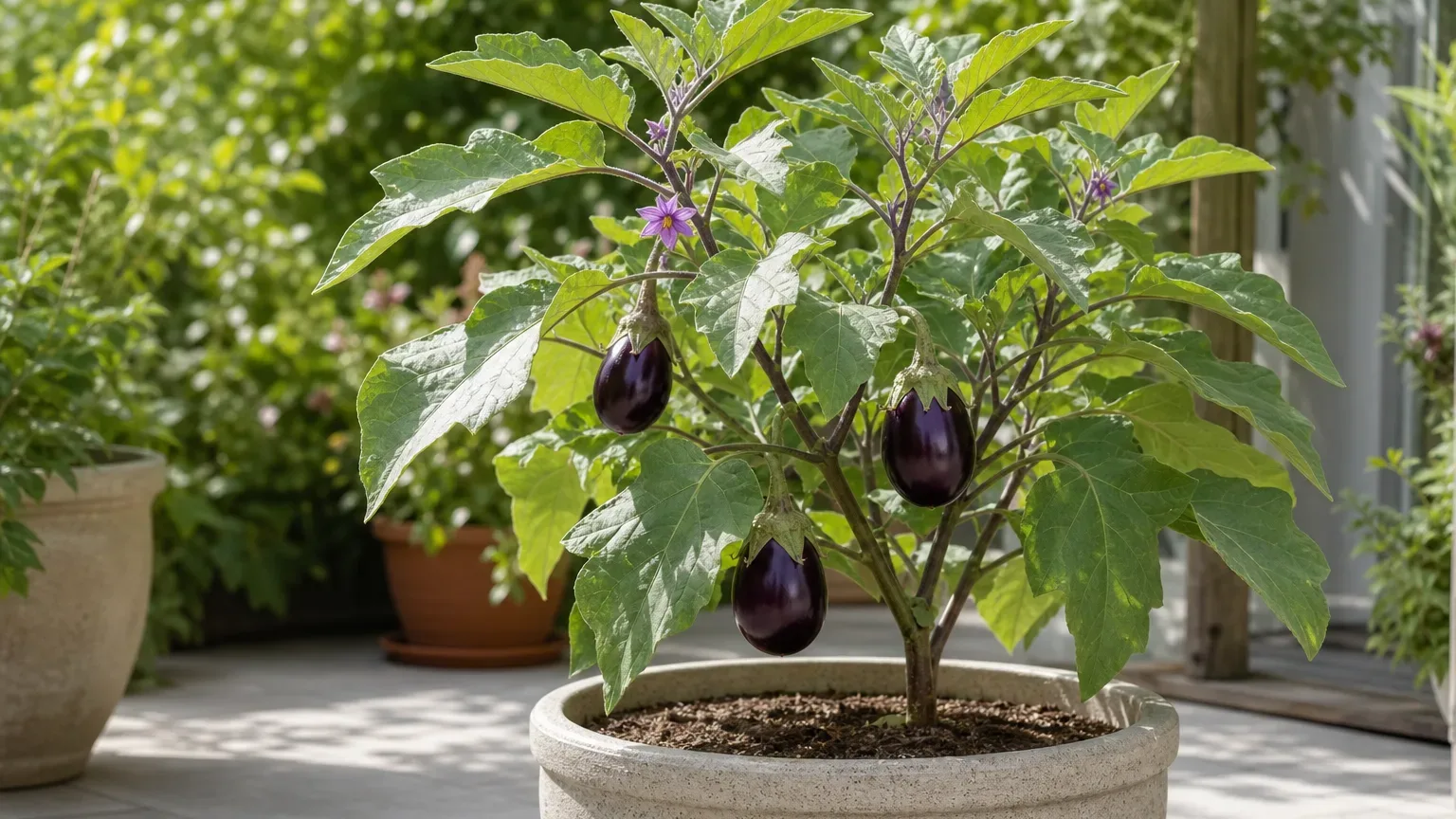
Pick eggplant when each fruit has reached the expected size and shape for its variety, developed its full color, and still has smooth, glossy skin. It should feel firm with only slight give under gentle pressure. That is the useful eating stage: the flesh is developed, while the seeds are still small and tender. Waiting for the fruit to become huge or for the seeds to mature usually costs you texture and flavor.
Use the seed packet or plant label to learn what a mature fruit of your cultivar should look like, then check the plant rather than relying on a calendar date alone. Eggplants vary from small, round fruit to long, narrow ones, and their ripe colors can be purple, white, green, or striped. Once you learn those cues for the variety you planted, a short walk through the bed every few days is usually enough to catch fruit before it turns dull or seedy.
The best harvest window: mature enough to eat, still young inside
Eggplant is harvested at horticultural maturity, which is earlier than full botanical maturity. In practical terms, you want a fruit large and developed enough to eat, but not one that has stayed on the plant until its seeds become prominent and hard. Utah State University Extension describes high-quality eggplant as full size, firm, and glossy; it notes that fruit is generally harvested before seeds enlarge and harden, because overmature fruit can become pithy and bitter (Utah State University Extension).
This distinction clears up a common point of confusion: “ripe” does not mean eggplant should reach the seed-bearing stage you might wait for in a tomato you plan to save. The goal for dinner is a tender, well-developed fruit. If you are growing an open-pollinated variety to save seed, you would intentionally let one fruit remain much longer, but that is a separate purpose and the eating quality will decline.
When the fruit is close to the size listed for its variety and its skin has turned shiny, you are in the harvest window. If two cues agree and you are unsure about the third, it is generally better to pick a slightly smaller, glossy fruit than to leave it hanging until it becomes dull and soft. Smaller fruit is still edible; an overgrown fruit cannot be returned to its tender stage.
Use the calendar to know when to start checking
Days to maturity help you plan when to begin watching, but they cannot tell you the exact morning to harvest. Variety and weather change the pace, and catalogs do not always count from the same starting point. Savvy Gardening gives a broad expectation of 55 to 85 days from transplanting, while Utah State reports that the period from flowering to harvest can range from 10 to 40 days depending on variety (Savvy Gardening; Utah State University Extension).
Read the fine print on your seed packet or nursery label: a day count may begin at sowing or at transplanting, and a seed-starting schedule adds time before the plant reaches the garden. Treat the number as a reminder to inspect the developing fruit, not as a promise that every eggplant on the plant will be ready on that date. A cool spell, a late transplant, or a slower cultivar can push harvest later; warm conditions and a compact variety can bring the first fruit sooner.
Flowering gives you another useful scouting cue. Once a flower has set and a small fruit is swelling behind it, note roughly when it appears and start checking more closely as it approaches the variety’s expected size. Flowers that fall without a swelling fruit do not start the harvest clock, and not every fruit on the plant will develop at the same pace.
Four field cues that tell you an eggplant is ready
Judge a fruit by several clues together rather than by color or length alone. The most dependable quick check combines the size and shape for its cultivar with full color, a glossy surface, and firm flesh. None of these clues needs an aggressive squeeze or a scratch through the skin.
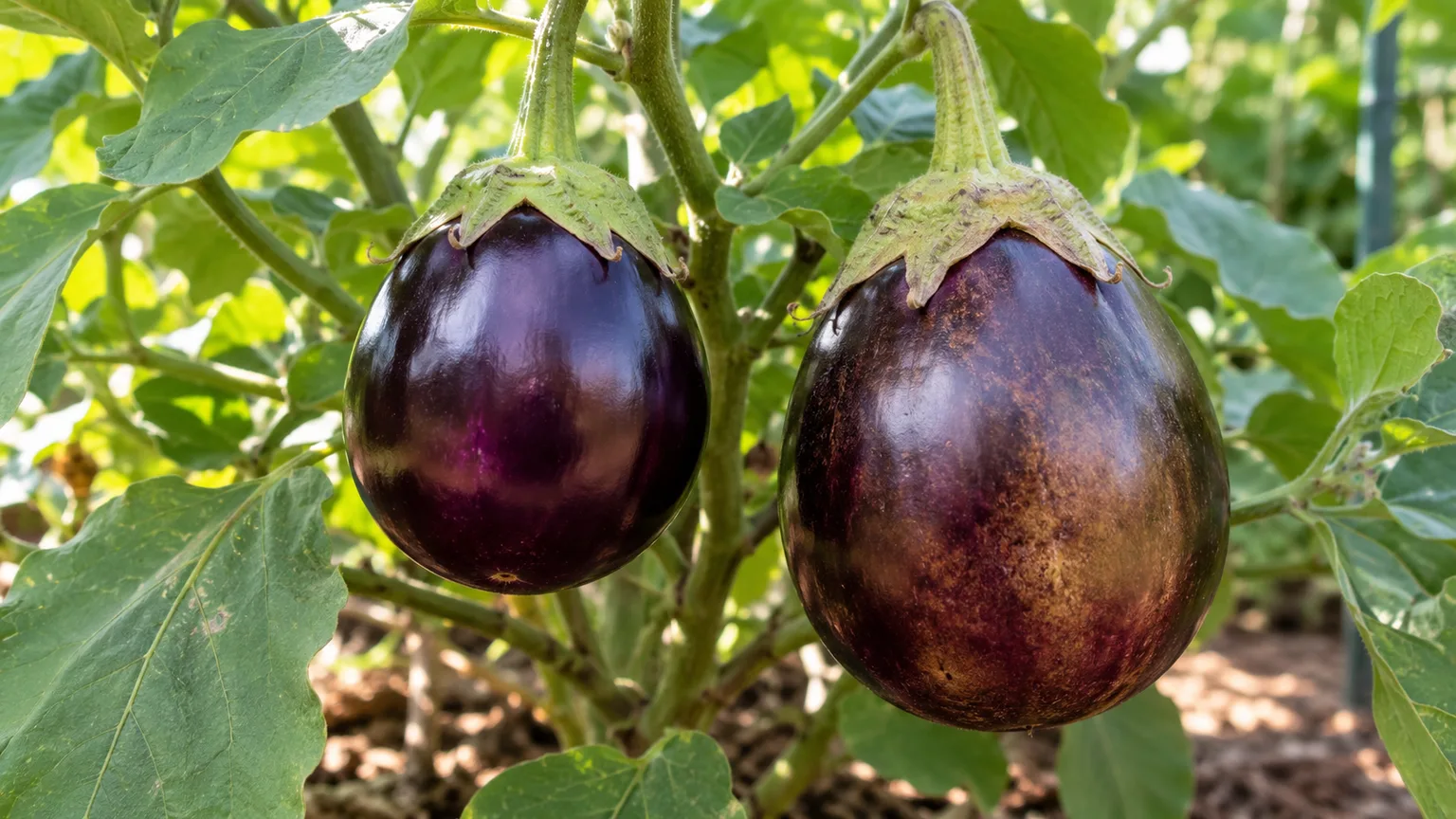
Match fruit size and shape to the variety
Before the first fruit forms, check the packet, plant tag, or a reliable description for the mature shape and approximate dimensions. University of Illinois Extension lists cultivars ranging from a tiny ornamental type to large oval fruit, plus slender varieties such as ‘Ichiban’ and ‘Little Fingers’; it recommends harvesting conventional fruit at about 6 to 8 inches while it is still glossy (University of Illinois Extension). That range is a useful reference for some larger types, not a rule for every eggplant.
A long Asian cultivar may be ready while it is still narrow, and a compact or mini cultivar may never approach grocery-store size. Round globe types fill out in width, while slender types add length. If your fruit has reached the dimensions expected for its type and is glossy, do not hold it back just because a different variety would grow larger.
Look for full color and a natural gloss
The surface should have the color expected for that cultivar and a fresh, reflective sheen. The classic dark-purple eggplant is not the only model: ‘Fairy Tale’ and similar striped cultivars keep their pattern, while white and green cultivars should be judged against their own mature color. The Royal Horticultural Society notes the wide range of aubergine colors, forms, and sizes, which is why a plant label is more useful than a universal purple-color rule (Royal Horticultural Society).
Gloss is often more helpful than intensity of color. A fruit can be fully colored but already past its best if its surface has turned flat, bronze, or dull. Conversely, a young fruit may have its final color before it has reached its proper size, so check the remaining cues before deciding.
Check firmness gently, without bruising the fruit
A harvest-ready eggplant should feel firm and substantial, not hard like a rock and not spongy. Support the fruit with one hand and give the side a light press with your thumb; the flesh should yield just slightly and rebound. Think of this as a gentle confirmation after the size and skin checks, not a test that requires digging a fingernail into the skin.
Repeated hard pinching can leave marks, especially on fruits that bruise easily. If your first light press leaves a dent or the fruit feels soft, stop pressing and look again at its sheen, color, and firmness near the body. A single cue can mislead, but a glossy, firm fruit at the right size is a much stronger case for harvesting.
Recognize an eggplant that has stayed on the plant too long
As eggplant becomes overmature, its skin often loses its shine and the flesh may turn soft or spongy. The seeds enlarge and become tougher; when you cut the fruit open, they may be obvious rather than small and tender. Extension guidance identifies pithiness and bitterness as common quality losses in overmature fruit, so a dull surface is a signal to inspect closely rather than wait for more size (Utah State University Extension).
Color change alone is not enough to diagnose overripeness. A pale cultivar may be ready while still white, and some cultivars change color as they age. Compare it with the variety description: if the fruit has lost its expected gloss and is soft or seedy inside, it has passed the best eating stage. If only one is overmature, cut it off so you can use the sound fruit and keep monitoring the younger ones.
Adjust the cues for globe, Asian, white, and striped eggplants
The basic rule stays the same across eggplants, but the “right size” and “full color” parts depend on the cultivar. Compare fruit only with the variety you planted, not with a photo of a different type in a seed catalog or supermarket display. That small adjustment prevents the most common mistake: waiting for a small-fruited plant to produce a giant fruit it was never bred to make.
Globe and American eggplants
Large globe types usually become rounder and fuller as they approach their eating size. Use the packet’s expected diameter or length as your guide, then harvest while the skin is still glossy and the body remains firm. The familiar 6-to-8-inch range cited for some common types can be useful, but it is not a hard stop; cultivar descriptions and the fruit’s condition take priority.
If a globe fruit looks large but is still shiny and firm, check the skin again in a day or two rather than assuming size alone means it is overripe. If it begins to dull, soften, or show an unusually yellow or bronze cast for that variety, cut it and inspect the flesh. In subsequent harvests, pick that cultivar a little earlier.
Long Asian and compact varieties
Japanese, Chinese, and other long Asian eggplants are often narrower and may mature at a different length than globe types. Some are ready while still relatively slender, so waiting for a thick, round shape would make you miss their intended stage. Use the seed description and look for full cultivar color, gloss, and firm flesh rather than comparing their length with a large purple globe.
Compact, patio, and mini varieties also reward an early check. A small fruit that has reached its expected shape can be ready even when it seems undersized beside a supermarket eggplant. If the plant carries several fruits at once, pick each one as it reaches its own size and sheen instead of clearing the plant in one harvest.
White, green, and striped varieties
White eggplant should be harvested while it is still the mature white or cream color described for the variety and the skin remains smooth and glossy. Some white cultivars yellow as they age, but color changes differ by cultivar, so check its description before interpreting yellowing. Green varieties need the same treatment: expect their named shade and use shape, sheen, and firmness to confirm readiness.
Striped fruit should retain its characteristic bands, though the contrast can change as it develops. A striped or pale fruit can still be perfectly ready while looking nothing like the standard dark-purple grocery type. When the description and the plant disagree, photograph the fruit and compare it with the variety’s grower or seed-company guidance rather than guessing from color alone.
Cut the fruit cleanly and protect your hands
Eggplant stems are thick enough to resist a casual pull, and some cultivars have prickles on the stems or calyx. University of Illinois Extension advises using a knife or pruning shears instead of breaking or twisting the fruit off, and leaving the large calyx attached. Put on garden gloves if you see spines, and choose pruners that can make a clean cut without crushing the stem.
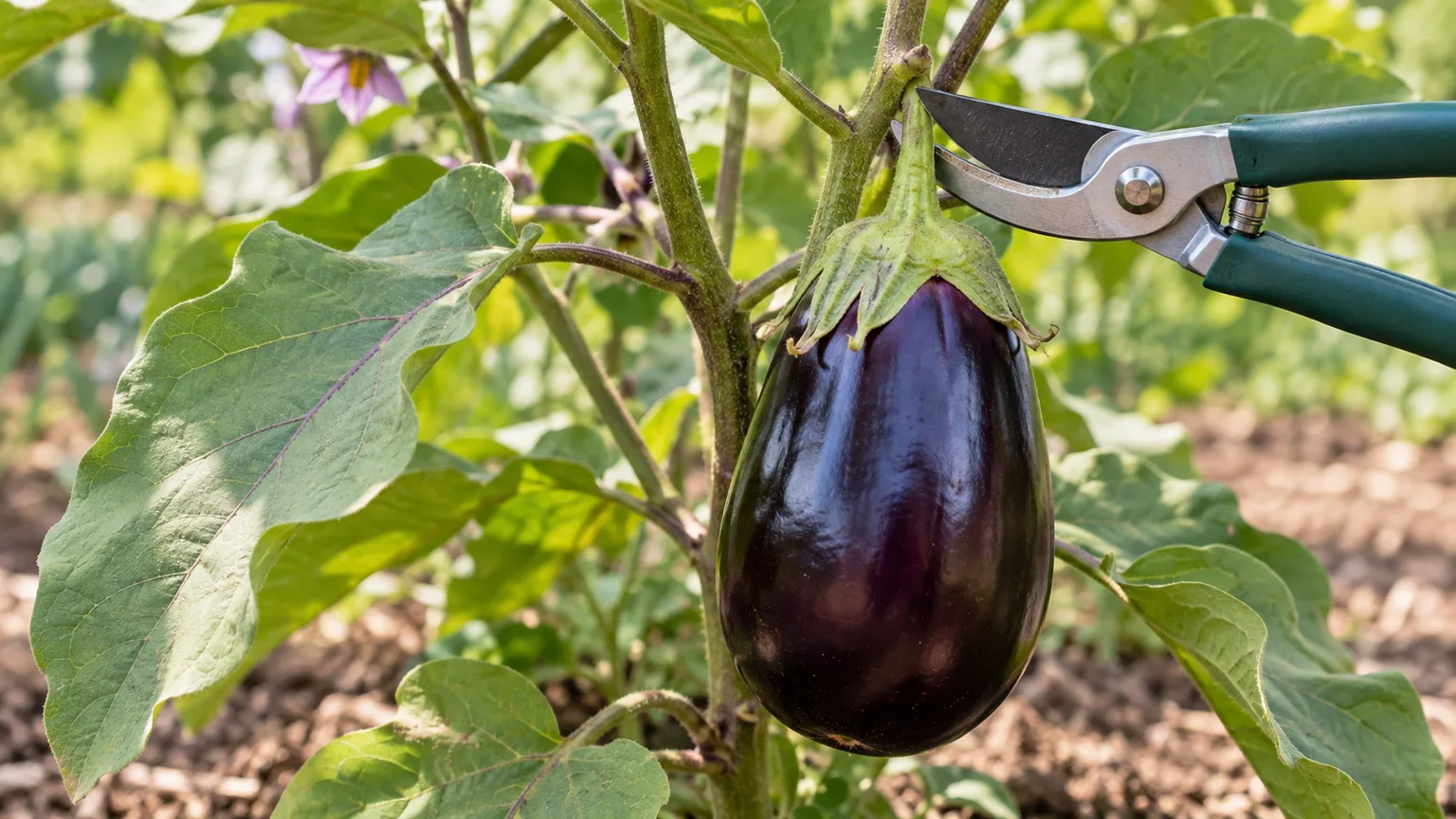
Hold the fruit so it cannot drop, then cut through the stem just above the calyx, leaving a short stem attached. A clean cut reduces the chance of splitting the fruit or tearing a branch, while leaving the calyx intact gives you a convenient handle and protects the stem end. Do not yank on a fruit that resists; reposition the blade and cut the stem rather than levering the plant.
Set harvested fruit into a shallow basket or container rather than dropping it into a deep bucket. Eggplants can bruise, and a small skin injury can shorten the time the fruit stays attractive. If you are harvesting several plants, keep the container in shade and avoid piling heavy fruit on top of softer or smaller ones.
Keep checking as new fruit develops
Once the first eggplants approach their expected size, make checking part of your regular garden walk. In warm weather, inspect every two or three days; fruit can move from glossy and firm to dull and seedy faster than a weekly calendar suggests. When temperatures are cooler or a variety develops slowly, you may not need that cadence, but shorter intervals are useful near peak summer production.
Do not harvest every fruit at once just because one is ready. Eggplant flowers and fruit set over time, so the plant may have one glossy fruit, a smaller swelling fruit, and a new flower at the same time. Cut only those at the right stage, leave younger fruit attached, and return to check them again.
Picking also prevents an old fruit from occupying your attention while newer ones mature. If one fruit has gone dull or overlarge, remove it rather than waiting for it to become tender again. Where the growing season is ending, pick full-size, sound fruit before cold weather damages the plant; do not count on a harvested fruit to finish developing its eating quality indoors.
Store eggplant cool without chilling it
Eggplant keeps best in a cool, humid place rather than in the coldest part of a refrigerator. Utah State University Extension recommends storage around 45 to 55°F with high relative humidity and notes that eggplant is sensitive to chilling below about 50°F, with sensitivity varying by variety, maturity, and fruit size. Quality can decline quickly, with the extension guide describing a typical storage period of about 7 to 10 days even under suitable conditions (Utah State University Extension).
Most home refrigerators run colder than that range, so refrigeration is a compromise when you do not have a cool storage spot. Keep the fruit whole and dry, place it in the warmest part of the refrigerator or a crisper that is not set to its coldest level, and use it soon. Avoid a wet, tightly sealed bag that traps condensation against the skin; a loose bag can limit drying without holding free water on the fruit.
Chilling injury is a quality problem, not a sign that the fruit has ripened further. A chilled eggplant may develop surface pitting, dullness, or faster deterioration after it warms. Check stored fruit before cooking; use firm, sound pieces promptly, and discard fruit that has become moldy, slimy, or badly decayed rather than trying to salvage damaged flesh.
Common harvest problems and what to do next
The fruit is small but glossy. First check the variety. If it is a mini or Asian type and has reached the expected shape, pick it; if it is a large globe type with no size yet, wait briefly and keep an eye on its sheen. A single measurement cannot tell you enough without knowing what the plant should produce.
The fruit is the right color but looks dull. Do not wait for it to grow larger. A dull surface on a fruit that has reached its cultivar size often means you are already at or beyond the ideal stage. Cut it, inspect the inside, and adjust your timing earlier for the next fruit.
A white eggplant is yellowing. Look up the cultivar before diagnosing it. Some white varieties become yellow as they age, while other types are supposed to remain white; compare firmness and surface gloss as well, and harvest if it has reached the expected shape and the skin begins to lose its shine.
The seeds are large when you cut it. The fruit stayed on the plant too long or the variety was picked later than its best eating stage. It may still be usable if the flesh is sound and the seeds are not objectionably tough, but quality will not improve after harvest. Pick the next fruit earlier, while it is firm and glossy.
A branch tears or the fruit bruises. Use sharp shears next time and support the fruit before cutting. If the stem is too thick for hand pruners, use a clean, sharp knife with a controlled cut; do not pull or twist to force it free. Handle the fruit gently and separate any damaged pieces for prompt use.
Conclusion
The best time to pick eggplant is when the fruit has reached the size and shape of its variety, shows its full color, and still has a glossy, firm surface. Use a gentle press only as a final check: the flesh should have slight give, not a lasting dent or a spongy feel. The edible window comes before the seeds become large and hard, so do not wait for a fruit to become enormous or fully seed-ripe.
Treat days to maturity as a cue to start checking, then let the individual fruit decide. Cut it cleanly above the calyx, wear gloves if the plant is prickly, return every few days while fruit is developing, and keep harvested eggplants cool without chilling them. If you remember one rule, make it this: harvest by cultivar-specific size and gloss, before the skin dulls.



